
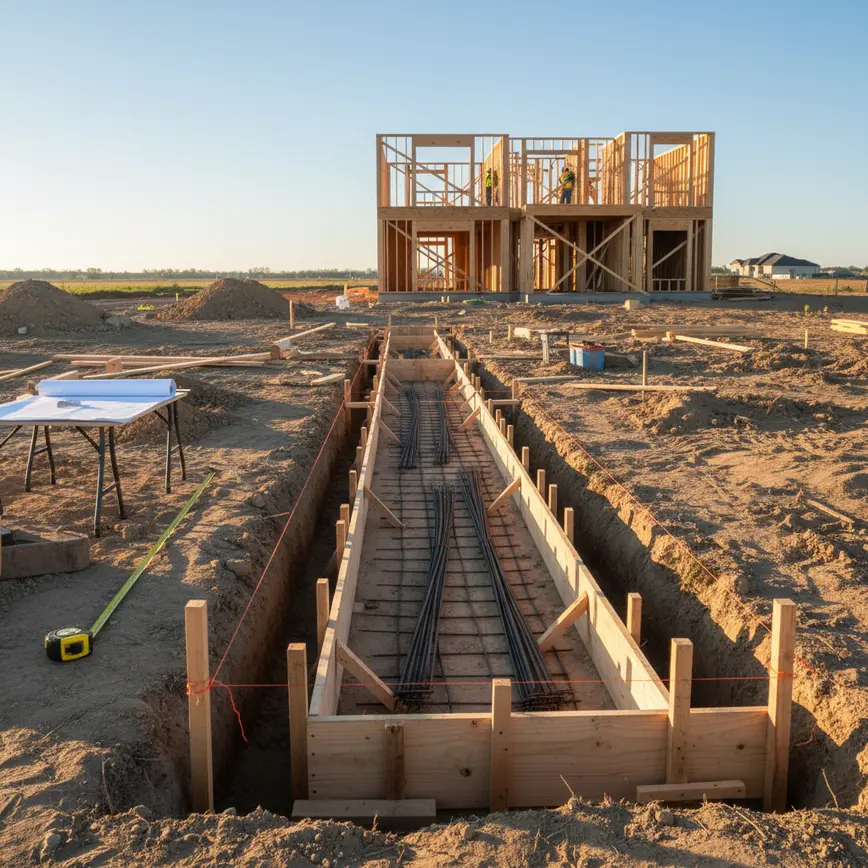

The recommended footer excavation depth in Central Ohio varies by soil type and frost line considerations. Generally, a depth of 32 inches is necessary to meet the Ohio frost line requirement. In areas like Franklin County, following local building codes ensures stability and durability. Call (844) 656-0129 for a free consultation!
Central Ohio Excavation Depth Requirements (2026)
| County | Footer Depth | Notes |
|---|---|---|
| Franklin | 32 inches | Meets frost line requirement |
| Delaware | 32 inches | Standard depth for stability |
| Licking | 36 inches | Deeper due to soil type |
Get your exact quote: (844) 656-0129
Understanding Why Depth Matters in Central Ohio
Proper footer excavation depths are crucial in Central Ohio due to various soil types and climate conditions. Many counties, including Franklin and Delaware, require a footer depth of at least 32 inches to prevent frost heave during winter months. This depth allows for the stability and longevity of foundations, ensuring the safety of structures.
The soil conditions in Central Ohio can vary significantly, especially between regions. For instance, Franklin County’s Brookston clay requires a stable base, while softer soils in Licking County may necessitate deeper footers, around 36 inches. Understanding these distinctions is vital for homeowners and builders.
Inadequate excavation depth can lead to foundation issues which can cost thousands in repairs. Consulting with a local contractor who understands Ohio’s soil types and building regulations ensures compliance and safety. For more guidance, feel free to reach out at (844) 656-0129.
Factors Affecting Footer Excavation Depth in Ohio
Several factors influence the required footer excavation depth across Central Ohio. One major consideration is the local frost line, typically set at 32 inches to avoid frost heave which can damage foundations. Counties like Franklin and Delaware strictly adhere to this standard, ensuring homes and buildings withstand Ohio’s winter climate.
The type of soil also plays a significant role in determining excavation depth. For example, in Delaware County, where the soil is more stable, the required depth remains consistent at 32 inches. Conversely, in Licking County, builders may recommend deeper excavation due to expansive clay which can complicate foundation stability.
Additionally, local building codes may dictate specific requirements for different types of buildings. It’s vital to check with county regulations before starting any construction project. For professional guidance, call (844) 656-0129 and ensure your project meets all local codes.
How to Measure and Prepare for Footer Excavation
When preparing for footer excavation, it’s essential to measure correctly to ensure compliance with local regulations. Begin by determining the frost line depth in your area, typically 32 inches or deeper in regions with clay soils, such as Licking County. Utilizing a measuring tape and level will help achieve accurate readings to ensure the foundation meets inspections.
Additionally, evaluating the soil type on your property can inform necessary adjustments to your excavation depth. Brookston clay in Franklin County may require careful handling due to its density, impacting excavation equipment choice and methods used.
Before excavation, homeowners should also consider contacting utilities for proper marking of underground lines. This step ensures safety and helps avoid costly utility repairs. For a professional assessment of your excavation needs, don’t hesitate to call (844) 656-0129.
Frequently Asked Questions
The standard footer excavation depth in Franklin County is typically 32 inches to meet the frost line requirement. This ensures that foundations remain stable through winter. If you’re planning construction, make sure to consult with local contractors or call (844) 656-0129 for more details on requirements.
Soil types have a significant impact on required excavation depth. For example, in areas with heavier clay, like Licking County, deeper excavation—sometimes 36 inches—is advisable. This accounts for potential shifts and expands during seasonal changes. For tailored advice, reach out to us at (844) 656-0129.
If footer excavation is too shallow, you risk structural instability due to frost heave or soil shifting, leading to cracks in foundations and costly repairs later on. It’s critical to adhere to recommended depths based on your county’s regulations. For professional insight, call (844) 656-0129.
While DIY footer excavation is possible, it requires proper knowledge of local regulations, soil conditions, and utility locations. Mistakes can lead to significant issues later. It’s often recommended to engage with a local contractor for accuracy and compliance. For an assessment of your project, contact us at (844) 656-0129.
How We Work
- You Call, We Answer: Call (844) 656-0129 and speak directly with our team—not a call center.
- Free On-Site Estimate: We walk your property within 48 hours, assessing soil conditions and access.
- Transparent Quote: Written quote before we start. No hidden fees.
- Professional Execution: Our CAT 299D3 XE handles Ohio clay without rutting. Licensed and insured.
- Clean Site Handoff: Property ready for your next phase. Debris handled.
- Satisfaction Guaranteed: Licensed, bonded, and insured for your protection.
Why Choose Fortress Level Construction
- Serving Central Ohio: Professional results across Franklin, Delaware, Licking, Fairfield, and Union Counties.
- Equipment Built for Ohio: CAT 299D3 XE tracked skid steer handles Brookston clay without sinking.
- Transparent Pricing: Written quotes before work begins. No surprises.
- Licensed & Insured: Full liability coverage. We handle all permits.
- Fully Licensed & Insured: Complete liability coverage protecting your property on every project.
Service Areas
Fortress Level Construction serves all of Central Ohio:
Get Your Free Estimate
Fortress Level Construction · Central Ohio’s Site Work Experts Since 2009
Free On-Site Estimates · Licensed & Insured · Same-Week Scheduling