
Does Land Clearing Remove Honeysuckle Without Losing Trees in Powell, Ohio?
Land clearing removes honeysuckle in Powell, Ohio without losing mature trees, provided the work is selective. Keeper trees are flagged before a machine moves, and only the understory is taken, which restores light to the forest floor rather than opening the canopy.
Selective clearing on a Powell wooded lot
- Bush honeysuckle and buckthorn are the two species that dominate Powell understory.
- Keeper trees are flagged on the walk before any machine starts.
- Only the understory is taken, so the oak and maple canopy stays intact.
- Removing honeysuckle improves canopy health by restoring light and airflow.
- Some resprouting is normal in the first two seasons; a follow-up pass settles it.
- Many Powell woodlots hold a native seed bank that returns once the honeysuckle is gone.
What Else Do People Ask About Land Clearing in Powell, Ohio?
It leafs out earlier and holds leaves later than natives, monopolising light at both ends of the season and shading out everything beneath.
Not on selective work. The head takes understory at ground level without touching trunks or root flare, and keepers are flagged first.
Some resprouts in the first two seasons. A follow-up pass on the strongest regrowth is what makes the result permanent.
Often yes. Many Powell woodlots hold a viable seed bank that comes back within two to three springs once the canopy of honeysuckle is gone.
Why Does Honeysuckle Take Over Powell, Ohio Woodlots?
Amur honeysuckle leafs out weeks earlier and holds leaves weeks later than native shrubs, so it monopolises light at both ends of the season. Birds spread the berries widely, and it resprouts vigorously when cut, which is why decades of mowing has not reduced it.
The extended leaf season is the mechanism. Native woodland wildflowers evolved to use the light window before the canopy closes, and honeysuckle closes that window early, shading them out before they finish their cycle.
On Powell’s one to five acre wooded parcels the result is a wall of understory beneath a canopy the owner bought the property for, impassable on foot and getting worse each year.
Buckthorn behaves similarly on the wooded margins, and both are listed among the species restricted in Ohio.
How Does Selective Land Clearing Protect Powell, Ohio Trees?
By flagging keepers before a machine moves and taking only what is below them. The mulching head works the understory at ground level without contacting trunks or root flare, so the canopy that took eighty years to grow is left standing.
This is slower than a clear pass and costs more per acre. It is also the entire point on a wooded Powell lot, where clearing everything would remove the reason the parcel is valuable.
Taking the understory out actually improves canopy health. Light and airflow reach the forest floor again, and the mature trees stop competing with a dense shrub layer for water.
Where a build footprint genuinely needs bare ground, that area is fully cleared and grubbed while the rest of the parcel keeps its canopy. See forestry mulching for the method.
What Happens After Honeysuckle Removal in Powell, Ohio?
Resprouts appear in the first growing season, which is normal rather than a failure. The second season decides the outcome: a follow-up pass or cut-stump treatment on the strongest regrowth turns a one day job into a permanent result.
Walking the ground the first spring is the most useful thing an owner can do. What comes up tells you whether a follow-up is needed and where.
On many Powell woodlots the native seed bank is still viable. Spring ephemerals frequently return on their own within two to three springs once the honeysuckle canopy is gone, without any replanting.
The mulch layer left behind helps here too. It suppresses a good deal of regrowth, protects the slope, and breaks down into topsoil over two to three seasons.
Which Invasives Does Land Clearing Handle in Powell, Ohio?
What grows in Powell understory, how it responds to mulching, and whether a follow-up pass is needed. Autumn olive is the one that reliably needs a second visit.
| Species | Where it grows in Powell | One-pass result | Follow-up needed |
|---|---|---|---|
| Bush honeysuckle | Under mature canopy, everywhere | Removed to ground | Light, season 2 |
| Common buckthorn | Wooded margins and edges | Removed to ground | Light, season 2 |
| Autumn olive | Retired field ground | Removed to ground | Yes, resprouts hard |
| Multiflora rose | Old boundaries and fence lines | Removed to ground | Moderate |
| Poison ivy | Throughout understory | Mulched in | None typically |
| Wild grape vine | Into the canopy | Cut at base | Monitor the canopy |
| Native saplings | Forest floor | Retained where flagged | None |
Species characterisation by Fortress Level Construction from Delaware County woodlot work, August 2026. Bush honeysuckle and common buckthorn are listed among the species restricted in Ohio by the Ohio Department of Natural Resources, and by the Ohio Department of Agriculture Division of Plant Health (both accessed August 2026).
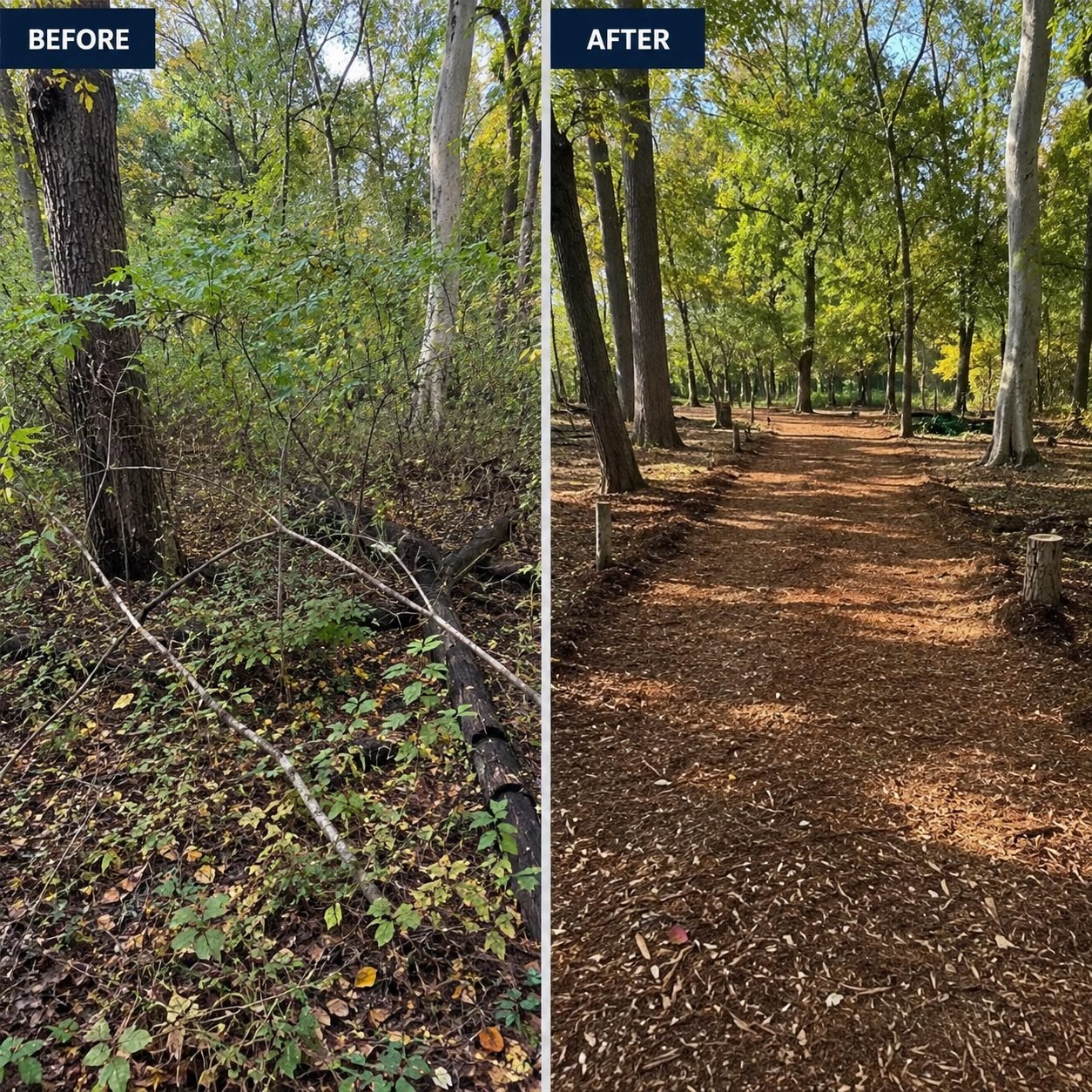
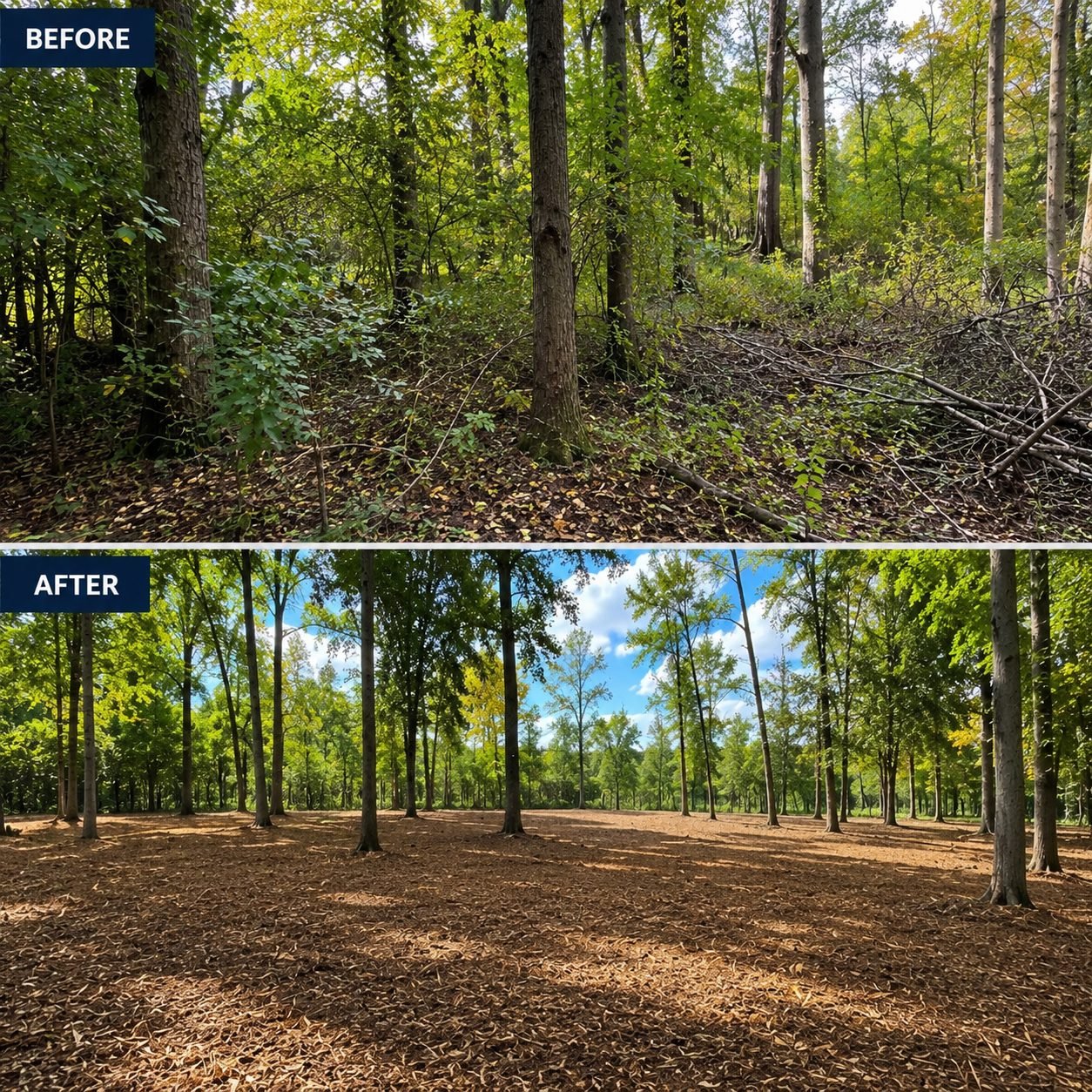
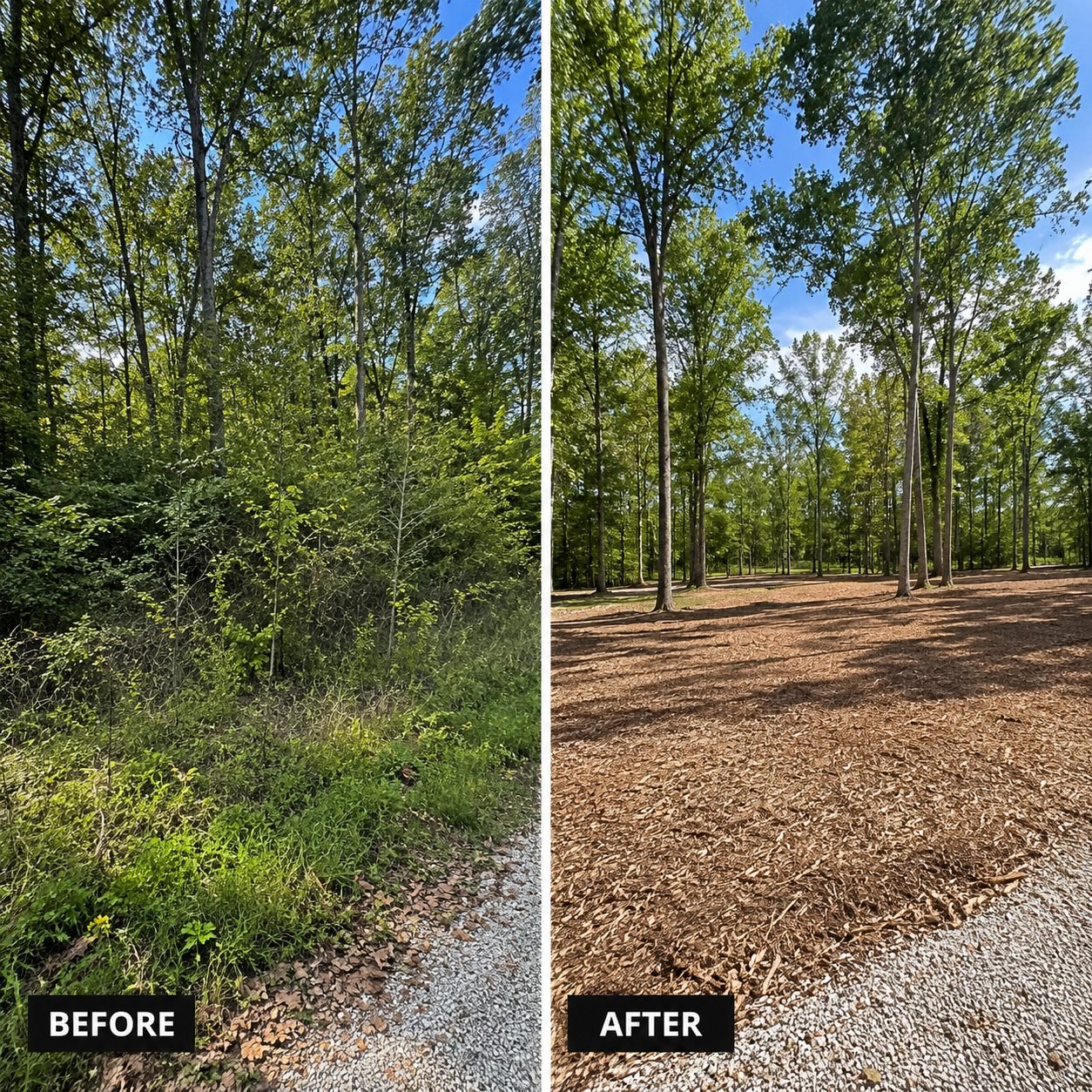
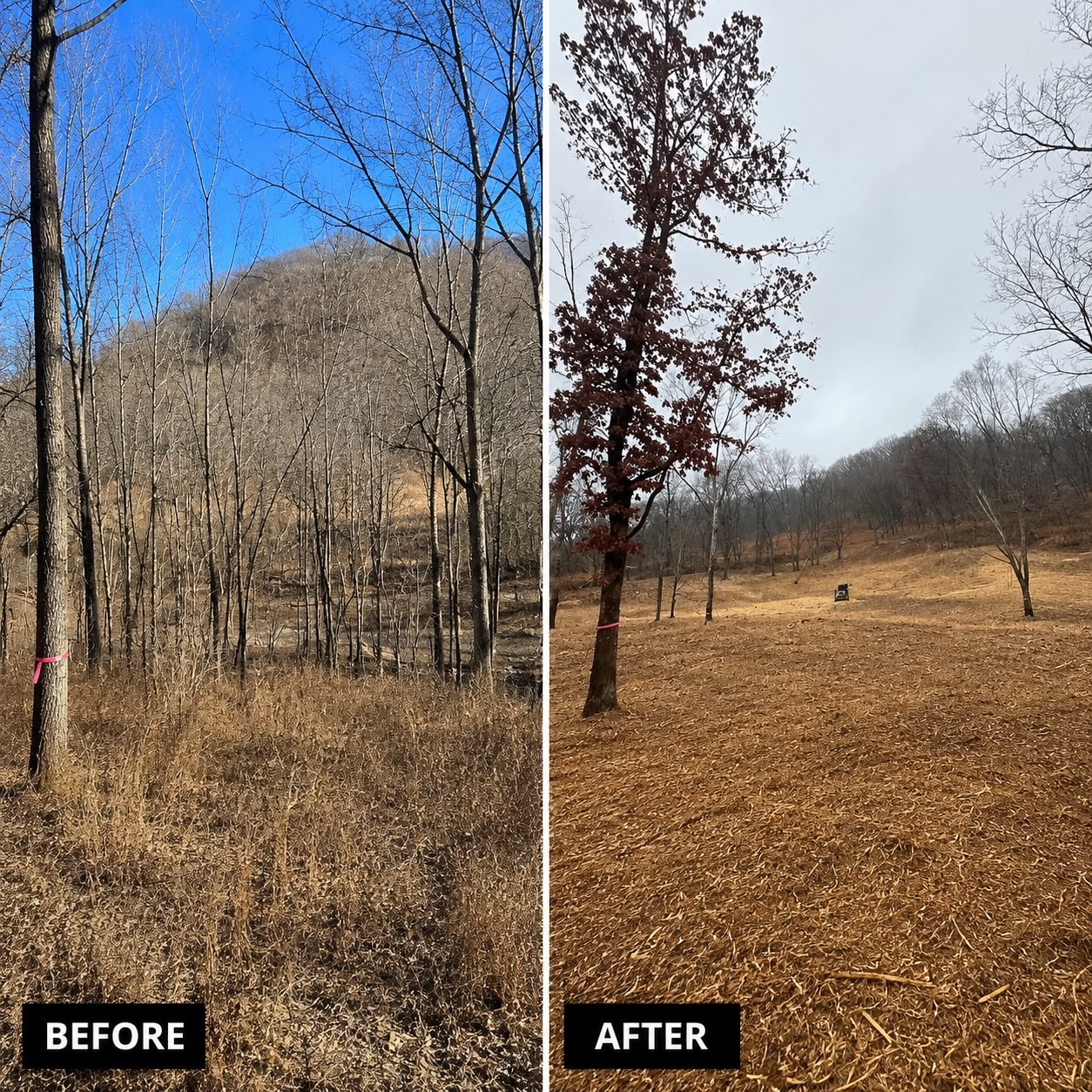
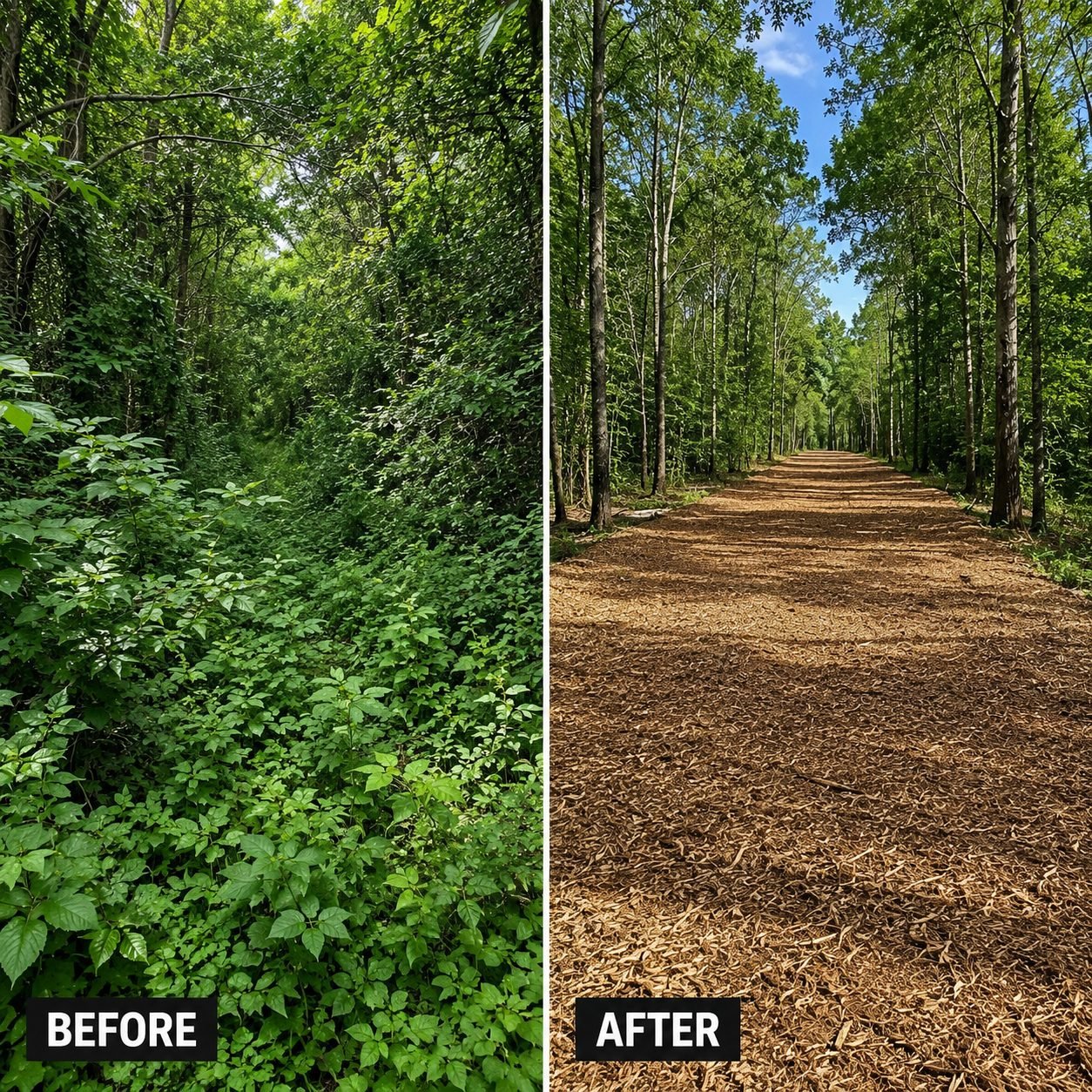
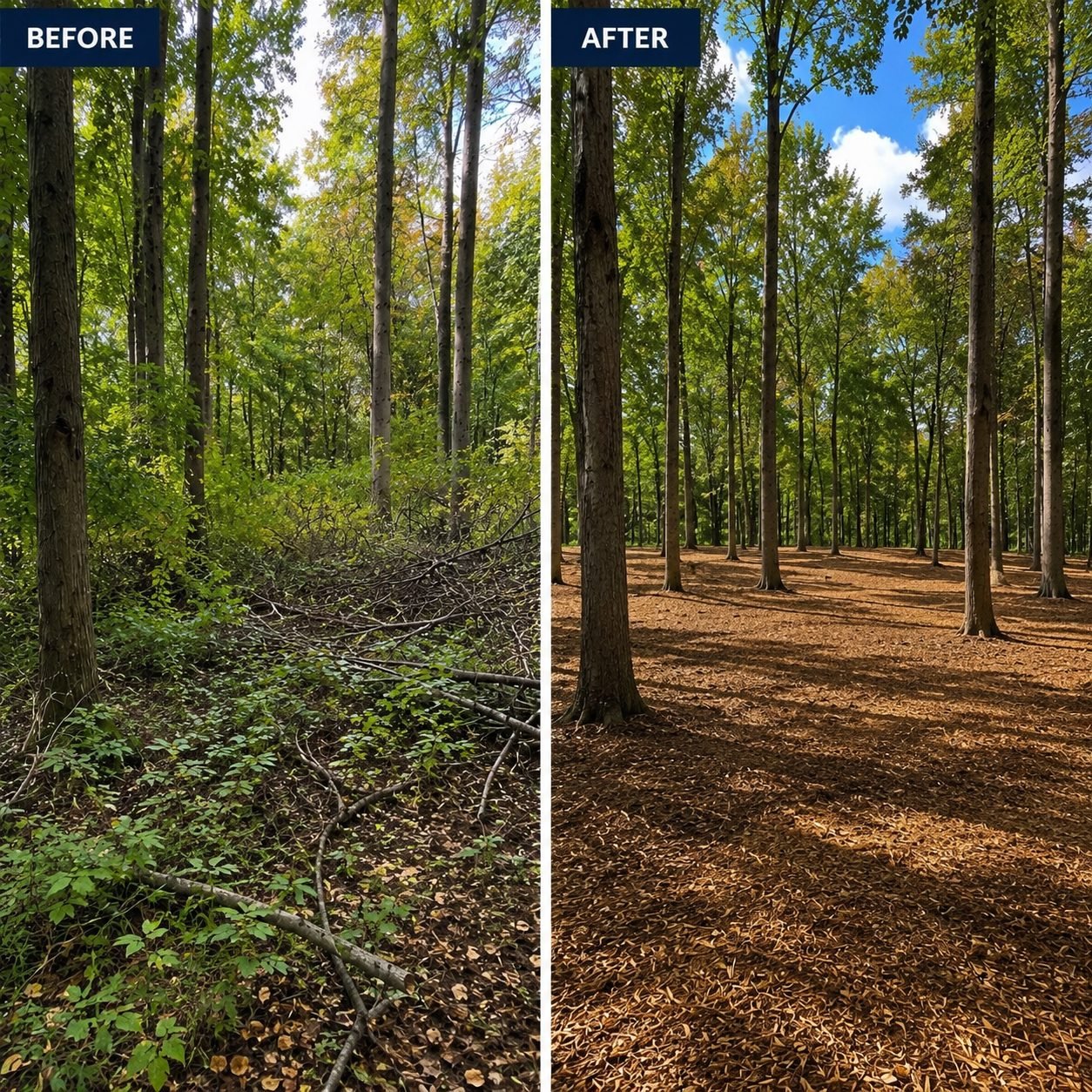
What Does Land Clearing Look Like Before and After in Powell, Ohio?
Recent Central Ohio jobs. The finished surface keeps a two to four inch mulch layer rather than bare soil, which is what holds ground through the first winter after clearing.
What Do Powell, Ohio Owners Ask About Land Clearing?
Yes. Selective mulching takes understory at ground level and leaves trunks and root flare untouched. Keepers are flagged before a machine moves.
One to two days for heavy honeysuckle under canopy. Selective work is slower than a clear pass, which the flat rate accounts for.
Only where an owner wants a cut-stump treatment on autumn olive or the strongest resprouts. Mulching itself uses none.
A two to four inch mulch layer. On Powell slope it holds soil and suppresses regrowth while it breaks down into topsoil.
No. The canopy is untouched. What changes is that you can walk through it and see between the trunks again.
Winter. Frozen ground carries the machine cleanly, and with leaves down the operator can see exactly which stems are honeysuckle and which are worth keeping.
What Else Can Fortress Do on a Powell, Ohio Property?
Land clearing, forestry mulching, excavation, demolition and grading run with the same crew and the same point of contact, so a Powell job that needs two trades does not wait on a second schedule.
Bush honeysuckle and common buckthorn are listed among the species restricted in Ohio by the Ohio Department of Natural Resources, and by the Ohio Department of Agriculture Division of Plant Health (both accessed August 2026).
Ready for a Flat Rate on Your Powell, Ohio Land Clearing?
Owner-operated land clearing across all five Central Ohio counties. Send your property details and Lee gets back to you within 2 to 3 hours during business hours with one flat number after a free on-site walk-through.