


How does Land Clearing work in Canal Winchester, Ohio?
In Canal Winchester, Ohio, land clearing starts with a walk-through and an Ohio 811 locate, then moves to mulching, tree removal, grading, or full clearing based on whether the parcel is former farmland or a semi-rural edge lot. Fortress Level Construction sizes the job around dense clay soils, subdivision access, and acreage.
The Quick Answer
- Canal Winchester land clearing usually means former farmland for new subdivisions or larger semi-rural parcels on the southeast edge of the metro.
- The village sits on a flat glacial-till plain with dense clay subsoil, so the crew plans for wet ground, root mats, and heavy spoil handling.
- Fortress uses John Deere 333G compact track loaders with Diamond drum mulchers for stems up to 14 inches, plus dozers and excavators for larger removal.
- Forestry mulching often fits brushy acreages, while full clearing is better when the lot must be opened for building pads, drives, or utilities.
- Flat-rate quotes are based on access, density, acreage, and whether debris stays as mulch or gets hauled off.
- Ohio 811 utility locate is required at least 48 hours before digging under Ohio Revised Code 3781.28.
- The crew responds in 2 to 3 hours during business hours and can usually schedule same-week walk-throughs.
- Fortress Level Construction is licensed and insured, and the work is led by Lee Carson and the crew.
Related Questions People Ask Next
Canal Winchester often needs clearing for two different site types: new-build subdivision lots created from former farmland and larger semi-rural parcels on the outskirts. That mix changes the process. The crew may mulch light growth on one lot, then switch to full tree and brush removal, grading, or stump work where development needs a cleaner finish.
The glacial-till plain around Canal Winchester brings dense heavy clay subsoil, including Crosby, Miamian, and Kokomo silt loams and clays. That means equipment choice matters. Fortress plans for traction, moisture, and rut control, especially on flat ground that can hold water. Dozers, excavators, and track loaders help keep the job moving without tearing up the site.
Sometimes. Forestry mulching works well on brush, saplings, and moderate overgrowth, especially on semi-rural acreage near the village edge. It is often the fastest way to open visibility and access. If the parcel needs stumps removed, trees fully cleared, or a building area prepared, Fortress may recommend a fuller clearing plan instead.
During business hours, Fortress usually responds within 2 to 3 hours and can often schedule a same-week walk-through. That matters in Canal Winchester because site conditions can vary quickly between subdivision fringe lots and rural edges off the Franklin and Fairfield line. The quote is flat-rate and based on the actual clearing scope, not guesswork.
What does the land clearing process look like on a Canal Winchester lot?
The process starts with a free on-site walk-through, then the crew maps access, tree density, and clay conditions before setting a flat-rate quote. In Canal Winchester, that matters on former farmland lots and semi-rural parcels alike, because flat ground, wet spots, and subdivision edges can change equipment choice and cleanup time.
Fortress then matches the job to the right method: John Deere 333G compact track loaders with Diamond drum mulchers for brush and stems up to 14 inches, or dozers and excavators when full removal, grading, or stump extraction is needed. That keeps the work efficient on the village’s glacial-till plain.
In a place straddling the Franklin and Fairfield line near Groveport, Pickerington, Lithopolis, and Columbus, access can be as important as acreage. The crew sizes the plan around how close the lot sits to a new subdivision road, a rural drive, or the historic High Street side of the village.
Why do Canal Winchester soils change the equipment and cost?
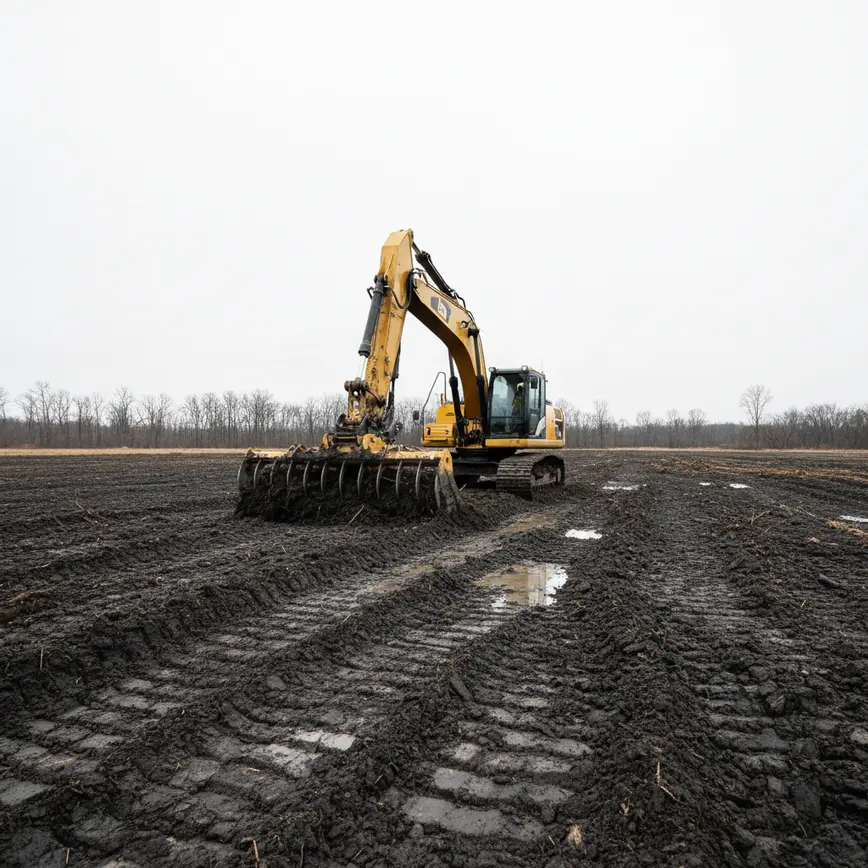
Canal Winchester’s heavy clay subsoil can slow clearing, especially after rain, so the quote reflects traction needs, moisture, and how much material must move. Former farmland lots often clear faster than tangled edge parcels, while full clearing costs more than forestry mulching because it includes stump and debris removal.
On the flat glacial-till plain, the crew often uses track loaders to reduce spinning and surface damage, then brings in dozers or excavators if the site needs deeper root work or rough grading. That approach matters on both new-build subdivision lots and larger rural tracts around the village.
Typical pricing falls in two realistic ranges: about $1,850 to $3,500 per acre for forestry mulching, and about $4,000 to $8,000 per acre for full clearing. The exact number depends on density, acreage, access, haul-off, and whether the goal is open ground for construction or simply a cleaner parcel.
Which clearing method fits Canal Winchester construction sites?
For Canal Winchester construction sites, forestry mulching is best when the goal is to open brushy land without removing every root or stump. Full clearing fits build-ready lots on former farmland, where the crew needs a cleaner footprint for pads, utility work, drainage, and access across the village’s flat clay terrain.
The choice often comes down to what the parcel will become. A subdivision lot near historic downtown or along newer growth edges may need a fast, tidy opening. A larger semi-rural acreage near Slate Run Metro Park may need broader clearing for a house site, driveway, or outbuilding access.
Fortress keeps the method practical: mulch when the site only needs visibility and light reclamation, but use dozers and excavators when tree removal, stump extraction, or heavier grading is part of the clearing scope. That prevents paying for more disturbance than the site actually needs.

How should a Canal Winchester property owner prepare before clearing begins?
Before clearing starts, Canal Winchester owners should confirm the utility locate, define the clearing boundary, and decide whether brush stays as mulch or gets removed. Because the village is small and fast-growing, a same-week walk-through helps keep subdivision timing or rural access from stalling the project.
Ohio law requires an Ohio 811 utility locate at least 48 hours before any digging, so the crew does not begin excavation until that step is complete. That is especially important where former farmland has been converted into new residential ground or where older rural access lines may cross the site.
Fortress then confirms whether the job is lot clearing, brush clearing, tree removal, or full land clearing, because the cost and equipment change with each scope. A parcel near the Ohio Herb Education Center may need different access planning than a larger edge lot outside the village core.
How do forestry mulching and full clearing compare in Canal Winchester?
In Canal Winchester, the right choice depends on whether the parcel is brushy, buildable, or still tied up in former farmland growth. Mulching is faster and lighter on the ground, while full clearing is the better fit when the site needs stumps removed, debris hauled, and a true construction-ready finish.
| Option | Best use in Canal Winchester | Typical equipment | Cost signal |
|---|---|---|---|
| Forestry mulching | Brushy semi-rural acreage and overgrowth near the village edge | John Deere 333G with Diamond drum mulcher | $1,850 to $3,500 per acre |
| Full clearing | Build-ready former farmland lots and tighter subdivision sites | Dozers and excavators with mulching support when needed | $4,000 to $8,000 per acre |
| Brush clearing | Opening visibility and access without deep disturbance | Track loader and mulch head | Usually lower than full clearing |
| Tree removal | Larger stems, pad areas, and drive corridors | Excavator, dozer, and haul-off equipment | Depends on size, density, and disposal |
| Rough grading after clearing | Sites that need shaping after the vegetation is removed | Dozer and excavator | Quoted with the clearing scope |
When is land clearing not the right call in Canal Winchester?
Land clearing is not the right first step when the site only needs mowing, when trees are protected, or when the owner has not completed the Ohio 811 locate. In Canal Winchester, some small urban-adjacent tasks around historic downtown may call for lighter vegetation work instead of full clearing.
If the parcel only needs seasonal maintenance, a lawn mow or simple brush trim is usually cheaper and less disruptive than bringing in dozers or excavators. If the goal is to keep tree canopy or preserve a natural buffer near a home, forestry mulching may be enough and full clearing would be unnecessary.
If the site is not yet marked, not yet located, or still under a plan review for subdivision work, the team should wait before digging. In that case, the next step is an on-site walk-through, utility locate, and a scope check so the work matches the actual Canal Winchester property need.
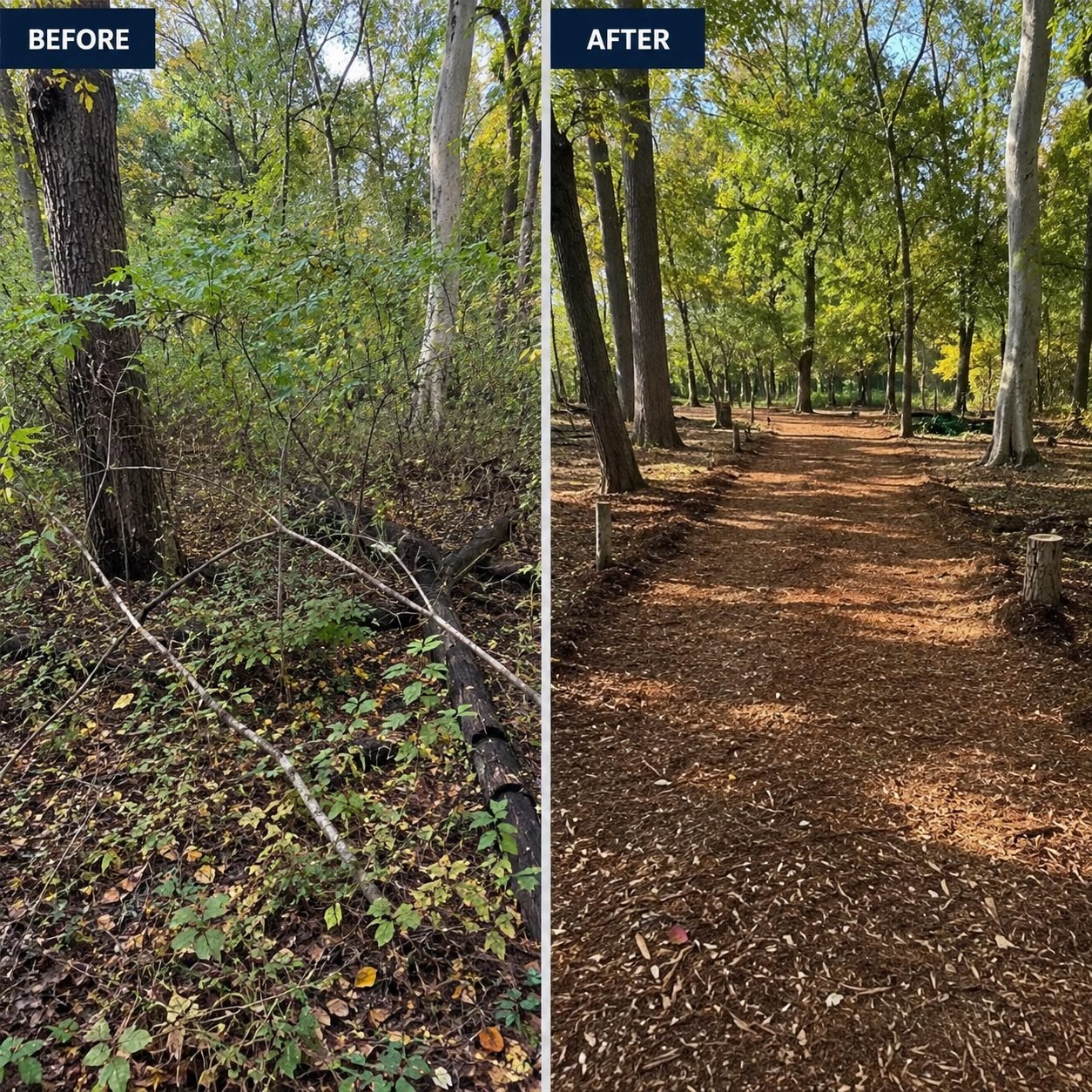
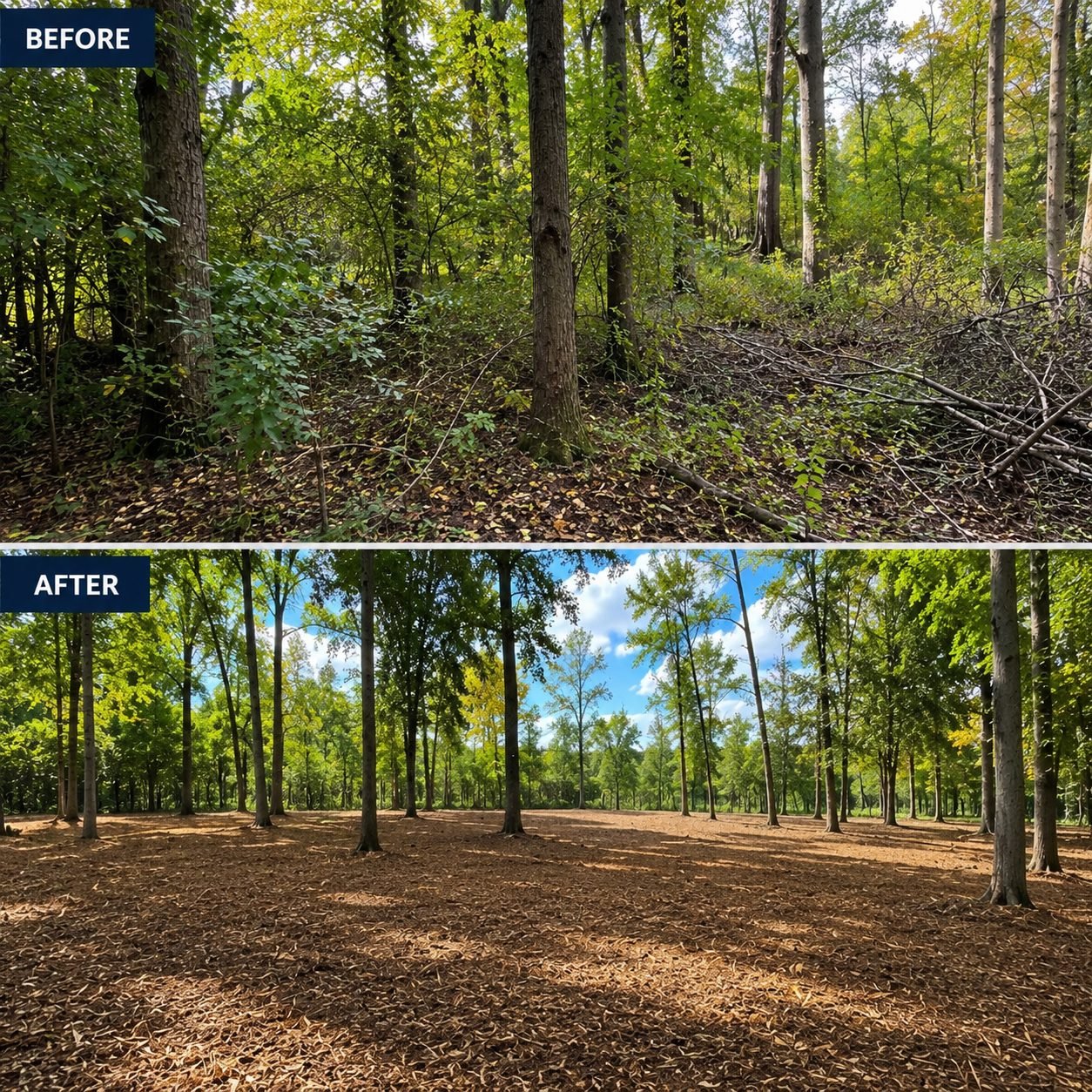
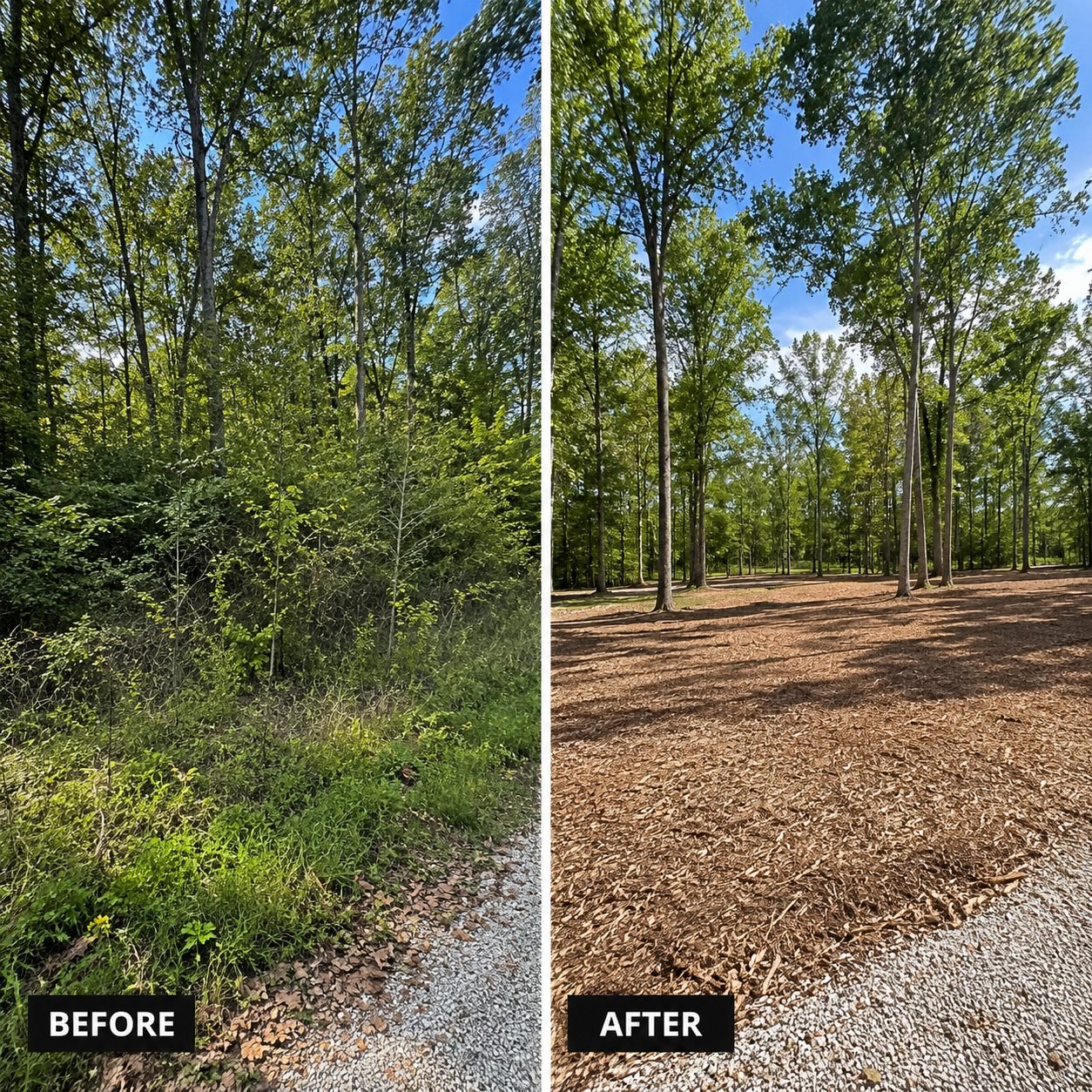
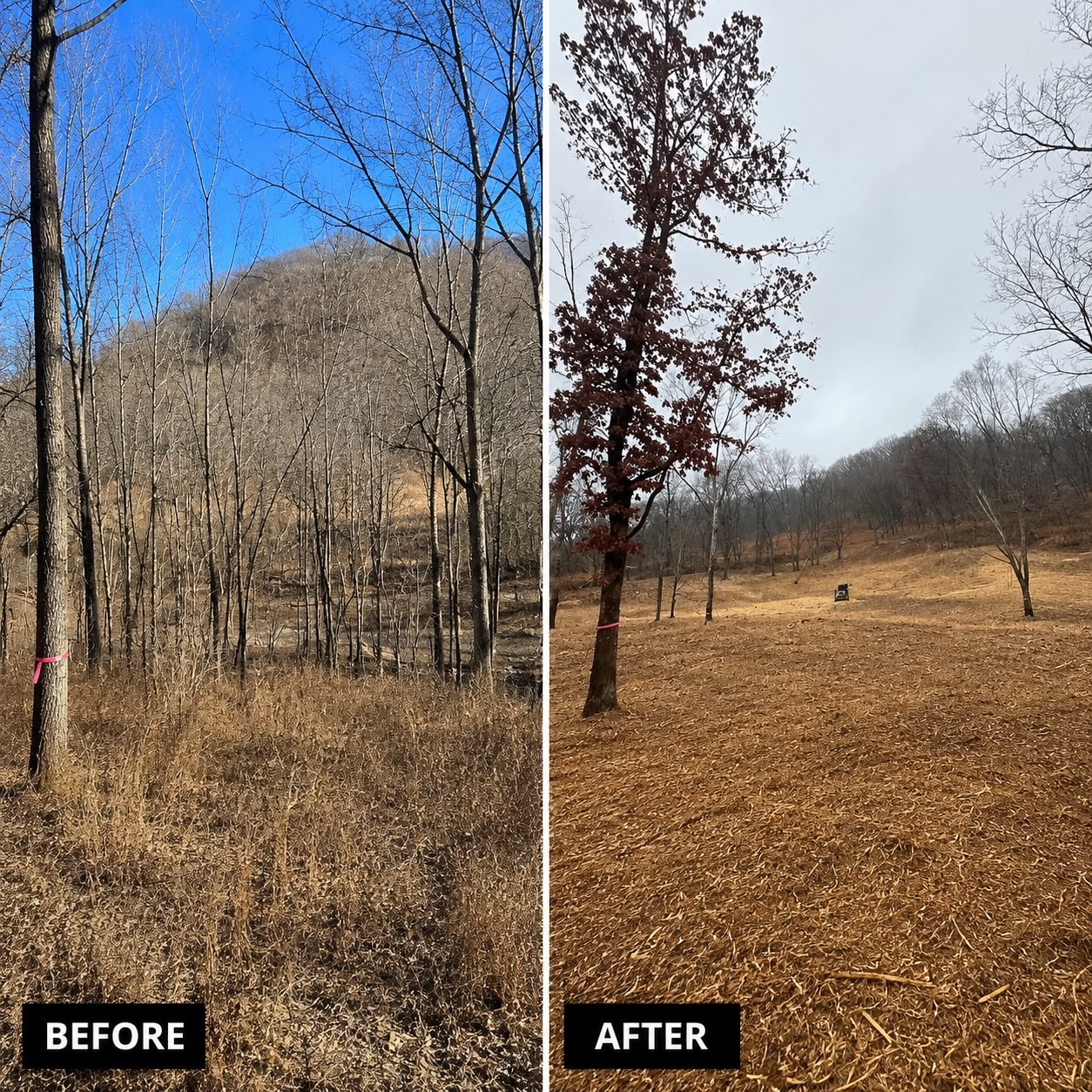
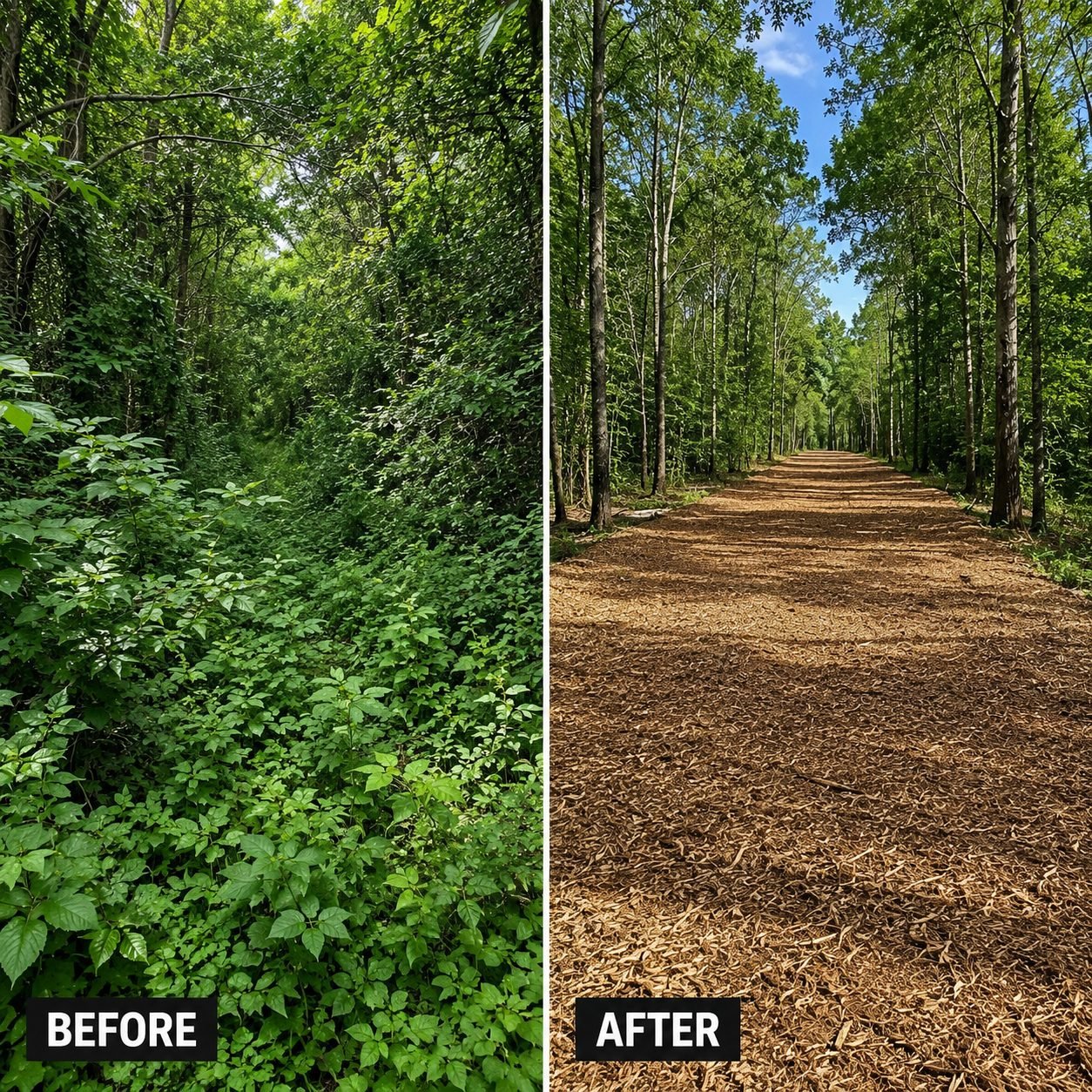
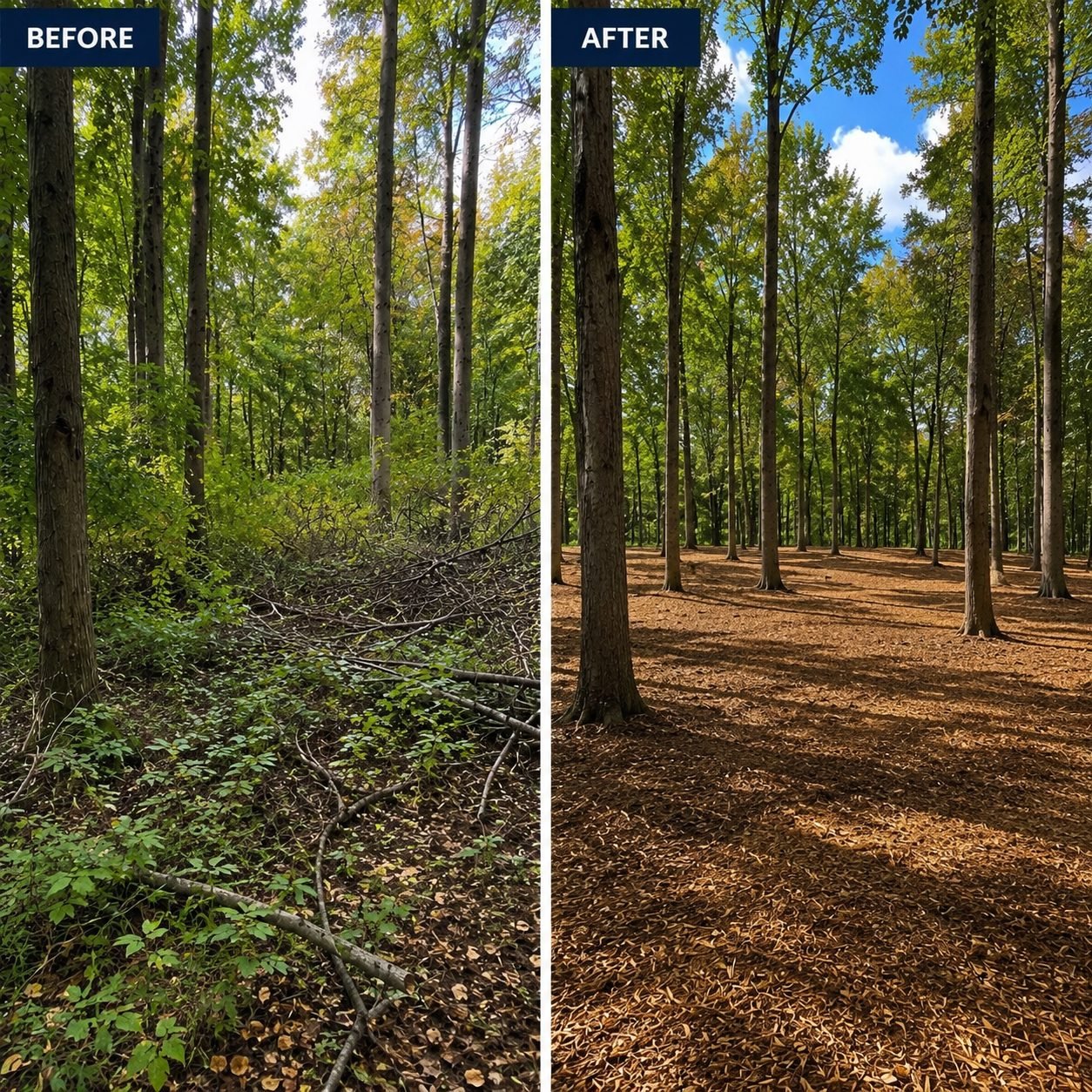
What does before and after land clearing look like in Canal Winchester?
Before and after in Canal Winchester usually means turning a brush-choked former field or overgrown edge parcel into a clean, usable site with better access and sightlines. The before often shows dense clay ruts, saplings, and tangled growth; the after shows open ground ready for a build plan or a managed rural lot.
Frequently asked questions
Yes, if the job includes digging, stump removal, or excavation. Ohio law requires an Ohio 811 utility locate at least 48 hours before digging. That rule protects buried lines on both new-build subdivision lots and older semi-rural parcels in Canal Winchester, where former farmland may have changed hands and uses over time.
Yes. Former farmland is one of the most common clearing scenarios in Canal Winchester because the village is growing on the southeast edge of the metro. Fortress can handle brush, saplings, trees, stumps, and rough grading so the site is ready for a builder, driveway, or utility access.
The crew uses John Deere 333G compact track loaders with Diamond drum mulchers for stems up to 14 inches, plus dozers and excavators when the job needs heavier removal or shaping. That mix is useful on Canal Winchester’s clay soil and flat terrain, where traction and ground pressure matter.
Fortress typically responds in 2 to 3 hours during business hours and can often set a same-week walk-through. That quick turnaround helps Canal Winchester owners move forward on subdivision lots, rural acreage, or build sites near Groveport, Pickerington, Lithopolis, or Columbus without waiting on a long estimate cycle.
Usually yes. Forestry mulching is often quoted around $1,850 to $3,500 per acre, while full clearing is commonly $4,000 to $8,000 per acre. The difference comes from stump removal, hauling, grading, and the extra time needed to make a site truly build-ready in dense clay conditions.
Because the work splits between two local realities: former farmland being converted into new subdivisions, and semi-rural parcels opening up on the growing southeast fringe. Add the village’s flat glacial-till plain, heavy clay subsoil, and location along the Franklin and Fairfield line, and the clearing plan has to be built around site conditions, not a generic template.
What Other Services Does Fortress Offer in Central Ohio?
Fortress Level Construction runs a full range of land-clearing, excavation, grading, and site-work services across Central Ohio, so one owner-operated crew can clear, grade, and prep a site end to end.
Get a Flat-Rate Quote from Lee Carson
Owner-operated land clearing across all five Central Ohio counties. Send your property details and Lee gets back to you within 2 to 3 hours during business hours with one flat number after a free on-site walk-through.