

Will Land Clearing Bring Native Plants Back on New Albany, Ohio Acreage?
Land clearing brings native plants back on New Albany, Ohio acreage more often than owners expect. Many woodlots here still hold a viable seed bank that was only shaded out, and spring ephemerals frequently return within two to three seasons without replanting.
What returns after the understory goes
- Honeysuckle shades out natives rather than killing the seed bank outright.
- Spring ephemerals often return within two to three springs on their own.
- Selective clearing that keeps the canopy gives the best recovery odds.
- Clearing to bare soil is worse for recovery than leaving the mulch layer.
- Where decades of dense infestation exhausted the bank, reseeding is worth considering.
- The first spring after clearing tells you which situation you have.
What Else Do People Ask About Land Clearing in New Albany, Ohio?
The seed bank in the soil survives being shaded. Remove the honeysuckle canopy and the light window reopens.
Two to three growing seasons for meaningful return. The first spring is diagnostic rather than the finished result.
Usually wait one spring. What comes up tells you whether the bank is viable or genuinely exhausted.
Helps. It holds moisture, protects the surface and breaks down into topsoil over two to three seasons.
Why Does Land Clearing Let Natives Return in New Albany, Ohio?
Because honeysuckle competes for light rather than destroying the soil. Native woodland wildflowers evolved to use the window before the canopy closes, and honeysuckle closes it early. Remove that layer and the window reopens.
The seed bank in woodland soil is durable. Species can persist for years waiting for light, which is exactly what a selective clearing pass gives them.
This is the strongest argument for keeping the canopy. Leaving mature trees and taking only the invasive understory gives the seed bank light without exposing bare soil to erosion and new weed colonisation.
Clearing to open ground does the opposite: it removes the canopy the woodland species need and creates conditions that favour whatever colonises fastest, which is rarely what you wanted.
What Comes Back First on Cleared New Albany, Ohio Ground?
Whatever was suppressed. On healthy woodlots that means spring ephemerals in the first or second April after clearing. On ground that was farmed more recently it usually means grasses and pioneer species rather than woodland natives.
The first spring is diagnostic. Walking the parcel and seeing what emerges tells you whether the bank is intact, and that is far more useful than guessing before the work.
Resprouting honeysuckle appears in the same window. Distinguishing the two is why the walk in spring matters, and it sets whether a follow-up pass is needed.
Where nothing much returns after two springs, the bank is likely exhausted and reseeding is worth the cost. That is a decision made on evidence rather than in advance.
How Should You Manage New Albany, Ohio Woodland After Clearing?
Leave the mulch, walk it each spring, and handle resprouts in season two. Beyond that, the main job is preventing reinfestation, because birds keep spreading honeysuckle berries from neighbouring properties regardless of what you do on yours.
Raking the mulch off to tidy the ground is counterproductive. The layer holds moisture, suppresses seedlings and becomes topsoil.
Spot-treating new seedlings while they are small is far cheaper than another clearing pass in ten years. On estate acreage that is an afternoon a year rather than a project.
Where the parcel adjoins untreated woodland, expect steady pressure from the boundary inward. That is not a failure of the clearing, it is the neighbourhood seed source.
Which Invasives Does Land Clearing Handle in New Albany, Ohio?
What grows in New Albany understory, how it responds to a single mulching pass, and which species need a second visit. Autumn olive is the one that reliably does.
| Species | Where it grows | One-pass result | Follow-up needed |
|---|---|---|---|
| Bush honeysuckle | Under preserved canopy | Removed to ground | Light, season 2 |
| Common buckthorn | Woodland edges | Removed to ground | Light, season 2 |
| Autumn olive | Retired field ground | Removed to ground | Yes, resprouts hard |
| Multiflora rose | Old boundaries | Removed to ground | Moderate |
| Wild grape vine | Into the canopy | Cut at base | Monitor the canopy |
| Callery pear | Edges and fence lines | Removed to ground | Yes, resprouts |
| Native saplings | Forest floor | Retained where flagged | None |
Species characterisation by Fortress Level Construction from Franklin and Delaware County woodlot work, August 2026. Bush honeysuckle, autumn olive and multiflora rose are listed among the species restricted in Ohio by the Ohio Department of Natural Resources and the Ohio Department of Agriculture Division of Plant Health (both accessed August 2026).
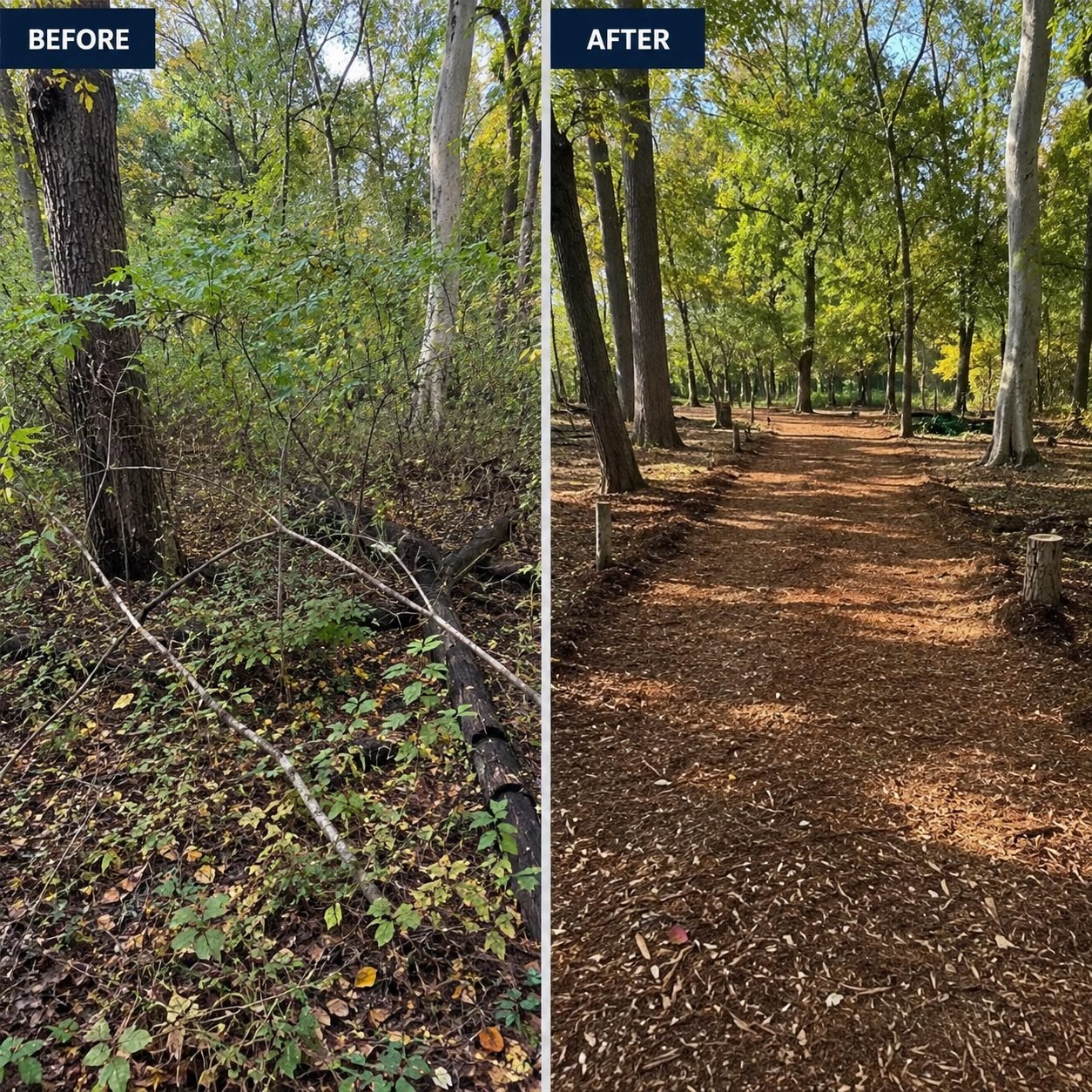
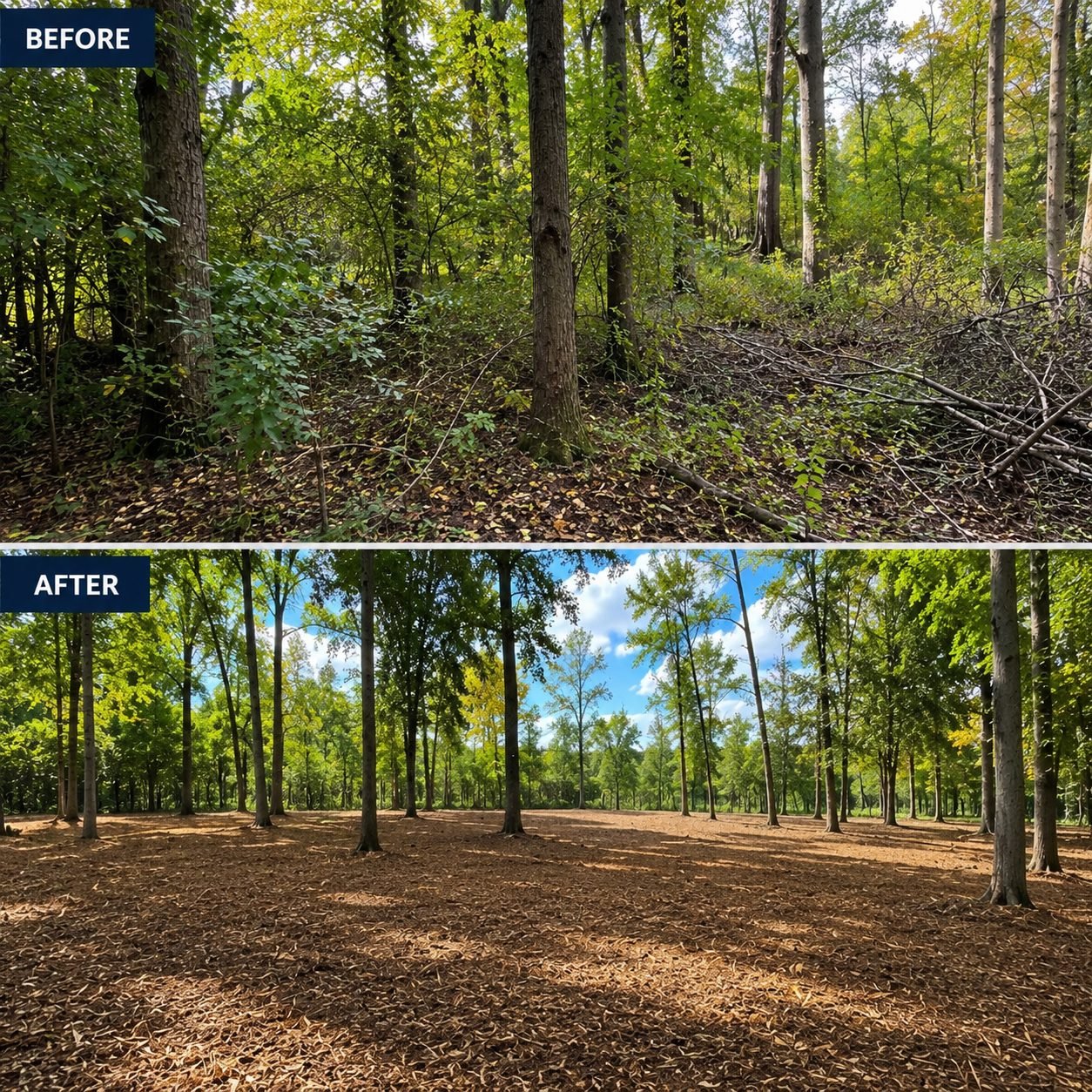
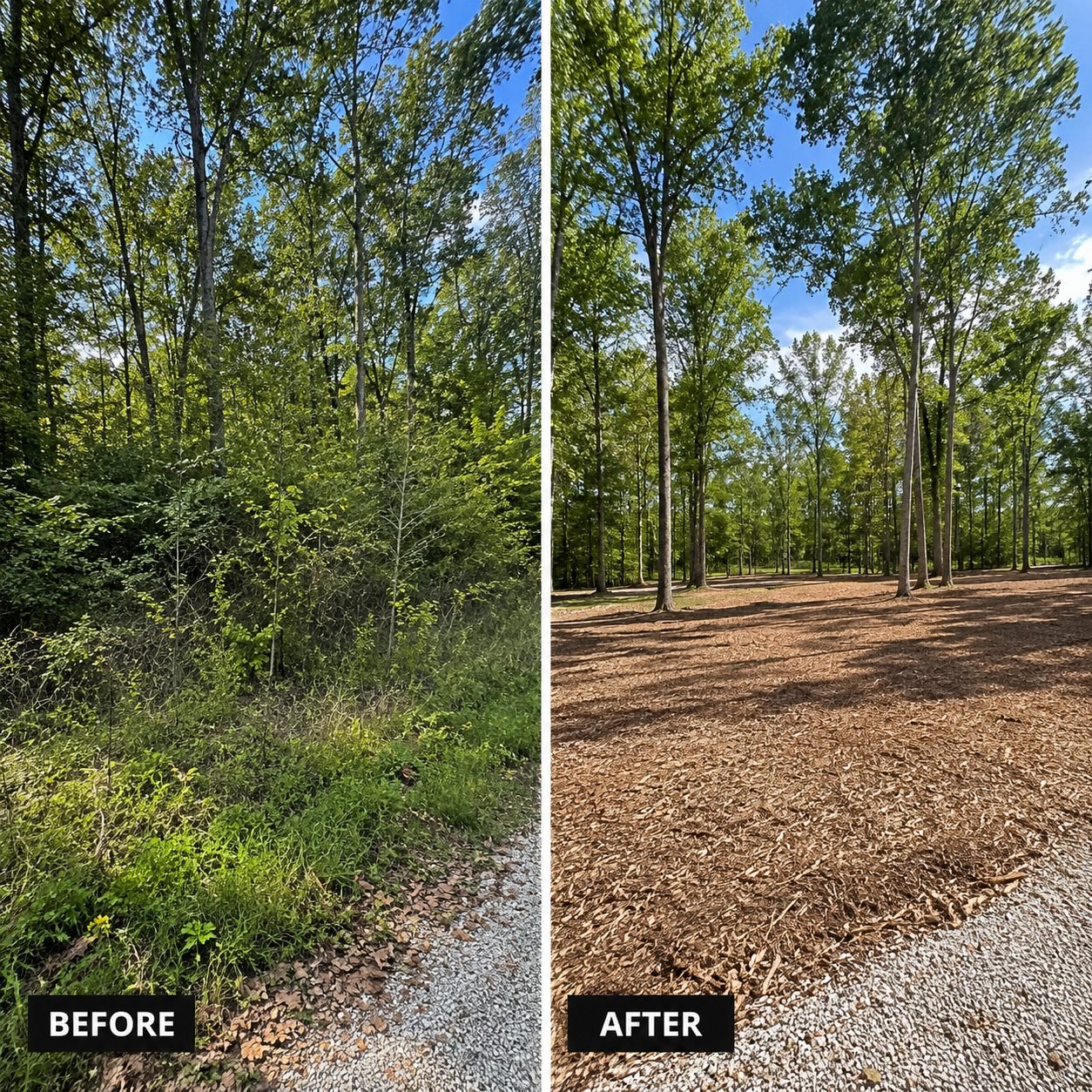
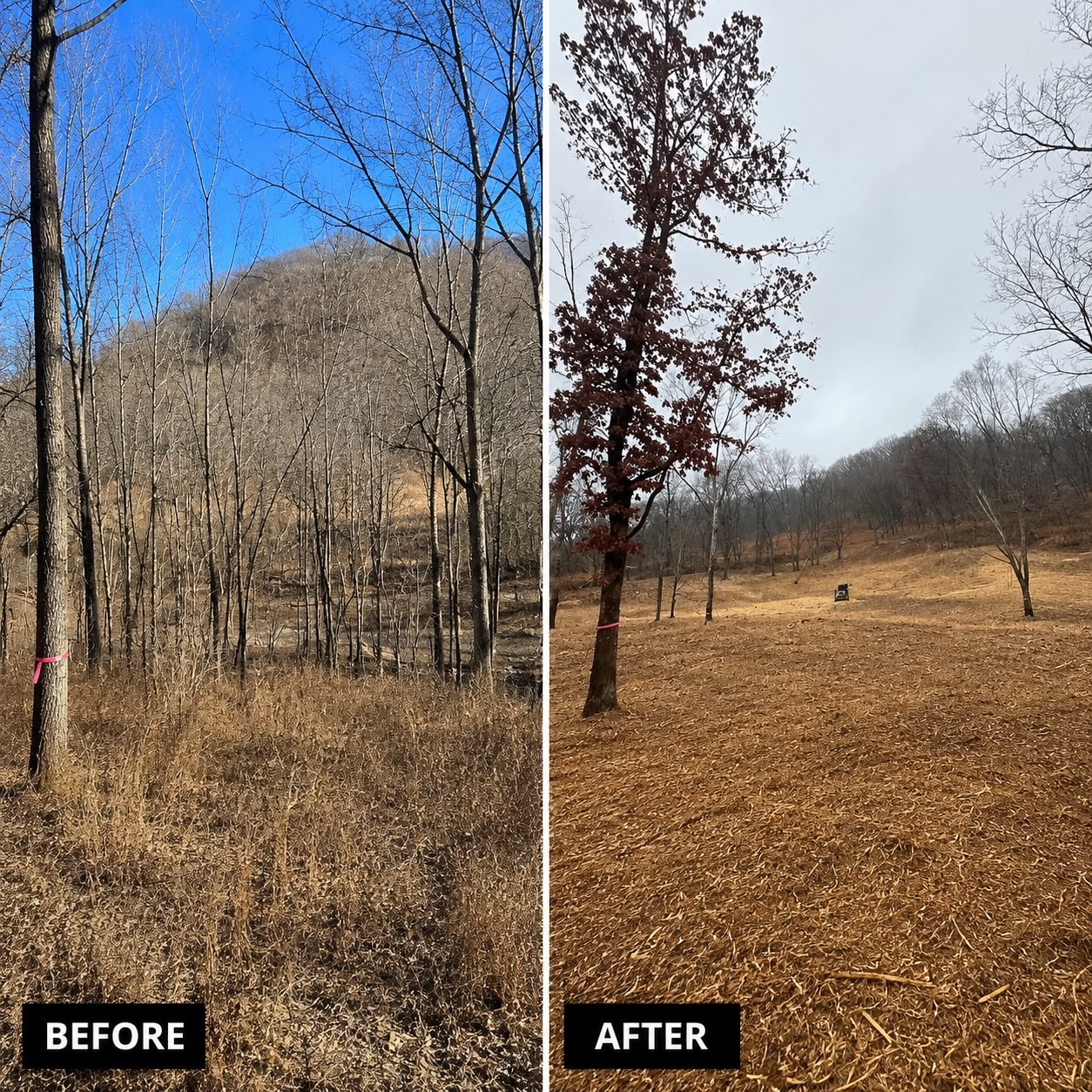
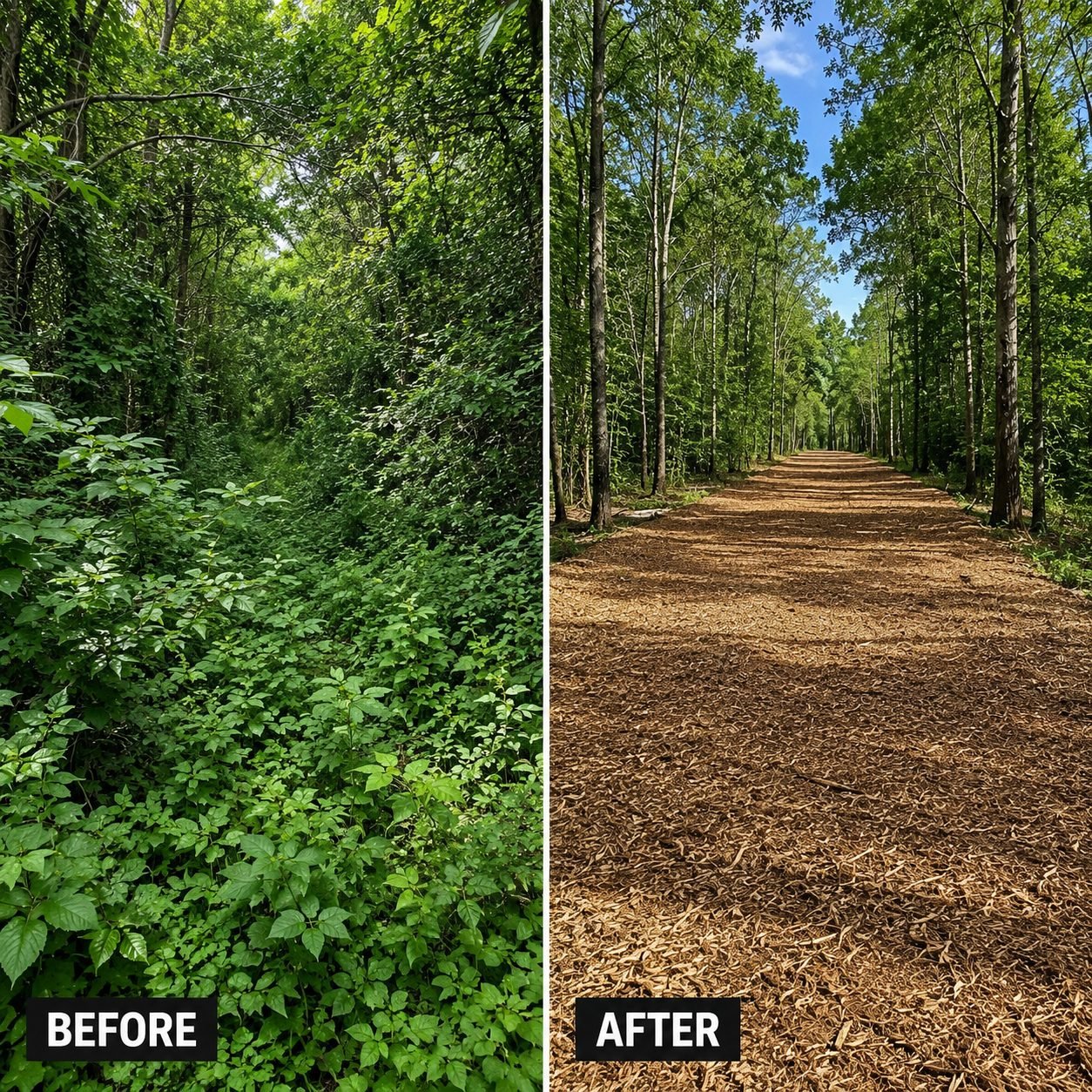
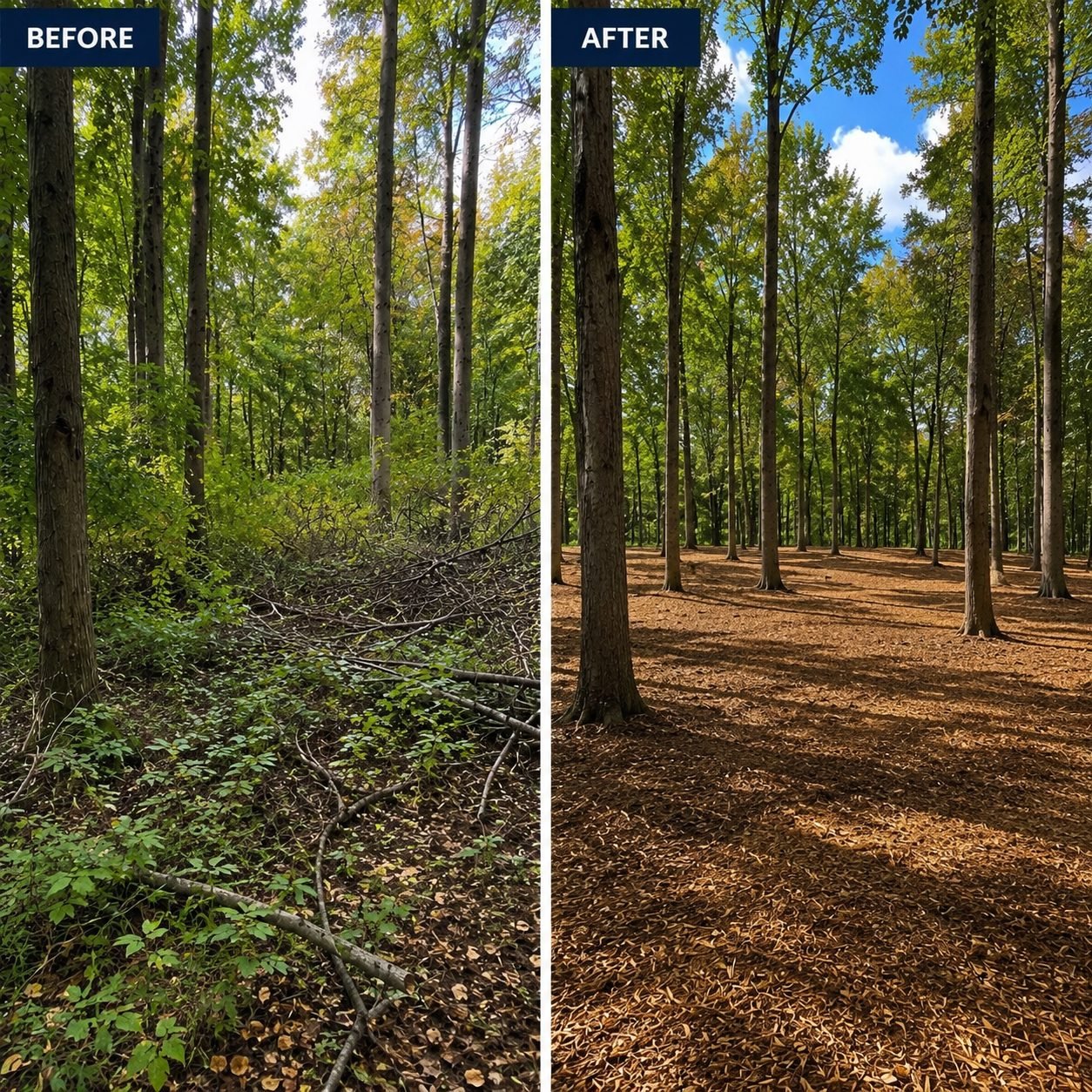
What Does Land Clearing Look Like Before and After in New Albany, Ohio?
Recent Central Ohio jobs. The finished surface keeps a two to four inch mulch layer rather than bare soil, which is what holds ground through the first winter after clearing.
What Do New Albany, Ohio Owners Ask About Land Clearing?
Usually not straight away. Wait one spring and see what the seed bank produces before spending on plants.
After two springs with little return, the bank is likely exhausted and reseeding with a native woodland mix is worth considering.
Not well. Woodland shade suits shade-tolerant natives rather than turf, which is worth knowing before seeding lawn mix.
Selective work generally improves habitat. Honeysuckle thickets offer poor food value compared with a functioning native understory.
Two to three seasons for ground cover, longer for shrub layer. The canopy is unchanged throughout.
Autumn seeding into settled mulch is the main lever. Beyond that, patience and handling resprouts is most of the work.
What Else Can Fortress Do on a New Albany, Ohio Property?
Land clearing, forestry mulching, excavation, demolition and grading run with the same crew and the same point of contact, so a New Albany job that needs two trades does not wait on a second schedule.
Bush honeysuckle, autumn olive and multiflora rose are listed among the species restricted in Ohio by the Ohio Department of Natural Resources and the Ohio Department of Agriculture Division of Plant Health (both accessed August 2026).
Ready for a Flat Rate on Your New Albany, Ohio Land Clearing?
Owner-operated land clearing across all five Central Ohio counties. Send your property details and Lee gets back to you within 2 to 3 hours during business hours with one flat number after a free on-site walk-through.