

What Equipment Is Needed for Land Clearing in Central Ohio?
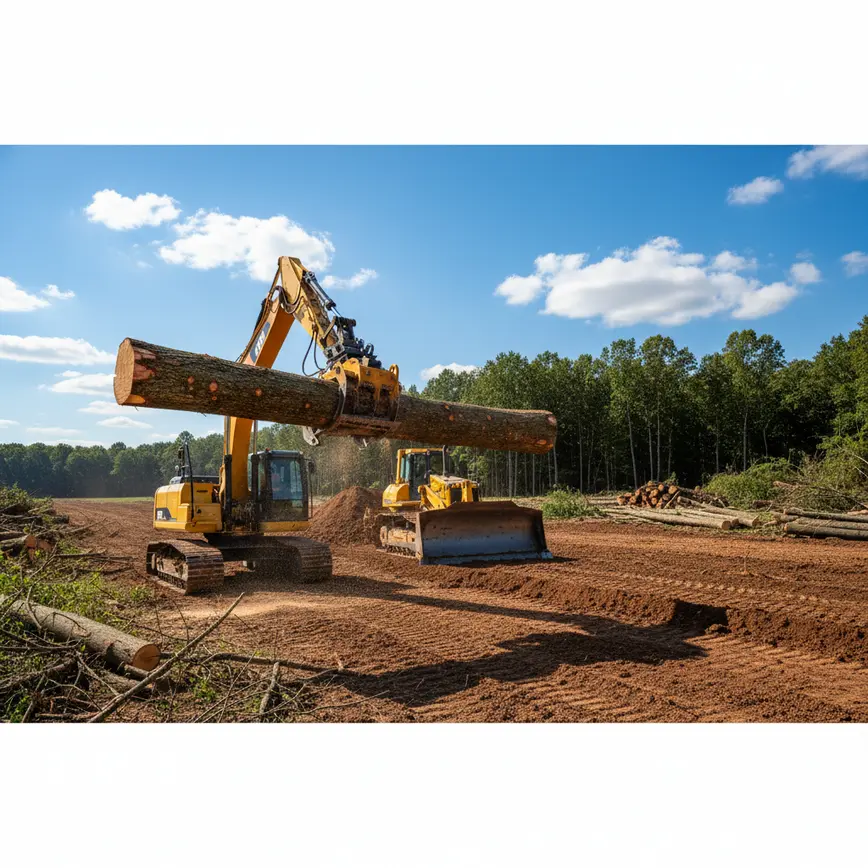
Land clearing in Central Ohio uses a tracked loader with a drum mulcher for standing brush and small trees, plus a dozer, excavator, and loader for grubbing stumps, grading, and hauling debris on full-clearing jobs. Fortress Level Construction runs a John Deere 333G with a Diamond mulcher across Franklin, Delaware, Licking, Fairfield, and Union counties.
The Quick Answer
- Track loader with drum mulcher handles standing brush and trees up to 14 inches in one pass
- John Deere 333G compact track loader running a Diamond drum mulcher grinds material to ground cover
- Caterpillar compact track loader with a mulcher head works fence lines and tight access areas
- Dozer, excavator, and loader come in for grubbing stumps, grading, and hauling on full-clearing jobs
- Track flotation spreads weight across wet Brookston-Crosby clay so rigs do not rut like wheeled equipment
- Mulched material stays on site as ground cover, no burning or haul-off required
- Ohio 811 utility locate is required at least 48 hours before any digging starts
Related Questions People Ask Next
Fortress runs its own equipment rather than subcontracting to a rental fleet. Owner Lee Carson, a combat veteran who has operated in Central Ohio since 2009, is on the machine for most jobs across Franklin, Delaware, Licking, Fairfield, and Union counties. That owner-operated setup keeps scheduling tighter and avoids the delays that come with third-party rental crews.
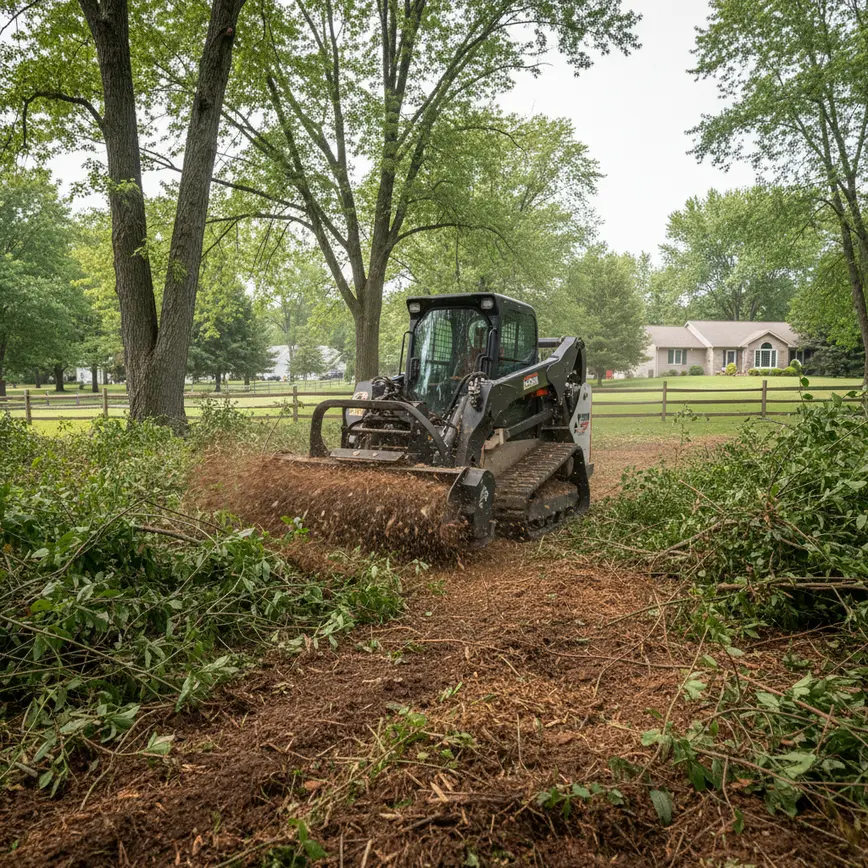
Tracked equipment spreads weight over a wider footprint than wheeled machines, which matters on the wet Brookston-Crosby clay common across Central Ohio. The John Deere 333G and the Caterpillar track loader both run on rubber tracks, so they leave fewer ruts and can keep working through soggy spring conditions that would bog down a wheeled skid steer.
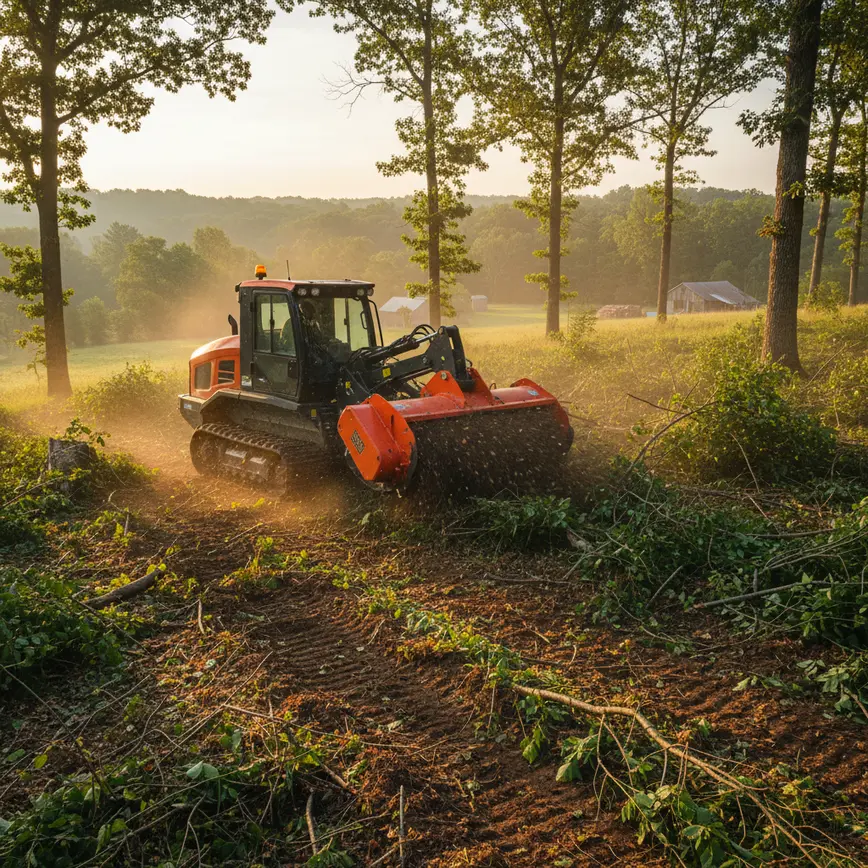
Forestry mulching grinds standing brush, small trees, and stumps into mulch that stays spread across the site as ground cover. There is no burning and no hauling debris off the property. On full-clearing jobs, where a dozer and excavator push and pile material, downed timber and root balls are hauled off site instead.
Yes. Ohio law requires an Ohio 811 utility locate at least 48 hours before any digging, grading, or stump removal begins. This applies whether the job is forestry mulching, which barely disturbs the surface, or full clearing with a dozer and excavator, which digs deeper for grubbing and grading.
What equipment does Fortress use for forestry mulching in Central Ohio?
Forestry mulching in Central Ohio runs on a John Deere 333G compact track loader carrying a Diamond drum mulcher that grinds standing brush and stems up to 14 inches in a single pass. A Caterpillar compact track loader with its own mulcher head handles tighter fence lines and wooded edges the 333G cannot reach.
The Diamond drum mulcher mounted on the 333G is the workhorse for open acreage, brush lines, and overgrown fence rows across Franklin, Delaware, Licking, Fairfield, and Union counties. It processes standing material in one pass and leaves the ground graded and walkable, which is why most residential lot-clearing and pasture reclamation jobs start with this rig.
The Caterpillar unit stays on standby for spots the larger machine cannot maneuver into, like narrow easements between a fence line and a tree line, or a wooded pocket behind an existing structure. Both machines run on rubber tracks rather than wheels, which matters once the ground gets soft.
What equipment does full land clearing require versus mulching?
Full land clearing adds a dozer, excavator, and loader to the lineup because the goal is bare, buildable ground rather than mulch left in place. The dozer and excavator push, grub, and pile stumps and root balls, and the loader stages material for haul-off once grading is complete.
Forestry mulching and full clearing are separate services because they call for different attachments and leave a different result. Mulching grinds material in place with a drum head; full clearing pulls stumps, cuts grade, and removes debris entirely, which is what most new construction, driveway, or pad-site projects require before a foundation can go in.
On a typical full-clearing job in Franklin or Delaware County, the excavator grubs stumps and root balls first, the dozer pushes and shapes the pad, and the loader handles staging and cleanup. All three run alongside the tracked mulcher when a site has both open acreage to grind and a building pad that needs to be scraped bare.
Why does Fortress run tracked equipment instead of wheeled machines?
Tracked equipment spreads a machine’s weight over a much larger contact area than tires, which keeps it from sinking into the wet Brookston-Crosby clay common across Central Ohio. That flotation means fewer ruts, less lawn and field damage, and a crew that can keep working through wet spring stretches.
Both the John Deere 333G and the Caterpillar compact track loader run on rubber tracks rather than tires. On the clay-heavy soils common through Franklin, Delaware, Licking, Fairfield, and Union counties, that distinction decides whether a job can proceed after rain or has to wait days for the ground to firm up.
Wheeled skid steers can rut a wet field badly enough to leave visible tracks for a season. Track loaders distribute weight differently, which lets Fortress keep a project moving on schedule instead of pushing the walk-through and clearing date back every time it rains.
What has to happen before equipment can start clearing a site?
Every job starts with an Ohio 811 utility locate, which state law requires at least 48 hours before any digging, grubbing, or grading begins. Fortress also walks the property first to flag the treeline, mark boundaries, and confirm whether the scope is mulching, full clearing, or both.
The Ohio 811 locate covers underground lines so equipment operators know where not to dig before the dozer or excavator ever touches the ground. Fortress schedules the locate as soon as a job is confirmed so the 48-hour window is already clear by the time equipment arrives on site.
The walk-through also decides which machines show up. A property that is mostly standing brush and small trees gets the tracked mulcher; a site headed for a foundation, driveway, or pad gets the dozer, excavator, and loader added to the schedule for grubbing and grading.
Which piece of equipment handles which part of a land clearing job?
Each machine on a Fortress crew has a specific role, from grinding standing brush to hauling debris off a graded pad. The table below breaks down what each piece of equipment does, where it works best, and how it handles the material it clears in Central Ohio.
| Equipment | What It Does | Best Use | Debris Handling |
|---|---|---|---|
| John Deere 333G + Diamond drum mulcher | Grinds standing brush and stems up to 14 inches in one pass | Open acreage, pasture reclamation, brush lines | Mulch left on site as ground cover |
| Caterpillar track loader + mulcher head | Grinds brush in tight or narrow spaces | Fence lines, wooded edges, tight access areas | Mulch left on site as ground cover |
| Dozer | Pushes and grades cleared ground | Full-clearing sites headed for a foundation or pad | Pushes debris into piles for removal |
| Excavator | Grubs stumps and root balls out of the ground | Full clearing where roots must come out, not just tops | Loads stumps and root balls for haul-off |
| Loader | Stages and moves material across the site | Full-clearing jobs needing debris hauled off | Loads debris onto trucks for haul-off |
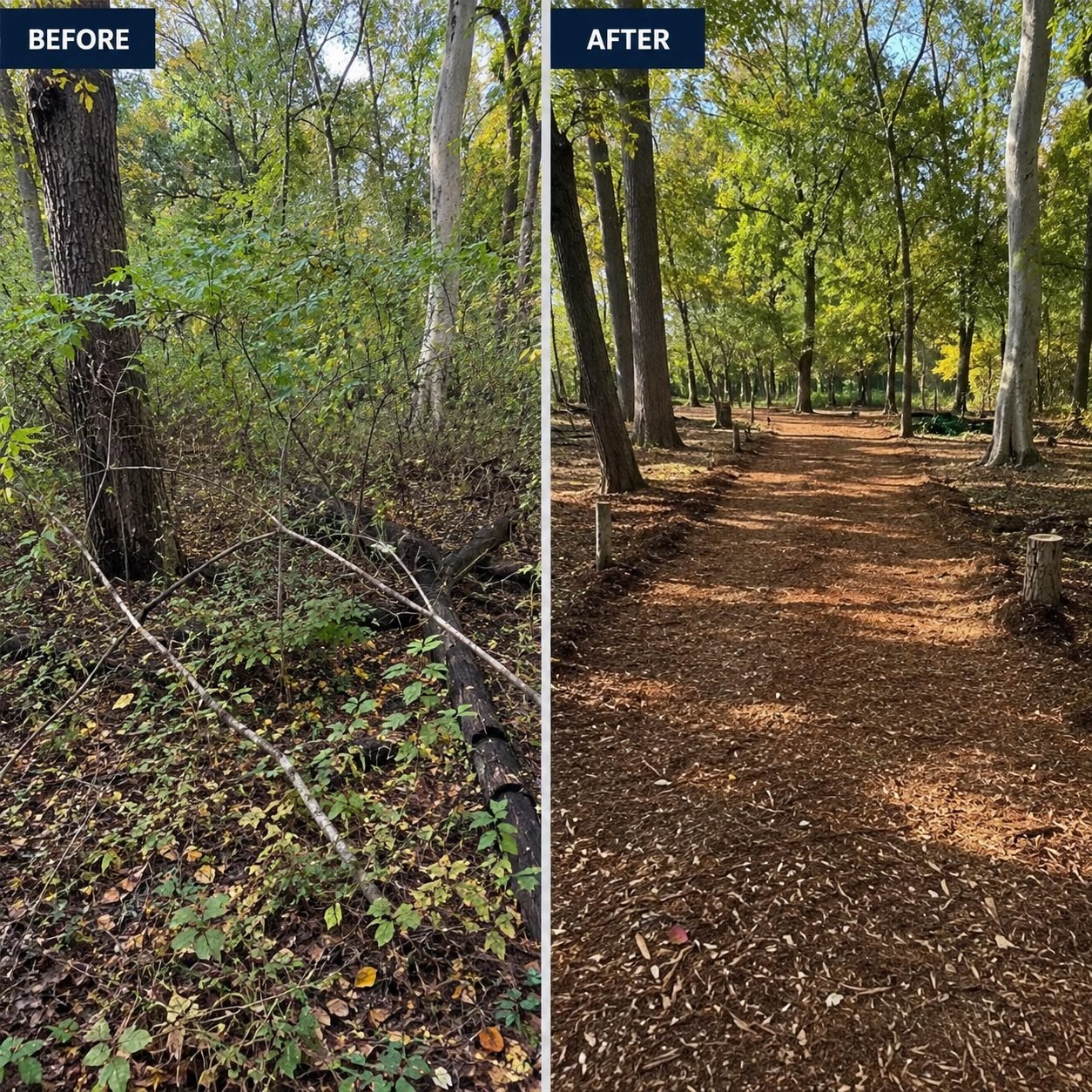
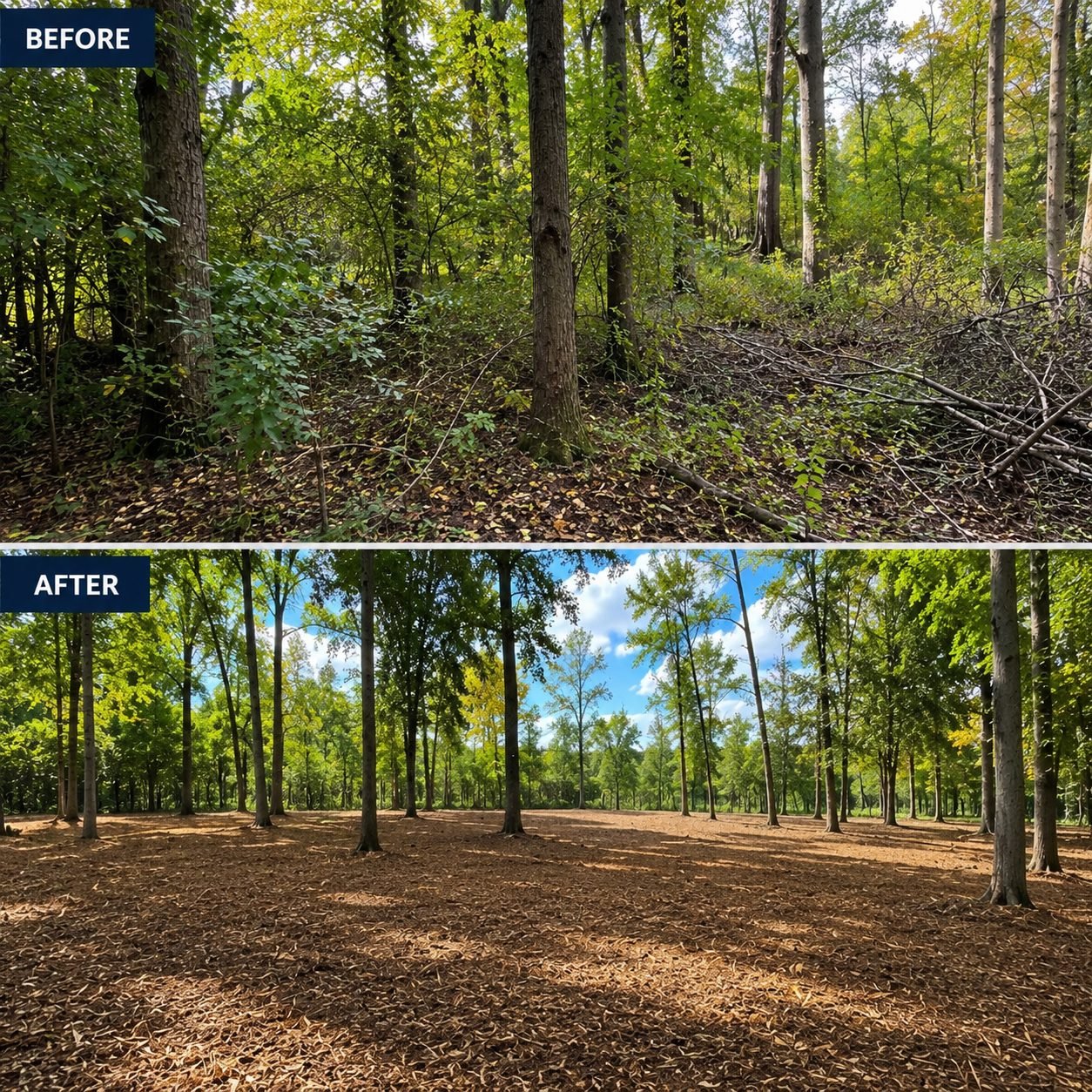
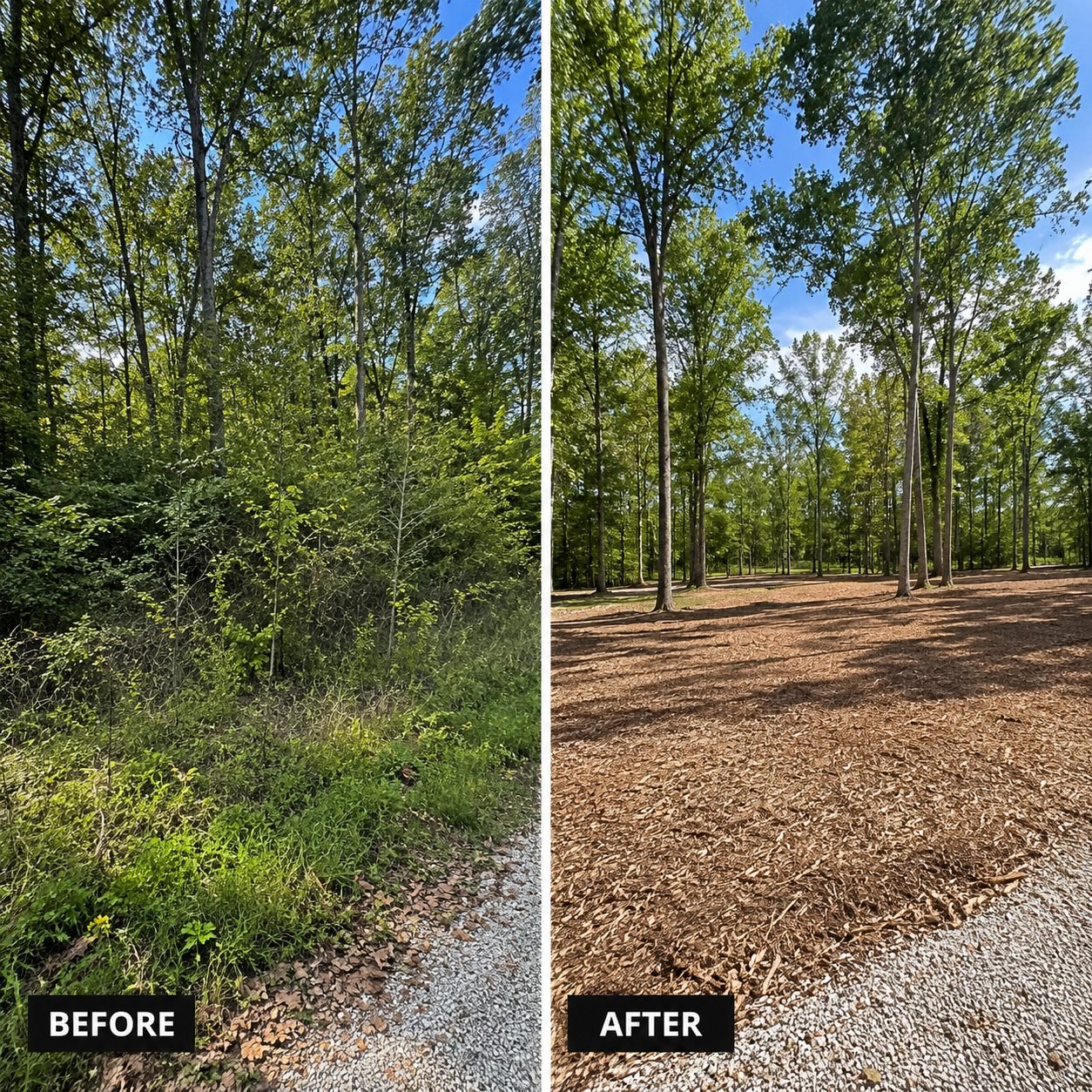
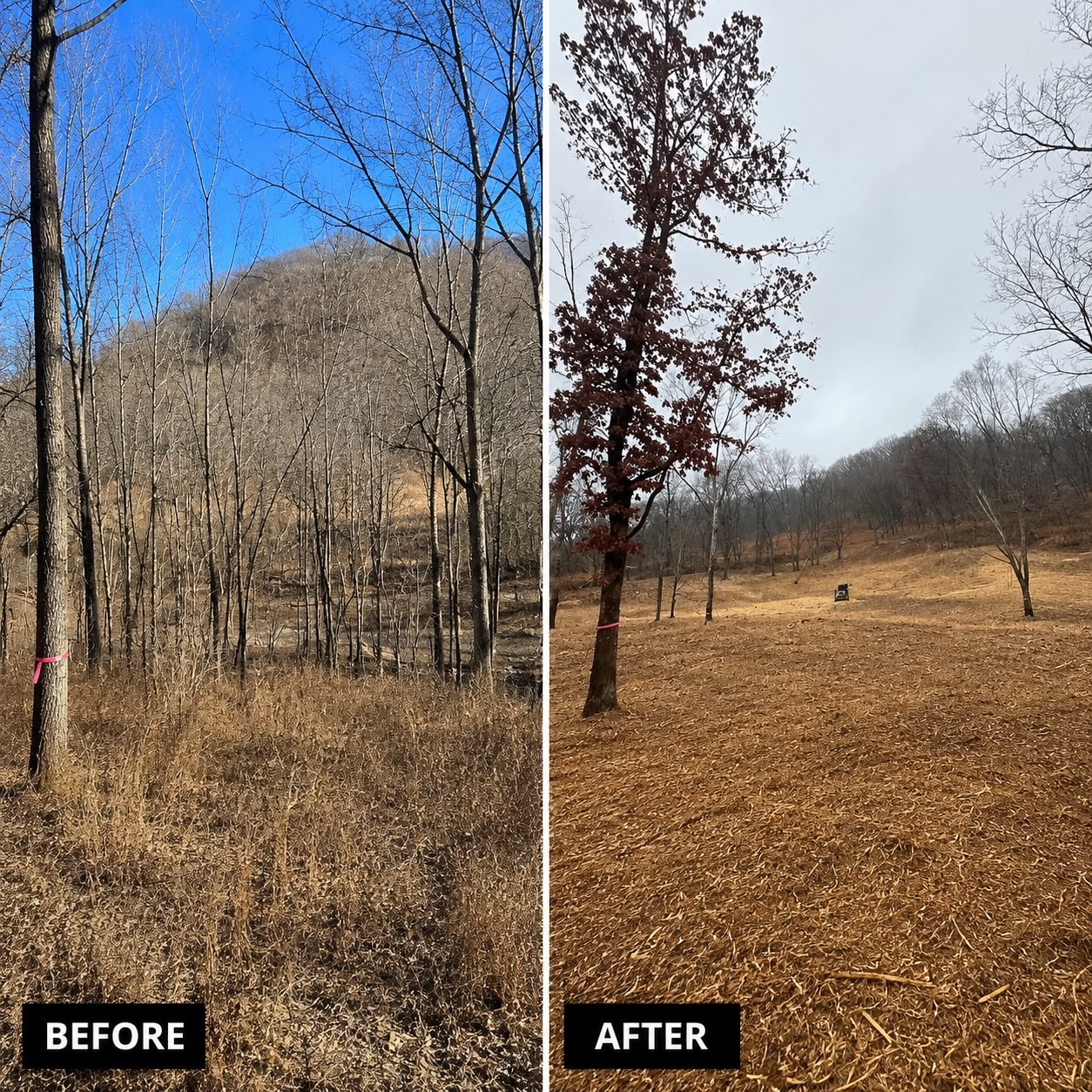
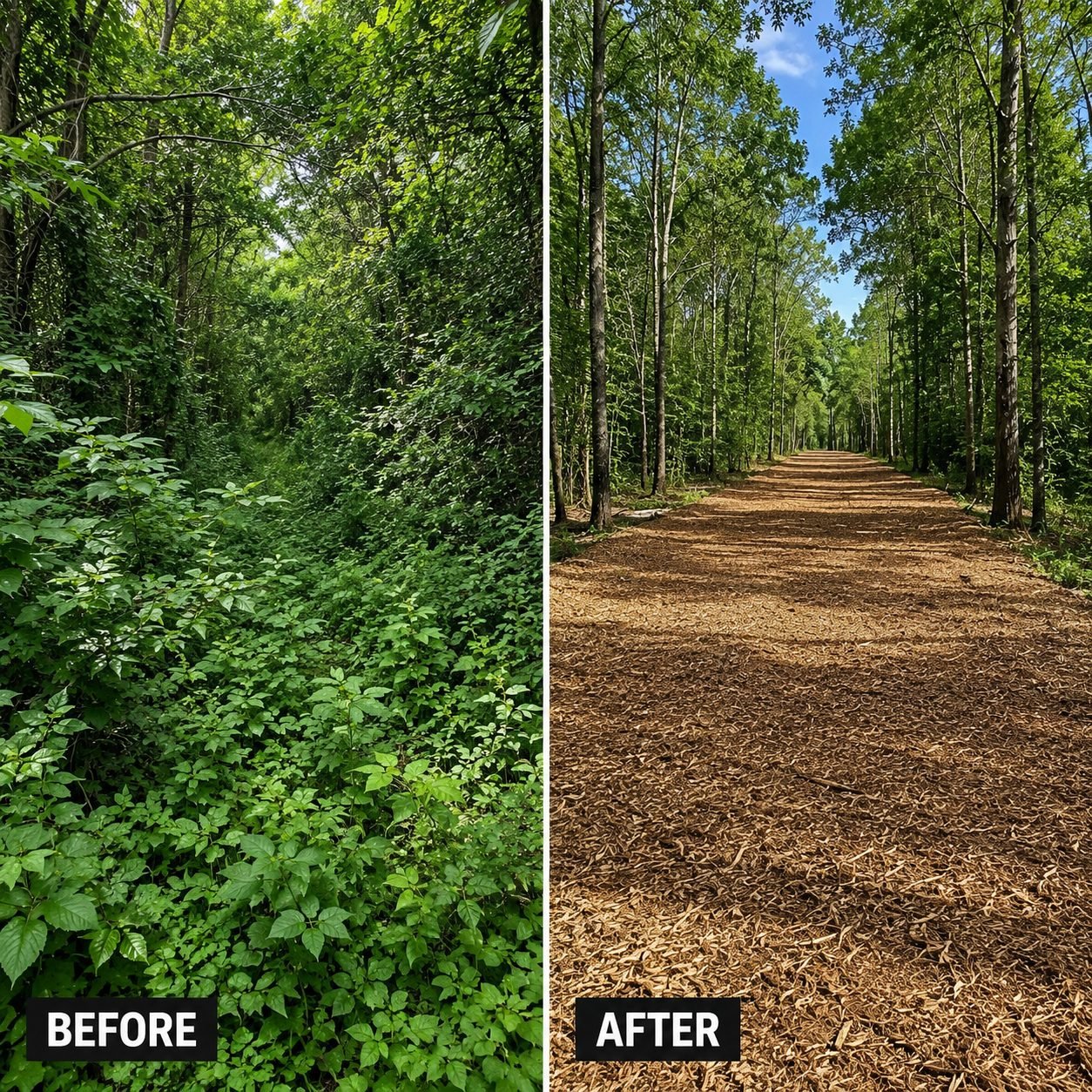
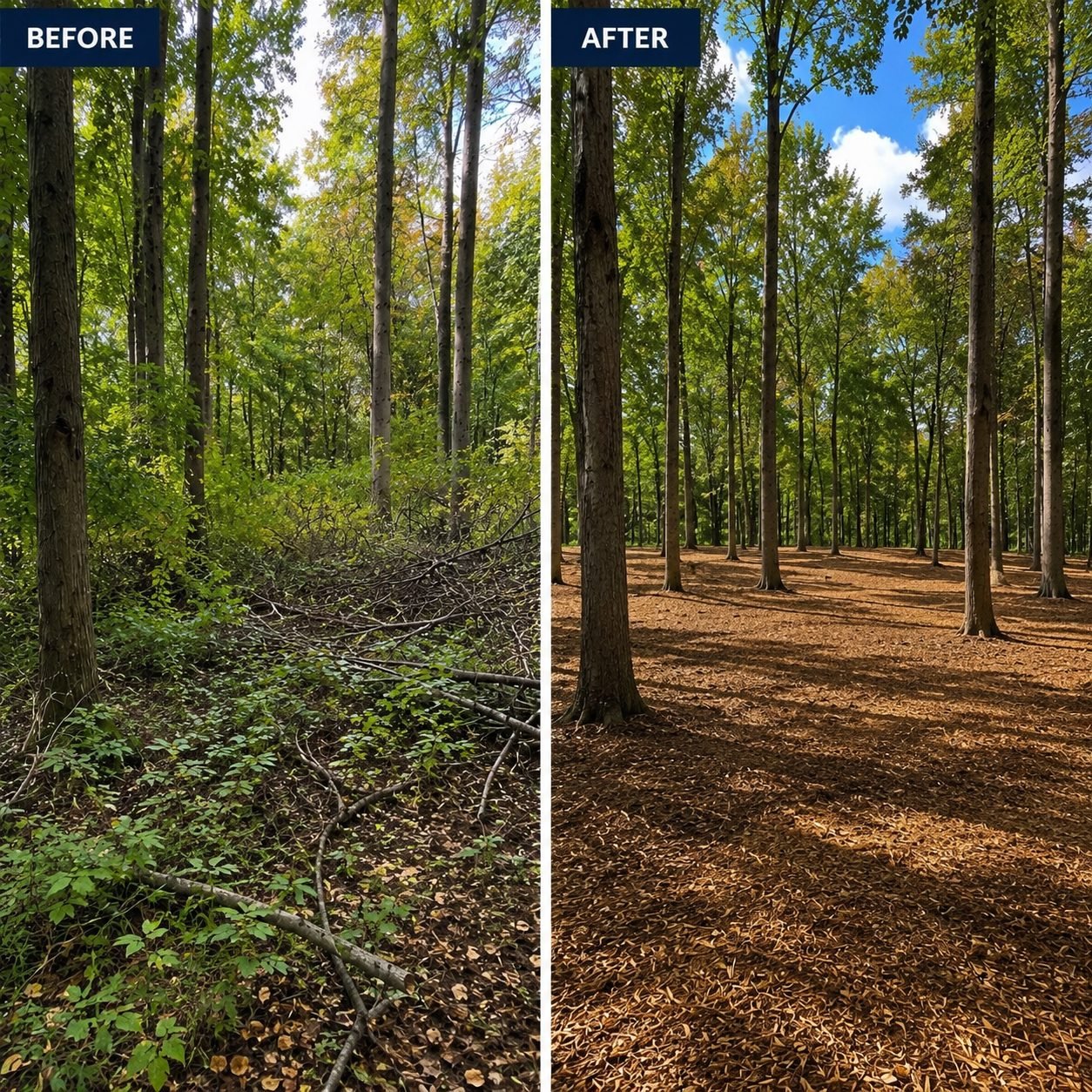
What Does Central Ohio Land Clearing Look Like Before and After?
Land clearing turns dense, unusable Central Ohio ground into open, walkable property. These are real Fortress jobs across Franklin, Delaware, Licking, Fairfield, and Union counties, cleared with mature trees left standing and no debris piles to burn or haul.
Frequently asked questions
The Diamond drum mulcher on the John Deere 333G grinds standing stems up to 14 inches in diameter in a single pass. Anything larger than that, or established hardwood stumps that need to come out of the ground entirely, gets handled by the dozer and excavator as part of a full-clearing scope rather than mulching alone.
No. Fortress runs its own machines, and owner Lee Carson is on the equipment for most jobs. That owner-operated approach across Franklin, Delaware, Licking, Fairfield, and Union counties means there is no coordinating with a separate rental company or waiting on a subcontractor’s schedule to get a job started.
Yes. Tracked loaders like the John Deere 333G and the Caterpillar unit are built to move across rough, ungraded ground, including wooded lots with no established access. Track flotation keeps them from sinking on soft or uneven terrain, which is common on raw acreage before any driveway or pad has been cut in.
A dozer only comes out for full-clearing scopes where the ground needs to be graded flat after stumps and debris are removed, such as a building pad or driveway. A forestry mulching job that leaves ground cover in place typically only needs the tracked mulcher, not a dozer or excavator.
Rubber tracks spread a machine’s weight across a much wider footprint than tires, which limits rutting on the wet Brookston-Crosby clay found through Central Ohio. That means less visible damage to the surrounding lawn or field once the equipment moves off the cleared area and onto the next section of the job.
Lee Carson, a combat veteran who has run Fortress since 2009, operates the equipment on most jobs himself rather than handing it off to a rotating crew. Fortress works across Franklin, Delaware, Licking, Fairfield, and Union counties with a flat-rate walk-through and typically a 2 to 3 hour response time.
What Other Services Does Fortress Offer in Central Ohio?
Land clearing is one of nine services Fortress Level Construction runs across Central Ohio, so one owner-operated crew can clear, grade, and prep a site end to end.
Get a Flat-Rate Quote from Lee Carson
Owner-operated land clearing across all five Central Ohio counties. Send your property details and Lee gets back to you within 2 to 3 hours during business hours with one flat number after a free on-site walk-through.