
Does Land Clearing Include Access Roads on an Etna, Ohio Site?
Land clearing on an Etna, Ohio site normally cuts access first so the rest of the tract stays reachable in wet weather. Clearing the route is part of the pass. Building it into a stone-based road that survives loaded trucks is separate excavation work.
Access on a large Etna tract
- Access is cut in the first pass, before the tract is worked area by area.
- Clearing a route and building a road are two different jobs with different costs.
- A cleared route on bare clay becomes impassable once it rains. Base stone is what fixes that.
- Getting access wrong costs days of waiting rather than hours.
- Culverts and drainage crossings are excavation work, quoted separately.
- Route placement should follow the build sequence, not the shortest line.
What Else Do People Ask About Land Clearing in Etna, Ohio?
Clearing it is part of the pass. Stone base, culverts and drainage are separate excavation work.
So later phases stay reachable after the ground turns. It is the single biggest protection for a spring schedule.
On bare clay, no. Once saturated it ruts and becomes impassable. Base stone is what makes it usable year round.
Set at the walk against the build sequence and the drainage, not simply the shortest line across the parcel.
Why Is Access Cut First on an Etna, Ohio Tract?
Because everything after it depends on being able to reach the working area. A route cut at the start keeps later phases accessible when Licking County clay turns, which is what protects a schedule through spring rather than hoping the weather holds.
Large Etna tracts are frequently worked in phases across months. Without a defined route, each return means crossing open ground that may be saturated, doing damage on the way in and losing days waiting for conditions.
Access placement is a real decision rather than a default. The route should follow the build sequence and the natural drainage rather than the shortest line between the road and the working area.
Running a route through a low point is the classic error. It is the shortest line on paper and the first section to become impassable in practice.
What Is the Difference Between Clearing a Route and Building a Road in Etna, Ohio?
Clearing removes the growth so a machine can pass. Building a road adds a compacted stone base that carries loaded trucks in wet weather. The first is part of the clearing pass; the second is excavation work with its own cost.
The distinction matters because a cleared route on bare clay looks like a road in August and stops being one in November. Owners who assumed the clearing produced a usable road find that out at the worst possible moment.
A stone base is graded, crowned so water sheds rather than sits, and thick enough for the loads it will actually carry. Concrete trucks and lowboys are a different requirement from a pickup.
Where the route crosses a ditch or swale, a culvert is needed and that is excavation work too. See excavation and grading.
How Should Access Be Planned on an Etna, Ohio Development Site?
Set the route at the walk, against the build sequence and the drainage. Clear it in the first pass, then decide whether it needs a stone base based on what will actually drive on it and in what season, rather than upgrading it after it fails.
A route used by a tracked machine in frozen conditions may genuinely need nothing. The same route carrying concrete deliveries through March needs a base, and finding that out late means recovering stuck trucks.
Drainage crossings should be identified at the same time. A swale that is invisible in summer is the point the route fails in spring.
Deciding all of this once, up front, is what keeps access from becoming the item that quietly sets the whole programme back.
What Access Work Does an Etna, Ohio Site Need?
What is included in the clearing pass on Etna ground and what is separate excavation work. The distinction decides whether a route survives a wet season.
| Item | Included in clearing | Separate work | When it is needed |
|---|---|---|---|
| Cutting the route through growth | Yes | – | Always, first pass |
| Mulch left as surface cover | Yes | – | Always |
| Stump grubbing along the route | – | Yes | Where a base is going in |
| Compacted stone base | – | Yes | Loaded trucks or wet season use |
| Crowning and drainage grading | – | Yes | Any road kept through winter |
| Culvert at a ditch crossing | – | Yes | Any watercourse crossing |
| Permanent driveway construction | – | Yes | Final site work |
Scope published by Fortress Level Construction for its Licking County operation, August 2026. Soil depth, slope class and erosion factor for any Etna parcel are published in the USDA NRCS Web Soil Survey (accessed August 2026).
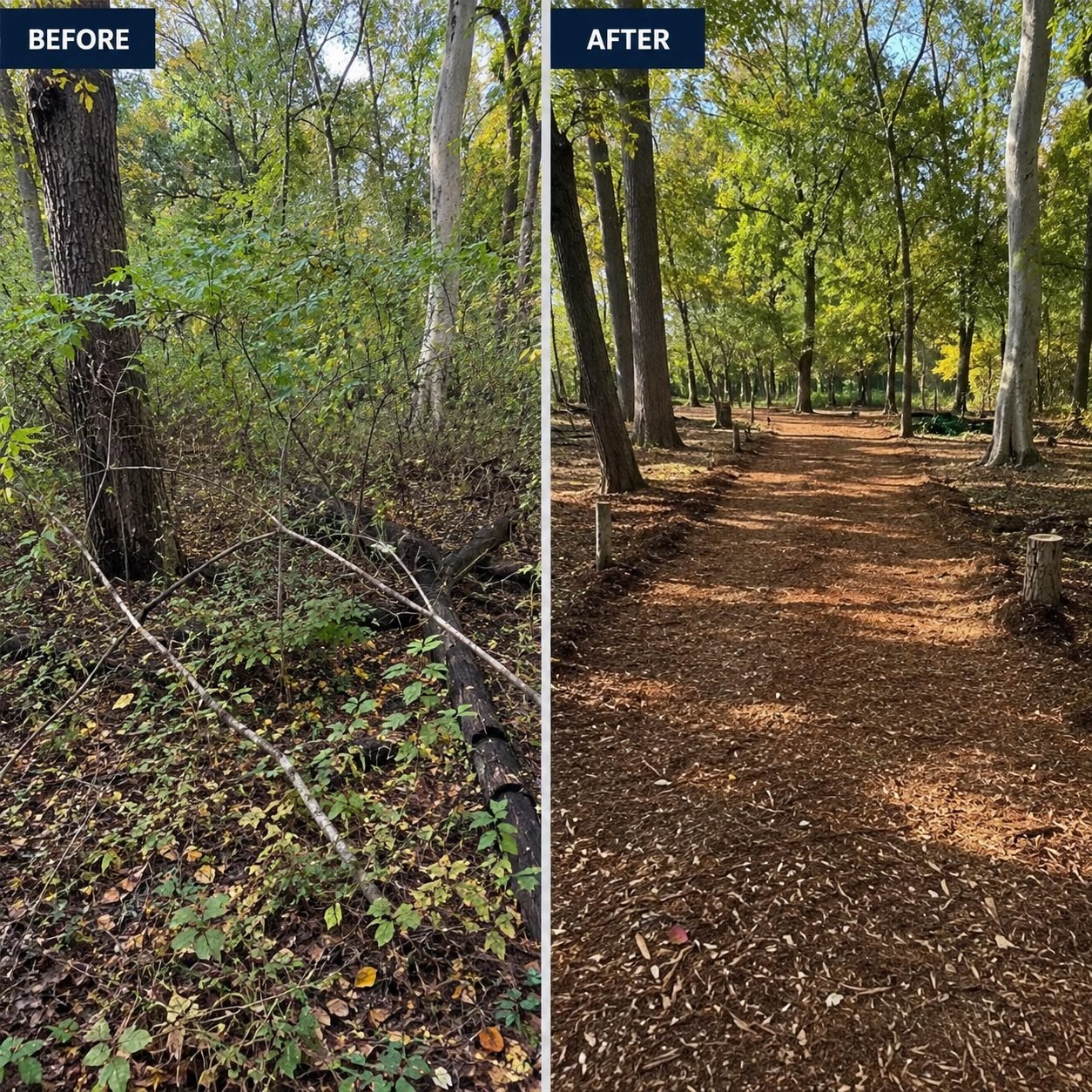
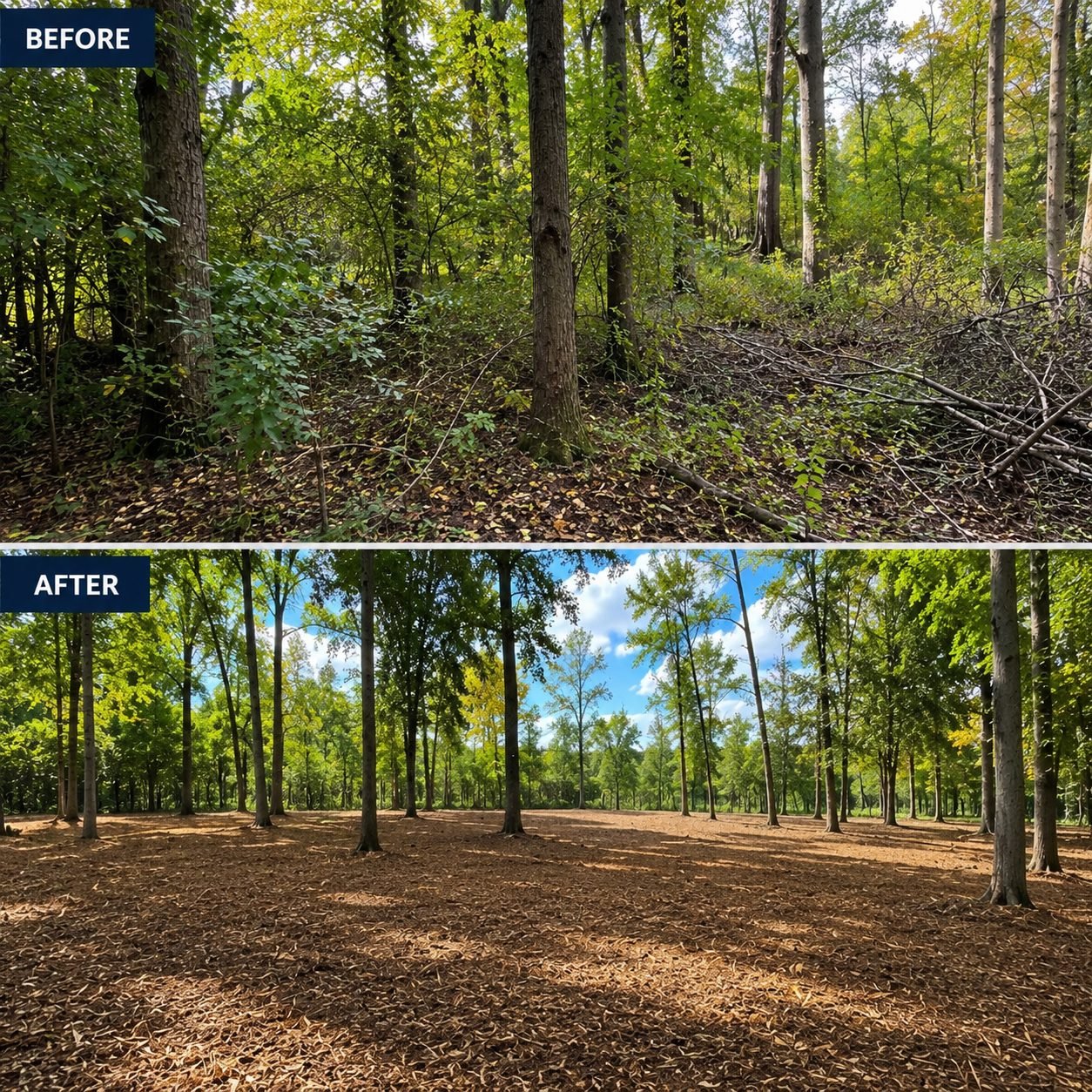
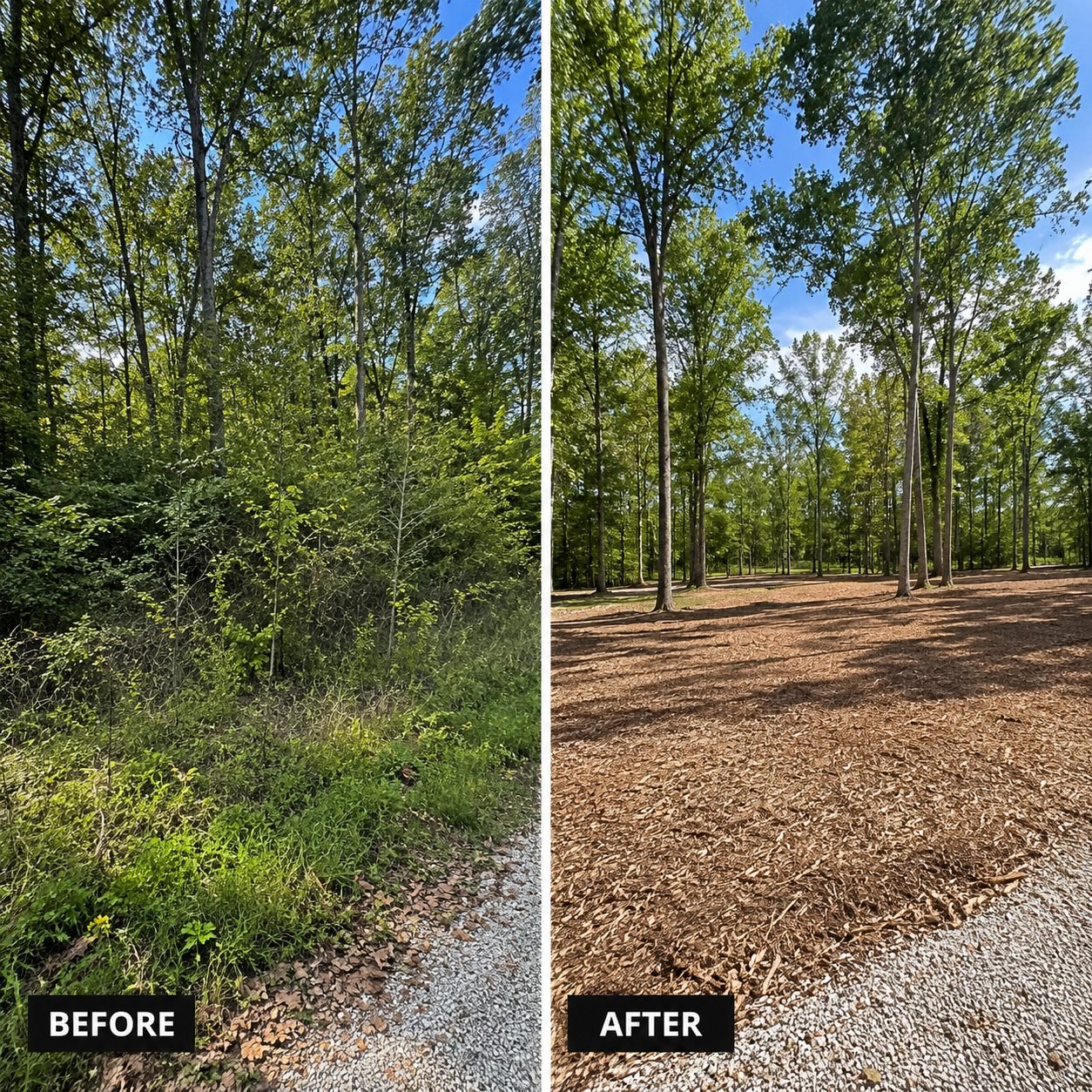
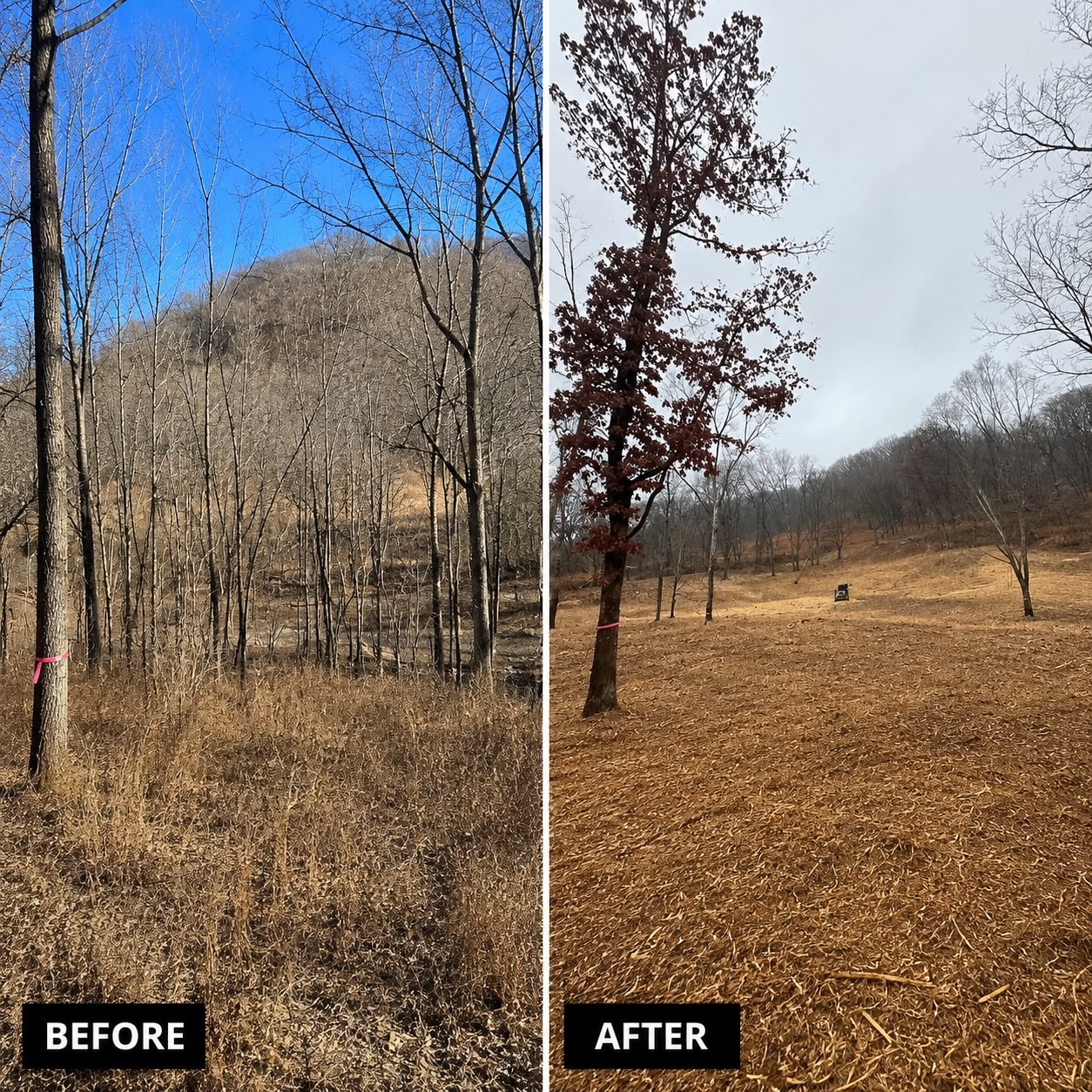
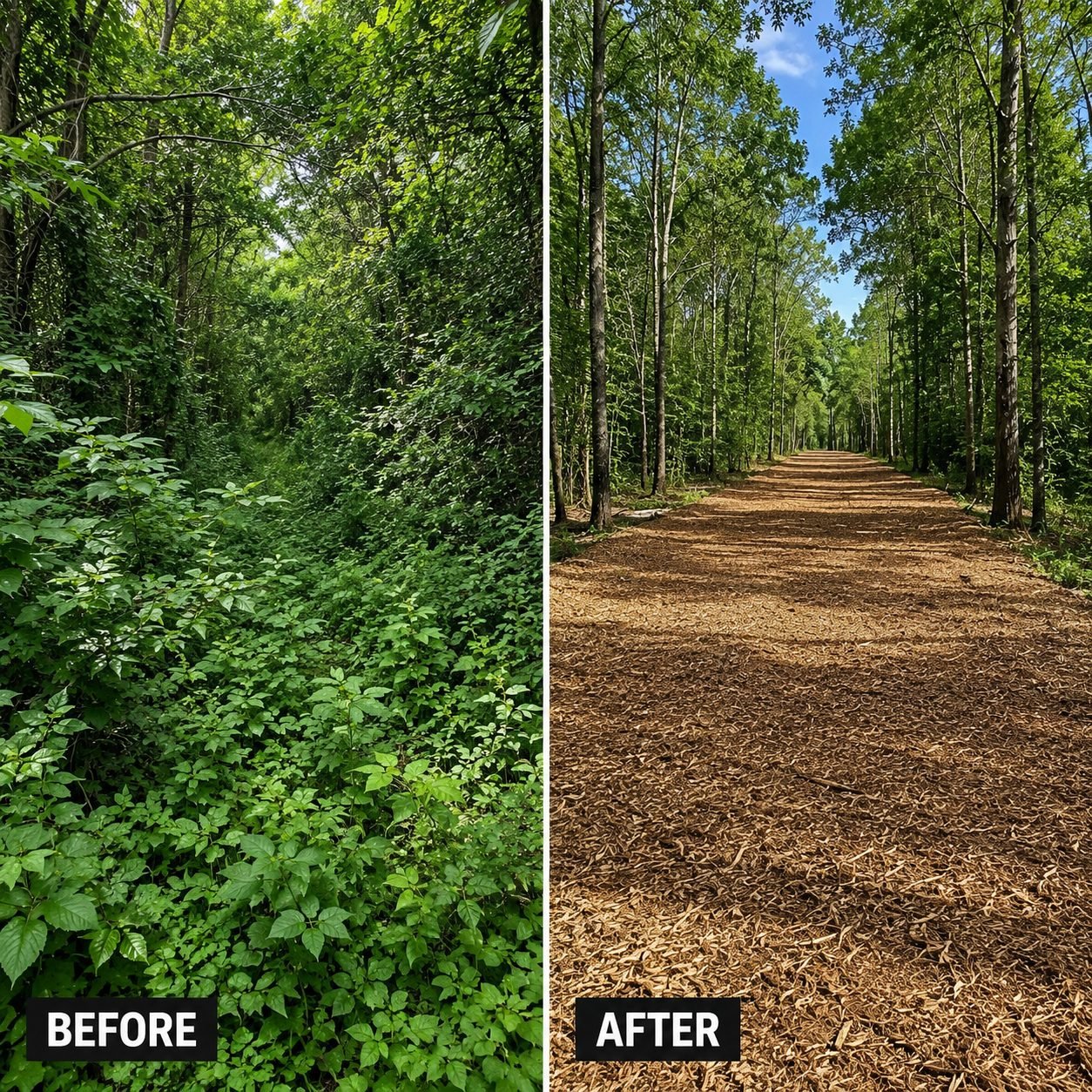
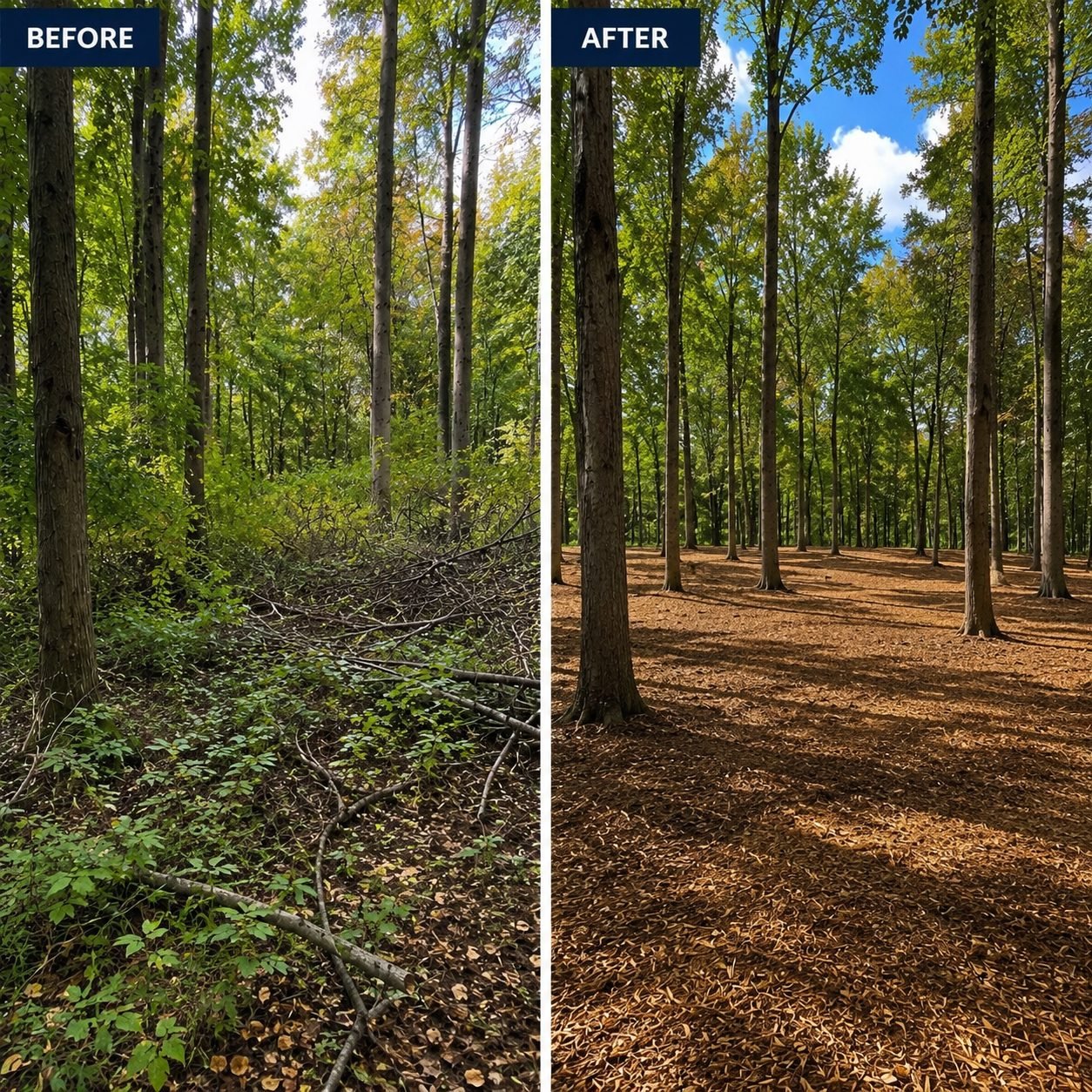
What Does Land Clearing Look Like Before and After in Etna, Ohio?
Recent Central Ohio jobs. The finished surface keeps a two to four inch mulch layer rather than bare soil, which is what holds ground through the first winter after clearing.
What Do Etna, Ohio Owners Ask About Land Clearing?
Often yes, if it is placed with that in mind at the walk. Deciding late usually means moving it.
Wide enough for the equipment plus safe clearance. Wider than necessary is just more ground opened for no benefit.
The clearing follows the same rules as the rest of the site. A culvert or a new road connection can carry its own requirement.
It is usually the best starting point. Whether it carries construction loads is the question the walk answers.
Yes, but on a route already rutted it costs more than doing it before the damage.
In dry or frozen conditions, often. Through a wet spring with loaded vehicles, no.
What Else Can Fortress Do on a Etna, Ohio Property?
Land clearing, forestry mulching, excavation, demolition and grading run with the same crew and the same point of contact, so a Etna job that needs two trades does not wait on a second schedule.
Soil depth, slope class and erosion factor for any Etna parcel are published in the USDA NRCS Web Soil Survey (accessed August 2026).
Ready for a Flat Rate on Your Etna, Ohio Land Clearing?
Owner-operated land clearing across all five Central Ohio counties. Send your property details and Lee gets back to you within 2 to 3 hours during business hours with one flat number after a free on-site walk-through.