
What Is Left on the Ground After Land Clearing in Delaware, Ohio?
Land clearing in Delaware, Ohio leaves either a two to four inch mulch layer or bare compacted soil, and which one you get is a decision rather than a default. Mulch holds the ground and feeds it. Bare soil belongs only where a structure is going in.
What the finished surface should be
- Mulch layer, two to four inches, across anything not carrying a structure.
- Bare compacted soil only under a pad, slab or road base.
- The mulch suppresses regrowth, holds moisture and becomes topsoil in 2 to 3 seasons.
- Nothing is burned. Open burning is restricted across this area.
- Nothing is hauled off unless there is no room for it, which is quoted separately.
- Raking the mulch off to tidy the site is counterproductive.
What Else Do People Ask About Land Clearing in Delaware, Ohio?
Not where it stays. Under a pad it is stripped along with the topsoil as part of the excavation.
Wood mulch at distance from a structure is not a meaningful risk. Keeping it away from foundations is normal practice regardless.
Two to three growing seasons to become topsoil, with visible settling within the first year.
Yes, quoted separately as haul-off. On most parcels it is doing useful work and removing it costs money for no return.
Why Does Land Clearing Leave Mulch on Delaware, Ohio Ground?
Because the material has to go somewhere, and spread across the site it does more good than in a truck. A two to four inch layer intercepts rainfall, slows surface flow, suppresses regrowth and breaks down into topsoil over two to three seasons.
The alternative used to be burning, which is restricted across this area, or hauling, which costs real money and takes the organic matter off the parcel.
On rolling Delaware County ground the erosion control function matters most. A freshly cleared slope with no cover moves soil in the first heavy rain; the same slope with a mulch layer holds while roots re-establish.
Owners sometimes want it raked off to make the site look finished. That is worth resisting: the layer is doing work that would otherwise have to be paid for.
When Should Delaware, Ohio Ground Be Left Bare Instead?
Only where a structure, slab or road base is going in. Those need clean compacted subgrade with no organic material in it, so the mulch and topsoil are stripped across that footprint as part of the excavation.
Organic material under a foundation is the same problem as a root ball. It decomposes, loses volume, and the ground above settles.
That is a footprint decision, not a site decision. Stripping the whole parcel to bare soil because a pad needs it is how a build site ends up with erosion problems across ground nothing is happening on.
Two finishes on one parcel is normal and should be visible in the quote: bare and compacted under the structure, mulched and covered everywhere else.
What Should a Delaware, Ohio Owner Do With the Mulch Layer Afterwards?
Leave it. The main aftercare is walking the ground the following spring to see what resprouted and handling the strongest regrowth in the second season, which is what turns a one day job into a lasting result.
Seeding into settled mulch works well in autumn where the ground is going to pasture or lawn. It is worth waiting one season on woodland ground to see what the existing seed bank produces first.
Where the parcel adjoins untreated ground, expect steady pressure from the boundary inward. That is the neighbouring seed source rather than a failure of the clearing.
Spot-treating new seedlings while they are small is an afternoon a year, against another clearing pass in a decade.
What Surface Does Delaware, Ohio Ground End Up With?
Finished surface by end use on Delaware parcels. Mulch is the default because it holds soil and feeds it; bare compacted ground is reserved for what genuinely needs it.
| Area | Finished surface | Why | Aftercare |
|---|---|---|---|
| Building footprint | Bare, compacted | No organics under structure | None |
| Driveway or road base | Bare, compacted | Base fails over organics | None |
| Cleared slope | Mulch retained | Erosion control | Walk it in spring |
| Future pasture | Mulch retained | Breaks down to topsoil | Seed in autumn |
| Managed woodland | Mulch retained | Suppresses regrowth | Second-season pass |
| Future lawn | Mulch, then seed | Feeds the seedbed | Seed in autumn |
| Septic or utility run | Bare along the run | Trench access | Restore after |
Practice published by Fortress Level Construction for its Delaware County operation, August 2026. Open burning is restricted across this area. Soil depth, slope class and erosion factor for any Delaware parcel are published in the USDA NRCS Web Soil Survey (accessed August 2026).
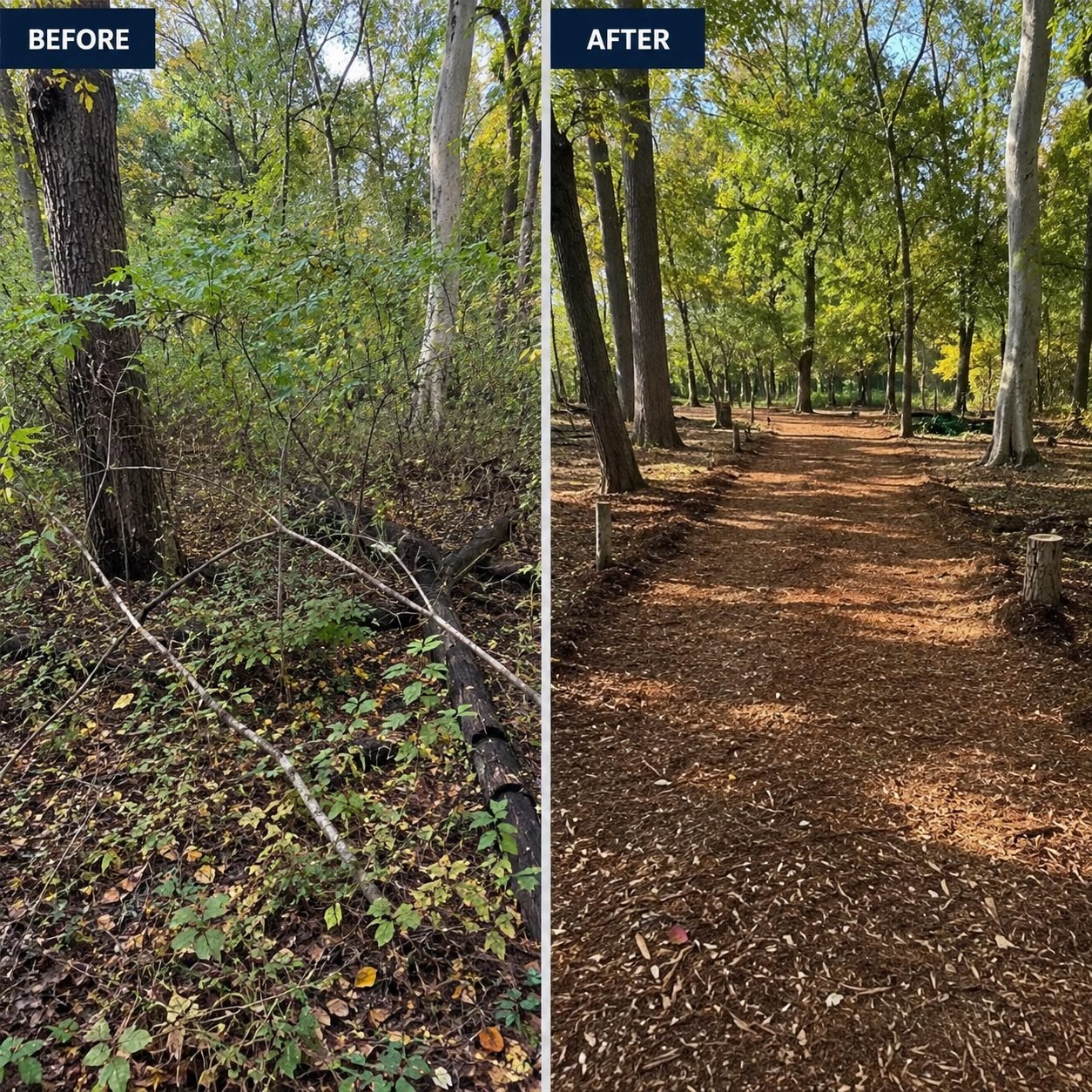
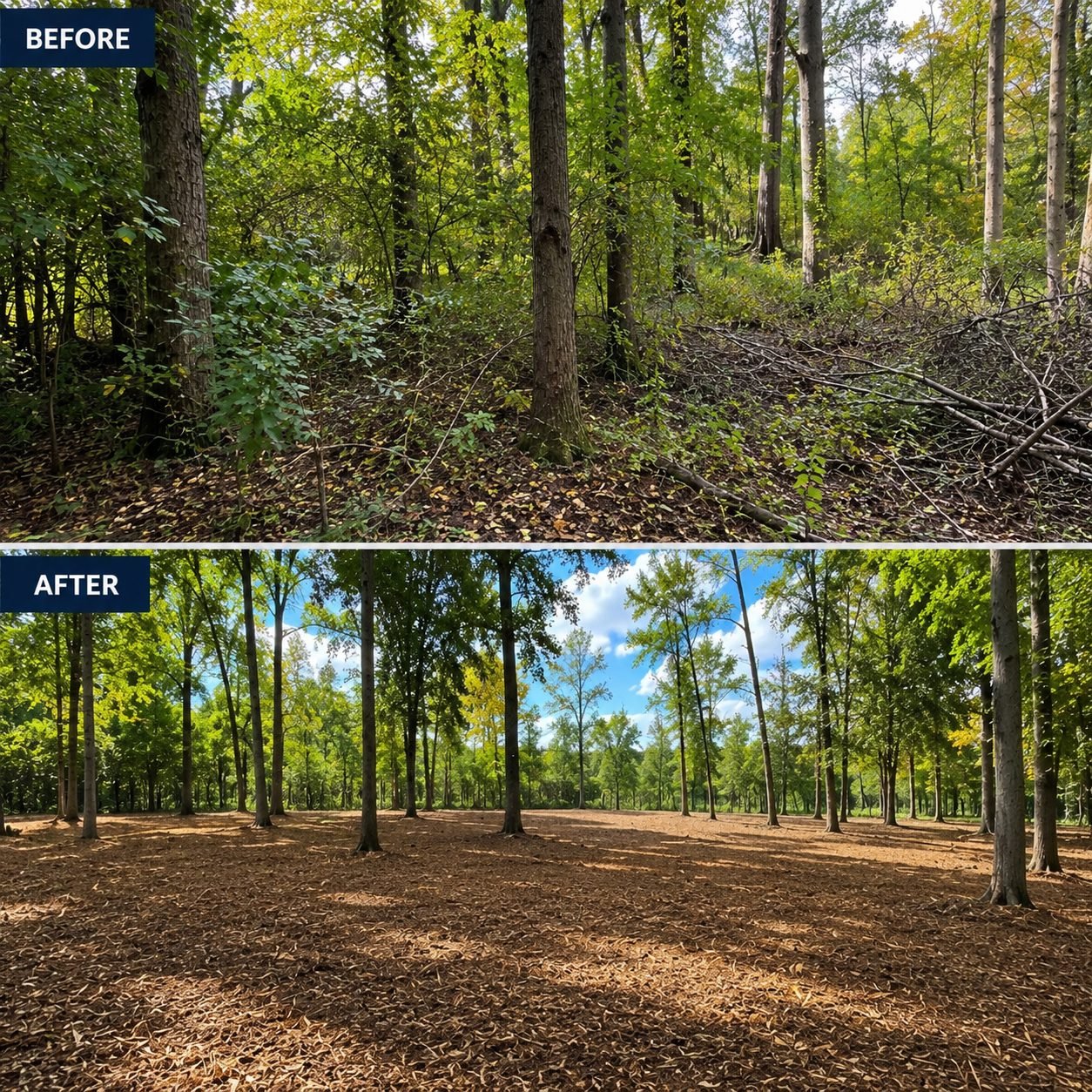
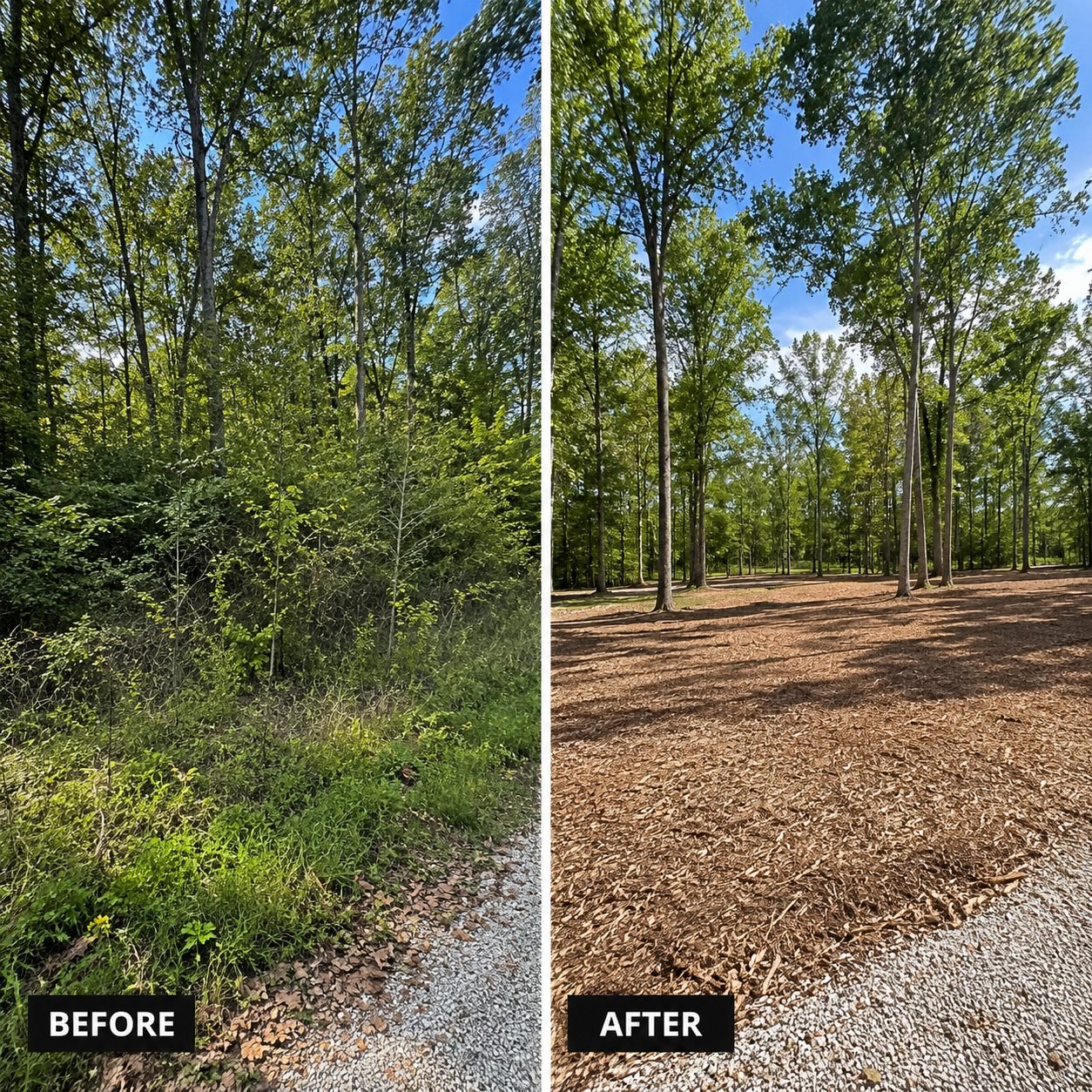
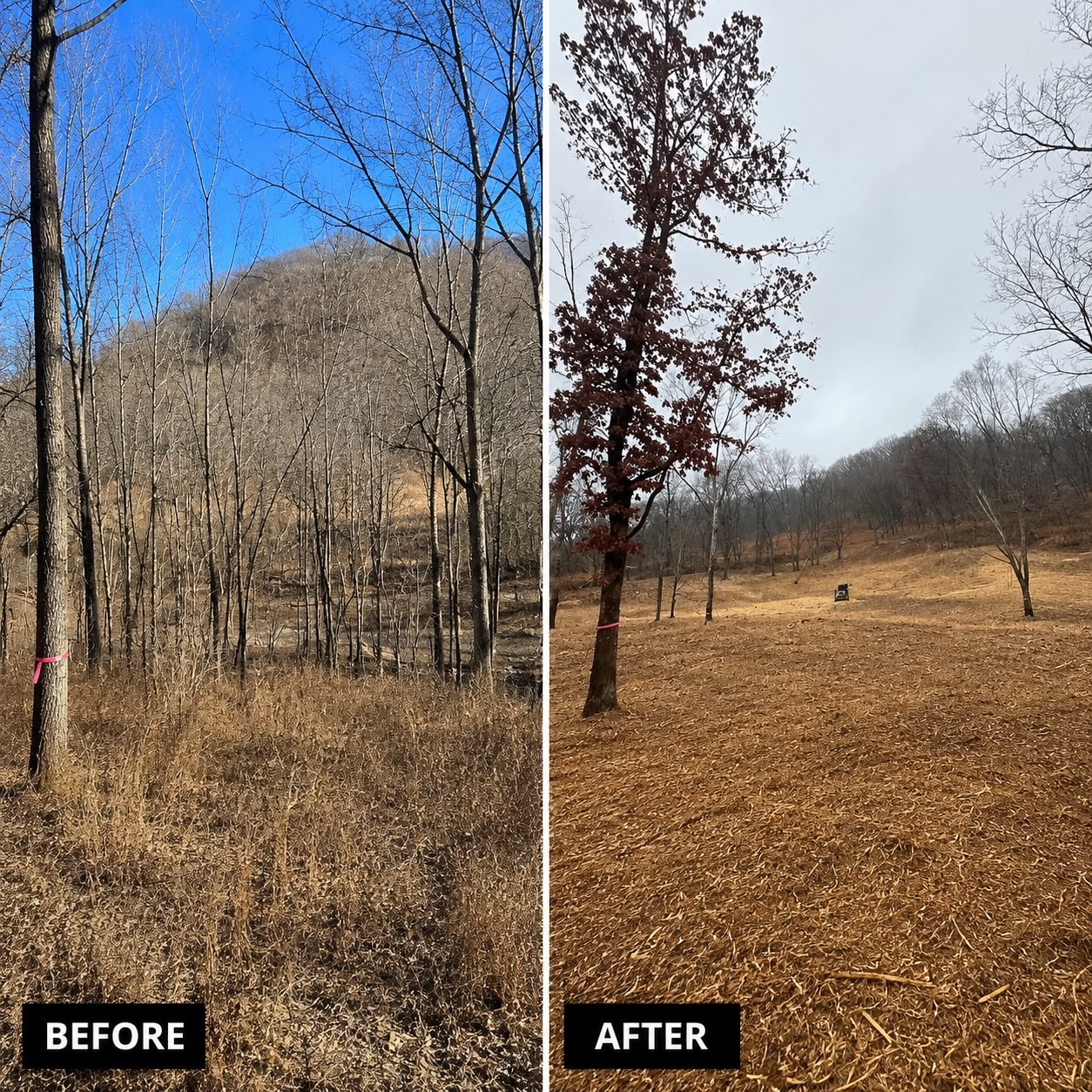
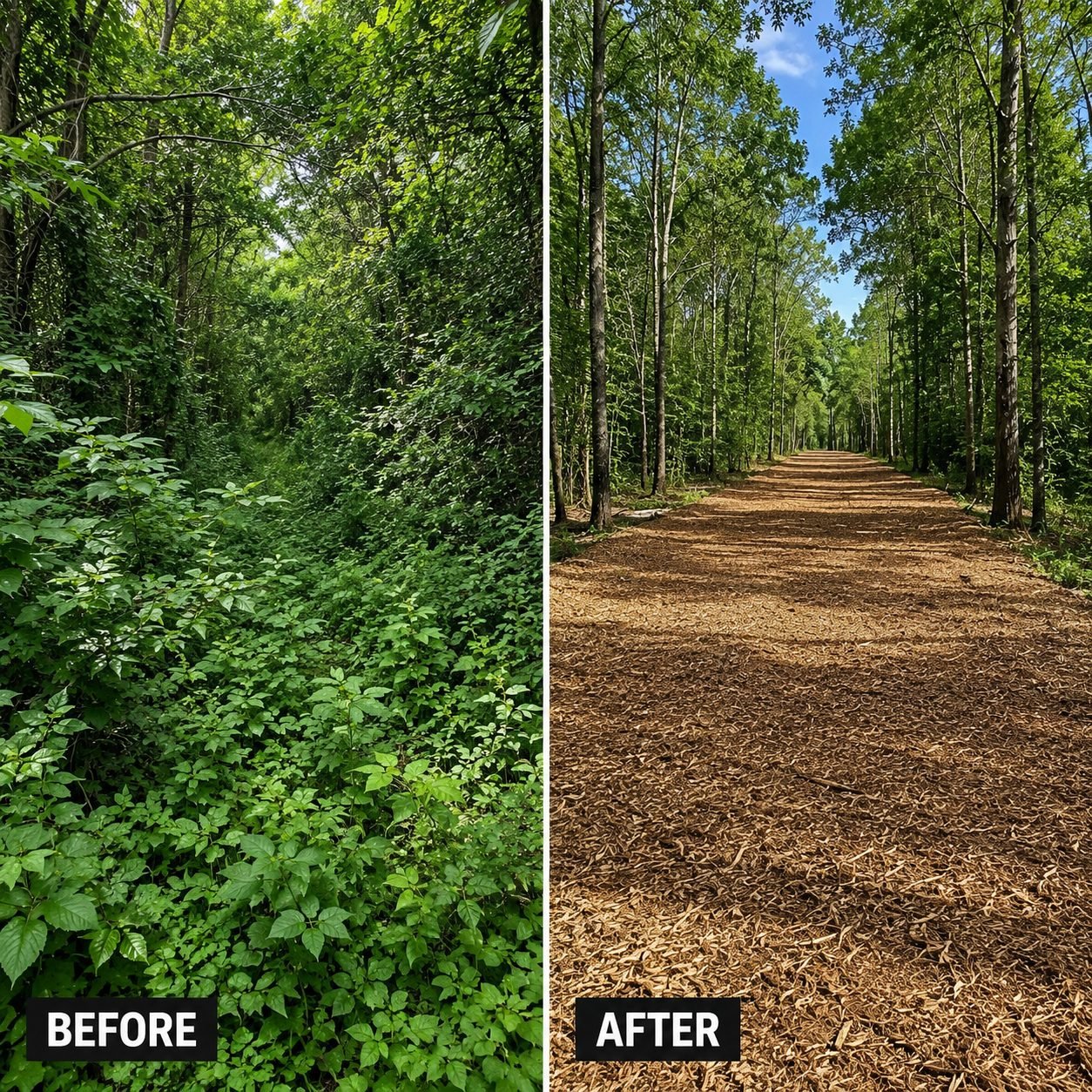
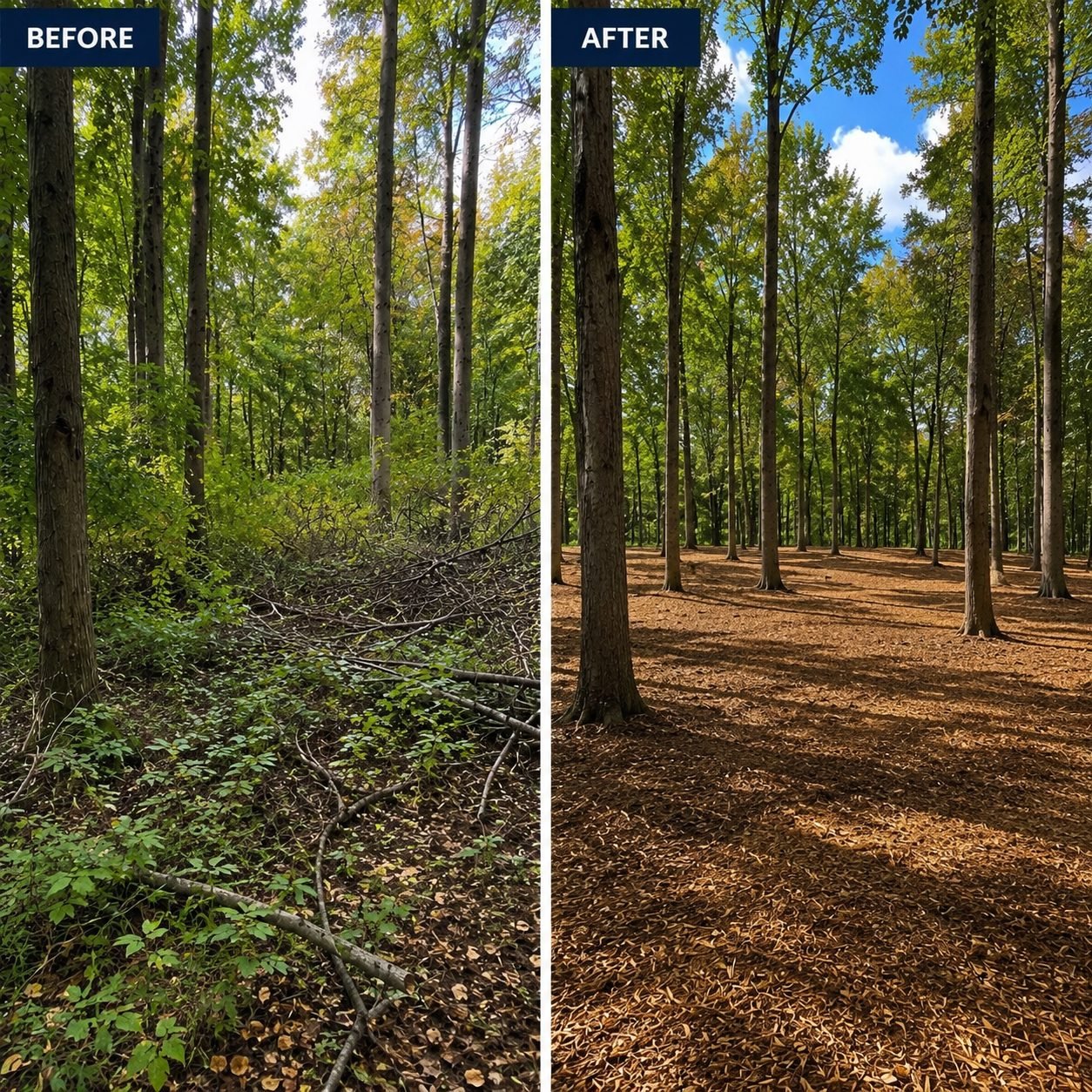
What Does Land Clearing Look Like Before and After in Delaware, Ohio?
Recent Central Ohio jobs. The finished surface keeps a two to four inch mulch layer rather than bare soil, which is what holds ground through the first winter after clearing.
What Do Delaware, Ohio Owners Ask About Land Clearing?
For the first season it looks like a worked site. By the second it has settled and reads as woodland floor.
Autumn seeding into settled mulch works well. Waiting one spring on woodland ground tells you whether you need to.
It suppresses seedlings while it is thick, which is the point. Seeding is timed for after it settles.
No. Open burning is restricted across this area, which is why mulching is the standard method.
Haul-off is quoted separately. On most parcels it is paying to remove something that is doing useful work.
Two to four inches across the worked area, varying with how much material the ground carried.
What Else Can Fortress Do on a Delaware, Ohio Property?
Land clearing, forestry mulching, excavation, demolition and grading run with the same crew and the same point of contact, so a Delaware job that needs two trades does not wait on a second schedule.
Soil depth, slope class and erosion factor for any Delaware parcel are published in the USDA NRCS Web Soil Survey (accessed August 2026). Bush honeysuckle, autumn olive and multiflora rose are listed among the species restricted in Ohio by the Ohio Department of Natural Resources and the Ohio Department of Agriculture Division of Plant Health (both accessed August 2026).
Ready for a Flat Rate on Your Delaware, Ohio Land Clearing?
Owner-operated land clearing across all five Central Ohio counties. Send your property details and Lee gets back to you within 2 to 3 hours during business hours with one flat number after a free on-site walk-through.