

Why Is Land Clearing to Bare Soil Wrong in Granville, Ohio?
Land clearing to bare soil is wrong in Granville, Ohio because the hillside soil is thin and steep, held by roots and leaf litter together. The mulch layer left after a pass is doing erosion control rather than tidiness, and stripping it starts a problem.
Why the mulch stays on Granville hills
- Hillside soil here is thin, and what holds it is roots plus litter plus understory together.
- Remove all three at once and the first heavy rain moves decades of accumulation.
- The mulch layer intercepts rainfall and slows sheet flow across the surface.
- Erosion repair on a moving slope costs more than the clearing ever saved.
- Bare compacted soil belongs only under a structure, and only across that footprint.
- The layer becomes topsoil across two to three seasons, which thin hill soil needs.
What Else Do People Ask About Land Clearing in Granville, Ohio?
Repair on a moving slope routinely exceeds the clearing cost and recurs each storm until cover returns.
On flat ground it is merely wasteful. On this slope it removes the erosion control.
Under a foundation, slab or road base, across that footprint only.
Ground layer within two to three springs. The mulch is what holds the slope in the meantime.
What Holds the Soil on a Granville, Ohio Hillside?
Three things acting together: tree and shrub roots binding the profile, leaf litter absorbing rainfall impact, and understory slowing water across the surface. Remove any one and the system weakens. Remove all three and it fails.
Hillside soil here is thin, sitting at angles where gravity is already doing steady work. It is the accumulation of decades and it moves in a single storm.
That is the specific reason bare-soil clearing is wrong on this ground and merely inefficient on flat ground elsewhere in the service area.
Soil depth, slope class and erosion factor for any Granville parcel are published rather than guessed at, so this is measurable rather than a matter of opinion.
What Does the Mulch Layer Replace on Granville, Ohio Slope?
The litter and understory functions, immediately. A two to four inch layer intercepts rainfall before it hits soil and slows sheet flow across the surface, which is exactly what the removed ground layer was doing.
Roots are the part it does not replace, which is why selective clearing that keeps the canopy is preferred on steep ground. The trees stay, so the binding stays.
Across two to three seasons the layer breaks down into topsoil. On thin hillside soil that is a real improvement rather than an incidental benefit.
It also suppresses the seedling flush that follows any disturbance, which keeps the ground from filling straight back in with what was just removed.
When Is Bare Ground Justified in Granville, Ohio?
Where a foundation, slab or road base is going in, and across that footprint only. Those need clean compacted subgrade with no organic material, so mulch and topsoil are stripped there as part of the excavation.
The error is extending it beyond the footprint. Stripping a hillside because a structure is going on part of it creates erosion exposure across ground nothing is happening on.
Two treatments on one parcel is the normal Granville answer: bare and compacted under the structure, mulched with cover retained everywhere else.
The quote should show them as separate lines. See grading and site preparation.
How Does Slope Change Land Clearing on Granville, Ohio Hills?
Method and pace by slope on Granville parcels, the steepest ground Fortress works regularly. Slope is measured across the sections that matter rather than averaged over the parcel.
| Slope | Method | Finished surface | Cost effect |
|---|---|---|---|
| Flat to 5 degrees | Clear pass or selective | Owner’s choice | Standard rate |
| 5 to 10 degrees | Either, cover retained | Mulch preferred | Standard rate |
| 10 to 15 degrees | Selective preferred | Mulch retained | Add 10 to 15 percent |
| 15 to 20 degrees | Mulch only, never bare | Mulch retained | Add 15 to 25 percent |
| 20 to 25 degrees | Across the contour only | Mulch retained | Quoted per job |
| Over 25 degrees | Assessed individually | Often no work | Quoted per job |
| Hillside trail cut | Bench cut across slope | Compacted tread | Quoted per job |
Working practice published by Fortress Level Construction for its Licking County operation, August 2026. Soil depth, slope class and erosion factor for any Granville parcel are published in the USDA NRCS Web Soil Survey (accessed August 2026).
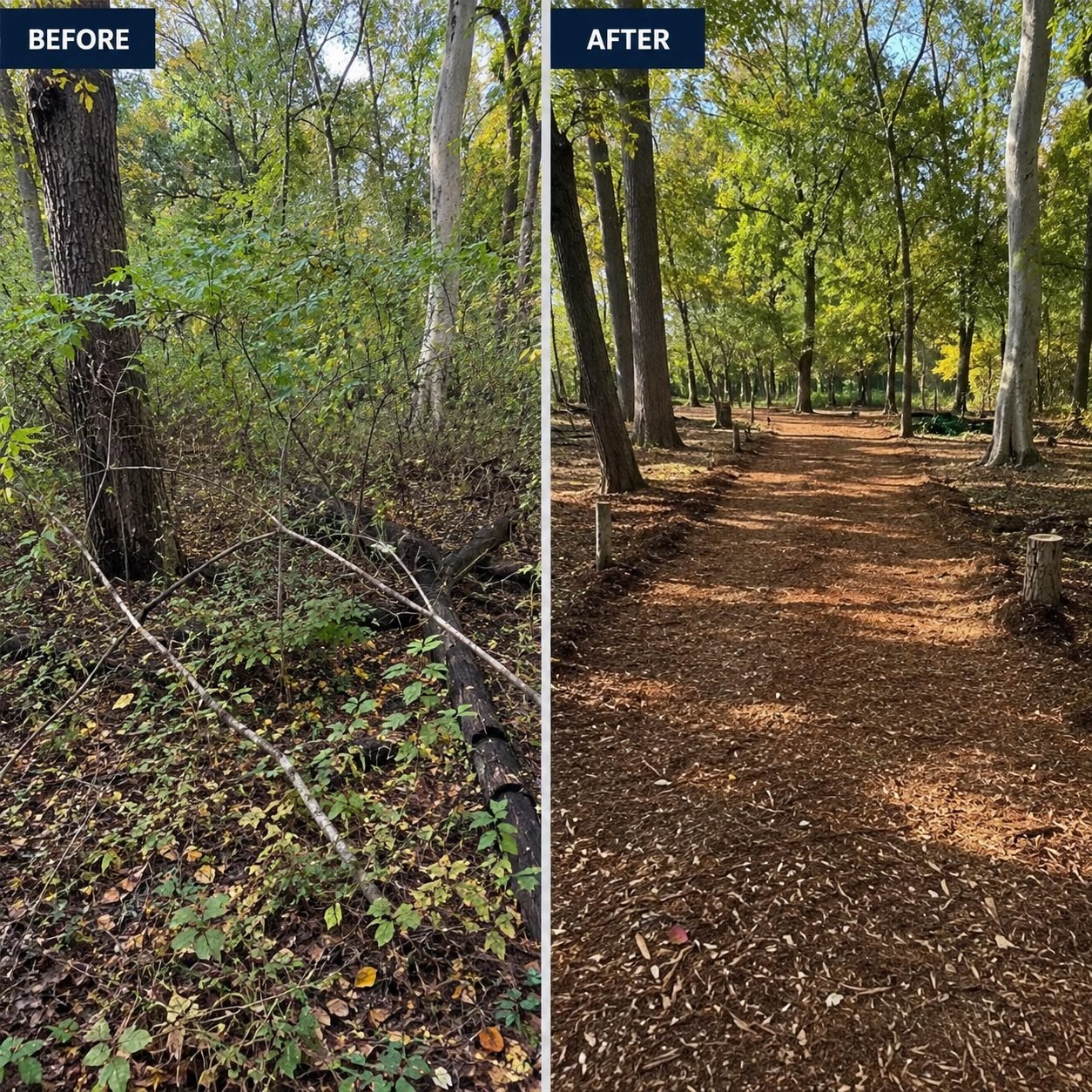
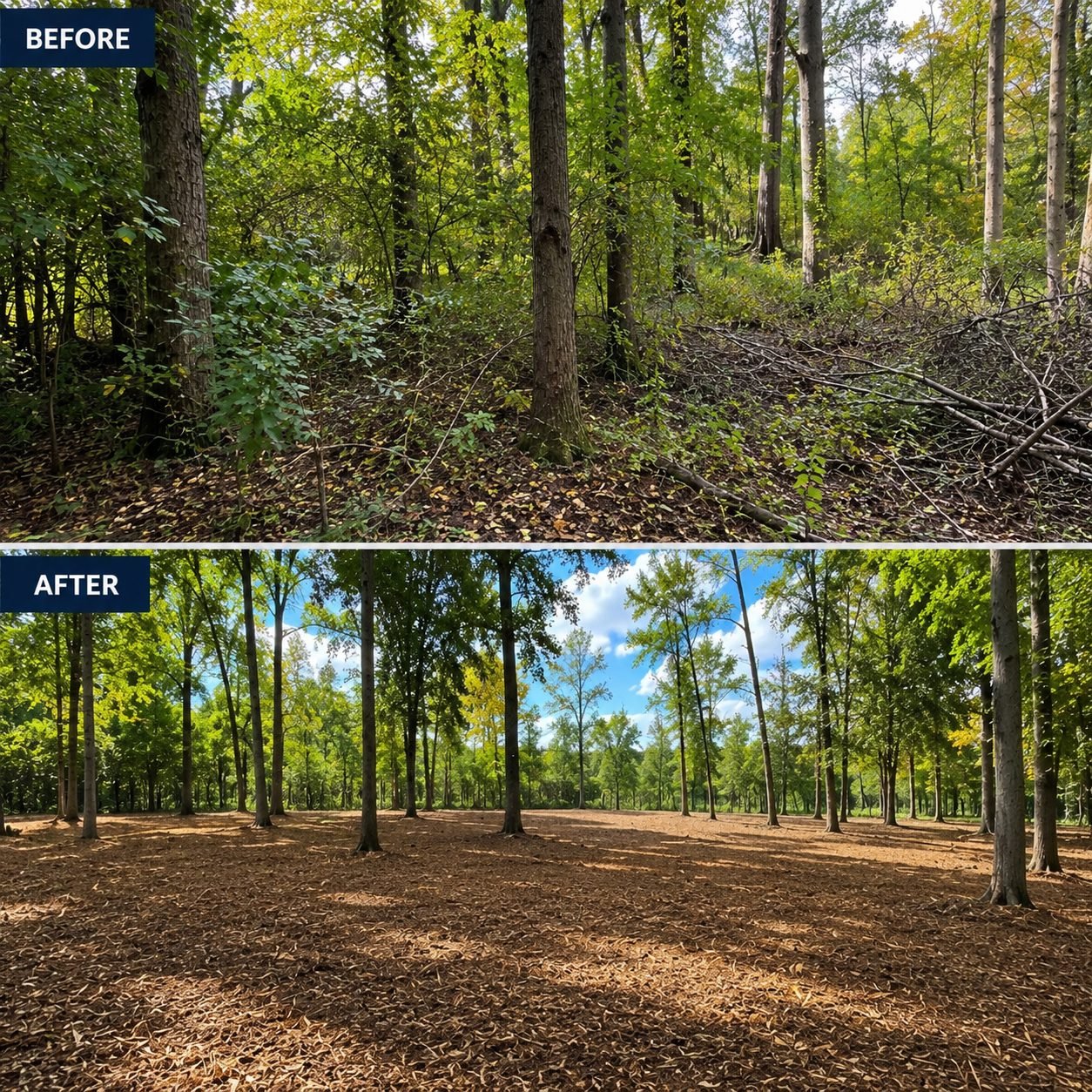
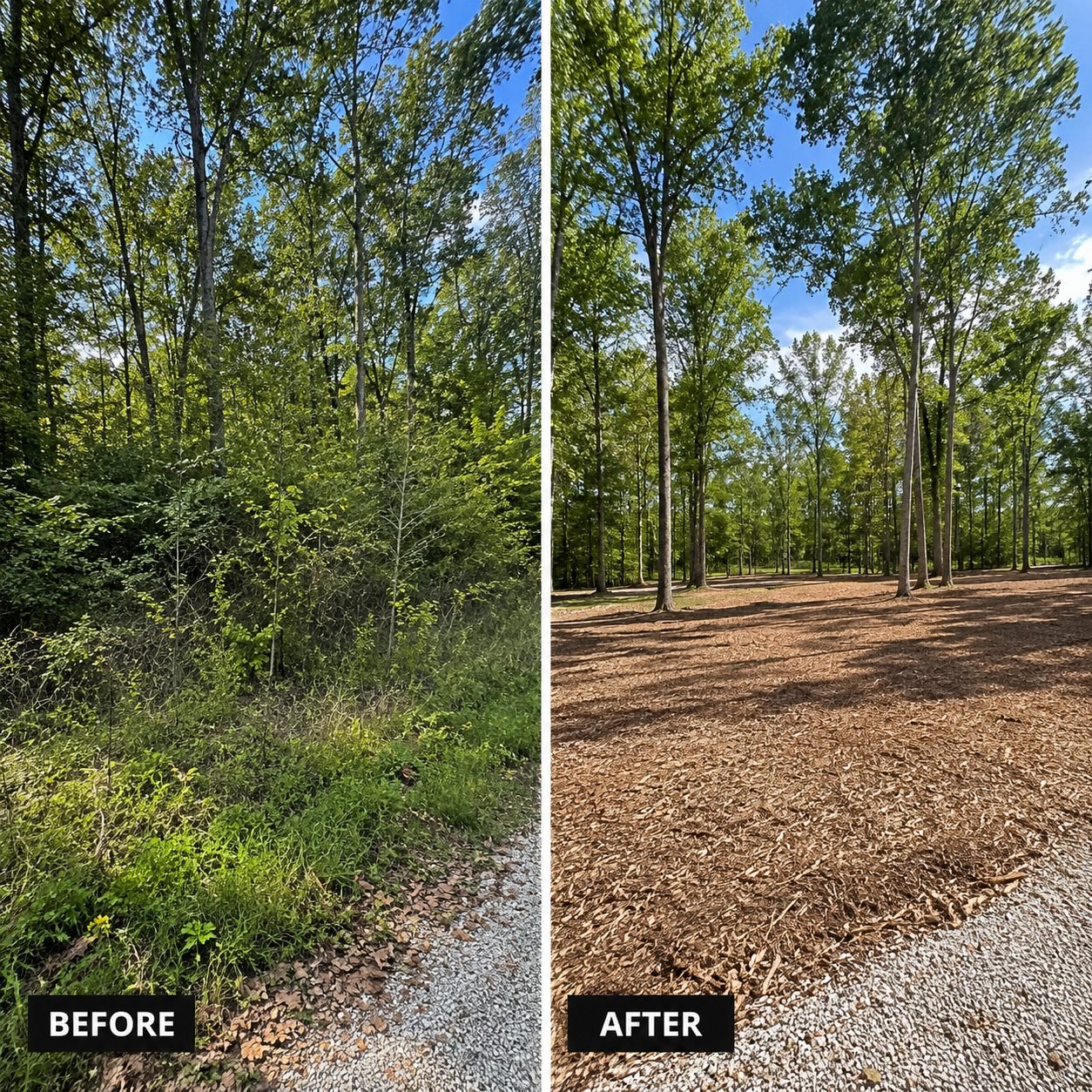
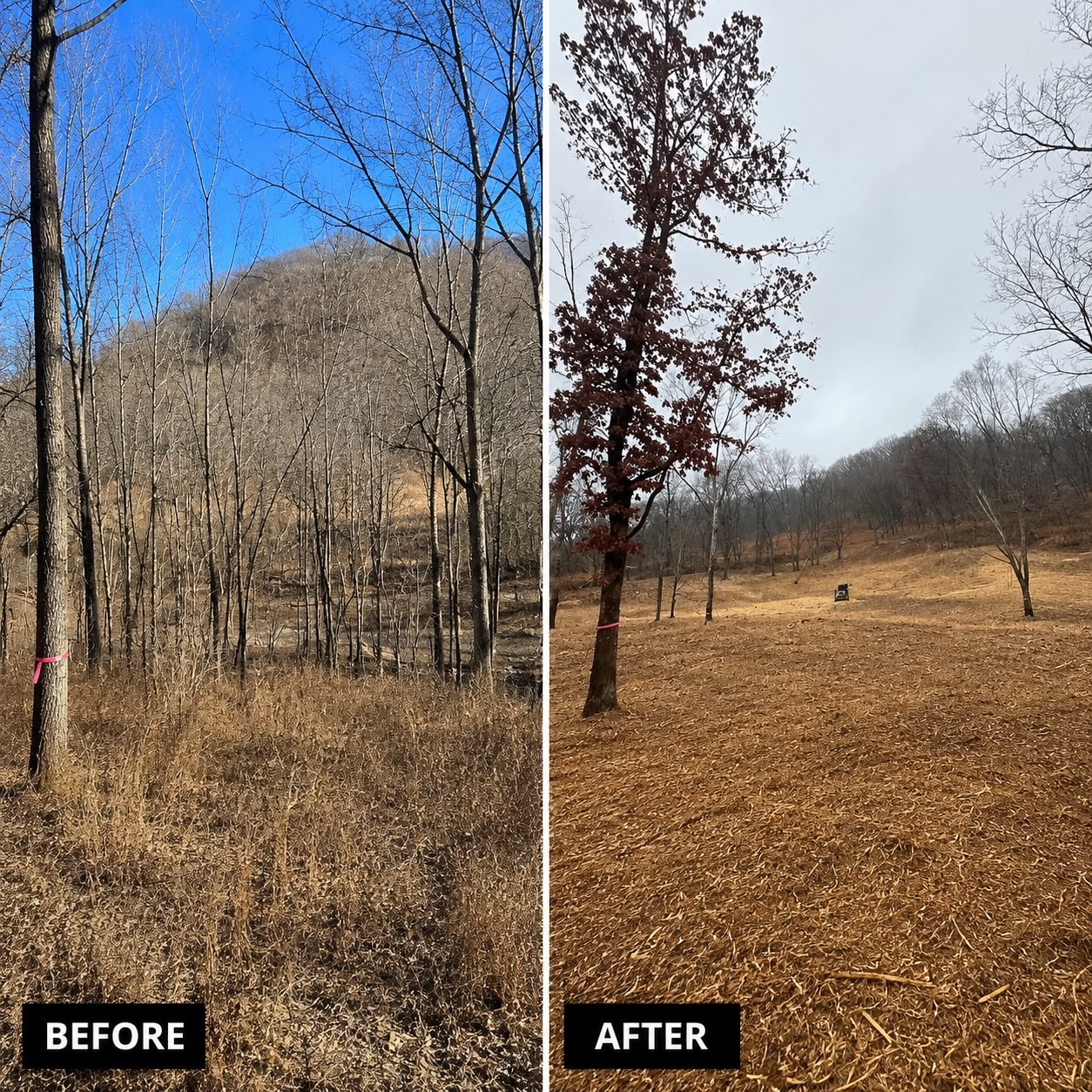
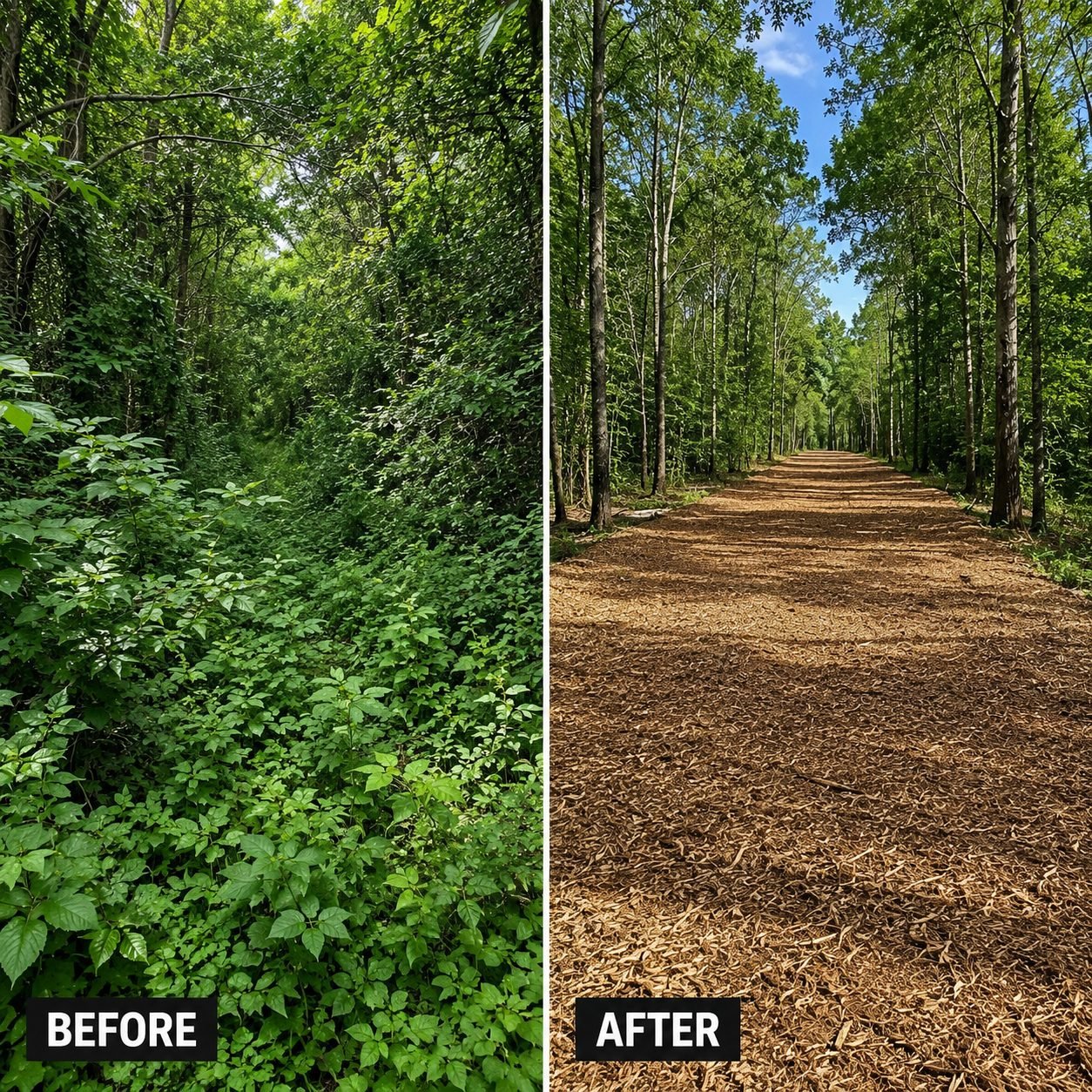
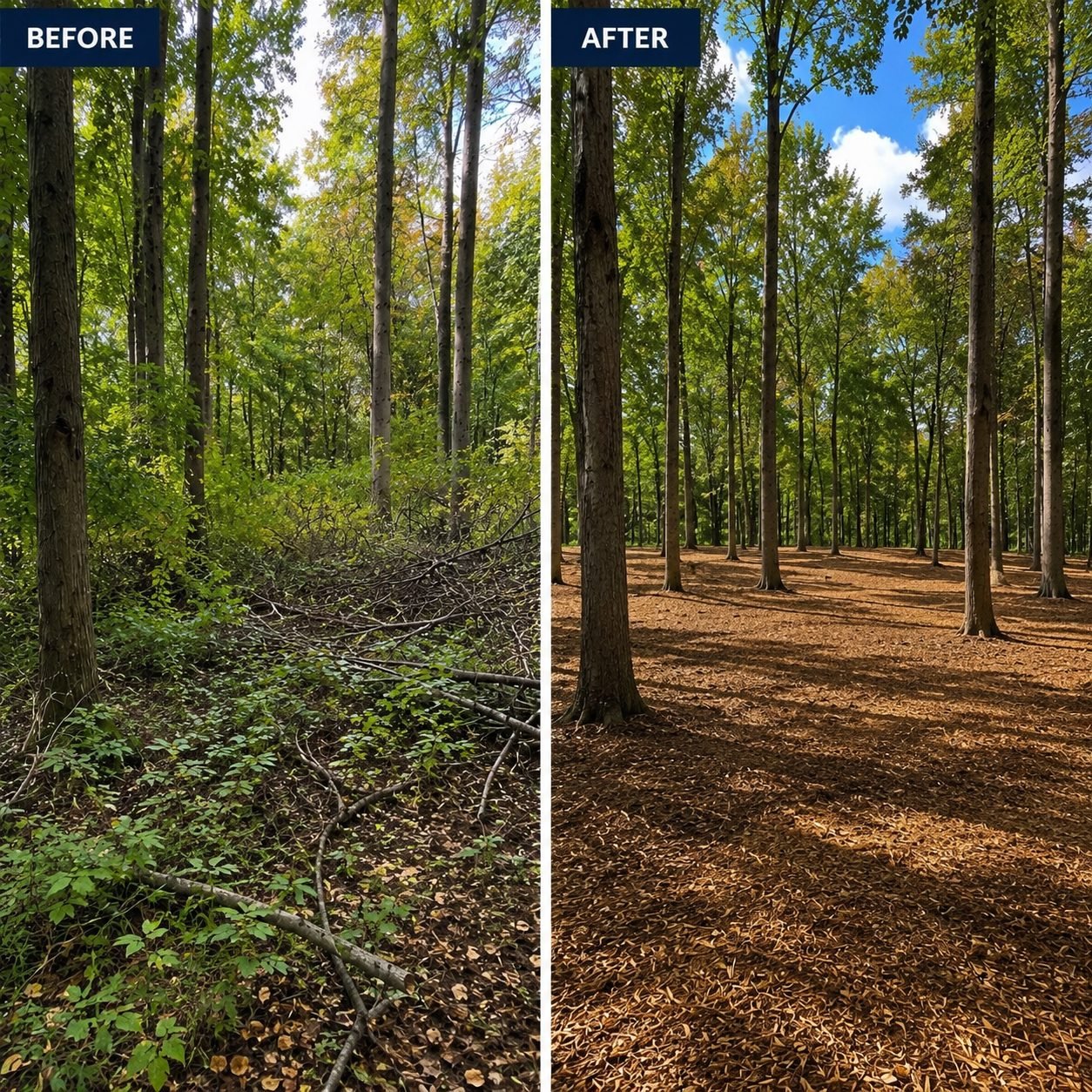
What Does Land Clearing Look Like Before and After in Granville, Ohio?
Recent Central Ohio jobs. The finished surface keeps a two to four inch mulch layer rather than bare soil, which is what holds ground through the first winter after clearing.
What Do Granville, Ohio Owners Ask About Land Clearing?
For the first season it looks like worked ground. By the second it reads as woodland floor.
Autumn seeding into a settled layer works well. Seeding into fresh thick mulch establishes poorly.
Selective clearing gives open walkable woodland while the canopy and cover stay. That is the usual answer.
Soil depth and slope class are published for any parcel, so it is checked rather than assumed.
Two to four inches across the worked area, varying with how much material the ground carried.
Ground woody material at distance from a structure is not a meaningful concern. Keeping it off foundations is normal practice regardless.
What Else Can Fortress Do on a Granville, Ohio Property?
Land clearing, forestry mulching, excavation, demolition and grading run with the same crew and the same point of contact, so a Granville job that needs two trades does not wait on a second schedule.
Soil depth, slope class and erosion factor for any Granville parcel are published in the USDA NRCS Web Soil Survey (accessed August 2026).
Ready for a Flat Rate on Your Granville, Ohio Land Clearing?
Owner-operated land clearing across all five Central Ohio counties. Send your property details and Lee gets back to you within 2 to 3 hours during business hours with one flat number after a free on-site walk-through.