

Does Land Clearing Kill Mature Trees in Westerville, Ohio?
Land clearing does not kill mature trees in Westerville, Ohio when it removes only the understory beneath them. Taking honeysuckle out from under mature oak and maple actually improves canopy health, because light and airflow return to the stand and competition for soil moisture drops away.
What understory removal does to the canopy
- Removing understory under mature trees improves their health rather than harming it.
- Light and airflow return to the canopy once the honeysuckle layer is gone.
- Competition for soil moisture drops significantly.
- The real risk to mature trees is root zone damage, not the clearing pass.
- Equipment traffic and grade changes inside the root zone kill trees slowly.
- Keeper trees are flagged physically before a machine moves.
What Else Do People Ask About Land Clearing in Westerville, Ohio?
No, the opposite. It reduces competition for water and restores light and airflow.
Root zone damage. Equipment traffic, compaction and grade changes under the canopy.
Roughly the area under the canopy, not a small circle at the trunk. That is what needs protecting.
The trunks become visible and the ground beneath opens up. The canopy itself is unchanged.
Why Does Understory Removal Help Westerville, Ohio Trees?
Because honeysuckle competes directly with the trees above it. It forms a dense layer that takes soil moisture, blocks airflow through the lower canopy and shades out everything at ground level including young natives.
Removing it returns those resources. Competition for water drops, air moves through the stand again, and light reaches the forest floor for the first time in years.
On a Westerville lot with eighty-year oak and maple, that canopy is the asset. Understory removal protects it rather than threatening it.
Native ground layer often returns without replanting afterwards, because the seed bank was shaded out rather than destroyed.
What Actually Threatens Mature Trees During Westerville, Ohio Clearing?
The root zone. Equipment traffic compacting soil under the canopy, and grade changes cutting or filling inside that area, kill more mature trees than any clearing pass does, and they do it slowly enough that nobody connects the two.
The root zone is roughly the area under the canopy spread, not a small circle around the trunk. That is the area that needs protecting.
Compaction is invisible and cumulative. Repeated passes over the same ground under a tree restrict water and air to the roots, and decline shows up seasons later.
Grade changes are worse. Piling fill against a trunk or cutting soil away inside the root zone will kill a mature tree, and it is a common build-phase mistake.
How Are Keeper Trees Protected on a Westerville, Ohio Lot?
Flagged physically on the tree so the operator can see them from the machine, with traffic routes planned to stay off the root zones. A plan or a verbal description is not sufficient in a wooded lot.
Winter is the best window for this work specifically. With leaves down the operator can distinguish keeper stems from invasive ones reliably, which is genuinely difficult in summer.
Where a build follows the clearing, the protected zones need communicating to the builder too. Most mature tree losses happen during construction rather than clearing.
See forestry mulching for how selective work is carried out around retained trees.
What Helps and What Harms Westerville, Ohio Mature Trees?
Effect of common site activities on retained mature trees on Westerville lots. The clearing pass is rarely the risk; what happens around the root zone is.
| Activity | Effect on mature trees | Why | Mitigation |
|---|---|---|---|
| Understory honeysuckle removal | Positive | Less competition, more light | None needed |
| Mulch layer left in place | Positive | Moisture retention | Keep off the trunk |
| Equipment traffic under canopy | Negative | Soil compaction | Defined routes |
| Fill piled against a trunk | Severe | Root suffocation | Never do it |
| Cutting grade inside root zone | Severe | Root loss | Keep grade changes out |
| Material storage under canopy | Negative | Compaction | Store elsewhere |
| Trenching through root zone | Negative | Root severance | Route around |
Practice published by Fortress Level Construction for its Franklin County operation, August 2026. Bush honeysuckle, autumn olive and multiflora rose are listed among the species restricted in Ohio by the Ohio Department of Natural Resources and the Ohio Department of Agriculture Division of Plant Health (both accessed August 2026).
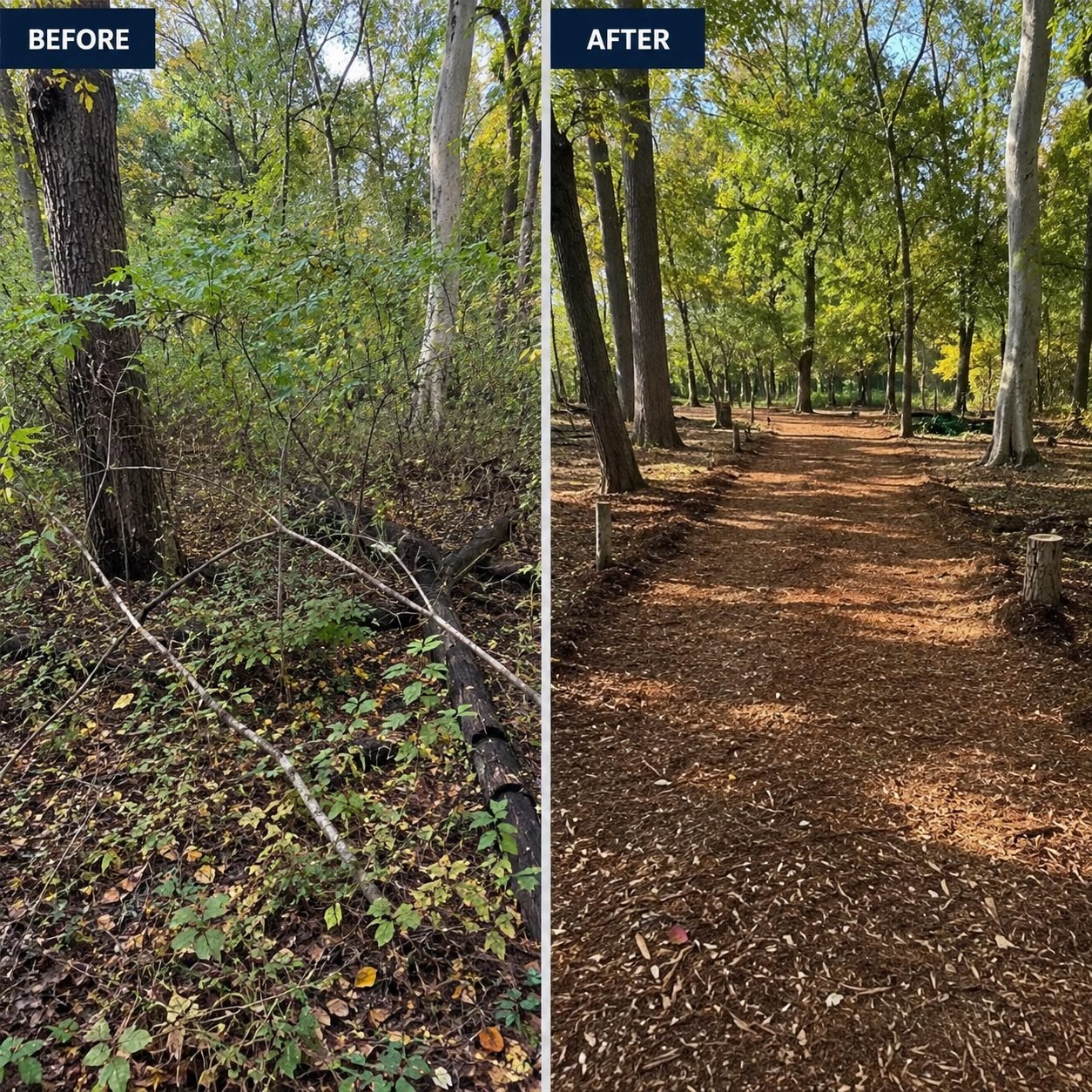
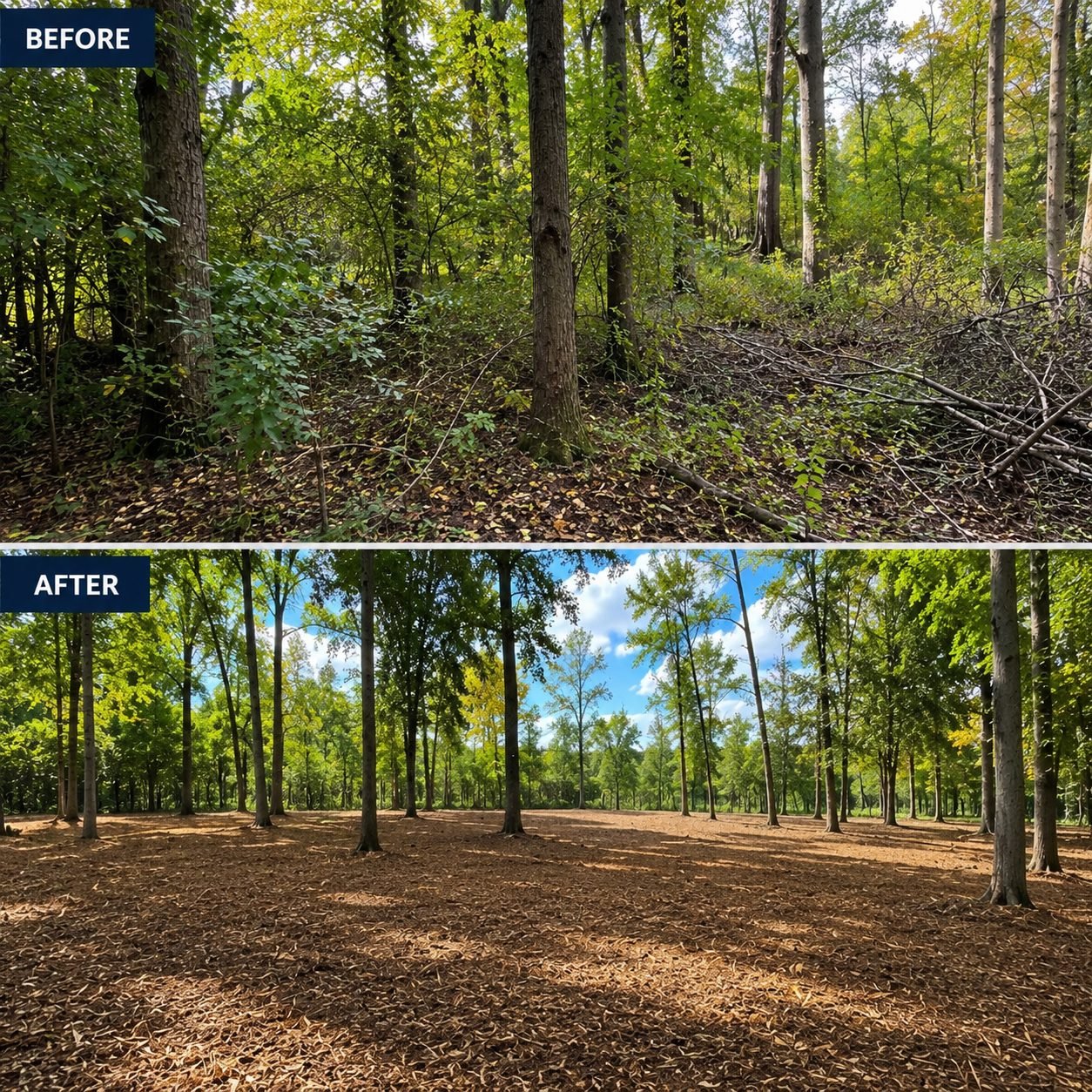
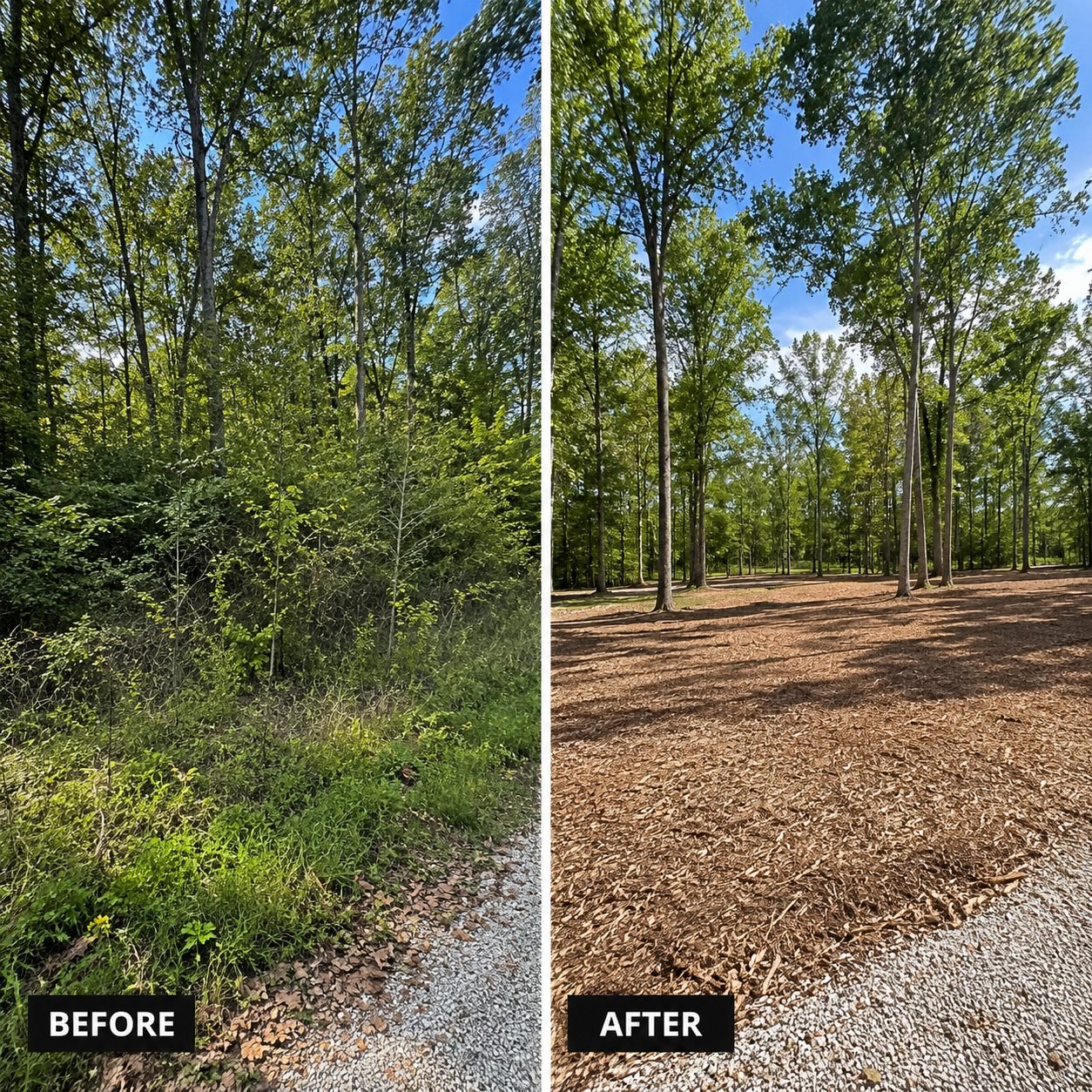
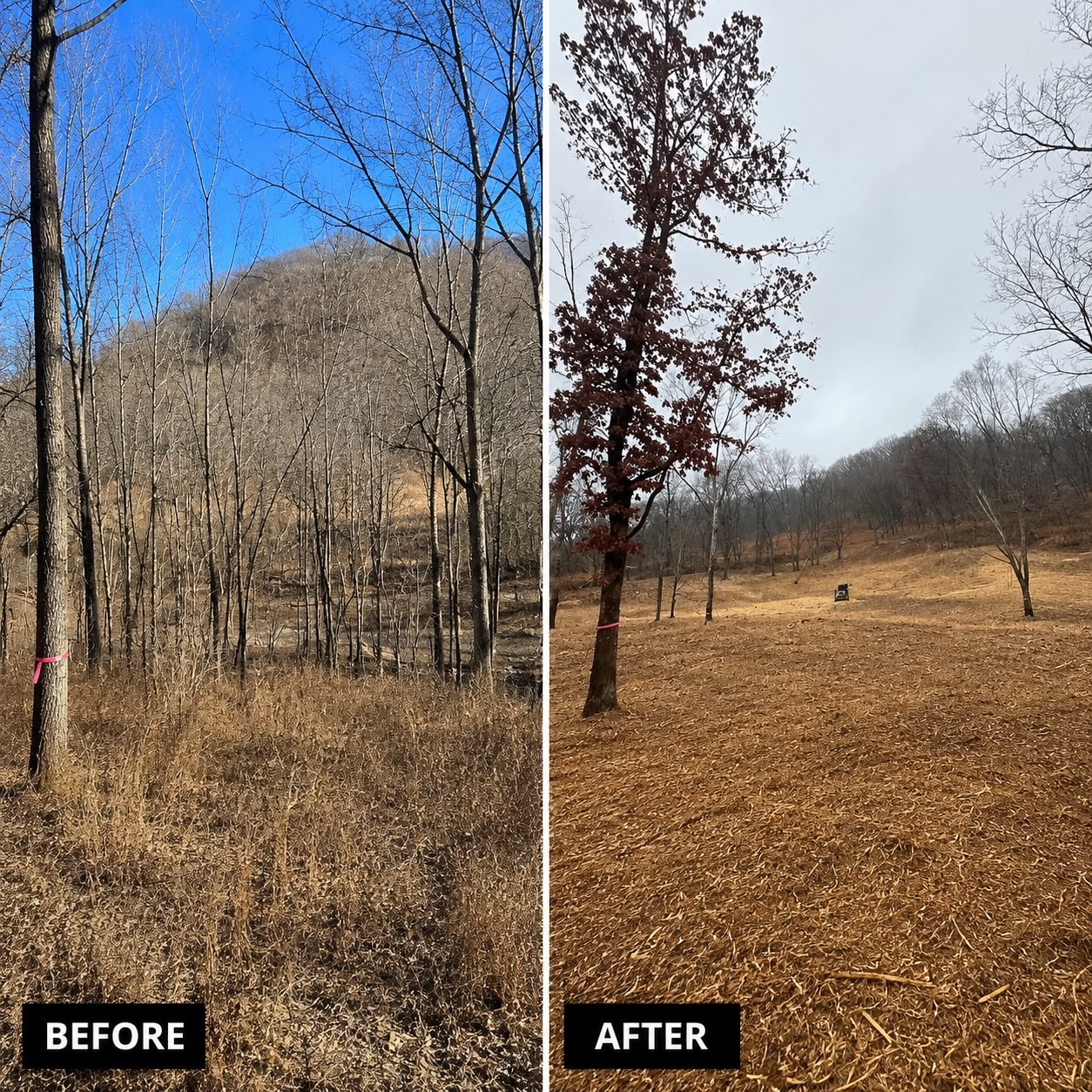
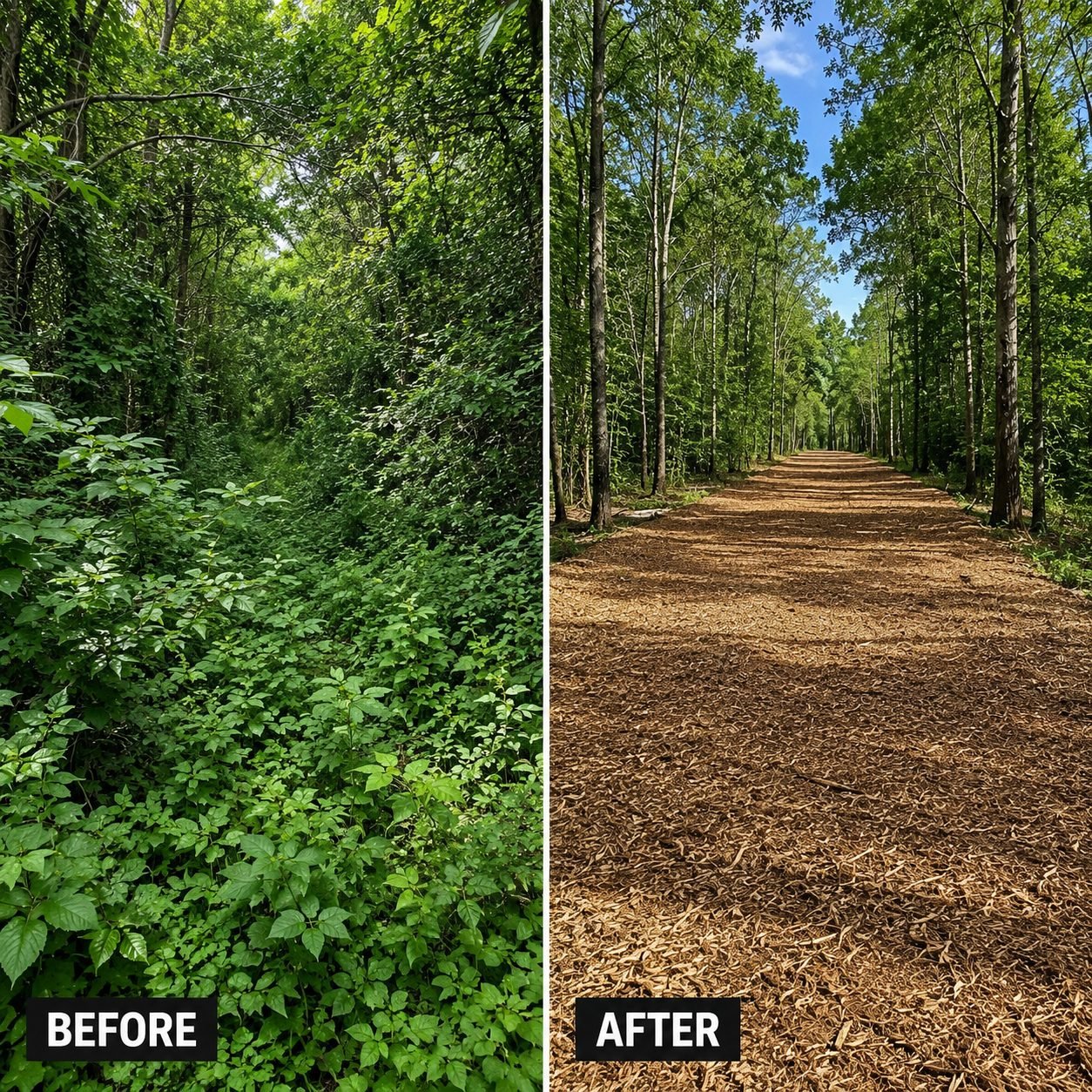
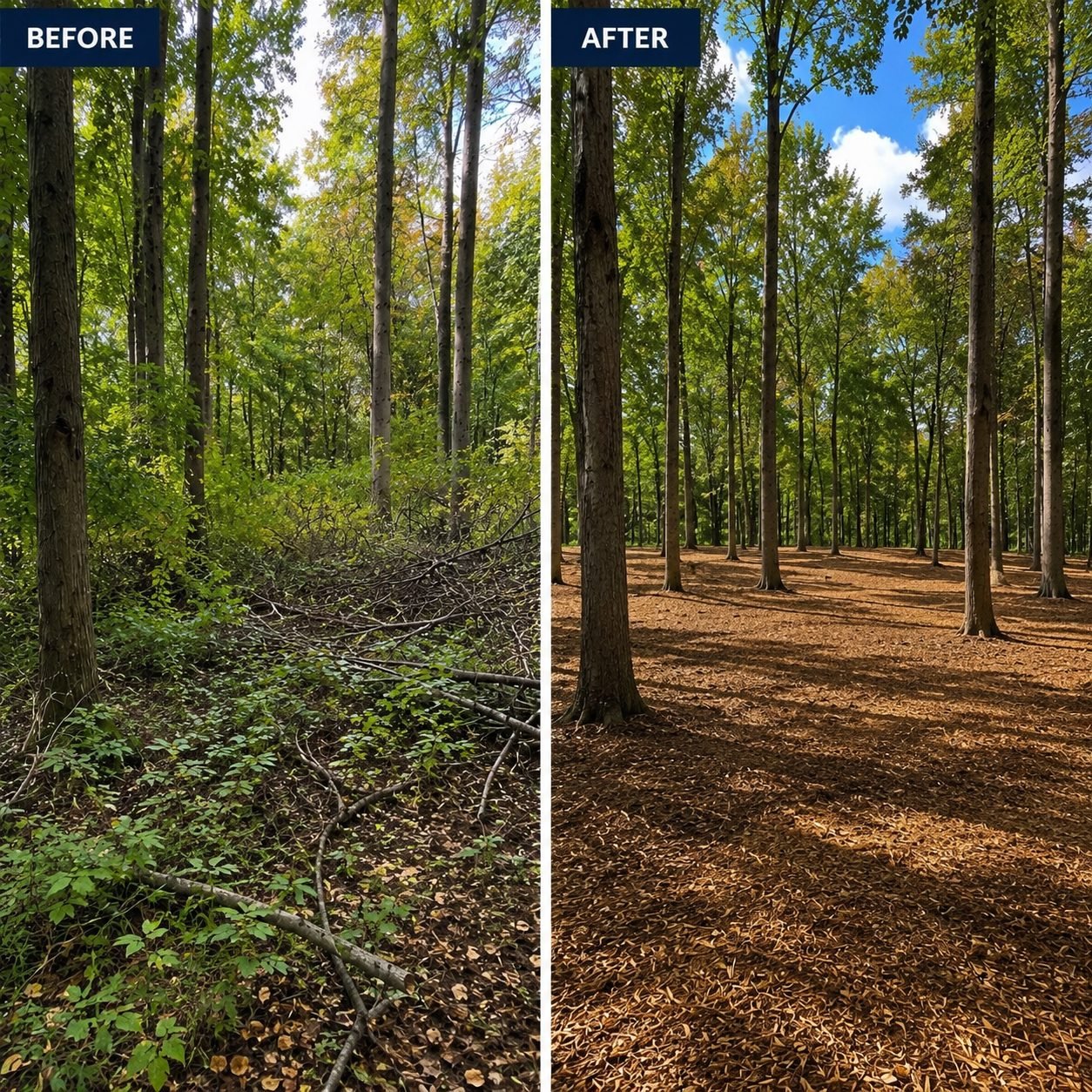
What Does Land Clearing Look Like Before and After in Westerville, Ohio?
Recent Central Ohio jobs. The finished surface keeps a two to four inch mulch layer rather than bare soil, which is what holds ground through the first winter after clearing.
What Do Westerville, Ohio Owners Ask About Land Clearing?
Removing understory does not destabilise a healthy tree. Dead or damaged stems are identified and removed at the walk.
That is arborist work rather than clearing. Hazardous limbs are flagged if seen.
Ground layer response within a season. Canopy vigour is slower and shows across a few years.
Yes, where flagged. They are the next canopy generation and easy to lose by accident.
No, provided it is kept off the trunk itself. Against bark it holds moisture where you do not want it.
Yes. Leaves down means keeper stems are identifiable and the ground carries equipment better.
What Else Can Fortress Do on a Westerville, Ohio Property?
Land clearing, forestry mulching, excavation, demolition and grading run with the same crew and the same point of contact, so a Westerville job that needs two trades does not wait on a second schedule.
Bush honeysuckle, autumn olive and multiflora rose are listed among the species restricted in Ohio by the Ohio Department of Natural Resources and the Ohio Department of Agriculture Division of Plant Health (both accessed August 2026).
Ready for a Flat Rate on Your Westerville, Ohio Land Clearing?
Owner-operated land clearing across all five Central Ohio counties. Send your property details and Lee gets back to you within 2 to 3 hours during business hours with one flat number after a free on-site walk-through.