

How Does Pasture Clearing for Livestock Reclamation Work in Central Ohio?
Pasture clearing in Central Ohio reclaims overgrown fields for livestock by removing brush, saplings, and invasive species so grass can regrow for grazing. Fortress Level Construction uses forestry mulching and selective clearing methods tailored to the region’s clay and glacial soils, restoring rotational pastures and improving livestock safety.
The Quick Answer
- Pasture clearing in Central Ohio reclaims overgrown fields for livestock by removing brush, saplings, and invasives so grass returns for grazing.
- Central Ohio’s Brookston clay and Coshocton silt loam require careful equipment selection to prevent soil compaction.
- Fortress Level Construction uses forestry mulchers and CAT track loaders for efficient, low-disturbance clearing.
- Livestock-focused clearing targets invasive plants that are toxic or hazardous to animals, such as multiflora rose and bush honeysuckle.
- Rotational pasture reclamation restores multiple grazing zones for improved herd management.
- Forestry mulching costs $1,850 to $3,500 per acre; full clearing with haul-off ranges from $4,000 to $8,000 per acre.
- Most residential or agricultural projects require no permit, but some sites may need a $100 to $300 land-disturbance permit.
- Owner Lee Carson walks every site and provides flat-rate, written quotes tailored to local soils and livestock needs.
Related Questions People Ask Next
Yes, pasture clearing for livestock focuses on removing brush and invasives to restore grass for grazing, while standard land clearing often prepares sites for construction and may involve complete tree and stump removal with grading. Pasture clearing aims to minimize soil disturbance and preserve grass roots.
Bush honeysuckle, multiflora rose, autumn olive, and buckthorn are common invasive plants in Central Ohio pastures. These species can choke out grass and some are toxic or harmful to livestock. Effective clearing includes mulching and, if needed, targeted follow-up to prevent regrowth.
Livestock can typically return once mulched debris has settled and grass begins to regrow, usually within a few weeks to a few months depending on rainfall and soil conditions. For full clearing, allow additional time for soil stabilization and any required reseeding.
Most small-scale agricultural and pasture clearing projects do not require a permit. However, projects disturbing over one acre or near protected wetlands may need a $100 to $300 local land-disturbance permit. Always check with your county planning office before starting.
What Is Livestock Pasture Clearing and How Does It Differ from Other Services?
Livestock pasture clearing reclaims overgrown fields by removing brush, saplings, and invasives so grass can regrow for grazing. Unlike full land clearing, it preserves soil structure and existing grass, focusing on livestock safety and rotational grazing needs. This approach is tailored to Central Ohio’s unique agricultural requirements.
Pasture clearing targets unwanted growth that limits grazing, such as saplings and invasive shrubs, while leaving healthy grass intact.
Unlike construction clearing, which removes all vegetation and grades the soil, pasture clearing minimizes ground disturbance to protect future forage.
Why Do Central Ohio’s Soils and Terrain Make Pasture Clearing Important?
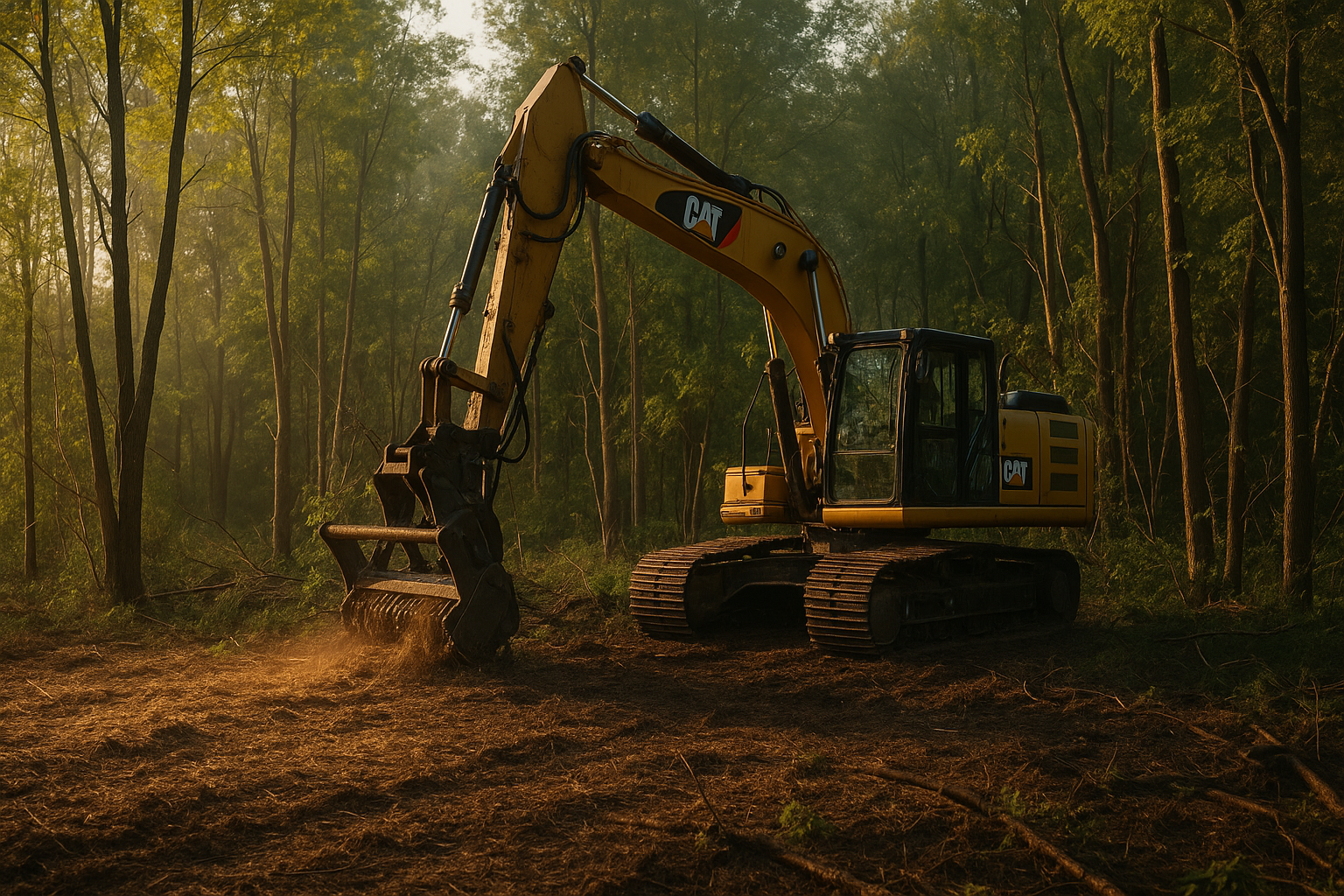
Central Ohio’s Brookston clay and Coshocton silt loam soils retain water and compact easily, making selective clearing essential for pasture health. Rolling hills and glacial plains create drainage challenges that require specialized equipment and techniques for livestock safety. Proper clearing encourages healthy grass regrowth and long-term field productivity.
Poorly drained clay soils can rut or compact if heavy equipment is used improperly, harming grass regrowth.
Local invasive species thrive in these soils, so targeted mulching and brush removal are crucial for reclaiming safe, productive pasture.
What Equipment Does Fortress Level Construction Use for Pasture Reclamation?
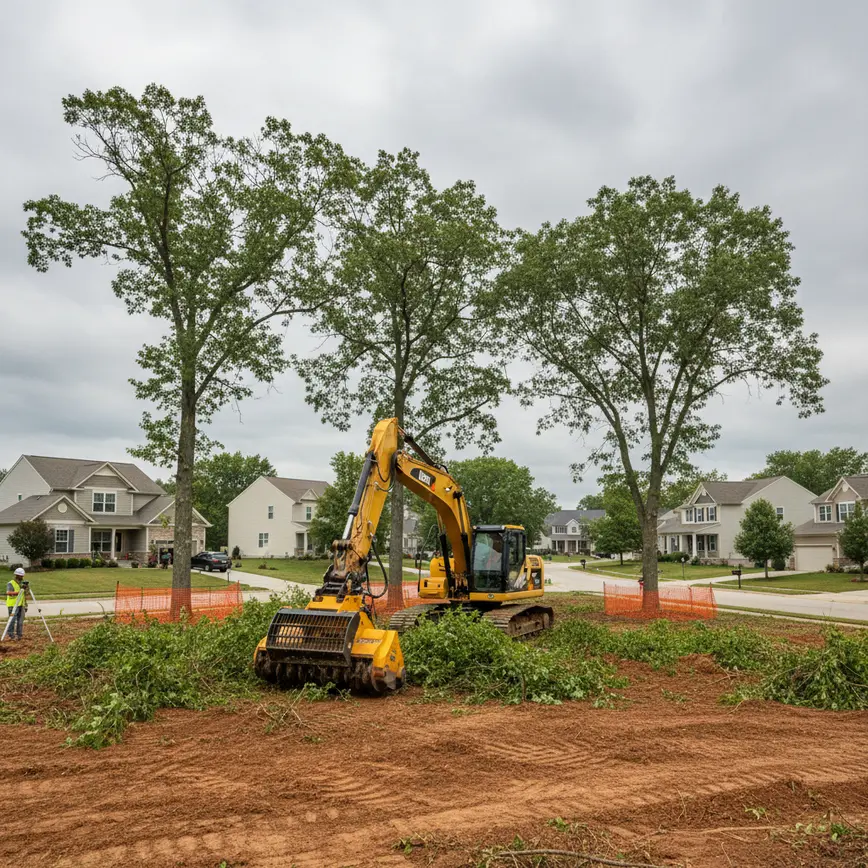
Fortress Level uses forestry mulchers on compact track loaders, along with excavators and dozers as needed. This equipment efficiently removes brush and saplings up to 14 inches in diameter, minimizing soil disturbance and preserving grass root systems for rapid pasture recovery. Each project is matched to the site’s soil and terrain.
A John Deere 333G compact track loader with a Diamond drum mulcher handles most brush and sapling removal.
Caterpillar track loaders and excavators with hydraulic thumbs are used for precision work, especially on challenging soils or steep terrain.
What Is the Process and Timeline for Livestock Pasture Clearing in Central Ohio?
The process starts with a site walk to assess soil and vegetation, followed by forestry mulching or selective clearing. Most pastures are reclaimed within a few days per field, with minimal downtime before livestock can return. Permits are rarely needed unless clearing over one acre or near sensitive areas.
Owner Lee Carson inspects each site, marks boundaries, and plans equipment use based on soil and livestock needs.
Clearing typically takes 1-5 acres per day; follow-up may include spot treatments for invasive regrowth or fence line restoration.
How Does Livestock Pasture Clearing Compare to Other Land Clearing Methods in Central Ohio?
Pasture clearing for livestock uses forestry mulching to restore grazing land, while other methods may focus on construction prep or total vegetation removal. Here’s how it compares to related services:
| Livestock Pasture Clearing | Forestry Mulching (General) | Full Land Clearing (Construction) | Brush Hogging/Mowing |
|---|---|---|---|
| Removes brush, saplings, invasives for grazing; preserves grass and soil structure | Grinds brush and trees in place; suitable for woods, trails, or fields | Removes all vegetation, stumps, roots; includes grading and haul-off | Cuts surface brush and grass; does not address saplings or invasives |
| Typical cost: $1,850-$3,500/acre for mulching; $4,000-$8,000/acre for full clearing | Similar cost range; may not focus on livestock safety or pasture needs | Higher cost due to grading and debris removal; best for building sites | Lowest cost, but limited effectiveness for overgrown or woody areas |
| Targets livestock hazards (toxic plants, hidden debris); enables rotational grazing | Improves access and appearance, but may leave stumps or regrowth | Prepares land for construction, not grazing; removes all vegetation | Maintains open fields but does not reclaim lost pasture |
| Minimal soil disturbance; tailored for Central Ohio soils | May cause rutting if not managed for local soil conditions | Significant soil disturbance; risk of erosion on slopes | No soil disturbance, but does not solve root or invasive issues |
| Best for reclaiming idle or overgrown livestock pasture | Best for wooded lots, trails, or general brush reduction | Best for new home sites or commercial development | Best for maintaining already-cleared, lightly overgrown fields |
When Is Pasture Clearing Not the Right Choice in Central Ohio?
Pasture clearing is not ideal if your goal is total site prep for construction or if the field is already open with only light grass growth. In those cases, full land clearing or periodic mowing may be better options.
If you need to remove all vegetation, stumps, and grade the land for a building site, full land clearing is recommended.
For lightly overgrown fields with no woody brush, regular mowing or brush hogging is more cost-effective than pasture clearing.
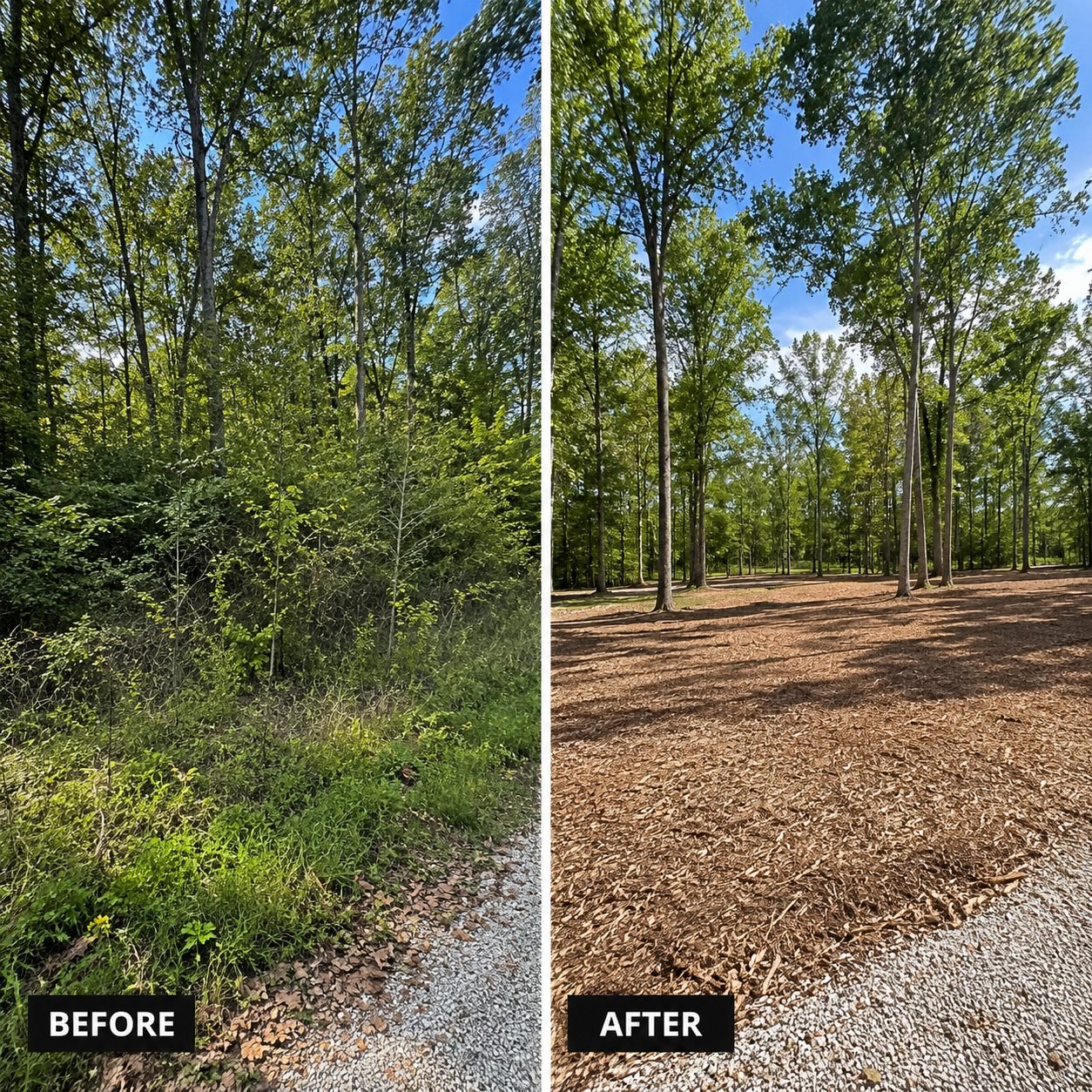
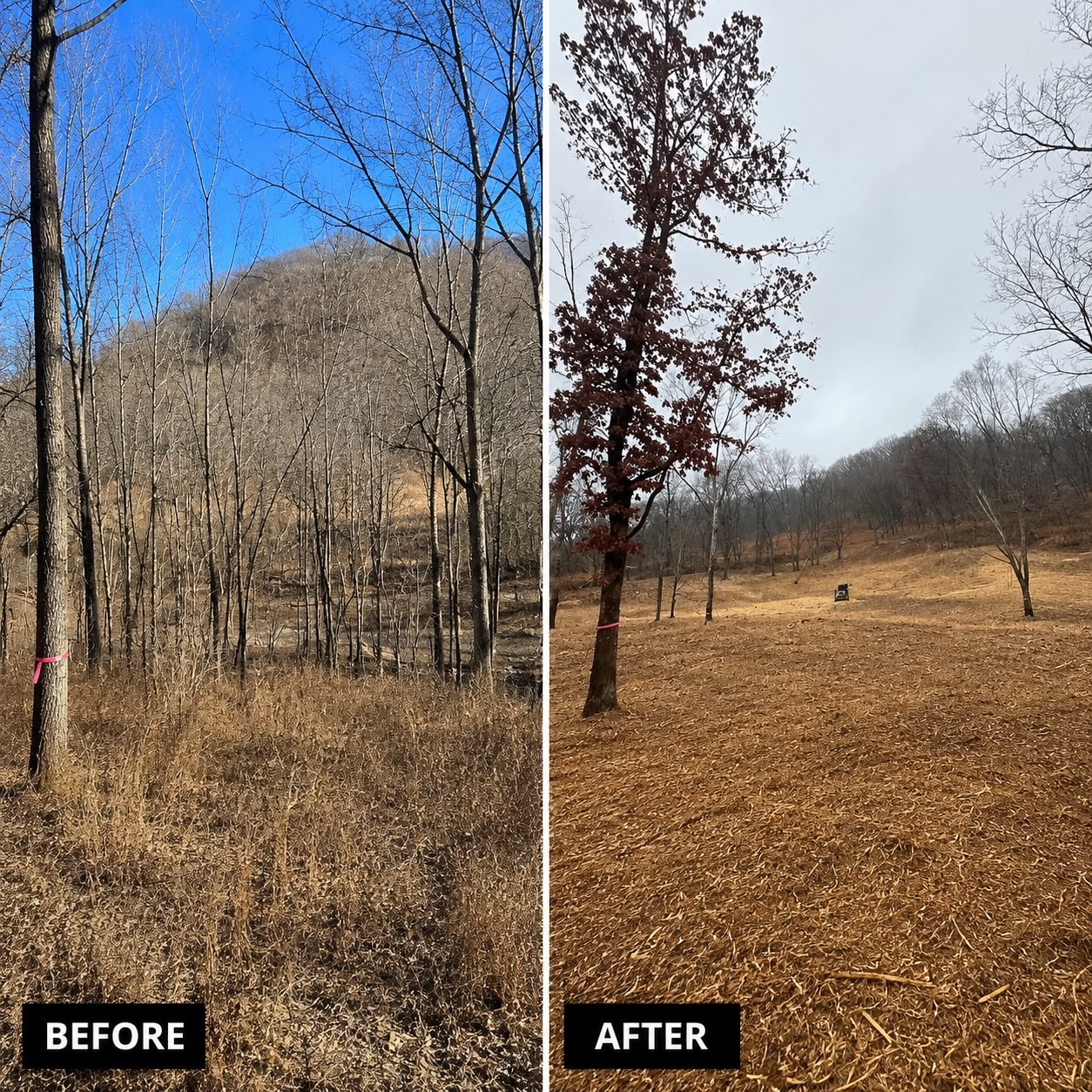
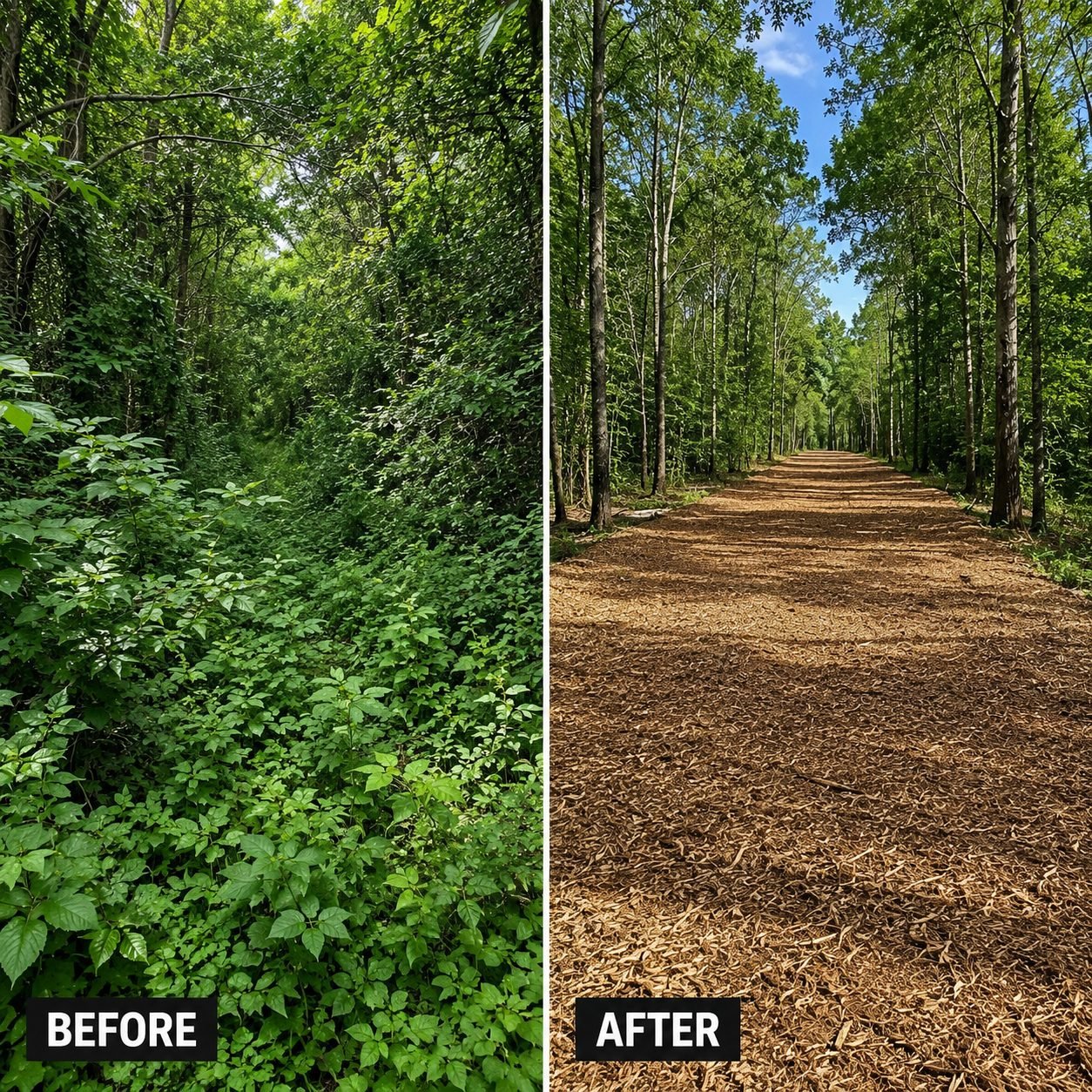
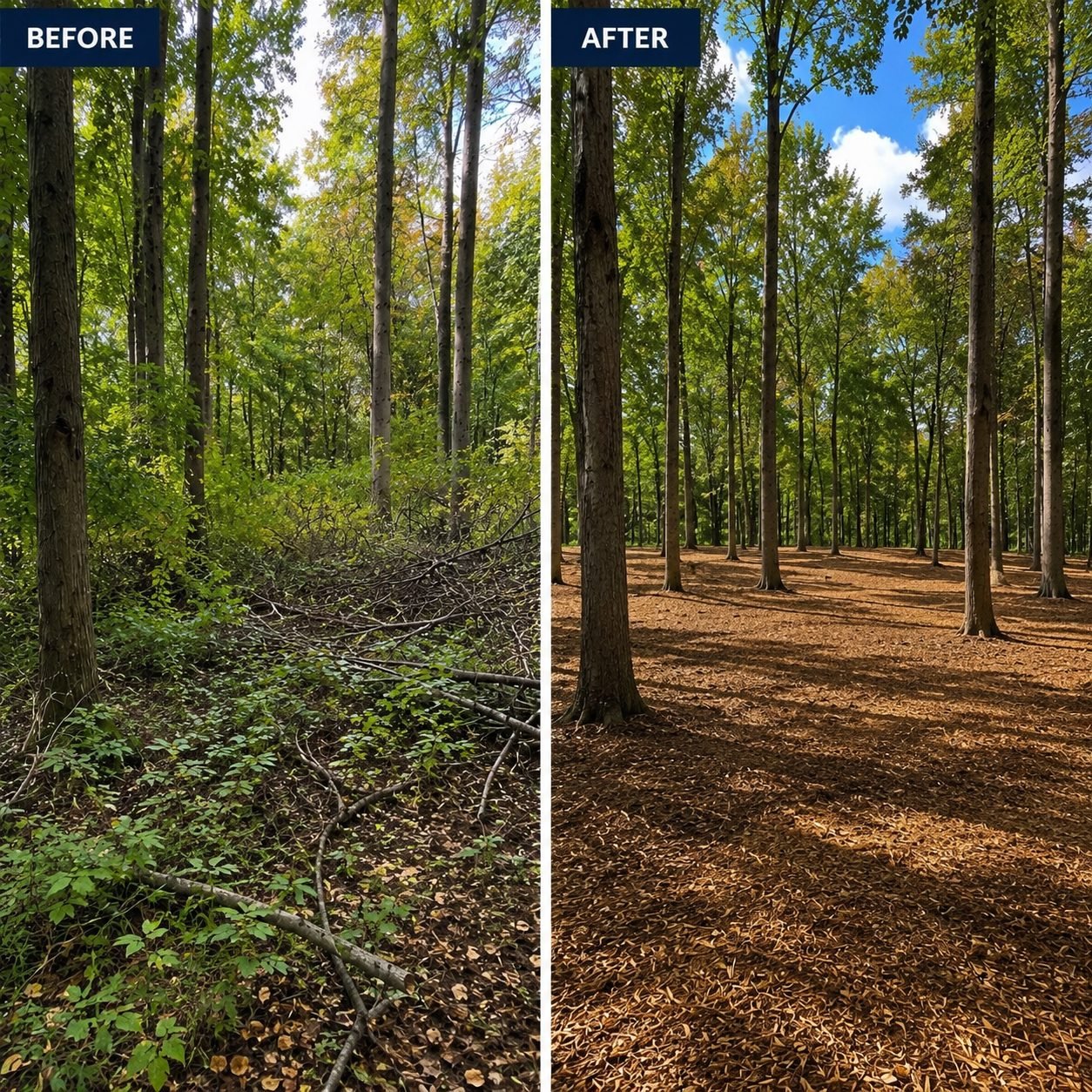
What Does Livestock Pasture Clearing Look Like Before and After in Central Ohio?
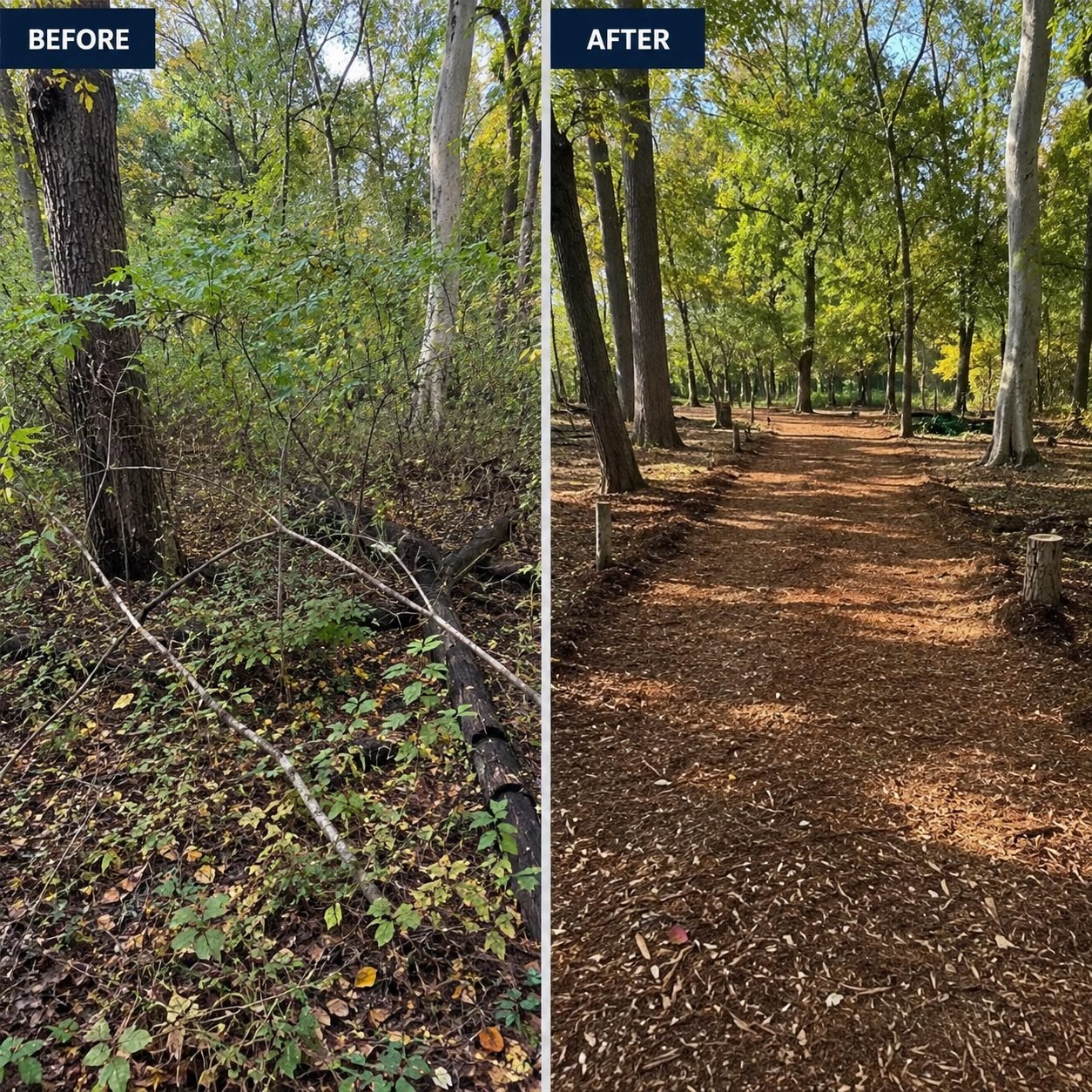
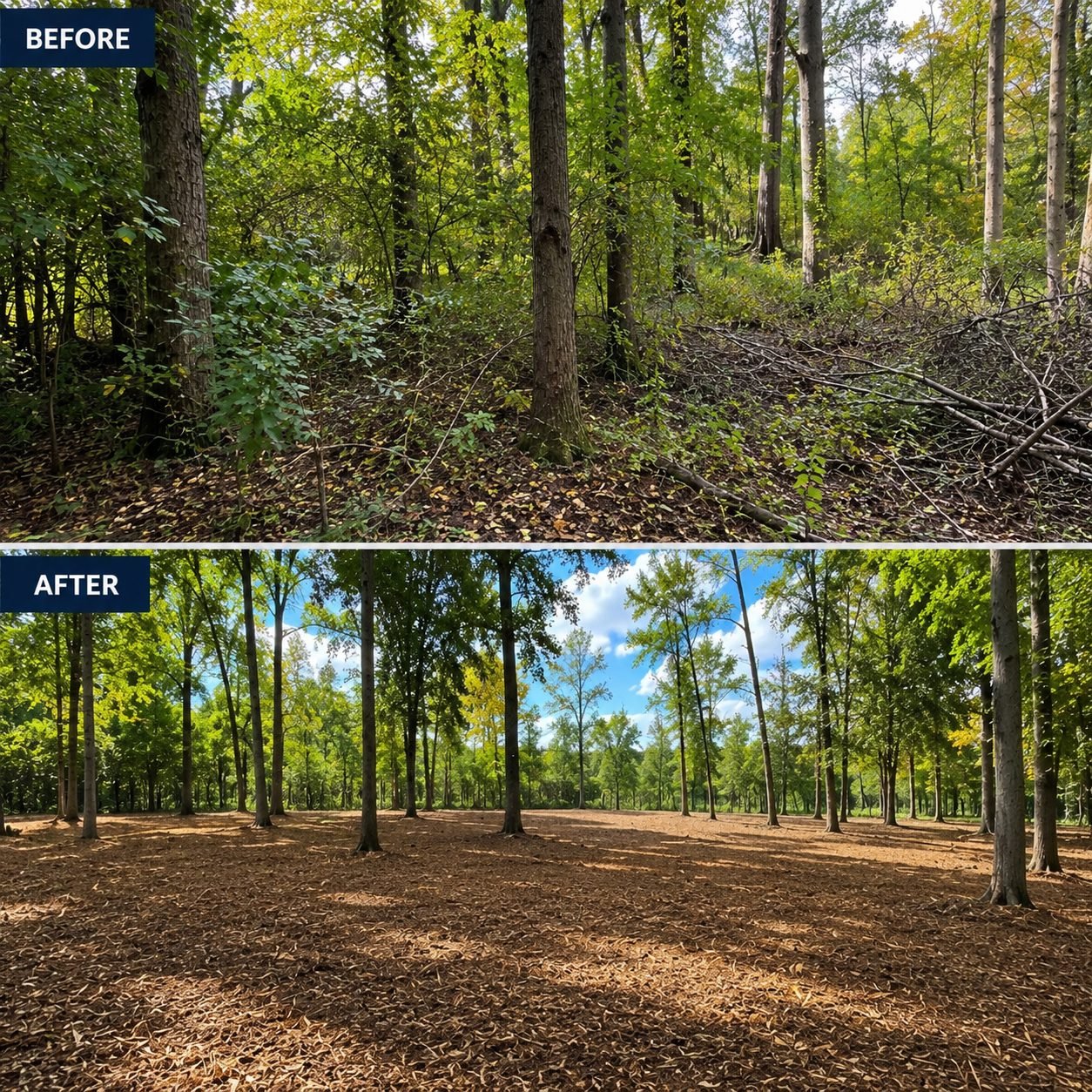
Before clearing, Central Ohio pastures are often choked with brush, saplings, and invasives that crowd out grass. After Fortress Level’s forestry mulching, fields are open, with mulch left in place and healthy grass ready to regrow for grazing livestock.
Frequently asked questions
Pasture clearing removes brush, saplings, and invasive species that limit grass growth and can be harmful to livestock. By reclaiming overgrown fields, it restores healthy forage, improves access, and reduces hazards like toxic plants or hidden debris. This creates a safer, more productive grazing environment for cattle, horses, and other animals.
Forestry mulching grinds brush and saplings in place, leaving mulch to protect the soil and encourage grass regrowth. Full land clearing removes all vegetation, stumps, and often includes grading, which is more disruptive and intended for construction sites. Mulching is preferred for pasture health and livestock safety in most cases.
Forestry mulching for pasture reclamation typically ranges from $1,850 to $3,500 per acre, depending on brush density and terrain. Full clearing with haul-off and grading ranges from $4,000 to $8,000 per acre. Most jobs use mulching for cost and soil health.
Fortress Level Construction uses compact track loaders with forestry mulchers for most brush and sapling removal. For larger trees or difficult terrain, excavators with hydraulic thumbs and dozers are available to handle stumps and heavy debris efficiently. Equipment is matched to the site’s soil and livestock needs for best results.
Yes, invasive shrubs like bush honeysuckle and multiflora rose can quickly take over neglected fields and are harmful to livestock. Effective clearing removes these, but follow-up treatment may be needed to prevent regrowth, as they often resprout if only cut.
Contact Fortress Level Construction at (844) 656-0129 for a free site walk and quote. Owner Lee Carson visits every site, assesses your soil and pasture needs, and provides a flat-rate estimate. Most projects can be scheduled for a same-week start.
Pasture Clearing by County and City in Central Ohio
Franklin County
Fairfield County
Union County
What Other Services Does Fortress Offer in Central Ohio?
Fortress Level Construction runs a full range of land-clearing, excavation, grading, and site-work services across Central Ohio, so one owner-operated crew can clear, grade, and prep a site end to end.
Get a Flat-Rate Quote from Lee Carson
Owner-operated land clearing across all five Central Ohio counties. Send your property details and Lee gets back to you within 2 to 3 hours during business hours with one flat number after a free on-site walk-through.