
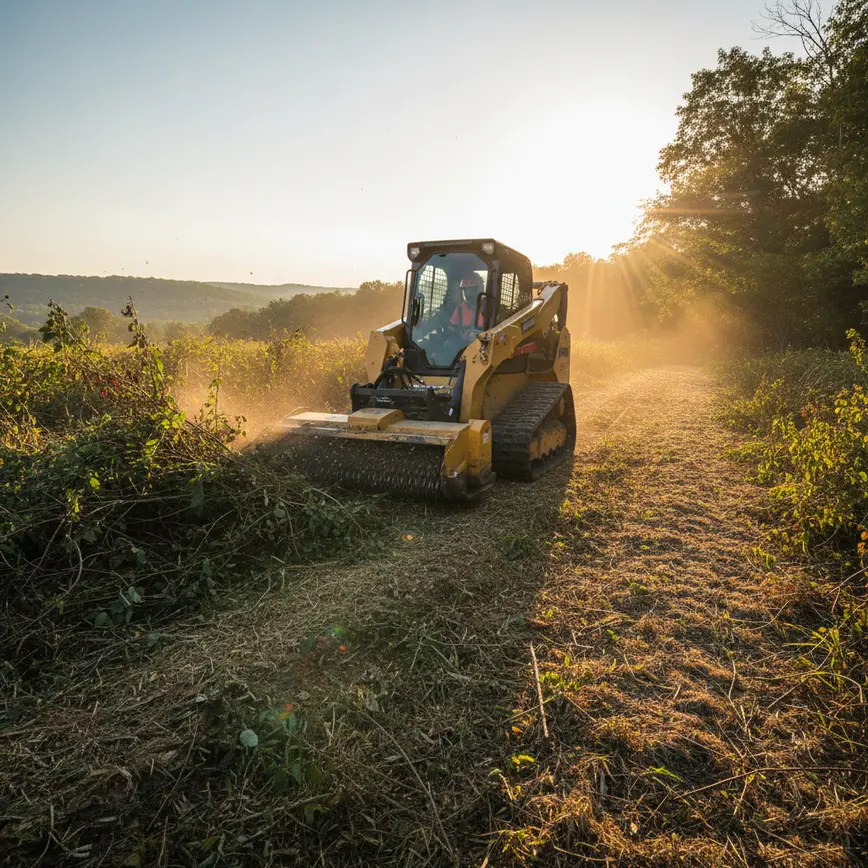

Pasture clearing in Newark often means tackling heavy tree cover on rolling hills and Coshocton silt loam soils. Fortress Level Construction, run by Mr. Carson since 2009, uses forestry mulchers and dozers sized for Newark’s Appalachian foothill terrain. Call (844) 656-0129 for a site walk and quote.
Pasture Clearing in Newark, Ohio
Pasture clearing in Newark, Ohio, brings its own set of challenges thanks to the region's steep hills and dense tree cover—especially on parcels along Raccoon Creek and in the transition zone of the Appalachian foothills. The presence of Coshocton silt loam soils makes for slick surfaces after rain and can slow progress if not handled with the right tracked equipment. Projects here often require careful planning to maintain soil stability, especially on grades above 10 percent. Clearing for livestock or hay production usually involves removing mature hardwoods, managing regrowth, and prepping for long-term pasture health.
Due to the frequent presence of creek valleys and the floodplain of the Licking River, many pasture sites in Newark require special attention to drainage and erosion control. Local permitting through the Licking County Planning Commission can be required, especially when disturbing over an acre or working near water features. Fortress Level Construction, under Mr. Carson’s direction, coordinates with local agencies and brings in low-ground-pressure machinery that minimizes rutting and compaction, which is important on Coshocton soils.
Since 2009, Mr. Carson has completed pasture clearing jobs throughout Newark’s outlying areas, from the steep edges near Horns Hill to lower-lying fields off Dayton Road. Typical work includes tree and brush removal, stump grinding, and grading for livestock fencing or rotational grazing setups. Clients in Newark benefit from experience with hillside access, wet weather work, and compliance with local land use ordinances.
Key Numbers at a Glance
Nearby Cities and Pasture Clearing Conditions
Compare Newark pasture clearing requirements with nearby towns in Licking County.
| Service | Population | Terrain | Soil Type | Permit Authority | Common Projects |
|---|---|---|---|---|---|
| Newark | 49,857 | Steep hills, creek valleys | Coshocton silt loam | Licking County Planning Commission | Dense tree clearing, hillside grading, creekside work |
| Heath | 10,412 | Gentle slopes, old fields | Miamian loam | Heath City Zoning | Brush removal, small tree mulching |
| Granville | 5,946 | Rolling hills, wooded lots | Cardington silt loam | Granville Township Zoning | Fence line clearing, pasture expansion |
| Pataskala | 15,408 | Flat to gently rolling | Bennington silt loam | Pataskala City Planning | Open field clearing, invasive species control |
Pasture Clearing and Related Services in Newark
Forestry Mulching
Forestry mulching is well-suited to Newark’s heavy hardwood stands and steep slopes, particularly in the wooded areas along the Licking River. We use high-flow skid steers with drum mulchers to grind trees and brush into mulch, leaving the soil structure intact. This method is efficient on Coshocton silt loam and minimizes soil disturbance, making it a practical choice for landowners who want quick results without extensive hauling or burning. Mulching can also help with invasive species control common in the Newark area.
Stump Removal and Grading
After tree and brush clearing, removing stumps and grading the land is critical for safe, effective pasture use in Newark. We employ excavators with stump grinders and heavy-duty blades to deal with deep-rooted hardwoods typical of the Appalachian foothill transition zone. Grading work addresses the slopes found along Raccoon Creek and prepares the ground for fencing or seeding, taking into account the drainage needs of Coshocton silt loam. This step sets the foundation for long-term pasture health and livestock safety.
Erosion Control and Seeding
Erosion can quickly become a problem on steep Newark pastures, especially after heavy clearing. Fortress Level Construction provides erosion control measures such as silt barriers, hydroseeding, and straw matting. We select seed mixes suitable for the local climate and soil, focusing on stabilizing slopes and restoring ground cover along creeks and hillsides. This service is particularly important for properties near the Licking River or in flood-prone areas where soil loss can be significant.
Permit Assistance and Site Planning
Navigating Licking County’s permitting process is a necessary step for most Newark pasture clearing projects. Mr. Carson works directly with the Licking County Planning Commission and understands local requirements for clearing over an acre or working near waterways. We assist with site plans, erosion control documentation, and compliance paperwork, saving landowners time and reducing delays. This service ensures your project meets all Newark and county regulations from start to finish.
“Fortress Level Construction cleared ten acres of heavy woods on our property just outside Newark. Mr. Carson handled the steep terrain and coordinated with the county for permits. The mulching work was done fast, and our new pasture drains well, even after heavy rain.”
Mr. Carson walks every property personally. Estimates are written, site-specific, and include all permitting — no hidden costs anywhere in our service area.
Pasture Clearing Process in Newark
Site Assessment and Planning
We start with an in-person visit to your Newark property, walking the hills and valleys to check for access issues, tree density, and soil condition. Mr. Carson evaluates Coshocton silt loam areas and grades, then develops a plan that accounts for water features and Licking County permit needs.
Tree, Brush, and Stump Removal
We bring in forestry mulchers, excavators, and dozers to clear trees, brush, and stumps efficiently. Equipment is chosen to handle steep Newark slopes and minimize rutting on wet Coshocton soils. Stump grinding and debris management prepare the site for new pasture use.
Grading and Drainage Work
After clearing, we shape the land with dozers and graders to promote drainage, especially on hillsides and near Raccoon Creek. We ensure water flows away from future pasture areas and install basic erosion controls as needed to prevent washouts on exposed soil.
Erosion Control and Final Prep
The final step includes spreading seed, straw, or mulch to stabilize bare earth, particularly on Newark’s steeper grades. We inspect for any erosion risk, add silt fencing if required, and finish paperwork for Licking County compliance. The site is left ready for fencing or pasture establishment.
Equipment Used for Newark Pasture Clearing
High-Flow Skid Steer Mulcher
100 HP, drum mulcher head — Efficient for Newark’s dense hardwood stands and tight creekside areas
Medium-Frame Bulldozer
18,000 lbs, LGP tracks — Grading steep hills and minimizing compaction on Coshocton silt loam
Tracked Excavator
24,000 lbs, 36" bucket — Stump removal and digging in Newark’s rocky hillsides
Hydroseeder
750-gallon, multi-nozzle — Quick seeding of cleared slopes and erosion-prone areas in Newark
Nearby Cities and Licking County Service Area
ColumbusWestervilleDublinHilliardGrove CityGahannaUpper ArlingtonReynoldsburgWhitehallWorthingtonBexleyGrandview HeightsNew AlbanyGroveportDelawarePowellLewis CenterSunburyGalenaWesterville NorthOrange TownshipOstranderHeathPataskalaGranvilleJohnstownHebronBuckeye LakeEtna
Frequently Asked Questions
Most large-scale pasture clearing projects in Newark require notification or permits from the Licking County Planning Commission, especially if over an acre or near a creek. Mr. Carson handles the permit paperwork and coordinates with the county to ensure compliance before starting work.
Yes, we have experience clearing steep terrain near the Appalachian foothills around Newark. Our low-ground-pressure equipment and mulchers are selected for hillside use, minimizing erosion and rutting while handling dense growth common to this area.
We use grading, seeding, and straw or matting to stabilize soil on Newark’s slopes, particularly after tree clearing. Erosion control is planned into every project, especially for sites along the Licking River or with Coshocton silt loam that can wash out easily.
Stump grinding and debris removal are included in our Newark pasture clearing process. We mulch or haul off woody debris as needed, and all stumps are ground to a depth that allows for safe mowing or grazing.
Newark’s Coshocton silt loam can become slick when wet, but our tracked equipment is designed to work even during wetter months. We monitor soil conditions and schedule work to minimize rutting and compaction, often completing jobs others won’t tackle in spring or fall.
Once the pasture is cleared and seeded, it’s best to wait for sufficient grass growth before grazing. In Newark, this can be six to eight weeks depending on weather and seed type. Mr. Carson provides recommendations for pasture establishment after clearing is complete.
Related Services in Central Ohio
Get a Newark Pasture Clearing Quote
Contact Fortress Level Construction for pasture clearing designed for Newark’s hilly terrain and Coshocton soils. Call (844) 656-0129 to schedule your on-site assessment with Mr. Carson.