
Brush Clearing Company Central Ohio projects move faster with Fortress Level Construction, based in Westerville, OH and clearing across Franklin, Delaware, Licking, Fairfield, and Union Counties. From Brookston-Crosby clays to karst pockets near Powell, they handle it. Call (844) 656-0129 for site-ready results built for Ohio soil and rules.
Quick Facts — Brush Clearing Company
Why ‘Brush Clearing Company’ Matters in Central Ohio
Brush clearing in Central Ohio isn’t generic landscape work; the terrain and regulations from Columbus to Marysville are specific to Ohio’s glacial history and municipal rules. In Franklin County (population 1,323,807), Brookston-Crosby clay soils and dense urban lot patterns from Clintonville to German Village push you to plan for spring saturation and narrow equipment access. In contrast, Delaware County’s western karst-limestone belt around Powell and Liberty Township creates sinkhole risk that a local contractor anticipates during clearing paths, food plots, and fence lines near the Olentangy River.
Across Licking County (population 180,564), the heavy clay lowlands around Hebron and the sandstone ridges near Hanover react differently to mulching heads and tracked machines—sandy pockets shed water, while compacted clays along Raccoon Creek hold it. Add real-world congestion on OH-161 due to the $20B Intel chip plant in Johnstown, and you see why scheduling brush work in Pataskala or Granville needs Ohio-specific traffic planning. Fairfield County’s transition zones from the Hocking River floodplain up to Lancaster’s hills blend shale and sandstone; clearing on steep Appalachian foothill edges near Amanda requires erosion controls that meet Ohio EPA standards. Union County’s deep glacial till and prime agricultural soils near Marysville and Plain City allow efficient mulching—if you factor in agricultural preservation easements common to central Ohio townships.
Fortress Level Construction builds brush-clearing plans that match these Ohio realities. The team works from Westerville, minutes from I-270 and OH-3, so they can hit eastbound jobs in New Albany or Pataskala before commuter traffic peaks and turn west to Dublin or Hilliard with minimal deadhead. For deeper county details and county-specific clearing tips, view: Franklin County: Brush Clearing Franklin County Ohio; Delaware County: Brush Clearing Delaware County Ohio; Licking County: Brush Clearing Licking County Ohio; Fairfield County: Brush Clearing Fairfield County Ohio; Union County: Brush Clearing Union County Ohio.
What Brush Clearing Company Services Include
- Forestry mulching for Ohio invasives: Mulch dense honeysuckle and multiflora rose across Franklin County greenbelts from Gahanna to Hilliard, producing a soil-friendly chip layer that suits Brookston-Crosby clays. Learn more: /forestry-mulching-central-ohio/.
- Selective clearing near Ohio streams: Create trail corridors along Alum Creek in Westerville or Big Walnut near Galena while respecting Ohio Scenic Rivers setbacks and county riparian buffers.
- Lot and homesite clearing in Columbus suburbs: Prepare infill lots in Worthington, Bexley, and Grandview Heights where tight alleys require compact low-ground-pressure machines and adherence to city tree requirements.
- Fence line and pasture reopening in Union and Delaware Counties: Reclaim field edges in Marysville, Ostrander, and Sunbury where glacial till supports efficient mulching but requires seasonally timed access after harvest.
- Right-of-way clearing: Clear utility and private ROWs along US-33 in Dublin or I-70 frontage in Etna with traffic-aware staging that follows Ohio DOT work-zone guidance. Explore: /right-of-way-clearing-central-ohio/.
- Hunting access lanes and food plots: Open trails on 30–180-acre parcels in Licking County hills near Hanover, matching clearing windows to Ohio bat roosting restrictions.
- Stump grinding and root rake cleanup: Address stubborn oak and maple stumps common in Clintonville and German Village using grinder depth tuned for Ohio’s 32–36 inch frost line. Details: /stump-grinding-central-ohio/.
- Brush haul-off and disposal compliant with Ohio open-burning rules: Coordinate with Franklin County Public Health and local fire departments from Grove City to Reynoldsburg to avoid restricted burning zones.
- Drainage improvements after clearing: Install swales and French drains so heavy central Ohio clays in Canal Winchester or Whitehall don’t pond after mulching. See: /drainage-solutions-central-ohio/.
- Full land clearing packages: Combine brush removal with excavation and rough grading for new builds in New Albany, Powell, or Pickerington. More: /land-clearing-central-ohio/ and Excavation Central Ohio.
How Close Is the Nearest Fortress Level Crew?
Working from Westerville, Ohio, crews reach all five counties without long mobilizations. Expect efficient arrivals to county seats based on real-world Central Ohio drive times: Columbus (Franklin County seat) in about 10–25 minutes via I-270 or I-71; Delaware (Delaware County seat) in roughly 15–35 minutes via US-23; Newark (Licking County seat) in about 25–45 minutes using OH-161; Lancaster (Fairfield County seat) in 30–50 minutes via US-33; and Marysville (Union County seat) in 25–40 minutes along US-33. This hub-and-spoke from Westerville keeps mobilization costs down for projects in Dublin, Gahanna, Powell, Sunbury, Granville, Pickerington, and Plain City while threading around Columbus rush-hour choke points like the I-270 east and north outerbelts.
What Does Brush Clearing Company Cost in Central Ohio?
Ohio pricing reflects soil, vegetation density, access, and regulations that vary between downtown Columbus infill and rural tracts near Magnetic Springs. Forestry mulching in Brookston-Crosby clay near Hilliard often runs slower after spring rains due to rut risk, while Delaware County’s drier glacial till around Ostrander can speed production. Karst potential near Powell may require a lighter touch and ground-pressure limits, slightly raising the per-acre cost. On smaller city lots from Bexley to Worthington, costs are influenced by tight alley access, tree protection rules, and haul-off logistics tied to Franklin County disposal facilities. In Licking County, Intel-area traffic on OH-161 can raise mobilization costs for Johnstown and New Albany edge projects, especially when staging must avoid peak commuter hours. Fairfield County’s hills near Amanda and Rushville may require winch-assist or tracked carriers with forestry guards, adding safety and slope-management time. Typical Central Ohio ranges (final pricing depends on site walk and Ohio-specific constraints):
| Scope (Central Ohio) | Typical Range | Ohio Factors That Shift Price |
|---|---|---|
| Forestry mulching, light brush (1–5 acres) in Union/Delaware till | $1,800–$3,200 per acre | Post-harvest timing, clay moisture after rain, proximity to US-33/US-23 for faster access |
| Heavy invasive thickets (honeysuckle/multiflora) in Franklin/Licking | $2,800–$5,000 per acre | Brookston-Crosby clay saturation, bat-window scheduling (Oct–Mar), city buffer zones near creeks |
| Urban infill lot (0.25–0.5 acre) in Columbus/Bexley/Worthington | $1,200–$3,500 per lot | Alley access limits, tree fencing, haul-off to Franklin County transfer stations |
| Steep slope clearing in Fairfield foothills (Amanda/Rushville) | $3,500–$6,500 per acre | Slope safety gear, erosion controls for Hocking River watershed |
| Karst-sensitive clearing (Powell/Liberty Twp) | $2,500–$5,200 per acre | Low-ground-pressure equipment, utility locating, sinkhole avoidance planning |
| Fence line reopening (Union/Delaware rural) | $2–$5 per linear foot | Overgrown hedge trees, field access across glacial till, seasonal freeze-thaw cycles |
| Brush haul-off and disposal (Franklin metro) | $300–$900 per load | Transfer station fees, open-burning restrictions, congestion around I-270 interchanges |
Expect adders for protected tree fencing (common in Columbus overlay districts), wetland avoidance around Buckeye Lake or Blacklick Creek corridors, and winter mobilizations that require mats on saturated Ohio clay. Fortress Level Construction provides written estimates that tie production rates to actual Central Ohio soil maps, precipitation trends, and municipal permit timelines.
Ohio Regulations for Brush Clearing Company
Ohio EPA’s Construction General Permit (NPDES) applies when clearing disturbs one acre or more anywhere from Grove City to Sunbury; you’ll need coverage, a SWPPP, and best management practices like silt fence on exposed clays common to Central Ohio. Smaller urban lots in Columbus may still trigger city erosion-and-sediment controls if within sensitive overlays near the Scioto or Olentangy corridors. Many tree removals in Columbus, Bexley, and Upper Arlington require review—city urban forestry standards regulate trunk-diameter thresholds and replacement plantings, especially in historic or neighborhood overlays.
County-specific notes matter across Central Ohio. Franklin County’s urban jurisdictions often enforce construction hours and right-of-way access permits near the Arena District or Short North. Delaware County HOAs in Powell, Lewis Center, and Orange Township maintain architectural and landscaping covenants that limit clearing near greenbelt setbacks. Licking County contains widespread wet pockets and jurisdictional streams; projects near the Newark Earthworks or along Raccoon Creek may require coordination with the U.S. Army Corps for Section 404 if wetlands are present. Fairfield County floodplain rules along the Hocking River limit grading after brush clearing; Lancaster and Canal Winchester often ask for pre-activity drainage plans on clay-to-shale transitions. Union County’s agricultural preservation easements around Plain City and Milford Center may prohibit certain clearing, while township zoning in Marysville’s outskirts can require agricultural-to-residential conversions before extensive brush removal.
Open burning is tightly regulated in Central Ohio. The Ohio EPA restricts open burning in urban areas like Columbus and Whitehall; additional rules may apply during ozone season. Many municipalities—from Gahanna to Reynoldsburg—require burn permits through local fire departments, and some ban open burning entirely, pushing jobs toward chipping, mulching, or off-site disposal. Wildlife timing is also Ohio-specific: to protect the Indiana bat and northern long-eared bat, many agencies recommend major tree clearing occur during the Oct 1–Mar 31 window. Fortress Level Construction sequences projects with this Ohio timing to keep you compliant and on schedule.
Our Brush Clearing Company Process — What to Expect
Site Walk Focused on Ohio Soil and Access
The crew meets you on-site—from New Albany cul-de-sacs to Marysville farm drives—to inspect Brookston-Crosby clays, glacial till, or sandstone ridges. They check alley widths in Bexley, slope grades near Amanda, and any riparian buffers along Alum Creek or Big Walnut to map an Ohio-specific plan.
Permits, Utility Locates, and Seasonal Windows
They coordinate Ohio 811 utility locates, confirm whether Columbus or Upper Arlington tree rules apply, and time major tree work to the Oct–Mar bat window. If you’re near Hocking River floodplains in Fairfield County or wetlands close to Buckeye Lake, the team sequences erosion controls per Ohio EPA CGP.
Equipment Mobilization from Westerville
Mobilization routes avoid rush-hour choke points on I-270 and OH-161, whether heading to Intel-area jobs in Johnstown or urban infill near OSU’s campus. Low-ground-pressure tracked mulchers protect saturated Ohio clays common after spring rains across Franklin and Licking Counties.
Selective Clearing and Mulching
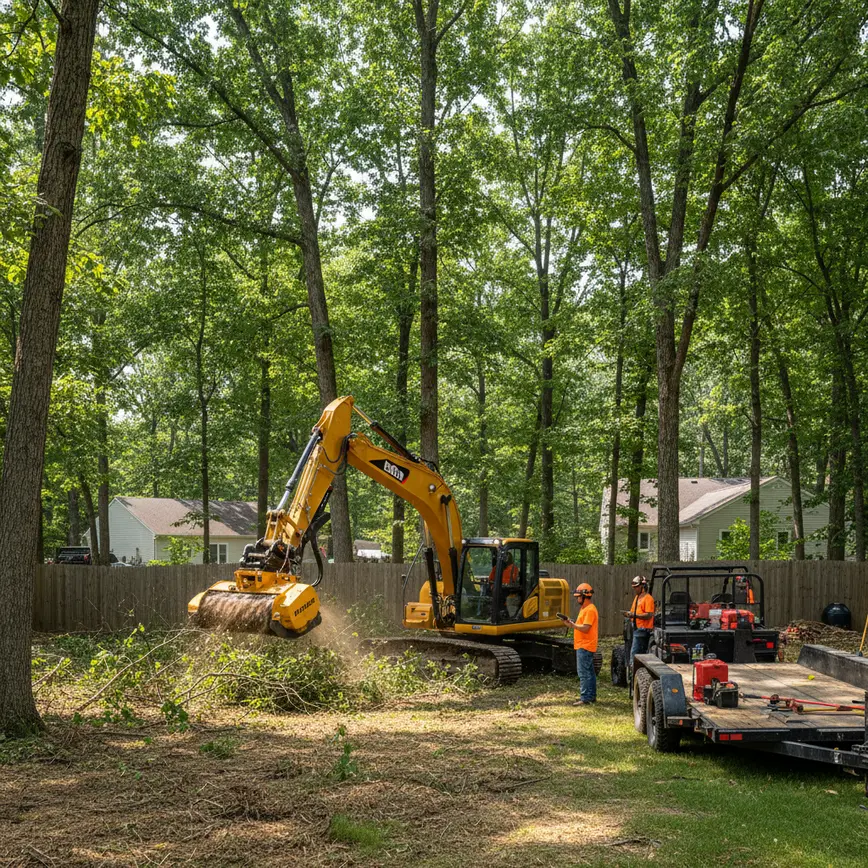
They mulch invasives like honeysuckle in Hilliard, Dublin, and Gahanna to a soil-conditioning chip layer, then cut-and-stack larger hardwoods in Worthington where hauling is required. On Fairfield County slopes near Rushville, operators use angled passes and spot-scarifying to reduce erosion into Hocking River tributaries.
Drainage and Access Finishing
In heavy Central Ohio clays, they crown paths and add stone at low spots so seasonal thaw in Union County doesn’t bog equipment. In Powell’s karst-prone areas, they preserve vegetative buffers and adjust path alignments away from suspect limestone voids flagged during the walk.
Compliance Closeout and Next-Step Build Prep
They photograph silt fence in place for Columbus inspectors, provide disposal tickets from Franklin County facilities if haul-off was needed, and lay out next-phase grading dates aligned with Ohio’s 32–36 inch frost line to minimize rework.
Why Central Ohio Property Owners Choose Fortress Level
Owner-operated since 2009 out of Westerville, Fortress Level Construction aligns equipment, scheduling, and permitting with Central Ohio’s real terrain. The crew runs compact tracked mulchers that won’t sink into Brookston-Crosby clays in Franklin County and can still navigate tight alleys in neighborhoods like Grandview Heights and Olde Towne East. For Fairfield County slopes near the Lancaster Festival grounds, they use forestry guards, winch-assist techniques, and erosion matting common to Hocking River tributary work.
On Delaware County’s western limestone belt—from Powell to Liberty Township—the team anticipates karst pockets when clearing trail networks around Highbanks Metro Park areas and HOA-managed open space in Orange Township. In Licking County, staging considers Intel-related traffic surges on OH-161 heading to Johnstown and New Albany, using early-morning load-ins to keep your day moving. Union County’s larger parcels near Plain City, Richwood, and Magnetic Springs benefit from wide-cut, efficient production on deep glacial till, especially after harvest when fields open up.
Fortress Level Construction fields licensed and insured operators familiar with Columbus code enforcement and township zoning processes across Franklin, Licking, Fairfield, Delaware, and Union Counties. You call one Westerville number—(844) 656-0129—and a local Ohio crew shows, ready to translate soil, frost-line timing, and riparian setbacks into a practical brush-clearing plan for your property in Central Ohio.
Is Fortress Level the Right Fit?
- 30–180-acre landowners in Licking and Fairfield Counties: If you manage timber edges near Granville or pasture renewals near Amanda and Rushville, they’ll schedule winter clearing in the Oct–Mar bat window and add erosion controls suited to sandstone and shale transitions.
- Farmers and ag managers in Union and Delaware Counties: Reopen fencerows near Marysville, Ostrander, and Sunbury after harvest when glacial till supports access, with attention to agricultural easements and tile drainage common to Central Ohio fields.
- Realtors and developers in Columbus, Westerville, and Dublin: Prepare infill lots with tight alleyways and Franklin County disposal requirements, or clear for new builds near the Scioto Mile or Easton while honoring Columbus tree and overlay standards.
- HOAs in Powell, Lewis Center, and Gahanna: Clear common areas and path corridors that border Olentangy or Big Walnut tributaries, following setback and replanting rules typical for Delaware and Franklin County subdivisions.
- Hunters in Buckeye Lake, Johnstown, and Etna: Establish quiet access lanes and food plots timed around Ohio’s hunting calendar and roosting restrictions, with equipment access coordinated around OH-79 and I-70 traffic patterns to minimize disturbance.
- Lake and river property stewards in Canal Winchester, Baltimore, and Millersport: Replace thorny thickets with view corridors while maintaining riparian buffers along Sycamore Creek or Buckeye Lake outfalls, avoiding Ohio EPA enforcement by protecting wetlands.
- Commercial owners along US-33 and I-270: Clear stormwater basins, fence lines, and utility ROWs from Hilliard to Groveport using off-peak mobilizations that factor in Columbus rush hours and city noise ordinances.
What Central Ohio Clients Say
“Our Worthington infill lot had alley access only and spring-saturated Brookston-Crosby clay. Fortress Level Construction staged a compact mulcher, fenced our street trees per Columbus guidance, and had the brush chipped in two days even with I-270 traffic delays. We were ready for footings before the next rain.” — M.M., Worthington, Franklin County
“On our 90-acre farm near Marysville in Union County, they reopened half-mile fencerows after harvest without tearing up the glacial till. They timed the work between freeze-thaw cycles and avoided our tile lines. Access roads are finally usable for spring planting.” — R.M., Marysville, Union County
“We needed trails cut above the Hocking River floodplain near Amanda in Fairfield County. The slopes were no joke. Fortress Level Construction brought tracked carriers with forestry guards, laid silt fence per Ohio EPA best practices, and angled passes to prevent ruts. The county inspector signed off without a punch list.” — T.S., Amanda, Fairfield County
Areas We Serve
Franklin County
Pop: 1,323,807 | 10-25 min from Westerville
Delaware County
Pop: 214,124 | 15-35 min from Westerville
Licking County
Pop: 180,564 | 25-45 min from Westerville
Fairfield County
Pop: 161,551 | 30-50 min from Westerville
Union County
Pop: 61,578 | 25-40 min from Westerville
Frequently Asked Questions About Brush Clearing Company
Related Articles — Brush Clearing Company in Central Ohio
Get Your Free Brush Clearing Company Estimate Today
Fortress Level Construction handles residential lots, commercial parcels, farm acreage, and everything in between across Central Ohio’s 5-county service area.
Fast Turnaround | Local Westerville Crew | Written Estimates, No Surprises