
How does Brush Clearing in Licking County, Ohio address both rural land and Intel-driven industrial growth?
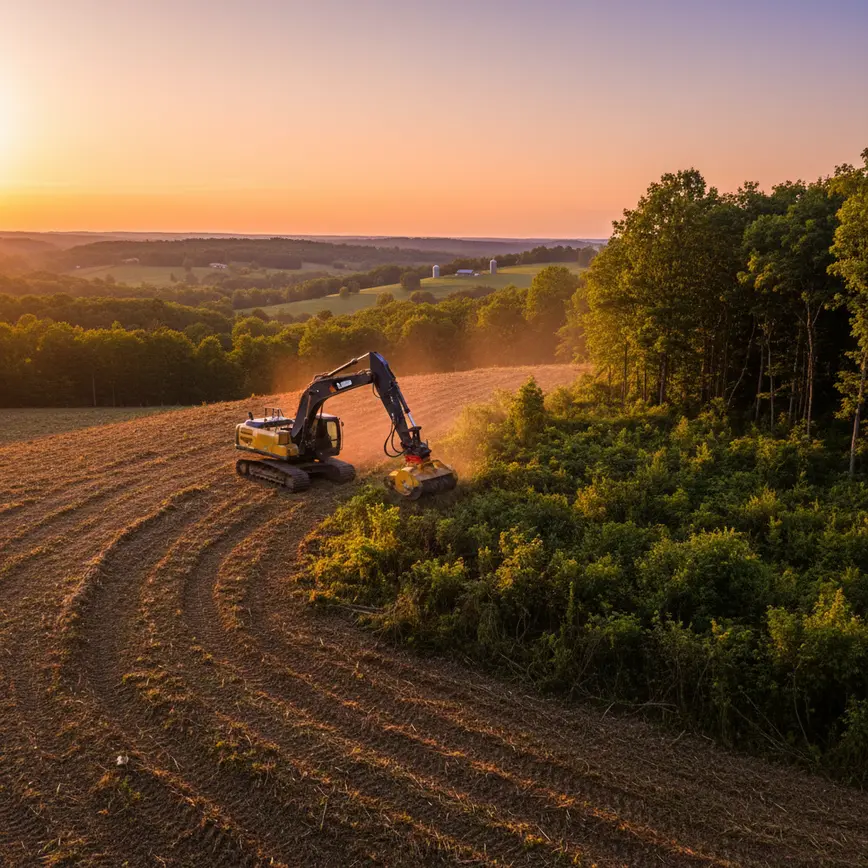
Brush clearing in Licking County, Ohio tackles dense woodland in eastern hills and rapid overgrowth on industrial sites near Johnstown, where Intel-driven development is transforming land use. Fortress Level Construction’s crew delivers efficient vegetation removal for farms, lakeside properties, and major new developments throughout the county’s varied landscapes, including Newark and Granville.
The Quick Answer
- Brush clearing in Licking County means handling both rural farmland and emergent industrial sites near the Intel corridor.
- Fortress Level Construction is veteran-founded, licensed, insured, and based in Central Ohio since 2009.
- Our John Deere 333G loaders with Diamond drum mulchers clear up to 14-inch stems and 1-5 acres per day.
- We serve Newark, Granville, Johnstown, Jersey Twp, Pataskala, Heath, Hebron, and Buckeye Lake.
- County terrain ranges from wooded hills (east) to flat greenfields, demanding tailored brush removal strategies.
- Flat-rate quotes include free, on-site walk-throughs and a rapid 2-3 hour response during business hours.
- Every job is scheduled only after a required Ohio 811 utility locate (per ORC 3781.28) for safety.
- Typical brush clearing cost in Licking County ranges from $1,000 to $2,500 per acre, depending on density and terrain.
Related Questions People Ask Next
Brush clearing on Licking County farmland, especially near Newark, Granville, and Buckeye Lake, focuses on reclaiming pastures and fence lines, often with mature overgrowth that can hinder farming. Near Johnstown and Jersey Twp, clearing is driven by large-scale industrial preparation, prioritizing speed and volume for flat greenfields slated for new commercial or manufacturing construction projects.
Fortress deploys John Deere 333G compact track loaders with Diamond drum mulchers that handle brush stems up to 14 inches thick. In hilly eastern areas like those near Blackhand Gorge, dozers and excavators are used for stability and reach. This allows the crew to efficiently clear both rugged woodland and flat industrial parcels across the county.
With Licking County’s rapid industrialization, spurred by the massive new semiconductor fabrication facilities near Johnstown, brush clearing is essential for transforming greenfields into build-ready sites. For farms and rural properties near Newark, Granville, and Buckeye Lake, it protects crops, restores fence lines, and controls invasive growth, supporting both traditional agriculture and modern land use.
Sites near the Licking River, Buckeye Lake, or Raccoon Creek require careful brush clearing to prevent erosion and protect water quality. Fortress adapts its approach on lakeside or creek-adjacent parcels, using mulchers that minimize soil disturbance and following best practices to avoid runoff into these important Licking County waterways and natural features.
What unique brush clearing challenges does Licking County present?
Licking County’s mix of wooded eastern hills, fertile farmland, and flat, rapidly developing industrial land means brush clearing must adapt to local conditions. From the Hopewell earthworks in Newark to new sites near Johnstown, each project faces different density, soil, and access challenges unique to the county.
Eastern Licking County, with its wooded hills and areas near Blackhand Gorge, often requires specialized mulching and careful navigation to avoid erosion and protect natural features. Here, the crew uses compact track loaders and excavators for selective clearing, especially near historic sites like the Newark Earthworks.
In contrast, the flat greenfields around Jersey Township and Johnstown, now targeted for Intel-driven development, demand high-volume brush clearing over large acreages. These jobs prioritize speed, uniformity, and efficient debris management, all while coordinating with utility locates and neighboring commercial projects.
Which Licking County areas are seeing the most brush clearing demand?
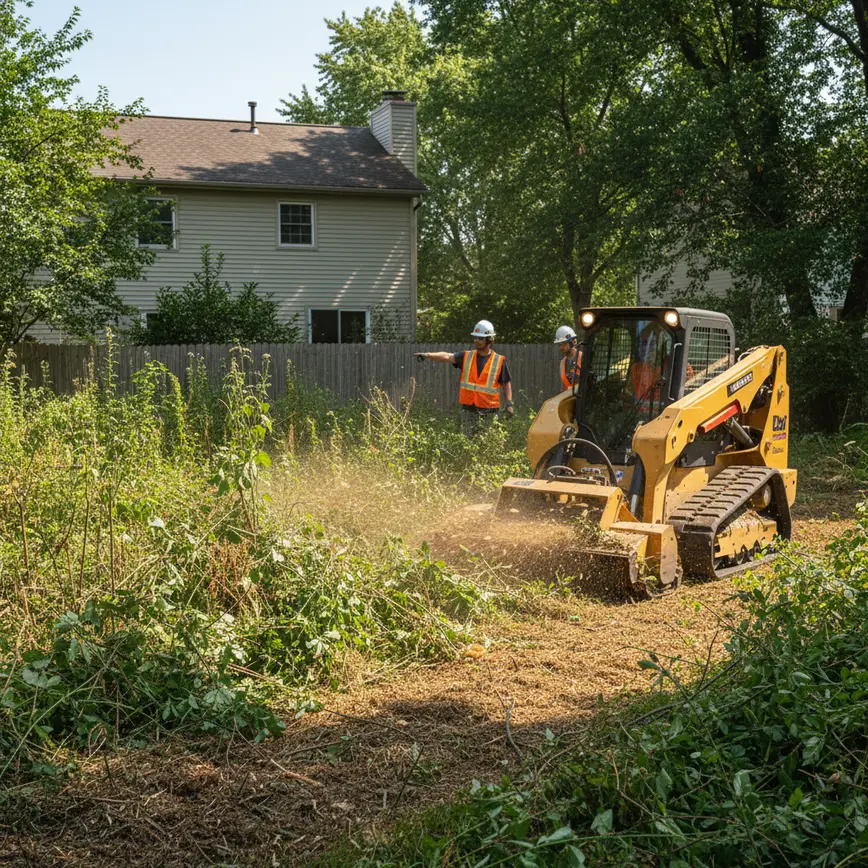
The greatest demand comes from Jersey Township and Johnstown, where the new semiconductor plant is driving commercial and industrial land preparation. Rural farms near Newark, Granville, and Buckeye Lake also need regular brush removal to maintain productive acreage and manage overgrowth across the county’s diverse terrain.
Near Johnstown and Jersey Township, brush clearing is often the first step in transforming former fields into build-ready industrial sites. With major new industrial projects underway, large parcels are being cleared rapidly, requiring heavy-duty mulchers and coordinated site logistics.
In rural Licking County, especially near Buckeye Lake and Granville, landowners seek brush removal to reclaim pasture, protect crops, and maintain property boundaries. Here, Fortress works closely with landowners to clear invasive species and restore access along creeks and fence lines.
What does the brush clearing process look like in Licking County?
Fortress starts with a free on-site walk-through, then schedules an Ohio 811 utility locate. Using John Deere 333G loaders and Diamond drum mulchers, the crew removes brush up to 14 inches thick, typically clearing 1-5 acres per day depending on density and terrain found in Newark, Granville, and Johnstown.
After the utility locate (required by Ohio law), the team mobilizes equipment based on site conditions, mulchers for dense brush, dozers for open fields, and excavators for tough-to-reach areas. In Newark, sites near the Earthworks or waterways demand extra care to avoid disturbing culturally or environmentally sensitive zones.
Brush is mulched directly into the soil, reducing haul-away costs and supporting erosion control, important for properties near the Licking River or Buckeye Lake. The process is tailored for each town, from lakeside lots in Hebron to industrial tracts in Jersey Township.
How is brush clearing in Licking County priced and scheduled?
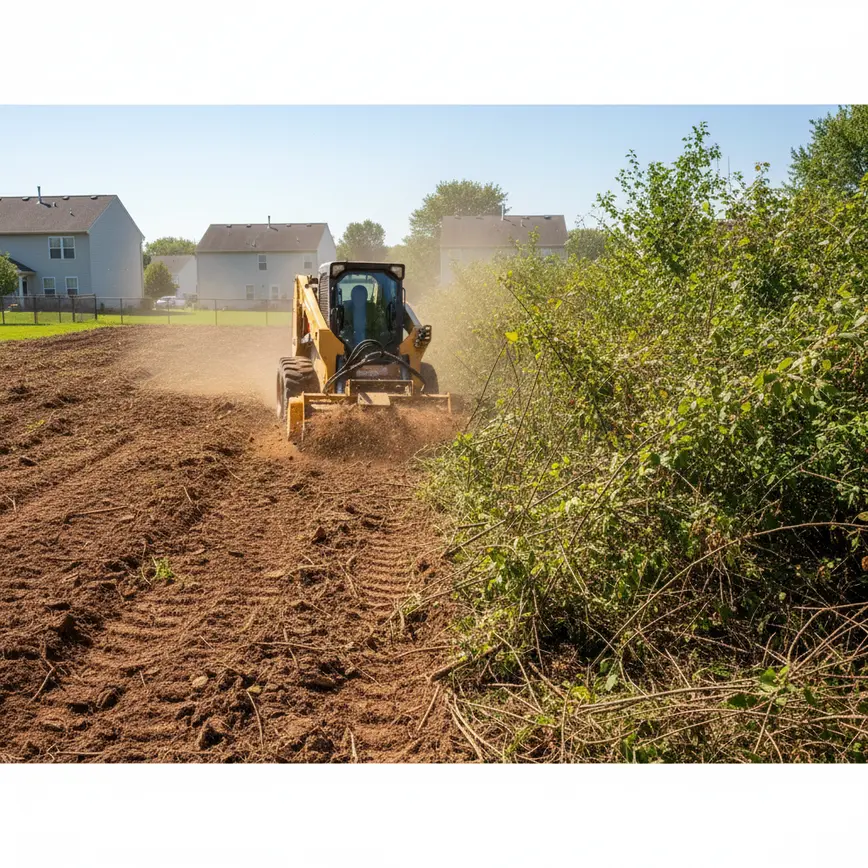
Brush clearing costs in Licking County typically range from $1,000 to $2,500 per acre, depending on density, terrain, and site access. Fortress provides flat-rate quotes after a free on-site assessment and can schedule most jobs within the same week of the walk-through, serving Newark, Granville, and Johnstown.
Pricing reflects the complexity of the site, wooded hills near Granville or Blackhand Gorge may require more labor and specialized equipment than flat industrial parcels near Johnstown or Heath. Acreage, brush density, and proximity to landmarks like Dawes Arboretum all factor into the final quote.
Fortress responds to quote requests within 2-3 business hours and offers flexible scheduling for both rural and commercial clients. Every job is coordinated with required Ohio 811 utility locates to ensure safety and compliance with state law.
How does brush clearing in Licking County compare across rural, lakeside, and industrial sites?
Licking County’s split market means brush clearing approaches differ between farms, lakeside lots, and Intel-driven industrial sites. See how methods, equipment, and project goals vary across these settings, from Buckeye Lake and Granville to Johnstown and Blackhand Gorge.
| Rural Farmland (Granville, Newark) | Lakeside Parcels (Buckeye Lake, Hebron) | Industrial/Intel Corridor (Johnstown, Jersey Twp) | Wooded Hills (East, Blackhand Gorge) | |
|---|---|---|---|---|
| Typical Brush Density | Medium-high (overgrown fence lines, pasture edges) | Variable (shoreline, seasonal growth) | Low-medium (cleared fields, some thickets) | High (dense woodland, invasive undergrowth) |
| Primary Equipment | Track loaders, mulchers | Track loaders, mulchers, hand tools | Track loaders, dozers, excavators | Mulchers, excavators |
| Project Goal | Restore pasture, manage invasive species | Maintain views, prevent erosion, clear access | Prepare for construction, maximize speed | Selective clearing, protect landscape |
| Scheduling Constraints | Seasonal (post-harvest, pre-planting) | Dry season, lake level concerns | Tight deadlines, utility locates | Weather, slope stability |
| Brush Clearing Cost Range | $1,000 to $2,500/acre | $1,000 to $2,500/acre | $1,000 to $2,500/acre | $1,000 to $2,500/acre |
When is brush clearing NOT the right solution in Licking County?
Brush clearing is not always the best approach for every Licking County site. Sensitive wetlands, protected archaeological areas like the Newark Earthworks, or parcels with significant slope instability may require alternative land management methods or permits. The Fortress crew will help determine the safest and most compliant solution for your land.
If your land is adjacent to the Newark Earthworks or Dawes Arboretum, or contains mapped wetlands near Buckeye Lake or Raccoon Creek, mechanical brush clearing may be restricted. In such cases, consult local authorities or land conservancies for ecological or regulatory guidance.
For sites with slope instability or erosion risk, common near Blackhand Gorge, hand clearing, selective trimming, or erosion control measures may be safer than full mechanical mulching. Fortress can advise if brush clearing is not appropriate and refer you to specialists as needed.
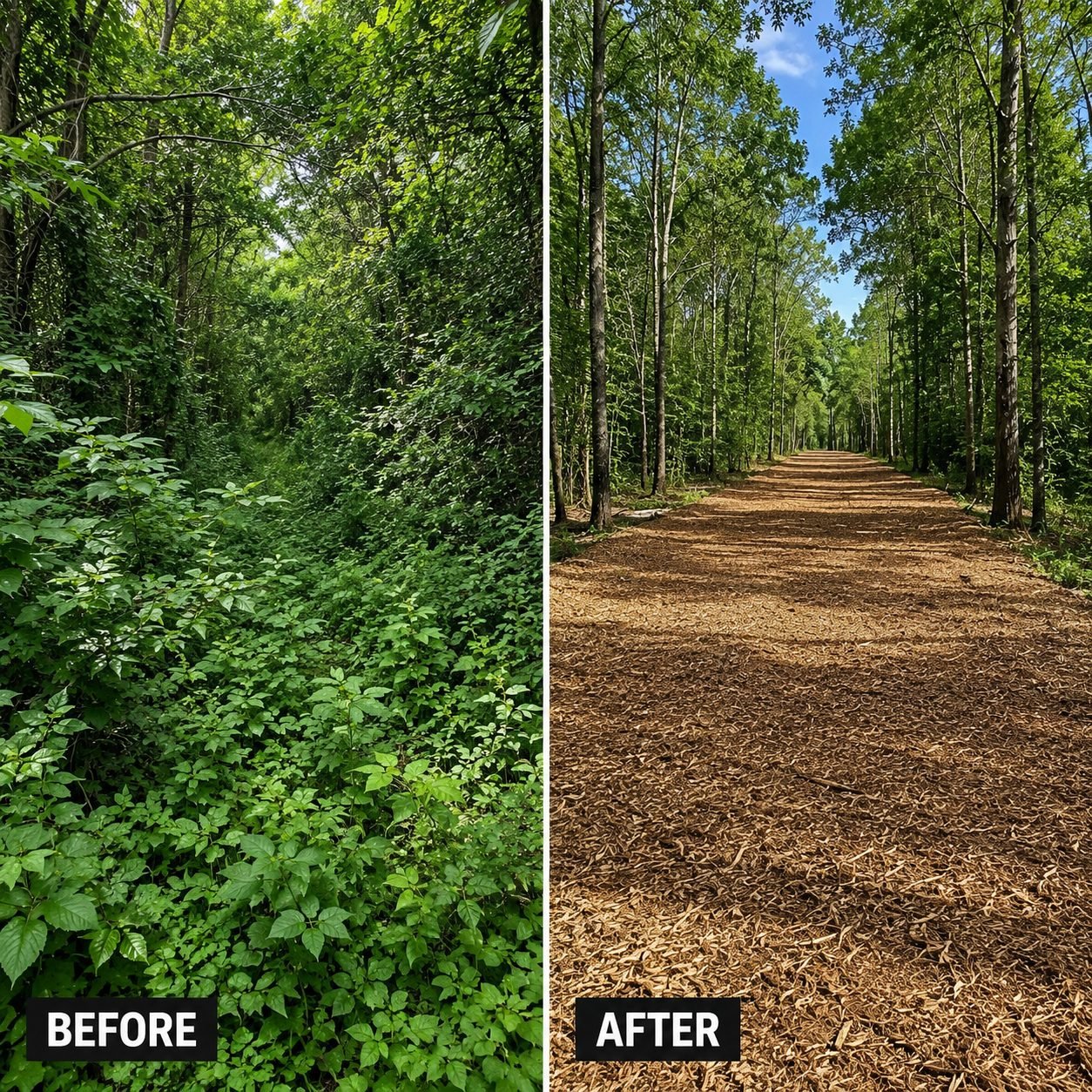
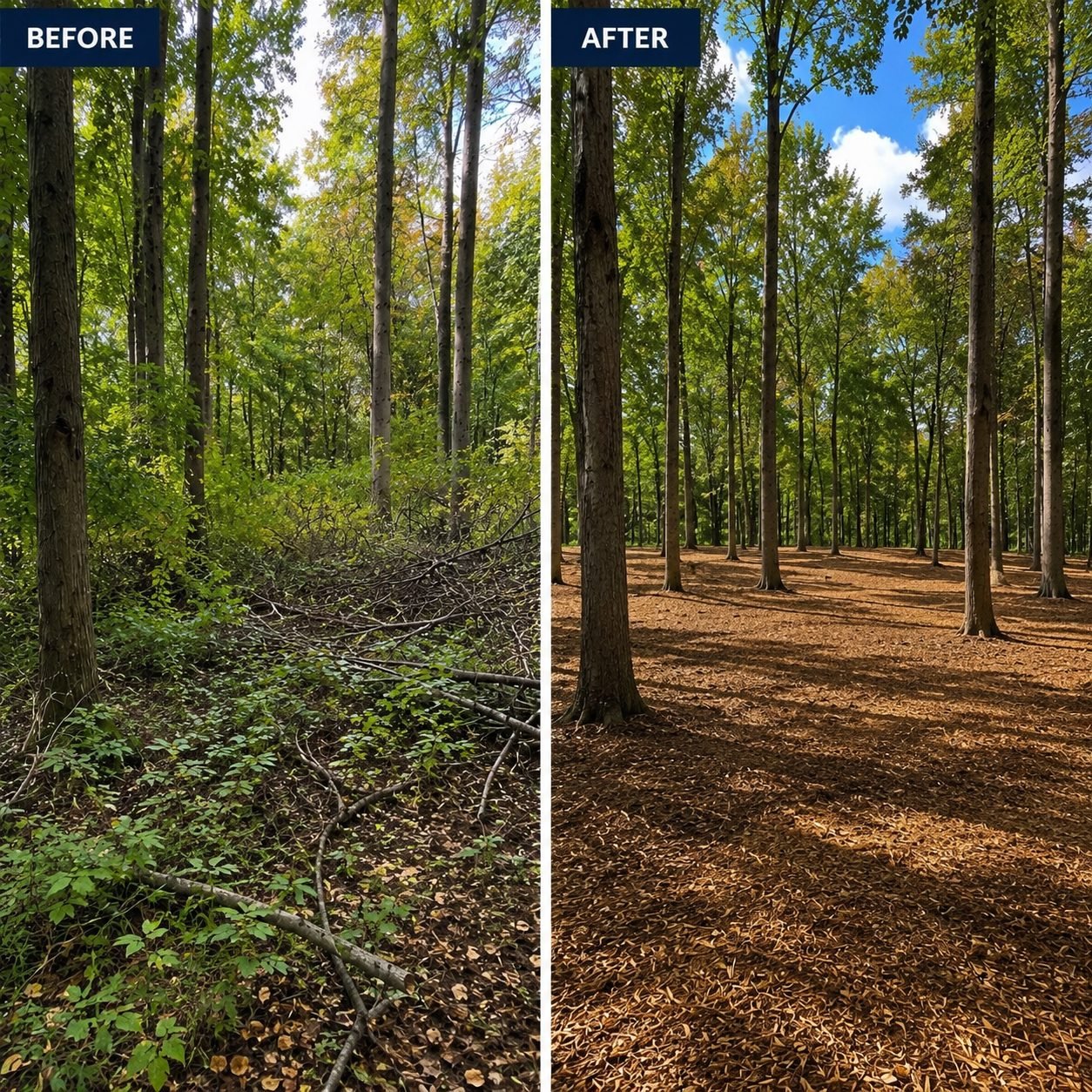
What does before-and-after brush clearing look like in Licking County?
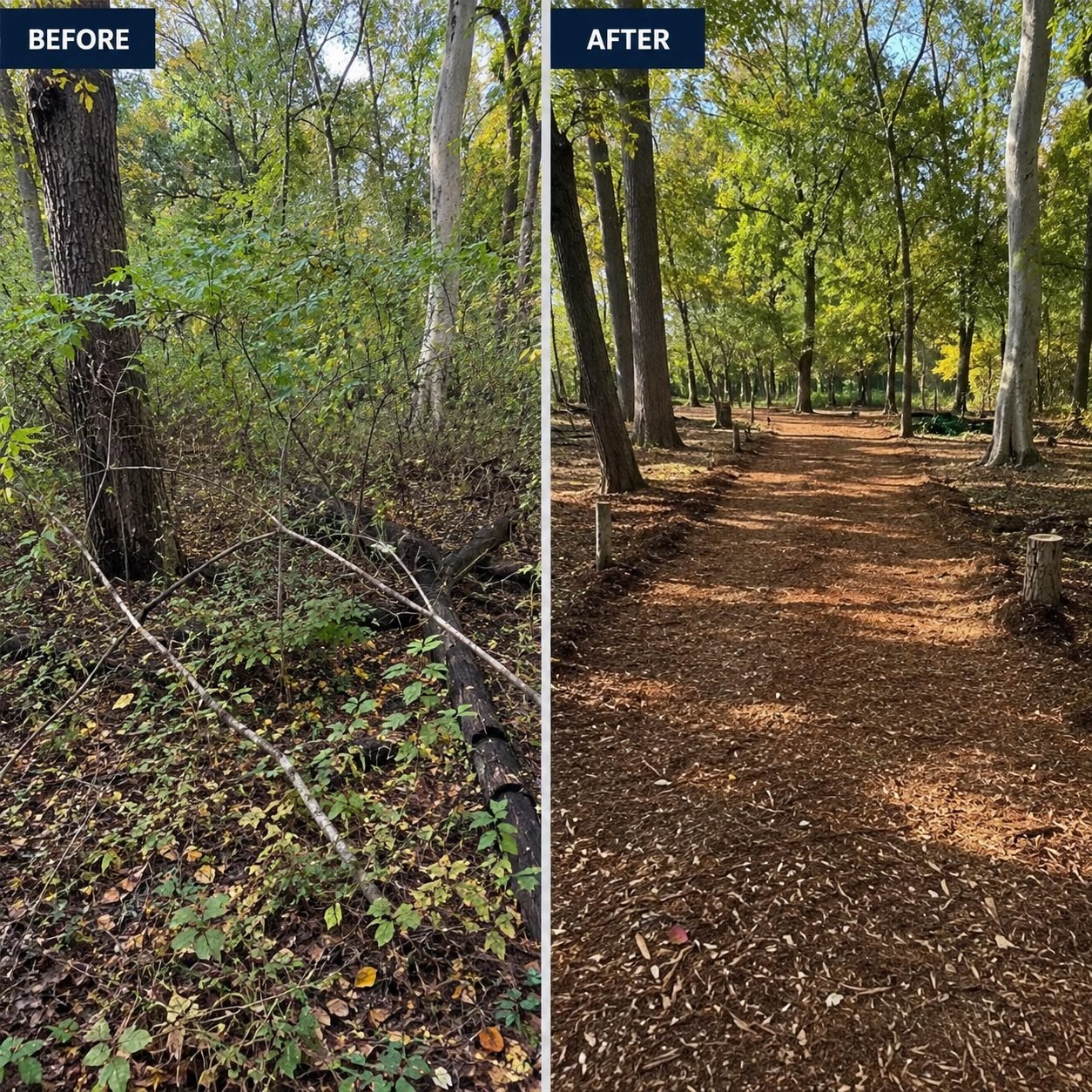
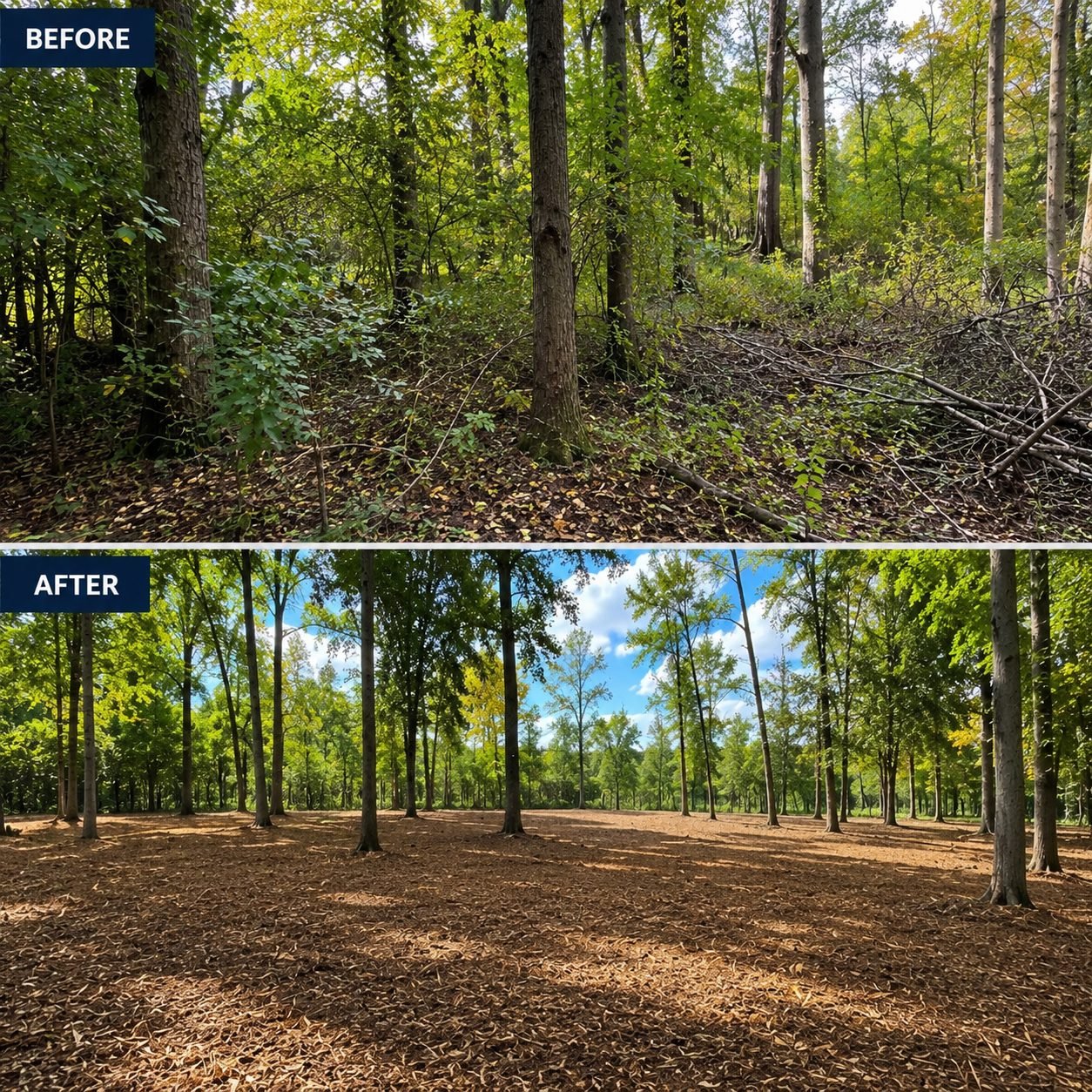
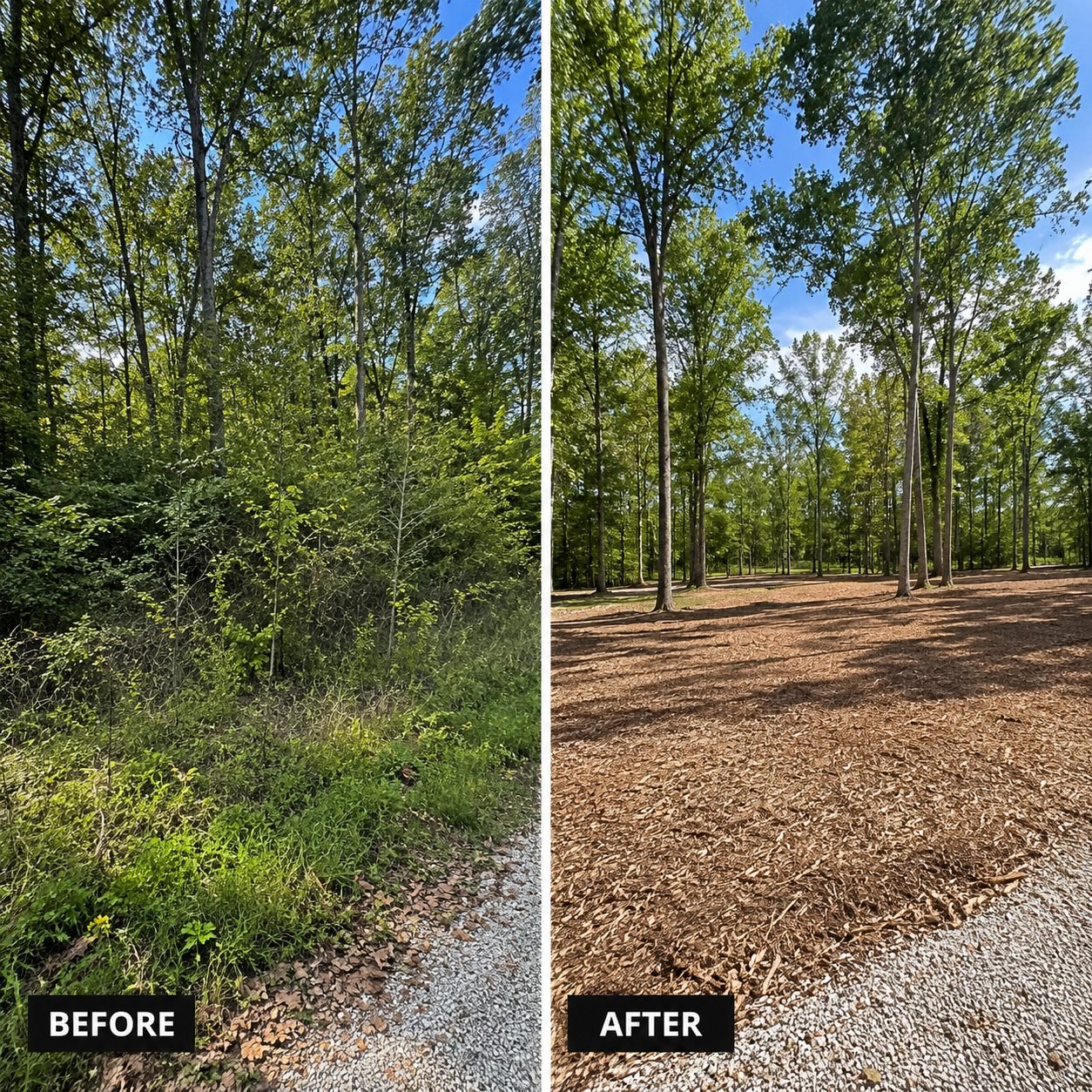
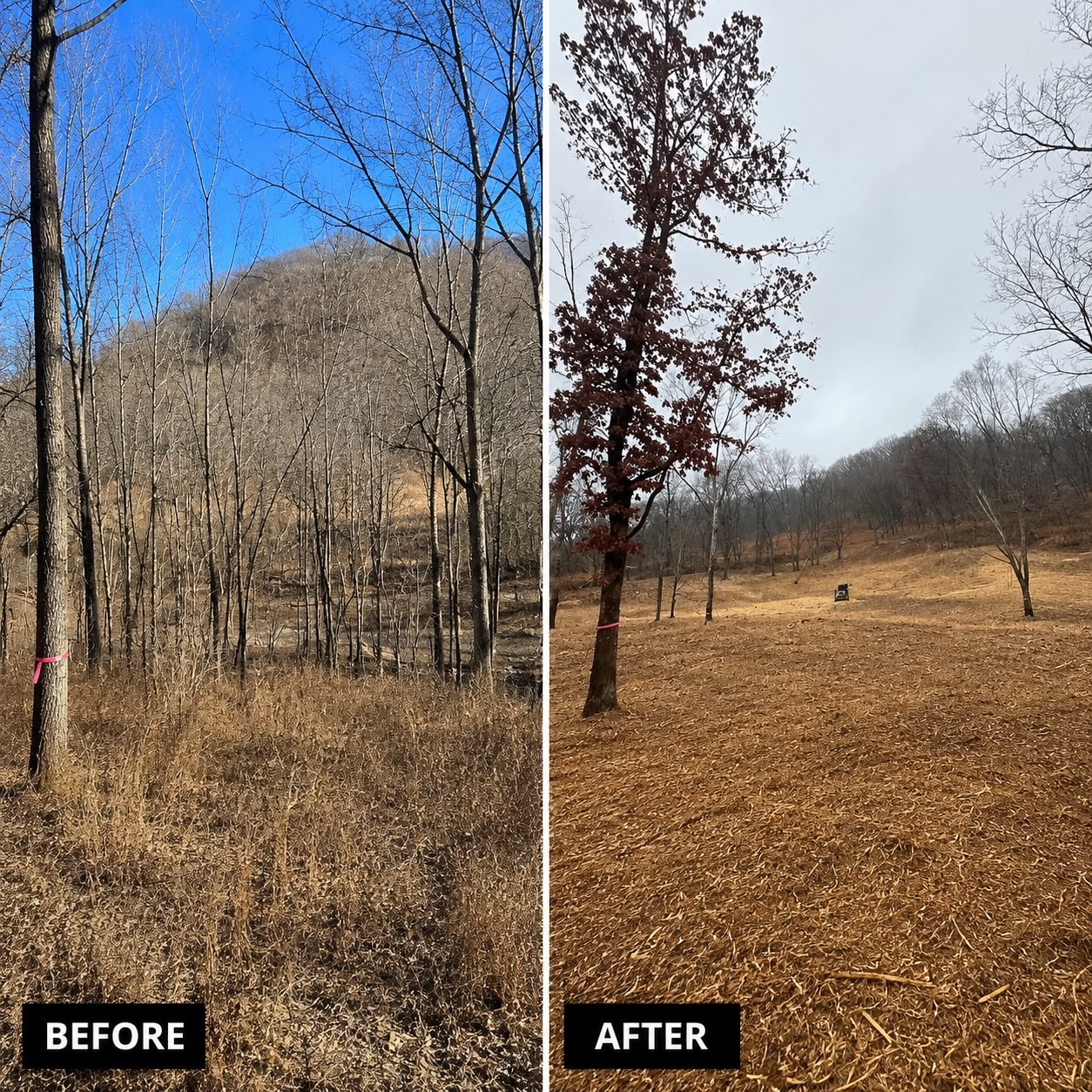
See the transformation across Licking County: Overgrown farmland near Granville restored to productive pasture, Buckeye Lake shorelines cleared for improved lake access, and flat industrial parcels in Johnstown prepared for major development, all completed by Fortress Level Construction’s experienced brush clearing crew using specialized equipment for the county’s unique landscapes.
Frequently asked questions
Most standard brush clearing projects on private property in Licking County do not require a permit from local authorities. However, if your land is near Buckeye Lake, a mapped wetland, or a protected site such as the Newark Earthworks, you may need a local or state permit, typically costing $100 to $300. Fortress can help determine if permits apply.
Fortress responds to quote requests in 2-3 business hours and typically completes the free on-site walk-through within the same week. After the legally required Ohio 811 utility locate (which takes at least 48 hours), most brush clearing jobs in Licking County can be scheduled and started within days of the initial assessment.
Brush is mulched directly into the soil using drum mulchers, which improves ground cover and reduces erosion, especially important near Licking River and Buckeye Lake. This method eliminates most haul-away needs, but Fortress can arrange debris removal for piles or large stumps if requested by property owners in towns like Hebron or Newark.
Regular brush clearing prevents invasive species from taking over pastures, maintains clear boundaries, and improves accessibility, key for both rural landowners and commercial developers. In fast-growing areas near Johnstown, cleared land is more attractive to buyers and ready for new industrial or residential construction, boosting both land value and usability.
Yes. Fortress always arranges an Ohio 811 utility locate (required by law, per ORC 3781.28) before any digging or heavy brush removal. This ensures all underground lines are marked and the crew can safely operate equipment without risk to water, gas, or electric infrastructure, which is common in Newark, Pataskala, and Johnstown.
Yes, brush clearing is often performed in winter when vegetation is dormant and ground conditions allow equipment access. Frozen ground can help minimize soil disturbance, making it ideal for clearing in fields near Granville or industrial lots near Johnstown. Fortress evaluates each site for winter suitability during the walk-through and schedules accordingly.
Brush Clearing Cities and Counties We Serve
What Other Services Does Fortress Offer in Central Ohio?
Fortress Level Construction runs a full range of land-clearing, excavation, grading, and site-work services across Central Ohio, so one owner-operated crew can clear, grade, and prep a site end to end.
Get a Flat-Rate Quote from Lee Carson
Owner-operated land clearing across all five Central Ohio counties. Send your property details and Lee gets back to you within 2 to 3 hours during business hours with one flat number after a free on-site walk-through.