
How does grading work in Etna, Ohio?
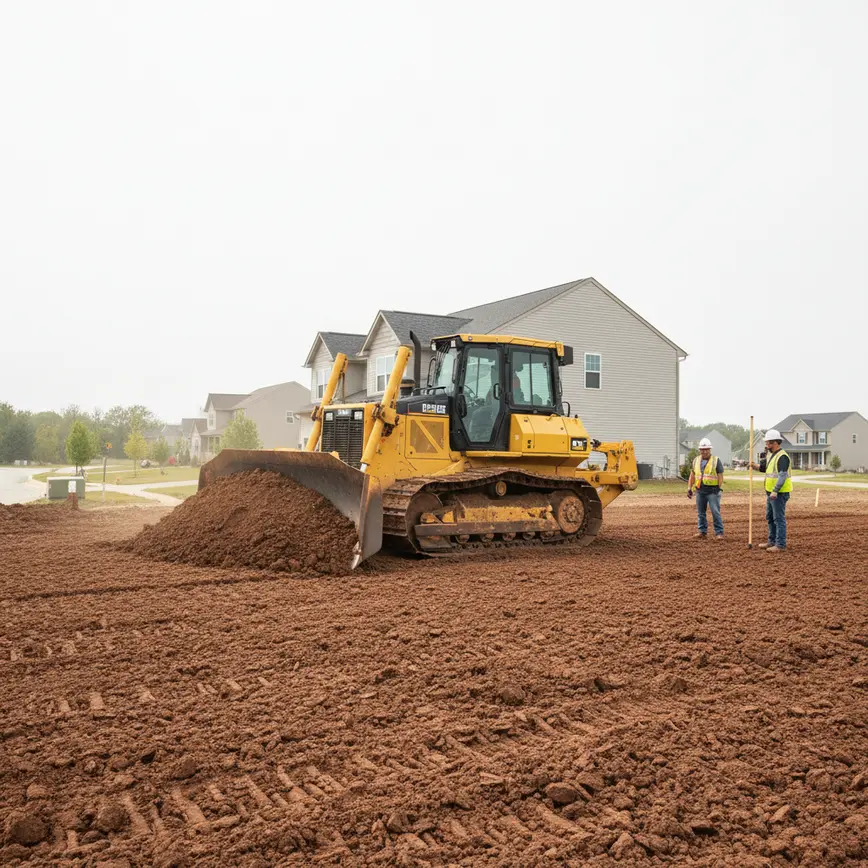
In Etna, grading means shaping former-farmland parcels and newer subdivision lots so warehouse pads, driveways, and building areas drain correctly on clay-heavy glacial till. Fortress Level Construction handles that with a crew-led, on-site plan, using dozers, excavators, and John Deere 333G compact track loaders with Diamond drum mulchers before final rough and finish grading.
The Quick Answer
- In Etna, grading usually starts on former farmland carved into large warehouse and industrial parcels off I-70 and US-40, not on small city lots.
- Fortress uses a crew-led process that pairs clearing, rough grading, drainage shaping, and finish grading so the pad is ready for construction.
- Clay-heavy glacial till in Etna can hold water, so slope, subgrade, and runoff control matter as much as cutting dirt.
- John Deere 333G compact track loaders with Diamond drum mulchers help clear stems up to 14 inches before grading begins.
- Dozers and excavators are used for larger commercial pads, swales, access drives, and material balancing on big sites.
- Flat-rate quotes and a free on-site walk-through help buyers understand grading cost before work starts.
- Ohio 811 utility locate is required at least 48 hours before any digging under Ohio Revised Code 3781.28.
- Fortress responds in 2 to 3 hours during business hours and can schedule same-week walk-throughs.
Related Questions People Ask Next
Etna grading is usually tied to large distribution and warehouse sites along the I-70 logistics corridor, where former farmland meets clay-heavy glacial till. That means the crew often has to clear, cut, and balance soil across bigger pads than you see in more residential places like Pataskala, Reynoldsburg, Kirkersville, or Pickerington.
For Etna work, Fortress often brings John Deere 333G compact track loaders with Diamond drum mulchers for clearing, then dozers and excavators for shaping the subgrade, moving spoil, and forming drainage. The equipment choice depends on whether the parcel is a newer subdivision lot or a large industrial site near Blacklick Creek or US-40.
Etna’s clay-heavy glacial till can slow drainage and make cuts more work than sandy ground, which affects time and equipment hours. A flatter residential lot may stay near the low end of the $1,000 to $3,000 project range, while larger commercial pads carved from farmland may need more machine time and finish passes.
A walk-through lets the crew see slope, access, tree cover, drainage paths, and the size of the parcel, which is important in Etna because lots vary from rural ground to major warehouse pads. Fortress gives flat-rate quotes after that visit, so the price matches the actual grading scope instead of guessing from a map.
How does Fortress grades a warehouse or subdivision lot in Etna?
Etna grading starts with a walk of the parcel, because former farmland along the I-70 corridor often needs clearing, cut and fill, and drainage layout before a pad can be built. Fortress uses compact track loaders, dozers, and excavators to shape clay-heavy glacial till into a stable building surface that sheds water correctly.
The crew looks at the site as a working surface, not just dirt. On a large distribution or warehouse parcel near Blacklick Creek or the old National Road, that means stripping organics, rough grading access, and building a consistent subgrade for trucks, slabs, or parking areas. In newer subdivisions, the same process is scaled down for driveways, house pads, and yard drainage.
Because Etna sits in a fast-growing township with large commercial parcels and rural ground, the grading plan has to match the project type. Fortress uses a free on-site walk-through, then a flat-rate quote, with typical grading costs in the $1,000 to $3,000 range depending on clearing, hauling, and finish work.
What equipment matters most for grading in Etna, Ohio?
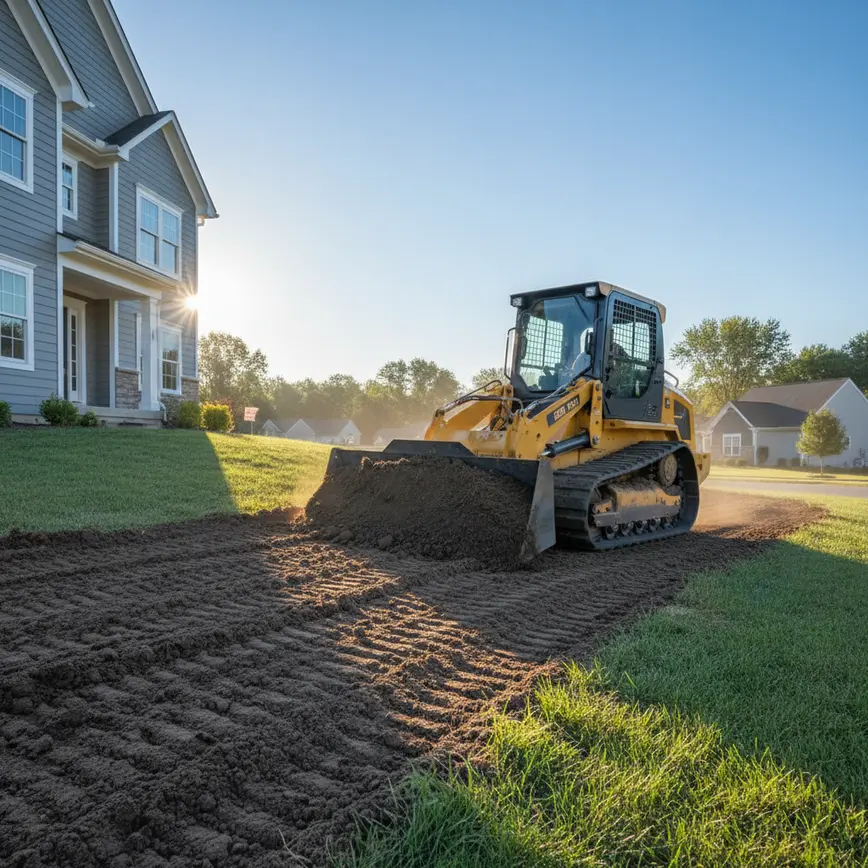
In Etna, the right grading equipment depends on whether the job is a broad industrial pad or a smaller residential lot. Fortress often starts with John Deere 333G compact track loaders and Diamond drum mulchers for clearing, then brings in dozers and excavators to move soil, set slopes, and finish the grade on clay-heavy ground.
The 333G with Diamond drum mulchers handles stems up to 14 inches, which helps on former farmland and wooded edges common around Etna Township. That clearing step matters because roots, brush, and topsoil can hide soft spots that would later settle under warehouse slabs or drive lanes. For bigger projects, dozers cut long, smooth grades faster than a loader alone.
Excavators come in when the site needs deeper cuts, trench tie-ins, drainage corrections, or material repositioning around large commercial parcels. On Etna ground, where glacial till can smear and hold moisture, the crew uses the machine mix to avoid overworking wet soil. That protects the finish grade and helps the subgrade stay firm before construction starts.
How much does grading cost in Etna, and what changes the price?
Most Etna grading jobs fall in the $1,000 to $3,000 range, but the final cost depends on how much farmland clearing, soil moving, and finish grading the parcel needs. Big warehouse and industrial sites near I-70 usually cost more than a simple residential pad because clay-heavy glacial till and drainage work add machine time.
The crew prices by scope after an on-site walk-through, not by guesswork. In Etna, a project can include tree and brush clearing, rough grading, drainage swales, access shaping, and final smoothing, especially on lots carved from former farmland. If the site has heavy organics or wet clay, the machine time goes up, which is why a flat-rate quote is useful.
Fortress responds in 2 to 3 hours during business hours and can usually schedule same-week walk-throughs. That fast response helps buyers compare grading options before excavation starts. An Ohio 811 locate is still required at least 48 hours before digging, and the utility-marking step is part of planning any Etna grading job.
Why does Etna’s soil make grading more technical?
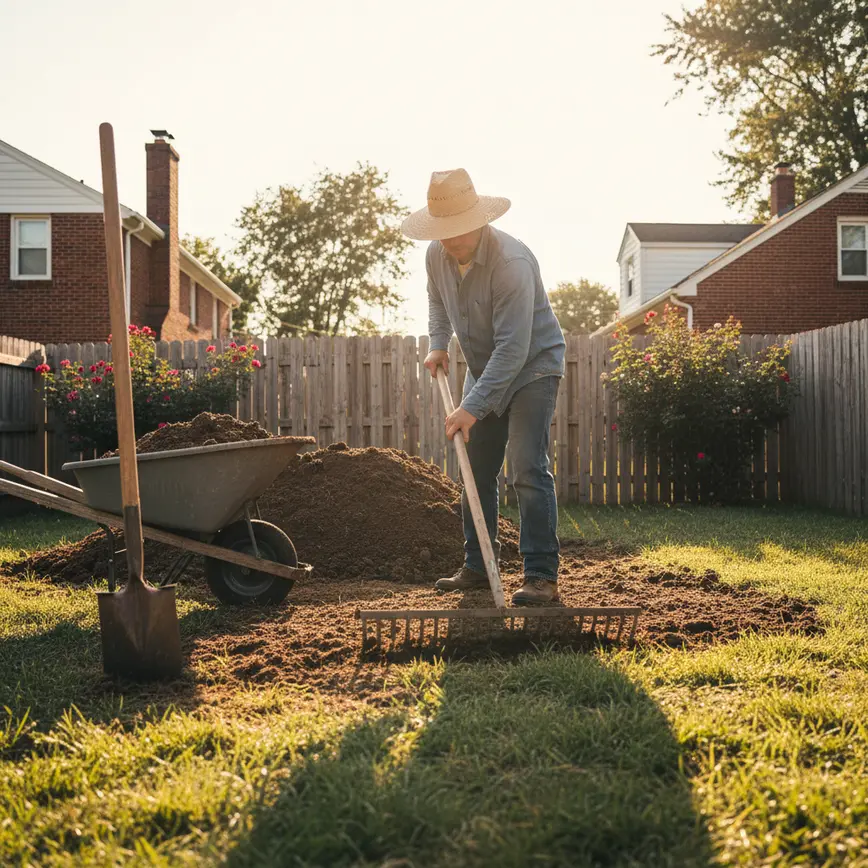
Etna’s clay-heavy glacial till can stay wet, move slowly under machinery, and create drainage problems if the grade is rushed. That is why Fortress treats grading as a shaping and compaction process, not just scraping dirt, especially on large industrial sites cut from farmland along the I-70 logistics corridor.
When clay holds water, the crew has to avoid building a pad too low or leaving the surface flat where runoff can pond. In Etna, that means checking slopes, outlets, and subgrade firmness before the finish pass. A proper grade helps warehouse slabs, parking lots, and residential foundations stay drier and more stable over time.
The mix of rural farmland and wooded ground around Etna Township also affects how much clearing comes before grading. Some sites need mulching and stripping first, while others only need re-shaping and compaction. Fortress uses the right equipment for each stage so the finished surface matches the actual use of the parcel.
How does Etna grading compare to a standard dirt move?
Etna grading is usually larger, wetter, and more utility-sensitive than a simple dirt push. The township’s warehouse growth, former farmland, and clay-heavy glacial till mean the crew has to think about clearing, drainage, and finish level together. Here is how a real grading job in Etna differs from basic land work.
| Etna grading factor | What it means on site | Fortress response | Buyer impact |
|---|---|---|---|
| Large warehouse parcels | Pads can span former farmland near I-70 and US-40 | Use dozers, excavators, and loaders for staged grading | More planning, better pad uniformity |
| Clay-heavy glacial till | Soil can hold water and rut when wet | Shape slopes, avoid overworking, and finish when conditions allow | Improves drainage and subgrade stability |
| Brush and tree clearing | Many parcels still have rural growth or wooded edges | Mulch stems up to 14 inches before grading starts | Cuts prep time and exposes soft spots early |
| Fast-growth logistics corridor | Schedules matter for commercial buildouts | Same-week walk-throughs and flat-rate quotes | Helps buyers move from estimate to work faster |
| Residential subdivision lots | Smaller but still need yard and driveway drainage | Finish grading after rough shaping and utility locate | Cleaner lot, fewer water issues later |
When is grading not the right first step in Etna?
Grading is not the first call if the Etna parcel still needs legal utility marking, major tree removal, or a design decision about where water should go. On some sites, the better move is clearing, survey work, or drainage planning first so the grade can be built once and built correctly.
If the ground is too wet, especially on clay-heavy glacial till, grading too early can smear the soil and create future settlement. In that case, the crew may recommend waiting, adjusting the sequence, or handling drainage before finish grading. Ohio 811 must be completed at least 48 hours before any digging.
If the parcel is a tight lot in a newer subdivision, or if a plan is still changing, it may make more sense to finalize layout before moving dirt. Fortress can still do the walk-through, explain the grading sequence, and give a flat-rate quote so the buyer knows what to budget before work starts.
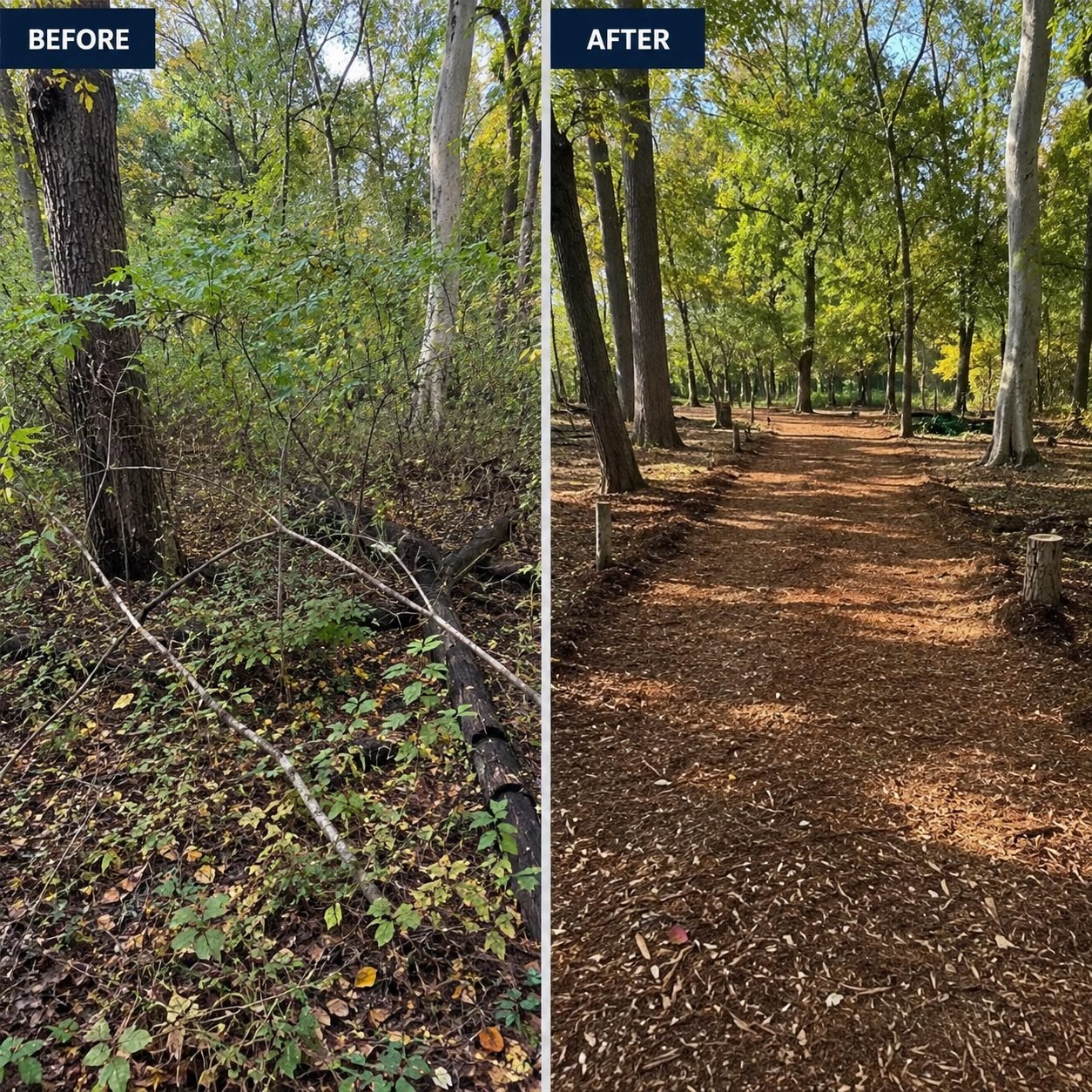
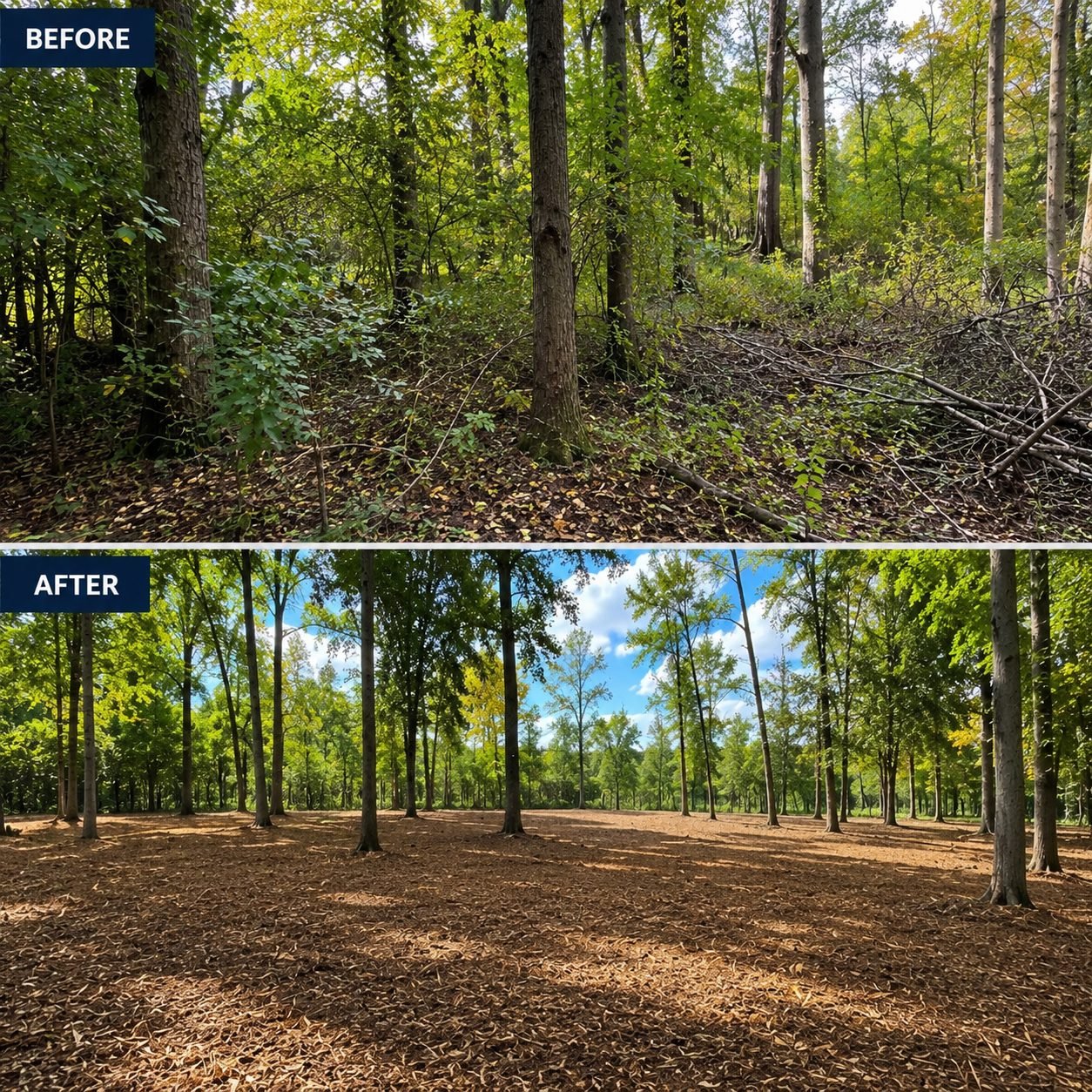
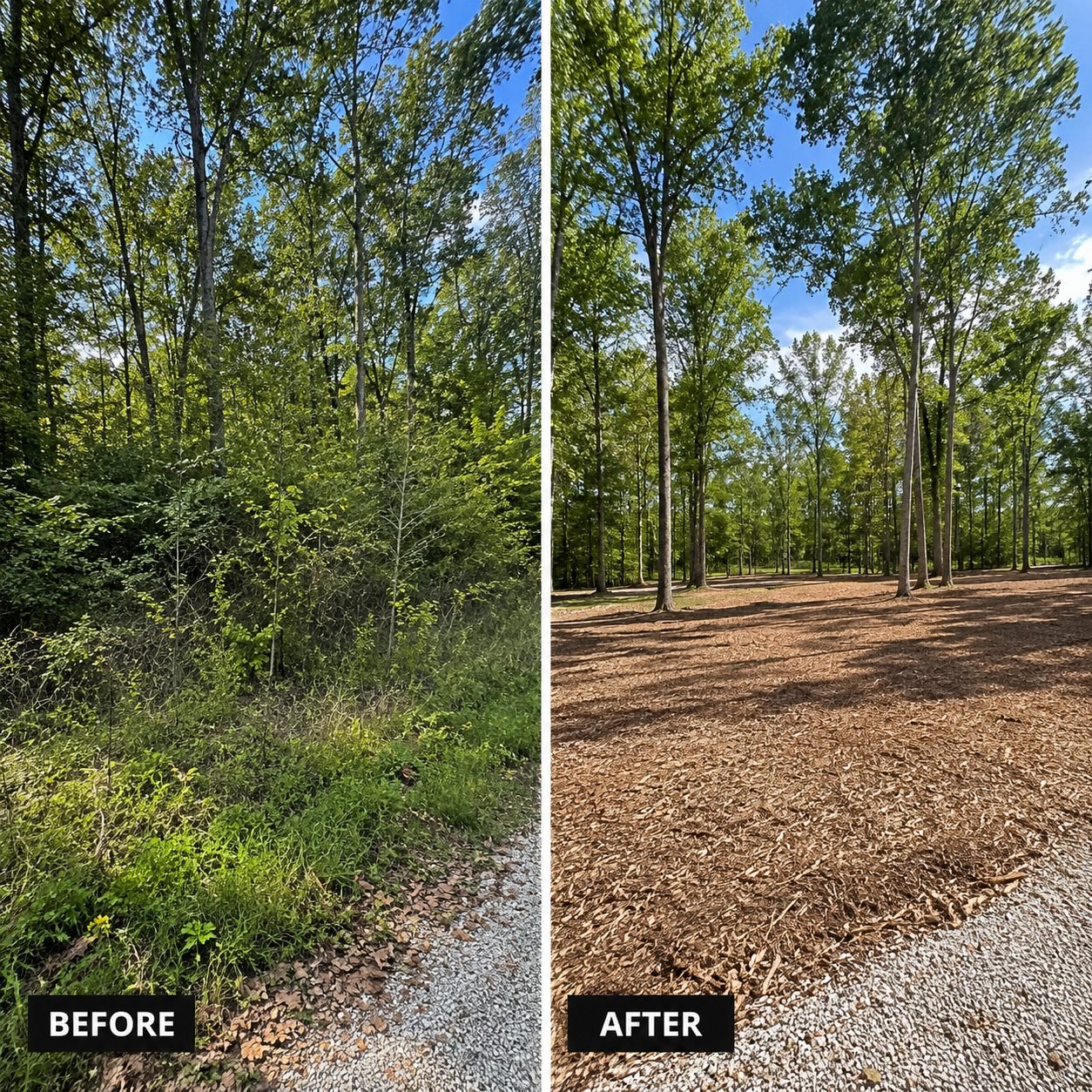
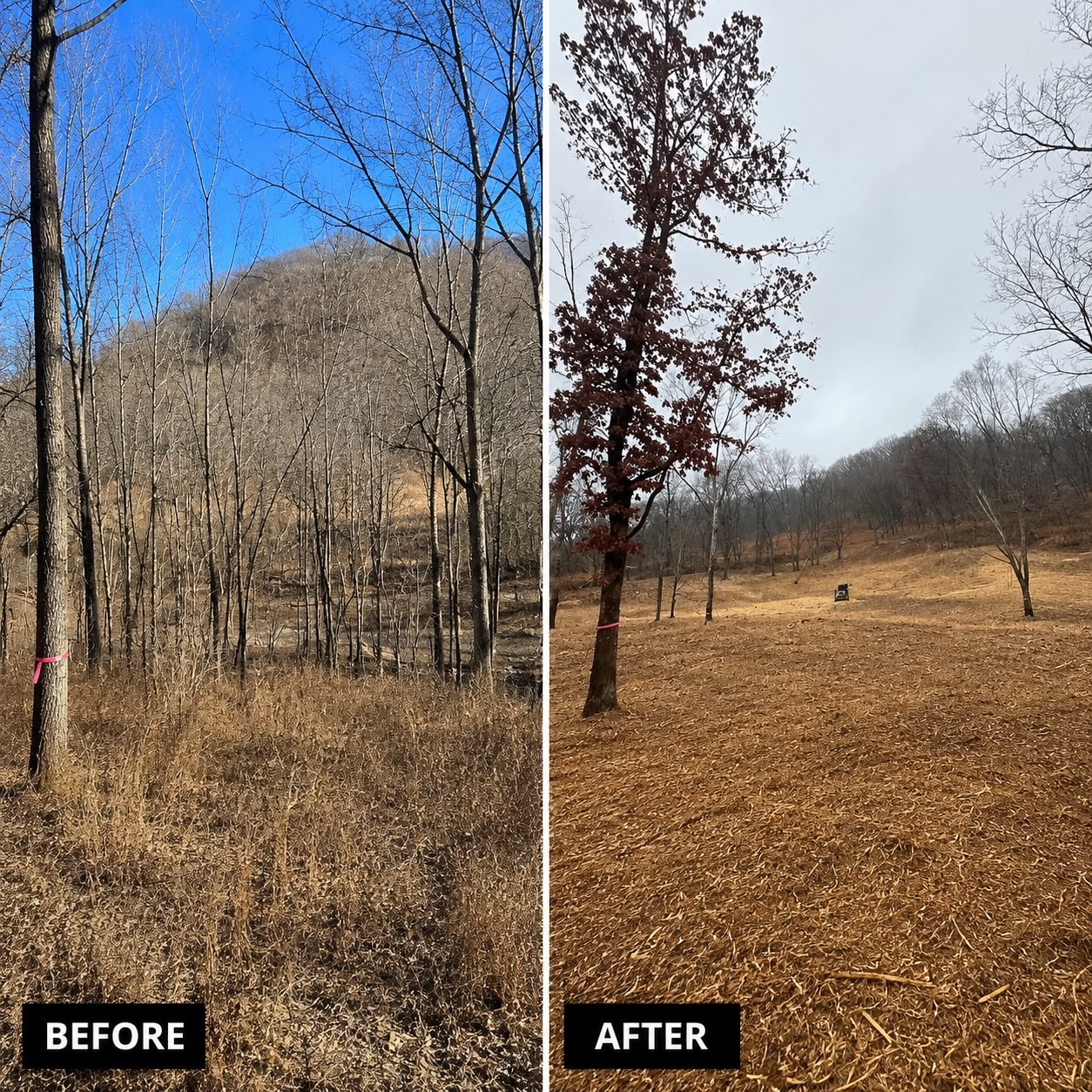
What should before and after grading look like in Etna?
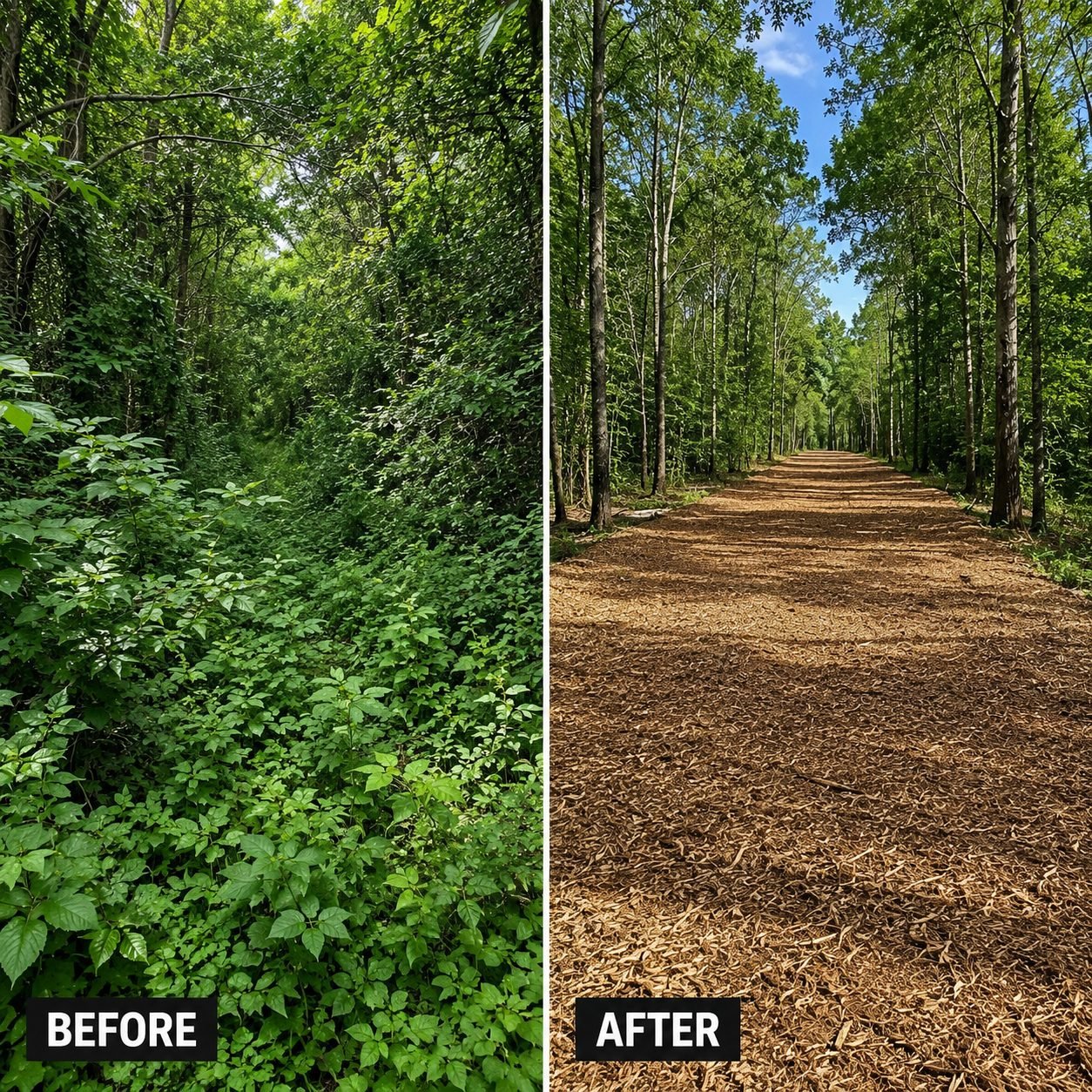
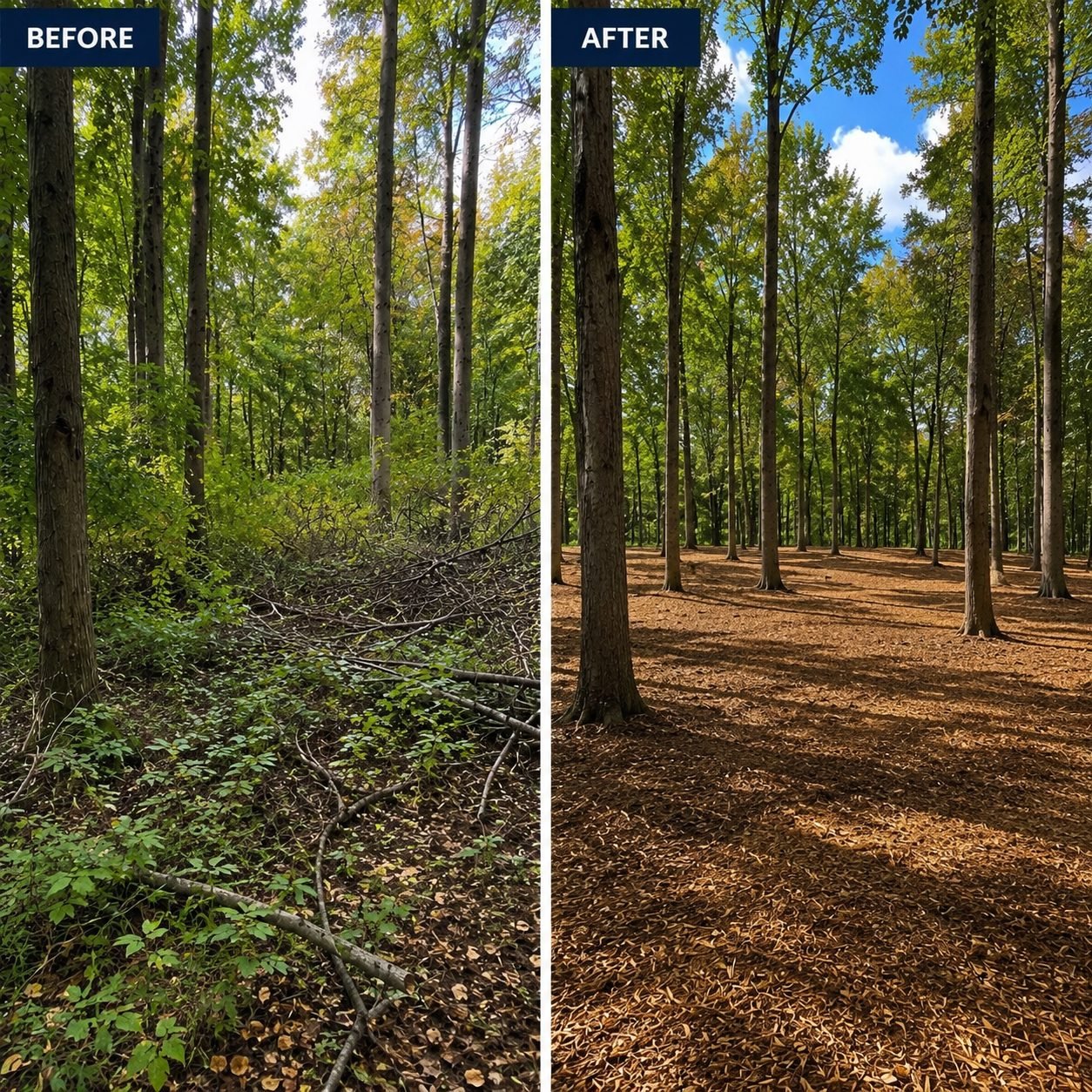
Before grading in Etna, the site often looks like rough farmland, brush, or a raw industrial parcel with uneven drainage. After grading, the surface should read as a clean building pad with the right slope, clear runoff path, and smooth finish, whether it is for a warehouse near the corridor or a subdivision lot.
Frequently asked questions
Usually yes, especially on the large former-farmland sites common in Etna Township. Those parcels often need rough grading, drainage shaping, and finish grading before pads, parking, or drive lanes can be built. Fortress can inspect the site, explain the sequence, and quote the work after a free on-site walk-through.
Yes, but the crew has to pay close attention to runoff, wet spots, and subgrade stability. Sites near Blacklick Creek can need careful slope work and better drainage handling because Etna’s clay-heavy glacial till can hold water. That makes the grading plan more technical than a simple scrape and smooth job.
Fortress responds in 2 to 3 hours during business hours and can usually schedule same-week walk-throughs. That matters in Etna because warehouse and residential sites move quickly. The on-site visit lets the crew size the equipment, identify clearing needs, and give a flat-rate quote that matches the actual grading scope.
Drainage and subgrade firmness are the biggest concerns. Clay-heavy glacial till can stay wet, so the crew has to shape the pad to shed water and avoid soft spots under buildings or drives. Good grading in Etna is about making the ground usable, not just making it look level.
Often, yes. Many Etna sites are still a mix of rural farmland and wooded ground, so the job may start with clearing brush, saplings, and small trees before the dirt work begins. Fortress uses John Deere 333G compact track loaders with Diamond drum mulchers to handle stems up to 14 inches.
Get the Ohio 811 utility locate completed at least 48 hours before digging, and be ready to show the crew the areas you want graded. If the parcel has access issues, drainage concerns, or changing building plans, mention them during the walk-through so the grade can be planned around the real site conditions.
What Other Services Does Fortress Offer in Central Ohio?
Fortress Level Construction runs a full range of land-clearing, excavation, grading, and site-work services across Central Ohio, so one owner-operated crew can clear, grade, and prep a site end to end.
Get a Flat-Rate Quote from Lee Carson
Owner-operated land clearing across all five Central Ohio counties. Send your property details and Lee gets back to you within 2 to 3 hours during business hours with one flat number after a free on-site walk-through.