
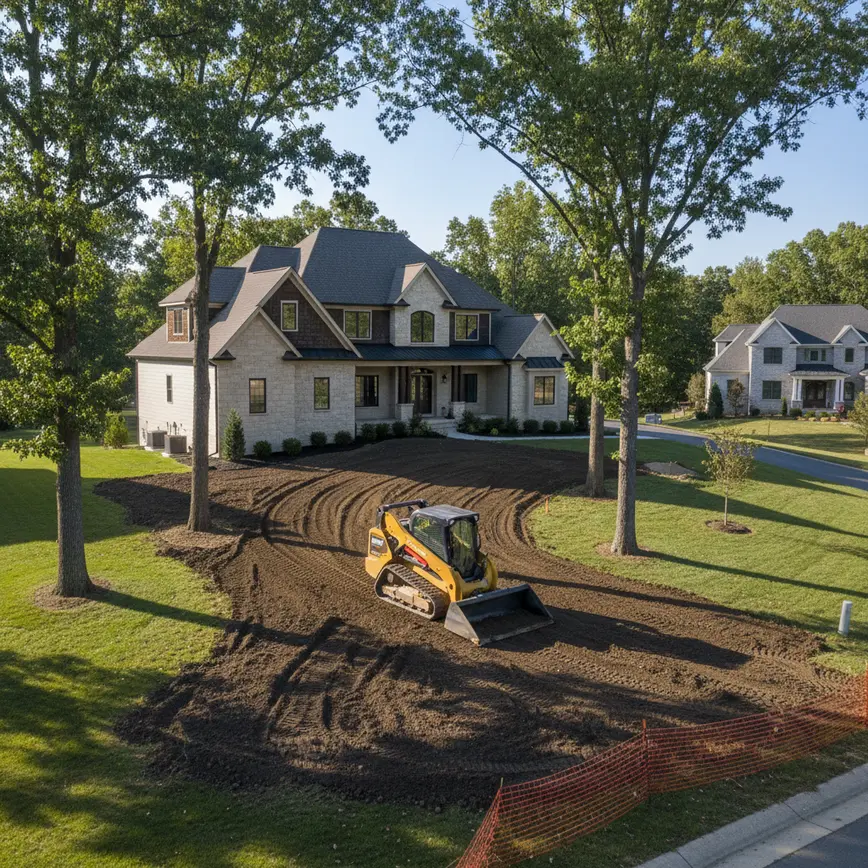

How does Grading work in Powell, Ohio?
Grading in Powell, Ohio means reshaping rolling ground, shale pockets, and clay subsoils so a lot drains correctly and supports the next build. Fortress Level Construction handles this on estate lots, wooded parcels, and former farmland with a free on-site walk-through, flat-rate quote, and utility locate coordination before digging.
The Quick Answer
- Powell grading is different because the market splits between large estate lots, newer subdivisions on former farmland, and wooded parcels near the reservoir.
- The crew uses John Deere 333G compact track loaders, Diamond drum mulchers, dozers, and excavators to cut, shape, and smooth grades for drainage and access.
- Rolling terrain and Ohio shale near creeks can change how quickly soil cuts, so the crew adjusts finish grading depth and slope control on site.
- Bennington, Cardington, and Pewamo clays can hold water, which makes subgrade shaping and runoff planning critical before a build or addition.
- Fortress gives flat-rate quotes after a free on-site walk-through, with response times of 2 to 3 hours during business hours and same-week walk-throughs.
- Ohio law requires an Ohio 811 utility locate at least 48 hours before any digging under Ohio Revised Code 3781.28.
- Typical grading projects in Powell often support higher-end construction, driveway prep, drainage correction, and lot cleanup before foundation work.
- Project pricing commonly falls in the $1,000 to $3,000 range, depending on lot size, access, vegetation, and how much cut-and-fill is needed.
Related Questions People Ask Next
Powell grading has to match estate lots, former farmland subdivisions, and wooded parcels near the reservoir, not just a flat suburban lawn. Rolling terrain, clay subsoils, and shale pockets near creeks affect drainage and machine access. Fortress shapes the site for the next phase, whether that is a foundation, driveway, or finish grade.
The crew starts with a walk-through, then looks at slope, drainage paths, tree cover, and where the build will sit. Rough grading moves more material for access and pad preparation, while finish grading fine-tunes the surface for water runoff and final elevation. On Powell lots, that distinction matters on both large estates and subdivision parcels.
Clay soils in Powell can stay wet, hold shape differently, and require more careful cuts and compaction planning. That affects how much time the crew spends shaping the pad and managing runoff. In practice, a project may stay in the $1,000 to $3,000 range, but stubborn soil, wooded access, or extra cut-and-fill can push the quote higher within that range.
Yes. Ohio Revised Code 3781.28 requires an Ohio 811 utility locate at least 48 hours before digging. That matters in Powell because many lots have utility runs added for newer subdivisions or extensions around older rural parcels. Fortress coordinates around the locate so the crew can grade safely without damaging buried utilities.
What kind of grading do Powell, Ohio lots usually need?
Powell grading usually starts with estate-lot clearing or former farmland prep, because the village has large lots, newer subdivisions, and wooded parcels near O’Shaughnessy Reservoir. Fortress grades pads, drive approaches, and drainage routes, then smooths clay and shale transitions so water sheds instead of pooling before construction.
On Powell projects, the crew often has to balance a suburban finish with rural site conditions. Rolling ground, Bennington and Cardington clay, and pockets of Ohio shale near creeks can change how a blade cuts and where runoff wants to go. That is why the team checks slope and access before the first pass.
Fortress uses John Deere 333G compact track loaders with Diamond drum mulchers for lots with stems up to 14 inches, then brings in dozers or excavators when the site needs cut-and-fill or subgrade correction. That equipment mix fits Powell’s higher-end build sites, where a cleaner finish and controlled drainage matter.
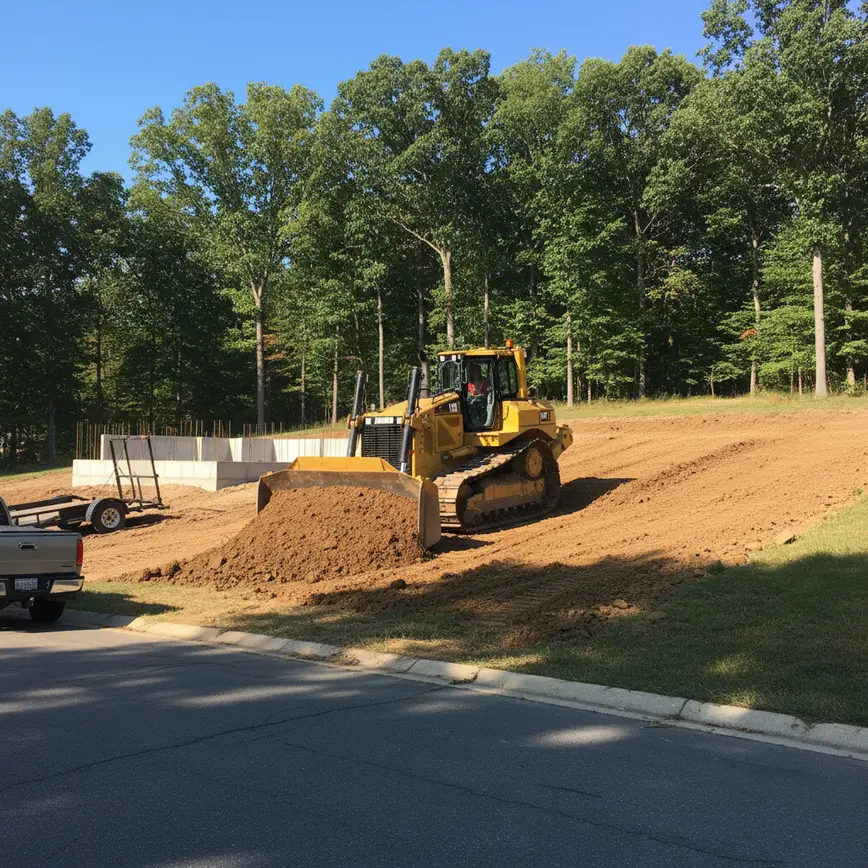
How does Fortress handles grading equipment and access on Powell sites?
Powell lots can be tight behind a historic downtown area or broad enough for estate clearing near the reservoir, so equipment choice changes fast. Fortress brings compact track loaders for precision, dozers for shaping, and excavators for deeper cuts. The crew plans access so the site stays efficient and the final grade stays accurate.
The John Deere 333G with Diamond drum mulcher is useful when a Powell parcel still has brush or stems up to 14 inches, especially on wooded ground near the Olentangy River corridor. For open former farmland, the crew may switch to dozers to build pads and establish the right fall across the lot.
Because Powell sits about 20 minutes from Fortress’s Westerville base, the team can usually respond quickly for a walk-through during business hours. That speed helps when a project has to line up with a builder’s schedule, a utility locate, or a weather window that affects clay soil and finish grading.
What does Powell grading cost when the lot is wet, wooded, or uneven?
Most Powell grading projects land in the $1,000 to $3,000 range, but the real drivers are slope, access, vegetation, and soil behavior. A flat quote follows the site visit, so the team can price cut-and-fill, finish work, and drainage shaping around the lot’s actual conditions instead of guessing from a map.
An open subdivision lot on former farmland usually grades faster than a wooded parcel near the reservoir or a steep site near a creek. Clay soils can also require more passes to stabilize the finish grade, which adds time. Fortress uses the walk-through to set scope clearly, then gives a flat-rate quote without hidden extras.
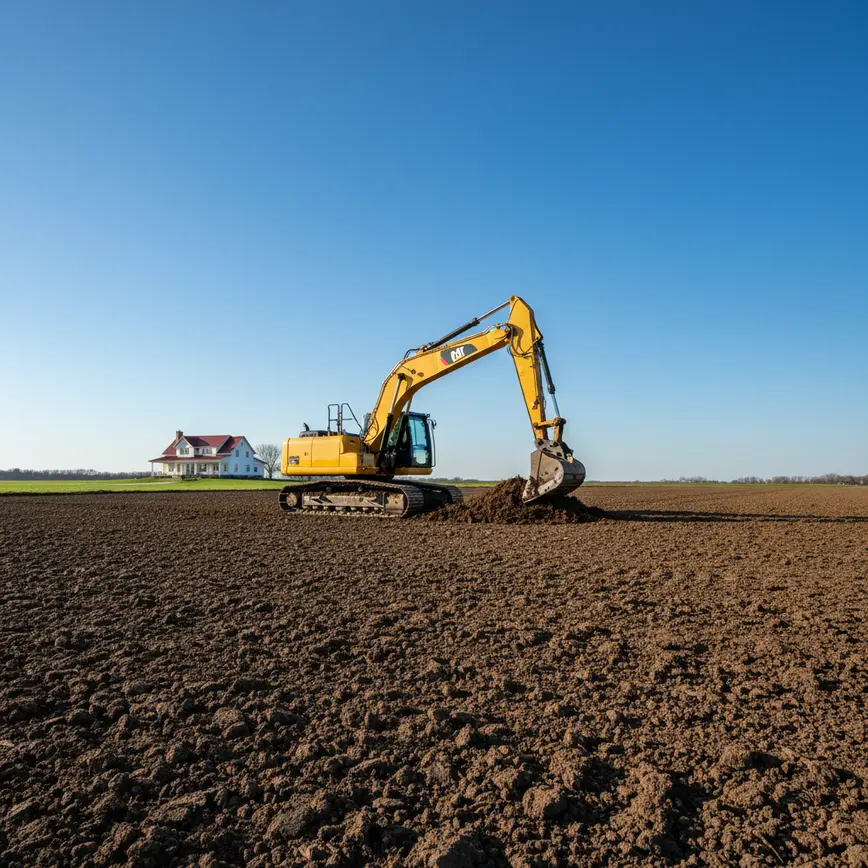
How does Powell’s terrain affect drainage and finish grading?
Powell’s rolling terrain means finish grading is not just cosmetic. Water has to move away from foundations, drive aprons, and yard edges while respecting clay and shale layers. Fortress shapes the final surface to support drainage on suburban pads, larger estate sites, and wooded lots where runoff can gather quickly after rain.
Near the Olentangy River and O’Shaughnessy Reservoir, grading may need more careful slope control because ground conditions can change across short distances. The crew checks where water should leave the site, where it should not collect, and how the finish grade will tie into neighboring elevations. That is especially important on lots being prepared for higher-end construction.
Powell is small enough that the same crew can see very different site types in a single week, from a walkable historic downtown edge to newer subdivisions outside town. The grading plan has to fit each one. Fortress keeps the process practical: evaluate, clear, cut, shape, compact, and verify the finish before handoff.
How does Powell grading compare with nearby Central Ohio areas?
Powell grading stands apart because the work often mixes upscale estate clearing with subdivision prep on former farmland. Nearby towns may have similar soil, but Powell’s lot mix, wooded edges, and reservoir proximity change the approach. Fortress adjusts equipment, access, and finish work to match each site instead of using one template.
| Factor | Powell, Ohio | Nearby Central Ohio towns | Why it matters for grading |
|---|---|---|---|
| Lot type | Estate lots, newer subdivisions, wooded parcels | More mixed suburban or town-edge sites | Changes clearing time and finish grading detail |
| Terrain | Rolling ground with clay and shale pockets | Often flatter in some newer development areas | Affects drainage, cut depth, and blade control |
| Access | Can include rural-style driveways and narrow wooded entries | May have broader open access or simpler frontage | Determines whether compact loaders or dozers fit best |
| Typical scope | Higher-end lot prep and drainage shaping | More standard residential or builder pad work | Influences price, equipment, and schedule |
| Project driver | Upscale market split between estate clearing and former farmland subdivision prep | Less concentrated split in some surrounding areas | Makes Powell grading more site-specific |
When is grading not the right answer for a Powell property?
Grading is not the right call if the problem is a sinkhole, a failed foundation, a major retaining wall issue, or a utility repair that needs a different trade. In Powell, that also includes sites with active wetland or watercourse constraints near the reservoir or creek corridors, where permits and design may come first.
If the lot only needs surface cleanup, light topsoil redistribution, or mowing after a build, full grading may be more than the site needs. In that case, the better move is a smaller scope or a different service plan after a walk-through. Fortress will tell you when the work should stay simple instead of overbuilding the fix.
If buried utilities, drainage structures, or foundation concerns are part of the issue, grading should wait until the underlying problem is solved. Ohio 811 locate requirements still apply before any digging, and on Powell’s wooded or older rural parcels that step is not optional. The crew can help sequence the work, but the right starting point matters.
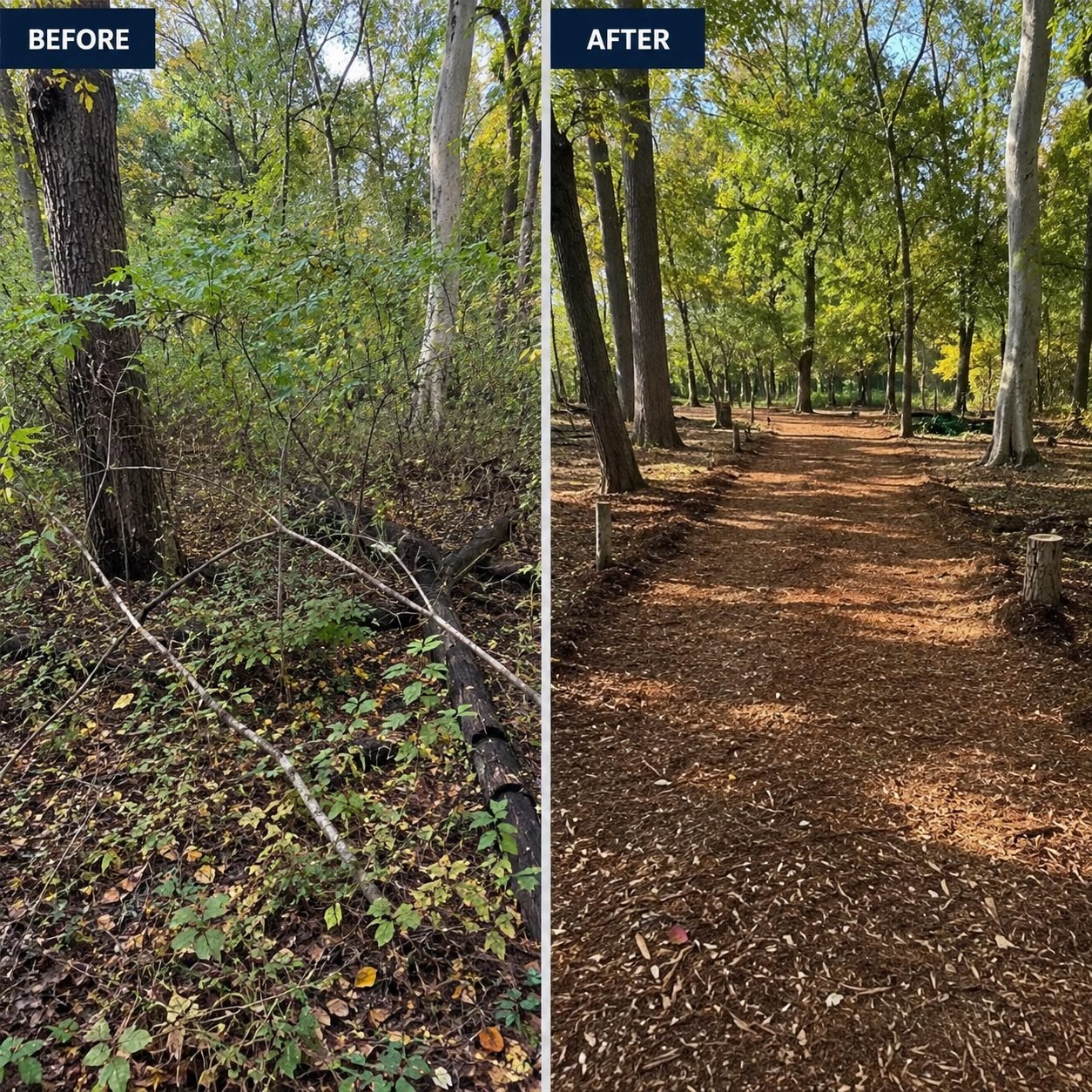
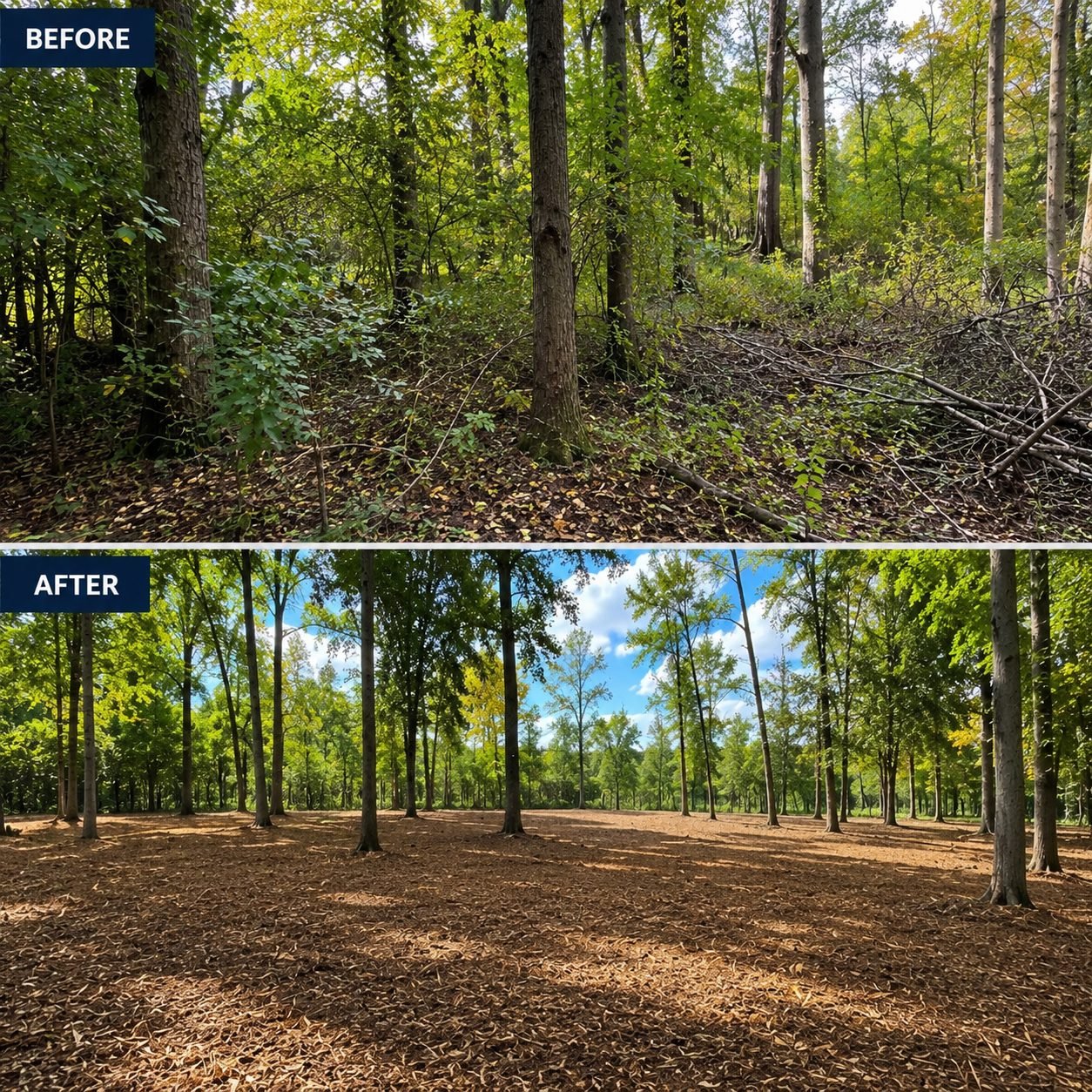
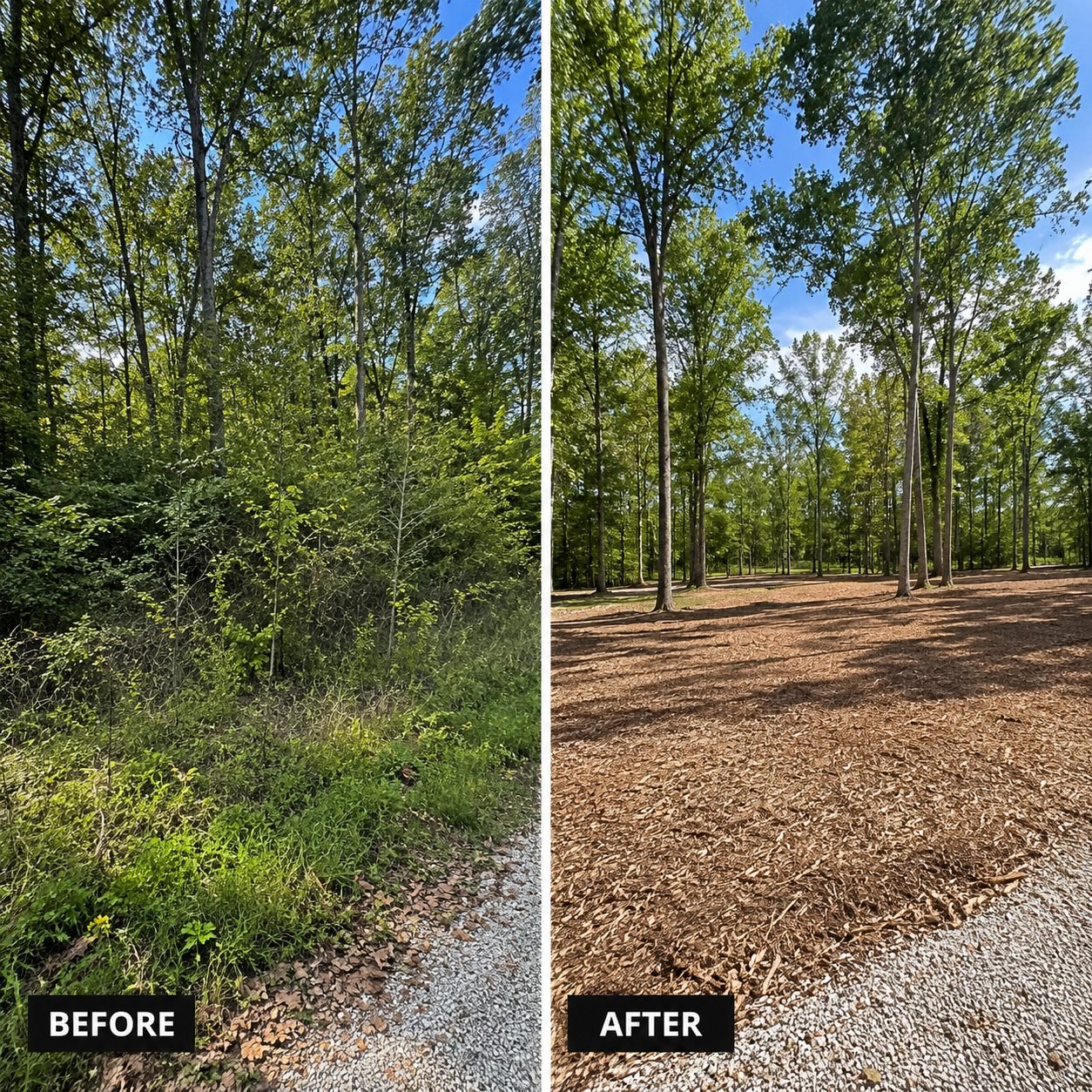
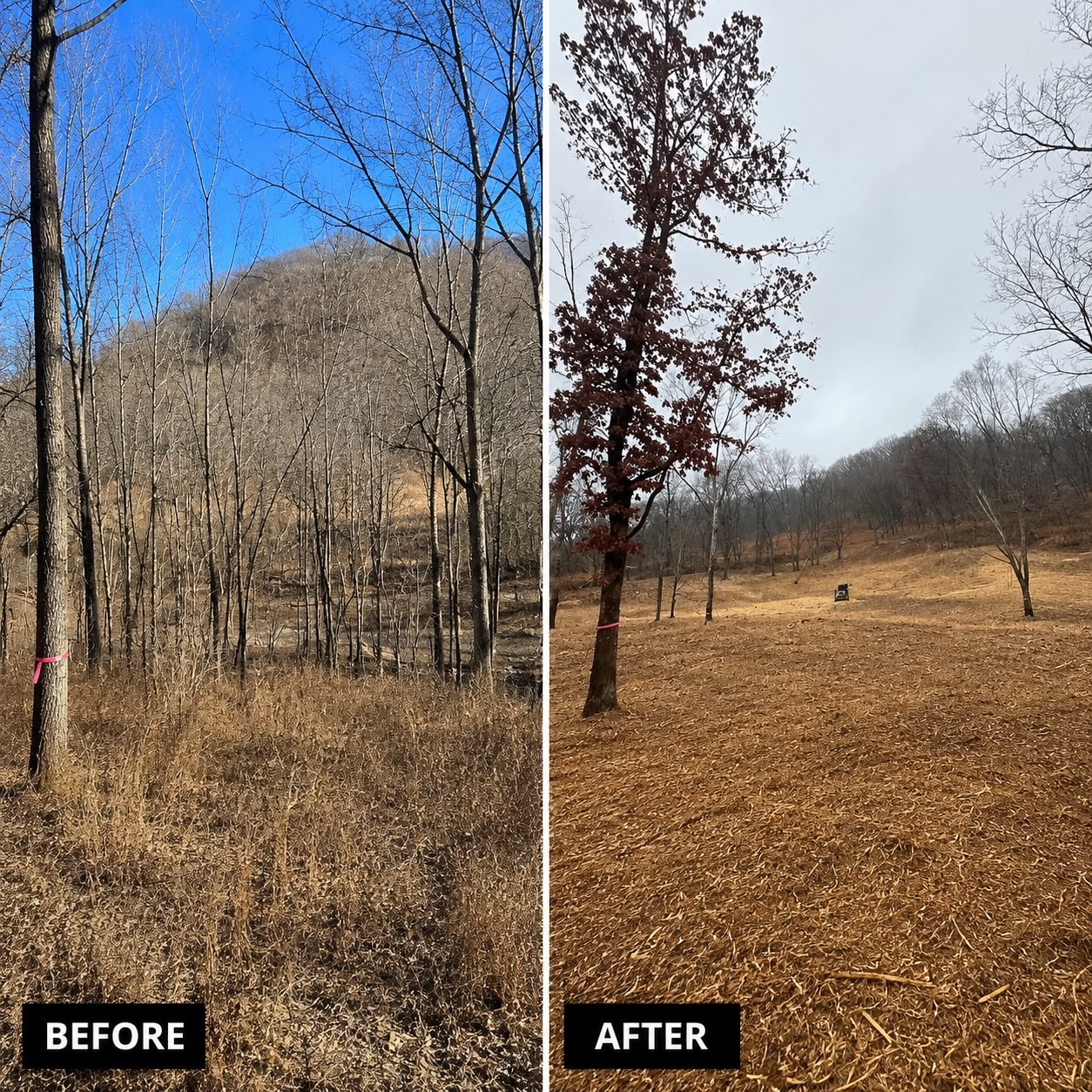
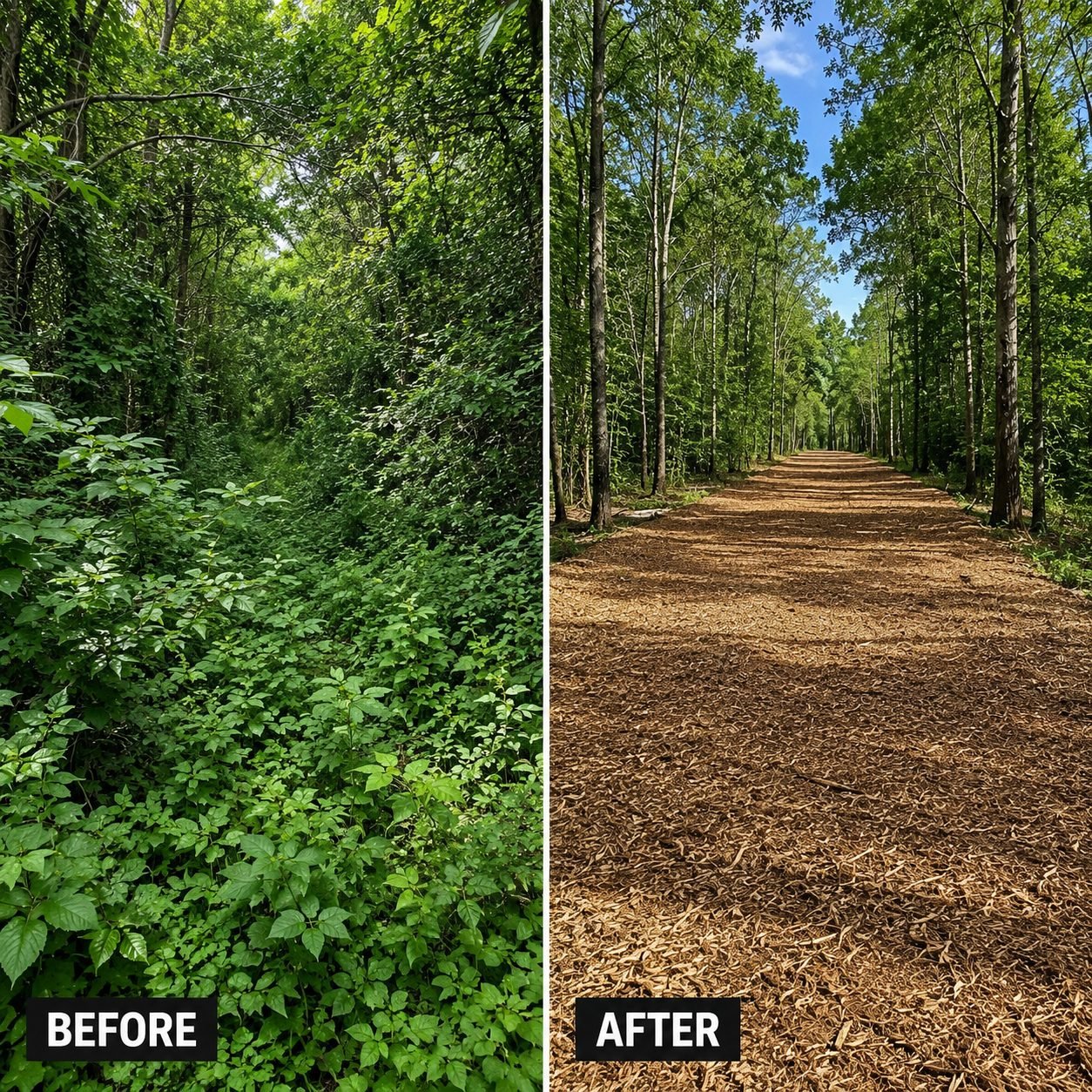
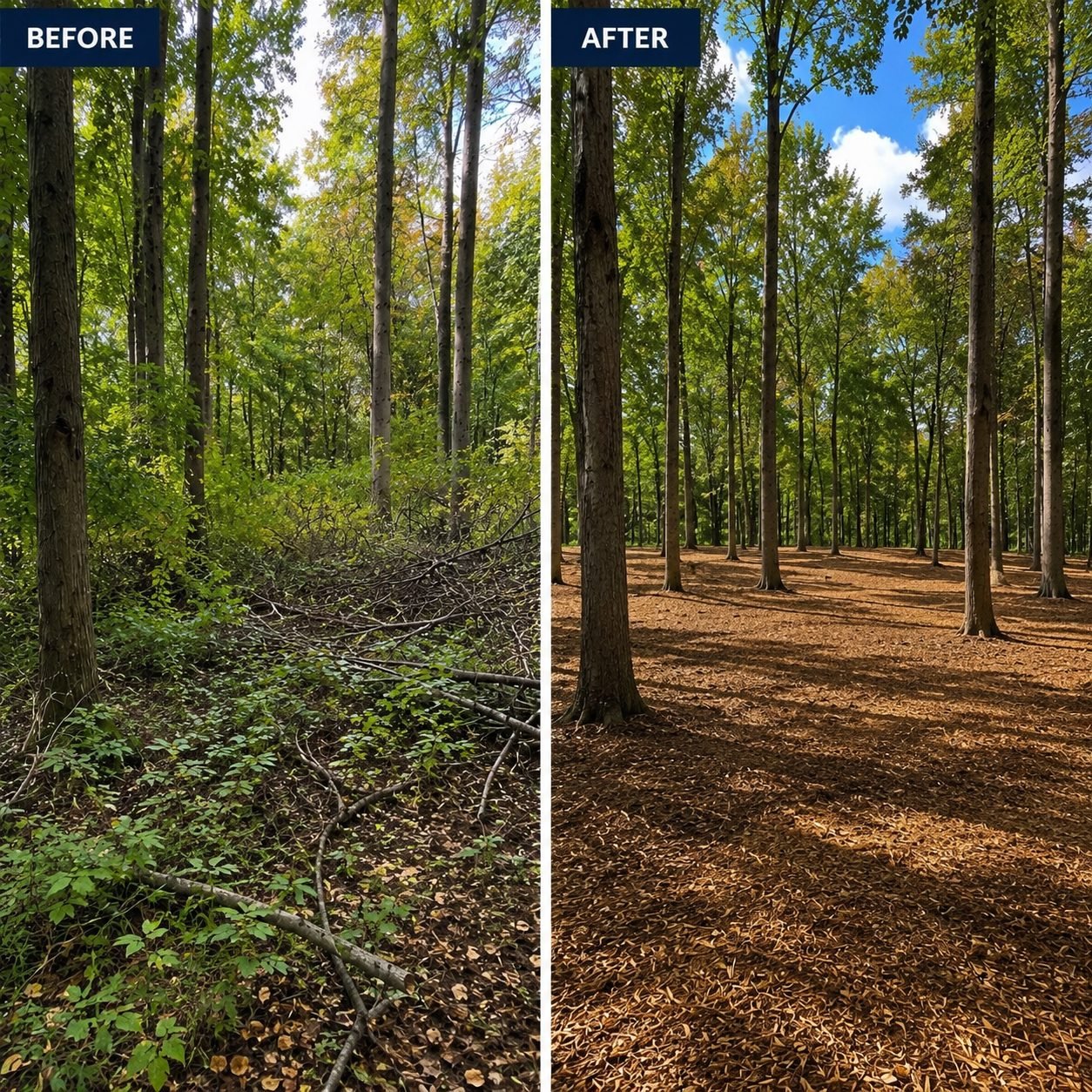
What does before and after grading look like on a Powell site?
Before grading, a Powell site may show sloped ground, brush, soft clay, or uneven runoff paths on an estate lot or former farmland parcel. After grading, the pad is level, water moves cleanly, and the lot is ready for building. Fortress documents the transition with a practical before-and-after focus.
Frequently asked questions
Fortress usually responds within 2 to 3 hours during business hours and can schedule same-week walk-throughs. That matters in Powell because project timing often depends on builder schedules, weather, and the Ohio 811 locate window. After the visit, the team gives a flat-rate quote based on the actual lot conditions.
Yes. Wooded lots near O’Shaughnessy Reservoir are part of the Powell mix, and those sites often need clearing before grading can begin. Fortress uses the John Deere 333G with a Diamond drum mulcher for stems up to 14 inches, then shifts to dozers or excavators for shaping and finish work after the site opens up.
It can. Bennington, Cardington, and Pewamo clays can change how much work is needed to cut, shape, and stabilize the lot. The final quote usually still falls in the $1,000 to $3,000 range for many projects, but wet clay, steep grades, or extra drainage correction can increase the scope within that range.
Estate lots usually have more trees, more terrain change, and longer drive or utility runs, while subdivision lots on former farmland may need broader pad prep and finish grading. In Powell, both are common, so the crew has to match the plan to the property, not the neighborhood style alone.
Fortress uses compact track loaders for precise shaping, then dozers and excavators when the lot needs larger cuts or deeper adjustments. Finish grading in Powell is about controlling slope, smoothing transitions, and helping runoff leave the site correctly. The equipment choice depends on whether the lot is open farmland, wooded, or already partially developed.
Start with a free on-site walk-through and make sure an Ohio 811 locate is requested at least 48 hours before digging. Gather any builder plans, drainage concerns, or driveway locations you already know. That helps Fortress price the job accurately and decide whether the site needs rough grading, finish grading, or both.
Grading Near Powell
What Other Services Does Fortress Offer in Central Ohio?
Fortress Level Construction runs a full range of land-clearing, excavation, grading, and site-work services across Central Ohio, so one owner-operated crew can clear, grade, and prep a site end to end.
Get a Flat-Rate Quote from Lee Carson
Owner-operated land clearing across all five Central Ohio counties. Send your property details and Lee gets back to you within 2 to 3 hours during business hours with one flat number after a free on-site walk-through.