

Can I Clear Land Myself or Do I Need a Professional in Central Ohio?
DIY land clearing works in Central Ohio for small brush removal on flat ground with hand tools, but acreage over roughly half an acre, mature trees, invasive thickets, or Brookston-Crosby clay call for a professional with tracked equipment. Fortress Level Construction, run by combat veteran Lee Carson, serves Franklin, Delaware, Licking, Fairfield, and Union counties.
The Quick Answer
- DIY works for small, flat, brush-only jobs; acreage, mature trees, and clay soil favor a professional
- Hand tools and a weekend suit brush under a quarter acre on dry, level ground
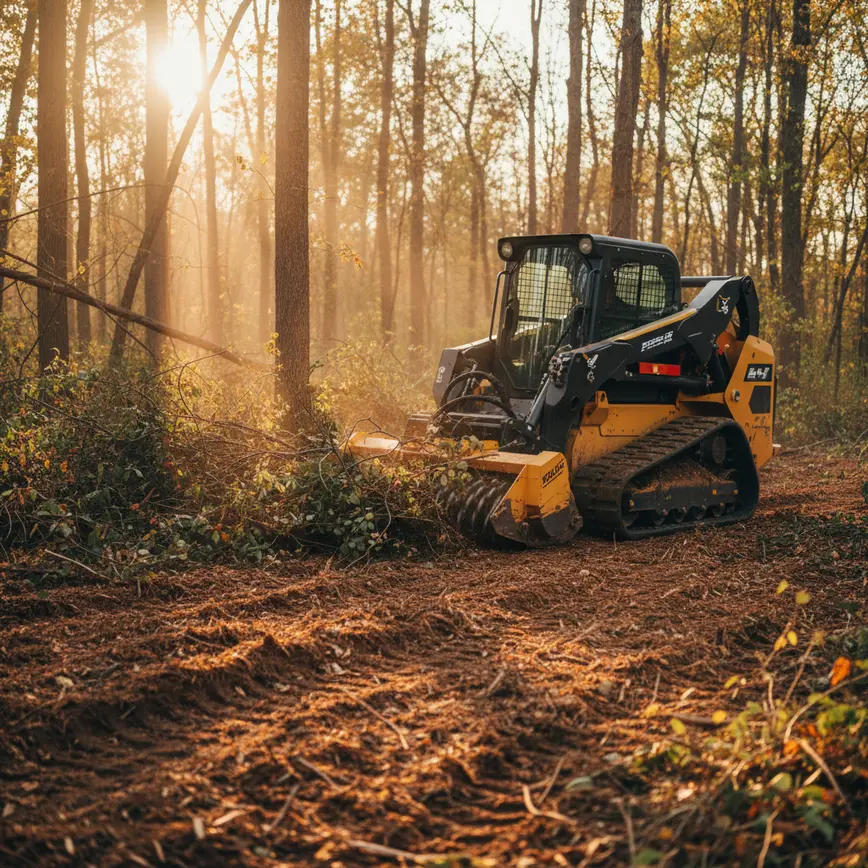
- A pro’s tracked mulcher clears one to five acres a day, stems up to 14 inches
- Cutting invasive honeysuckle or multiflora rose without treatment makes it resprout thicker, per OSU Extension
- Brookston-Crosby clay ruts under undersized rental equipment, especially in wet weather
- Ohio law requires an Ohio 811 locate 48 hours before any digging, a step DIYers often miss
- Fortress Level Construction is licensed, insured, and gives flat-rate, owner-walked quotes across 5 counties
Related Questions People Ask Next
A tracked mulcher like the John Deere 333G with a Diamond drum head clears roughly one to five acres a day depending on stem density and terrain, handling stems up to 14 inches in a single pass. A crew working by hand with chainsaws and a chipper typically covers a fraction of an acre in the same amount of time, especially once brush needs hauling off site.
Yes. Much of Franklin, Delaware, Licking, Fairfield, and Union counties sits on Brookston-Crosby clay, which holds moisture and ruts easily under foot traffic or undersized rental equipment, especially after rain. A homeowner attempting DIY clearing on wet clay risks compacting or gouging the soil in ways that are far harder to fix than the original brush was to remove.
Forestry mulching grinds brush and small to mid-size trees into mulch and leaves root systems in the ground, which is faster and often better for erosion control on sloped or wooded ground. Full land clearing removes stumps and roots entirely to leave bare, buildable ground, which takes more equipment time and typically costs more per acre.
Fortress Level Construction takes over partially cleared sites regularly, since piled brush, half-cut invasive thickets, and rutted ground from rental equipment are common results of a DIY project that outgrew its plan. Call (844) 656-0129 for an owner-walked assessment; Lee Carson can usually give a same-week estimate for finishing the job with the right equipment.
When Is DIY Land Clearing Realistic in Central Ohio?
DIY land clearing is realistic in Central Ohio for small brush piles, saplings under a few inches thick, and yard-edge overgrowth cleared with a chainsaw, loppers, and a rented brush mower on flat, dry ground. Anything beyond a quarter to half acre of dense growth quickly outpaces hand tools and weekend hours.
A homeowner with a chainsaw, loppers, a wood chipper, and a free weekend can reasonably clear scattered brush, small saplings, and light undergrowth along a fence line or garden edge. This kind of work does not usually require heavy machinery, and it lets a property owner control the pace and cost without hiring out labor.
The line moves quickly once the job involves more than isolated brush. Stumps with root systems, standing dead trees near a structure, or growth spread across multiple acres change the math fast, and that is where Fortress Level Construction typically gets called after a homeowner has already spent a weekend or two chipping away at the edges.
What Makes a Job Too Big for DIY Land Clearing?
A land clearing job outgrows DIY once it involves mature trees, dense multiflora rose or honeysuckle thickets, more than half an acre of continuous growth, or Brookston-Crosby clay that ruts under foot traffic and light equipment. Fortress brings a John Deere 333G with a Diamond drum mulcher that handles stems up to 14 inches in one pass.
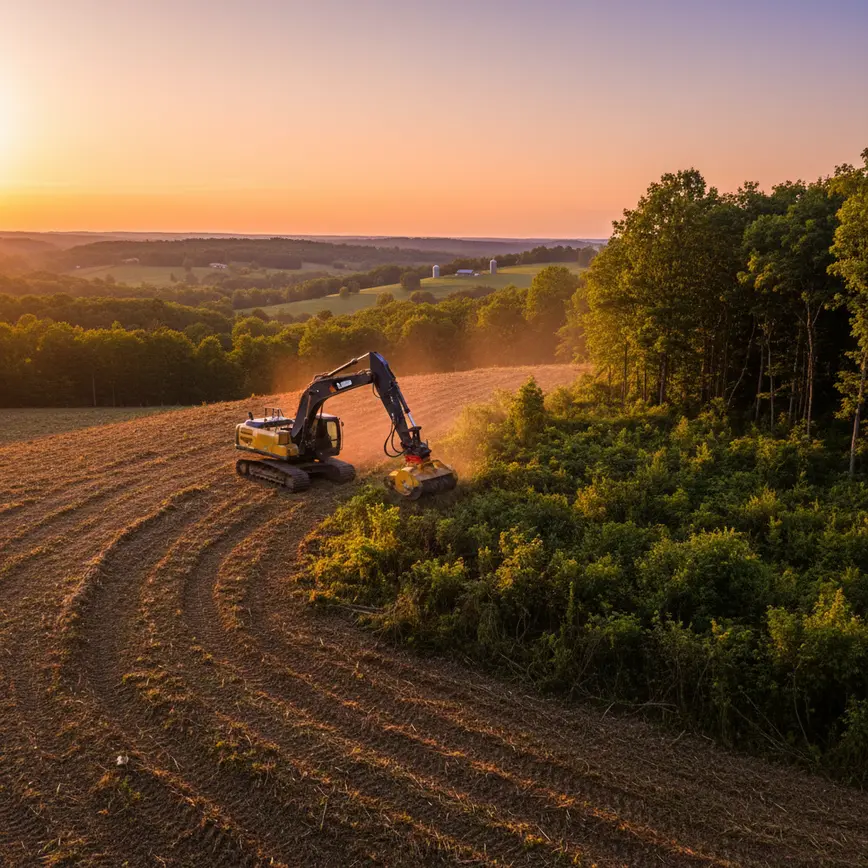
Scale is the first factor. A single tracked mulcher can clear one to five acres a day depending on stem density, a pace no chainsaw crew matches without weeks of labor and a place to haul debris. Mature trees add another layer, since felling anything with real diameter near a driveway, fence, or structure carries real risk without the right saw and drop zone.
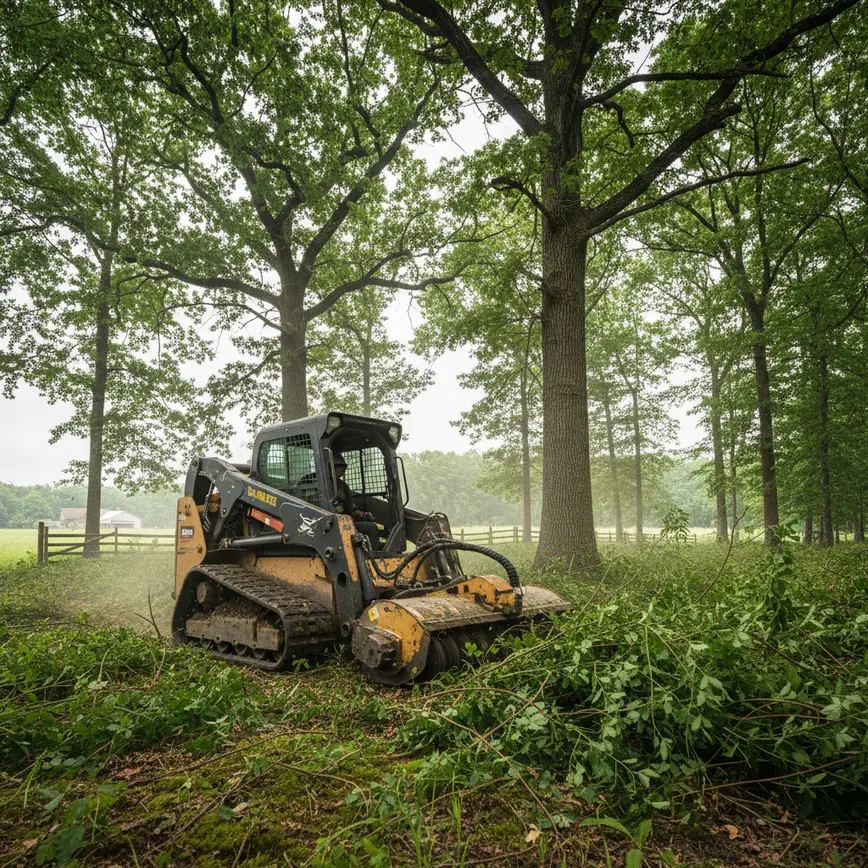
Soil is the second factor that surprises DIYers in this region. Franklin, Delaware, Licking, Fairfield, and Union counties sit largely on Brookston-Crosby clay, which holds water and ruts easily under an ATV, a rented skid steer, or repeated foot traffic in wet weather. A tracked loader distributes weight differently than rental equipment sized for suburban yards, which is part of why the wrong machine can leave damage that outlasts the clearing job itself.
Why Do Invasive Species Come Back Thicker After DIY Cutting?
Invasive shrubs like bush honeysuckle, autumn olive, multiflora rose, and buckthorn regrow thicker and denser when cut without a follow-up herbicide or stump treatment, according to Ohio State University Extension. A single mowing or chainsaw pass removes the visible plant but leaves the root system intact and ready to resprout multiple stems.
This is one of the most common DIY mistakes Fortress sees across the five-county service area. A homeowner clears a hillside of honeysuckle in a weekend, feels satisfied with the open sightline, and returns the following spring to find the same root crowns pushing up three or four new stems each, denser than before.
Professional invasive removal pairs mechanical clearing with a treatment plan that targets the root, not just the stem, which is the step most DIY projects skip. Without it, repeated cutting can turn a manageable thicket into a multi-year cycle of regrowth that eventually costs more in time than a single properly treated clearing job would have.
What Legal Steps Do DIYers Often Miss Before Clearing Land?
Ohio law requires an Ohio 811 utility locate at least 48 hours before any digging, including stump grinding or grading during land clearing, and this step is the one most DIYers skip entirely. Hitting a buried gas, electric, or water line during a weekend project turns a simple clearing job into an expensive and dangerous mistake.
The Ohio 811 locate is free and applies to any digging deep enough to disturb utility lines, which includes pulling stumps and grading uneven ground after clearing brush. Skipping it is a common DIY oversight since the process feels like it belongs to construction projects rather than a weekend spent clearing a fence line.
Licensed contractors build the 811 waiting period into the project timeline as a matter of course, along with any permitting tied to Ohio Revised Code 3781.28 where it applies to the scope of work. Fortress is licensed and insured, and an owner-walked quote from Lee Carson includes flagging where a locate is needed before equipment ever moves onto the property.
DIY or Professional: Which Land Clearing Jobs Fit Which Approach?
The right approach depends on acreage, tree size, invasive species, and soil conditions rather than a fixed rule of thumb. Small, flat, brush-only jobs on dry ground are reasonable DIY projects, while anything involving mature trees, dense invasives, wet clay, or more than half an acre is better handled with tracked equipment and a licensed crew.
| Job | DIY Feasible? | Why | Better With a Pro |
|---|---|---|---|
| Scattered brush under a quarter acre | Yes | Hand tools and a weekend handle light growth on flat, dry ground | Not usually needed |
| Mature trees near structures | No | Felling risk near a home, fence, or power line is high without training | Yes, always |
| Honeysuckle or multiflora rose thicket | Rarely | Root crowns resprout thicker without herbicide follow-up (OSU Extension) | Yes, for lasting removal |
| Half acre or more of dense growth | No | Volume and hauling outpace hand tools within a day or two | Yes, mulcher clears 1-5 acres a day |
| Grading or stump pulling on clay | No | Brookston-Crosby clay ruts under the wrong equipment and requires an Ohio 811 locate first | Yes, licensed and insured |
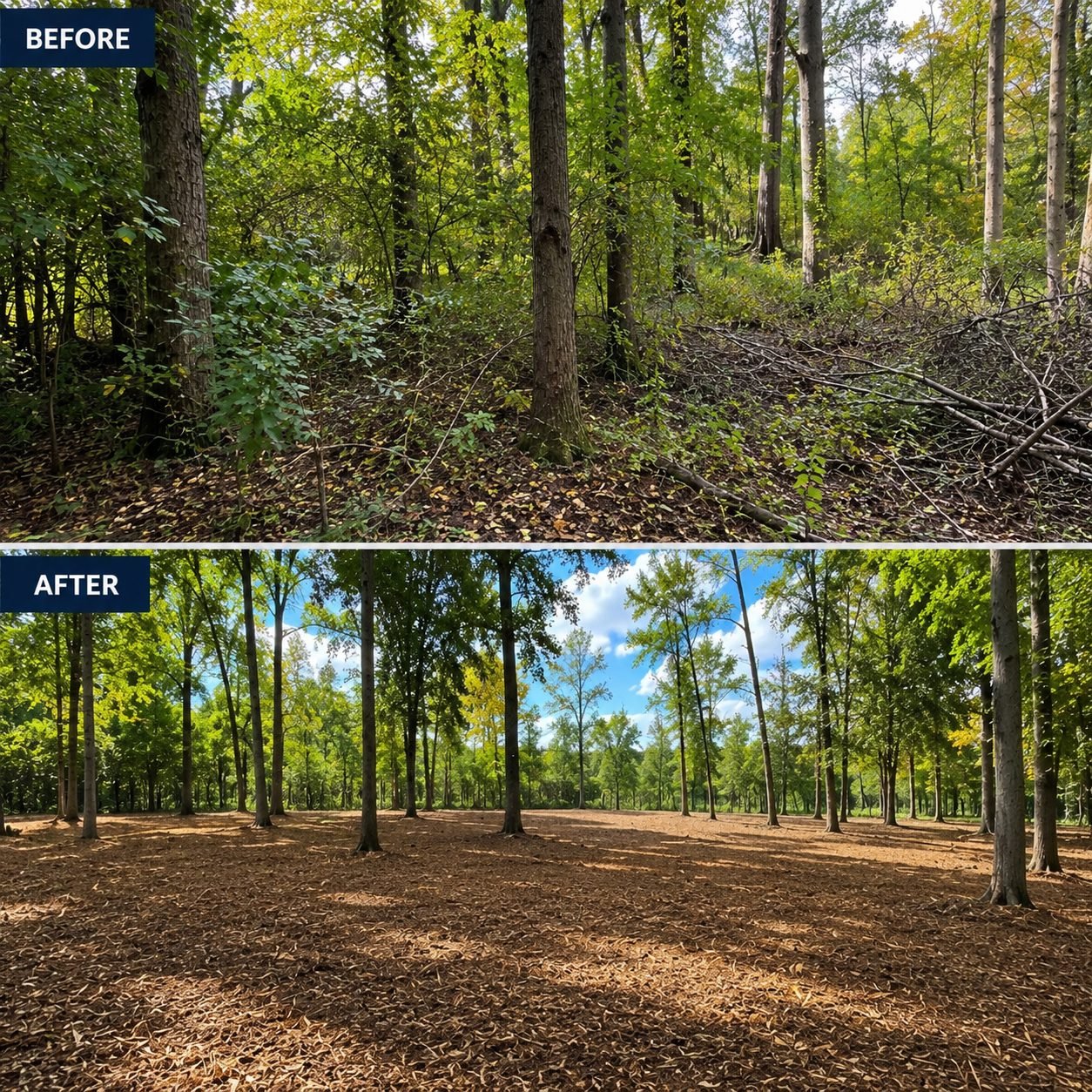
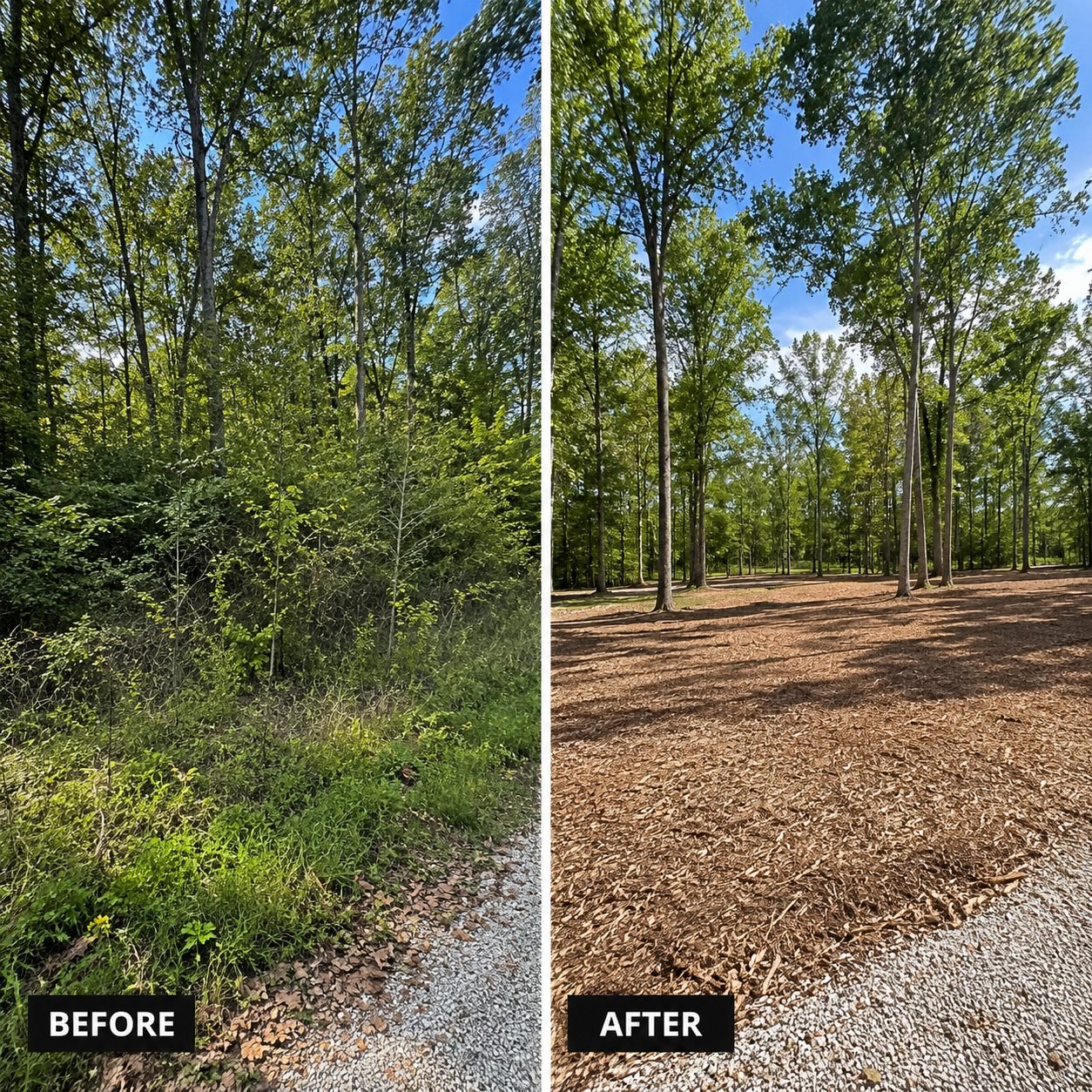
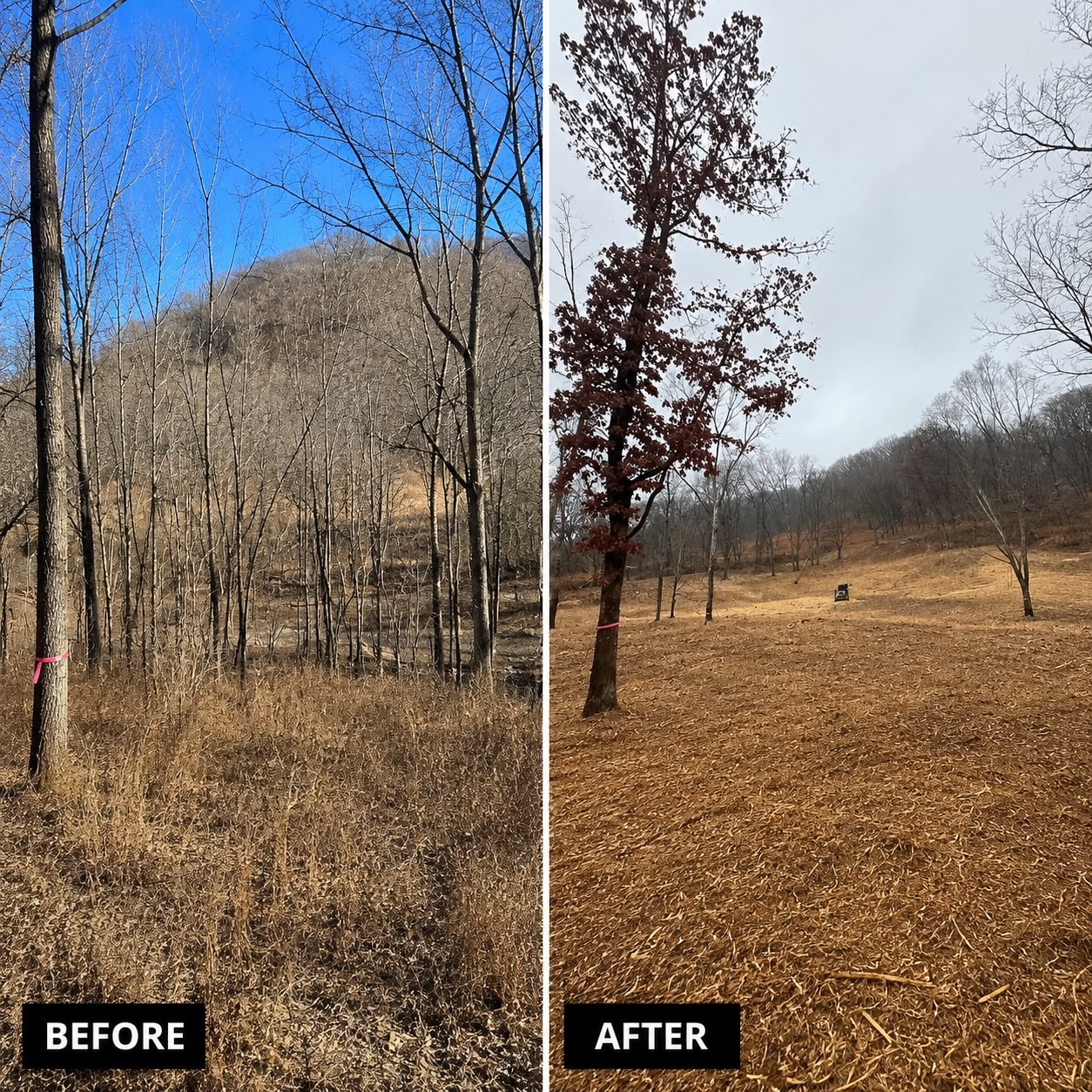
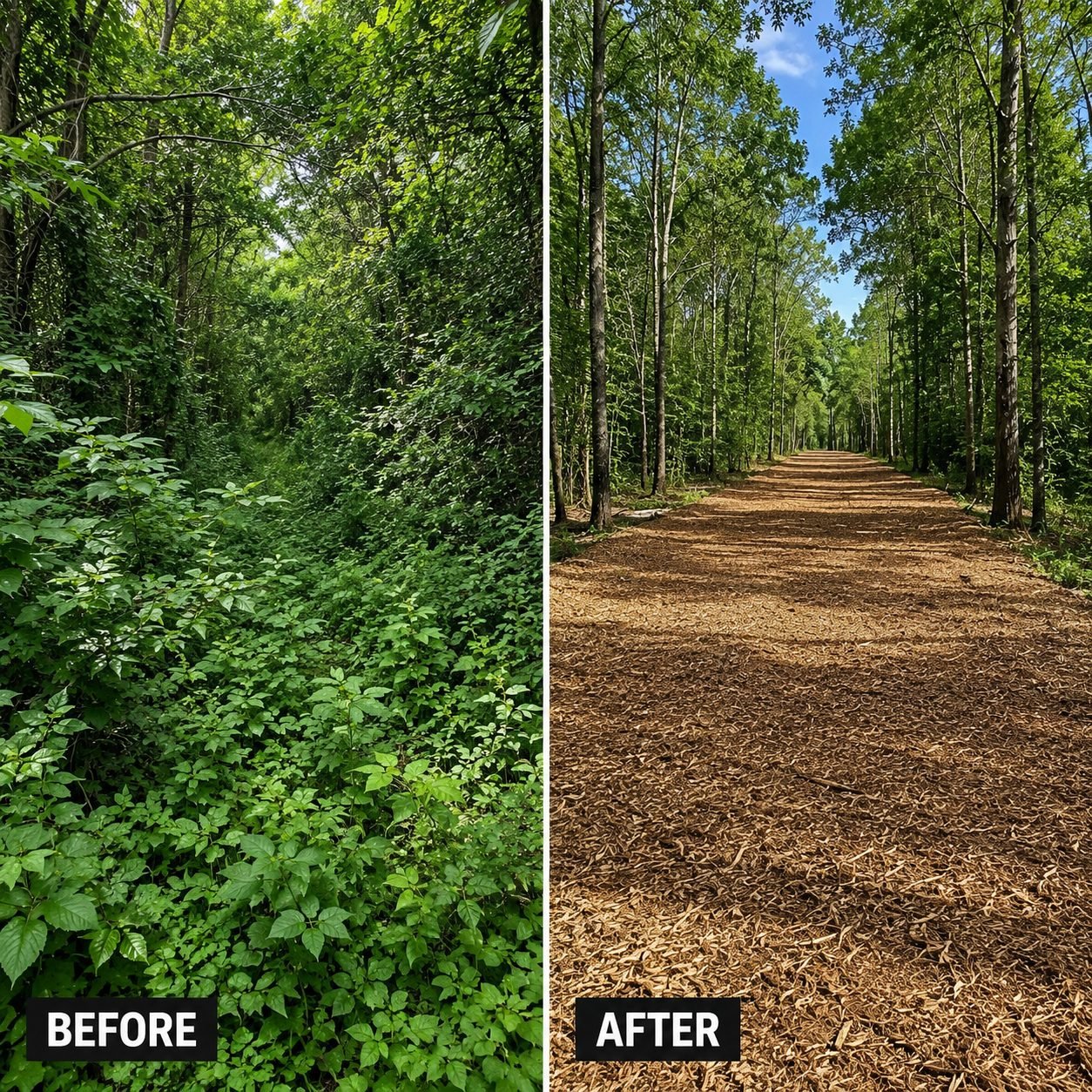
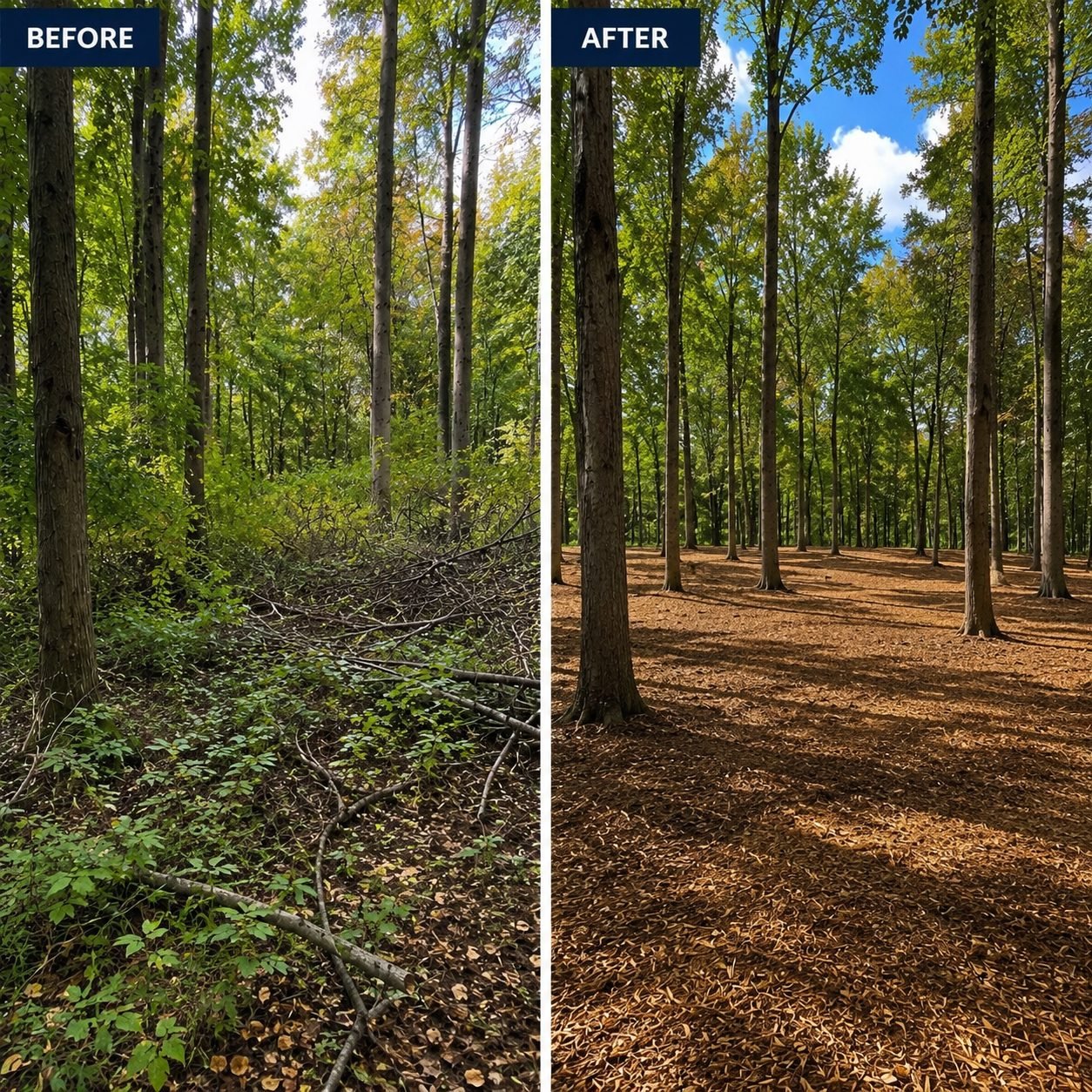
What Does Central Ohio Land Clearing Look Like Before and After?
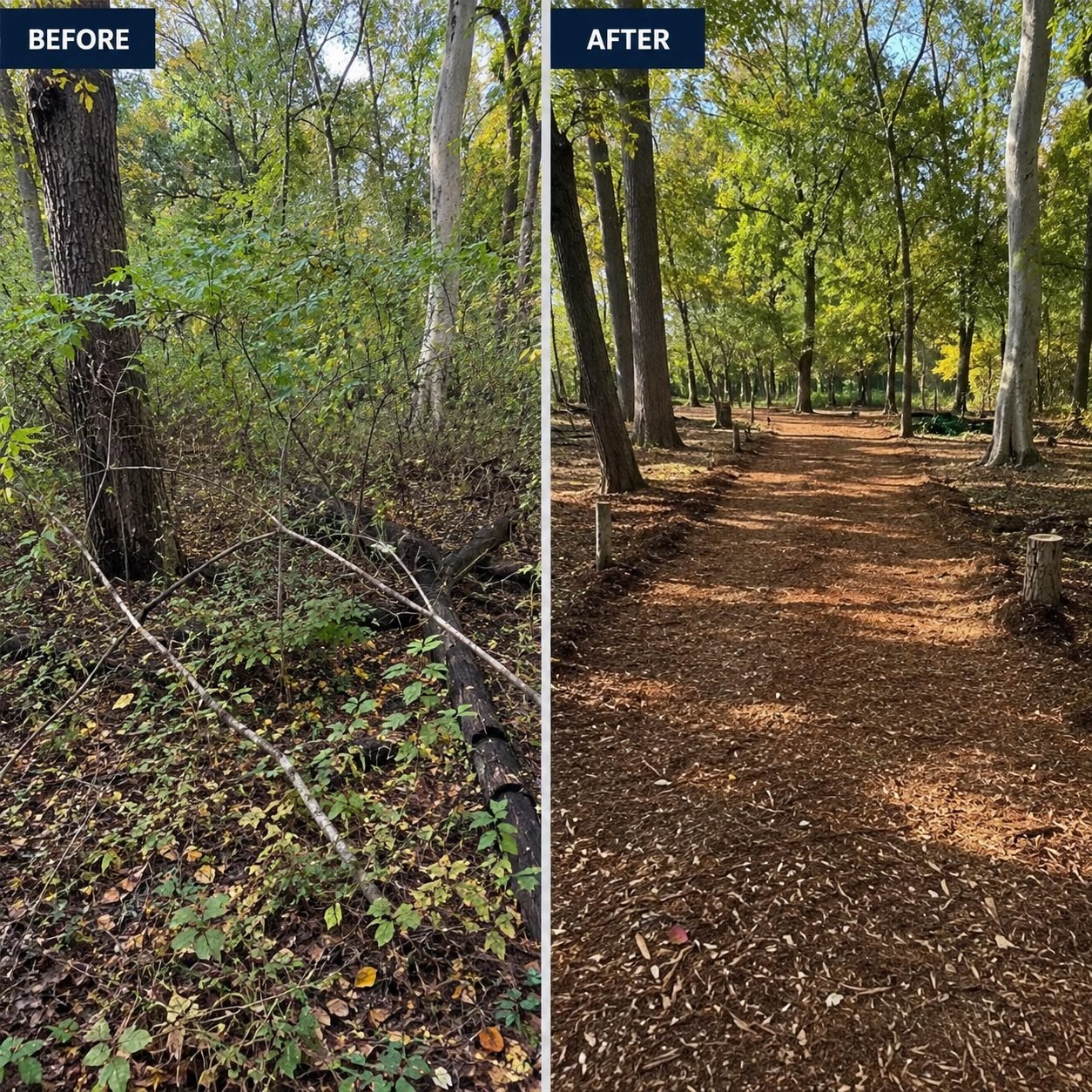
Land clearing turns dense, unusable Central Ohio ground into open, walkable property. These are real Fortress jobs across Franklin, Delaware, Licking, Fairfield, and Union counties, cleared with mature trees left standing and no debris piles to burn or haul.
Frequently asked questions
A chainsaw and a rented brush mower can handle scattered saplings and light undergrowth on flat, dry ground, usually under a quarter acre. Once the job includes mature trees, dense invasive thickets, or wet clay soil, hand tools and rental equipment fall short, and Fortress Level Construction can clear the same area in one to five acres per day.
Full land clearing in Central Ohio typically runs $4,000 to $8,000 per acre, while forestry mulching, which leaves root systems in place and mulch on the ground, runs $1,850 to $3,500 per acre. Fortress provides a flat-rate, owner-walked quote from Lee Carson so the price is set before any equipment arrives on site.
Permit requirements vary by county and by the scope of work, and can run roughly $100 to $300 when one applies, sometimes tied to Ohio Revised Code 3781.28 for construction-adjacent clearing. An Ohio 811 utility locate is separately required at least 48 hours before any digging. Fortress accounts for both during the initial site walk.
Small brush and sapling removal on flat, open ground is generally low risk with proper eye and ear protection. Risk climbs fast with any tree over a few inches thick, work near power lines or structures, or slopes where a chainsaw kickback or a falling limb has nowhere safe to go, which is when calling a licensed crew is the safer choice.
Fortress Level Construction serves Franklin, Delaware, Licking, Fairfield, and Union counties, with response typically within two to three hours of an inquiry. Owner Lee Carson, a combat veteran who founded the company in 2009, personally walks most quotes before scheduling equipment for either forestry mulching or full land clearing.
Mowing over honeysuckle knocks down the visible plant but leaves the root crown intact, and OSU Extension notes that cut invasive shrubs typically resprout thicker without a follow-up herbicide treatment. A mulcher pass paired with stump treatment removes both the stem and the regrowth cycle in one visit rather than creating years of repeat mowing.
What Other Services Does Fortress Offer in Central Ohio?
Land clearing is one of nine services Fortress Level Construction runs across Central Ohio, so one owner-operated crew can clear, grade, and prep a site end to end.
Get a Flat-Rate Quote from Lee Carson
Owner-operated land clearing across all five Central Ohio counties. Send your property details and Lee gets back to you within 2 to 3 hours during business hours with one flat number after a free on-site walk-through.