

Can Land Clearing Cut a Trail on Granville, Ohio Hill Ground?
Land clearing can cut a trail on Granville, Ohio hill ground, and on one to twenty acre wooded parcels around the village it is one of the most useful things to do. A hillside trail is a bench cut across the slope rather than a path straight up it.
Cutting a usable hillside trail
- A hillside trail is a bench cut across the contour, not a line straight up the hill.
- A trail run straight down a slope becomes a drainage channel and erodes.
- Switchbacks let a trail gain height at a walkable grade on steep Granville ground.
- The tread needs compacting and shedding water sideways off the slope.
- Trail work is quoted per job because length and slope vary enormously.
- A cleared line is not a trail. The tread is what makes it last.
What Else Do People Ask About Land Clearing in Granville, Ohio?
It becomes the drainage path. Water runs down the tread and erodes it into a gully within a season or two.
A level tread cut into the slope, so you walk across the hill rather than up its face.
On the steeper Granville hills, yes. They are what keep the grade walkable.
Wide enough for the use intended. Wider than needed just opens more ground on an erodible slope.
How Is a Trail Cut on Granville, Ohio Hill Ground?
As a bench across the contour. A level tread is cut into the slope so you walk across the hill rather than up its face, which is what makes the grade comfortable and stops the trail becoming a watercourse.
Cutting a bench means removing material from the uphill side and using it to build the downhill edge, producing a tread that sits level across the slope.
That tread then needs to shed water sideways off the hill rather than along its length. A trail that carries water down its own line is a gully in waiting.
On the steepest Granville ground, switchbacks are what let a trail gain height at a walkable grade instead of a scramble.
Why Do Straight Trails Fail on Granville, Ohio Slopes?
Because they become the drainage path. Water finds the lowest resistance route, and a compacted line running straight down a hillside is exactly that. Within a season or two it is a channel rather than a trail.
Once it starts, it accelerates. A deepening channel concentrates more water, which cuts faster, and the trail becomes both unusable and a genuine erosion source on the parcel.
This is the single most common mistake on hillside trails, and it is entirely a layout decision rather than a construction one.
Getting the line right at the start costs nothing extra. Fixing it afterwards means cutting a new trail and repairing the old line.
What Makes a Granville, Ohio Trail Last?
A compacted tread, water shed sideways at regular intervals, and a line that follows the contour. A cleared route through the growth is the start of a trail rather than a finished one, and the difference shows within the first wet season.
Clearing the line is part of a normal pass. Cutting the bench, compacting the tread and handling drainage is separate work, quoted per job because length and slope vary so widely.
Surface choice depends on use. A walking trail on compacted tread is often enough; anything carrying a vehicle needs more.
See excavation and grading for the tread and drainage work.
How Does Slope Change Land Clearing on Granville, Ohio Hills?
Method and pace by slope on Granville parcels, the steepest ground Fortress works regularly. Slope is measured across the sections that matter rather than averaged over the parcel.
| Slope | Method | Finished surface | Cost effect |
|---|---|---|---|
| Flat to 5 degrees | Clear pass or selective | Owner’s choice | Standard rate |
| 5 to 10 degrees | Either, cover retained | Mulch preferred | Standard rate |
| 10 to 15 degrees | Selective preferred | Mulch retained | Add 10 to 15 percent |
| 15 to 20 degrees | Mulch only, never bare | Mulch retained | Add 15 to 25 percent |
| 20 to 25 degrees | Across the contour only | Mulch retained | Quoted per job |
| Over 25 degrees | Assessed individually | Often no work | Quoted per job |
| Hillside trail cut | Bench cut across slope | Compacted tread | Quoted per job |
Working practice published by Fortress Level Construction for its Licking County operation, August 2026. Soil depth, slope class and erosion factor for any Granville parcel are published in the USDA NRCS Web Soil Survey (accessed August 2026).
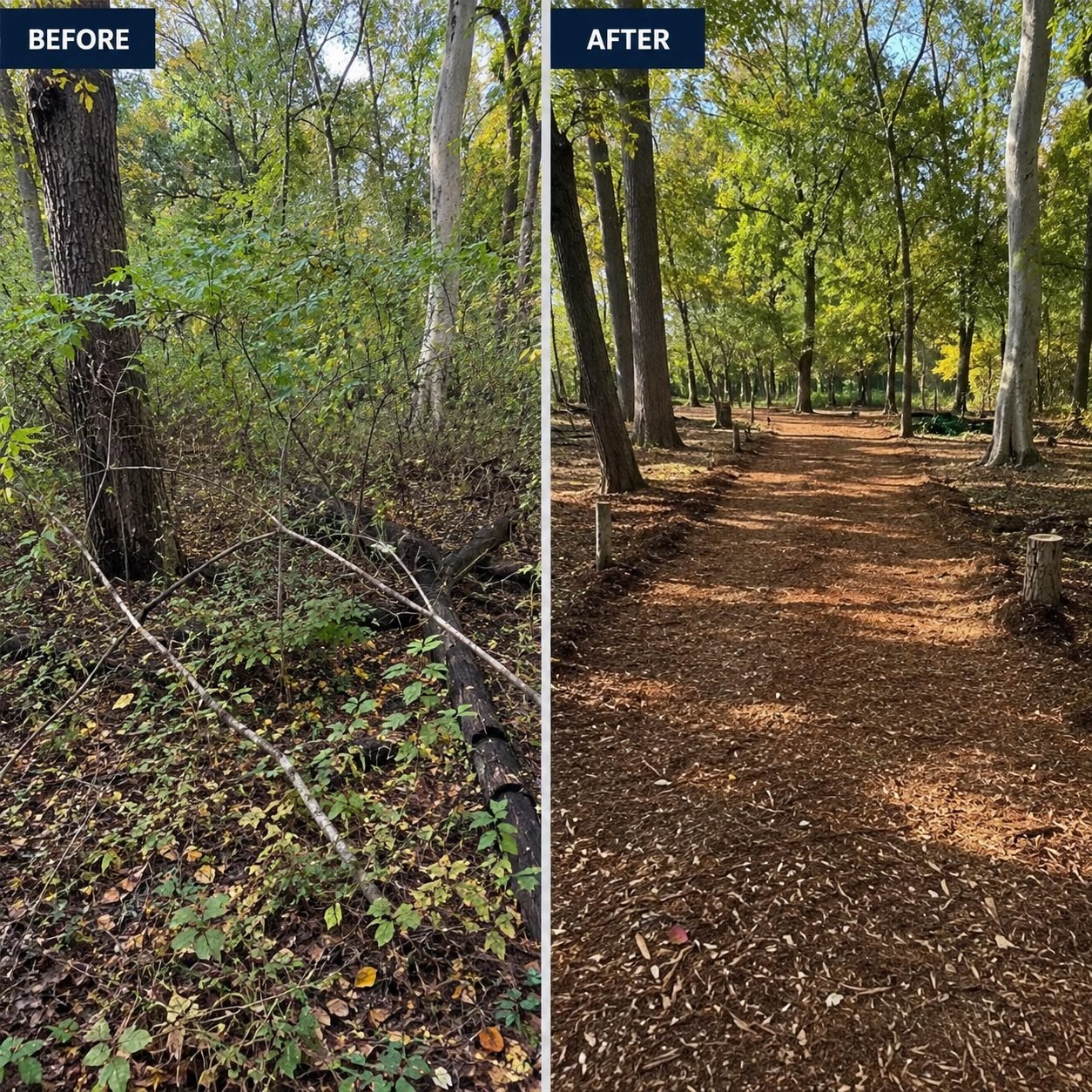
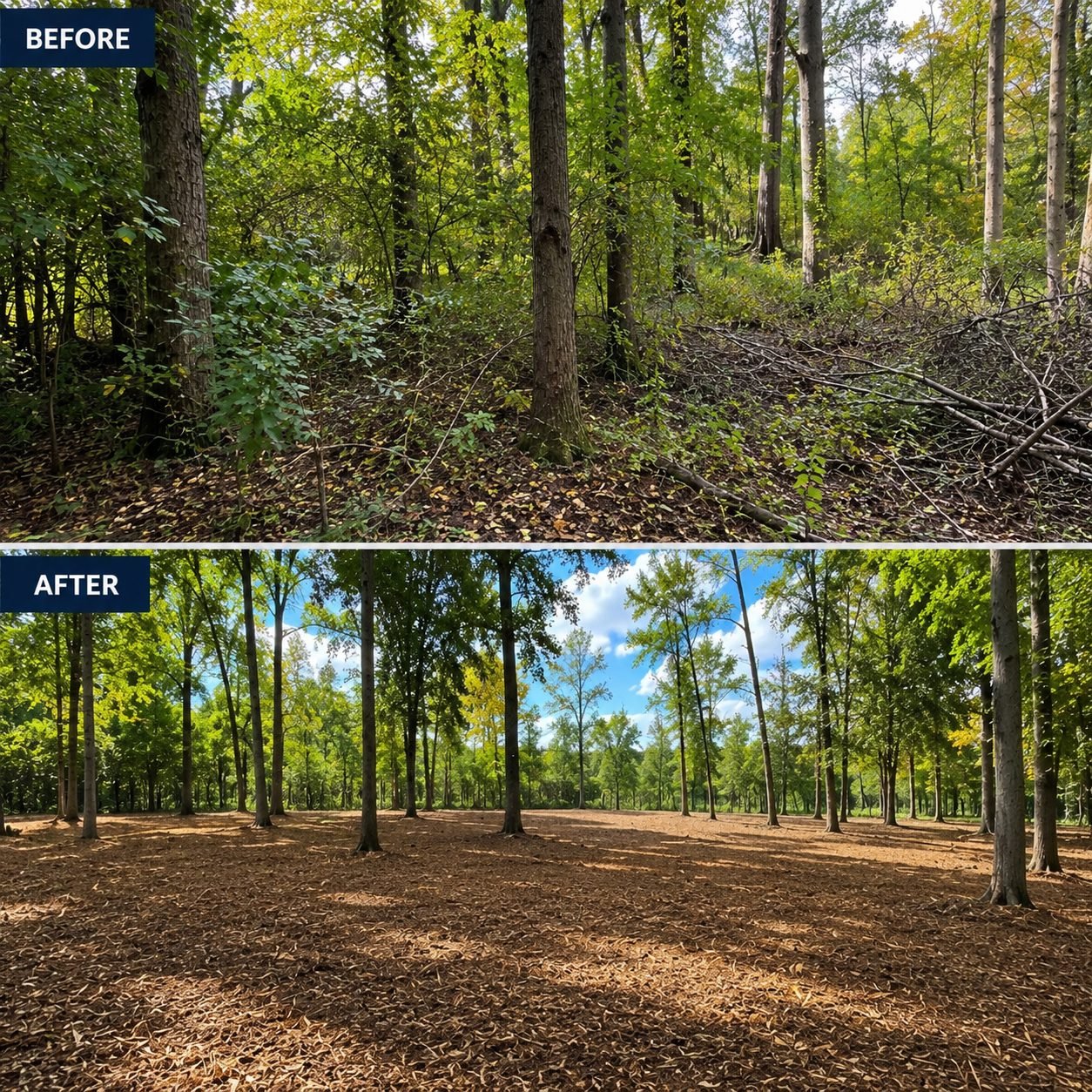
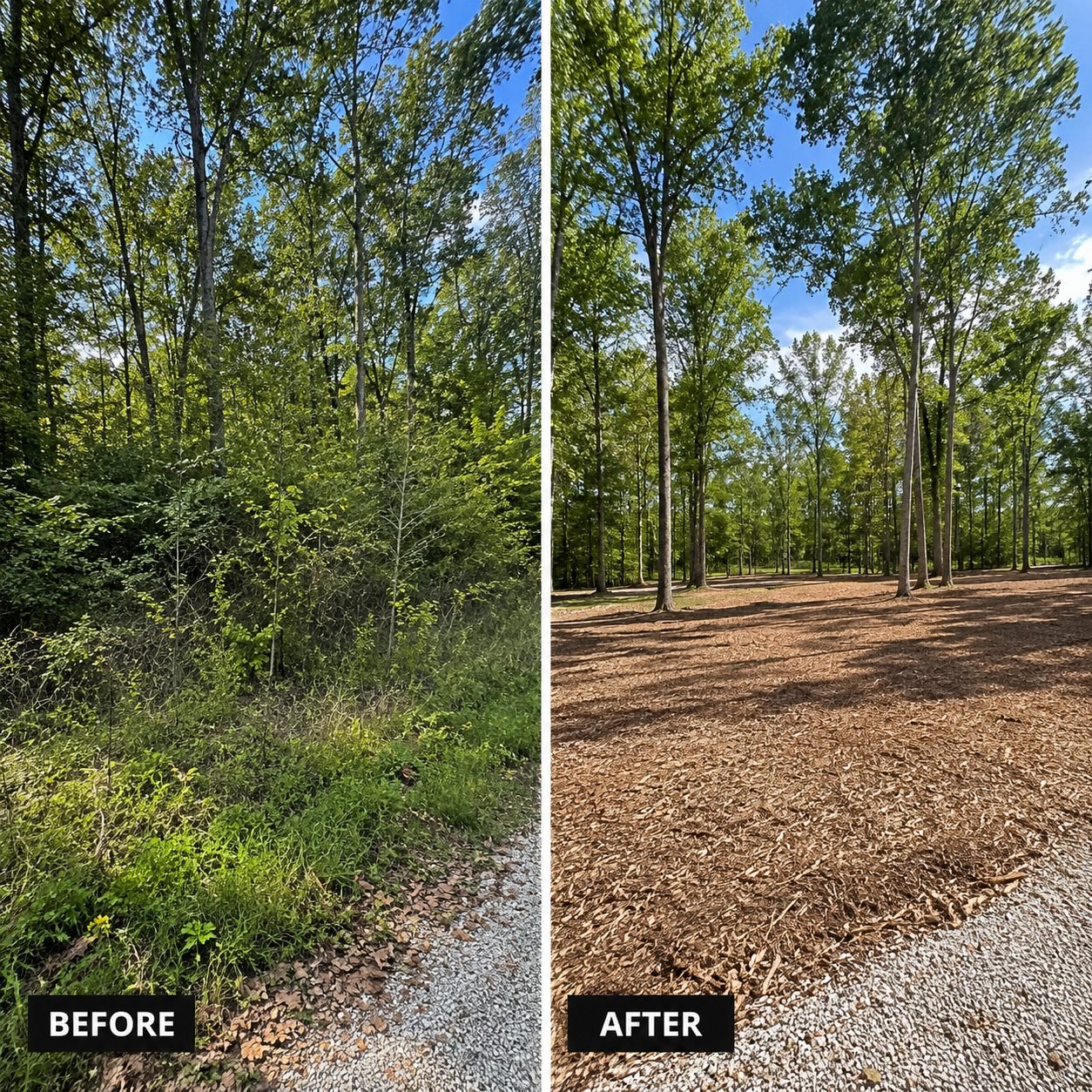
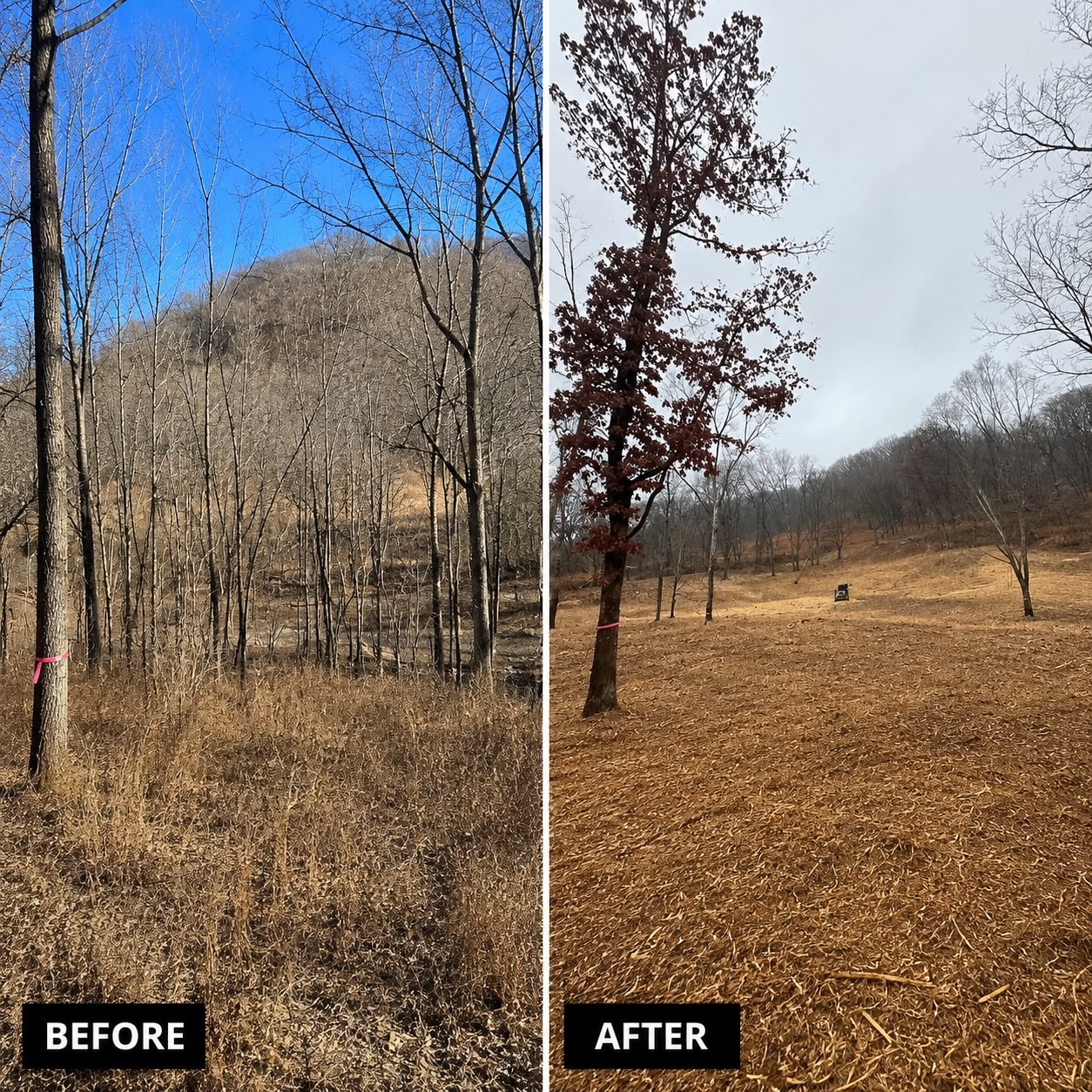
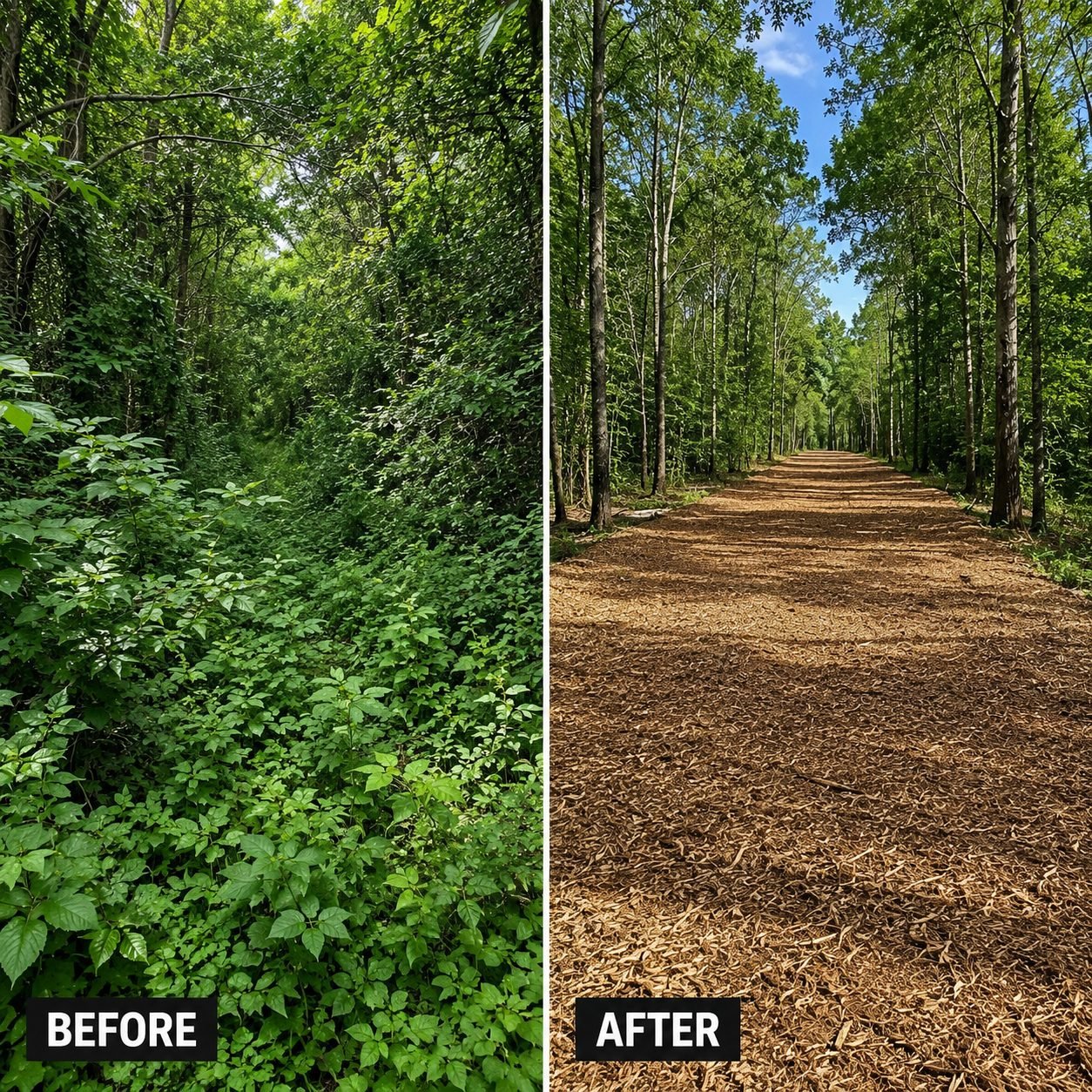
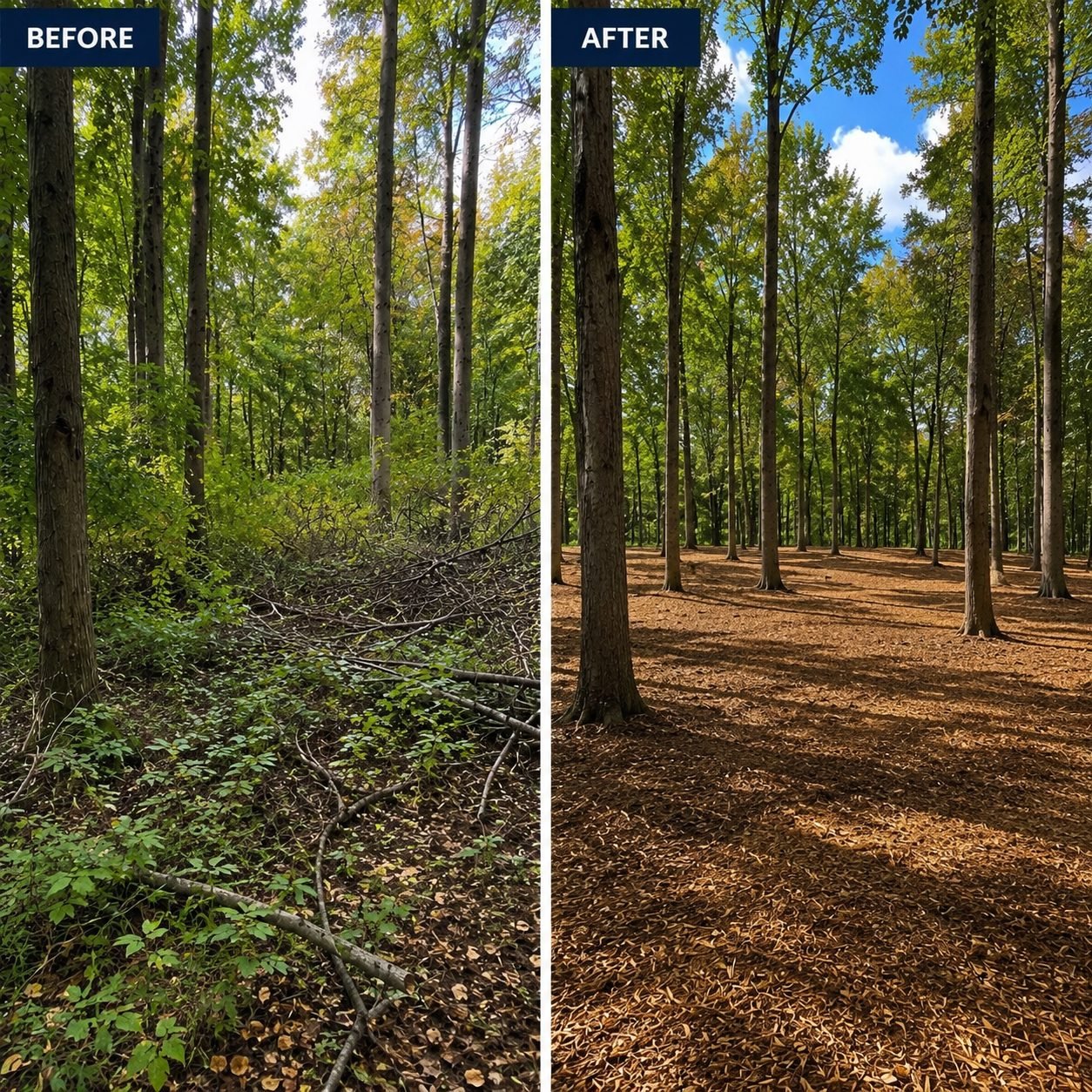
What Does Land Clearing Look Like Before and After in Granville, Ohio?
Recent Central Ohio jobs. The finished surface keeps a two to four inch mulch layer rather than bare soil, which is what holds ground through the first winter after clearing.
What Do Granville, Ohio Owners Ask About Land Clearing?
With a wider bench and a firmer tread, yes. It is specified at the walk because it changes the build.
Quoted per job. Length, slope and how many switchbacks are needed drive it rather than parcel acreage.
Generally not on your own parcel. Floodplain ground and stream crossings are the exceptions.
A contour trail with proper drainage holds well. A straight-line trail erodes regardless of construction.
On light-use walking trails it works initially. It breaks down, so a compacted tread lasts far longer.
Winter. Frozen ground is safer to work on slope and the line is visible with leaves down.
What Else Can Fortress Do on a Granville, Ohio Property?
Land clearing, forestry mulching, excavation, demolition and grading run with the same crew and the same point of contact, so a Granville job that needs two trades does not wait on a second schedule.
Soil depth, slope class and erosion factor for any Granville parcel are published in the USDA NRCS Web Soil Survey (accessed August 2026).
Ready for a Flat Rate on Your Granville, Ohio Land Clearing?
Owner-operated land clearing across all five Central Ohio counties. Send your property details and Lee gets back to you within 2 to 3 hours during business hours with one flat number after a free on-site walk-through.