

Can Land Clearing Thin Understory Without Harming Mature Worthington, Ohio Trees?
Land clearing can thin understory without harming mature Worthington, Ohio trees, and it usually improves them. On these third-acre to two-acre heavily treed lots the eighty-year canopy is the whole asset, and removing the honeysuckle beneath it returns light, airflow and soil moisture to the stems above.
Thinning under an established canopy
- The 80-year canopy is the asset on a Worthington lot. It stays.
- Removing honeysuckle beneath it returns light, airflow and soil moisture.
- Selective work is slower per acre and is the right method on these lots.
- The real risk to mature trees is root zone damage, not the clearing pass.
- Keeper trees are flagged physically before a machine moves.
- Native ground layer often returns without replanting.
What Else Do People Ask About Land Clearing in Worthington, Ohio?
No. It reduces competition for water and restores light and airflow to the lower canopy.
Root zone compaction and grade changes under the canopy, mostly during a build rather than a clearing.
No. The canopy is unchanged; the ground beneath opens up and the trunks become visible.
Where flagged, yes. They are the next canopy generation and easy to lose by accident.
Why Does Understory Thinning Help Worthington, Ohio Trees?
Because honeysuckle competes directly with what is above it. A dense understory takes soil moisture, blocks airflow through the lower canopy, and shades the ground completely including any young natives trying to establish.
Removing it returns all three. On a heavily treed Worthington lot where the canopy is eighty years old, that is protecting the asset rather than risking it.
Owners often worry that any machine work near mature trees is dangerous. The clearing pass itself is not the risk; what matters is what happens to the soil under the canopy.
The visible result is a lot that reads as open woodland, with trunks visible and ground you can walk, which is what most owners wanted in the first place.
What Does Threaten a Mature Worthington, Ohio Tree?
The root zone. Compaction from equipment traffic and any grade change inside the canopy area kill mature trees slowly enough that the cause is rarely identified, and they account for far more losses than clearing does.
The root zone is roughly the area under the canopy spread rather than a circle at the trunk, which is larger than most people assume.
Defined traffic routes keep equipment off it. On a small lot that takes planning, because there is not much ground that is not under something.
Grade changes are the severe case. Fill piled against a trunk or soil cut away inside the root zone will kill a mature tree, and it is a common build-phase error.
How Is Selective Work Carried Out on a Worthington, Ohio Lot?
Keeper trees are flagged physically on the tree, the operator works around them, and the understory is processed to ground level. The mulch is left as a surface layer, kept off the trunks themselves.
Flagging on the tree rather than on a plan matters. From a machine cab in a wooded lot, one stem looks much like another.
Winter is the best window. With leaves down the operator can distinguish keeper stems from invasive ones reliably, which is genuinely difficult in full leaf.
See forestry mulching and brush clearing for the two methods.
How Is a Small Worthington, Ohio Lot Actually Priced?
On third-acre to two-acre Worthington lots, mobilisation and access dominate the cost. Area is close to irrelevant below about an acre, which is why these are quoted as jobs.
| Lot size | Priced as | What dominates | Access effect |
|---|---|---|---|
| Under a third acre | Job | Mobilisation | Decides feasibility |
| Third acre to half acre | Job | Mobilisation and access | Large |
| Half acre to 1 acre | Job | Access and density | Large |
| 1 to 2 acres | Job or per acre | Density and access | Moderate |
| Gate under 6 ft | Job | Machine choice | Add 15 to 25 percent |
| No vehicle access | Job | Hand crew | Quoted per job |
| Neighbour access agreed | Job | Normal machine | Standard rate |
Pricing practice published by Fortress Level Construction for its Franklin County operation, August 2026. Soil depth, slope class and erosion factor for any Worthington parcel are published in the USDA NRCS Web Soil Survey (accessed August 2026).
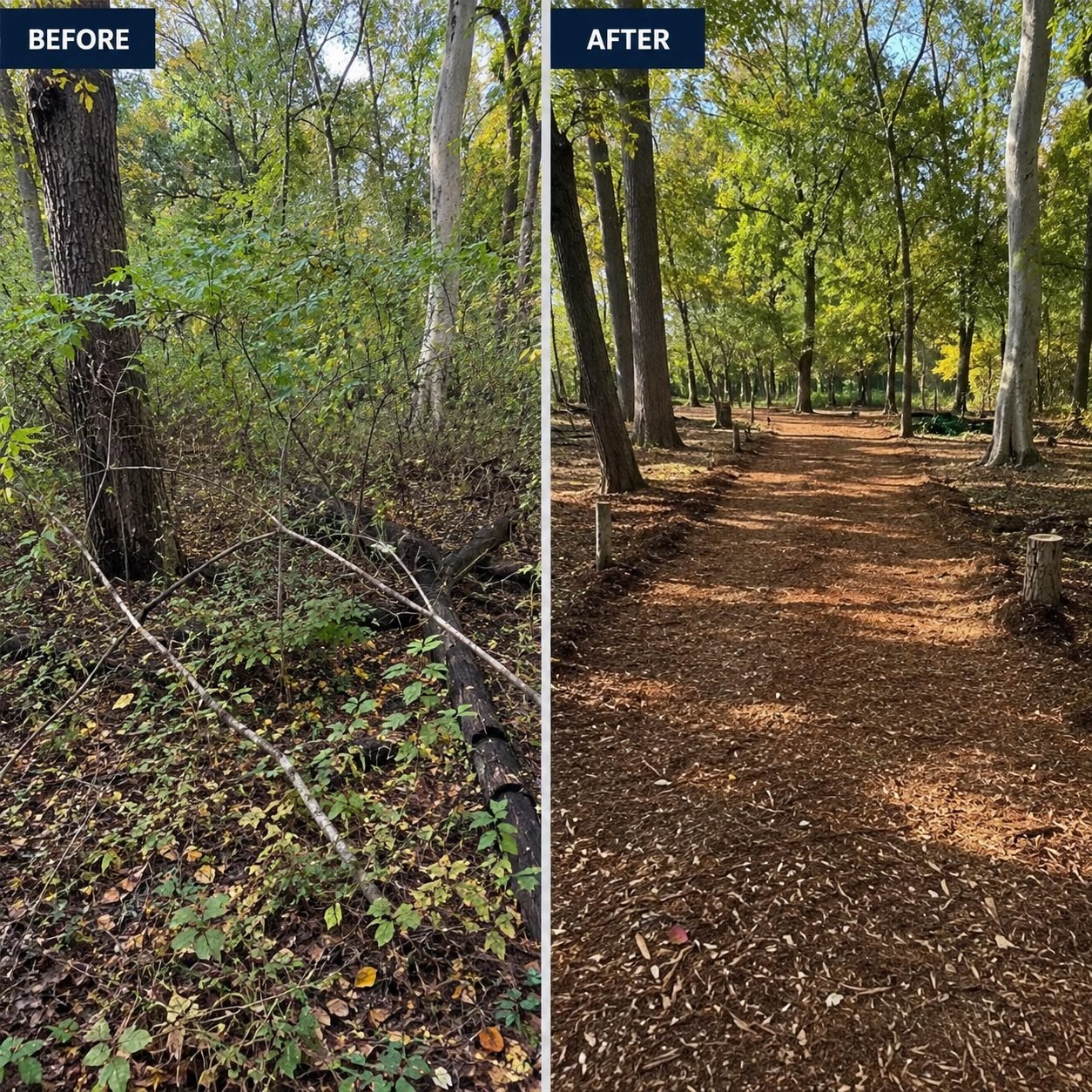
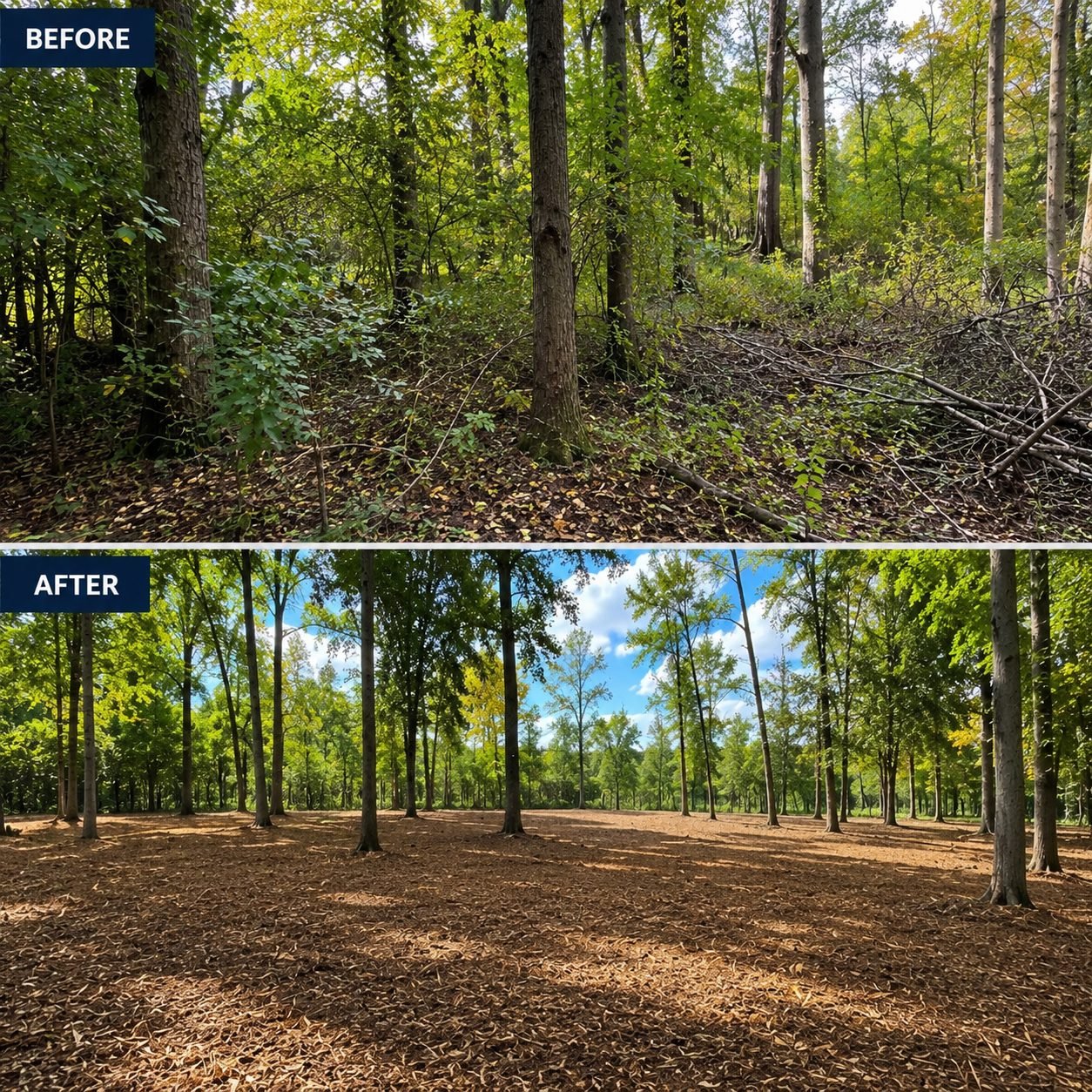
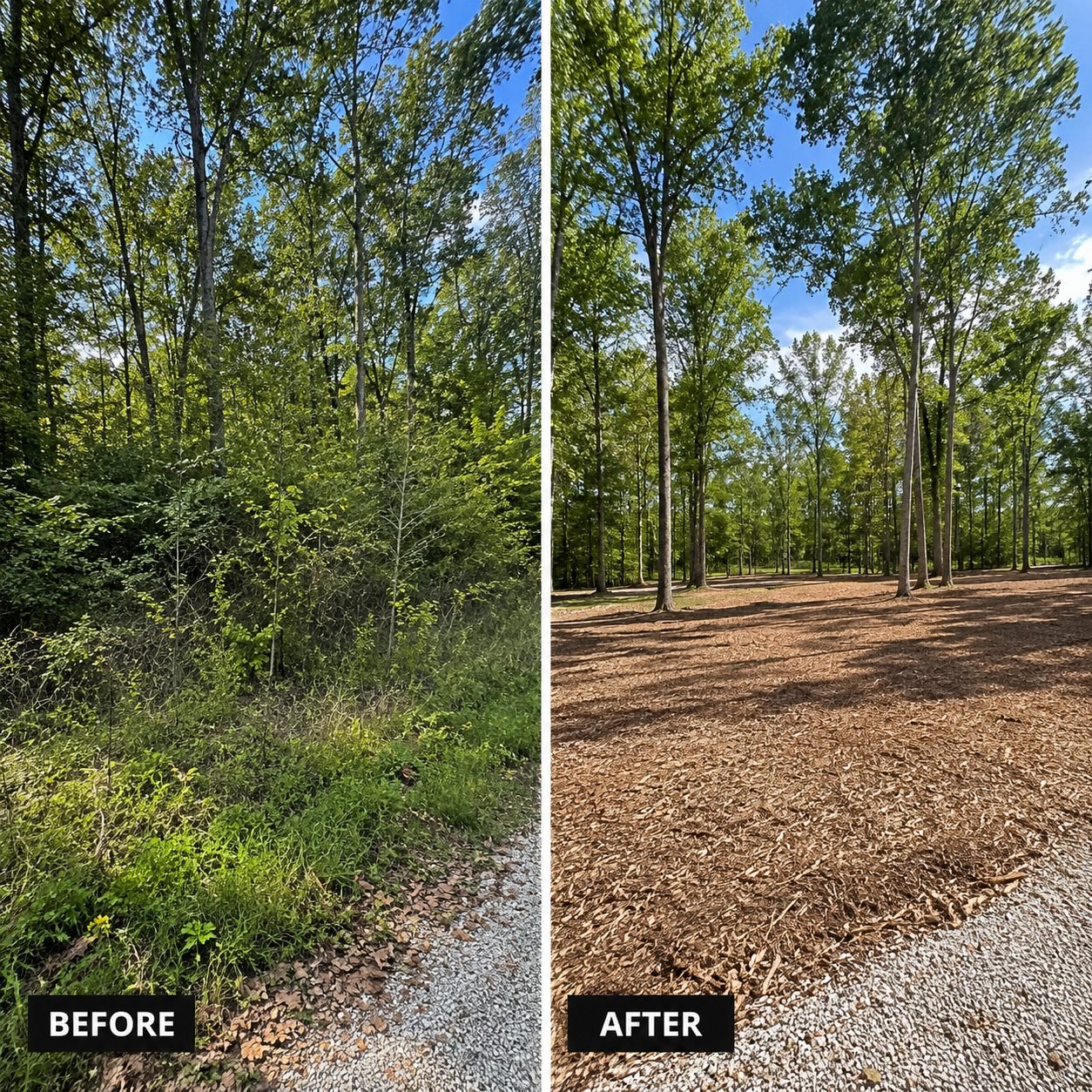
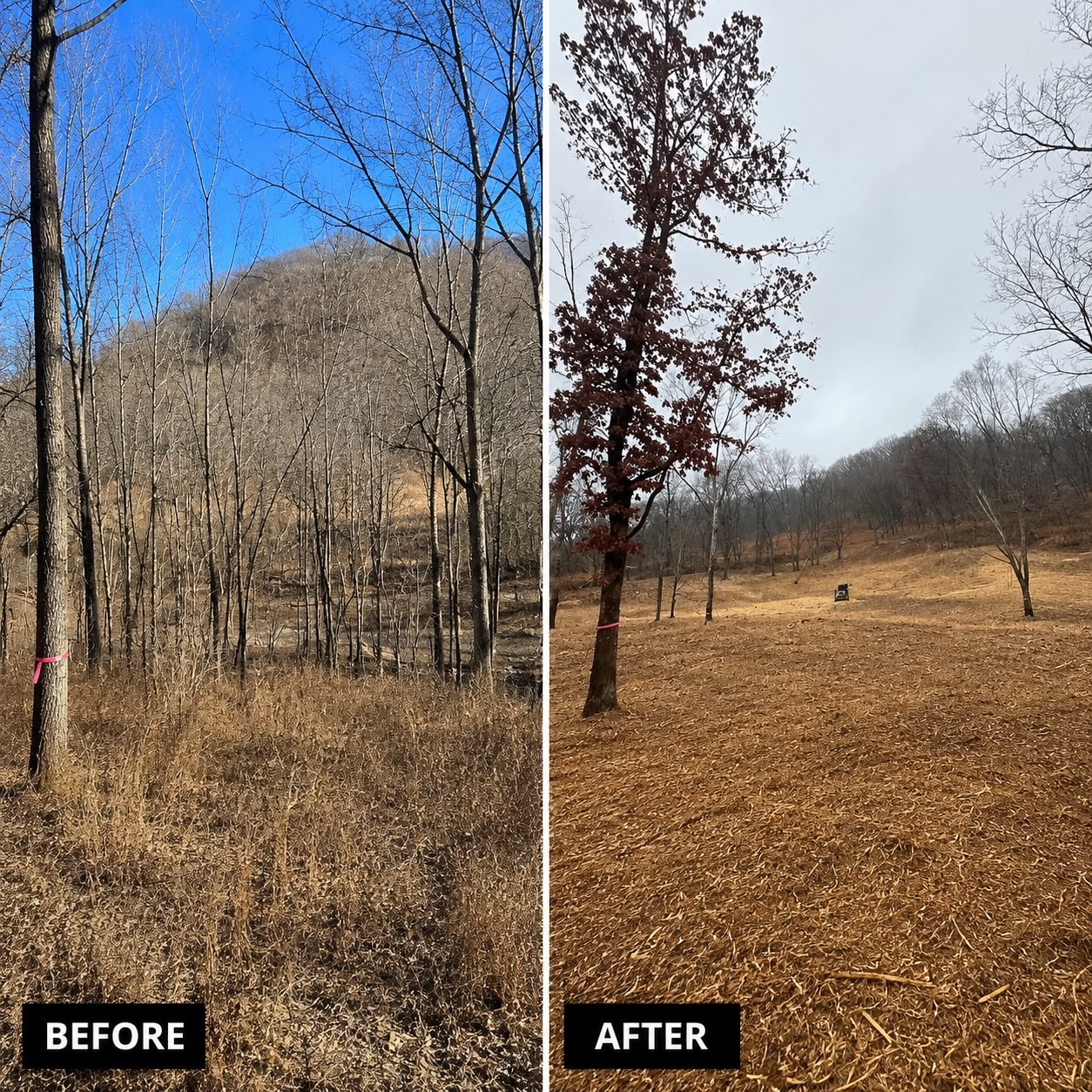
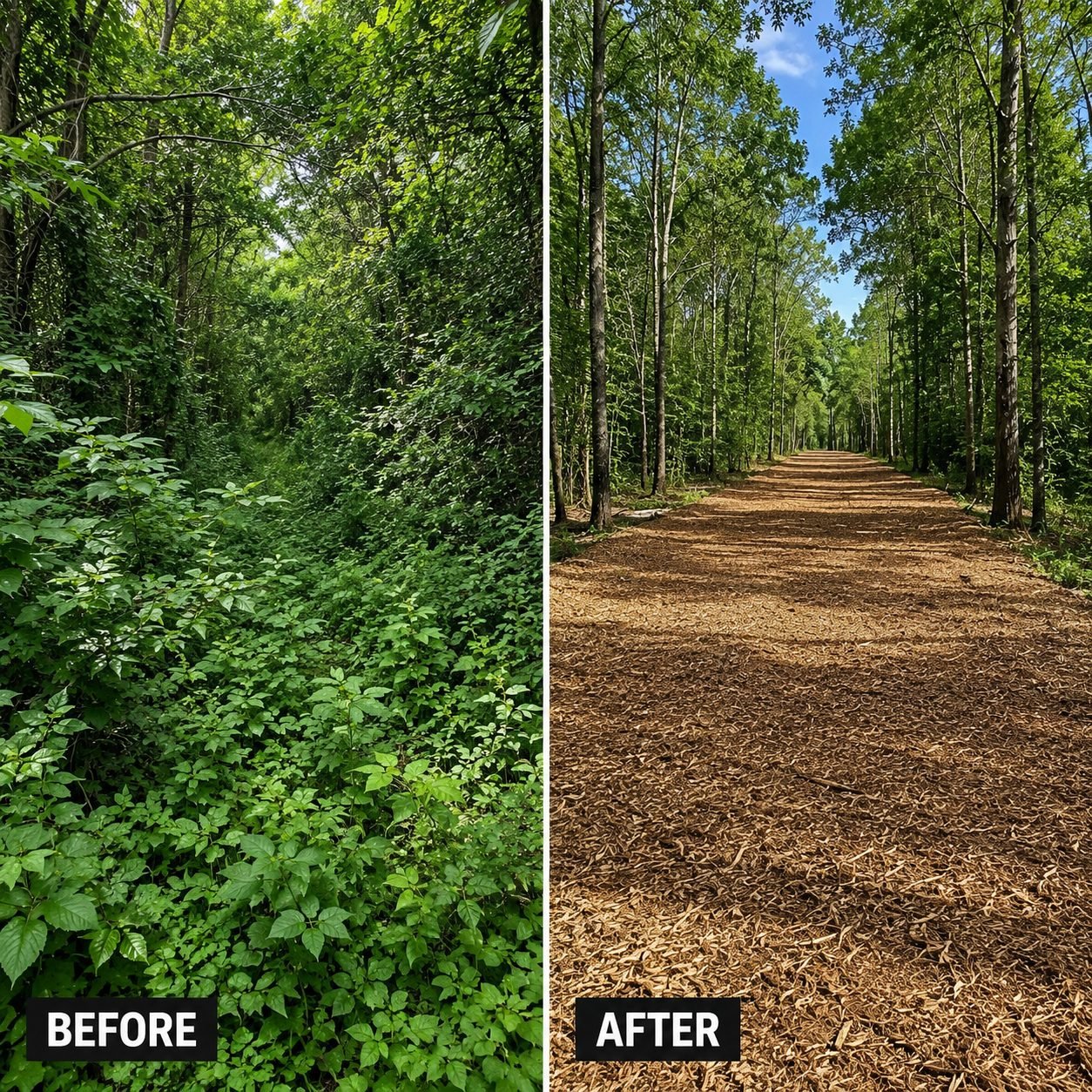
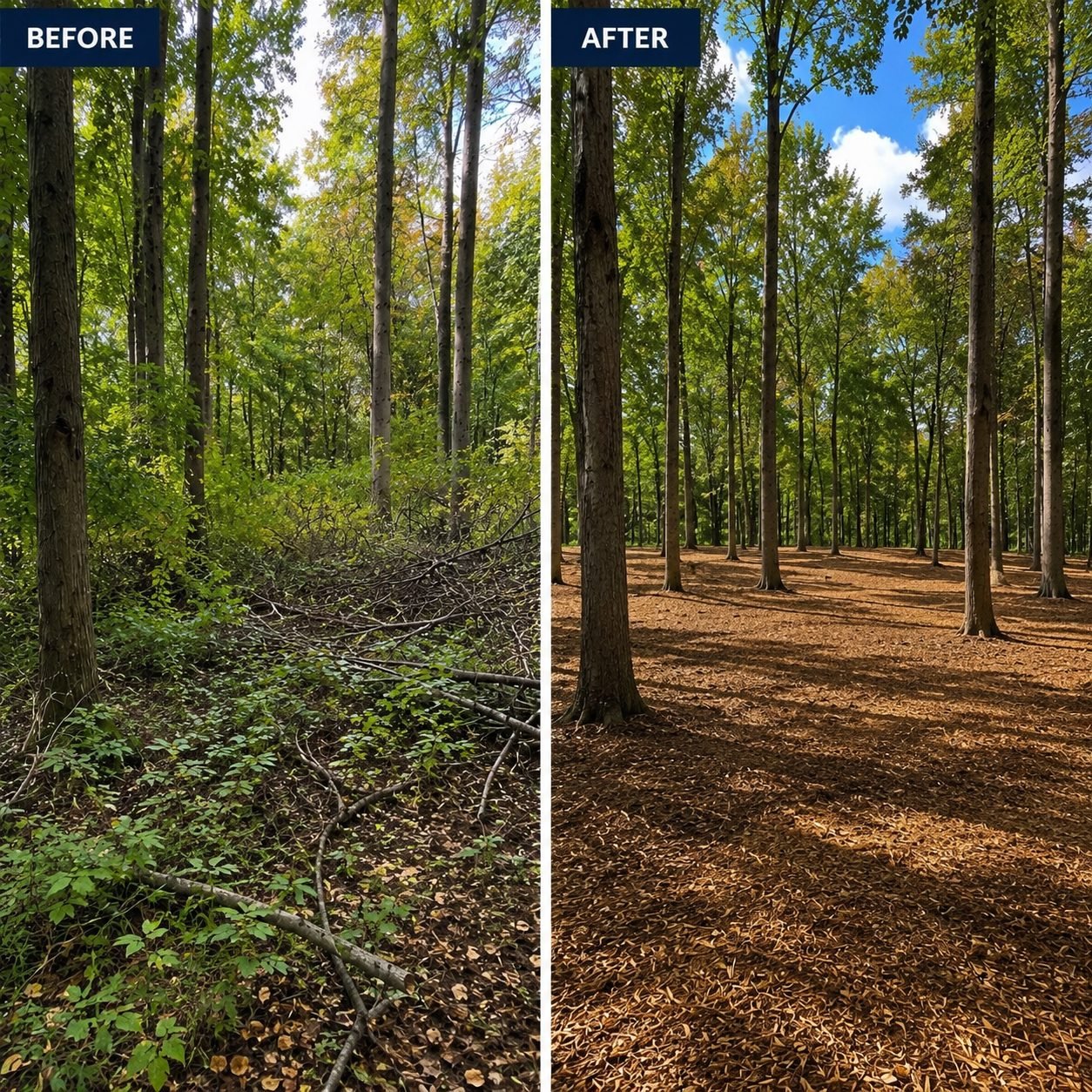
What Does Land Clearing Look Like Before and After in Worthington, Ohio?
Recent Central Ohio jobs. The finished surface keeps a two to four inch mulch layer rather than bare soil, which is what holds ground through the first winter after clearing.
What Do Worthington, Ohio Owners Ask About Land Clearing?
Ground layer changes within a season. Canopy vigour improves more slowly, across a few years.
No, provided it is kept off the trunk. Against bark it holds moisture where you do not want it.
Yes. Where a boundary screen is wanted, that section is treated differently and it is agreed at the walk.
Often within two to three springs, because the seed bank was shaded out rather than destroyed.
Understory work on your own parcel generally does not. Mature tree removal is the regulated item.
Usually a day, sometimes two. Access matters more than area on these lots.
What Else Can Fortress Do on a Worthington, Ohio Property?
Land clearing, forestry mulching, excavation, demolition and grading run with the same crew and the same point of contact, so a Worthington job that needs two trades does not wait on a second schedule.
Bush honeysuckle, autumn olive and multiflora rose are listed among the species restricted in Ohio by the Ohio Department of Natural Resources and the Ohio Department of Agriculture Division of Plant Health (both accessed August 2026).
Ready for a Flat Rate on Your Worthington, Ohio Land Clearing?
Owner-operated land clearing across all five Central Ohio counties. Send your property details and Lee gets back to you within 2 to 3 hours during business hours with one flat number after a free on-site walk-through.