
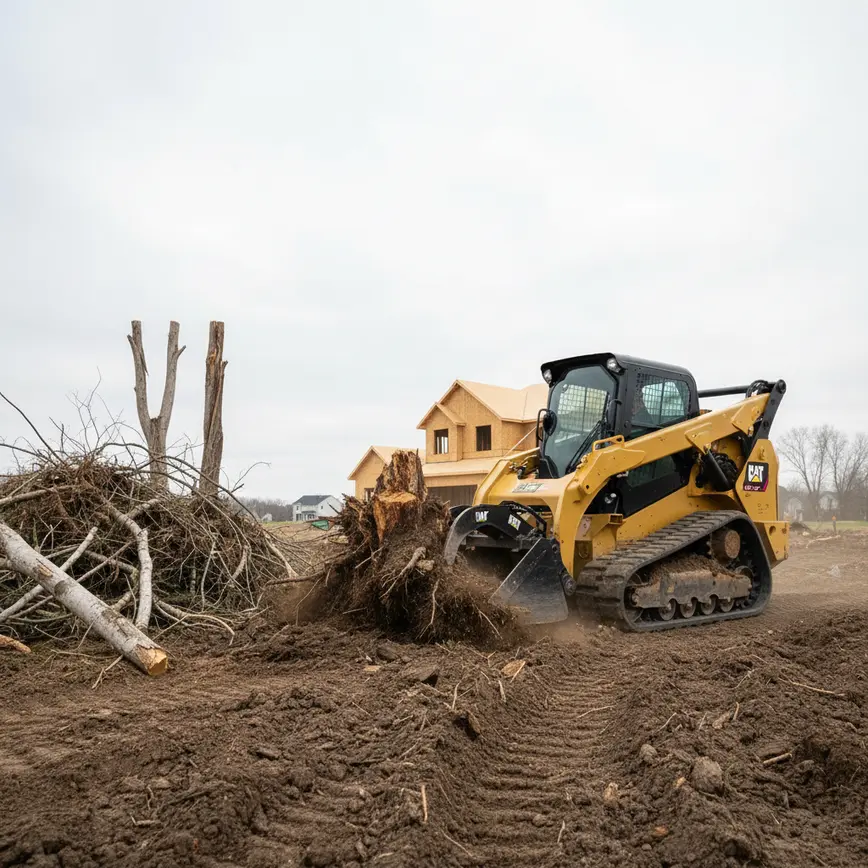

What Is the Difference Between Land Clearing and Grubbing in Central Ohio?
Land clearing removes surface vegetation, trees, brush, and debris from a Central Ohio property, while grubbing removes the roots, stumps, and root systems left below grade after clearing. Grubbing is the step that gets a site down to bare soil for a building pad, driveway, or footer excavation.
The Quick Answer
- Land clearing removes what grows above the ground; grubbing removes what is still rooted below it
- Land clearing cuts and hauls off trees, brush, and vegetation down to the surface
- Grubbing pulls stumps and root systems out of the soil so nothing regrows or shifts a foundation
- Building pads, driveways, and footers in Franklin, Delaware, Licking, Fairfield, and Union counties usually need grubbing, not just clearing
- Forestry mulching grinds vegetation in place and leaves roots in the ground, so it is not a substitute for grubbing
- Ohio 811 requires a locate at least 48 hours before any digging, and grubbing digs into the root zone
- Fortress Level Construction quotes grubbing with an owner-walked flat rate, not a per-hour guess
Related Questions People Ask Next
No. Forestry mulching grinds standing brush and small trees into mulch on the surface and leaves the root systems in the ground. Grubbing is a separate step that digs those roots and stumps out below grade. A property that only gets mulched still has roots underground, which is fine for trails or pasture but not for a footer or slab.
Not reliably. Clearing removes what stands above the ground, but stumps and root balls left below grade can rot, settle, and shift soil under a slab or footer over time. Ohio’s clay-heavy soils, including the Brookston-Crosby series common in Central Ohio, hold moisture around buried roots, which makes settling worse without grubbing.
Clearing works at and above ground level, cutting trunks near the base and removing brush and debris. Grubbing typically digs 12 to 24 inches below grade, or as deep as the root mass runs, using an excavator or track loader bucket to pull stumps and lateral roots out whole rather than leaving fragments behind.
Yes. Fortress Level Construction, run by combat veteran Lee Carson since 2009, clears and grubs sites across Franklin, Delaware, Licking, Fairfield, and Union counties using a John Deere 333G with a Diamond drum mulcher plus dozer and excavator attachments, with owner-walked flat-rate quotes and a 2 to 3 hour response window.
What Does Land Clearing Actually Remove?
Land clearing removes everything growing above the surface of a Central Ohio lot, including standing trees, brush, undergrowth, and fallen debris. It cuts vegetation at or near the base and hauls or piles the material off site, leaving open ground, but it does not dig out what remains rooted below grade.
On a typical Franklin or Delaware County property, land clearing starts with a walk of the site to mark tree lines, fence rows, and anything the owner wants saved, like a mature oak near a driveway or a tree line along a property boundary. From there, equipment cuts and removes trunks, brush, and undergrowth down to stump level, and the debris gets hauled off or piled for burning where local ordinance allows.
What clearing does not do is touch what is underground. A field that has been cleared can still have a dozen stumps and their full root systems sitting a foot or two below the surface, which is fine if the land is going back to pasture or a hay field, but a problem if a driveway, pad, or footer is planned for that same footprint.
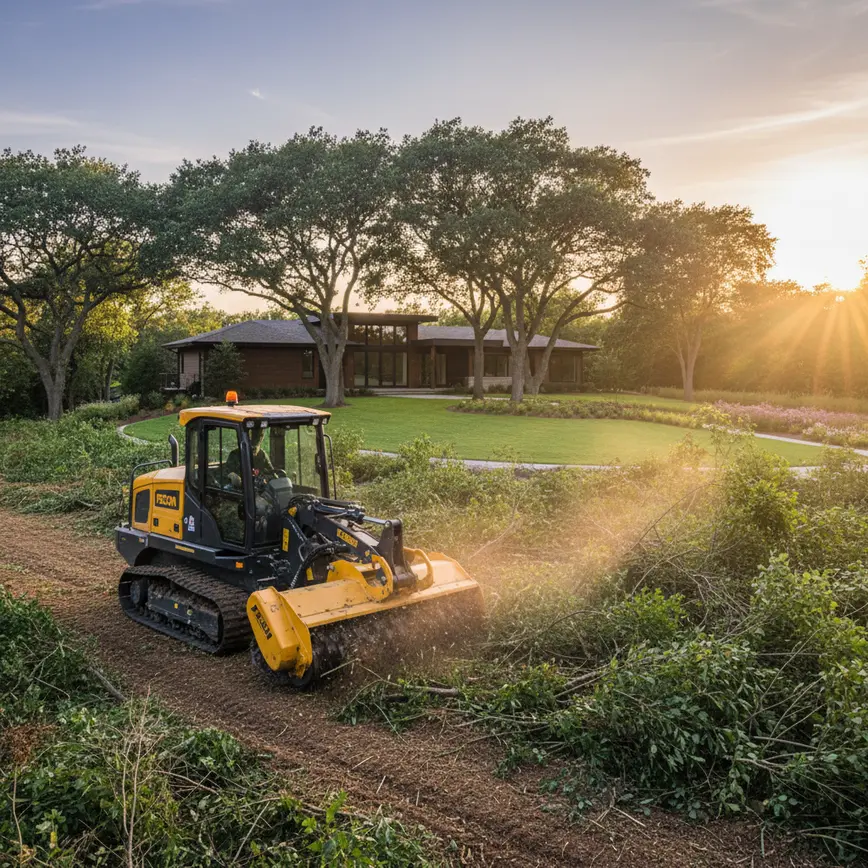
What Does Grubbing Remove That Clearing Leaves Behind?
Grubbing removes the stumps, root balls, and lateral root systems still sitting below grade after trees and brush are cut. Where clearing stops at the surface, grubbing digs down with an excavator or track loader to pull roots out whole, leaving bare soil that can be graded and compacted for construction.
Grubbing is a below-grade operation. Once trunks and brush are down, the remaining stump and its root mass have to come out of the ground, not just get cut flush. Fortress Level Construction uses excavator and loader attachments to dig around the root ball, pry it loose, and pull it out along with the lateral roots that spread out from it, sometimes several feet in either direction.
This matters most on Brookston-Crosby clay soils, which hold water around buried organic material and can settle unevenly as old roots decompose. A pad, driveway, or slab poured over ungrubbed roots in that kind of soil is more likely to crack or shift within a few years than one poured over bare, grubbed ground that has been graded and compacted properly.
When Does a Central Ohio Project Need Grubbing Instead of Just Clearing or Mulching?
Grubbing is needed anywhere something permanent goes into the ground, including building pads, garage slabs, driveways, footers, and septic fields. Clearing alone or forestry mulching works fine for pasture, trails, and fence lines where nothing is being poured or excavated on top of the old root zone.
If the end goal in Union or Fairfield County is a new outbuilding, a home addition footer, or a paved driveway, grubbing has to happen before excavation or grading starts, because those roots and stumps sit directly in the path of the footer trench or the compacted base layer under a slab. Skipping it means digging into roots mid-project, which slows crews down and can leave voids under the finished surface.
If the goal is opening up a wooded acre for pasture, clearing a fence line, or restoring a trail through overgrown brush, grubbing usually is not necessary and forestry mulching or standard clearing gets the job done at a lower cost, since nothing structural is going into the ground.
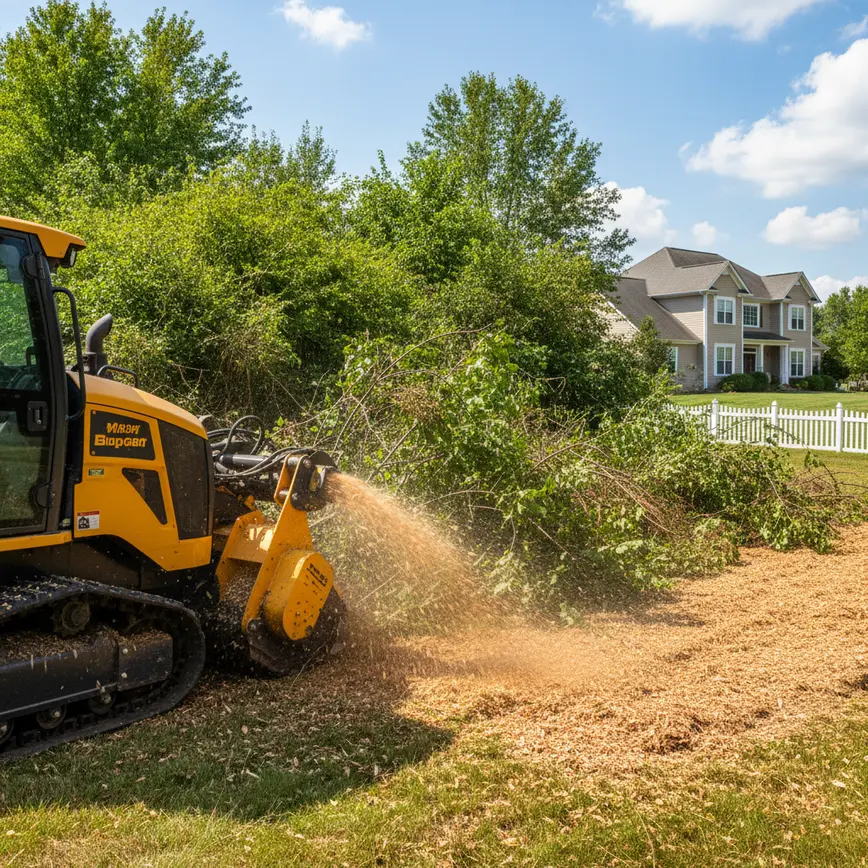
Why Does Ohio 811 Matter Before Grubbing Begins?
Grubbing digs below grade, and Ohio law requires an Ohio 811 utility locate at least 48 hours before any digging on a property. Buried gas, water, and electric lines sit at depths that overlap with typical root systems, so a locate has to happen before an excavator ever breaks ground.
Because grubbing routinely reaches 12 to 24 inches or deeper to pull a full root ball, it falls squarely under Ohio’s call-before-you-dig requirement. Fortress Level Construction schedules the Ohio 811 locate as part of the standard pre-job process on every county job, whether the property is a rural lot in Licking County or a subdivision infill site in Franklin County, so marked lines are visible before the excavator moves in.
Skipping this step is not just a compliance issue, it is how grubbing jobs turn into repair jobs. A stump sitting near a shallow gas or utility line, which happens more often than property owners expect on older lots, can turn a straightforward root pull into an expensive utility strike without a locate on file first.
How Do Land Clearing, Grubbing, and Forestry Mulching Compare in Central Ohio?
Land clearing removes what stands above the ground, grubbing removes what remains rooted below it, and forestry mulching grinds vegetation in place without touching the roots at all. Each fits a different end use, from pasture reclaim to a building pad ready for a footer.
| Task | What It Removes | Leaves Behind | Best Fit |
|---|---|---|---|
| Land Clearing | Trees, brush, surface vegetation, debris | Root systems and stumps below grade | Opening land, fence lines, pasture cleanup |
| Grubbing | Roots, stumps, root systems below grade | Bare soil ready for grading | Building pads, driveways, footers |
| Forestry Mulching | Standing brush and stems up to 14 inches, ground in place | Roots and a mulch layer on the surface | Trails, pasture reclaim, low-disturbance clearing |
| Land Clearing + Grubbing | Vegetation and root systems together | Bare, graded soil | New construction site prep |
| Grading After Grubbing | Remaining loose soil to finish grade | Compacted, level building pad | Foundation and footer work |
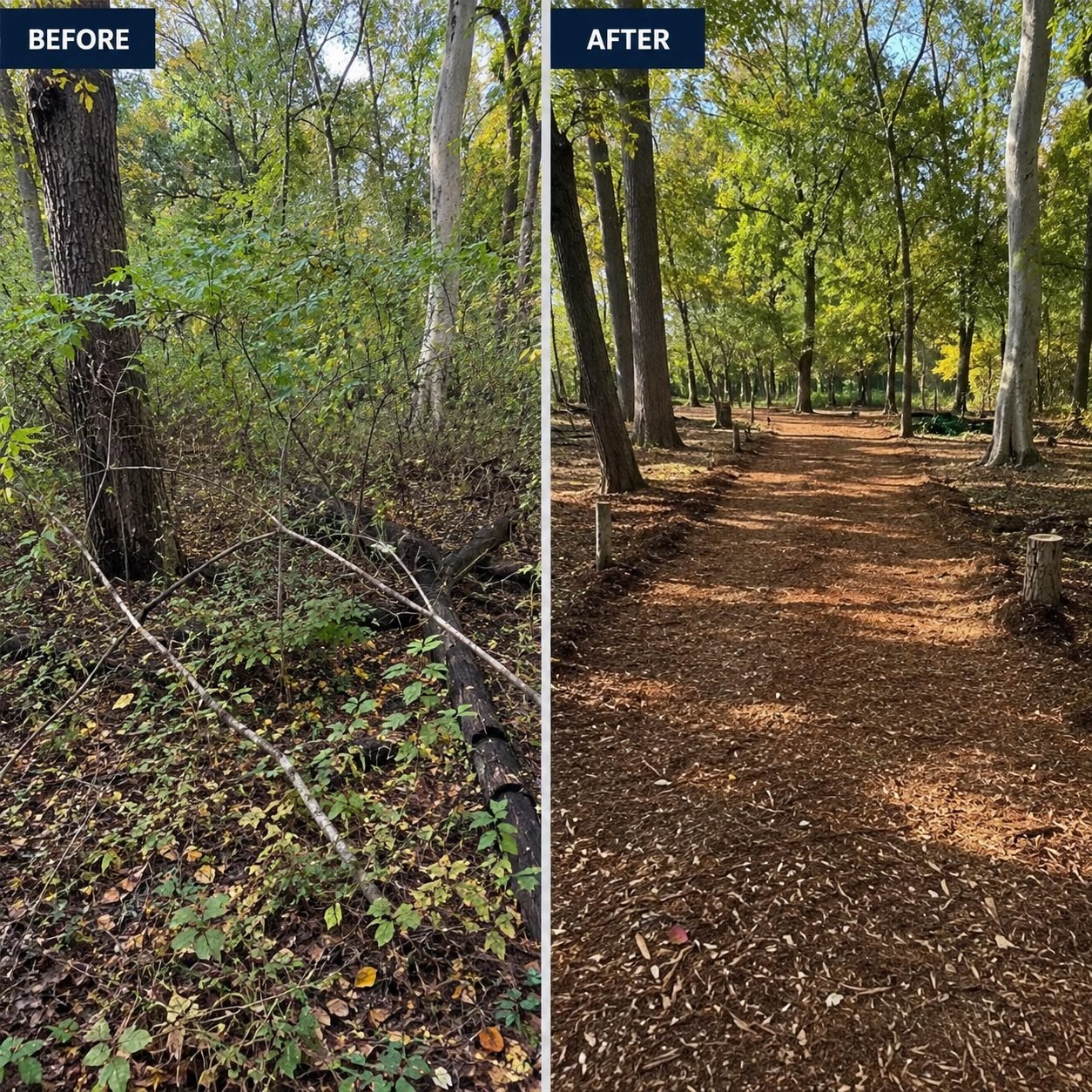
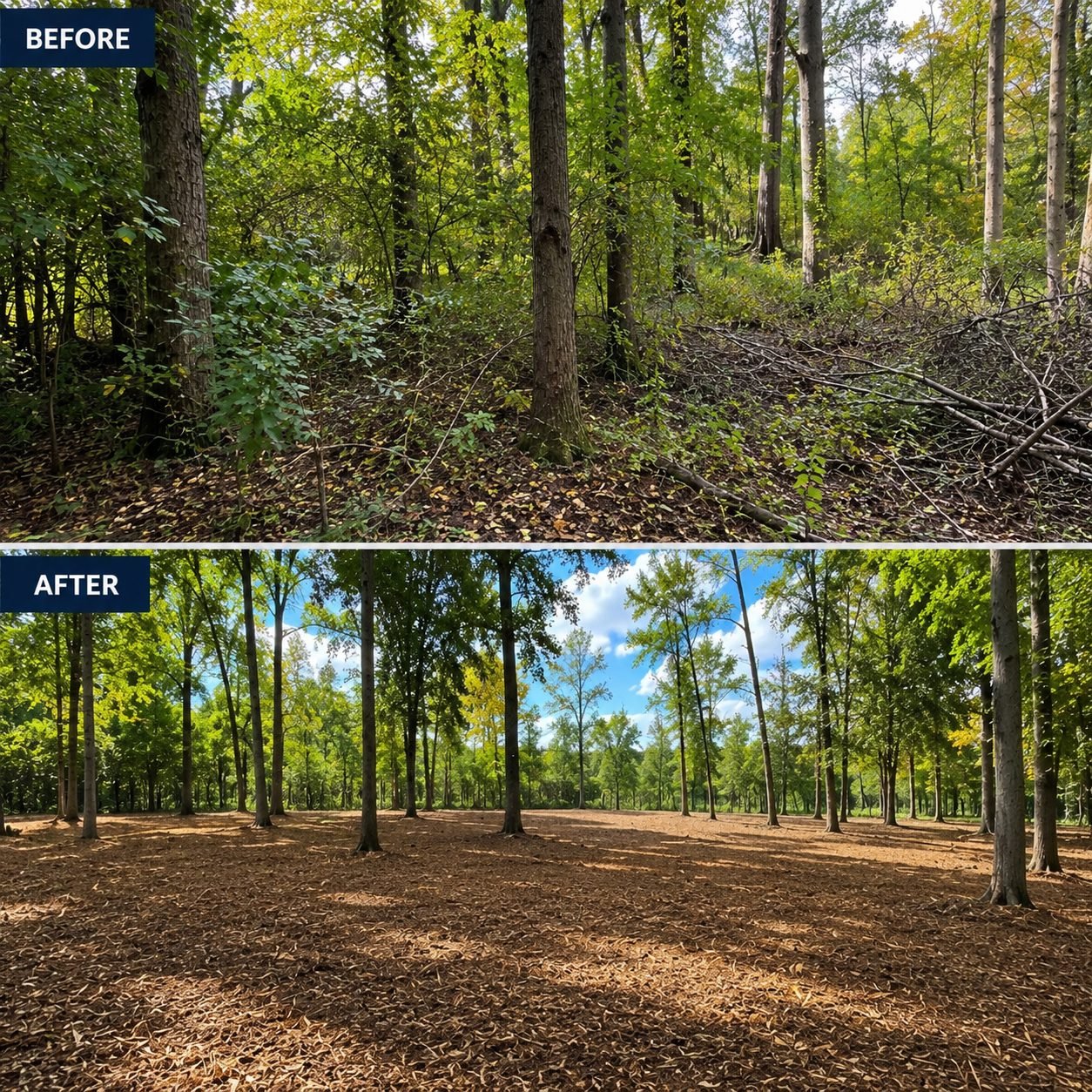
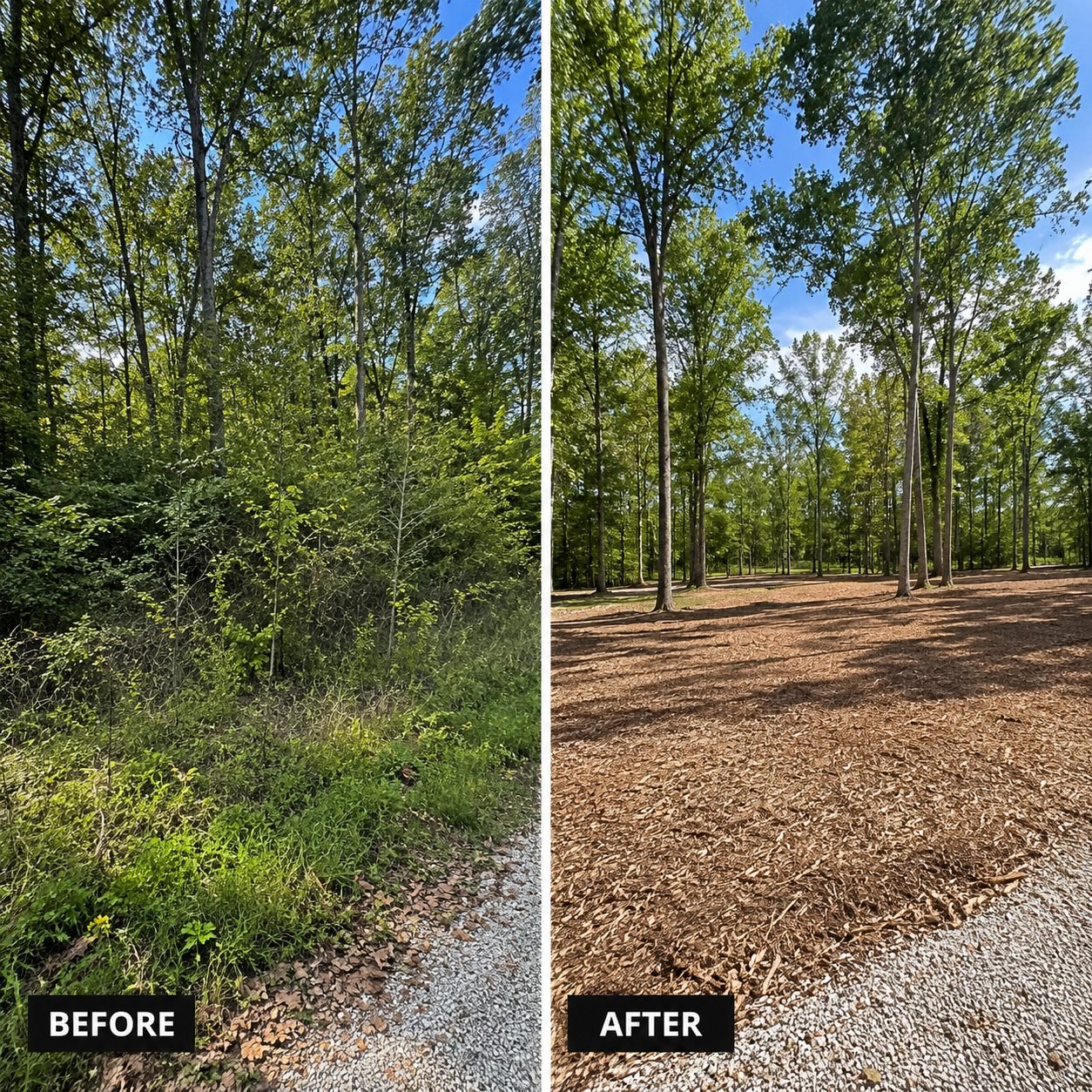
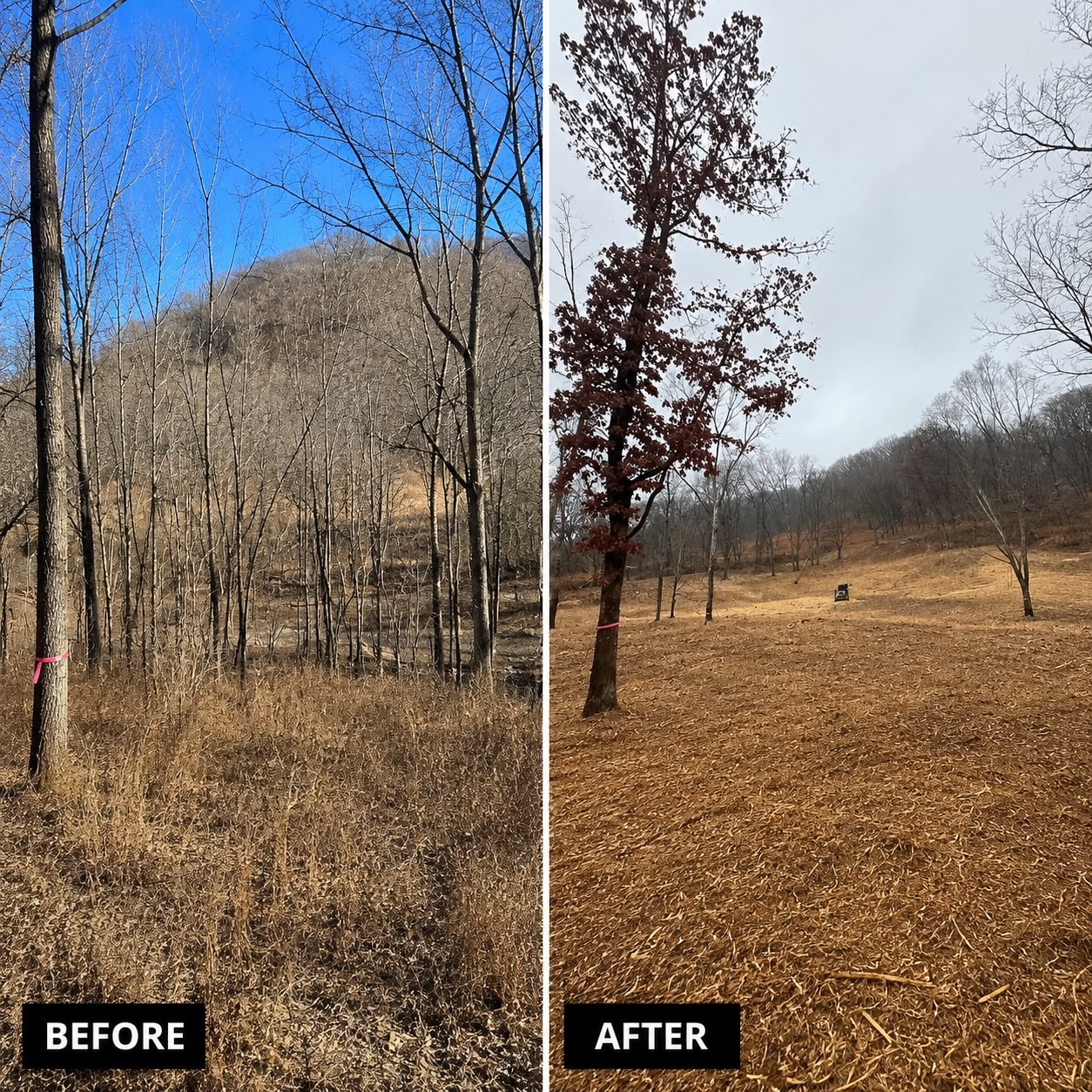
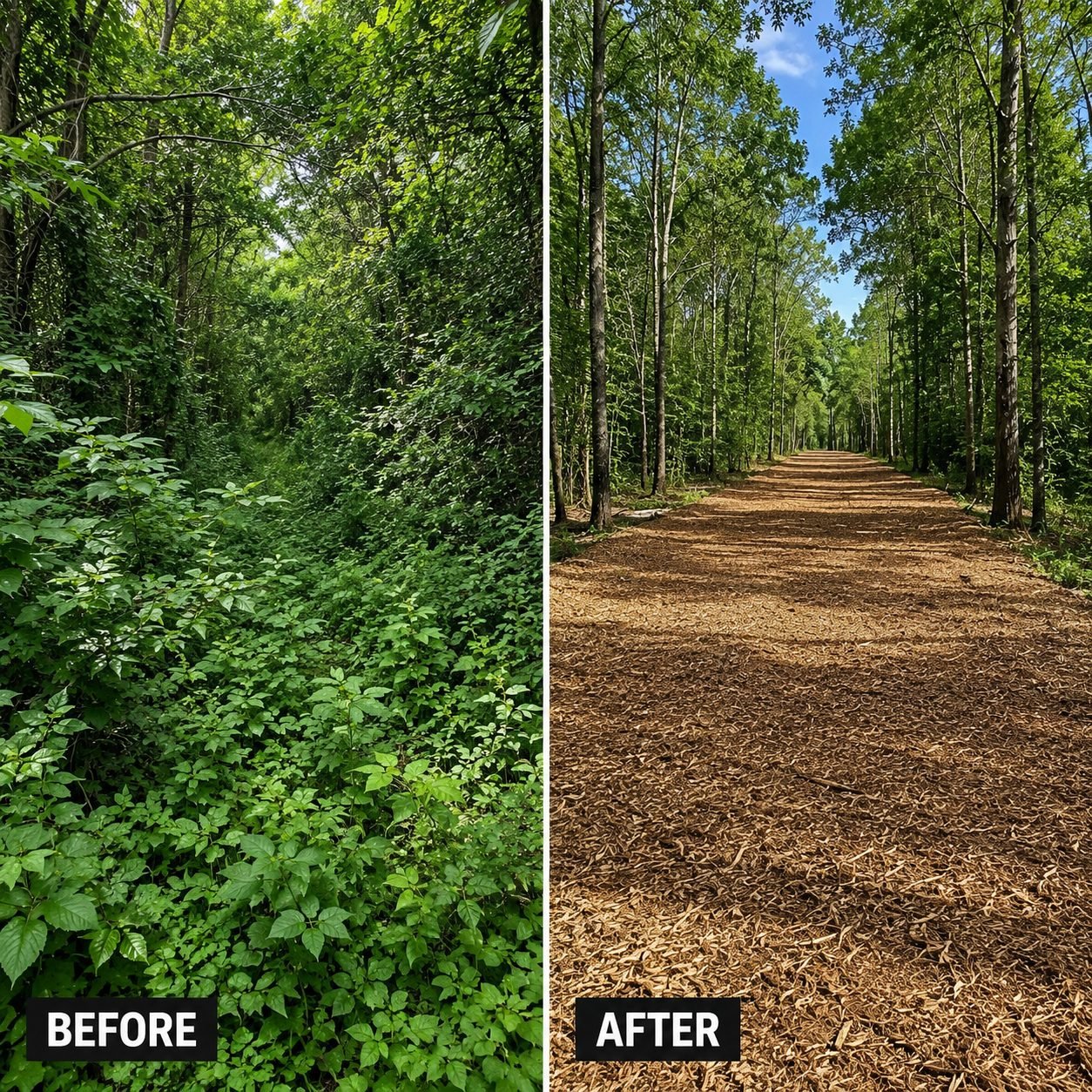
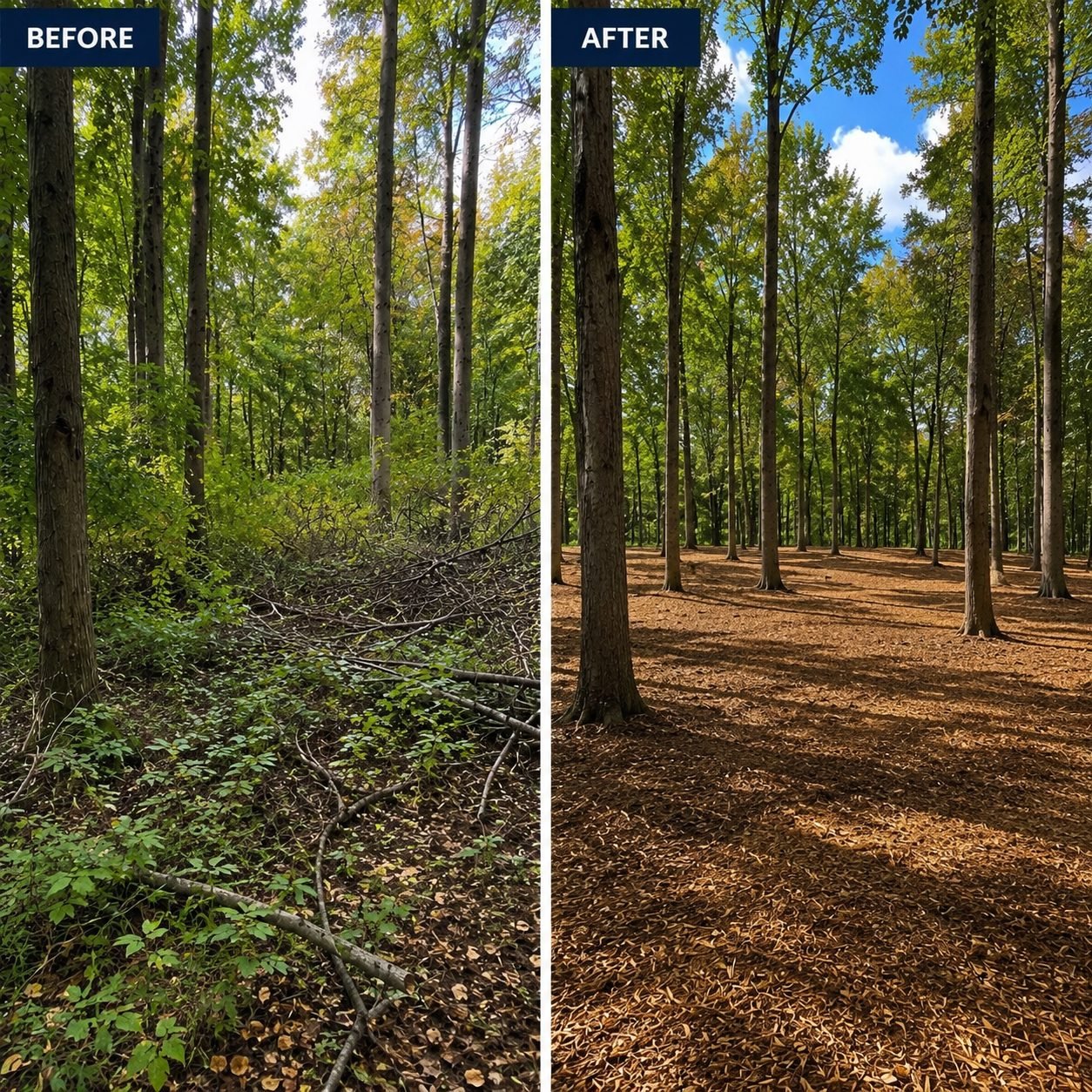
What Does Central Ohio Land Clearing Look Like Before and After?
Land clearing turns dense, unusable Central Ohio ground into open, walkable property. These are real Fortress jobs across Franklin, Delaware, Licking, Fairfield, and Union counties, cleared with mature trees left standing and no debris piles to burn or haul.
Frequently asked questions
Grubbing typically adds cost beyond clearing alone because it involves digging and pulling root systems out of the ground rather than just cutting vegetation at the surface. Full clearing with haul-off and grading, which includes grubbing where needed, runs roughly $4,000 to $8,000 per acre. Fortress Level Construction walks each site and quotes a flat rate before work starts.
In practice, clearing almost always happens first, since trees and brush need to come down before an excavator can reach the stump and root ball underneath. On a lot with a few isolated stumps left from an old clearing job, grubbing alone can be scheduled without a full clearing pass, but that is the exception rather than the rule.
Grubbing gets a site down to bare soil with roots removed, but grading and compaction usually follow before a pad, driveway, or footer is poured. Ohio Revised Code 3781.28 and local building department requirements govern site prep standards for permitted construction, so a grubbed lot still needs the grading step before it meets building-ready condition.
Left-in stumps decompose over years, which creates voids and uneven settling under asphalt or gravel, especially in Central Ohio’s clay-heavy soils that hold moisture around buried wood. The driveway surface can crack, dip, or heave in that spot long after paving is finished, which is why grubbing before grading matters more than it looks like on day one.
No. Franklin, Delaware, Licking, Fairfield, and Union counties all have areas of Brookston-Crosby clay, but soil composition varies by parcel, and the USDA NRCS Web Soil Survey can pull exact soil data for a specific address. Wetter, denser clay sections generally need more careful grading after grubbing than sandier or better-drained ground.
Timing depends on how many stumps and how large the root systems are, but a typical residential building pad in Central Ohio can be grubbed in one to two working days once the Ohio 811 locate has cleared. Fortress Level Construction gives a specific timeline during the owner-walked quote rather than a generic estimate.
What Other Services Does Fortress Offer in Central Ohio?
Land clearing is one of nine services Fortress Level Construction runs across Central Ohio, so one owner-operated crew can clear, grade, and prep a site end to end.
Get a Flat-Rate Quote from Lee Carson
Owner-operated land clearing across all five Central Ohio counties. Send your property details and Lee gets back to you within 2 to 3 hours during business hours with one flat number after a free on-site walk-through.