

Does Land Clearing Cause Erosion on a Powell, Ohio Slope?
Land clearing causes erosion on a Powell, Ohio slope only when the ground is taken to bare soil. Mulching leaves a two to four inch layer that holds the surface through the first winter, which is the difference between a stable slope and a repair bill.
What Powell slope owners should know
- Bare soil on a ravine slope moves in the first heavy rain after clearing.
- A two to four inch mulch layer intercepts rainfall and slows sheet flow across the surface.
- Roots and leaf litter were doing that job before; removing all three at once is the mistake.
- Ravines toward the Scioto and O’Shaughnessy Reservoir carry the steepest ground in Powell.
- Reseeding in autumn into settled mulch holds far better than seeding bare soil on grade.
- Where a structure needs bare ground, only that footprint is cleared; the slope keeps its cover.
What Else Do People Ask About Land Clearing in Powell, Ohio?
The first heavy rain after clearing does the most. That is why cover is left in place rather than raked off for appearance.
Yes. At two to four inches it intercepts rainfall and slows runoff, which is structural work rather than tidiness.
Two to three growing seasons for meaningful re-establishment. The mulch protects the surface in the meantime.
Usually yes, in autumn, into the settled mulch. Seed washes off bare soil on any real grade.
Why Does Land Clearing Risk Erosion on Powell, Ohio Ground?
Because a Powell ravine slope is held together by three things at once: tree roots, leaf litter and the understory itself. Clearing to bare soil removes all three in a single pass, at the exact moment the slope most needs cover.
The soil on those ravine faces is thinner than the deep glacial till on the flat ground above. There is less depth to lose before you are down to subsoil, and that loss is permanent.
Water is the mechanism. Rain that used to be intercepted by canopy and litter now hits bare ground directly and runs, carrying surface soil with it toward the ravine bottom.
This is not an argument against clearing. It is an argument against clearing the wrong way, which on Powell ground means clearing to bare soil when nothing is being built there.
How Does Land Clearing Avoid Erosion on a Powell, Ohio Slope?
By leaving the mulch. Forestry mulching removes the standing growth in one pass and converts it into a two to four inch layer that stays where it falls. That layer intercepts rainfall, slows sheet flow and keeps the surface intact while roots re-establish.
Even distribution matters more than depth. An operator working too fast leaves windrows and thin patches, and the thin patches are where the surface starts moving.
On slope the layer is doing genuine structural work. Removing it to make the ground look tidy undoes the protection that was the point of mulching in the first place.
Where a foundation or driveway genuinely needs bare compacted soil, that footprint is cleared and grubbed while the surrounding slope keeps its cover. Two treatments on one parcel is normal on Powell ravine lots.
What Should You Do After Land Clearing on a Powell, Ohio Slope?
Leave the mulch through the first winter, walk the ground in spring, and seed in autumn into the settled layer. Resprouts appear in the first season and are normal; the follow-up pass is what converts a one day job into a permanent result.
Walking it the first spring is the most useful thing an owner can do. What comes up tells you whether honeysuckle, buckthorn or nothing at all needs a second visit.
Seeding works better into settled mulch than onto bare soil on grade, because the layer holds both moisture and seed against runoff.
Raking the mulch off before the slope has re-established is the single most common way owners create the erosion problem they were trying to avoid.
What Happens to a Powell, Ohio Slope After Clearing?
Outcome by method and ground condition. The pattern is consistent: cover retained holds the surface, cover removed does not, and slope amplifies both.
| Method | Cover left | Erosion risk | Best use on a Powell lot |
|---|---|---|---|
| Forestry mulching, selective | 2 to 4 inch layer | Low | Wooded ravine lots, canopy kept |
| Forestry mulching, clear pass | 2 to 4 inch layer | Low to moderate | Open ground, gentle grade |
| Full clearing and grubbing | None, bare soil | High on slope | Building footprint only |
| Hand clearing | Partial litter | Moderate | Small areas, tight access |
| Bush hogging | Cut stems left | Moderate | Flat ground, not slope |
| Clearing then raking off mulch | None | Highest | Not recommended on slope |
Practice published by Fortress Level Construction for Delaware County ravine ground, August 2026. Soil depth, slope class and erosion factor for any Powell parcel are published in the USDA NRCS Web Soil Survey (accessed August 2026).
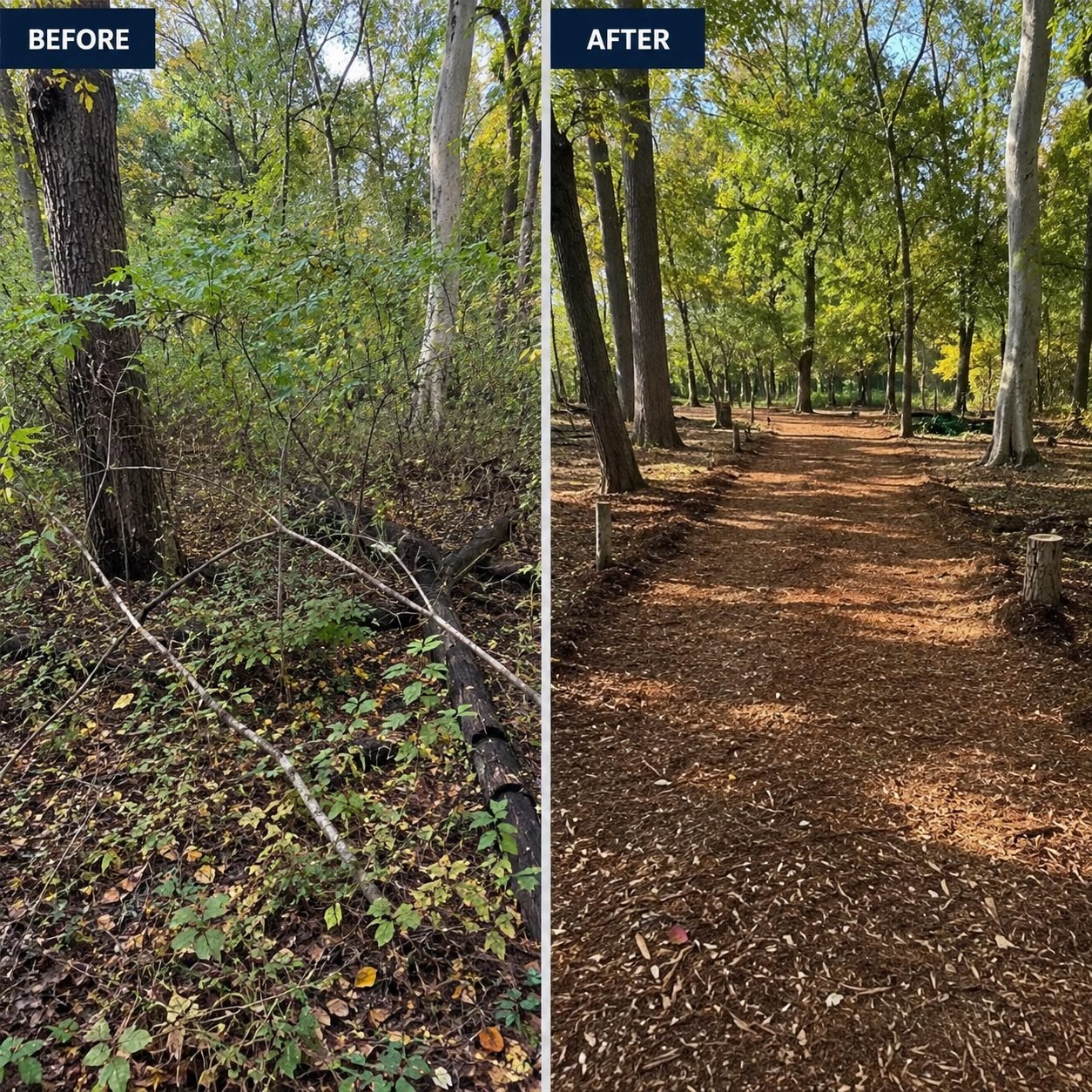
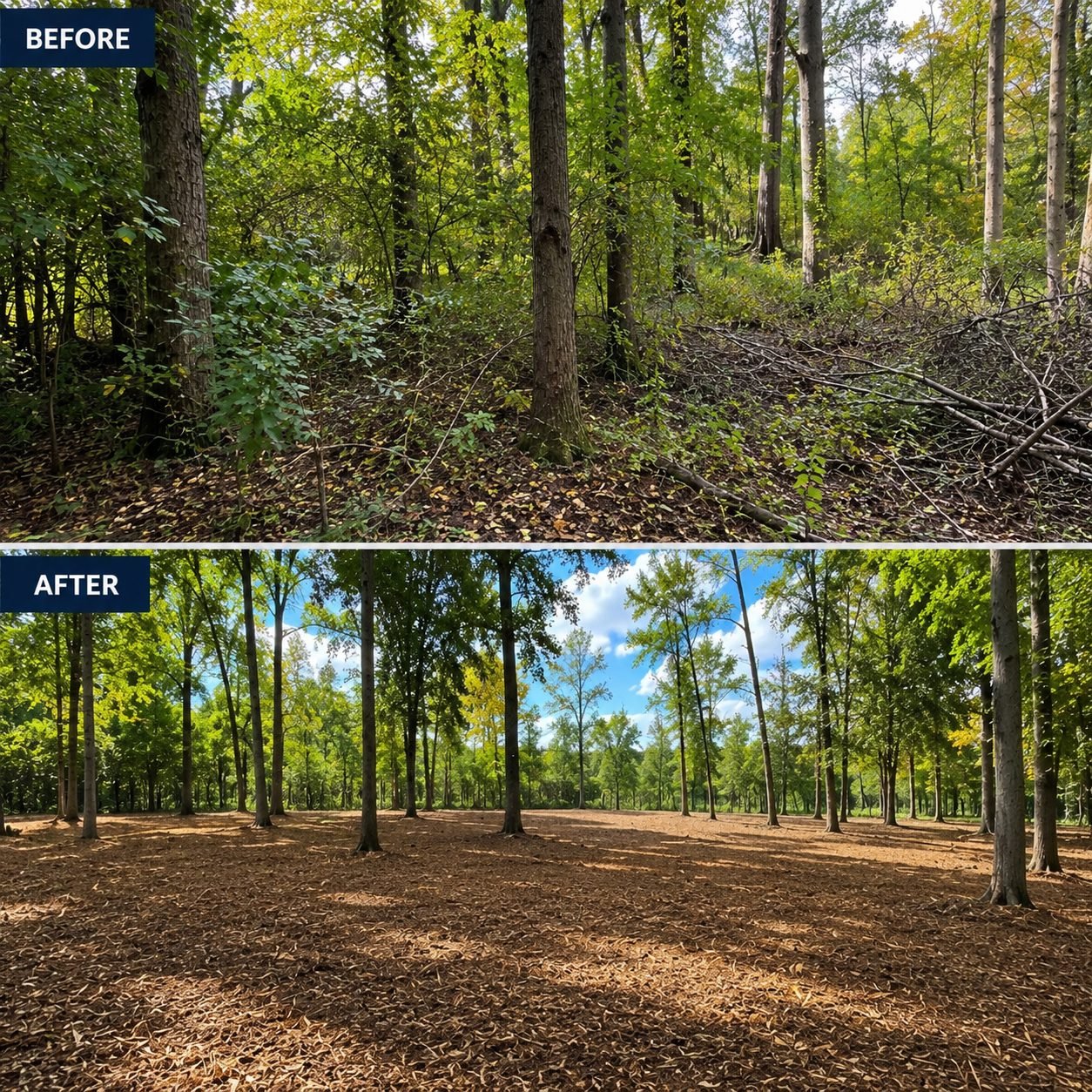
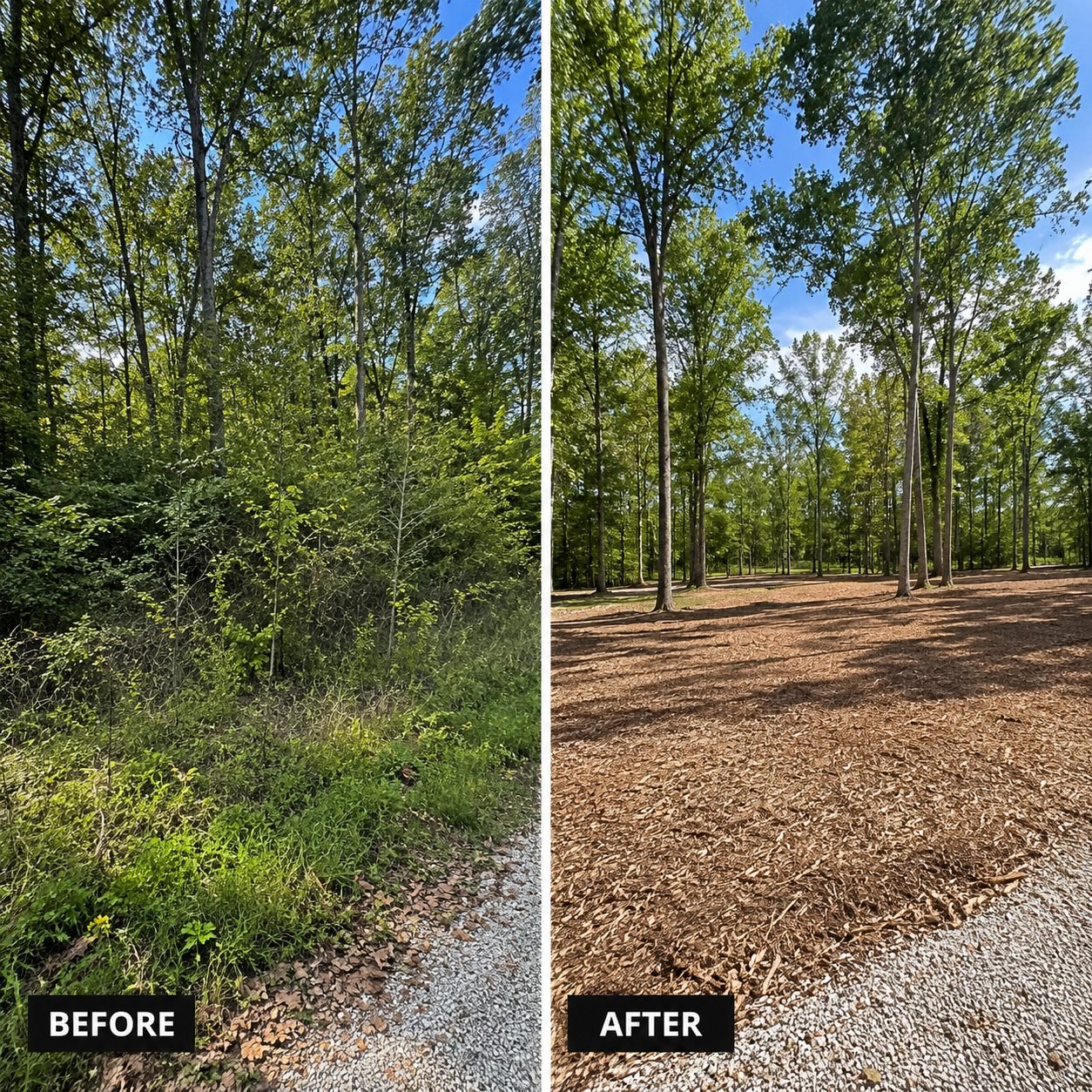
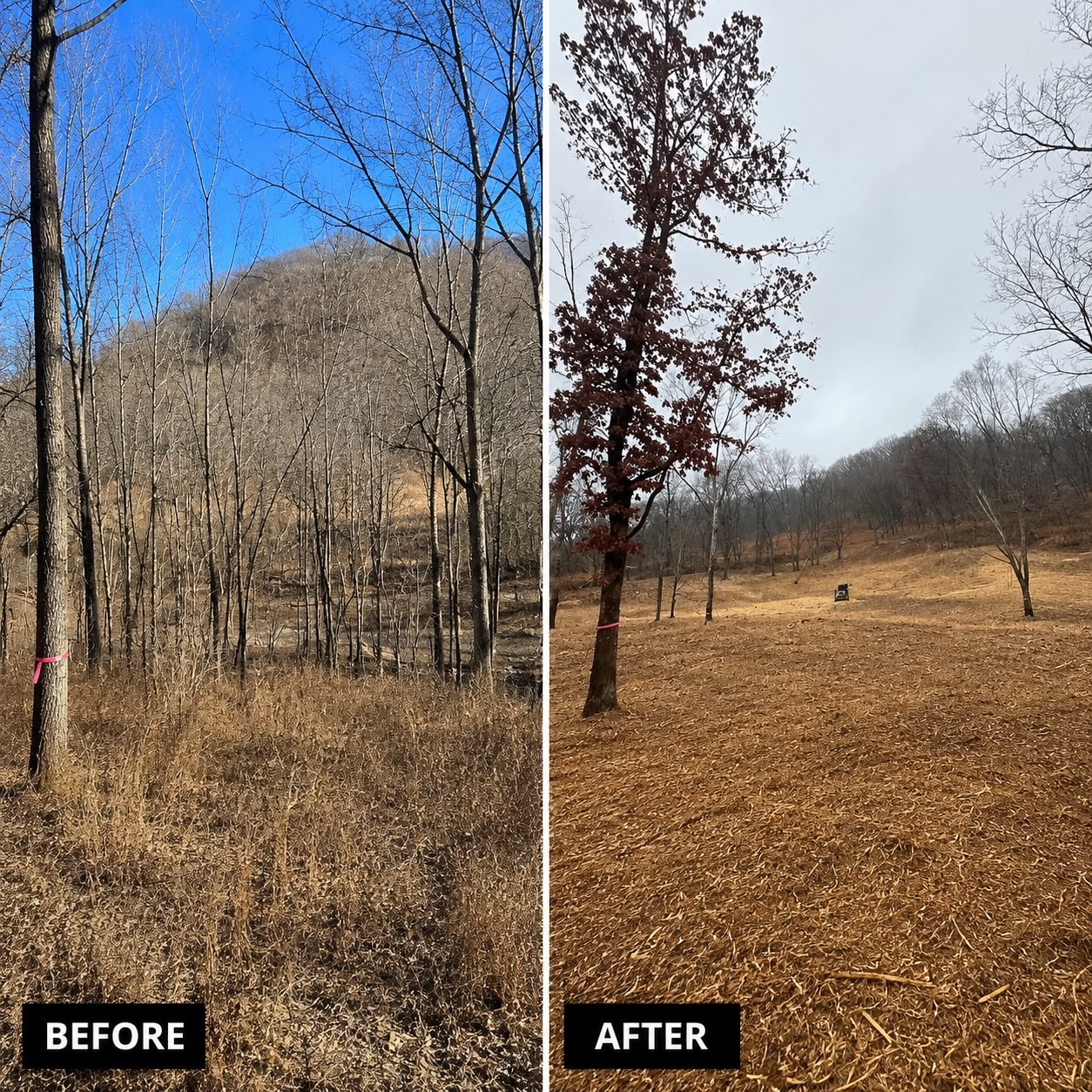
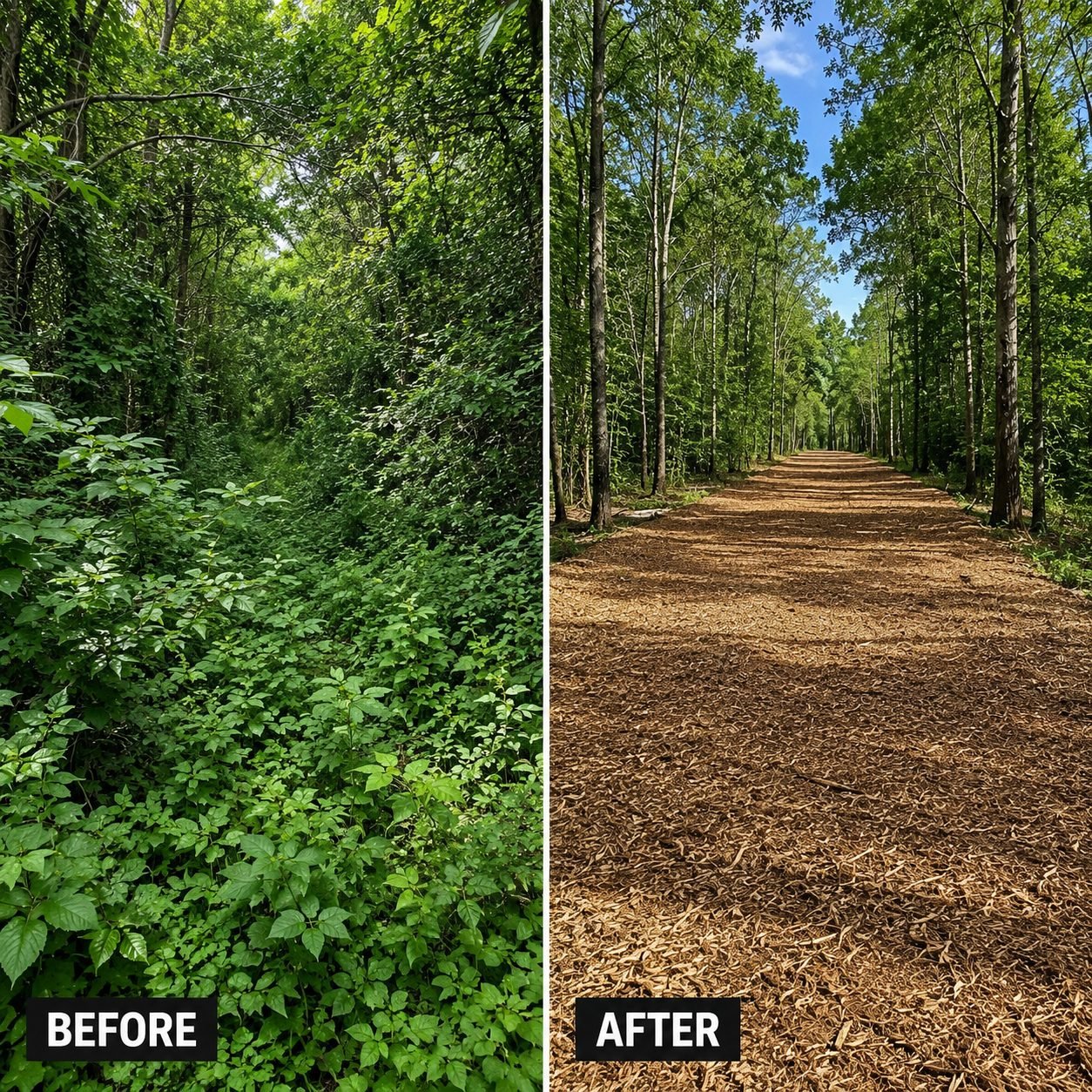
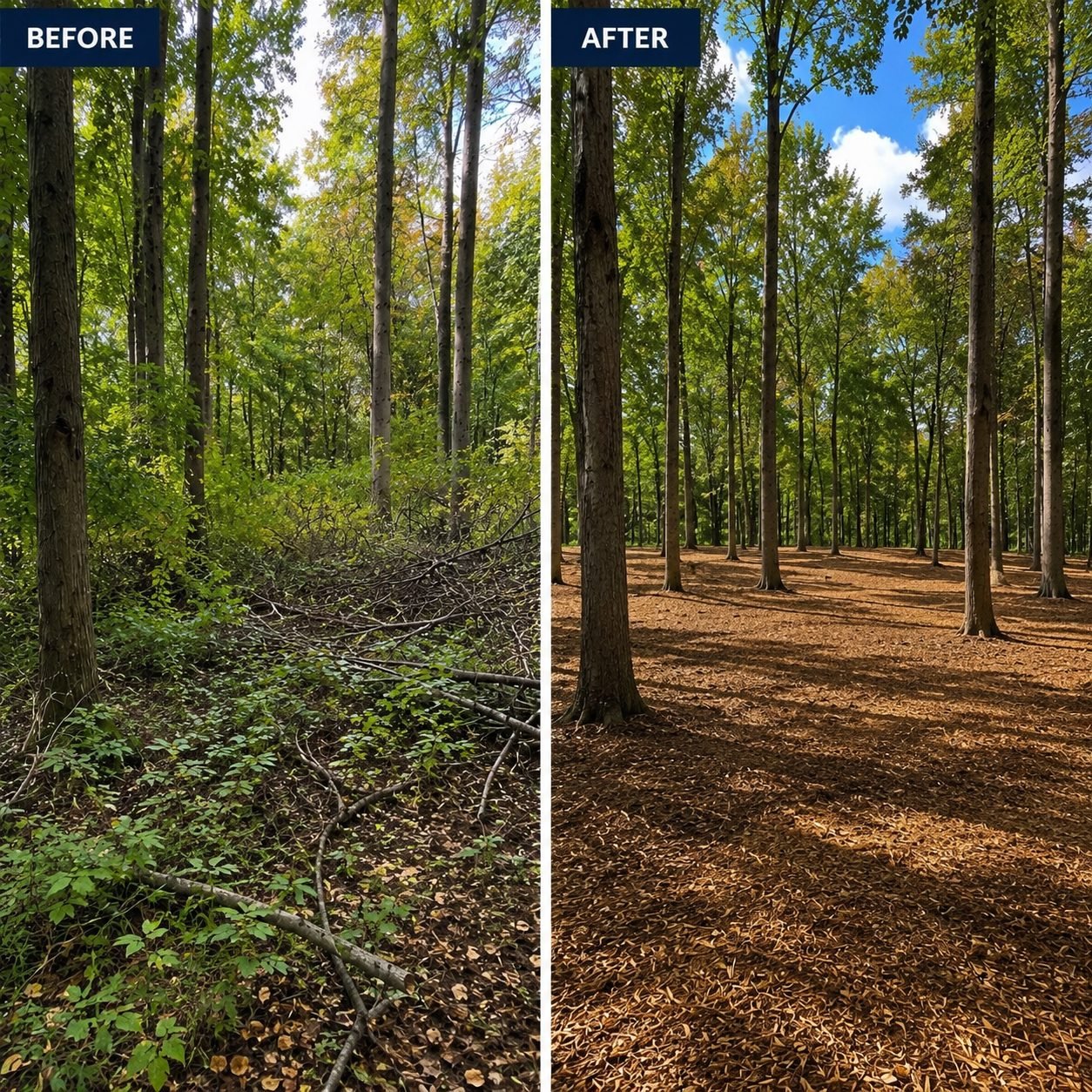
What Does Land Clearing Look Like Before and After in Powell, Ohio?
Recent Central Ohio jobs. The finished surface keeps a two to four inch mulch layer rather than bare soil, which is what holds ground through the first winter after clearing.
What Do Powell, Ohio Owners Ask About Land Clearing?
Uncommon, but saturated soil on a cleared slope can move. It is the reason cover matters more on this ground than on flat parcels.
Physically yes, but it is where erosion risk is highest. Reservoir and waterway setbacks may also apply, and that is checked before scheduling.
It suppresses a good deal of it. Resprouts from cut stems still appear, which is what the follow-up pass handles.
Two to four inches. Much thicker and it stays wet and can smother the growth you want back.
On a building site with disturbed soil, usually yes and often required. On a mulched slope with cover retained it is rarely necessary.
Winter. Frozen ground carries the machine without displacing soil, and the surface is at its strongest rather than its weakest.
What Else Can Fortress Do on a Powell, Ohio Property?
Land clearing, forestry mulching, excavation, demolition and grading run with the same crew and the same point of contact, so a Powell job that needs two trades does not wait on a second schedule.
Soil depth, slope class and erosion factor for any Powell parcel are published in the USDA NRCS Web Soil Survey (accessed August 2026).
Ready for a Flat Rate on Your Powell, Ohio Land Clearing?
Owner-operated land clearing across all five Central Ohio counties. Send your property details and Lee gets back to you within 2 to 3 hours during business hours with one flat number after a free on-site walk-through.