

Does Land Clearing Help Equipment Access on Ostrander, Ohio Farm Ground?
Land clearing helps equipment access on Ostrander, Ohio farm ground by restoring the headland turn that overgrown boundaries have gradually closed off. Modern equipment needs considerably more turn room than the machinery those rows were originally planted around, so the gap has closed from both sides at once.
Access on Ostrander farm ground
- Overgrown boundaries close the headland turn before they take much acreage.
- Modern equipment is wider than what these boundaries were planted around.
- A blocked turn costs time on every pass of every operation, every season.
- Opening a corner is often a small targeted job rather than a whole boundary.
- Field lanes and gate approaches are the other common access constraint.
- Access work is quoted per run alongside the boundary work.
What Else Do People Ask About Land Clearing in Ostrander, Ohio?
Equipment got wider while the boundaries grew in. Both moved in the same direction at once.
Often not. A specific corner or gate approach is frequently the actual constraint.
Targeted corner work is a small job compared with clearing every boundary on the parcel.
Lanes grown in from both sides are a common constraint and are cleared the same way.
Why Has Equipment Access Got Worse on Ostrander, Ohio Ground?
Two things moved at once. Equipment got substantially wider over the decades, while the boundaries those fields were laid out around grew steadily inward. The gap closed from both sides simultaneously.
A headland that comfortably accommodated the machinery of forty years ago can be genuinely tight for a modern planter or combine.
The turn closes before the acreage loss becomes obvious, which is why access is usually the first symptom an owner notices rather than the lost width.
On Ostrander’s ten to sixty acre parcels, where fields are worked intensively, that lost turn room shows up as time on every single pass.
What Does a Blocked Turn Actually Cost on Ostrander, Ohio Fields?
Time, repeatedly. Every pass that requires an extra reposition, through planting, spraying and harvest, across every season. It never appears as a single cost, which is exactly why it gets tolerated for years.
There is a damage cost too. Tight turns against a thorny boundary mean equipment contact with rose and volunteer saplings, which is hard on tyres and paint alike.
And a compaction cost, since repeated tight turning in the same spot works the headland harder than the rest of the field.
Opening the corner solves all three at once, and it is usually a small job rather than a whole-boundary project.
What Access Work Is Worth Doing on Ostrander, Ohio Ground?
The corners that block turns, the gate approaches that have narrowed, and any field lane grown in from both sides. Those three cover most access problems and none of them requires clearing every boundary on the parcel.
Prioritising this way gets most of the practical benefit for a fraction of what full boundary clearing would cost.
It is identified by walking the parcel with the actual operations in mind, thinking about where equipment has to go rather than where the growth looks worst.
Access work is quoted per run alongside any boundary clearing, so the two can be scoped together or separately. See land clearing.
What Does an Old Windbreak Cost in Ostrander, Ohio Field Width?
Production lost to an overgrown windbreak on Ostrander parcels, and what comes back when it is opened. An old row takes ground from both sides at once.
| Windbreak age | Width lost each side | Per 1,000 ft, both sides | Recovery |
|---|---|---|---|
| Maintained, under 5 years | 2 to 4 ft | 0.1 to 0.2 acres | Immediate |
| Rose established, 5 to 10 years | 6 to 10 ft | 0.3 to 0.5 acres | Immediate |
| Overgrown, 10 to 20 years | 10 to 15 ft | 0.5 to 0.7 acres | Immediate |
| Volunteer treeline, 20 years plus | 15 to 25 ft | 0.7 to 1.1 acres | Immediate |
| Headland turn blocked | Whole turn lost | Varies | Immediate |
| Both sides overgrown | Double the above | Double | Immediate |
| Partial removal, screen retained | Reduced | Partial | Immediate |
Figures published by Fortress Level Construction from Delaware County agricultural work, August 2026. Bush honeysuckle, autumn olive and multiflora rose are listed among the species restricted in Ohio by the Ohio Department of Natural Resources and the Ohio Department of Agriculture Division of Plant Health (both accessed August 2026).
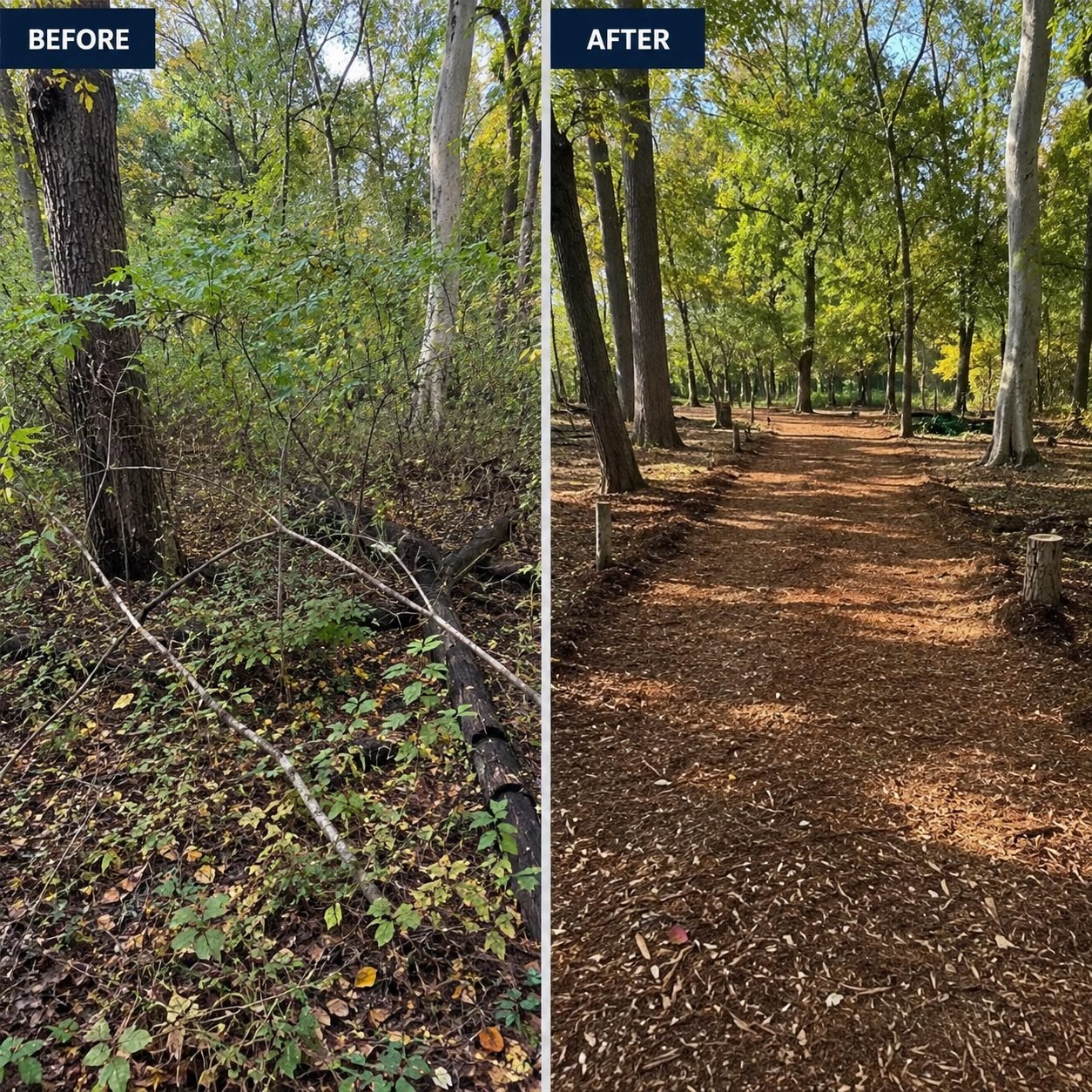
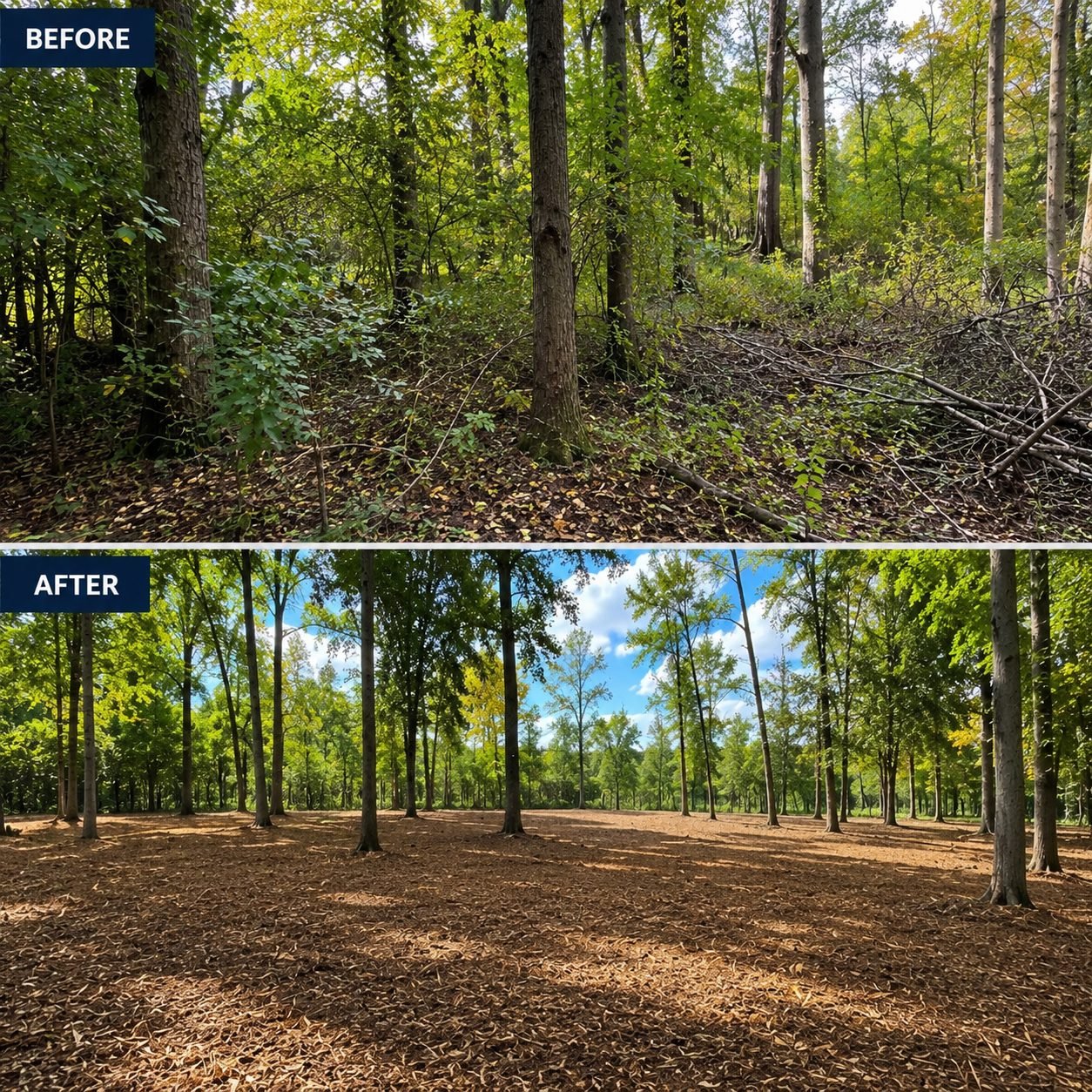
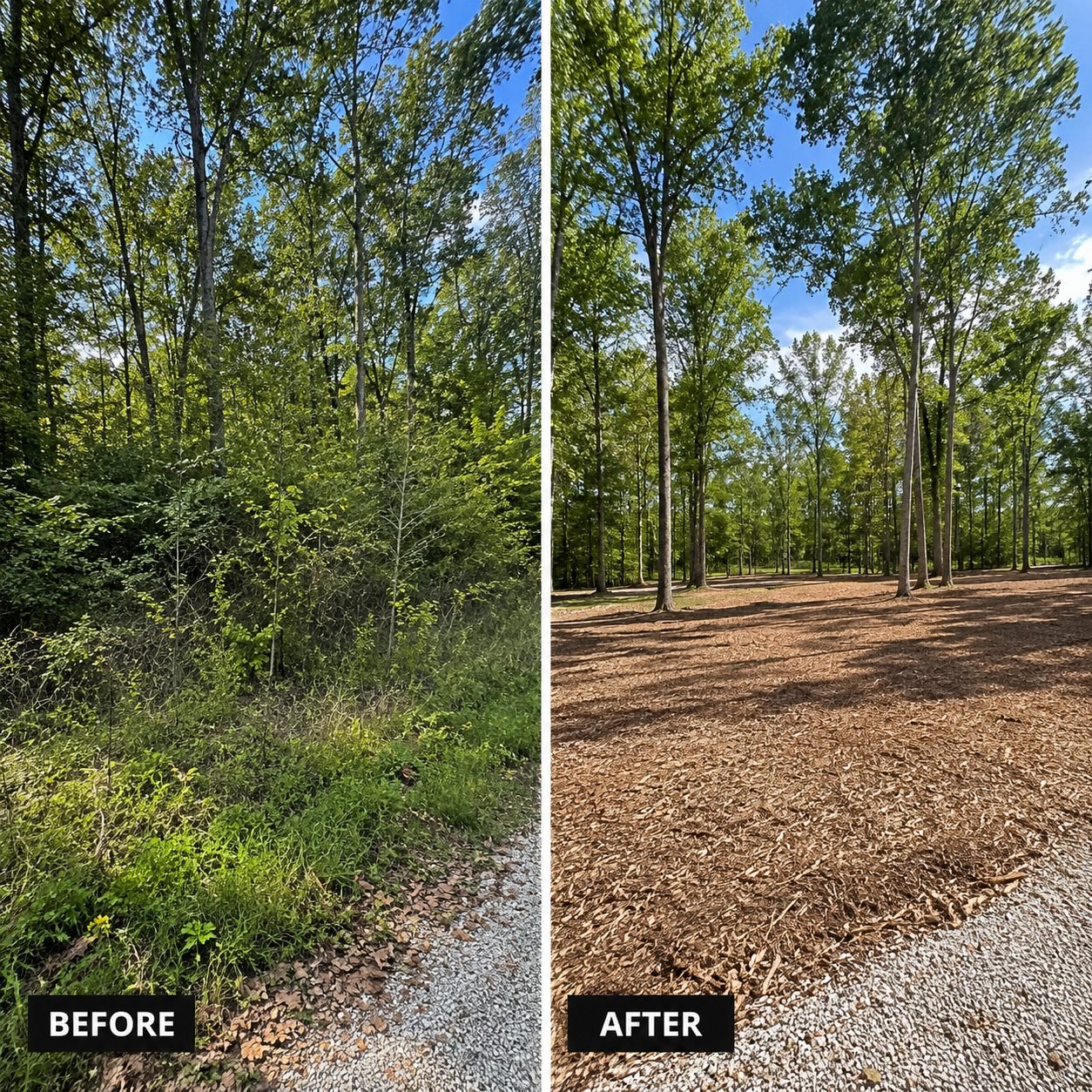
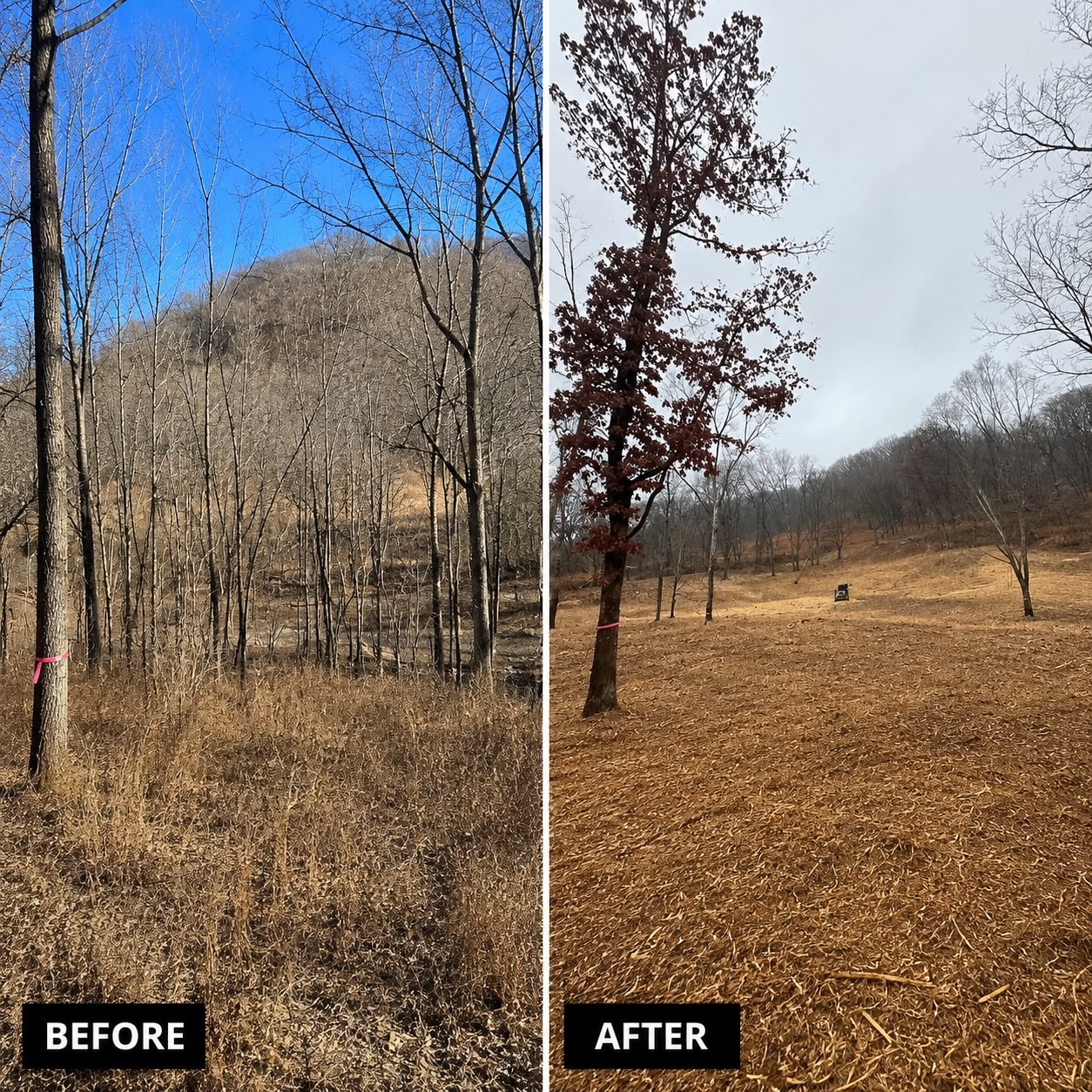
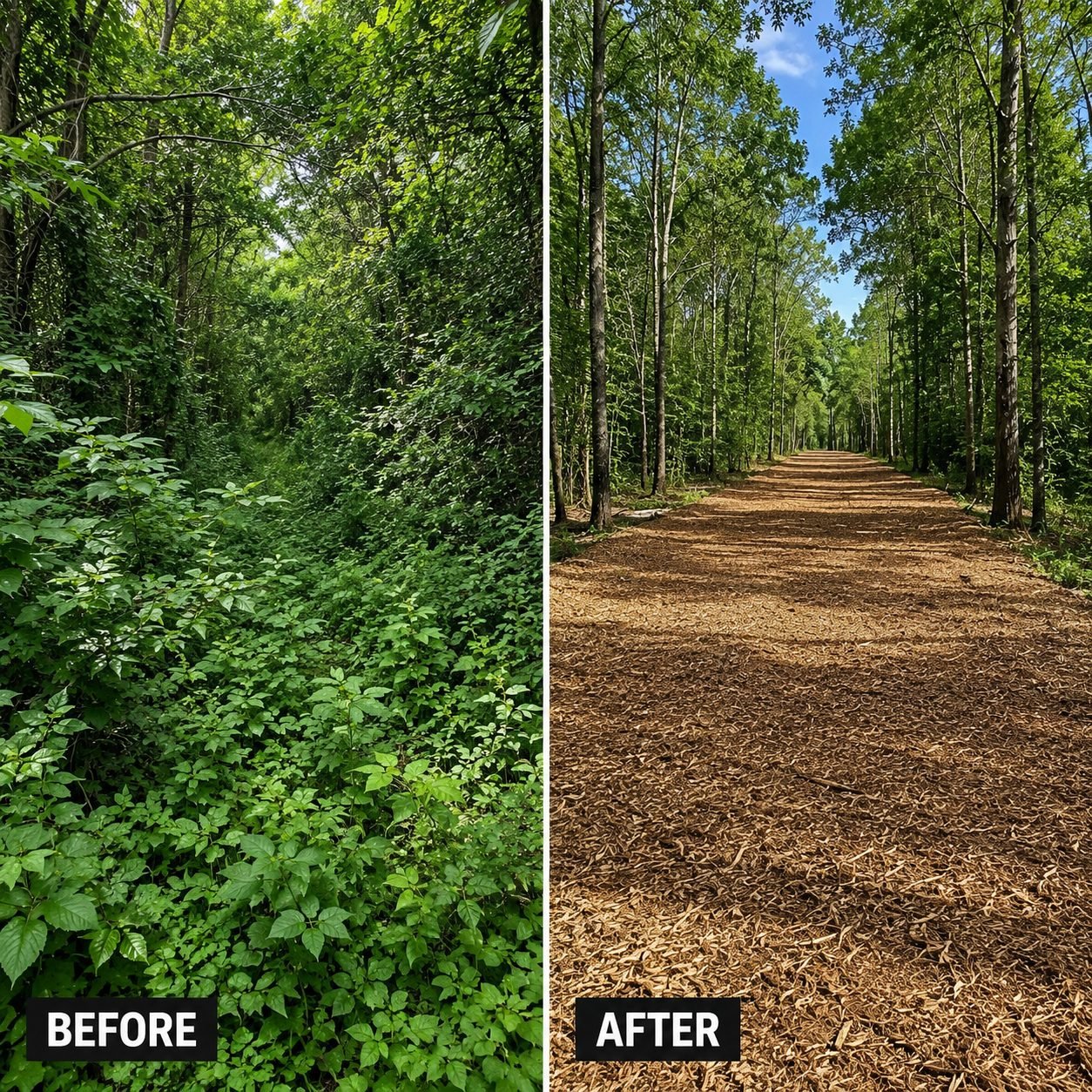
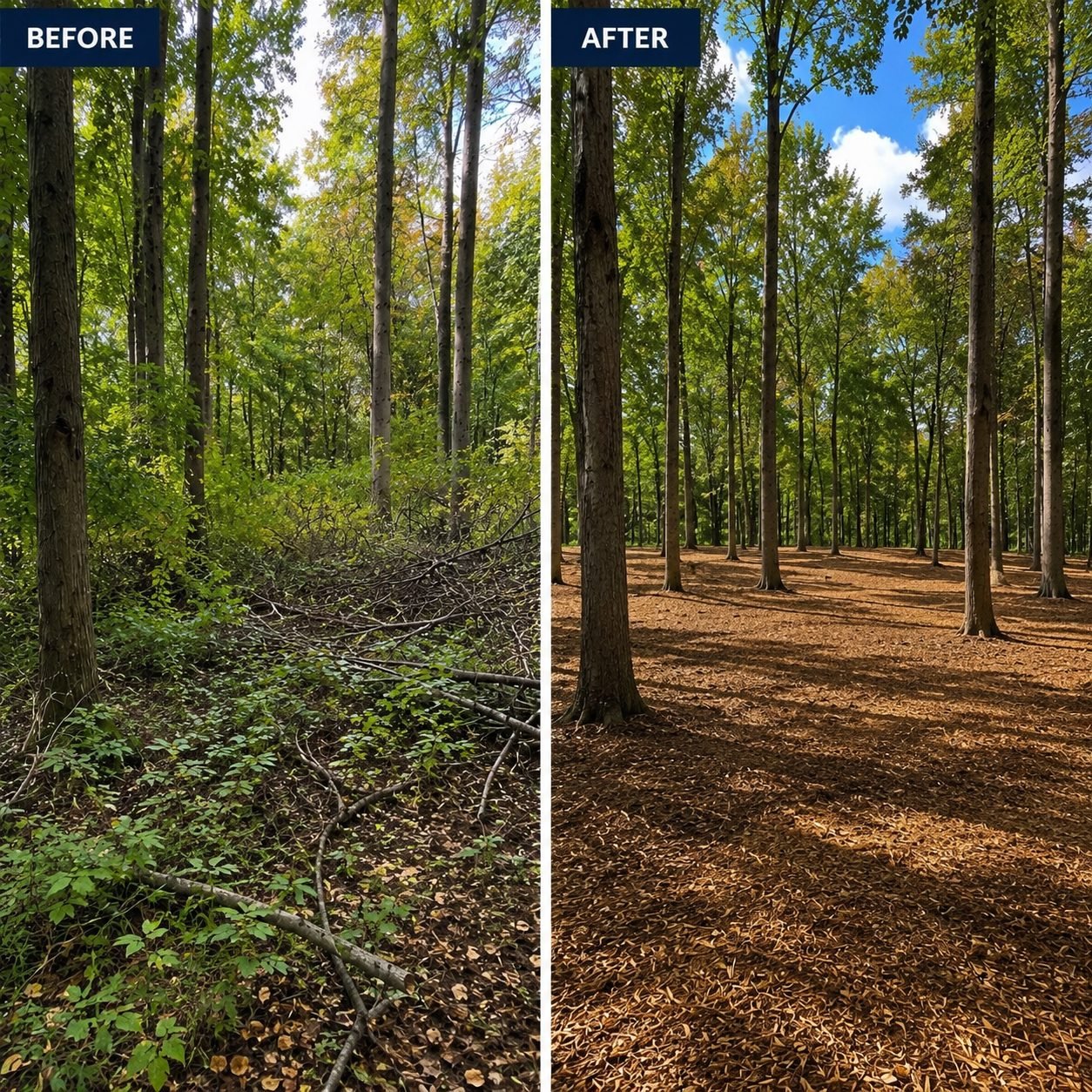
What Does Land Clearing Look Like Before and After in Ostrander, Ohio?
Recent Central Ohio jobs. The finished surface keeps a two to four inch mulch layer rather than bare soil, which is what holds ground through the first winter after clearing.
What Do Ostrander, Ohio Owners Ask About Land Clearing?
Yes, and that is often the sensible scope. It is quoted as a run rather than as a parcel job.
Enough for the widest equipment you actually run. That is established at the walk against your machinery.
Frequently. A narrowed approach is as much of a constraint as a blocked corner.
With a second-season follow-up and normal management, yes. Untreated it closes again over a decade.
Opening a boundary rarely does. Where there is tile along the row it is identified before work.
Between harvest and planting, on frozen ground, same as any boundary work here.
What Else Can Fortress Do on a Ostrander, Ohio Property?
Land clearing, forestry mulching, excavation, demolition and grading run with the same crew and the same point of contact, so a Ostrander job that needs two trades does not wait on a second schedule.
Bush honeysuckle, autumn olive and multiflora rose are listed among the species restricted in Ohio by the Ohio Department of Natural Resources and the Ohio Department of Agriculture Division of Plant Health (both accessed August 2026). Soil depth, slope class and erosion factor for any Ostrander parcel are published in the USDA NRCS Web Soil Survey (accessed August 2026).
Ready for a Flat Rate on Your Ostrander, Ohio Land Clearing?
Owner-operated land clearing across all five Central Ohio counties. Send your property details and Lee gets back to you within 2 to 3 hours during business hours with one flat number after a free on-site walk-through.