

Does Land Clearing Improve Old Tree Health in Worthington, Ohio?
Land clearing improves old tree health in Worthington, Ohio when it removes honeysuckle from beneath the canopy. Taking that layer out restores light and airflow to mature stems and cuts the competition for soil moisture that a dense understory creates.
What the canopy gains
- Honeysuckle competes directly with mature trees for soil moisture.
- Removing it restores airflow through the lower canopy.
- Light reaches the forest floor again, so young natives can establish.
- The mulch layer holds moisture and becomes topsoil over 2 to 3 seasons.
- Root zone protection matters more than anything else during the work.
- Canopy vigour improves across a few years rather than immediately.
What Else Do People Ask About Land Clearing in Worthington, Ohio?
It competes for soil moisture and blocks airflow, and it prevents any next generation establishing.
Ground layer within a season. Canopy vigour is slower, across a few years.
Yes, kept off the trunk. It holds moisture and adds organic matter as it breaks down.
Root zone compaction and grade changes under the canopy. Defined routes prevent both.
How Does Honeysuckle Affect Old Worthington, Ohio Trees?
It competes with them. A dense understory draws soil moisture from the same profile the mature roots use, blocks airflow through the lower canopy, and shades the ground so completely that no young tree can establish beneath.
That last effect is the long-term one. A Worthington stand with no next generation coming through is a stand with a finite life, and honeysuckle guarantees that outcome.
The moisture competition matters most in dry summers, when mature trees are already under stress and a dense understory is drawing from the same reserve.
Airflow is the subtler one. Stagnant humid air in a choked understory does not suit the lower canopy, and opening it up changes the microclimate of the stand.
What Improves After Clearing on a Worthington, Ohio Lot?
Light at ground level immediately, moisture availability within a season, and canopy vigour across a few years. The visible change is instant; the physiological one is gradual and worth the patience.
Native ground layer frequently returns without replanting, because the seed bank survived being shaded rather than being destroyed. Spring ephemerals are often the first sign.
Young natives establishing on the opened floor are the meaningful long-term result, because they are the next canopy.
The mulch layer contributes as it breaks down, adding organic matter to soil that has been under a monoculture understory for years. See forestry mulching.
What Protects Old Trees During Worthington, Ohio Clearing?
Keeping equipment off the root zone and making no grade changes inside it. Those two account for almost every mature tree lost around this kind of work, and both are entirely preventable with planning.
The root zone is roughly the area beneath the canopy spread, which is larger than most people assume and is the area that matters.
Defined traffic routes are the practical measure. On a small heavily treed lot that requires thought, because there is little ground not under something.
Keeper trees are flagged physically before a machine moves, and winter work makes identification reliable because the leaves are down.
What Helps and What Harms Old Worthington, Ohio Trees?
Effect of common activities on mature trees retained on Worthington lots. The clearing pass itself is rarely the risk; what happens under the canopy is.
| Activity | Effect | Why | Timescale |
|---|---|---|---|
| Honeysuckle understory removal | Positive | Less competition, more light | 1 to 3 years |
| Mulch left, off the trunk | Positive | Moisture and organic matter | 2 to 3 seasons |
| Young natives allowed to establish | Positive | Next canopy generation | Decades |
| Equipment traffic under canopy | Negative | Soil compaction | Shows in seasons |
| Fill against the trunk | Severe | Root suffocation | 1 to 3 years |
| Grade cut inside root zone | Severe | Root loss | 1 to 3 years |
| Mulch piled against bark | Negative | Moisture against the trunk | Gradual |
Practice published by Fortress Level Construction for its Franklin County operation, August 2026. Bush honeysuckle, autumn olive and multiflora rose are listed among the species restricted in Ohio by the Ohio Department of Natural Resources and the Ohio Department of Agriculture Division of Plant Health (both accessed August 2026).
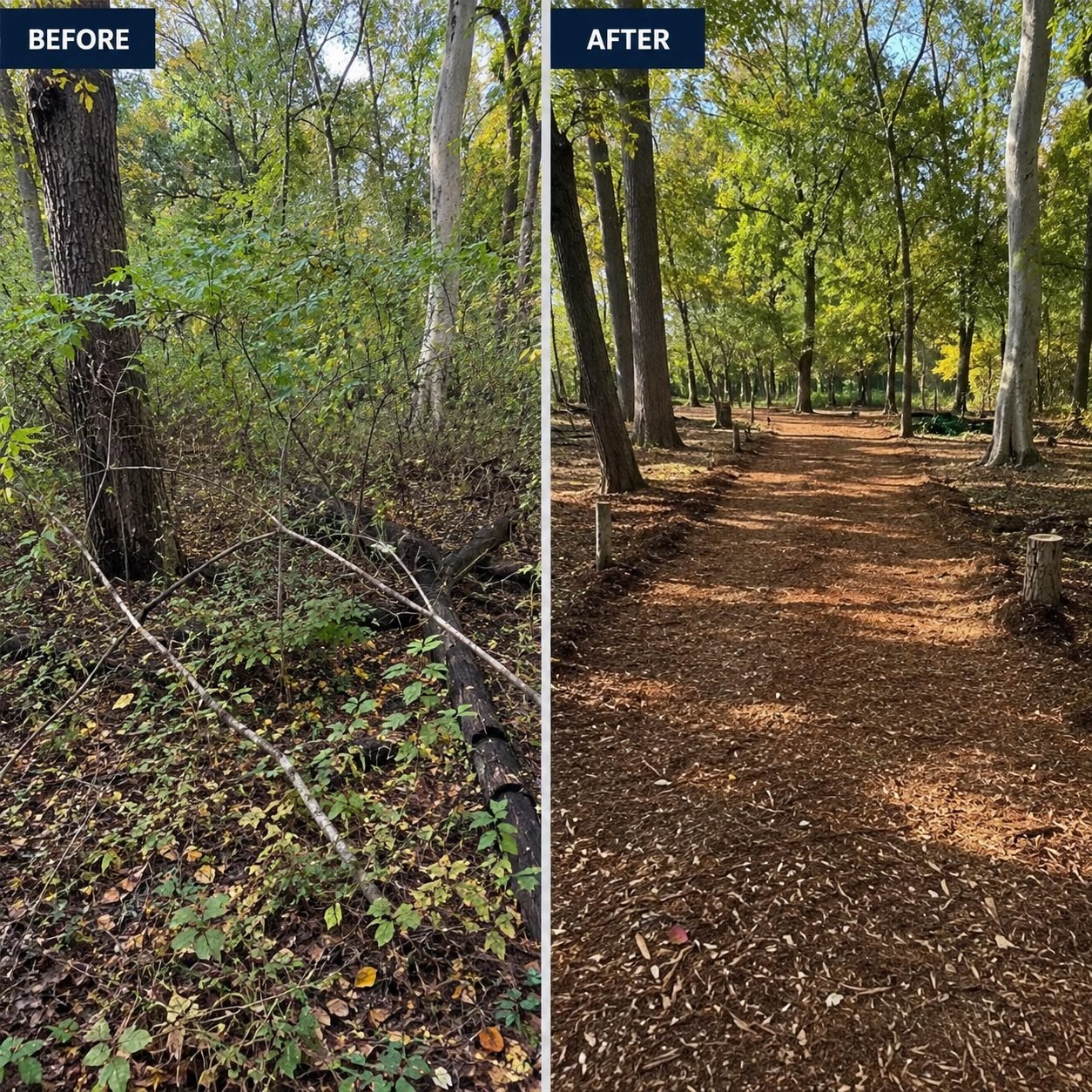
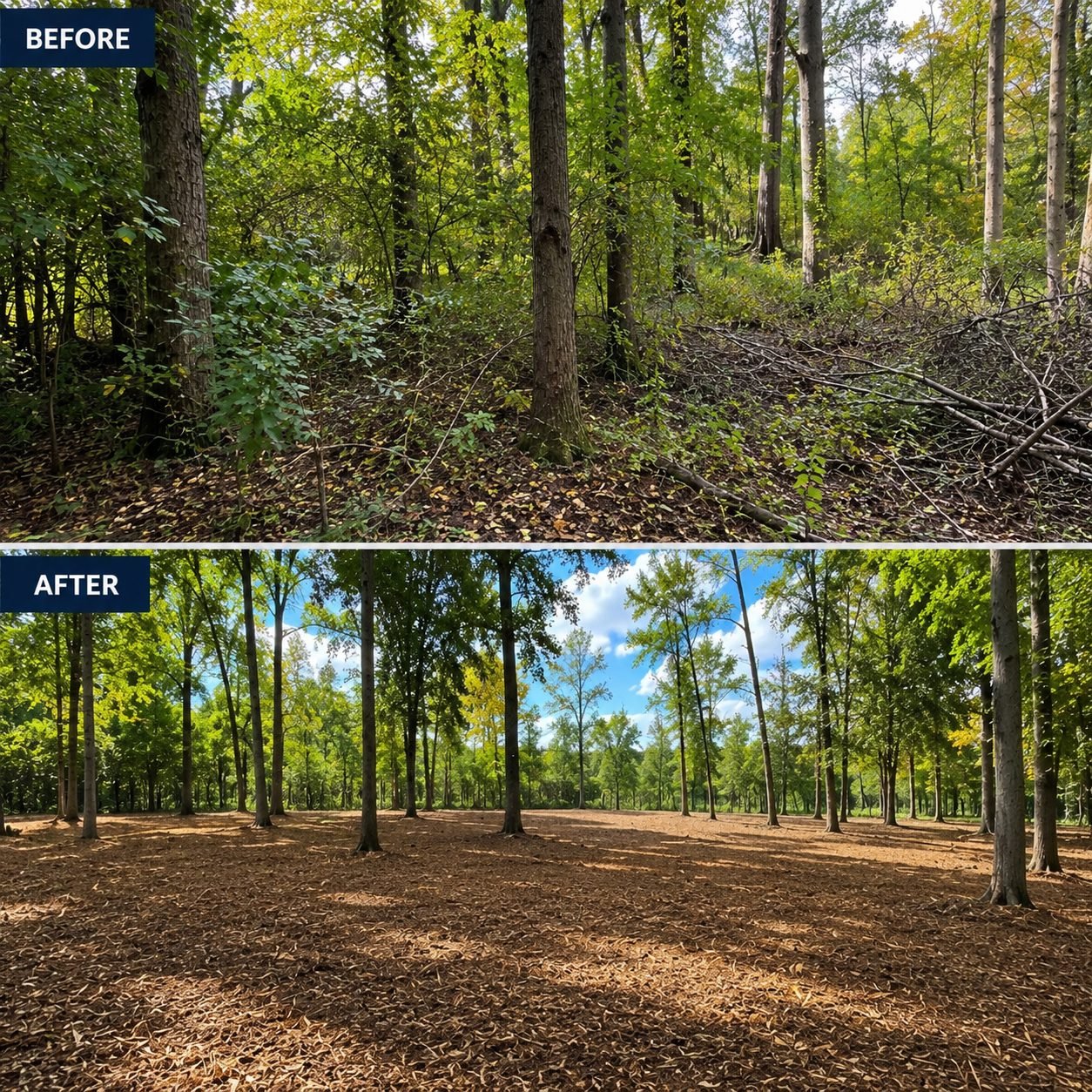
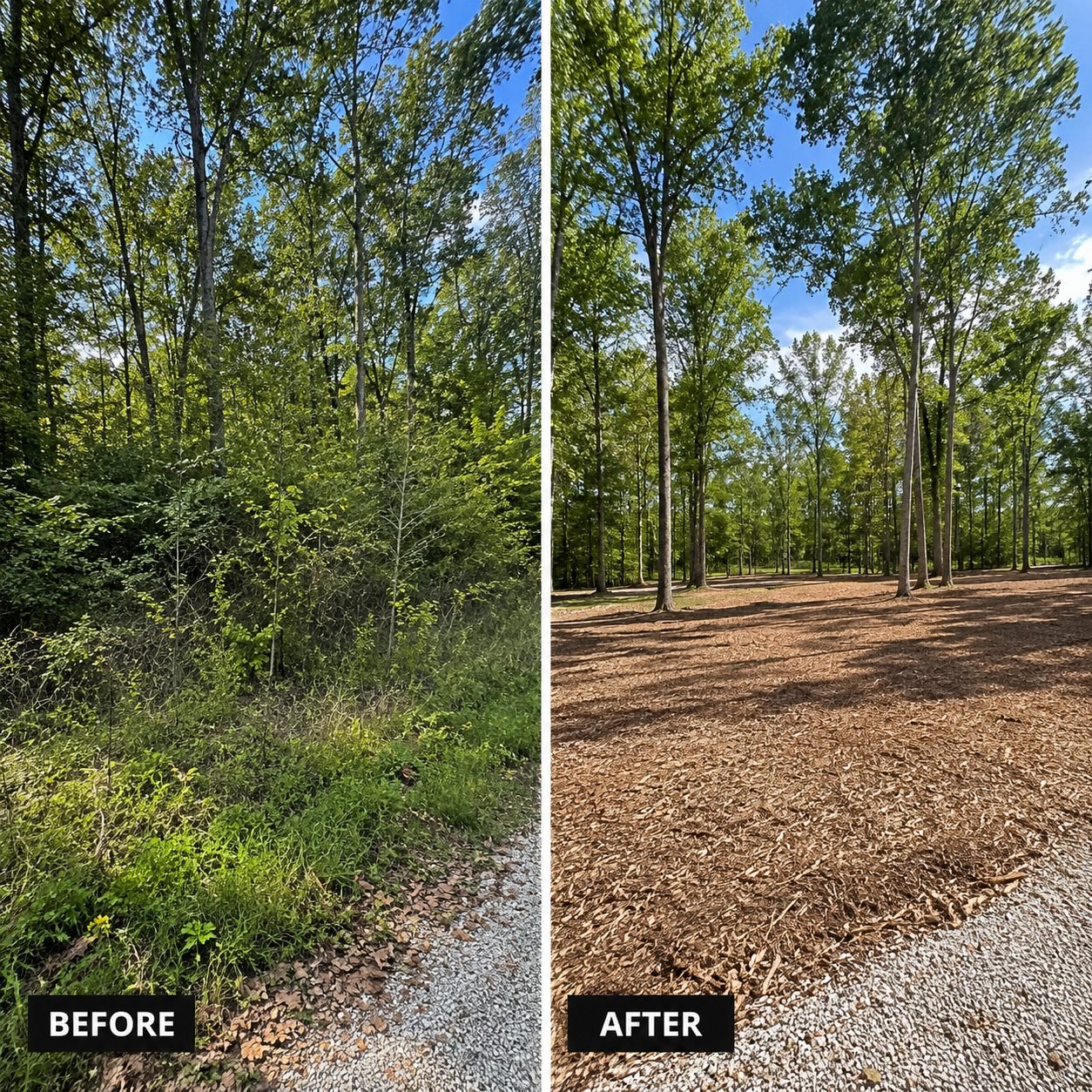
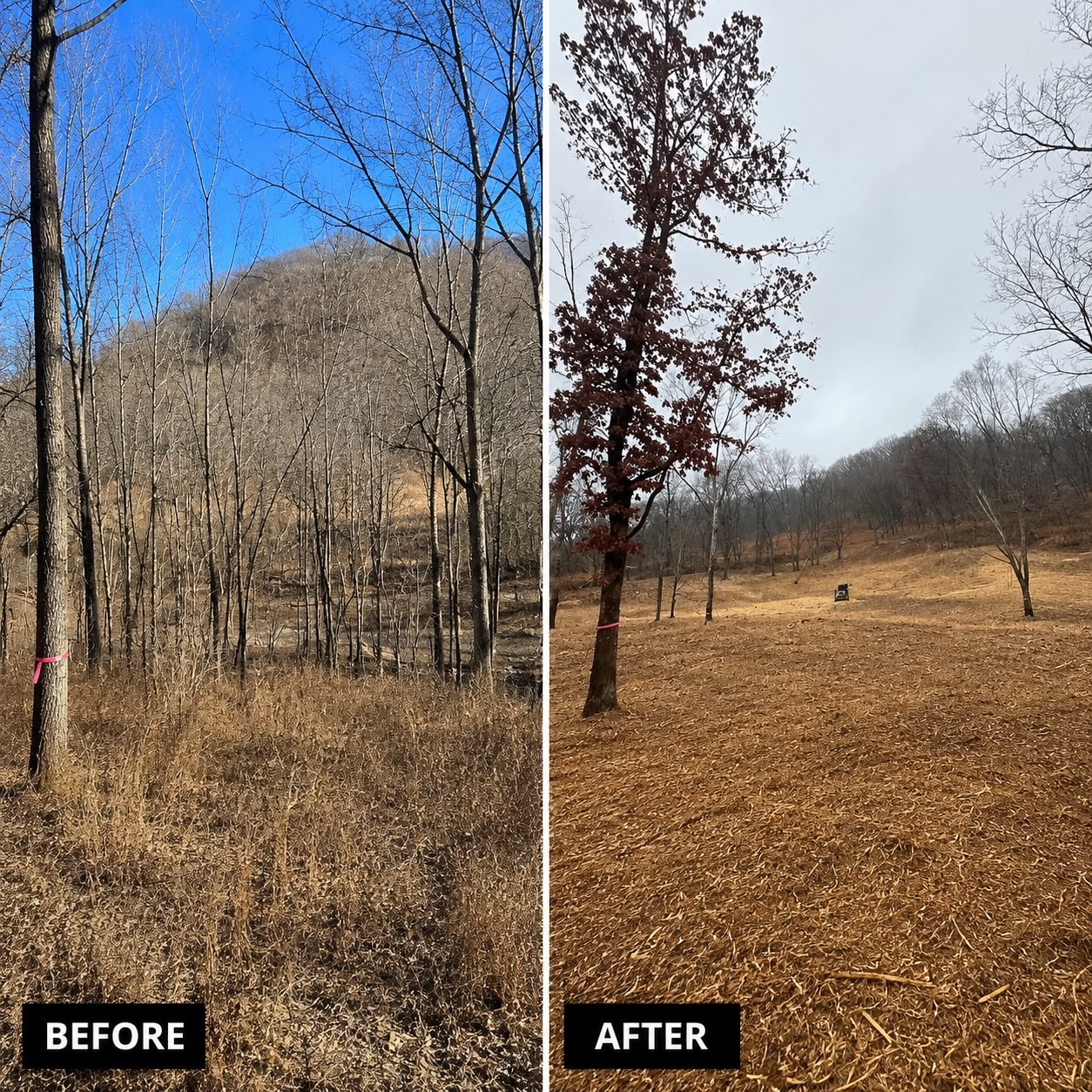
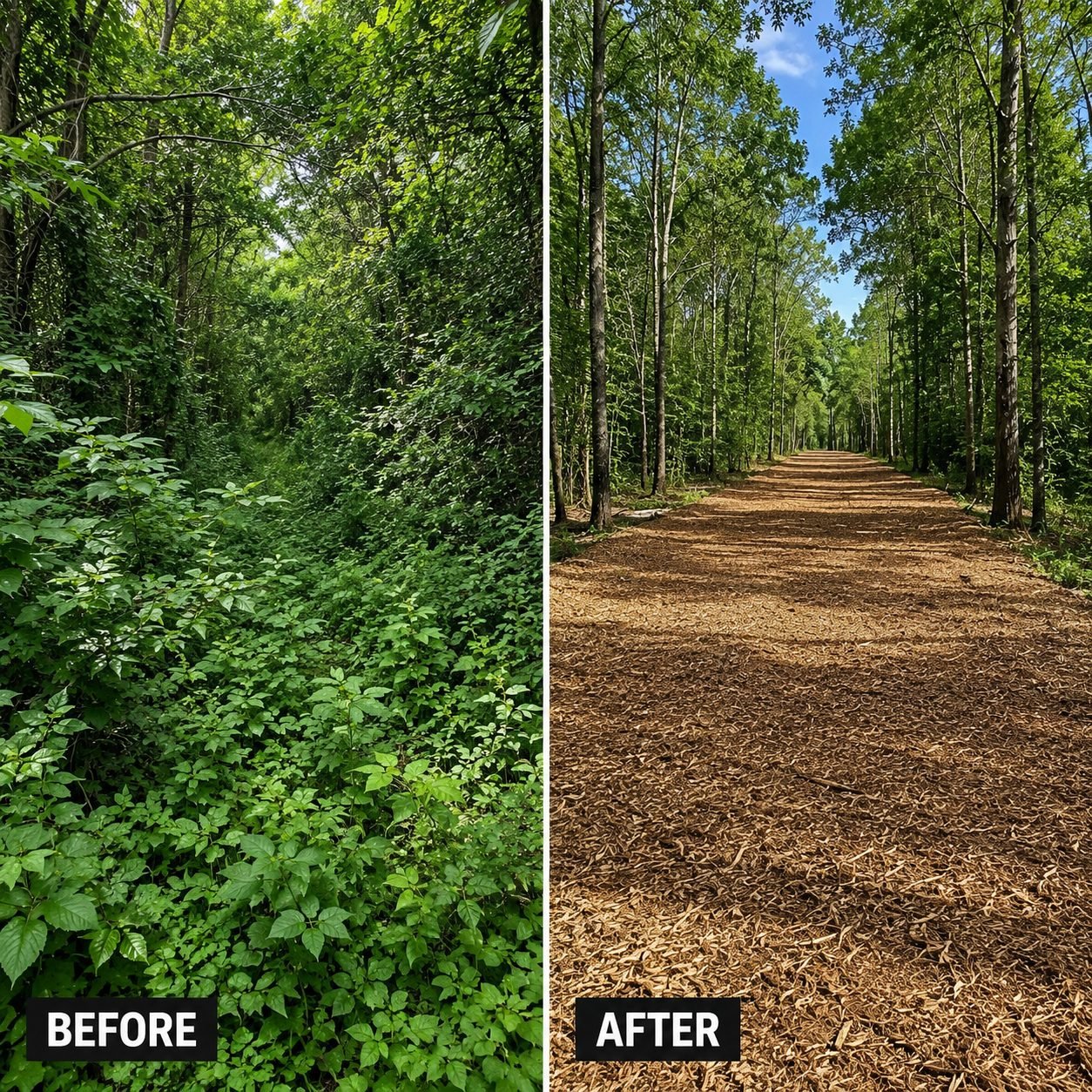
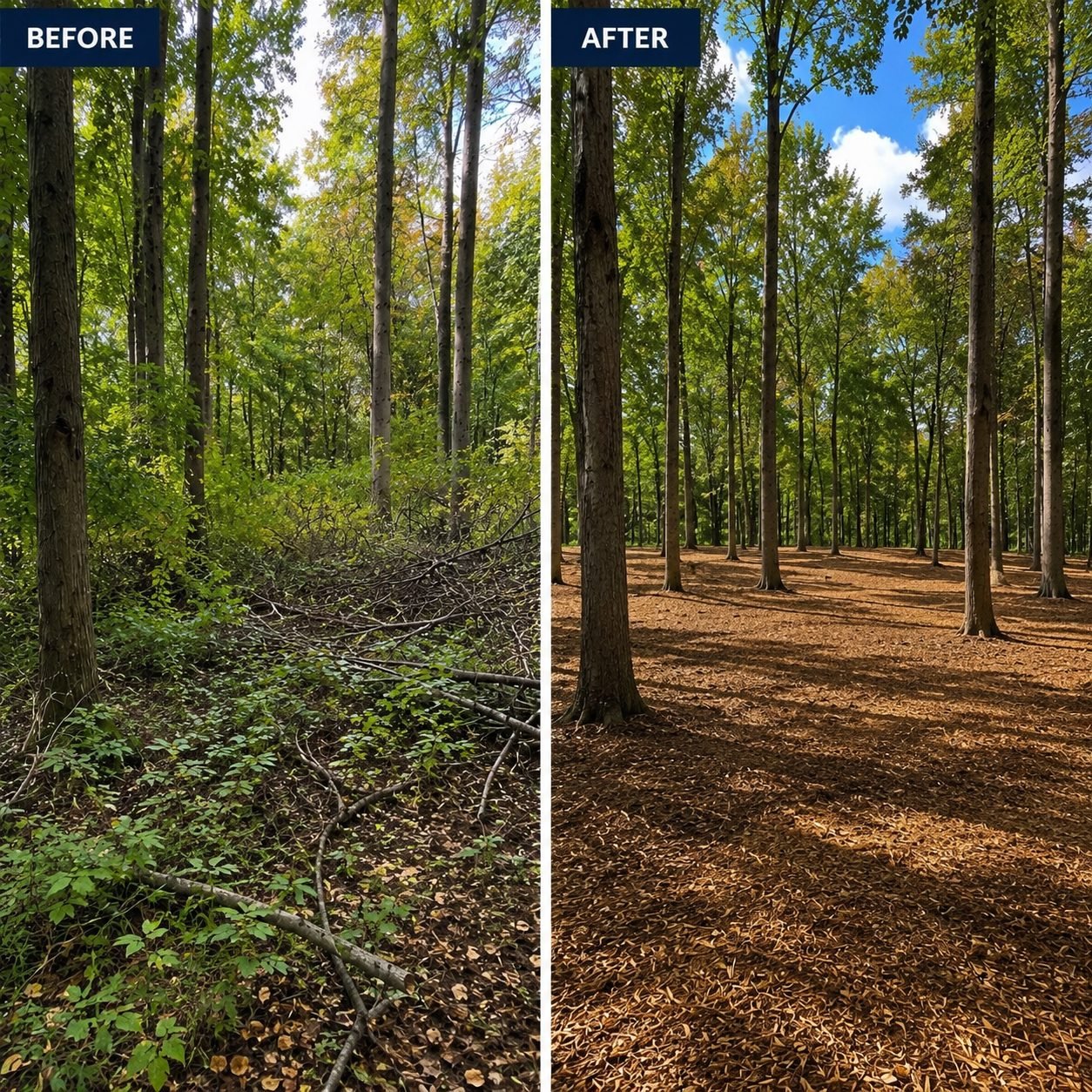
What Does Land Clearing Look Like Before and After in Worthington, Ohio?
Recent Central Ohio jobs. The finished surface keeps a two to four inch mulch layer rather than bare soil, which is what holds ground through the first winter after clearing.
What Do Worthington, Ohio Owners Ask About Land Clearing?
Vigour improves rather than growth rate changing dramatically. Stress reduction is the main effect.
Test rather than assume. The mulch adds organic matter as it breaks down regardless.
For pruning and hazard assessment, yes. That is separate work from clearing.
Yes, and that is the visible change. It does not harm a healthy mature tree.
It can, but waiting one spring shows whether the existing seed bank will do it for free.
Yes for the work. Dormant season disturbance is easier on the stand than growing season work.
What Else Can Fortress Do on a Worthington, Ohio Property?
Land clearing, forestry mulching, excavation, demolition and grading run with the same crew and the same point of contact, so a Worthington job that needs two trades does not wait on a second schedule.
Bush honeysuckle, autumn olive and multiflora rose are listed among the species restricted in Ohio by the Ohio Department of Natural Resources and the Ohio Department of Agriculture Division of Plant Health (both accessed August 2026).
Ready for a Flat Rate on Your Worthington, Ohio Land Clearing?
Owner-operated land clearing across all five Central Ohio counties. Send your property details and Lee gets back to you within 2 to 3 hours during business hours with one flat number after a free on-site walk-through.