

Does Land Clearing Include Stump Grubbing in Delaware, Ohio?
Land clearing in Delaware, Ohio does not include stump grubbing by default, and it should not. Anything carrying a foundation needs the root balls out, but ground going to pasture or managed woodland does not, so grubbing is quoted separately for the area that needs it.
When grubbing is actually required
- Under a foundation, slab or road base: root balls must come out.
- Under future pasture, lawn or woodland: they can stay and rot down.
- Grubbing the whole parcel when only a pad needs it is wasted money.
- Rotting root balls leave voids, and ground above them settles unevenly.
- Grubbing produces spoil and a hole, both of which need handling in the same visit.
- Mulching leaves stumps ground to below grade, which is not the same as grubbing.
What Else Do People Ask About Land Clearing in Delaware, Ohio?
Mulching grinds the stump to at or below grade and leaves the roots. Grubbing pulls the whole root ball out of the ground.
Cost and disturbance. Removing root balls across ground that will never carry a structure buys nothing and opens more soil.
The root ball rots, leaves a void, and the ground above settles. Under a foundation that is a structural problem.
Yes, and it has to be backfilled and compacted, which is part of the pad work rather than an afterthought.
What Is the Difference Between Mulching and Grubbing in Delaware, Ohio?
Mulching processes everything above ground and grinds the stump to at or below grade, leaving the root system in place. Grubbing pulls the entire root ball out of the soil. They look similar on the surface and are completely different underneath.
For most purposes mulching is enough. A cleared field going back to pasture, a woodland being opened up, a boundary being reclaimed: none of those care what is under the surface.
A foundation cares a great deal. A root ball left under a slab decomposes over years, loses volume, and the ground above it settles into the void that leaves.
That is the whole decision. What is going on top of this ground determines whether the roots have to come out, and nothing else does.
Where on a Delaware, Ohio Parcel Does Grubbing Actually Belong?
The building footprint, any slab, and road or driveway base. That is normally a fraction of the parcel, which is exactly why grubbing is quoted separately rather than folded into a per-acre clearing rate that would inflate the whole job.
Bundling it in would mean charging every owner for work most parcels do not need. Quoting it against the actual footprint keeps the number honest.
Grubbing also generates spoil and leaves holes. Both have to be handled in the same visit, backfilled and compacted, or the pad work simply inherits the problem.
This is another reason clear, grub, pad and grade belong in one mobilisation on Delaware County build sites. See excavation.
Does Grubbing Change the Land Clearing Schedule in Delaware, Ohio?
It adds time across the footprint only, and it prefers the same conditions clearing does. Frozen or dry ground handles the equipment and the spoil far better than saturated Delaware County clay, which turns backfill into a compaction problem.
Wet clay is the specific issue. Backfilling a grubbed hole with saturated material never compacts properly, and the settlement shows up later under whatever was built on it.
That is a real argument for scheduling build site work in the winter window rather than pushing through spring because the calendar says so.
Where the spec calls for imported fill rather than site spoil, that is identified at the walk so it is priced rather than discovered on the day.
Does This Delaware, Ohio Ground Need Grubbing?
Requirement by end use on Delaware parcels. What is going on top of the ground decides it, and nothing else does.
| End use | Grubbing required | Why | Typical extent |
|---|---|---|---|
| House foundation or slab | Yes | Voids cause settlement | Footprint plus margin |
| Garage, barn or outbuilding | Yes | Same structural risk | Footprint plus margin |
| Driveway or road base | Yes | Base fails over voids | Route width |
| Pasture or hay ground | No | Roots rot down harmlessly | None |
| Managed woodland | No | Roots hold soil in place | None |
| Lawn or landscaping | Usually not | Surface grind is enough | Spot only |
| Septic or utility trench | Yes | Along the run | Trench line |
Practice published by Fortress Level Construction for its Delaware County operation, August 2026. The builder or engineer specification governs in every case. Soil depth, slope class and erosion factor for any Delaware parcel are published in the USDA NRCS Web Soil Survey (accessed August 2026).
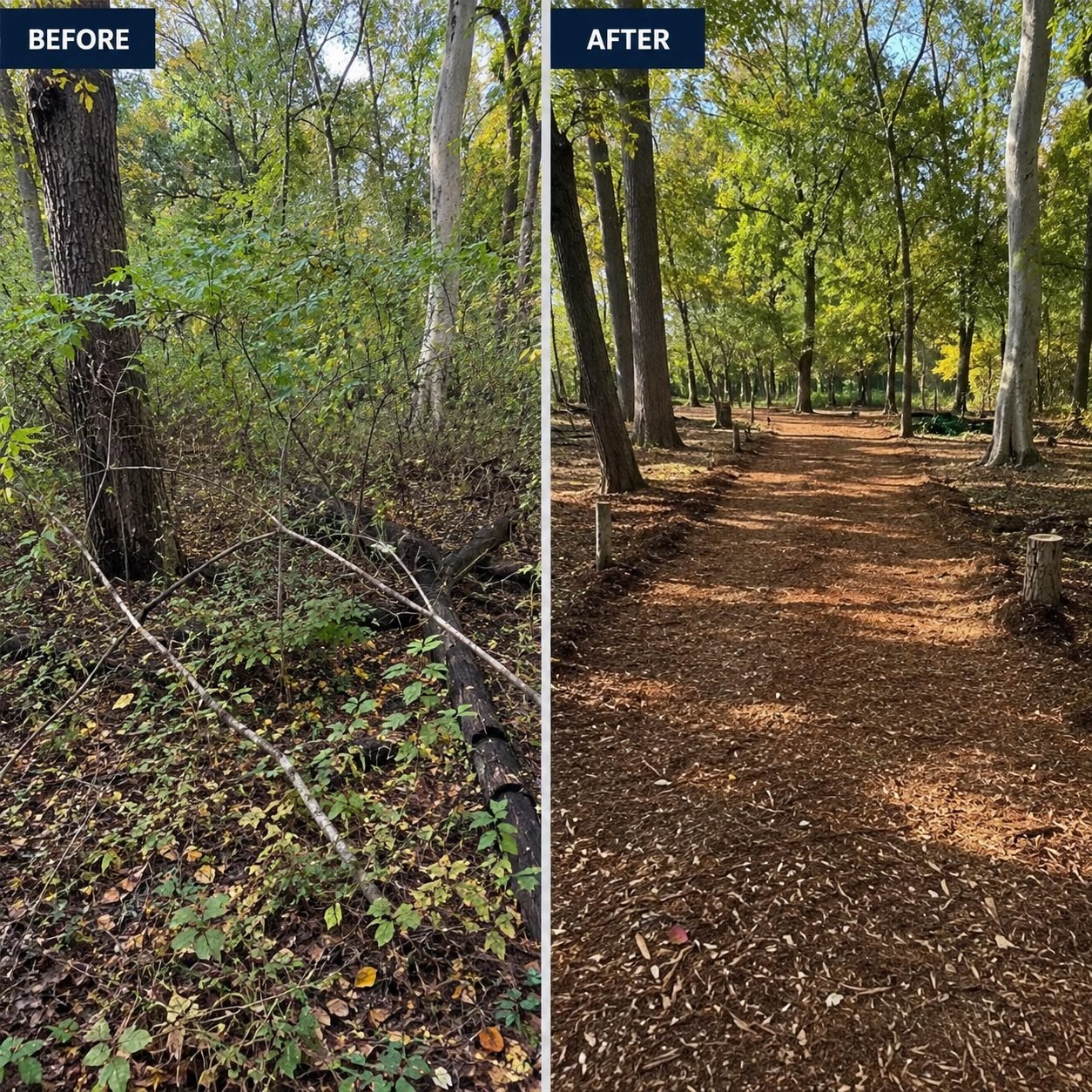
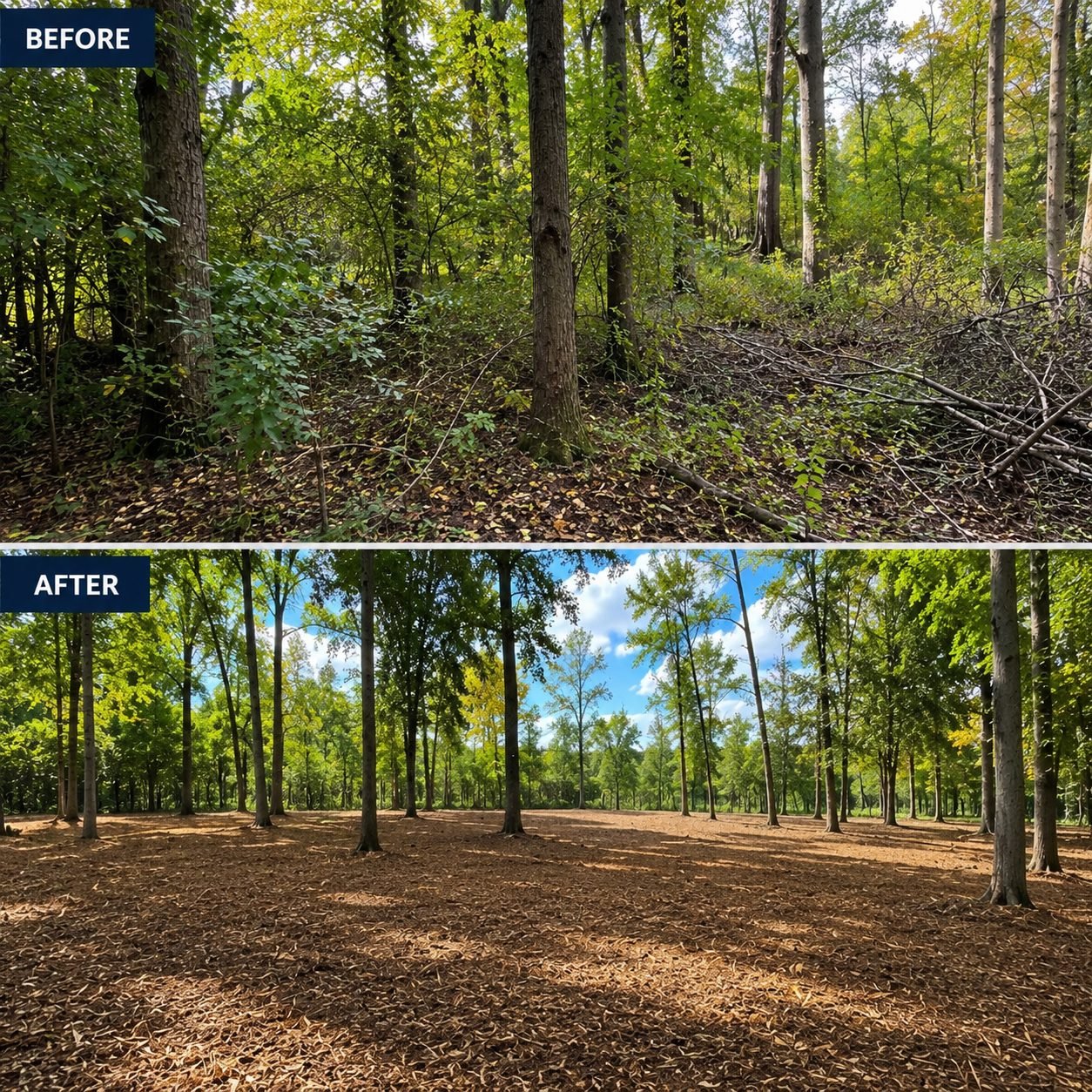
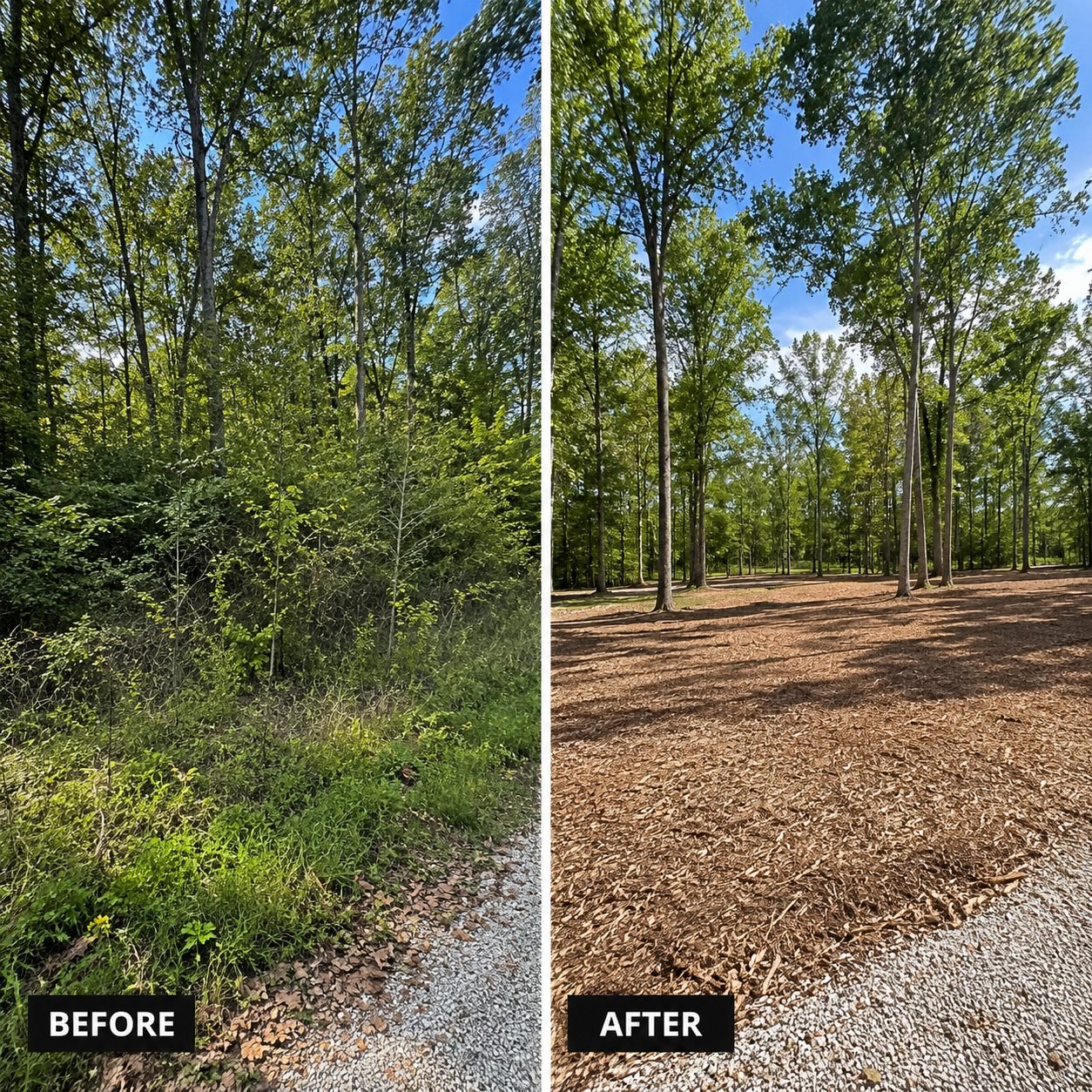
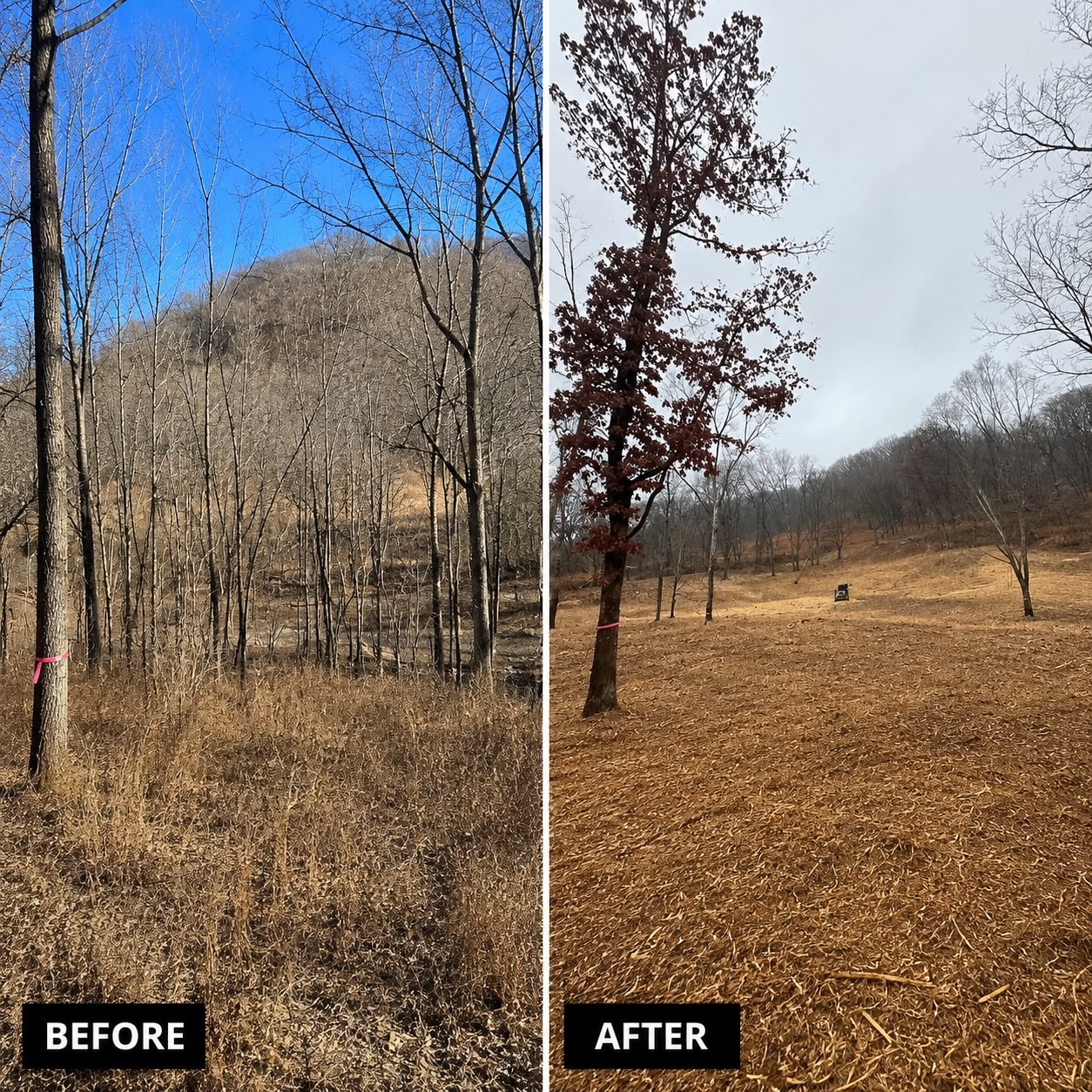
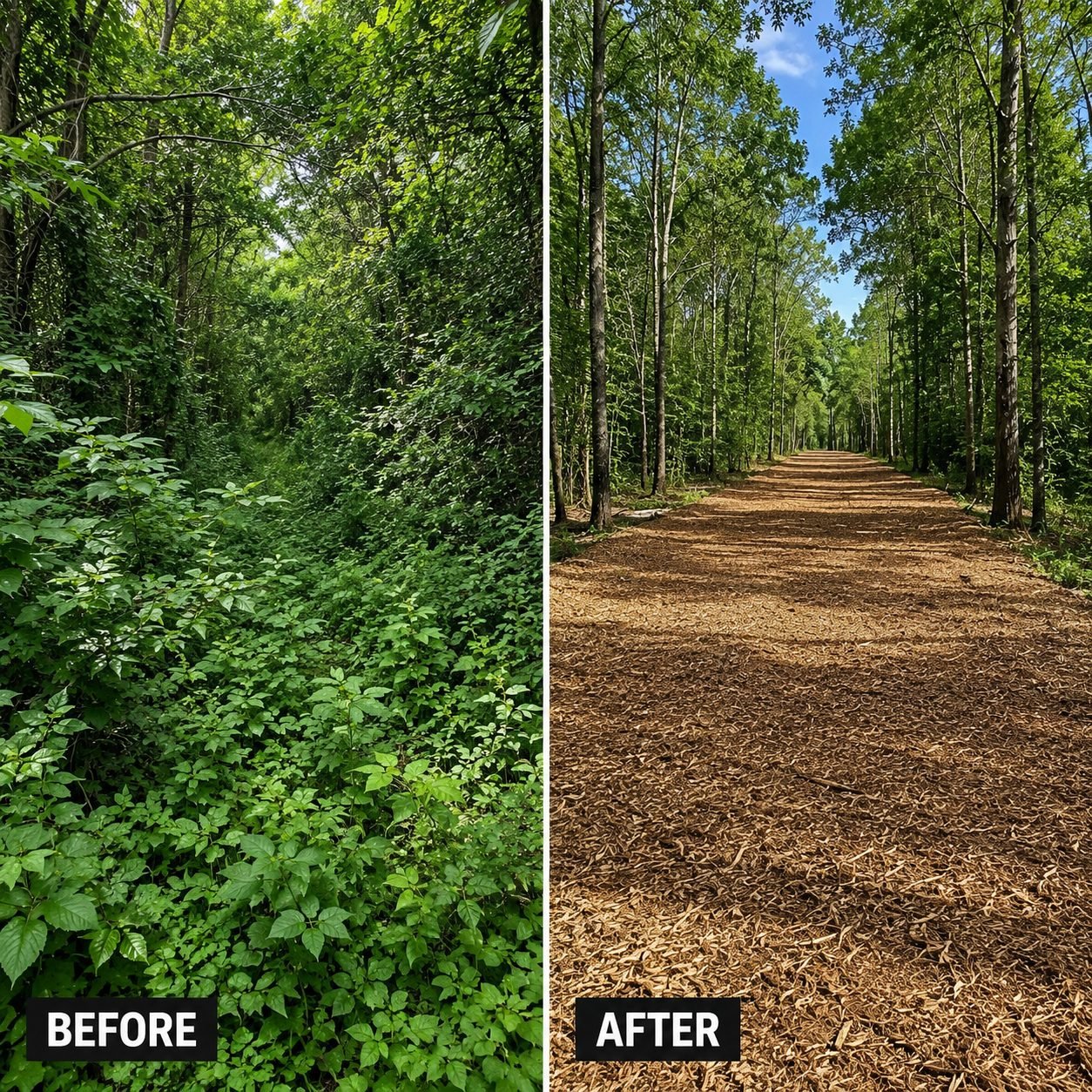
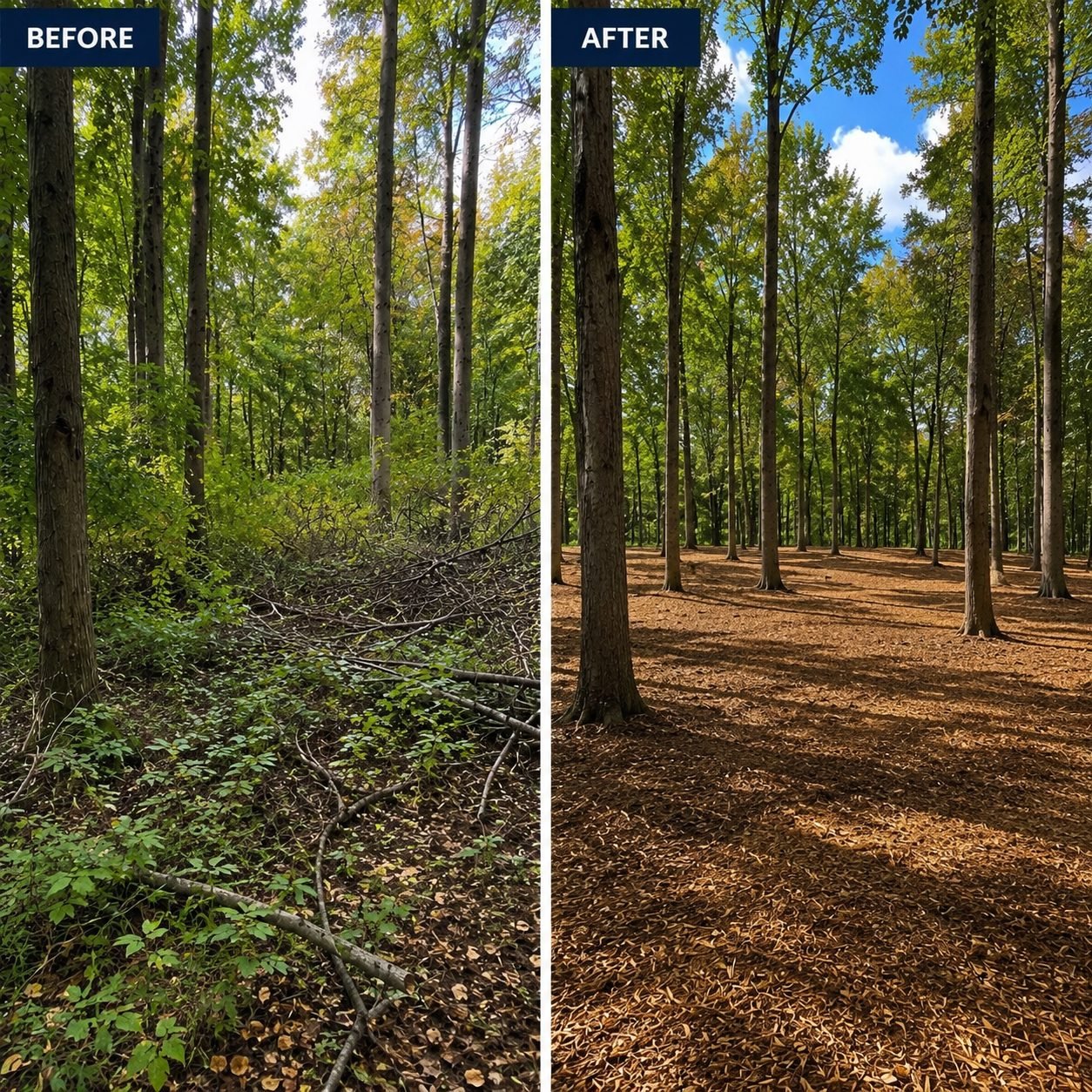
What Does Land Clearing Look Like Before and After in Delaware, Ohio?
Recent Central Ohio jobs. The finished surface keeps a two to four inch mulch layer rather than bare soil, which is what holds ground through the first winter after clearing.
What Do Delaware, Ohio Owners Ask About Land Clearing?
It can, but doing it after clearing means a second mobilisation and a second setup cost for work that was always going to be needed.
Processed on site where possible. Where volume is high, haul-off is quoted separately.
Not on its own. The stormwater threshold applies to the total disturbed area, and the build permit covers the pad.
Deep enough to remove the root ball, which varies with species and stem size rather than a fixed depth.
Yes, backfilled and compacted as part of the work. Leaving it open just moves the settlement problem later.
On one or two small stumps, with the right machine. Across a footprint it is not realistic hand work.
What Else Can Fortress Do on a Delaware, Ohio Property?
Land clearing, forestry mulching, excavation, demolition and grading run with the same crew and the same point of contact, so a Delaware job that needs two trades does not wait on a second schedule.
Soil depth, slope class and erosion factor for any Delaware parcel are published in the USDA NRCS Web Soil Survey (accessed August 2026).
Ready for a Flat Rate on Your Delaware, Ohio Land Clearing?
Owner-operated land clearing across all five Central Ohio counties. Send your property details and Lee gets back to you within 2 to 3 hours during business hours with one flat number after a free on-site walk-through.