

Does Land Clearing Prepare Sunbury, Ohio Ground for Pasture?
Land clearing prepares Sunbury, Ohio ground for pasture directly. Cleared field is usable for grazing almost immediately, and the mulch layer breaks down into topsoil across two to three seasons rather than needing to be removed before livestock go on.
From cleared field to pasture
- Grazing can start almost immediately. The mulch does not need removing first.
- Existing pasture grass with a surviving root base recovers quickly on its own.
- Where the field was fully taken over, autumn seeding is worth the cost.
- The mulch layer becomes topsoil across two to three seasons.
- Stump grubbing is not needed under pasture. Root balls rot down harmlessly.
- The second-season follow-up on resprouts is what keeps the pasture open.
What Else Do People Ask About Land Clearing in Sunbury, Ohio?
Almost immediately after the work. The surface is walkable and the mulch is not a hazard to stock.
Yes, and existing root base comes through quickly. A thick layer slows new seed until it settles.
No. Under grazing they rot down without causing any problem, so grubbing is wasted cost.
Autumn, into settled mulch. Seeding straight into fresh thick mulch gives poorer establishment.
How Quickly Can Cleared Sunbury, Ohio Ground Carry Livestock?
Almost immediately. The mulching pass leaves a walkable surface with no standing hazards, and there is nothing about the mulch layer that has to break down before stock can use the field.
What determines grazing value is what comes up rather than what is on the surface. Where pasture grass survived under the invasive canopy, it recovers fast once light returns.
Where the field was fully taken over for a decade or more, the grass base may be gone and seeding is the honest answer rather than waiting and hoping.
The first spring tells you which situation you have, which is a good reason not to spend on seed before you have seen it.
What Does the Mulch Layer Do for Sunbury, Ohio Pasture?
It suppresses the weed seedling flush that follows any disturbance, holds moisture through the first summer, and breaks down into topsoil across two to three seasons. On retired ground with depleted soil that last part matters.
Removing it would cost money and take organic matter off a field that generally needs more of it, not less.
The one trade-off is that a thick layer slows new seed establishment while it is fresh, which is why autumn seeding into a settled layer works better than seeding immediately.
Across the following seasons the layer thins visibly as it incorporates, and by the third year it is soil rather than surface cover.
What Keeps Sunbury, Ohio Pasture Open After Clearing?
The second-season follow-up and then ordinary grazing management. Autumn olive resprouts from the crown in year one, and handling the strongest regrowth is what stops the field returning to what it was.
Once that is done, grazing pressure and routine mowing genuinely do maintain open ground. The reason mowing failed before was that it was fighting an established stand rather than maintaining a clear field.
Boundaries need watching. Where the parcel adjoins untreated ground, seed pressure comes steadily from the fence line inward.
Spot-treating new seedlings while they are small is an afternoon a year against another clearing pass in a decade. See forestry mulching.
How Do Sunbury, Ohio Invasives Respond to One Clearing Pass?
What grows on retired Sunbury cropland and how each species behaves after a single mulching pass. Autumn olive is the one that reliably needs a second season.
| Species | Where it takes hold | After one pass | Second season |
|---|---|---|---|
| Autumn olive | Open retired cropland | Removed to ground | Resprouts hard, plan for it |
| Multiflora rose | Old fence lines | Removed to ground | Moderate regrowth |
| Bush honeysuckle | Field edges, treelines | Removed to ground | Light regrowth |
| Common buckthorn | Shaded margins | Removed to ground | Light regrowth |
| Callery pear | Field boundaries | Removed to ground | Resprouts, treat stumps |
| Volunteer boxelder | Wet corners | Removed to ground | Light |
| Established pasture grass | Open field | Retained | Recovers quickly |
Species behaviour recorded by Fortress Level Construction across Delaware County agricultural work, August 2026. Bush honeysuckle, autumn olive and multiflora rose are listed among the species restricted in Ohio by the Ohio Department of Natural Resources and the Ohio Department of Agriculture Division of Plant Health (both accessed August 2026).
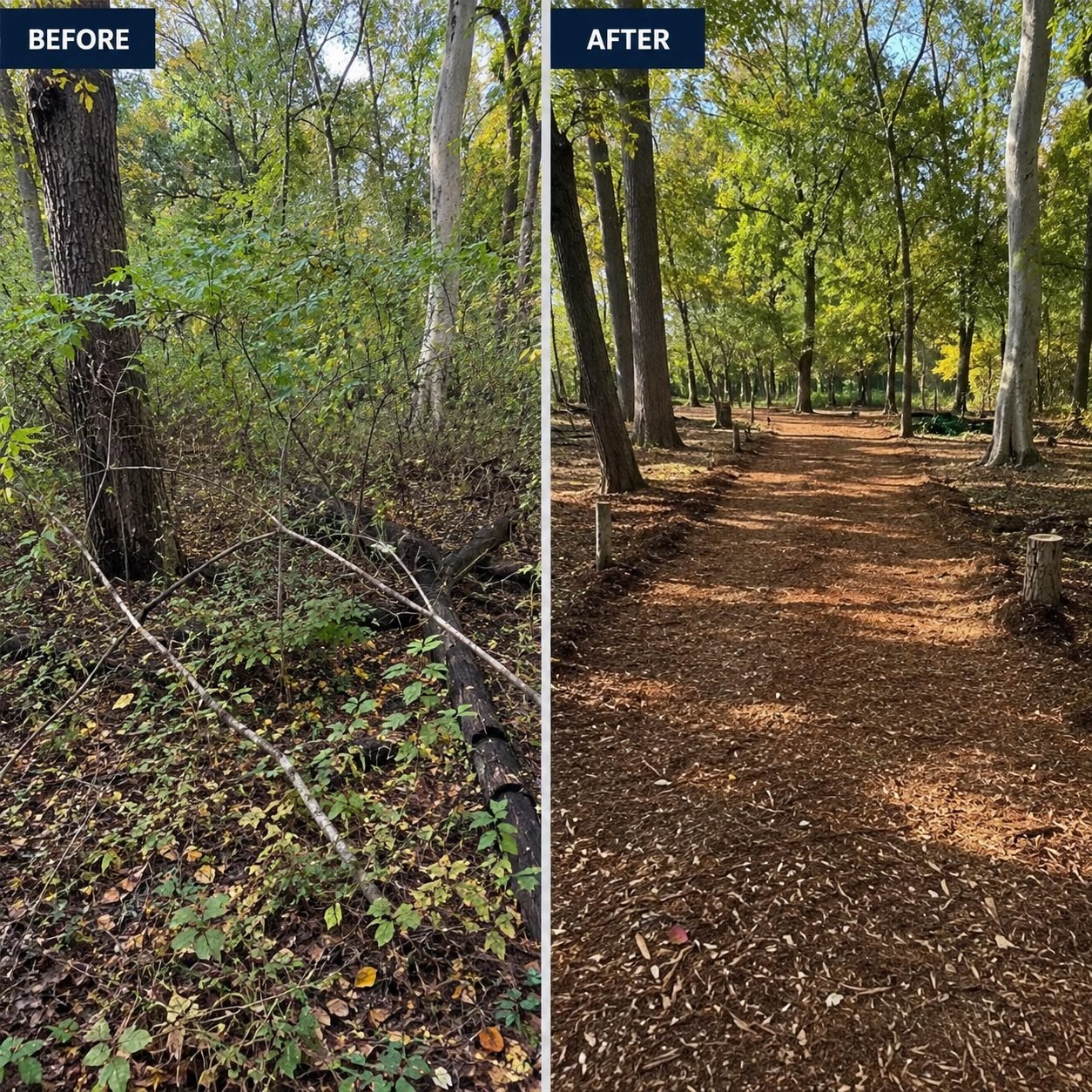
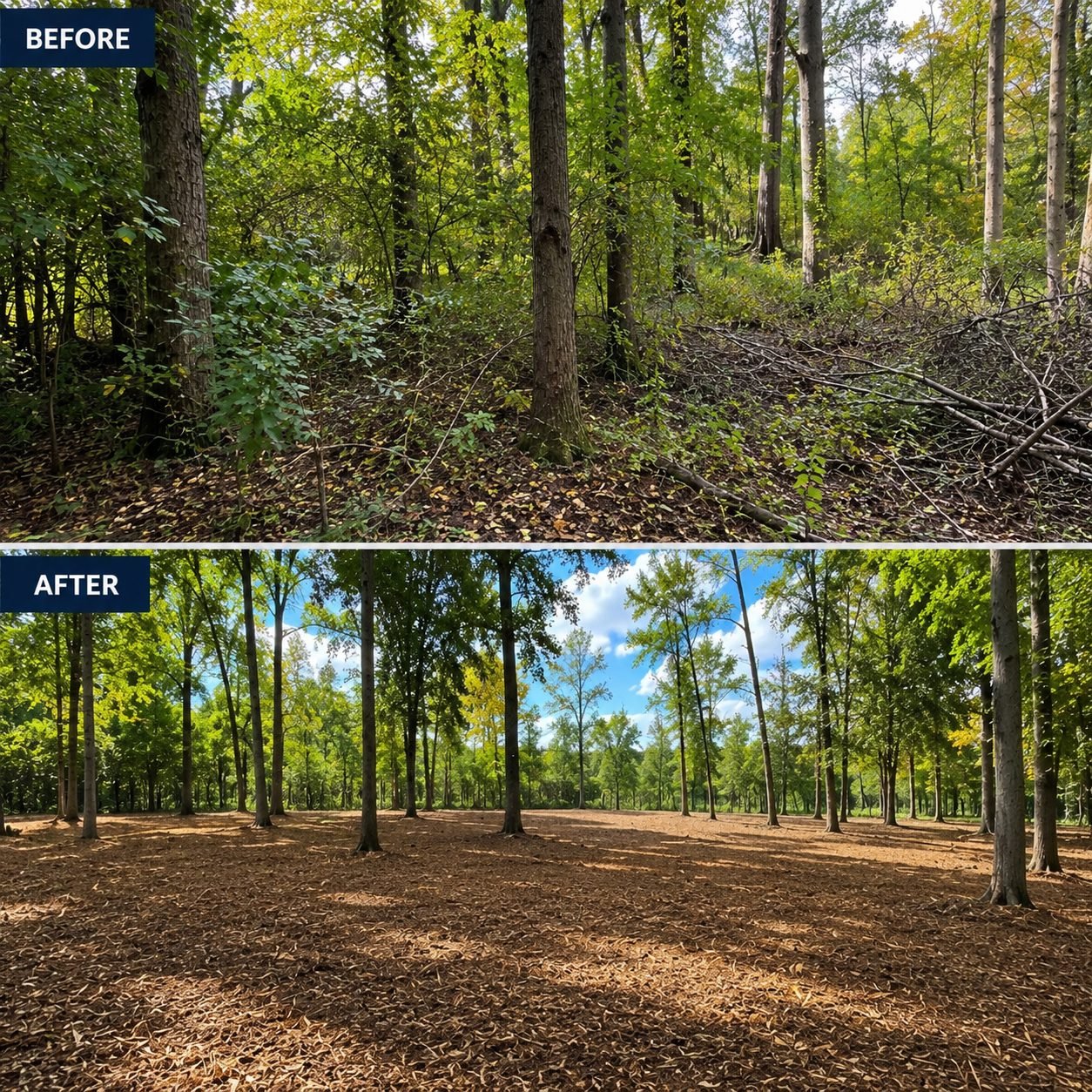
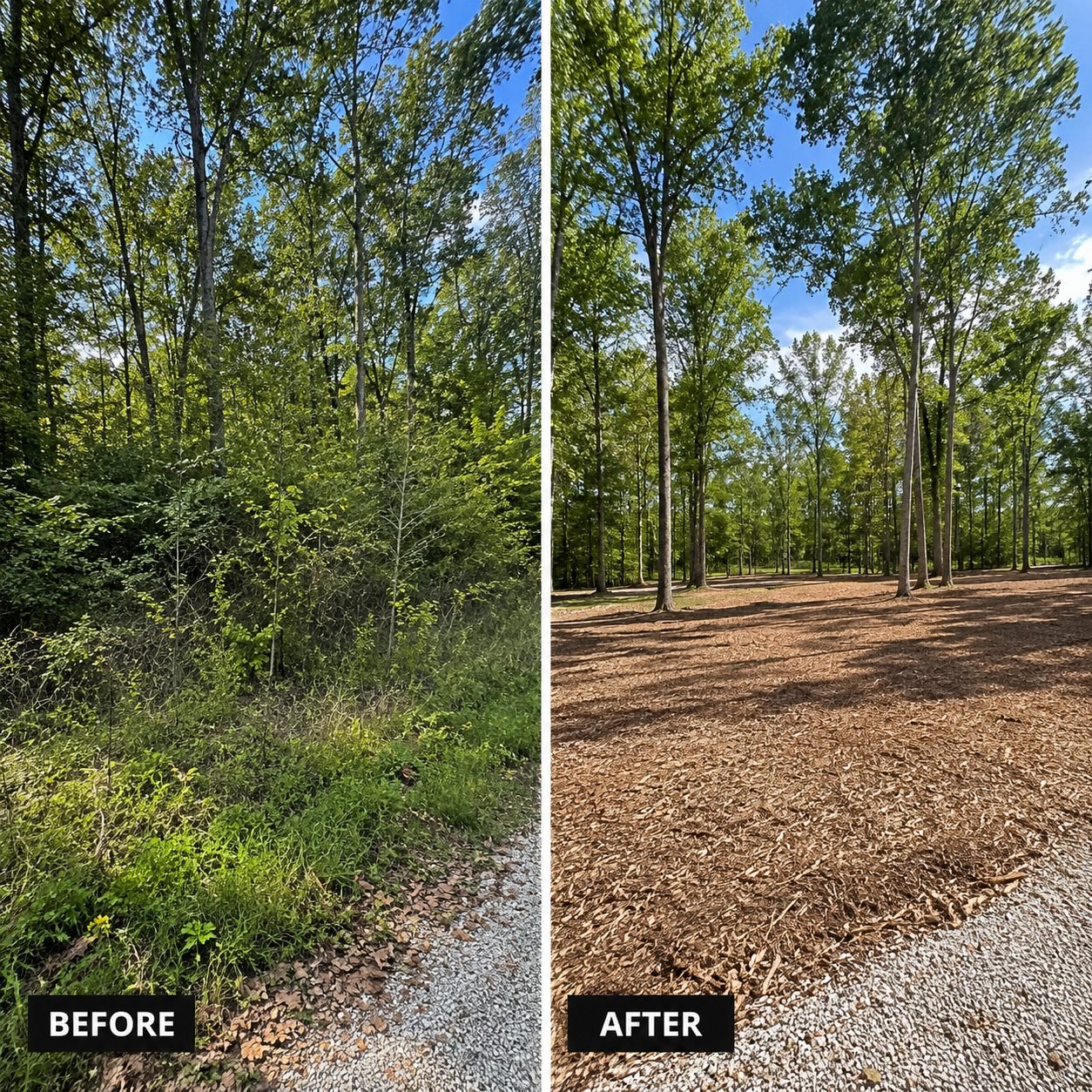
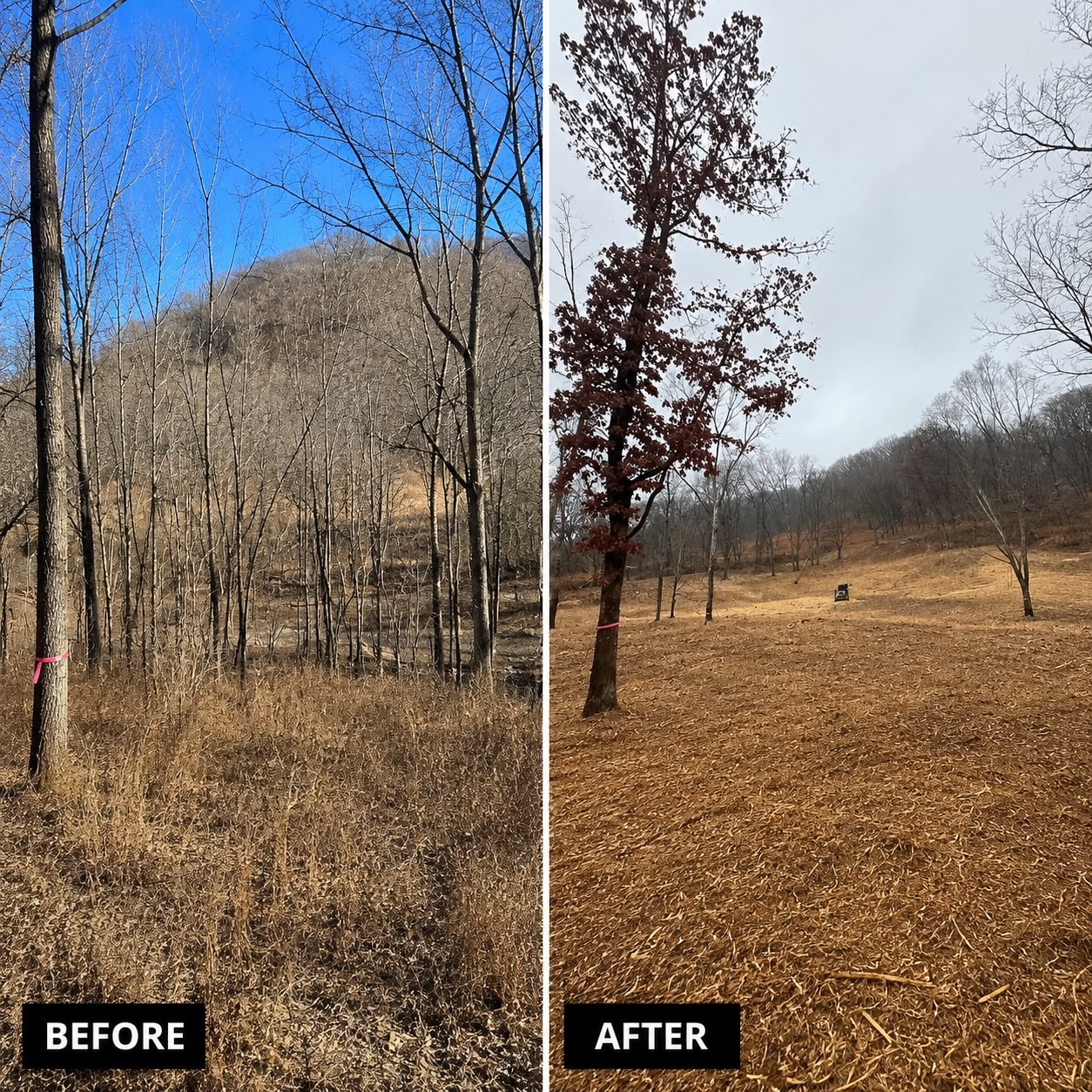
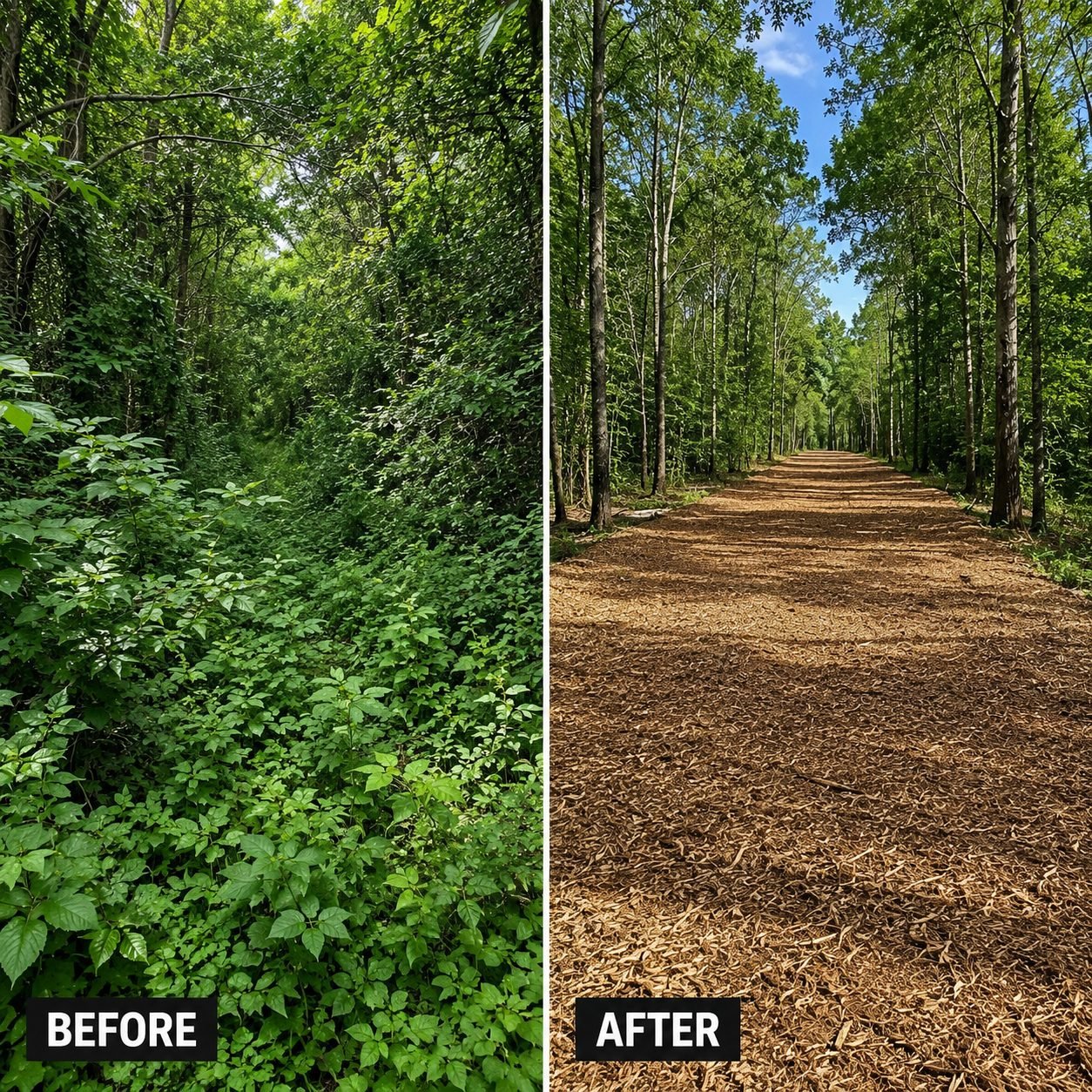
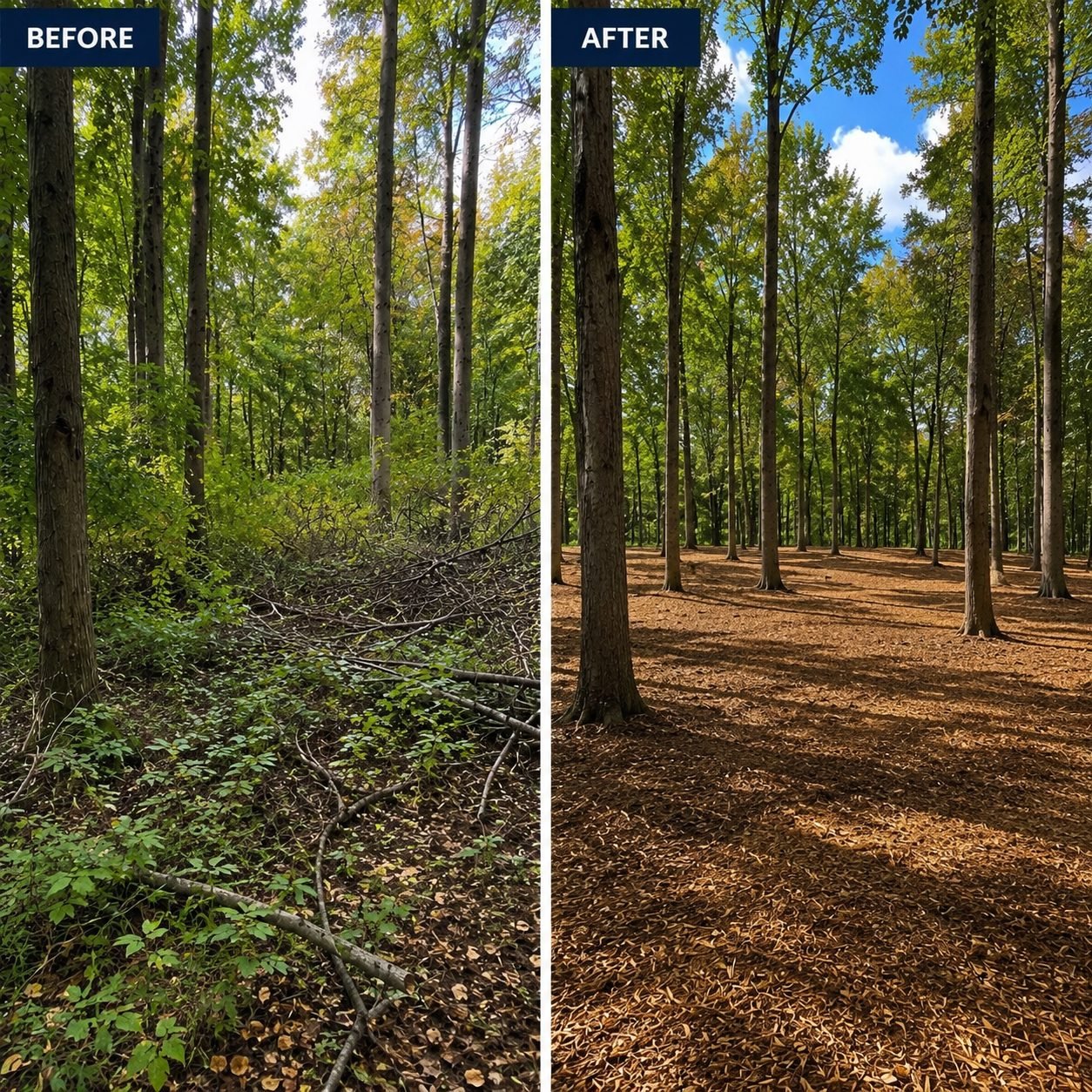
What Does Land Clearing Look Like Before and After in Sunbury, Ohio?
Recent Central Ohio jobs. The finished surface keeps a two to four inch mulch layer rather than bare soil, which is what holds ground through the first winter after clearing.
What Do Sunbury, Ohio Owners Ask About Land Clearing?
Yes. It is ground woody material spread as surface cover, with no standing stems left to injure stock.
Wait one spring on ground that had pasture before. Seed in autumn once you know what the existing base produces.
Cropping and haying need a settled surface, so allow a season. Grazing does not.
Test rather than assume. Retired ground varies, and the mulch adds organic matter over time regardless.
Worth clearing at the same time. Opening one gives usable field width back immediately.
One to two growing seasons where the grass base survived, longer where seeding was needed.
What Else Can Fortress Do on a Sunbury, Ohio Property?
Land clearing, forestry mulching, excavation, demolition and grading run with the same crew and the same point of contact, so a Sunbury job that needs two trades does not wait on a second schedule.
Bush honeysuckle, autumn olive and multiflora rose are listed among the species restricted in Ohio by the Ohio Department of Natural Resources and the Ohio Department of Agriculture Division of Plant Health (both accessed August 2026). Soil depth, slope class and erosion factor for any Sunbury parcel are published in the USDA NRCS Web Soil Survey (accessed August 2026).
Ready for a Flat Rate on Your Sunbury, Ohio Land Clearing?
Owner-operated land clearing across all five Central Ohio counties. Send your property details and Lee gets back to you within 2 to 3 hours during business hours with one flat number after a free on-site walk-through.