

Does Land Clearing Remove Multiflora Rose in Pataskala, Ohio?
Land clearing removes multiflora rose in Pataskala, Ohio in a single pass, taking a boundary decades thick down to ground level. It is slow going because the material is dense, and it gives usable field width back the same day.
Rose on Pataskala boundaries
- Multiflora rose on old boundaries is the recurring Pataskala job.
- One pass takes a row decades thick down to ground level.
- It is slow work because the material is dense and thorny, not because it resists.
- Regrowth is moderate, well below autumn olive, and a light follow-up settles it.
- Hand clearing rose is genuinely miserable and rarely finishes.
- Field width returns the day the row is cleared.
What Else Do People Ask About Land Clearing in Pataskala, Ohio?
Fifteen feet deep and impenetrable after twenty years without intervention. It grows into itself.
Moderate regrowth in the first season. Lighter than autumn olive, and a follow-up pass settles it.
Physically possible on a short run and genuinely unpleasant. Across a boundary it rarely gets finished.
No. Cutting triggers replacement stems, so annual mowing thickens the row rather than holding it.
Why Does Multiflora Rose Take Over Pataskala, Ohio Boundaries?
Because a fence row is the one part of a farmed parcel nothing ever disturbs. The field is worked every year and the boundary is mowed around rather than through, so the row becomes the only refuge on the parcel and rose fills it.
It grows into itself, forming a dense thorny mass that eventually nothing can walk through and no deck can cut.
Once stems pass roughly two inches a bush hog goes around rather than through them, so the largest plants are the ones never touched by decades of mowing.
That is why an owner can describe mowing the boundary every year and still have a row fifteen feet deep. The two facts are connected rather than contradictory.
What Does One Pass Do to Pataskala, Ohio Rose?
Takes it to ground level regardless of how thick the row is. A mulching head processes the whole stem structure rather than trimming what it can reach, so density slows the work without changing the outcome.
It is slow going compared with open field, which is why fence line work is quoted per run rather than folded into a per-acre field rate.
The result is immediate. The row is gone, the fence is visible, and the working width of the field either side comes back the same day.
Material is mulched and left along the line as cover rather than piled or burned, since open burning is restricted here. See brush clearing.
Does Multiflora Rose Return After Clearing in Pataskala, Ohio?
Some regrowth appears in the first season, moderate rather than aggressive. Rose resprouts from the crown like most of these species, but it comes back considerably lighter than autumn olive does on open ground.
A light follow-up pass in the second season handles it, and it costs a fraction of the original run because there is a fraction of the material.
Cut-stump treatment during the first pass is the single-visit alternative and is the owner’s choice rather than a default.
After that, keeping the row clear is ordinary maintenance rather than a project, because you are holding open ground instead of fighting an established stand.
What Does Fence Line Clearing Recover on Pataskala, Ohio Ground?
Field width returned by opening an overgrown boundary on Pataskala parcels. An old fence row takes production from both sides, and the recovery is immediate rather than gradual.
| Fence row condition | Width lost each side | Recovered per 1,000 ft | Pass needed |
|---|---|---|---|
| Light growth, recently maintained | 2 to 4 ft | 0.1 to 0.2 acres | Single, fast |
| Rose established, 5 to 10 years | 6 to 10 ft | 0.3 to 0.5 acres | Single |
| Rose plus saplings, 10 to 20 years | 10 to 15 ft | 0.5 to 0.7 acres | Single, slow |
| Mature treeline established | 15 to 25 ft | 0.7 to 1.1 acres | Quoted per run |
| Both sides overgrown | Double the above | Double | Single, slow |
| Rose regrowth, season two | Minimal | – | Light follow-up |
| Fence being replaced | Full clear both sides | – | Coordinate with fencing |
Figures published by Fortress Level Construction from Licking County fence line work, August 2026. Bush honeysuckle, autumn olive and multiflora rose are listed among the species restricted in Ohio by the Ohio Department of Natural Resources and the Ohio Department of Agriculture Division of Plant Health (both accessed August 2026).
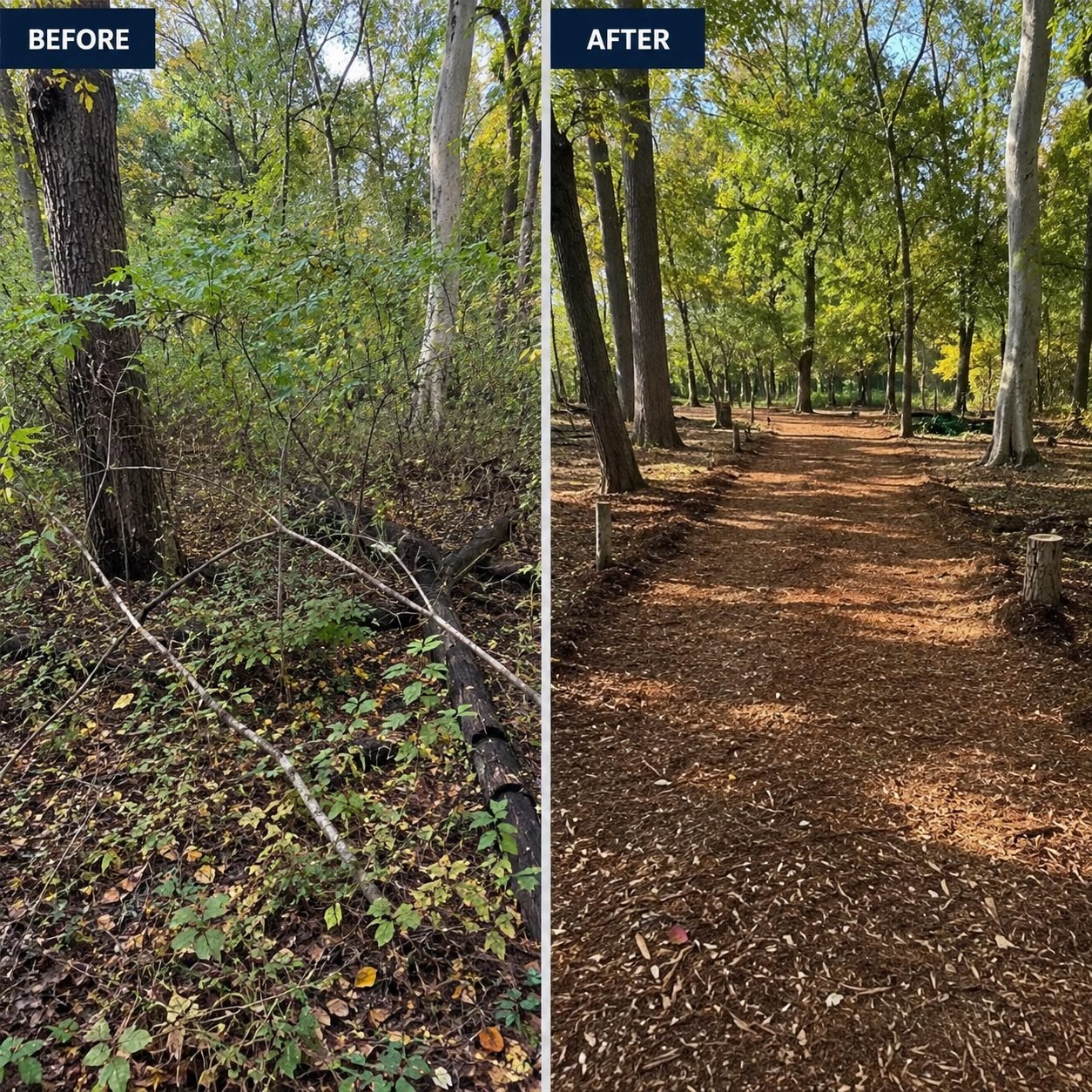
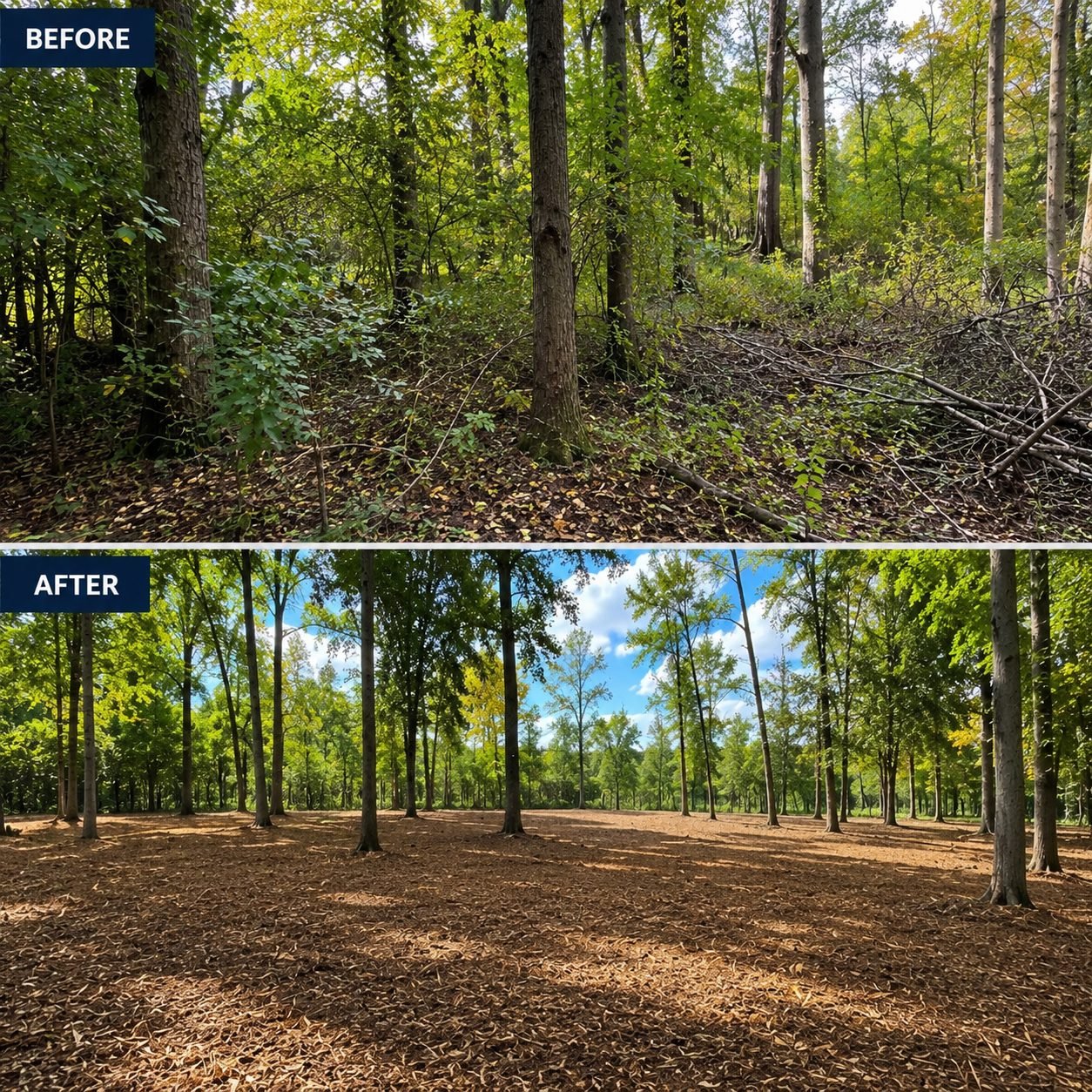
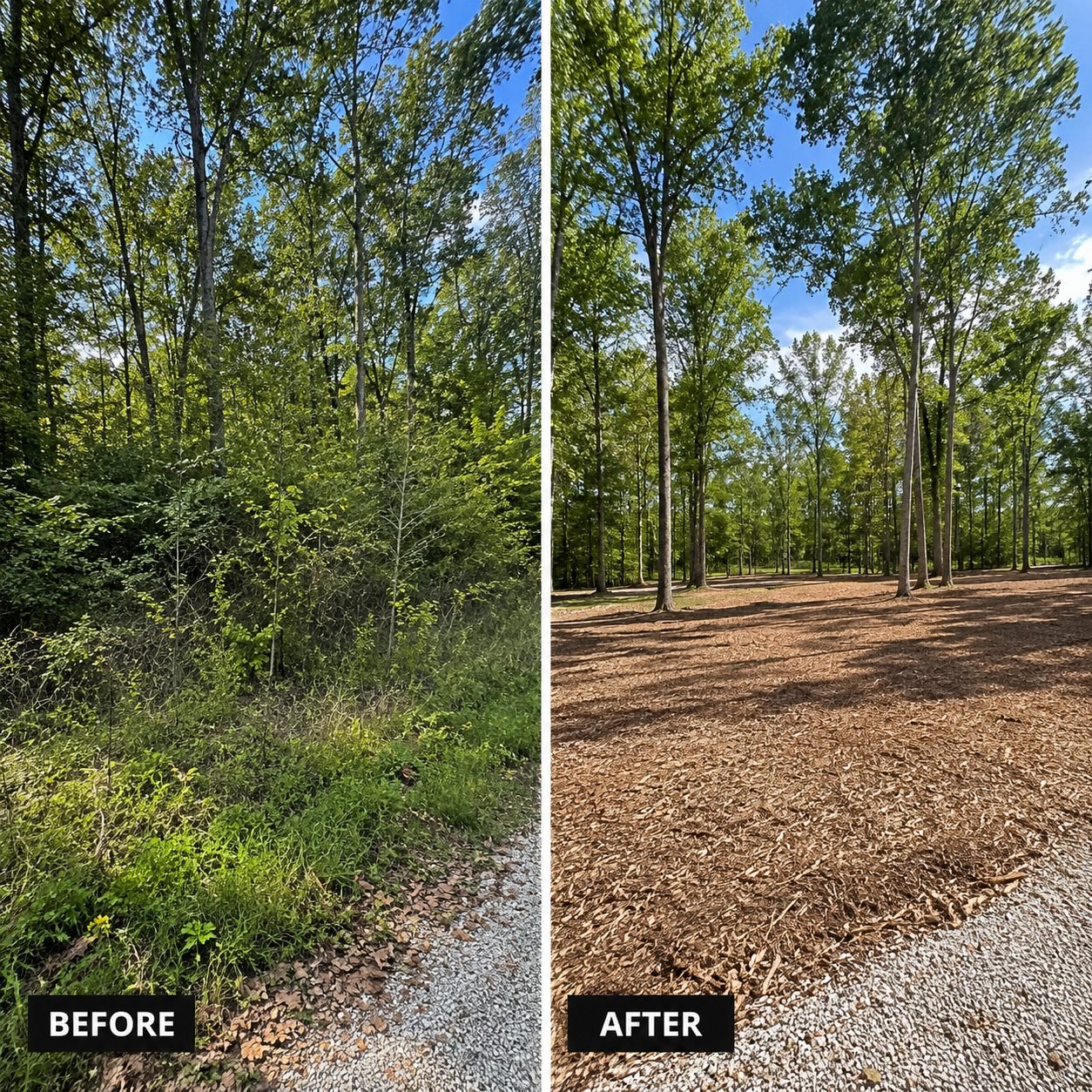
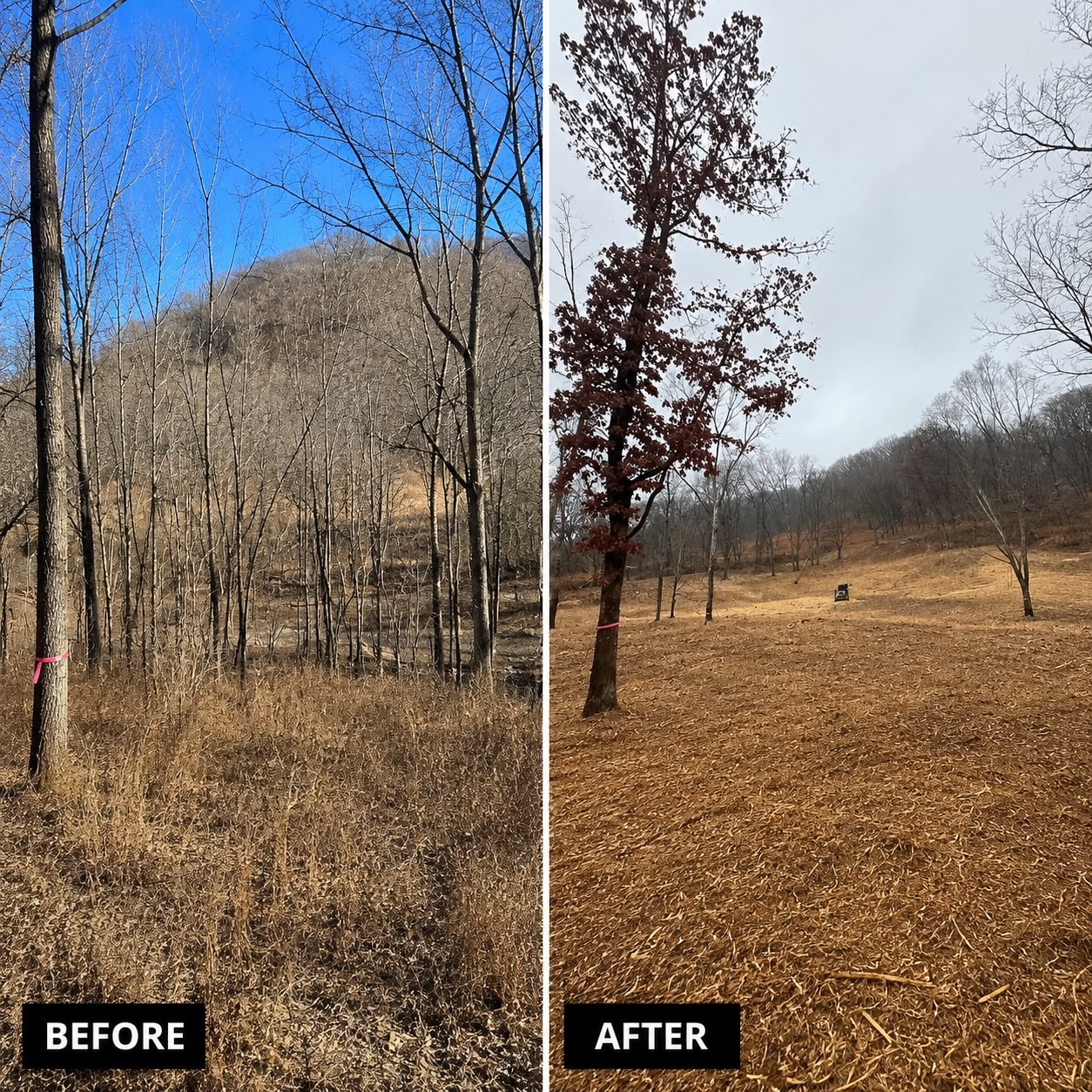
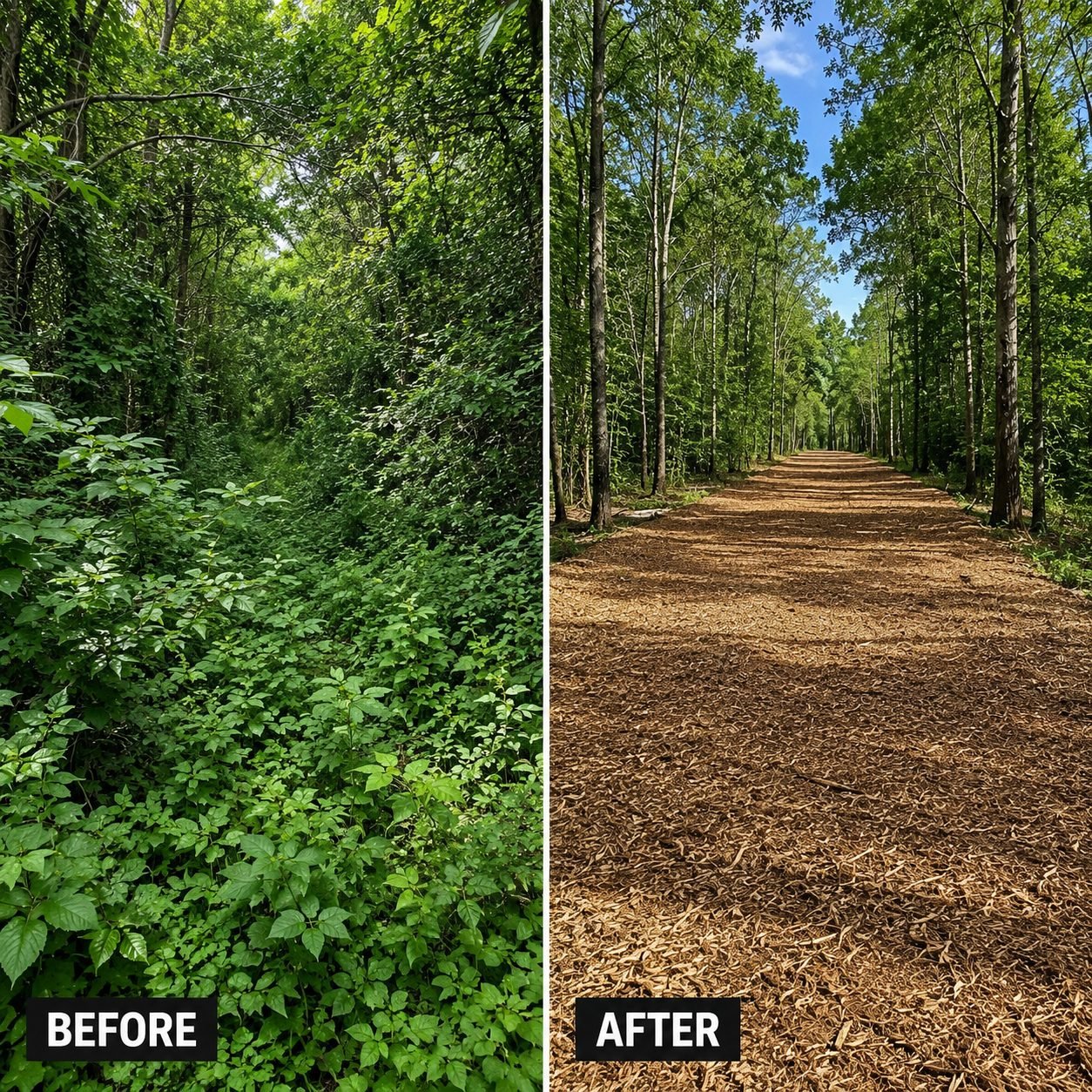
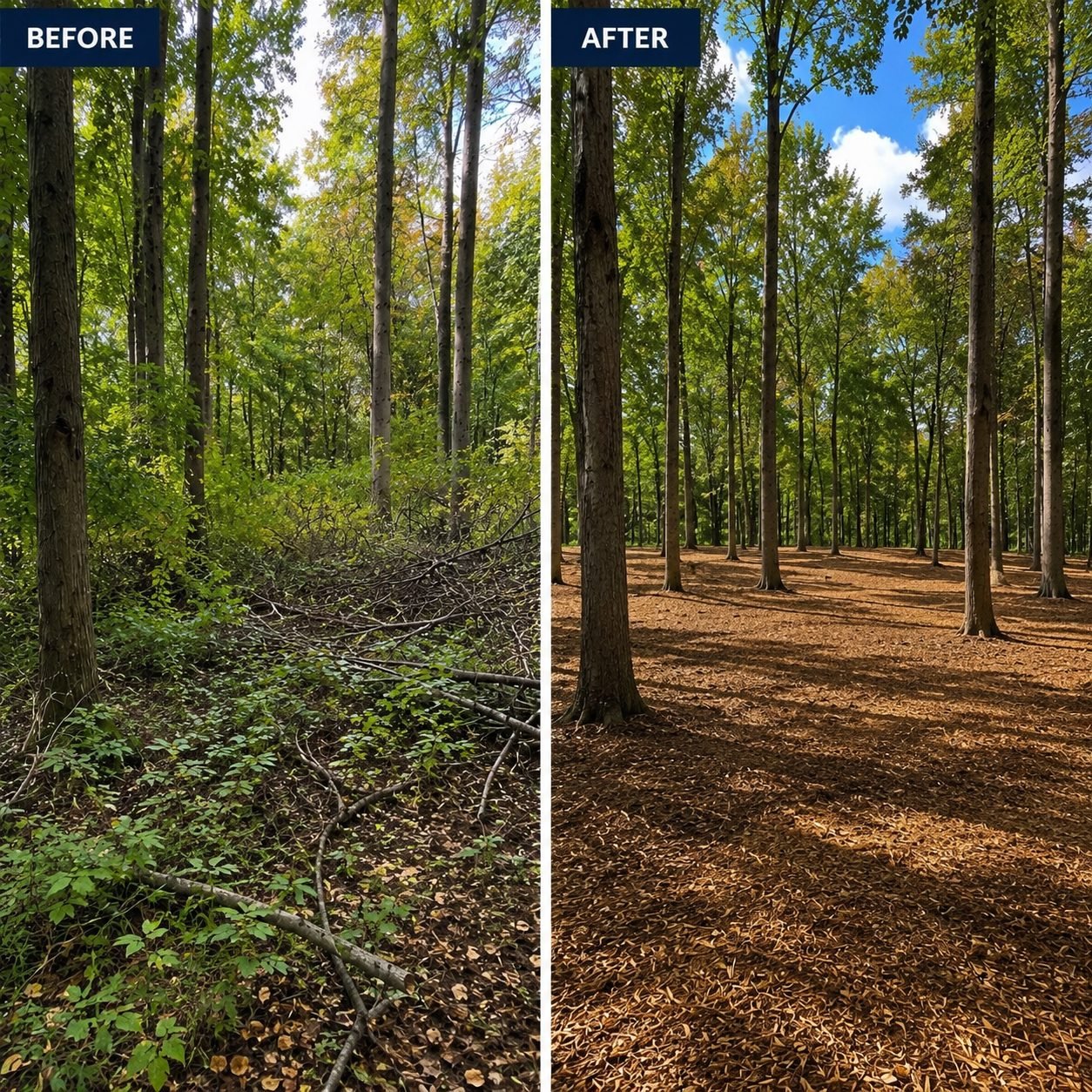
What Does Land Clearing Look Like Before and After in Pataskala, Ohio?
Recent Central Ohio jobs. The finished surface keeps a two to four inch mulch layer rather than bare soil, which is what holds ground through the first winter after clearing.
What Do Pataskala, Ohio Owners Ask About Land Clearing?
Denser and thornier, so harder to work. Honeysuckle spreads further into open ground.
The thorns are a real nuisance and dense rows cut off access to field edges. Clearing solves both.
Yes where it is staying. Work runs to the wire on both sides without disturbing it.
Quoted per run rather than per day, because density varies far more than length does.
Not for the clearing. Cut-stump treatment speeds permanence and is the owner’s choice.
Winter. Frozen ground, no leaves, and the fence line is actually visible to work to.
What Else Can Fortress Do on a Pataskala, Ohio Property?
Land clearing, forestry mulching, excavation, demolition and grading run with the same crew and the same point of contact, so a Pataskala job that needs two trades does not wait on a second schedule.
Bush honeysuckle, autumn olive and multiflora rose are listed among the species restricted in Ohio by the Ohio Department of Natural Resources and the Ohio Department of Agriculture Division of Plant Health (both accessed August 2026).
Ready for a Flat Rate on Your Pataskala, Ohio Land Clearing?
Owner-operated land clearing across all five Central Ohio counties. Send your property details and Lee gets back to you within 2 to 3 hours during business hours with one flat number after a free on-site walk-through.