

How Long Does Land Clearing Take on a Pataskala, Ohio Field?
Land clearing on a Pataskala, Ohio field covers three to five acres a day on flat to gently rolling former cropland. Open ground clears fast because the machine cuts continuously, and the boundaries are what slow the job rather than the field itself.
What sets the pace on a Pataskala field
- Open former cropland clears at 3 to 5 acres a day.
- The fence rows are the slow part, not the field.
- Flat to gently rolling ground means minimal repositioning.
- Soil moisture is the main schedule risk, as everywhere on this clay.
- Twenty acres of open field is roughly 4 to 7 working days.
- Frozen ground is the fastest and cleanest working window.
What Else Do People Ask About Land Clearing in Pataskala, Ohio?
The machine cuts in long uninterrupted passes rather than repositioning around obstacles.
The boundaries. Dense rose rows are slow work compared with the open ground either side of them.
Four to seven working days on open ground, plus separate time for the fence rows if included.
Saturated clay does. Light rain on draining ground is workable.
Why Does Pataskala, Ohio Field Ground Clear Quickly?
Because it is flat to gently rolling with nothing in the way. The machine cuts in long uninterrupted passes at three to five acres a day, which is the fastest working condition available anywhere in the service area.
Former cropland is the ideal case. There are no structures to work around, no slope to reduce safe pace, and the growth across the middle is usually light compared with the boundaries.
That is the opposite of a wooded suburban lot, where the same machine covers one to two acres a day because every pass is short and obstructed.
It is also why per-acre rates on Pataskala field ground sit below what a small wooded parcel costs. The pace is genuinely different.
What Actually Slows a Pataskala, Ohio Field Job?
The fence rows. A boundary carrying twenty years of multiflora rose is the densest material on the parcel and takes disproportionate time relative to its area, which is why it is quoted separately per run.
Owners are often surprised that forty acres of open field and a thousand feet of overgrown boundary can be comparable amounts of work.
Any volunteer treeline that has established across a corner behaves the same way. Open ground is fast; anything with stem density is not.
Splitting the quote between field and boundary makes that visible, so an owner can decide whether the rows are worth doing now or later.
How Should a Pataskala, Ohio Field Job Be Scheduled?
Between harvest and planting, on frozen ground where possible. That window fits the farming calendar, gives the cleanest surface, and avoids the saturated spring clay that is the main schedule risk on this ground.
Frozen soil carries the machine with almost no rutting. The same field worked in March ruts badly and the repair costs more than waiting would have.
Leaves down is a secondary advantage. Boundary pins, drainage lines and the actual fence become visible, which matters when the work runs to a property line.
A forty acre job splits comfortably across two windows if the farming calendar suits that better than one continuous block.
How Fast Does Pataskala, Ohio Ground Clear?
Daily coverage by ground type on Pataskala parcels. Open field is the fastest working condition in the service area; the boundaries are the slowest.
| Ground type | Acres per day | 20 acres takes | Main constraint |
|---|---|---|---|
| Flat open cropland, light growth | 4 to 5 | 4 to 5 days | Very little |
| Open field, medium growth | 3 to 4 | 5 to 7 days | Material volume |
| Gently rolling field | 3 to 4 | 5 to 7 days | Minor repositioning |
| Volunteer treeline across a corner | 1 to 2 | – | Stem density |
| Overgrown fence row | Quoted per run | – | Density, narrow line |
| Saturated clay, any type | Reduced or stopped | Weather dependent | Rutting |
| Frozen ground | Best case | Fastest window | Daylight |
Coverage figures published by Fortress Level Construction from its Licking County operation, August 2026. Soil depth, slope class and erosion factor for any Pataskala parcel are published in the USDA NRCS Web Soil Survey (accessed August 2026).
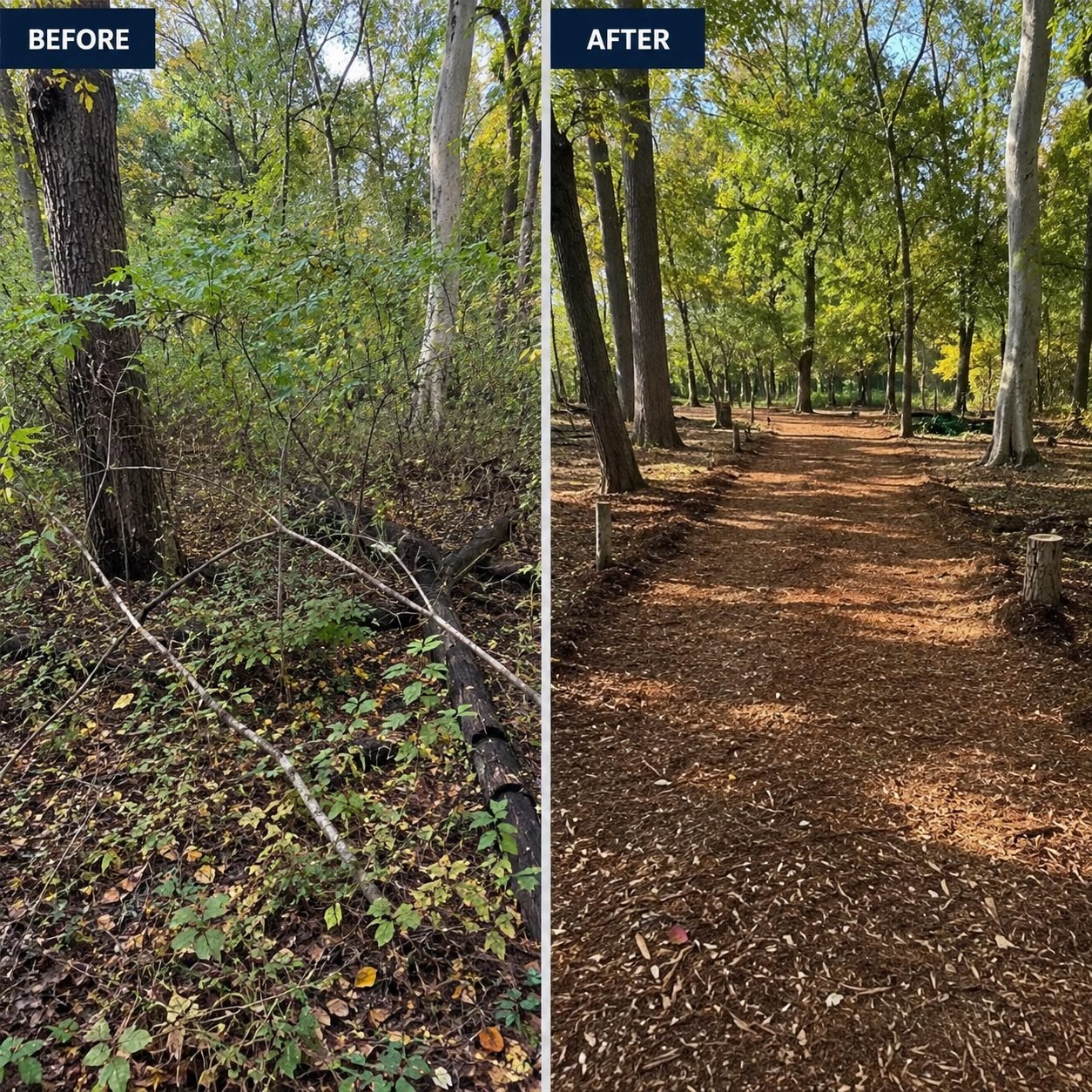
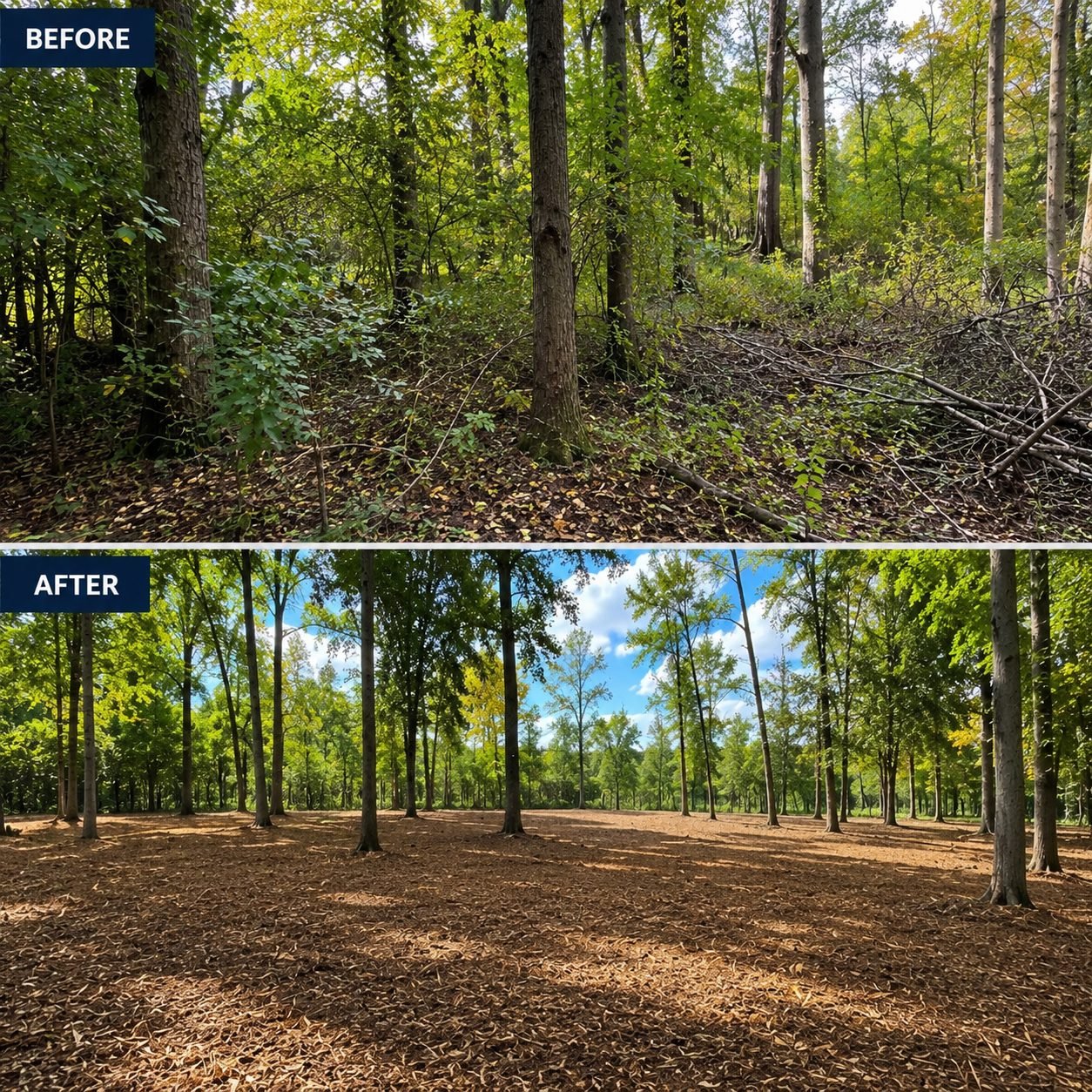
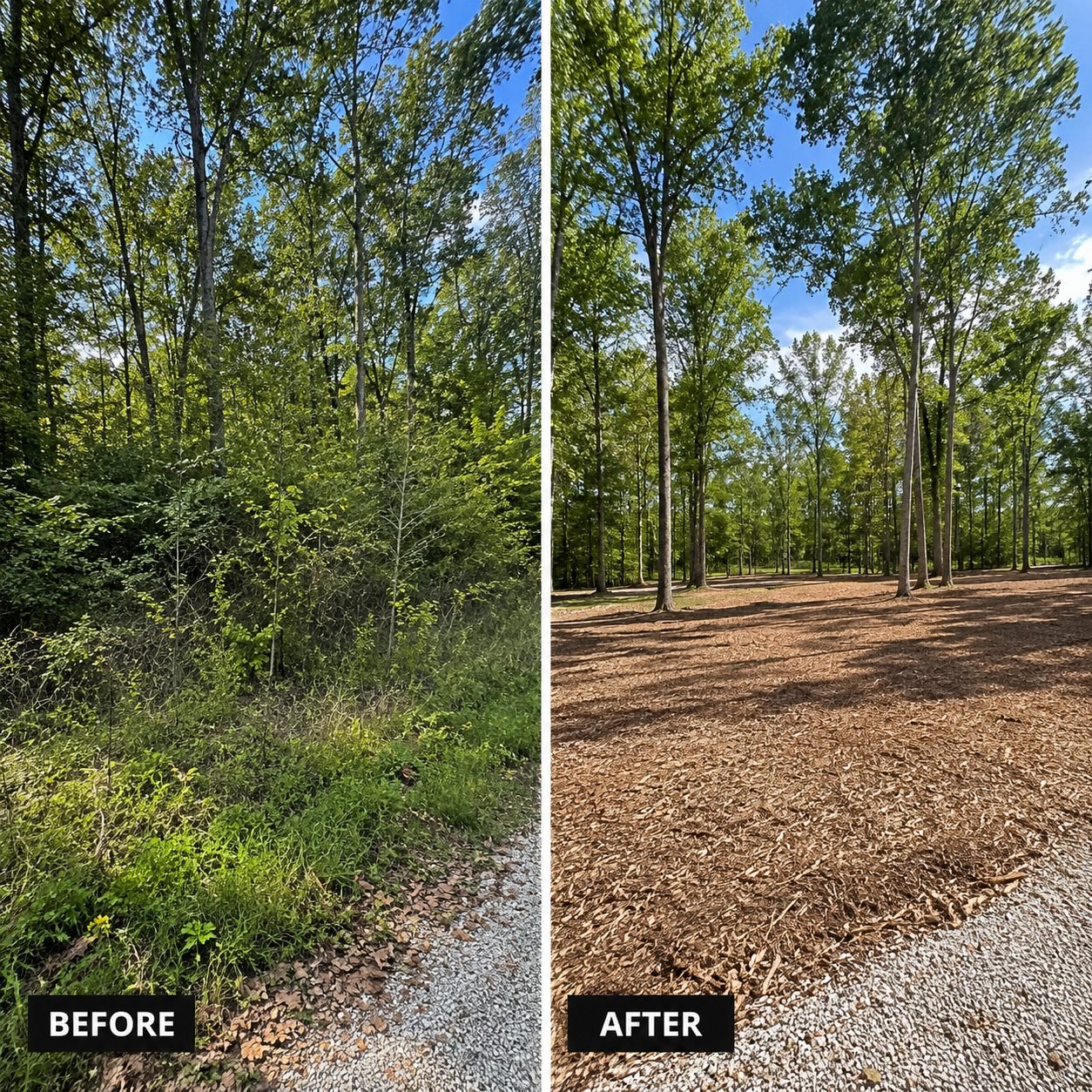
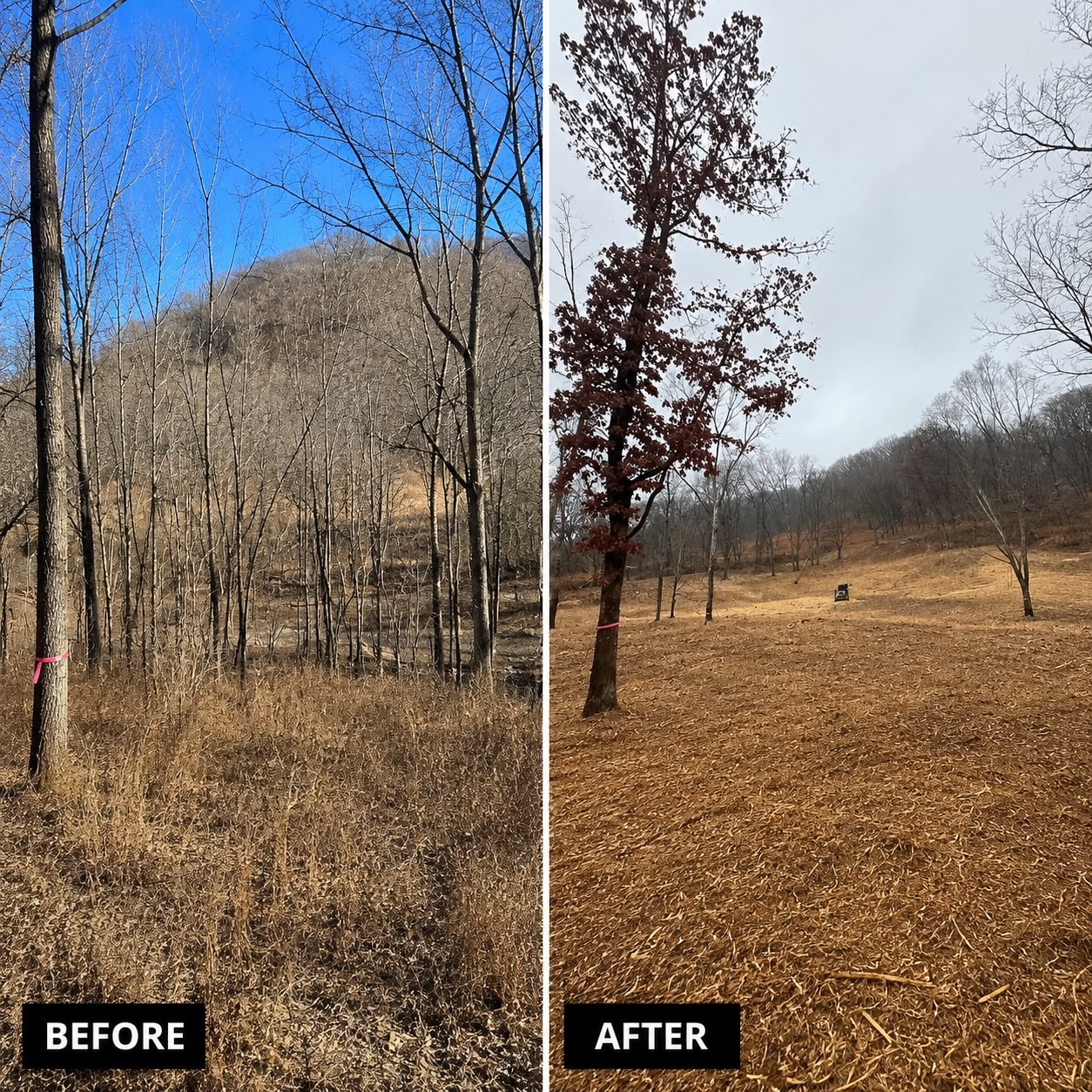
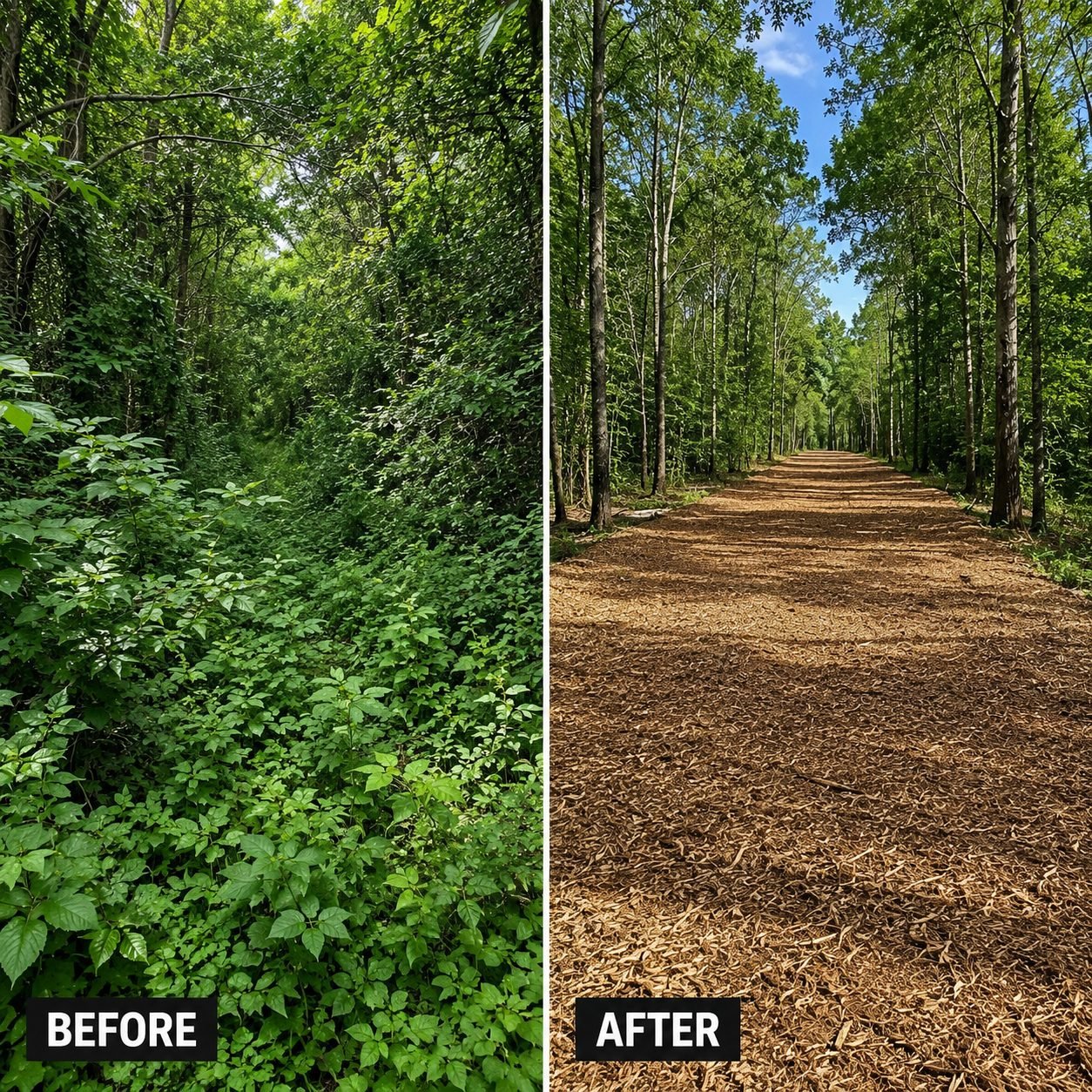
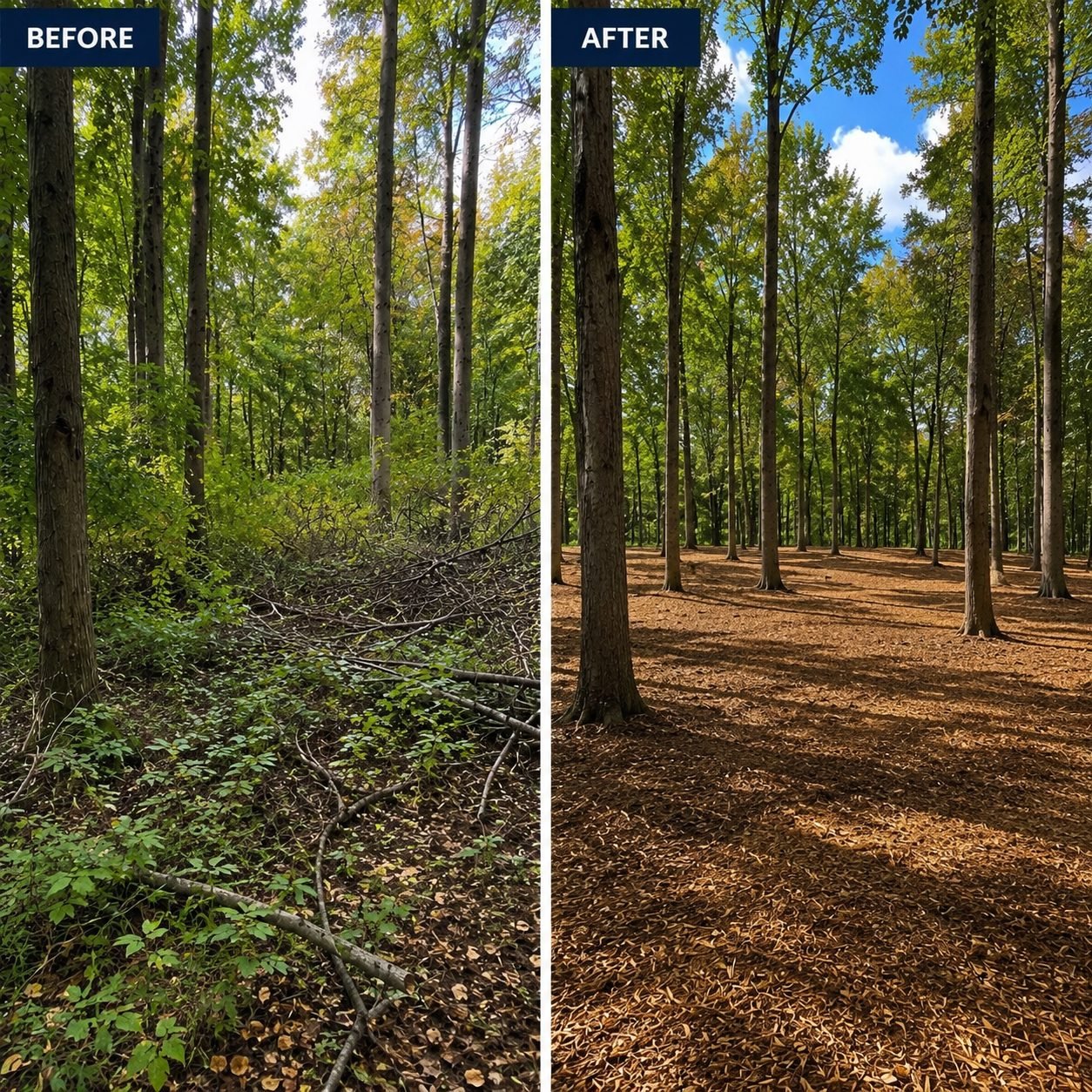
What Does Land Clearing Look Like Before and After in Pataskala, Ohio?
Recent Central Ohio jobs. The finished surface keeps a two to four inch mulch layer rather than bare soil, which is what holds ground through the first winter after clearing.
What Do Pataskala, Ohio Owners Ask About Land Clearing?
Yes. Between harvest and planting is the normal window and it suits both sides.
Work pauses. Pushing through saturated clay ruts the field and the repair outlasts the delay.
No, and splitting them is common. They are a separate line on the quote.
Enough to schedule against ground conditions rather than a calendar date, so a few weeks is sensible.
For grazing effectively yes. Cropping needs the surface to settle across a season.
No, but larger contiguous ground keeps the machine cutting rather than repositioning, so the average rises.
What Else Can Fortress Do on a Pataskala, Ohio Property?
Land clearing, forestry mulching, excavation, demolition and grading run with the same crew and the same point of contact, so a Pataskala job that needs two trades does not wait on a second schedule.
Soil depth, slope class and erosion factor for any Pataskala parcel are published in the USDA NRCS Web Soil Survey (accessed August 2026).
Ready for a Flat Rate on Your Pataskala, Ohio Land Clearing?
Owner-operated land clearing across all five Central Ohio counties. Send your property details and Lee gets back to you within 2 to 3 hours during business hours with one flat number after a free on-site walk-through.