
How to clear overgrown land in Central Ohio?
To clear overgrown land in Central Ohio, you can use forestry mulching or full land clearing, depending on your goals and the vegetation type. Forestry mulching grinds brush and small trees in place, while full clearing removes all vegetation and debris, often including grading and haul-off.
The Quick Answer
- Clearing overgrown land in Central Ohio is typically done with forestry mulching or full land clearing, depending on your needs.
- Forestry mulching grinds brush and trees up to 14 inches thick directly into mulch.
- Full land clearing includes vegetation removal, debris haul-off, and grading.
- Fortress Level Construction uses compact track loaders and drum mulchers for efficient clearing.
- Invasive species like bush honeysuckle resprout if not treated after cutting.
- Most residential and agricultural clearing in Central Ohio does not require a permit.
- Ohio law requires an Ohio 811 utility locate at least 48 hours before any excavation.
- Poorly drained Brookston-Crosby clay soils are common and can affect clearing timelines.
Related Questions People Ask Next
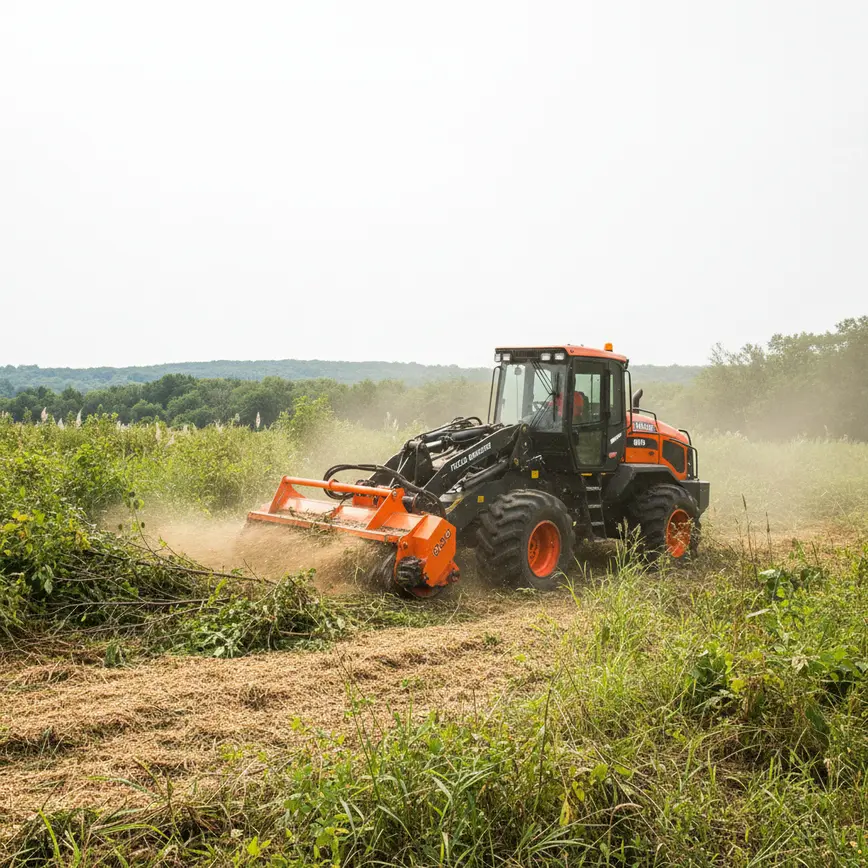
Forestry mulching uses specialized equipment to grind brush, trees, and invasive plants into mulch on site. This method leaves the mulch in place, helping control erosion and reducing the need for haul-off. It is efficient for clearing 1-5 acres per day in Central Ohio, even with dense brush.
Most residential and agricultural land clearing in Central Ohio does not require a permit. However, a local land-disturbance permit may be needed for some projects, typically costing $100-$300. Always check with your local jurisdiction before starting work, especially for larger or commercial projects.
Invasive species like bush honeysuckle, multiflora rose, and autumn olive resprout thicker if only cut. Follow-up treatment, such as targeted herbicide application, is recommended after clearing to prevent regrowth. OSU Extension Ohioline F-68 provides best practices for managing invasive plants in Ohio landscapes.
Common equipment includes compact track loaders with drum mulchers, dozers, excavators, and loaders. Fortress Level Construction uses John Deere 333G and Caterpillar loaders with mulching attachments, capable of clearing stems up to 14 inches thick in a single pass, plus dozers and excavators as needed.
What are the main methods for clearing overgrown land in Central Ohio?
The main methods are forestry mulching and full land clearing. Forestry mulching grinds vegetation into mulch on site, while full clearing removes all growth, debris, and often includes grading. Your choice depends on your goals, property size, and future land use. Each method has unique benefits and considerations.
Forestry mulching is ideal for quickly clearing brush, small trees, and invasives, leaving mulch to control erosion.
Full land clearing is best when you need all vegetation and debris removed, such as for construction or pasture conversion.
How does forestry mulching compare to traditional clearing?
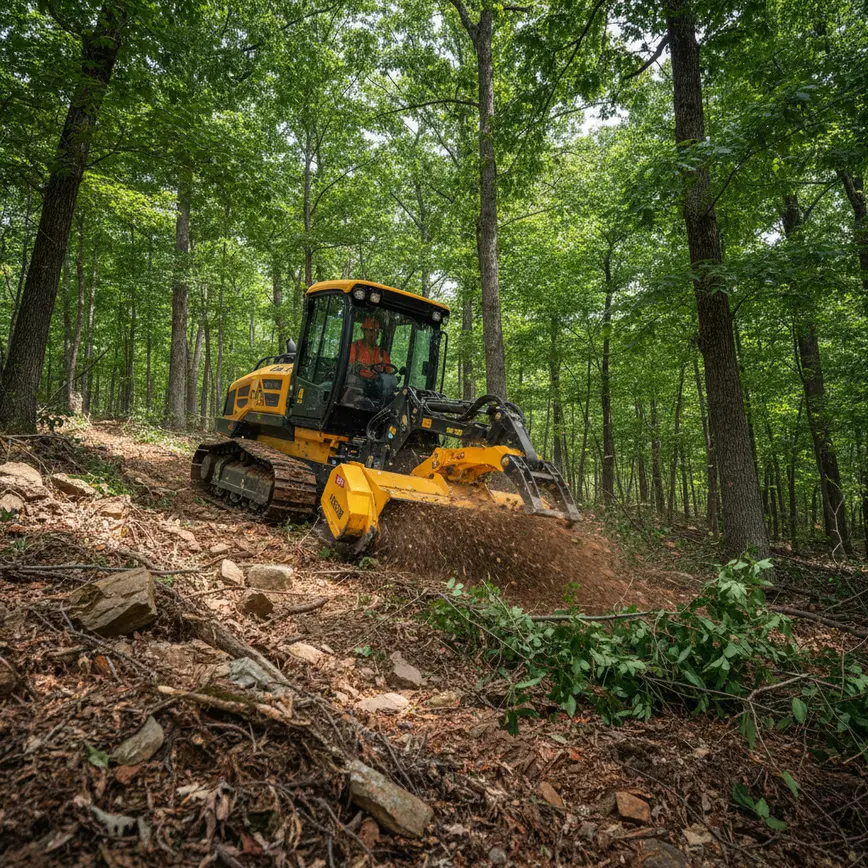
Forestry mulching is less disruptive and usually more cost-effective than traditional clearing. It leaves mulch in place, requires no burning or haul-off, and is faster for many Central Ohio properties. Traditional clearing is necessary when grading or total removal is required, especially for construction or pasture.
Forestry mulching grinds material in place, reducing soil disturbance and erosion risk.
Traditional clearing involves cutting, hauling, and often grading, which can be more expensive and time-consuming.
What should I know about invasive species when clearing land?
Invasive plants like bush honeysuckle and autumn olive resprout vigorously if only cut. OSU Extension recommends follow-up herbicide treatment after clearing to prevent thicker regrowth. Proper management is essential for long-term control of invasives in Central Ohio, as repeated cutting alone can worsen the problem.
Cutting invasives without follow-up can worsen the problem, as they often return thicker.
Consult local resources or professionals for best practices on invasive plant management after clearing.
Are permits or utility locates required before clearing land?
Most residential or agricultural clearing in Central Ohio does not require a permit, but some projects may need a local land-disturbance permit. Ohio law requires an Ohio 811 utility locate at least 48 hours before any digging or excavation work begins, to ensure underground utilities are identified and protected.
Always check with your local city or county for permit requirements before starting a clearing project.
Request an Ohio 811 utility locate to identify underground utilities and ensure safe excavation.
How does forestry mulching compare to full land clearing?
Forestry mulching and full land clearing differ in cost, speed, environmental impact, and results. Mulching is faster and less disruptive, while full clearing provides bare ground ready for construction or pasture.
| Method | Cost per Acre | Speed | Result |
|---|---|---|---|
| Forestry Mulching | $1,850-$3,500 | 1-5 acres/day | Mulch left in place |
| Full Land Clearing | $4,000-$8,000 | Varies | Bare ground, debris removed |
| Equipment Used | N/A | N/A | Mulcher, loader, dozer, excavator |
| Permit Needed | Rarely | N/A | Sometimes for large projects |
| Best For | Brush, invasives | Quick clearing | Construction, pasture |
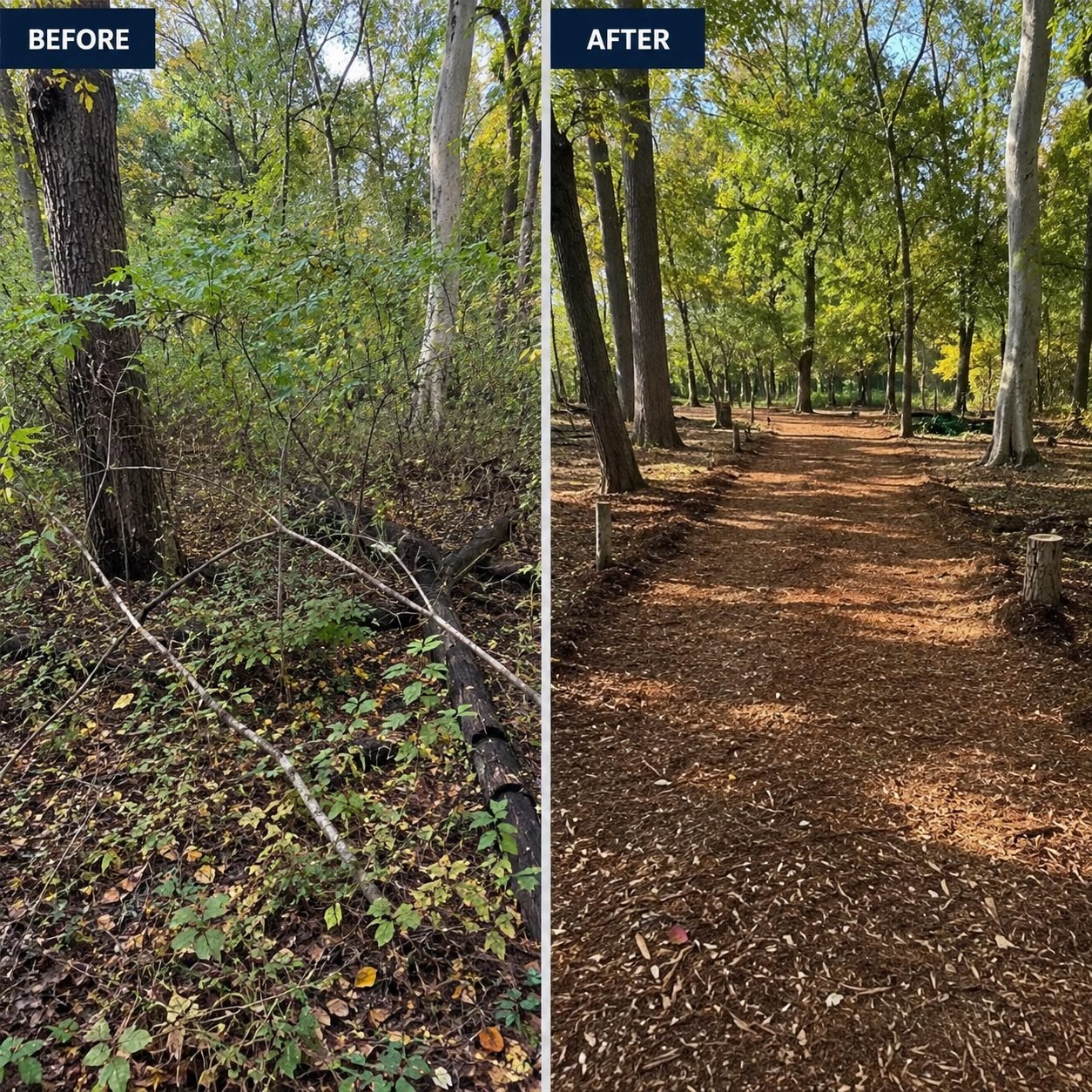
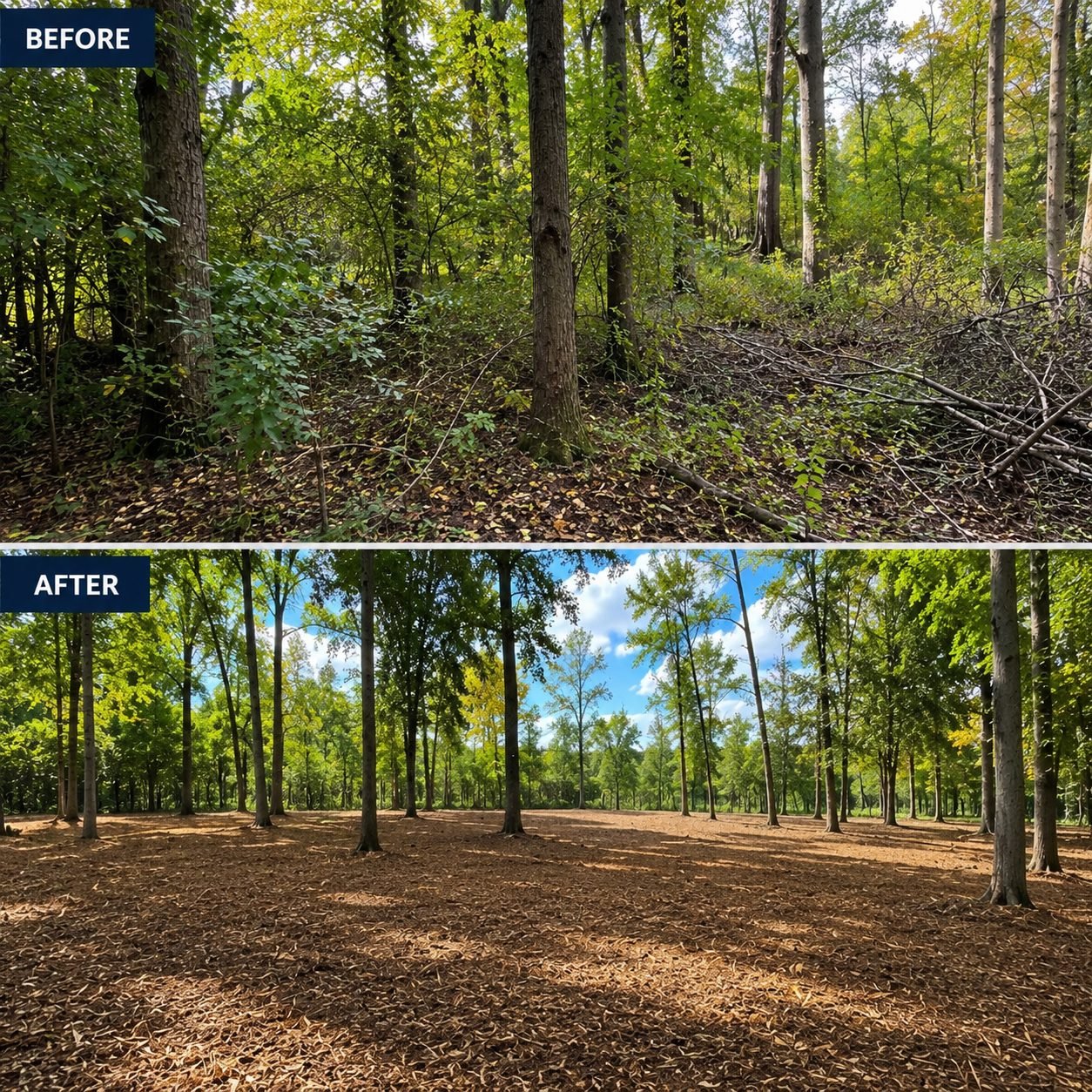
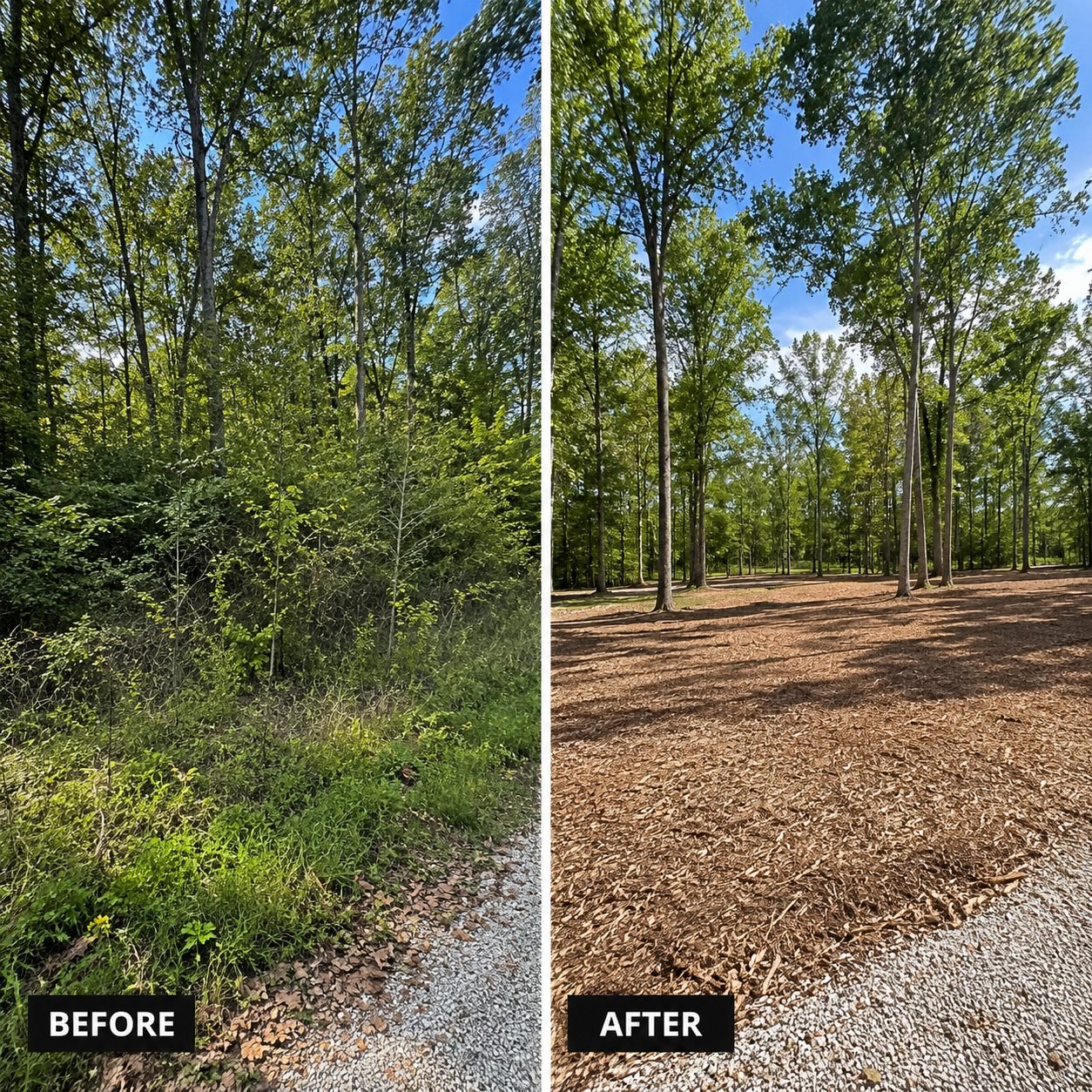
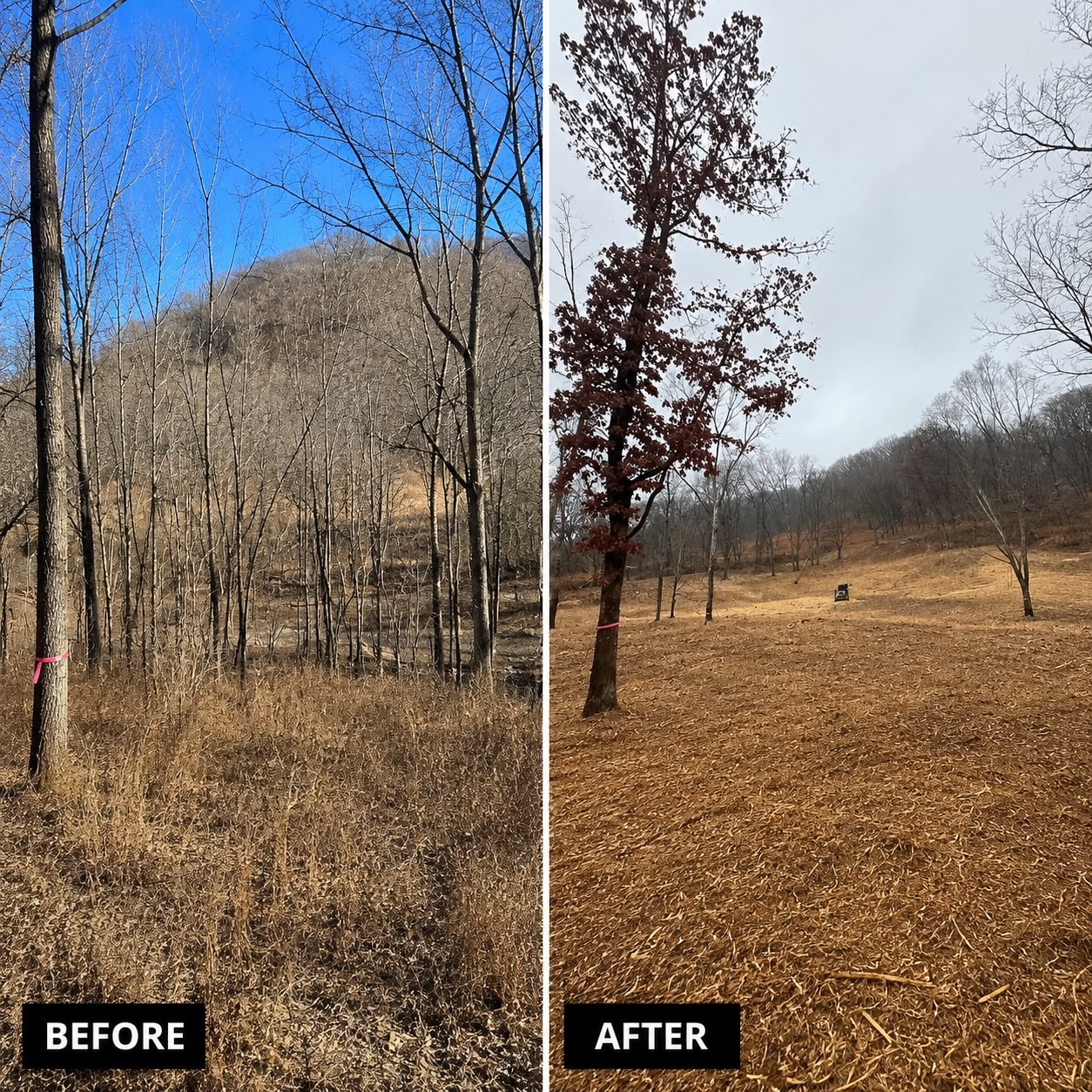
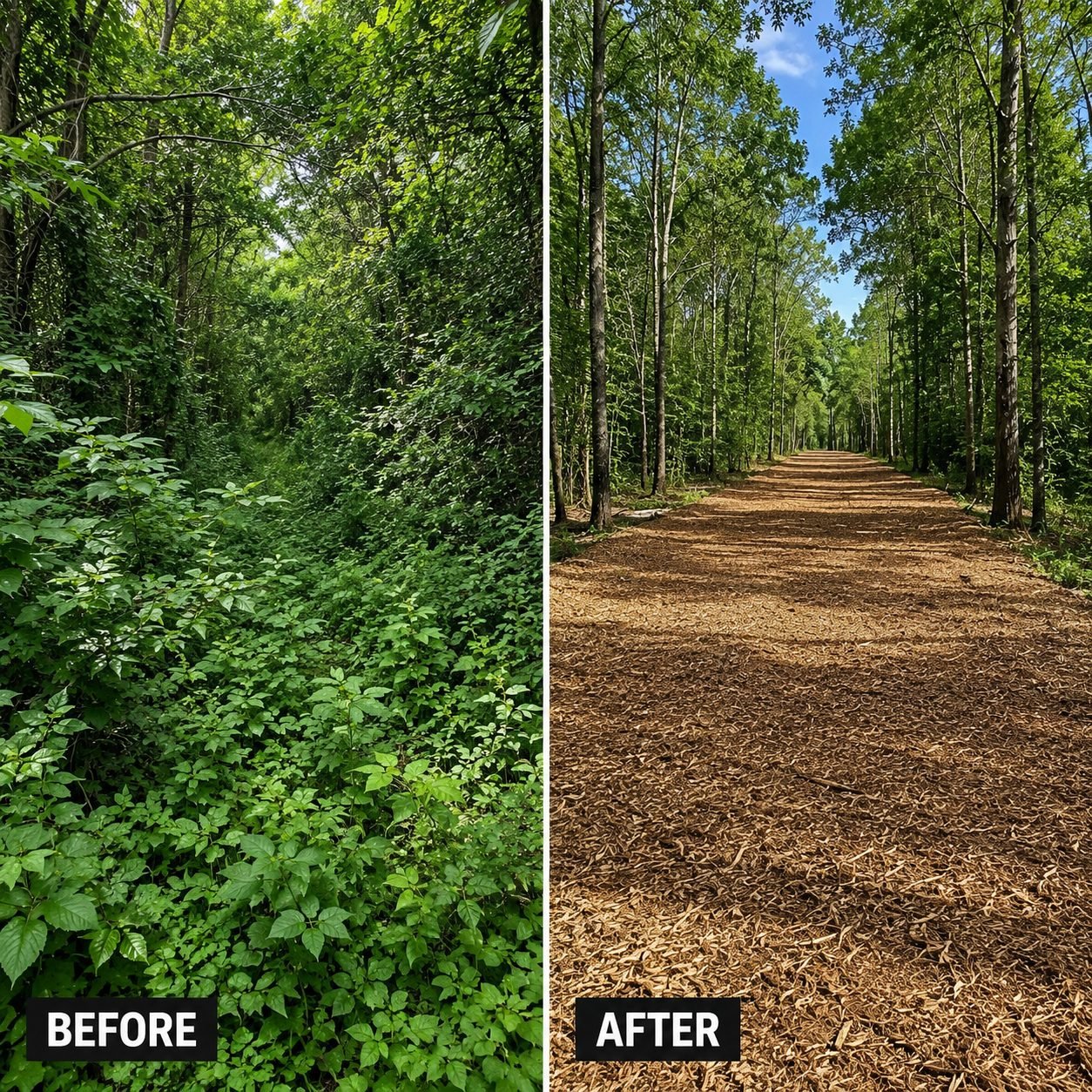
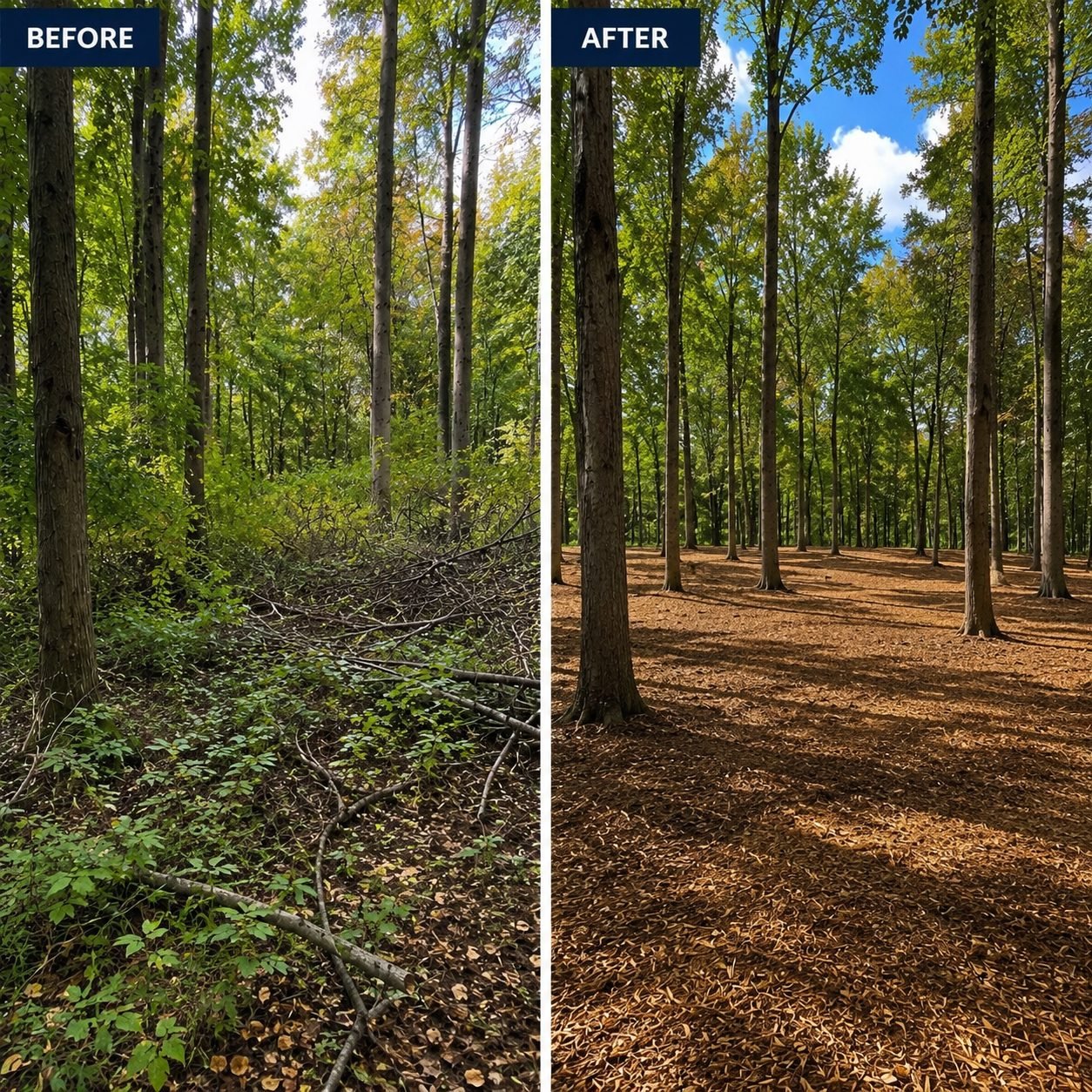
What Does Central Ohio Land Clearing Look Like Before and After?
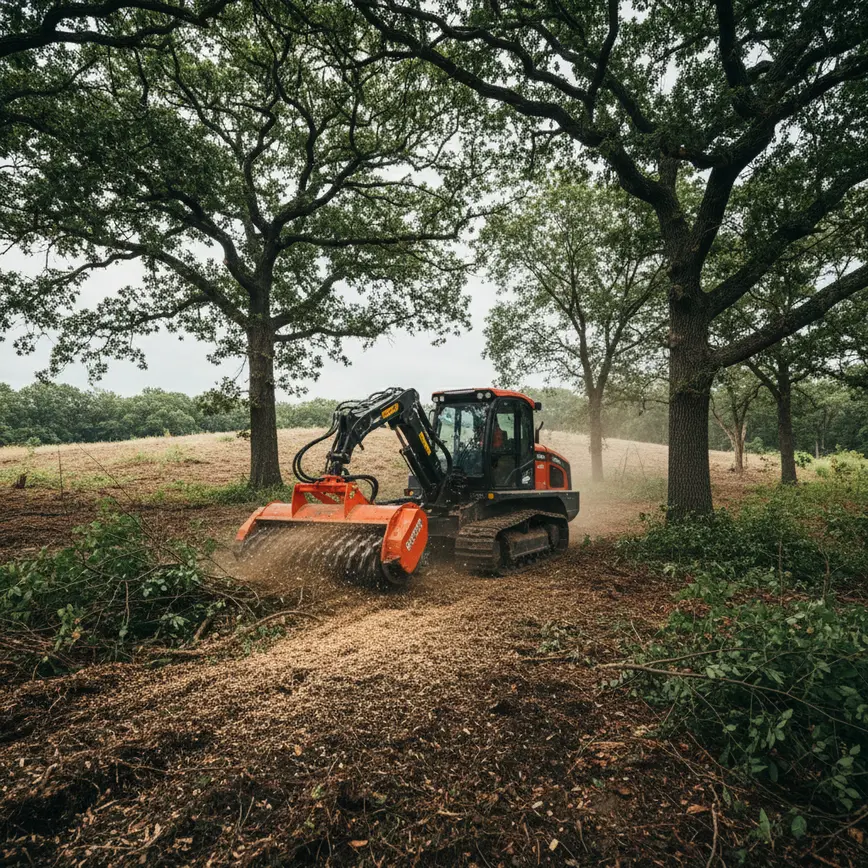
Land clearing turns dense, unusable Central Ohio ground into open, walkable property. These are real Fortress jobs across Franklin, Delaware, Licking, Fairfield, and Union counties, cleared with mature trees left standing and no debris piles to burn or haul.
Frequently asked questions
Forestry mulching typically costs $1,850 to $3,500 per acre, while full land clearing with haul-off and grading ranges from $4,000 to $8,000 per acre. The actual cost depends on the density of brush, size of the area, terrain, and whether grading or debris removal is needed.
While small areas can sometimes be cleared by hand, hiring a professional ensures the job is done efficiently and safely. Professionals use specialized equipment like drum mulchers and compact track loaders, and they understand local regulations, utility locate requirements, and how to handle invasive species properly.
Full land clearing includes removing all trees, brush, and stumps, hauling off debris, and grading the site as needed. This method prepares the land for construction, pasture, or other uses that require bare ground, and is more involved than forestry mulching, which leaves mulch in place.
Forestry mulching can clear 1 to 5 acres per day, depending on vegetation density, terrain, and weather conditions. Full land clearing may take longer, especially if the site requires extensive grading, stump removal, or debris haul-off. Equipment and site access also affect the timeline.
Yes, invasive plants like bush honeysuckle, autumn olive, and multiflora rose often resprout if only cut. Follow-up treatment, such as targeted herbicide application, is recommended to prevent regrowth and ensure long-term control. Consult OSU Extension Ohioline F-68 for best management practices.
Before starting, check with your local city or county for permit requirements, even if most residential or agricultural projects do not need one. Schedule an Ohio 811 utility locate at least 48 hours before any digging, and consult a professional to assess your land and discuss your project goals.
What Other Services Does Fortress Offer in Central Ohio?
Land clearing is one of nine services Fortress Level Construction runs across Central Ohio, so one owner-operated crew can clear, grade, and prep a site end to end.
Get a Flat-Rate Quote from Lee Carson
Owner-operated land clearing across all five Central Ohio counties. Send your property details and Lee gets back to you within 2 to 3 hours during business hours with one flat number after a free on-site walk-through.