

How to regrade a sloped yard in Central Ohio?
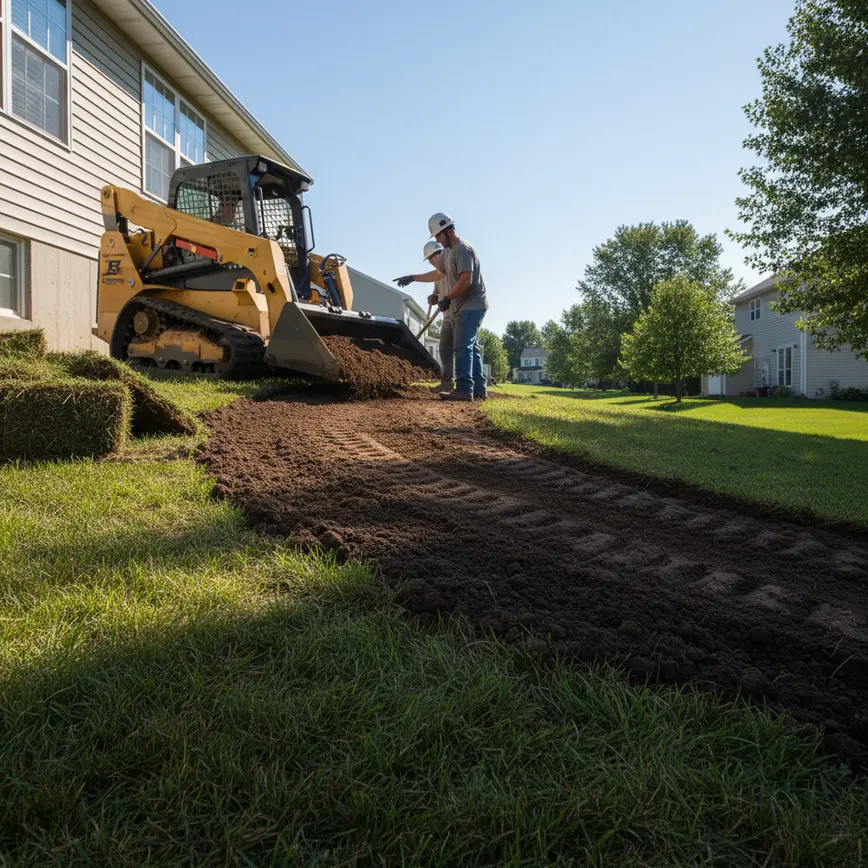
To regrade a sloped yard in Central Ohio, you must remove the topsoil, reshape the subgrade with heavy equipment for proper drainage, and then replace and finish the topsoil. This is especially important on Brookston-Crosby clay, which is common locally and holds water, causing persistent drainage and foundation issues if not properly graded.
The Quick Answer
- Regrading a sloped yard in Central Ohio involves reshaping soil to direct water away from structures, especially on Brookston-Crosby clay.
- Proper grading prevents water pooling and foundation issues due to poorly drained local soils.
- Heavy equipment like dozers, excavators, and the John Deere 333G are used for efficient grading.
- Always call Ohio 811 at least 48 hours before excavation to mark underground utilities.
- Finish grading creates a smooth, stable surface for lawns, driveways, or pads.
- Owner Lee Carson, a combat veteran, personally walks every job and provides flat-rate quotes.
- Licensed and insured, Fortress Level Construction serves Franklin, Delaware, Licking, Fairfield, and Union counties.
- Same-week walk-throughs and quick response times are standard for local grading projects.
Related Questions People Ask Next
Regrading is crucial in Central Ohio because the prevalent Brookston-Crosby clay soil holds water and drains slowly, leading to persistent drainage problems. Without proper grading, water can pool near foundations, cause soggy lawns, and result in erosion or basement leaks, making professional grading essential for long-term property protection.
Professional regrading in Central Ohio uses heavy equipment such as dozers, excavators, loaders, and the John Deere 333G. These machines are necessary to move and shape the dense, clay-rich soil efficiently, ensuring proper drainage and a stable surface that will last through wet Ohio springs.
Ohio law (Ohio Revised Code 3781.28) requires you to call Ohio 811 for a utility locate at least 48 hours before any excavation or grading. This ensures that underground utilities are marked, which prevents accidents, legal issues, and costly repairs. Skipping this step can result in serious safety hazards.
Signs your yard needs regrading include standing water after rain, water flowing toward your home, uneven or eroded ground, and soggy areas that persist into spring. These issues are common with Brookston-Crosby clay and indicate poor drainage that can lead to long-term property and foundation problems if not corrected.
What steps are involved in regrading a sloped yard?
Regrading a sloped yard begins with removing the existing topsoil and setting it aside. Next, heavy equipment reshapes the subgrade to create the correct slope for drainage, especially important on Brookston-Crosby clay. The topsoil is then replaced, compacted, and smoothed to ensure water flows away from structures and prevents pooling.
Begin by stripping away the topsoil and setting it aside. Use heavy equipment to reshape the underlying clay subgrade, creating a gentle slope away from buildings.
Replace and spread the topsoil, then compact and smooth the surface. This ensures water flows away from structures and prevents pooling on the dense local clay.
Why does Brookston-Crosby clay require special grading techniques?
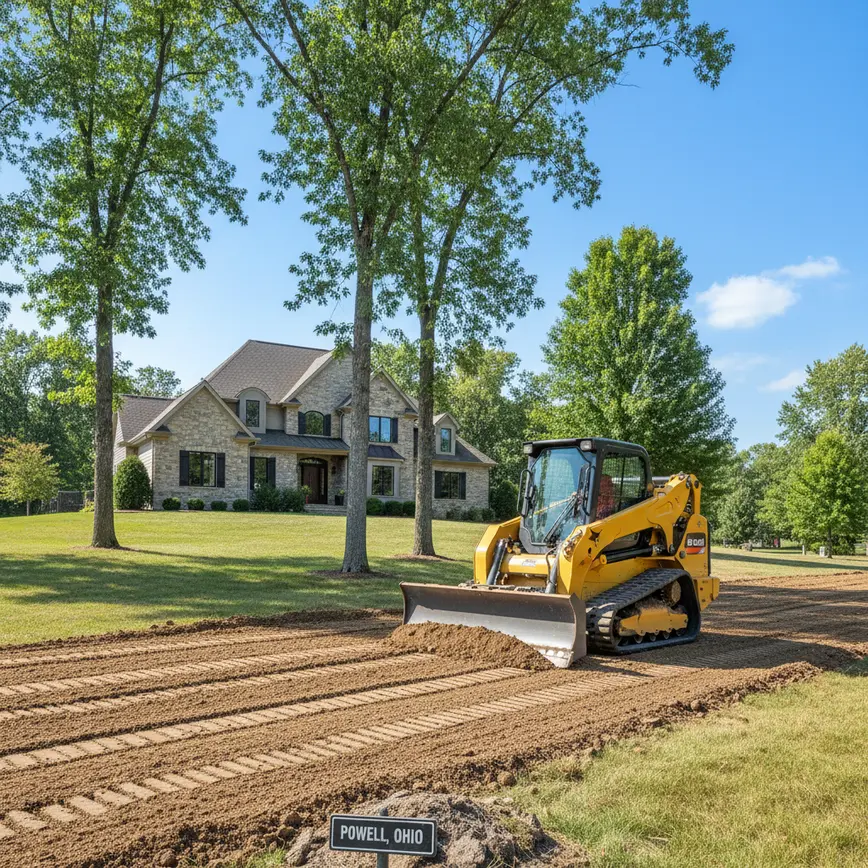
Brookston-Crosby clay is dense and drains poorly, causing water to linger and increasing the risk of erosion or foundation problems. Specialized grading techniques are needed to create reliable slopes and swales, helping water move away from homes and reducing the chance of soggy lawns, standing water, or basement leaks in Central Ohio.
This clay soil type is dense and slow to drain, causing water to linger and increasing the risk of erosion or foundation problems.
Specialized grading creates reliable slopes and swales, helping water move away from homes and reducing the chance of soggy lawns or basement leaks.
How do you prepare for a grading project in Central Ohio?
Preparation starts with contacting Ohio 811 at least 48 hours before excavation to mark utilities as required by state law. Assess the site for drainage needs, plan the required slope, and schedule the right equipment and materials. Proper preparation prevents delays, ensures safety, and helps achieve the best grading results.
Contact Ohio 811 at least 48 hours before digging to mark underground utilities, as required by state law.
Assess the site, determine the needed slope for drainage, and arrange for the necessary equipment and materials to be on-site before work begins.
What results can you expect after regrading a yard?
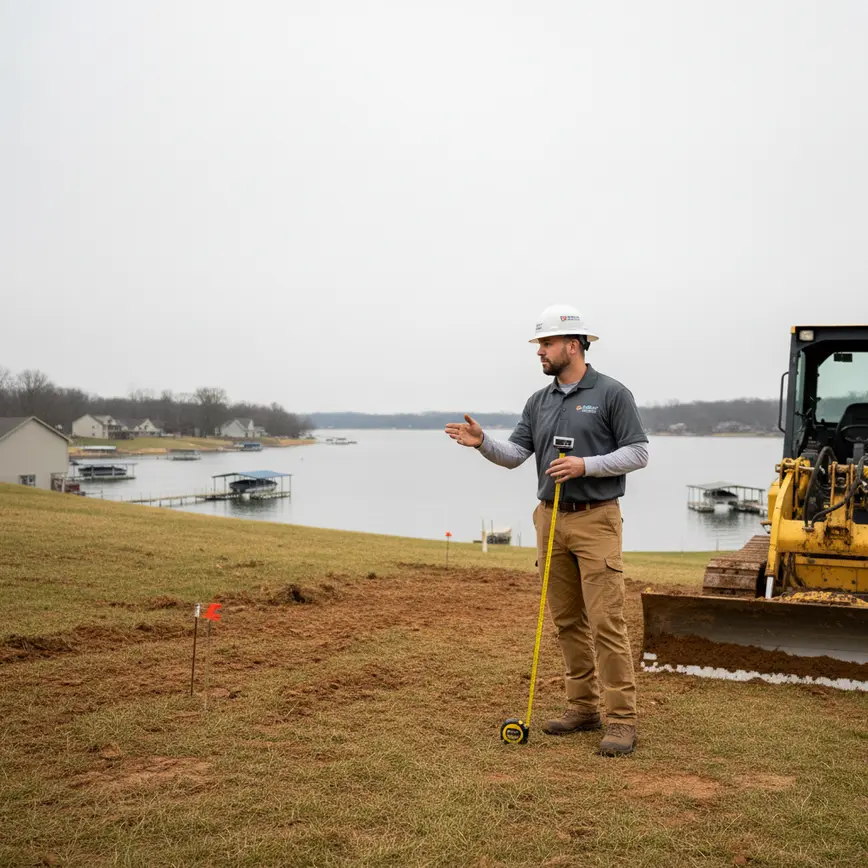
After regrading, you can expect improved drainage, fewer wet spots, and a stable surface for landscaping or construction. Proper grading ensures water sheds efficiently, reducing the risk of standing water and erosion on heavy clay soils. Finished surfaces support healthy lawns, driveways, or pads and protect your property from water damage.
Properly graded yards shed water efficiently, reducing the risk of standing water and erosion even on heavy clay soils.
The finished surface supports healthy lawns, driveways, or building pads and protects your property from water-related damage.
How does professional yard regrading compare to DIY in Central Ohio?
Professional regrading offers better drainage and efficiency, especially on heavy clay, while DIY may lack proper equipment and expertise. Local soil knowledge, powerful machines, and legal compliance give professionals an edge, ensuring long-term results that DIY efforts often cannot match in Central Ohio’s challenging conditions.
| Aspect | Professional Regrading | DIY Regrading | Central Ohio Impact |
|---|---|---|---|
| Equipment | Dozer, excavator, John Deere 333G | Shovels, small rental tools | Heavy clay requires powerful machines |
| Expertise | Experienced operators, owner-walked jobs | Limited experience | Local soil knowledge is crucial |
| Drainage Results | Consistent, long-term drainage | May miss problem spots | Brookston-Crosby clay is unforgiving |
| Time & Effort | Efficient, fast completion | Labor-intensive, slow | Professional crews handle large areas quickly |
| Compliance | Handles Ohio 811 and legal steps | Risk of missing utility locate | Legal compliance prevents accidents |
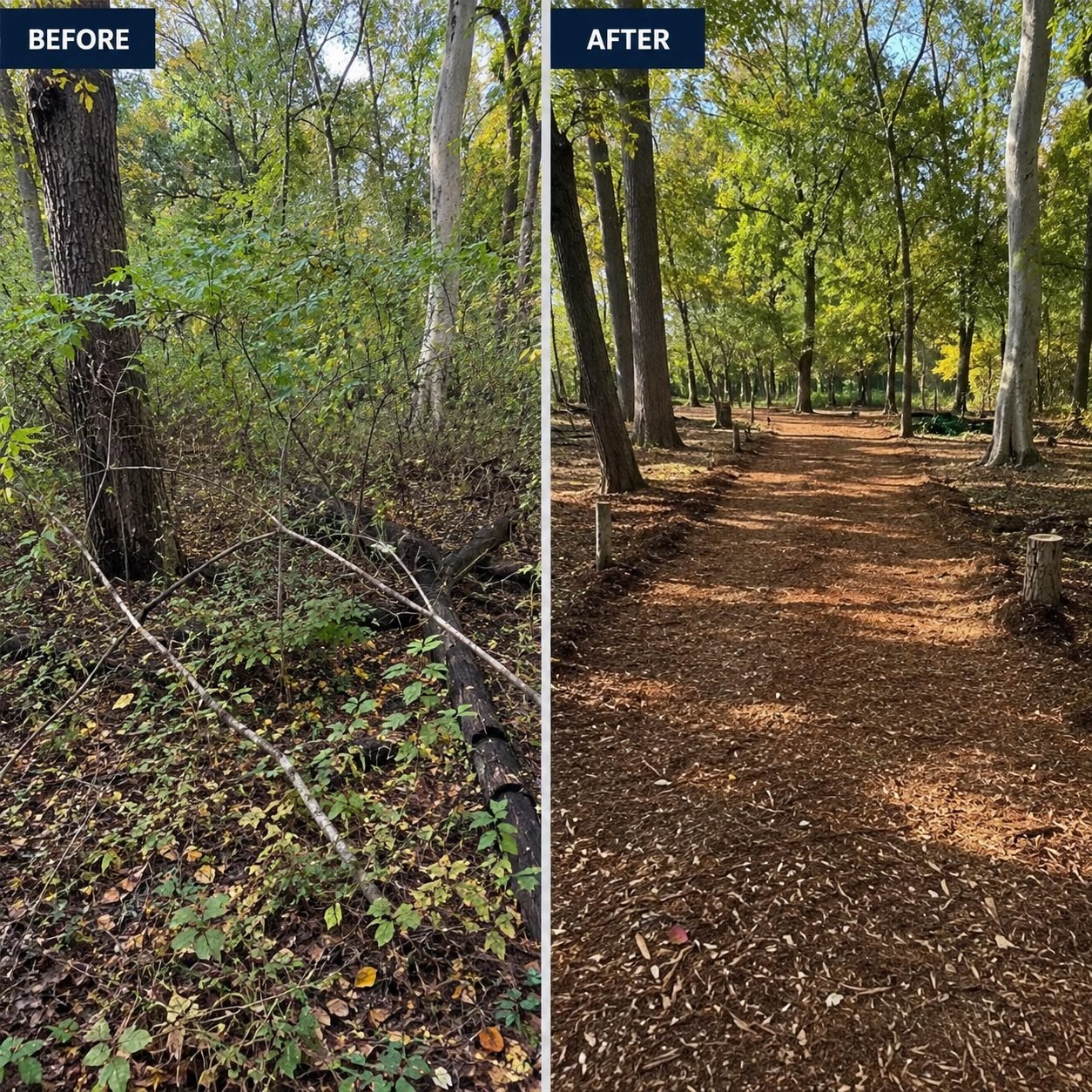
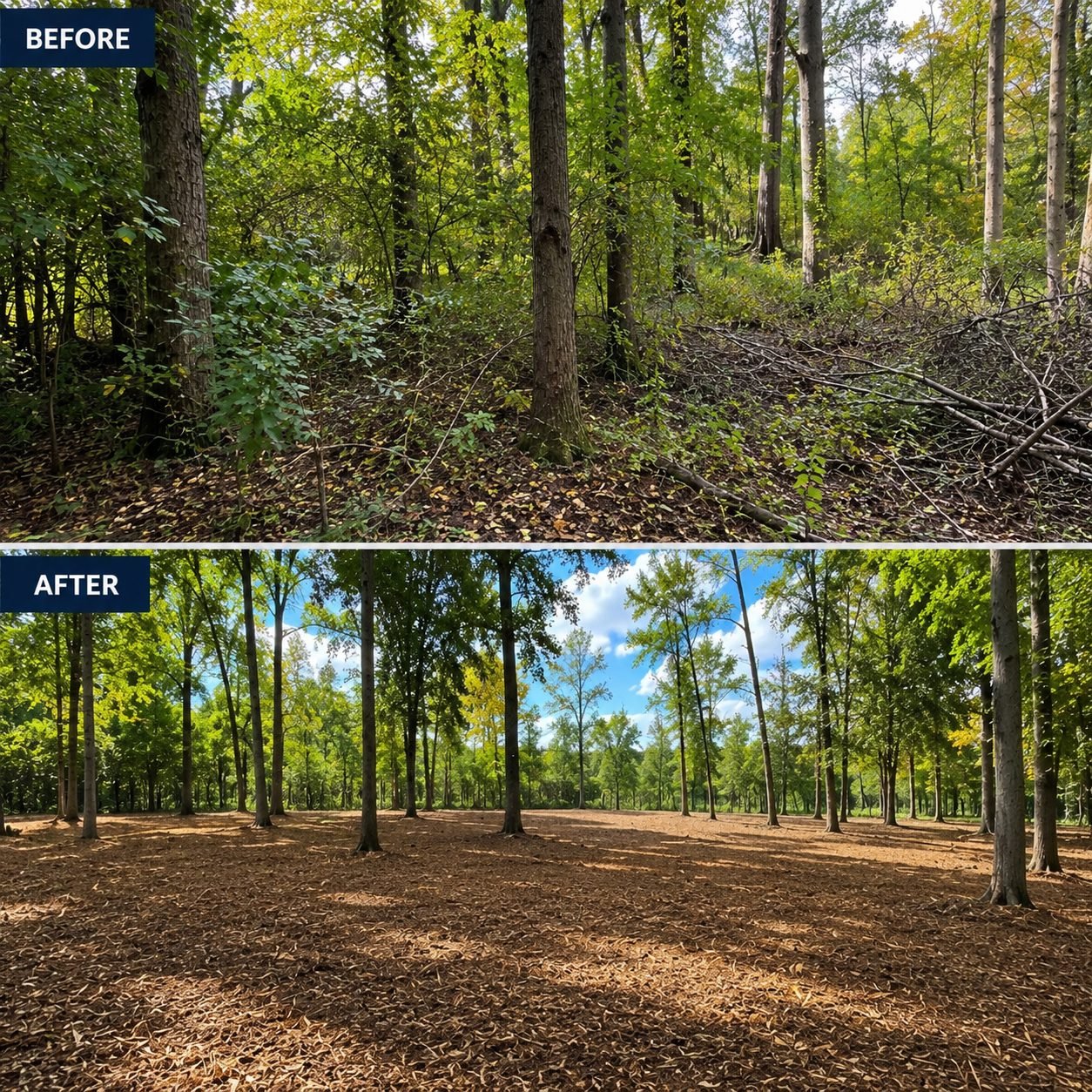
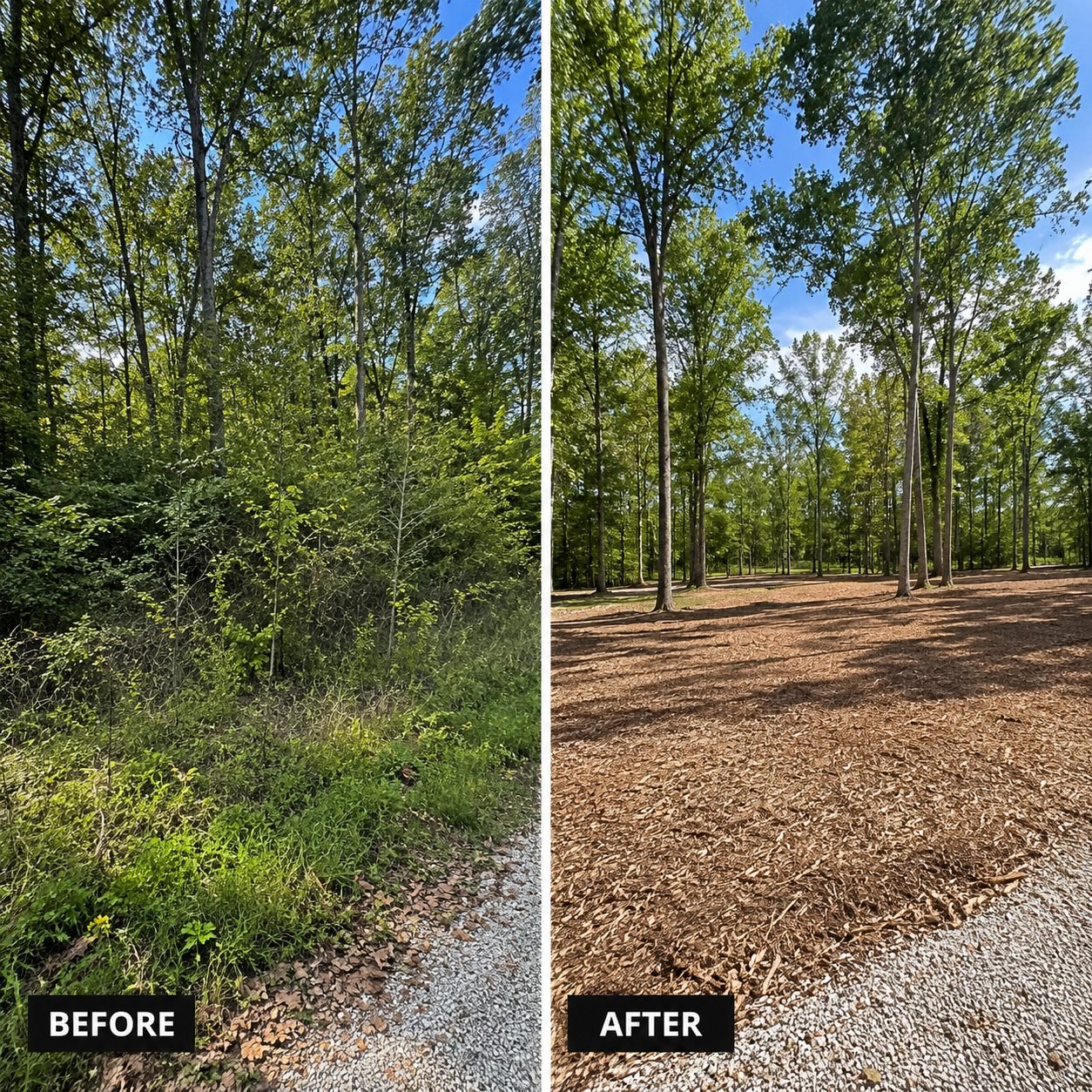
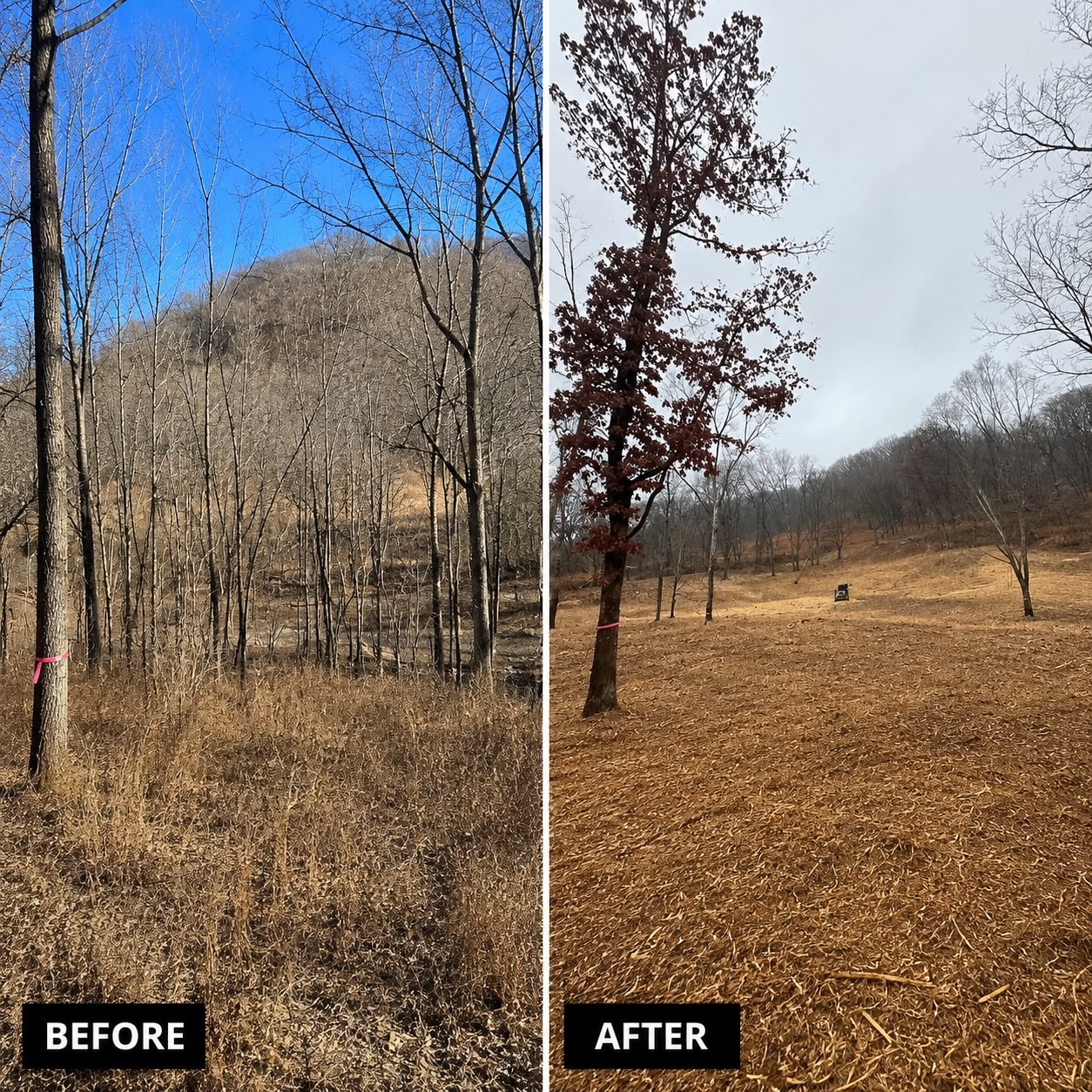
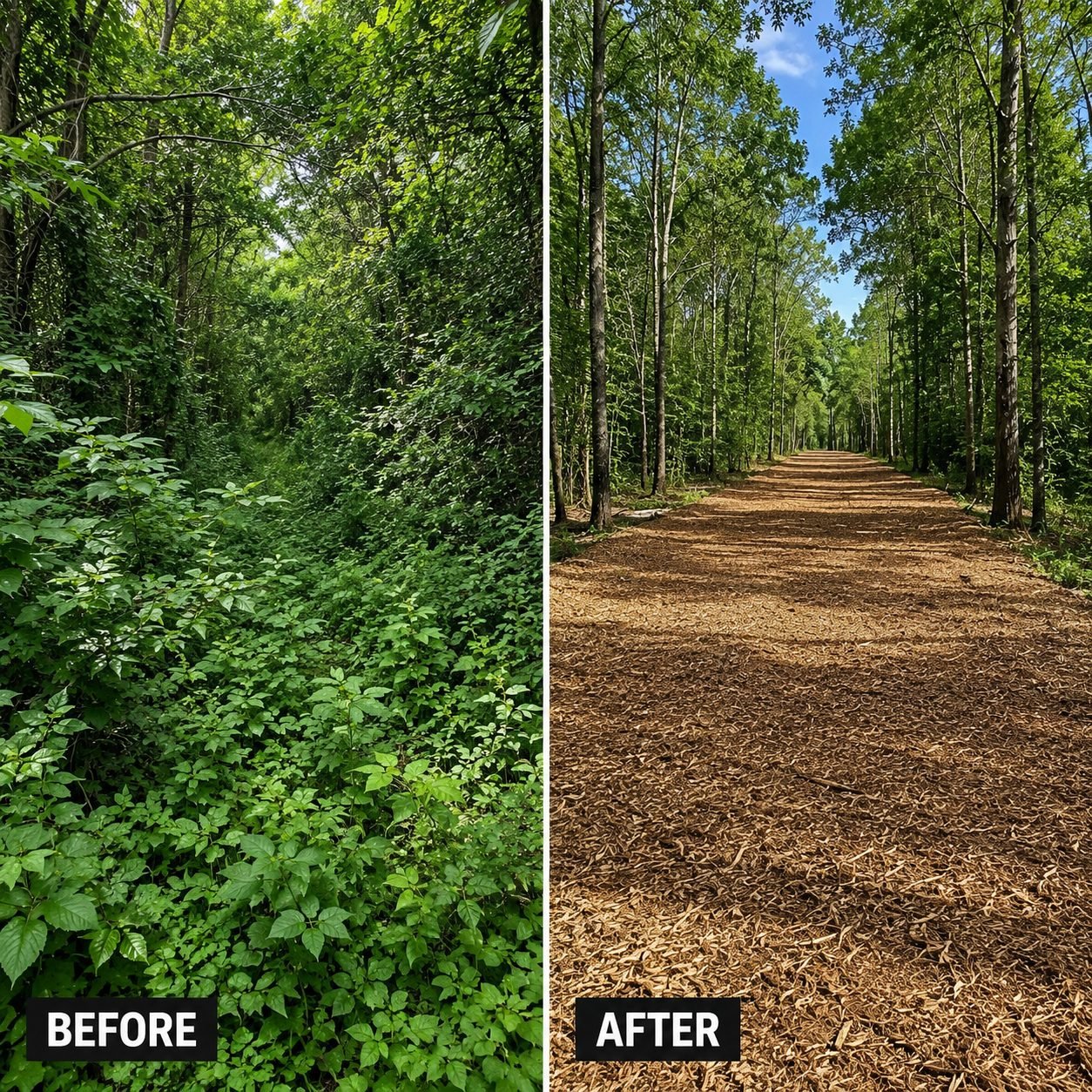
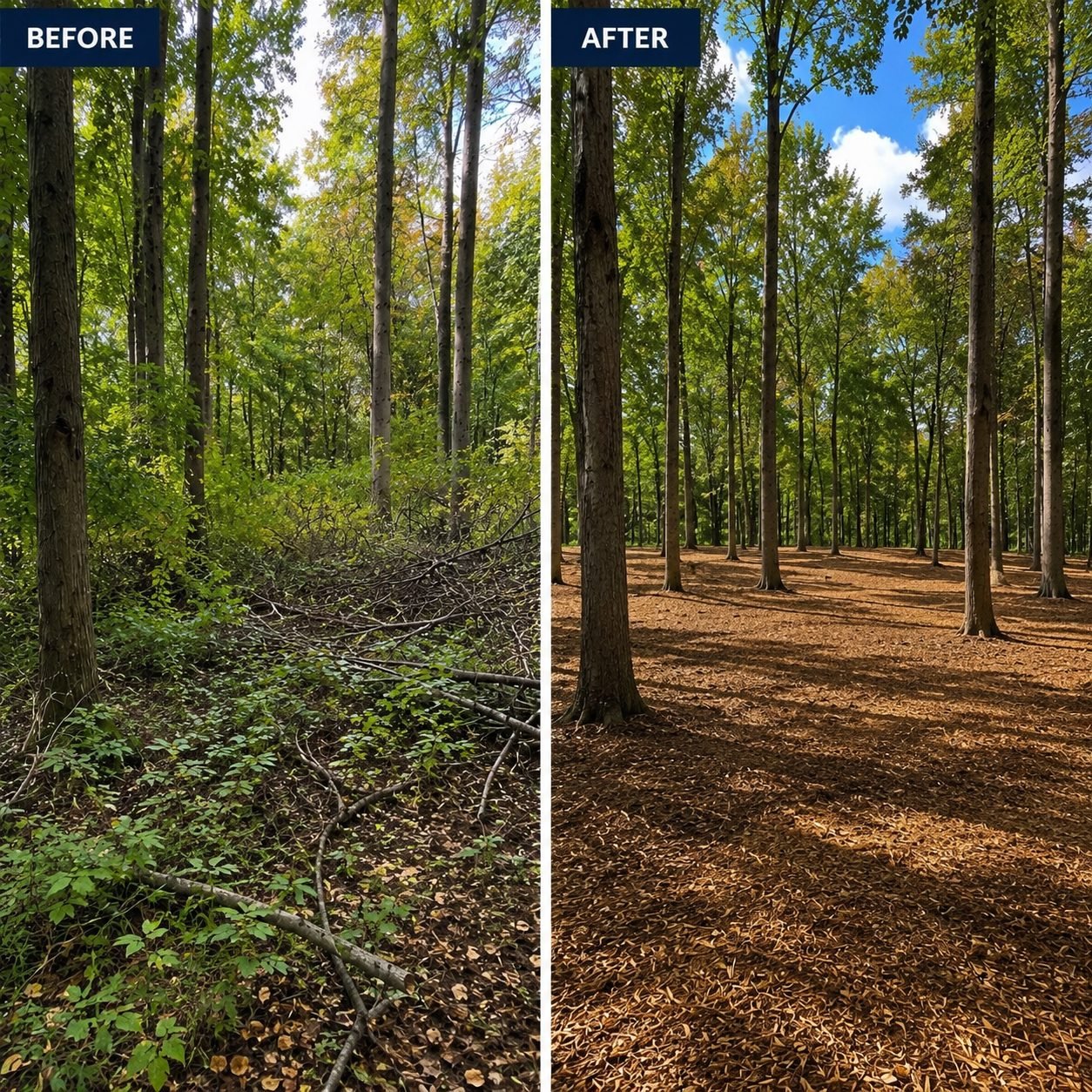
What Does Central Ohio Land Clearing Look Like Before and After?
Land clearing turns dense, unusable Central Ohio ground into open, walkable property. These are real Fortress jobs across Franklin, Delaware, Licking, Fairfield, and Union counties, cleared with mature trees left standing and no debris piles to burn or haul.
Frequently asked questions
Permits may be required depending on the scope and your local county or municipality regulations. Always check with local authorities before starting any grading project. Additionally, you must call Ohio 811 for a utility locate at least 48 hours before excavation to ensure underground utilities are marked and avoid safety hazards.
Most residential yard regrading projects in Central Ohio can be completed in one to three days, depending on the size of the yard, the slope severity, and weather conditions. Scheduling is often available within the same week, especially when working with local professionals familiar with area soils.
Yes, regrading is specifically designed to eliminate water pooling and soggy areas by reshaping the land so water flows away from problem spots. This is especially effective on poorly drained Brookston-Crosby clay, which is common in Central Ohio and often causes persistent drainage issues if not properly addressed.
The best time to regrade a yard in Central Ohio is from late spring through early fall, when the soil is workable and less saturated. Avoid early spring, as Brookston-Crosby clay is often too wet for heavy equipment, which can lead to delays and less effective grading results.
Grading typically removes and replaces topsoil, so existing lawns and landscaping will be disturbed or removed in the process. After grading, you should plan to reseed or replant your lawn and landscaping to restore the appearance and health of your yard once the grading is complete.
A minimum slope of about 2 percent, or a 1/4 inch drop per foot away from buildings, is recommended for proper drainage. This guideline is especially important on dense Central Ohio clay soils to ensure water moves away from structures and does not pool near foundations.
What Other Services Does Fortress Offer in Central Ohio?
Land clearing is one of nine services Fortress Level Construction runs across Central Ohio, so one owner-operated crew can clear, grade, and prep a site end to end.
Get a Flat-Rate Quote from Lee Carson
Owner-operated land clearing across all five Central Ohio counties. Send your property details and Lee gets back to you within 2 to 3 hours during business hours with one flat number after a free on-site walk-through.