
Is Land Clearing Allowed on a Ravine Lot in Powell, Ohio?
Land clearing is allowed on a ravine lot in Powell, Ohio, but the method is not open to choice. Slopes running toward the Scioto and O’Shaughnessy Reservoir carry setback and erosion requirements that flat lots never trigger, so clearing to bare soil is usually the wrong answer even where it is permitted.
What Powell ravine owners need to know
- Brush clearing on your own parcel usually needs no permit. Demolition always does.
- Powell, Liberty Township and Delaware County each run their own building department.
- Disturbing one acre or more generally triggers stormwater permitting.
- On slope, forestry mulching is preferred: the mulch layer holds soil that bare ground would lose.
- Reservoir proximity can add setback and erosion conditions on top of the permit.
- Keeper trees are flagged on the walk before any machine moves.
What Else Do People Ask About Land Clearing in Powell, Ohio?
Brush clearing on your own parcel usually needs none. Work inside a reservoir setback, a floodplain, or anything disturbing an acre or more does.
It depends where the parcel sits. The City of Powell, Liberty Township and Delaware County each administer their own process.
Rarely a good idea. A bare slope moves in the first heavy rain, and the repair costs more than the clearing saved.
Forestry mulching runs $1,850 to $3,500 per acre. Slope and access move a Powell parcel more than acreage does.
What Makes a Powell, Ohio Ravine Lot Different?
Powell sits on one to five acre wooded parcels cut by ravines running west toward the Scioto River and O’Shaughnessy Reservoir. That geography changes three things at once: what you are allowed to do, what a machine can safely do, and what happens to the soil afterward.
Most of Delaware County is rolling ground. Powell is rolling ground with edges. The ravines are steep enough that a machine works across the slope rather than up it, and the soil on those slopes is thinner than the deep glacial till on the flat ground above.
That thin soil is held by roots, leaf litter and understory. Remove all three at once and the first heavy rain moves what took decades to build. It is the most common expensive mistake on Powell parcels, and it is entirely avoidable.
Reservoir proximity adds a second layer. Ground draining toward O’Shaughnessy carries setback and erosion considerations that a flat lot never encounters, and those are established before a machine is scheduled rather than discovered afterward.
When Is Land Clearing Permitted on a Powell, Ohio Slope?
Clearing brush on your own residential parcel in Powell generally needs no permit. Demolition always does. Floodplain ground, wetland ground and anything disturbing one acre or more trigger requirements, and reservoir setback ground can add conditions on top.
The confusion in Powell is jurisdiction rather than the rules. A parcel can fall under the City of Powell, Liberty Township, or unincorporated Delaware County, and each runs its own process. Owners regularly assume the wrong one, particularly near a boundary.
Where a structure is involved, notification requirements run in working days before work begins, not hours. A stop work order on a slope with soil already exposed is the worst possible time to discover that.
The practical rule: establish which category the parcel falls into before booking a machine. That check is part of the walk, not an extra.
What Land Clearing Method Should Be Used on a Powell, Ohio Ravine?
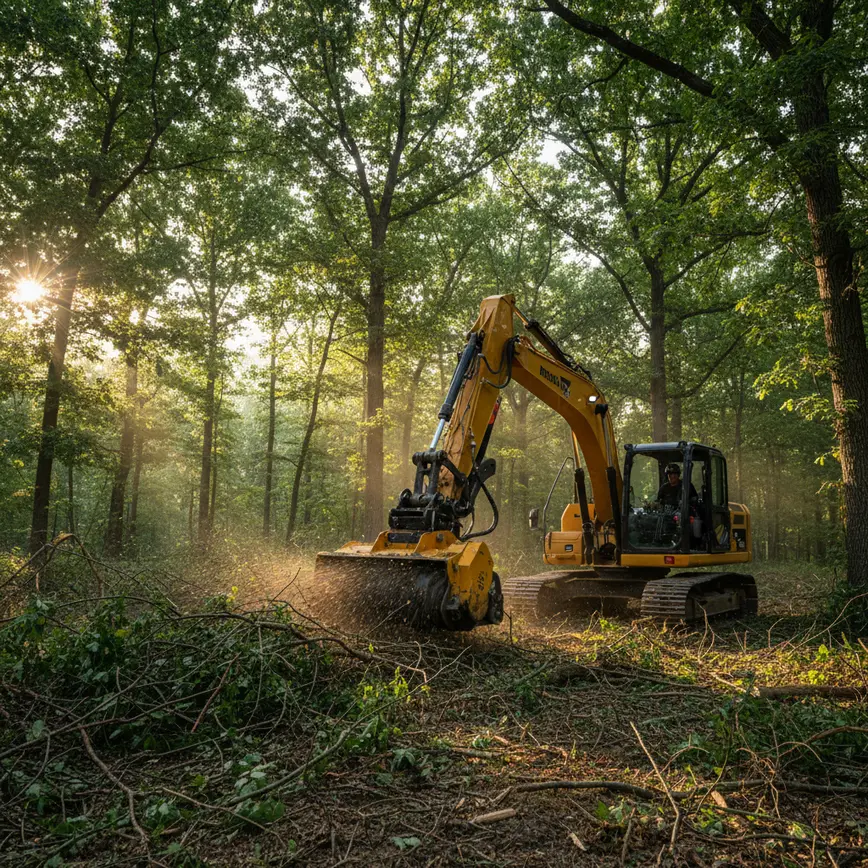
Forestry mulching, in almost every case. It removes standing growth in one pass and leaves a two to four inch mulch layer that holds the slope through the first winter while roots re-establish. Clearing to bare soil belongs only where a structure is going in.
On a Powell slope the mulch layer is doing structural work rather than tidiness. It intercepts rainfall, slows sheet flow across the surface and keeps soil in place at exactly the point when a cleared slope would be moving.
Honeysuckle and buckthorn are what most Powell owners want gone, and both sit under a mature canopy people bought the property for. Selective mulching takes the understory and leaves oak and maple standing, restoring light to the forest floor without exposing the slope.
Where a foundation, driveway or utility trench genuinely needs bare compacted soil, that footprint is fully cleared and grubbed while the surrounding slope keeps its cover. Two treatments on one parcel is normal here, and it should be quoted that way. See land clearing and grading for how the two run together.
What Rules Apply to Land Clearing on a Powell, Ohio Ravine Lot?
Permit requirement and recommended method by situation. The permitting jurisdiction is the authority in every case, and it is established before a machine is scheduled.
| Situation | Permit needed | Recommended method | Note |
|---|---|---|---|
| Brush clearing, own parcel, under 1 acre | Usually none | Selective mulching | Keeper trees flagged first |
| Disturbing 1 acre or more | Yes, stormwater | Phased mulching | Control plan required |
| Inside reservoir setback | Check first | Mulch, cover retained | Erosion conditions likely |
| Floodplain ground | Yes | Assess before scheduling | Not visible from aerial imagery |
| Demolishing a structure | Always | Not applicable | Utility disconnects set the schedule |
| Building pad on the parcel | Yes | Clear and grub footprint only | Slope keeps its cover |
| Slope over 15 degrees | Varies | Mulch only, never bare | Add 15 to 25 percent to the rate |
Practice and figures published by Fortress Level Construction for its Delaware County operation, August 2026. Soil depth, slope class and erosion factor for any Powell parcel are published in the USDA NRCS Web Soil Survey (accessed August 2026).
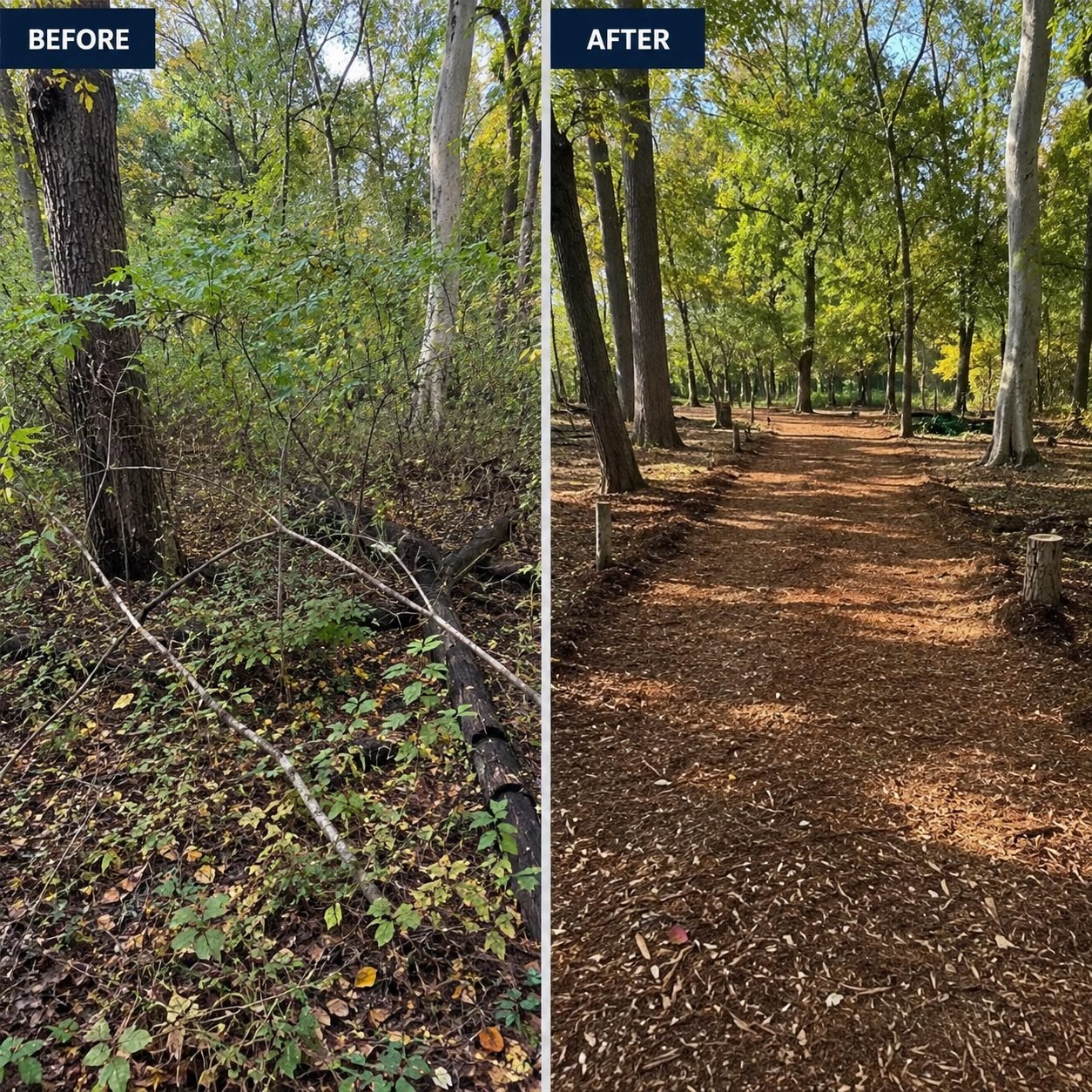
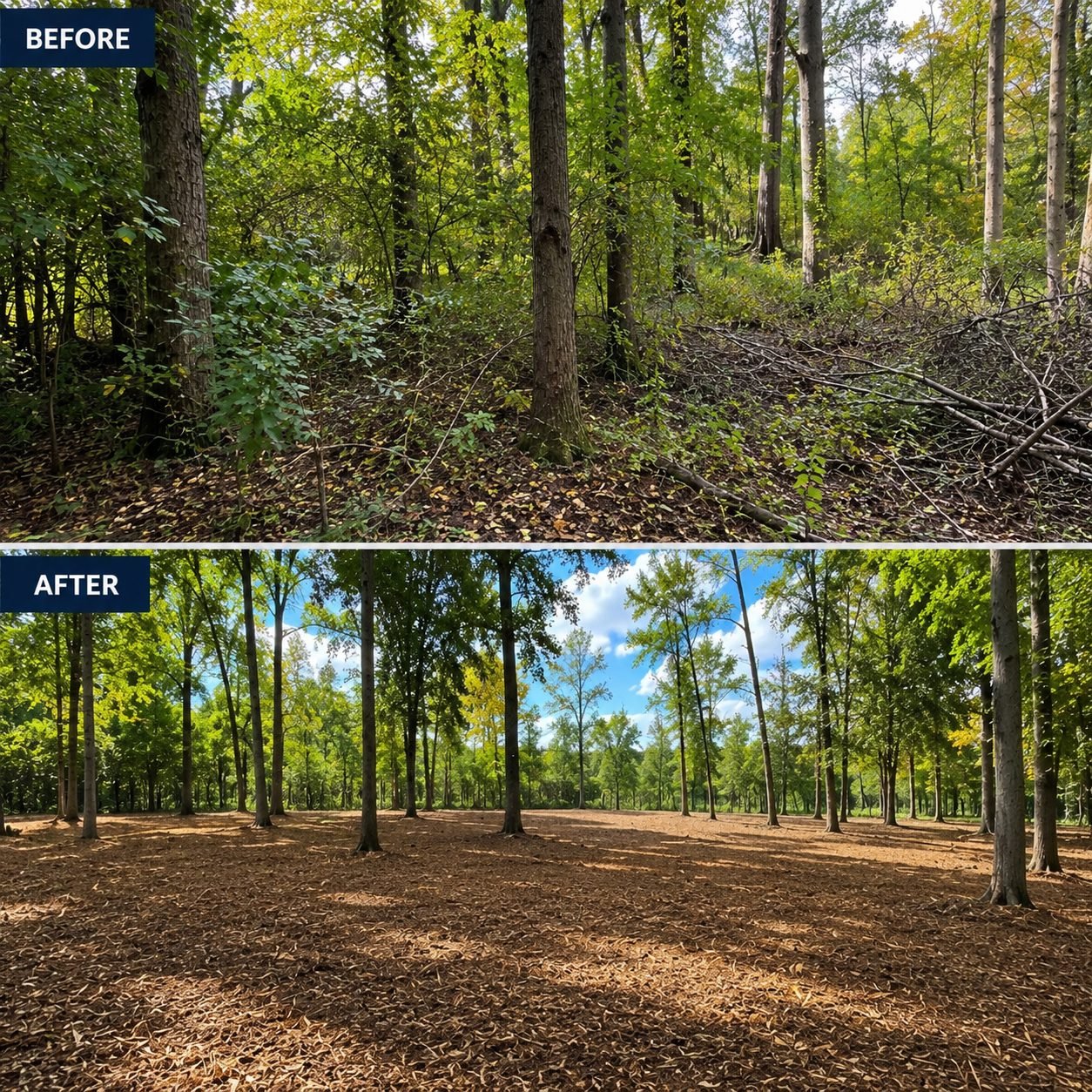
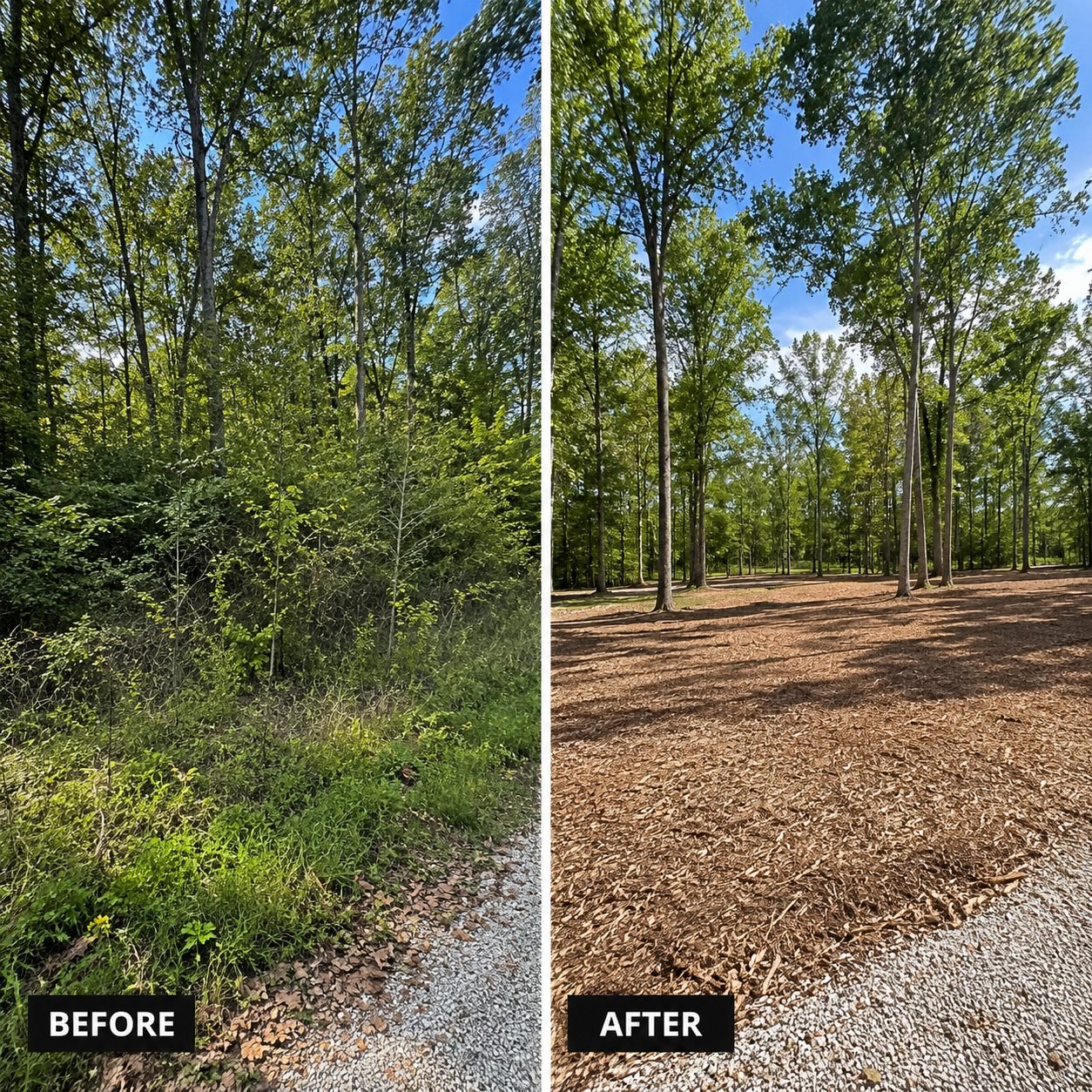
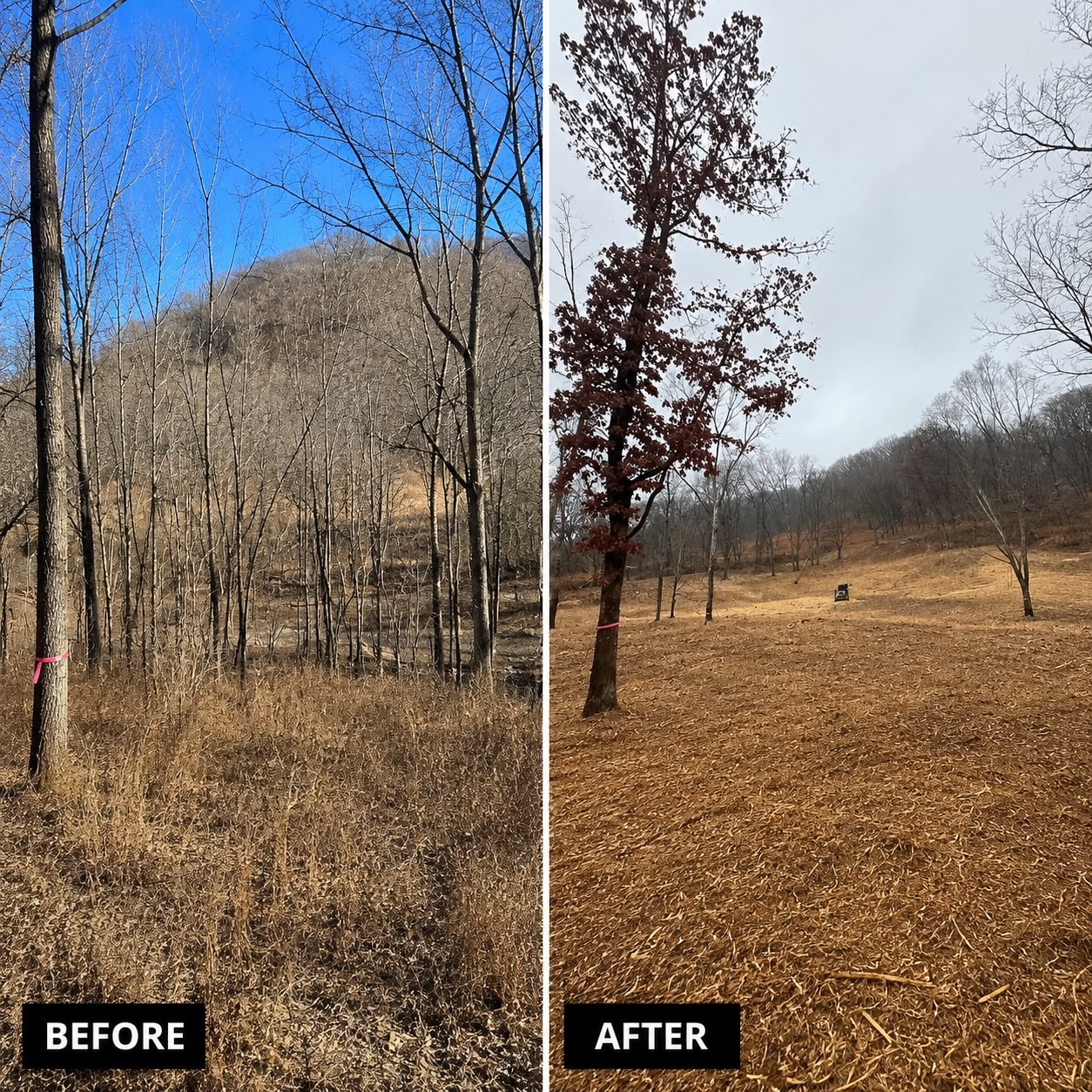
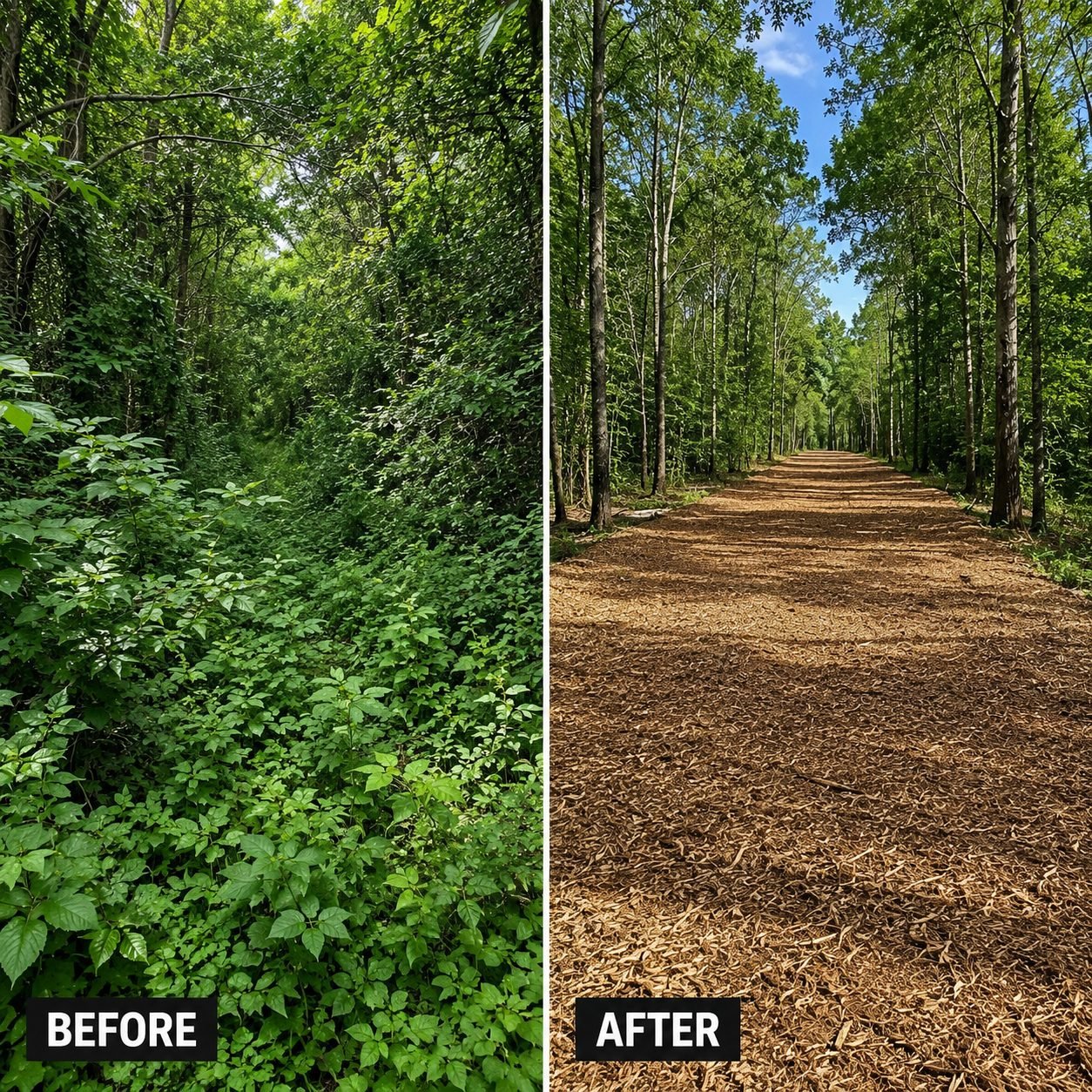
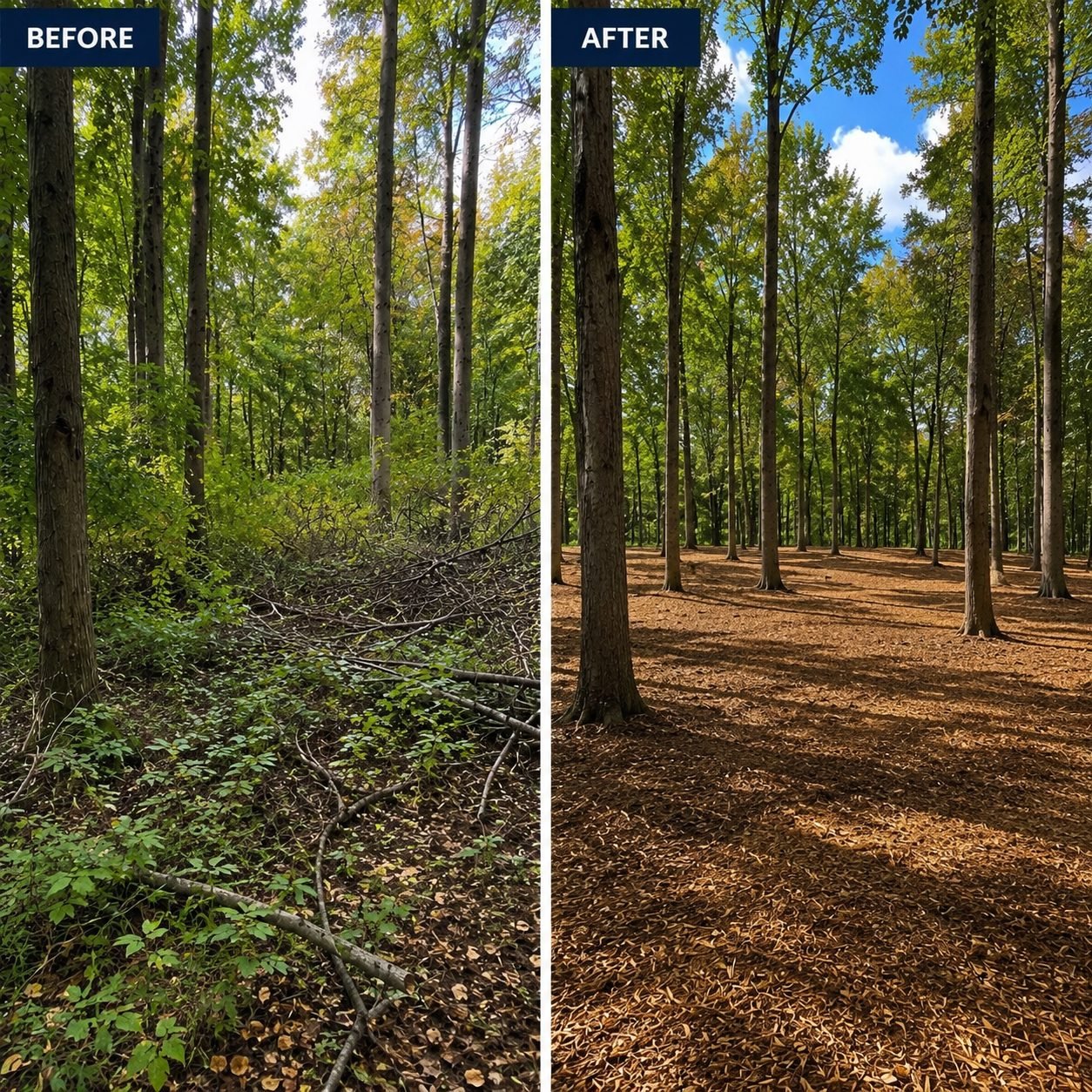
What Does Land Clearing Look Like Before and After in Powell, Ohio?
Recent Central Ohio jobs. On Powell ravine ground the finished surface keeps a two to four inch mulch layer rather than bare soil, which is what holds the slope through the first winter after clearing.
What Do Powell, Ohio Owners Ask About Land Clearing?
Physically yes on a small parcel. The risk is that hand clearing an entire slope exposes soil just as surely as a machine does, without the mulch layer that protects it.
Often, and it is a legitimate goal. It is achieved by selective thinning that opens sight lines while keeping the canopy, not by clearing the slope.
Forestry mulching runs $1,850 to $3,500 per acre. Powell parcels sit toward the upper half because slope reduces safe working pace and selective work is slower than a clear pass.
Winter. Frozen ground carries the machine with far less rutting than saturated clay, and with leaves down the operator can see stems, grade and property pins.
Some resprouts in the first two seasons. A follow-up pass on the strongest regrowth turns a one day job into a permanent result, and it is flagged at the walk.
Yes. Establishing which jurisdiction applies, and whether setback or floodplain conditions attach, is part of the walk before anything is scheduled.
What Else Can Fortress Do on a Powell, Ohio Property?
Land clearing, forestry mulching, excavation, demolition and grading run with the same crew and the same point of contact, so a Powell job that needs two trades does not wait on a second schedule.
Ready for a Flat Rate on Your Powell, Ohio Land Clearing?
Owner-operated land clearing across all five Central Ohio counties. Send your property details and Lee gets back to you within 2 to 3 hours during business hours with one flat number after a free on-site walk-through.