
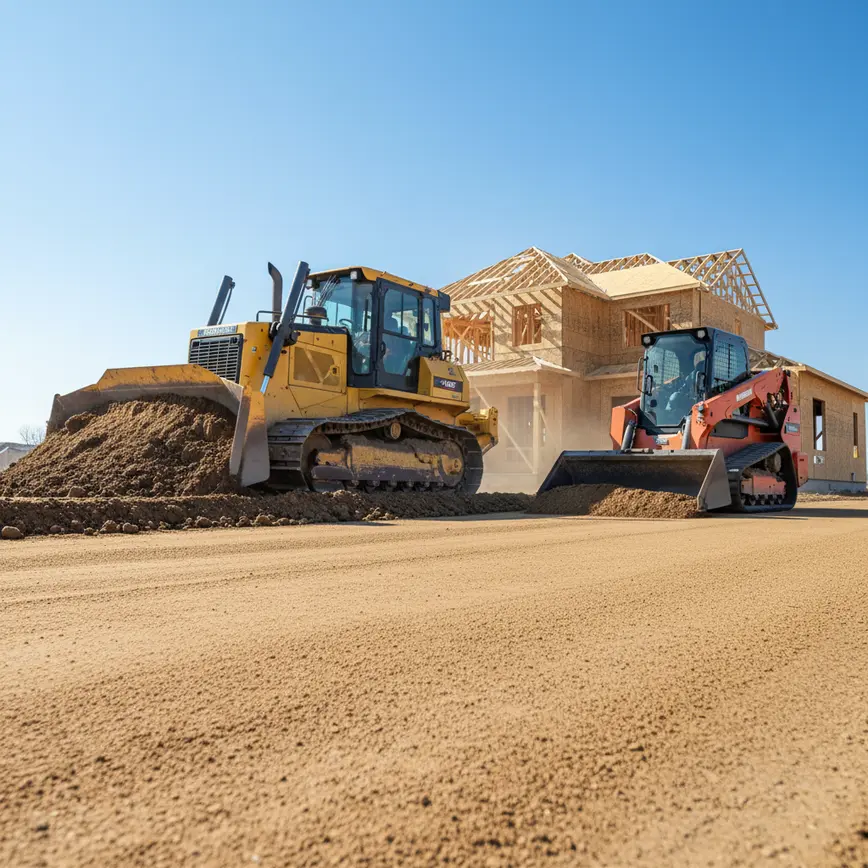

What is rough grading vs finish grading in Central Ohio?
Rough grading is the initial shaping and leveling of soil to establish the basic ground contour, while finish grading is the final smoothing and preparation of the surface for drainage, building, or landscaping. In Central Ohio, both steps are critical due to poorly drained Brookston-Crosby clay soils that require careful water management and site stability.
The Quick Answer
- Rough grading shapes the land’s basic form, while finish grading perfects the surface for final use.
- Central Ohio’s Brookston-Crosby clay holds water, making precise grading essential for drainage.
- Rough grading uses heavy equipment like dozers and excavators to move large volumes of soil.
- Finish grading involves smoothing, leveling, and preparing the surface for driveways, pads, or lawns.
- Both grading types are needed for proper site drainage and stable building foundations.
- Fortress Level Construction uses a John Deere 333G and other equipment for grading projects.
- Owner Lee Carson personally walks each site and provides flat-rate quotes.
- Ohio law requires an Ohio 811 utility locate at least 48 hours before any excavation.
Related Questions People Ask Next
Grading is crucial in Central Ohio because Brookston-Crosby clay soils drain poorly and retain water, especially in spring. Proper grading prevents water pooling, foundation issues, and erosion, making it essential for driveways, building pads, and landscaping on these challenging soils. Without grading, properties can face costly long-term problems.
Rough grading typically uses heavy machinery like dozers, excavators, and loaders to move and shape large amounts of soil. Finish grading often uses more precise equipment, such as the John Deere 333G, to smooth and level the surface for its final purpose. Both types of equipment are essential for site preparation.
Finish grading creates the final slope and surface contour, ensuring water flows away from structures and does not pool. This is especially important in Central Ohio’s poorly drained soils, where improper finish grading can lead to long-term water and foundation problems. Proper finish grading protects landscaping, driveways, and building pads.
Yes, Ohio law (Ohio Revised Code 3781.28) requires an Ohio 811 utility locate at least 48 hours before any digging or excavation, including grading. This helps prevent damage to underground utilities and ensures safety on your property. Scheduling a locate is a legal requirement and protects both workers and homeowners from costly accidents.
What does rough grading involve?
Rough grading involves moving and shaping soil to establish the basic contours of a site, setting the groundwork for drainage and construction. This step uses heavy equipment to cut, fill, and level the ground, creating the essential base for future work and preventing water problems in Central Ohio’s challenging clay soils.
In Central Ohio, rough grading is the first phase of site preparation. It creates the general shape of the land, adjusting slopes and elevations as needed.
This process is especially important on Brookston-Crosby clay, where poor drainage can cause water to pool if the site is not properly contoured.
What does finish grading achieve?
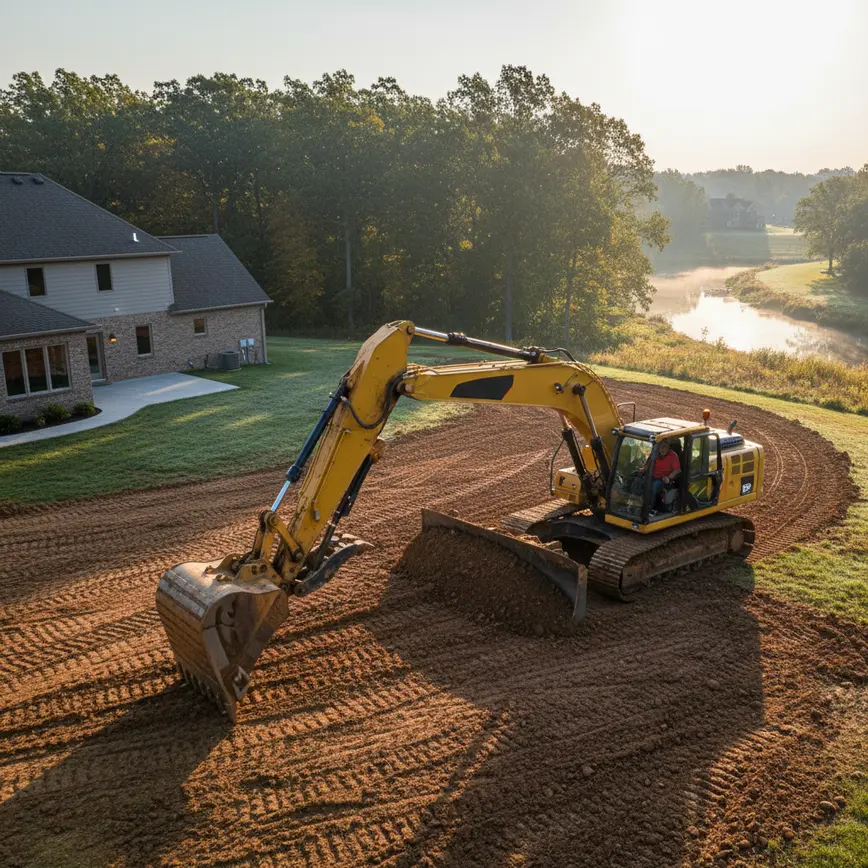
Finish grading provides the final surface preparation, smoothing and leveling the soil for driveways, building pads, or landscaping. It removes high spots, fills low areas, and ensures a uniform surface. In Central Ohio, finish grading is vital to prevent water retention and support stable, long-lasting construction or landscaping projects.
After rough grading, finish grading refines the surface, removing high spots and filling low areas to create a uniform layer.
This step is critical for Central Ohio properties, as it prevents water retention and supports long-term site stability.
How do rough and finish grading work together?
Rough grading sets the overall shape and elevation of the land, while finish grading perfects the surface for its intended use. Both steps are necessary for proper drainage, foundation stability, and usability in Central Ohio, especially with the heavy Brookston-Crosby clay that can cause water issues if not properly managed.
Rough grading creates the initial slopes and elevations, while finish grading fine-tunes the surface for its end use.
Together, they address drainage and stability issues common in Brookston-Crosby clay, reducing future maintenance needs.
What are the local requirements for grading in Central Ohio?
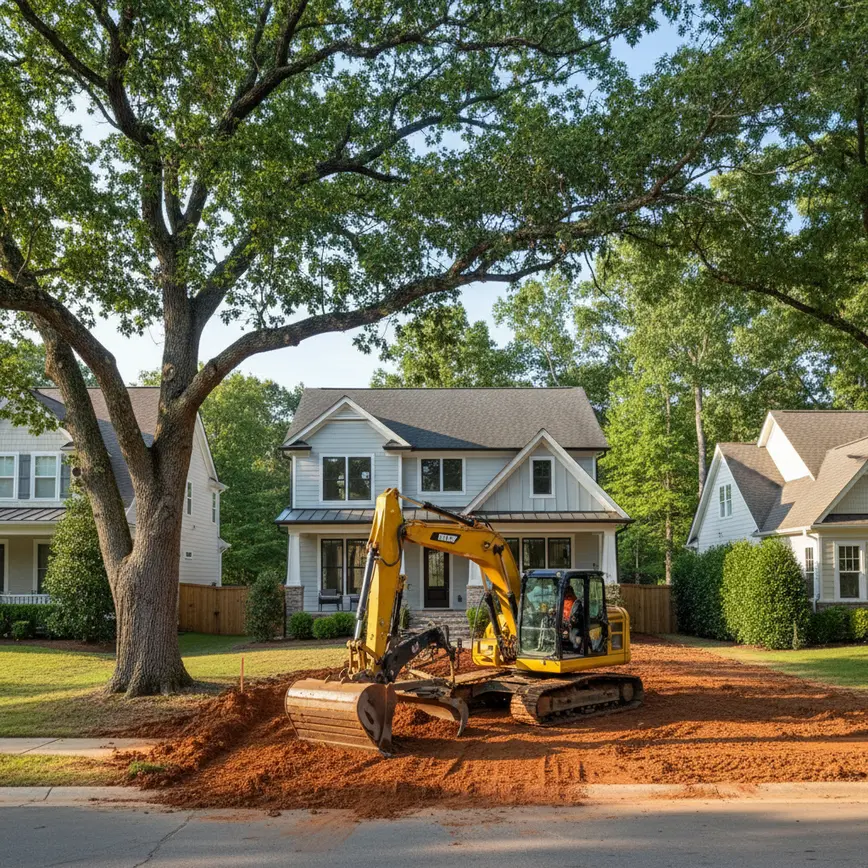
Before grading, Ohio law requires an Ohio 811 utility locate at least 48 hours in advance to prevent accidental damage to underground utilities. Local soils and drainage conditions also make professional grading essential for safe, effective site preparation, especially in areas with water-retentive Brookston-Crosby clay and strict safety regulations.
Ohio Revised Code 3781.28 mandates a utility locate before any excavation or grading to avoid damaging underground lines.
Professional grading is especially important in Central Ohio due to the water-holding Brookston-Crosby clay and strict safety regulations.
How do rough grading and finish grading differ?
Rough grading shapes the basic landform, while finish grading creates the final, smooth surface. Both are vital for effective drainage and site readiness in Central Ohio, particularly due to the heavy, water-holding Brookston-Crosby clay that can cause issues if grading is not done correctly.
| Aspect | Rough Grading | Finish Grading | Importance in Central Ohio |
|---|---|---|---|
| Purpose | Shape land, set elevations | Smooth and level for final use | Both prevent water issues in clay soils |
| Equipment | Dozer, excavator, loader | John Deere 333G, fine grading tools | Proper equipment avoids soil compaction |
| Timing | First step after clearing | Final step before construction | Sequence ensures drainage and stability |
| Drainage Impact | Establishes basic water flow | Ensures surface water runs off | Critical due to poorly drained soils |
| Typical Uses | Building pads, driveways, rough site prep | Lawns, landscaping, final building pads | Both needed for lasting results |
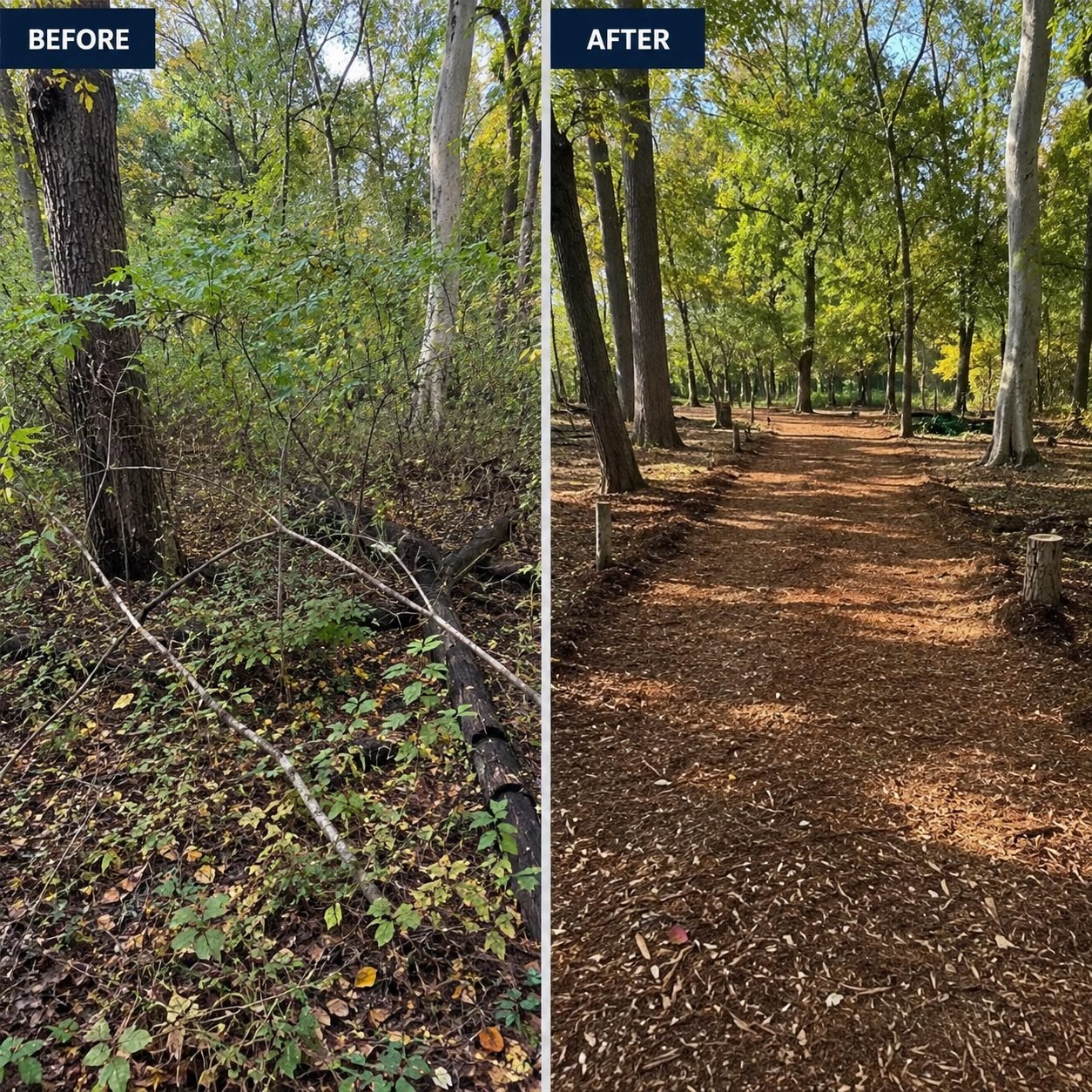
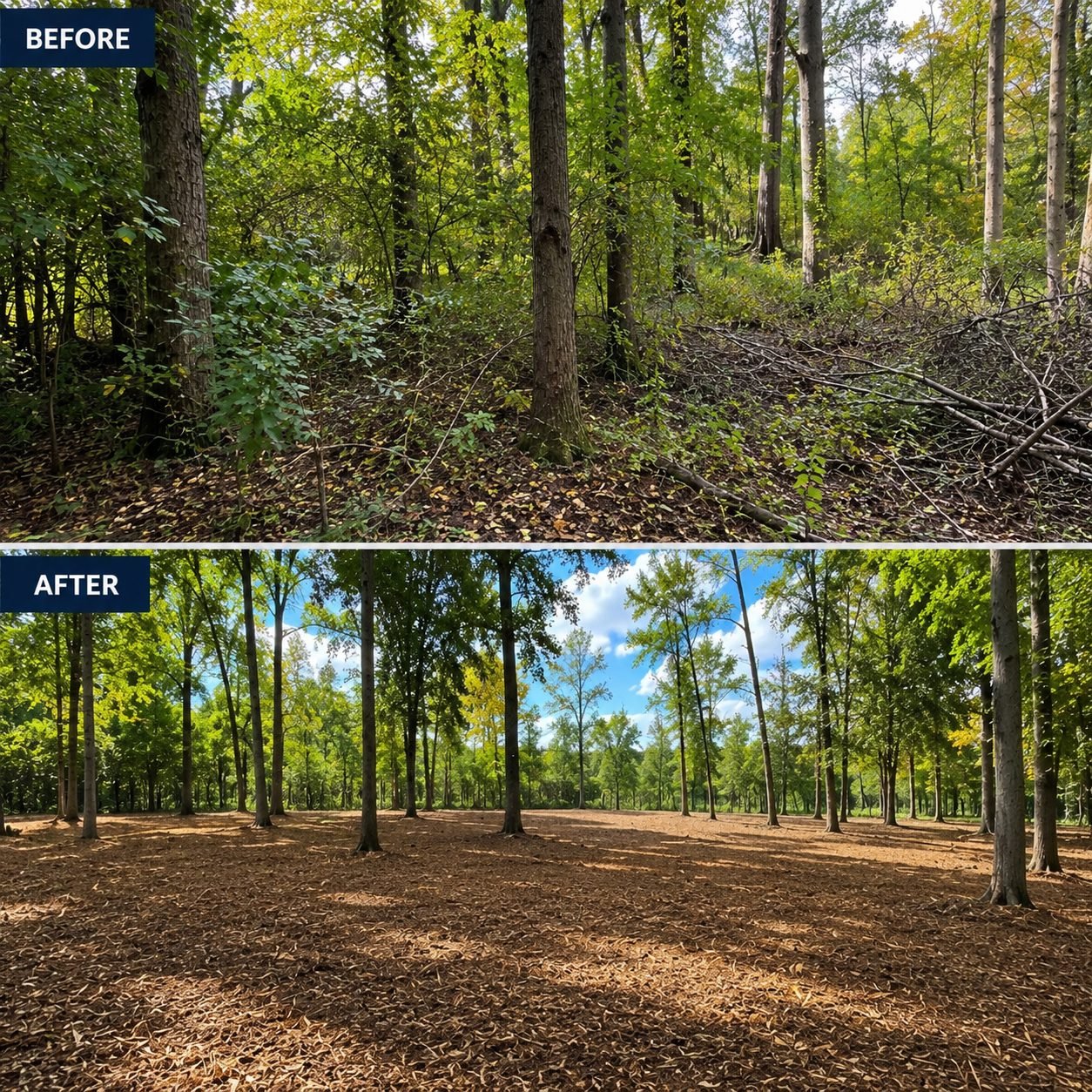
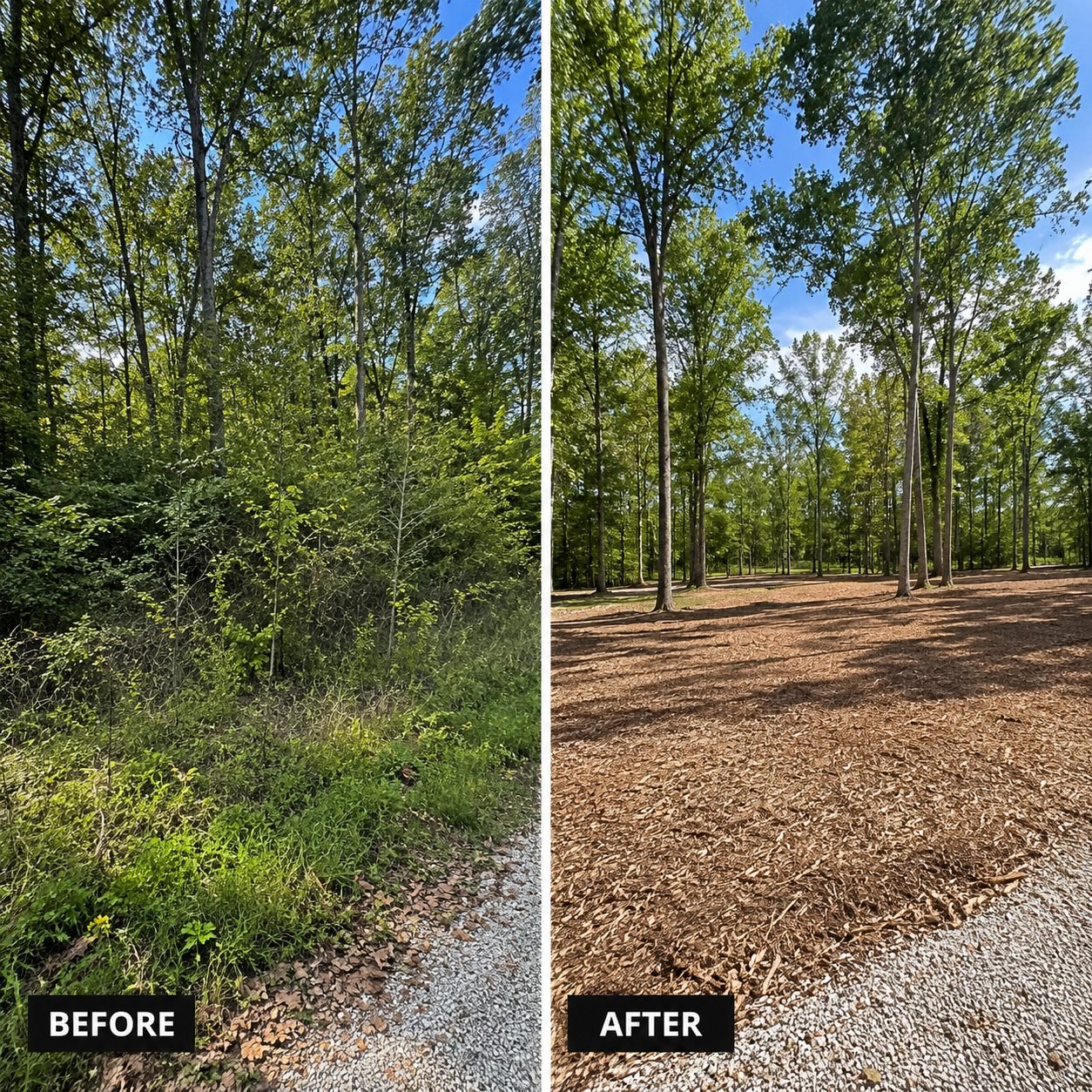
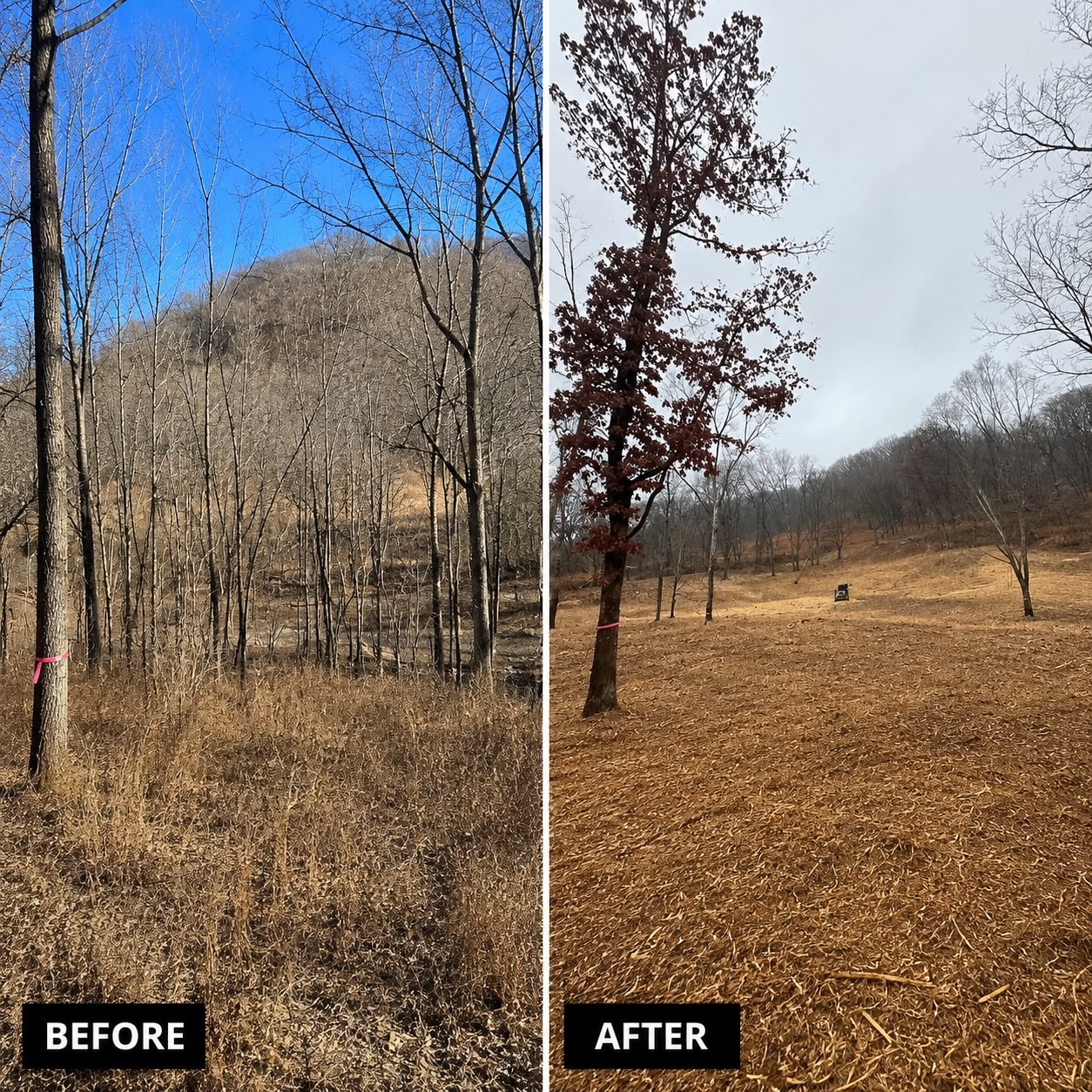
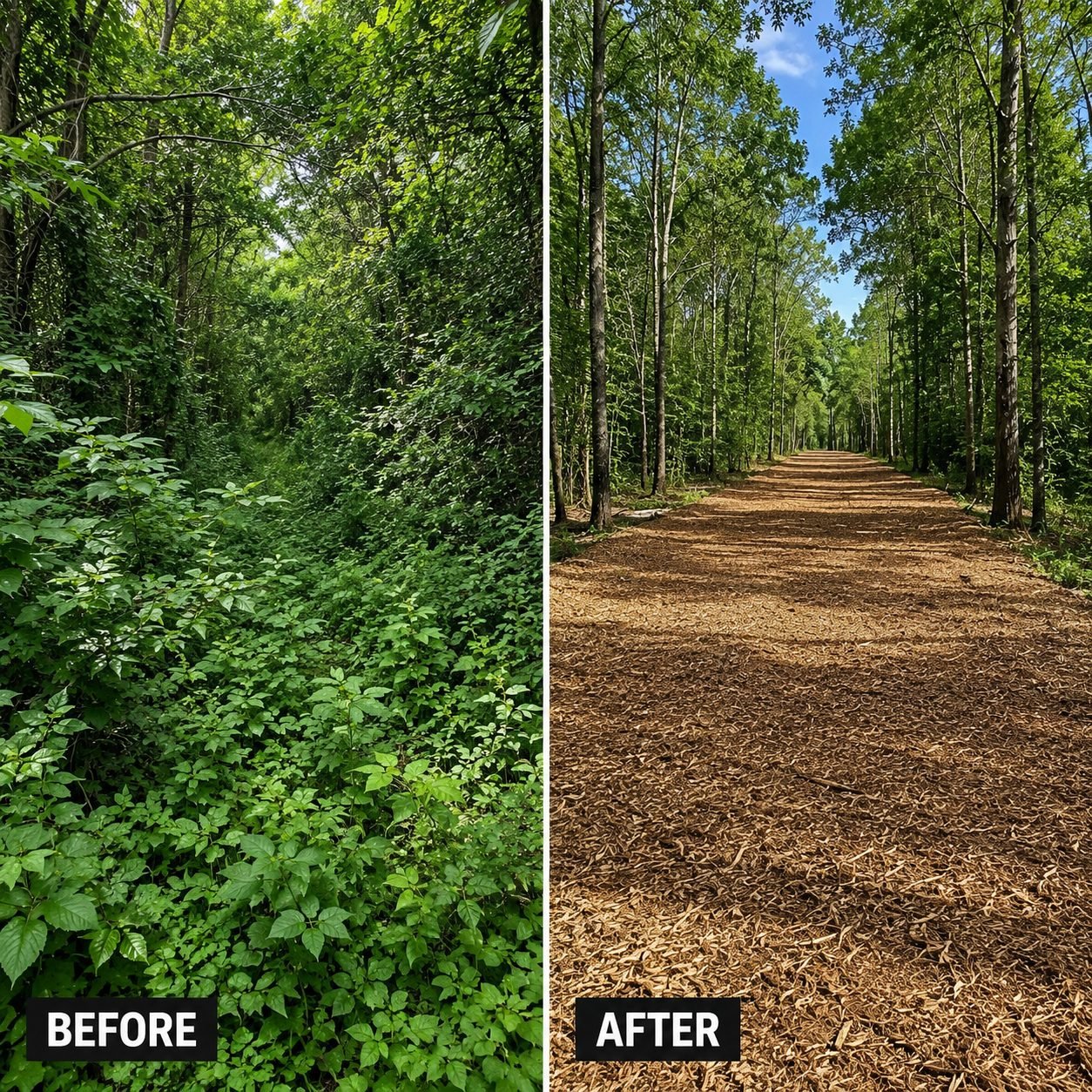
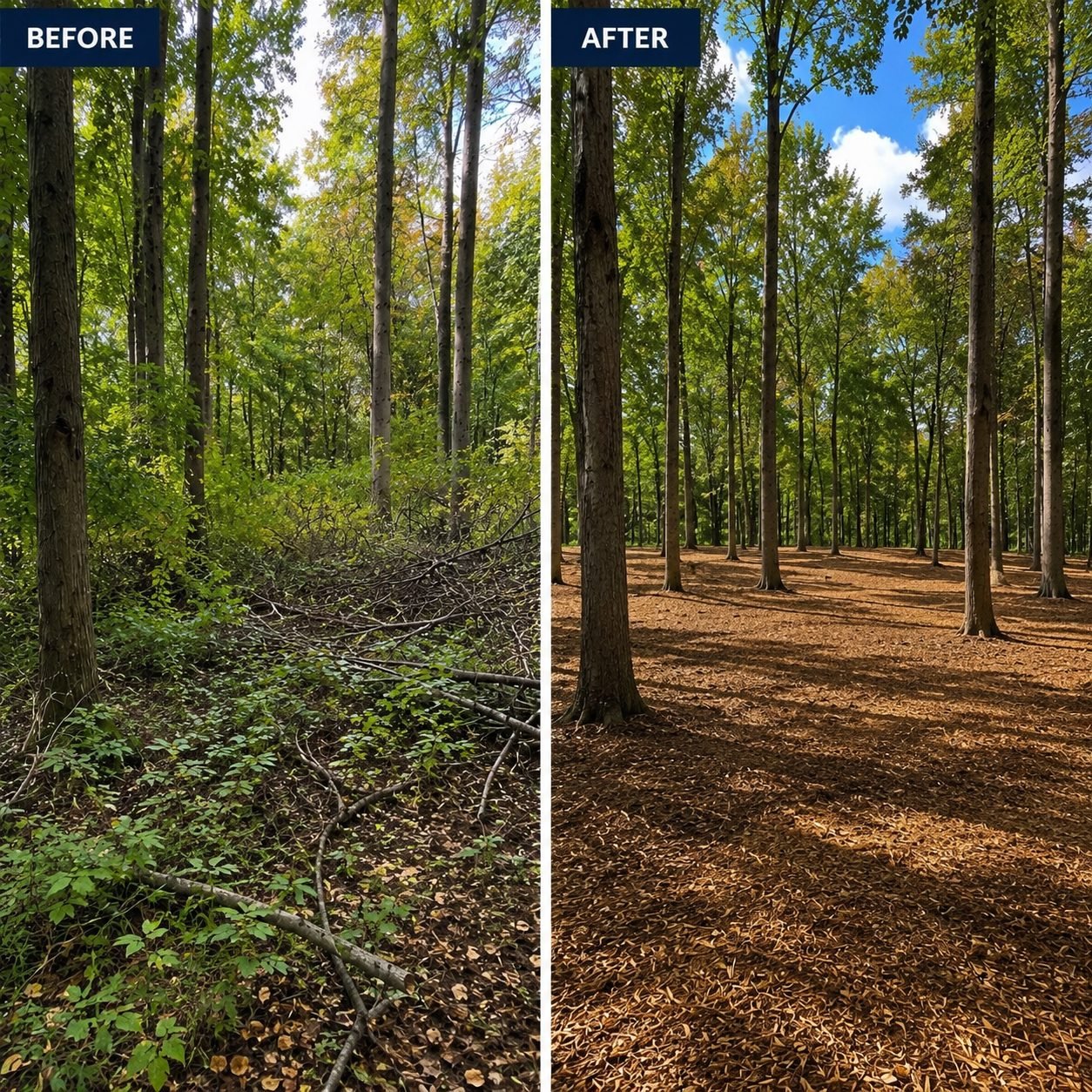
What Does Central Ohio Land Clearing Look Like Before and After?
Land clearing turns dense, unusable Central Ohio ground into open, walkable property. These are real Fortress jobs across Franklin, Delaware, Licking, Fairfield, and Union counties, cleared with mature trees left standing and no debris piles to burn or haul.
Frequently asked questions
No, skipping rough grading can lead to uneven surfaces, poor drainage, and unstable foundations. Rough grading is essential for shaping the land and establishing proper elevations before the precise work of finish grading, especially on Central Ohio’s heavy Brookston-Crosby clay soils, which are prone to water retention and drainage problems if not properly prepared.
The time required for grading depends on the site’s size, soil conditions, and the project’s complexity. In Central Ohio, most grading projects can be evaluated and scheduled for a same-week walk-through. Owner Lee Carson responds within 2-3 business hours to set up a quote and discuss the timeline for your specific needs.
Improper grading can lead to water pooling, erosion, foundation damage, and unusable driveways or yards. In Central Ohio, the Brookston-Crosby clay makes these issues more likely if grading is not done correctly. Poor grading may also increase maintenance costs and cause persistent drainage or structural problems on your property.
Yes, both rough and finish grading are required to create a stable, level base and ensure proper drainage for driveways and building pads. This is especially important in areas with heavy clay soils like Central Ohio, where improper grading can cause water to pool, leading to long-term damage and costly repairs.
Owner Lee Carson, a combat veteran, personally walks each site and oversees all grading work. Fortress Level Construction has served five Central Ohio counties since 2009 and uses professional equipment, including the John Deere 333G, to ensure every grading project is completed to the highest standards for drainage and stability.
Ohio law requires an Ohio 811 utility locate at least 48 hours before any excavation or grading work begins. This ensures safety and compliance with state regulations before starting any site work. Scheduling a utility locate is a legal requirement and helps prevent costly and dangerous utility strikes during grading.
What Other Services Does Fortress Offer in Central Ohio?
Land clearing is one of nine services Fortress Level Construction runs across Central Ohio, so one owner-operated crew can clear, grade, and prep a site end to end.
Get a Flat-Rate Quote from Lee Carson
Owner-operated land clearing across all five Central Ohio counties. Send your property details and Lee gets back to you within 2 to 3 hours during business hours with one flat number after a free on-site walk-through.