
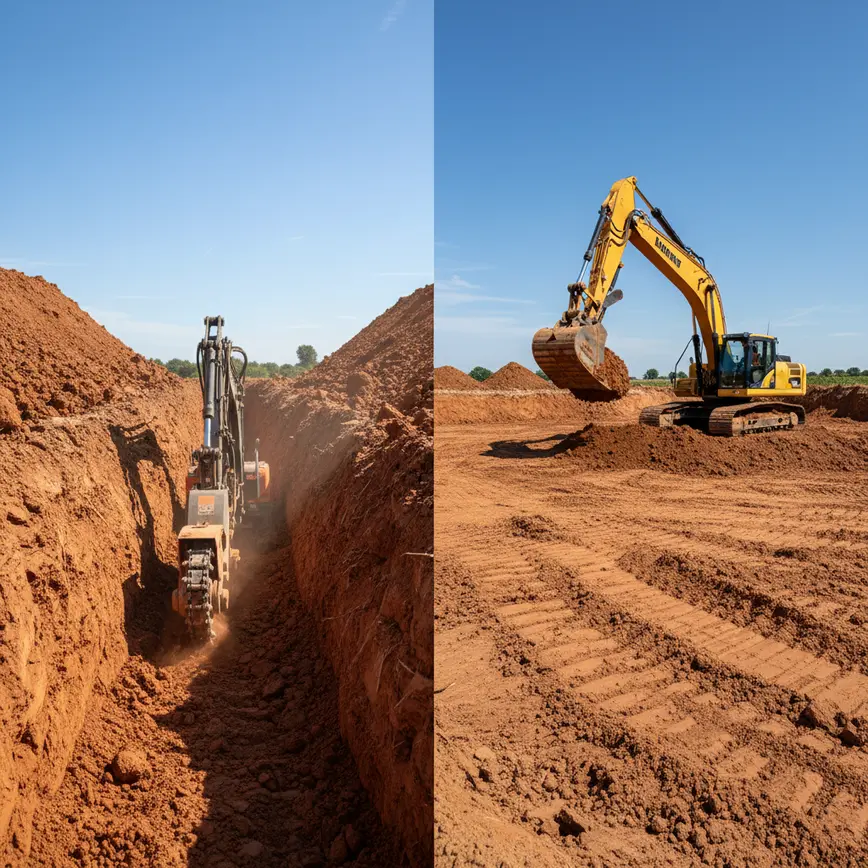

What is the difference between trenching and excavation in Central Ohio?
Trenching in Central Ohio means digging narrow, long channels for utilities or drainage, while excavation refers to broader soil removal for foundations, ponds, or site prep. Both require an Ohio 811 utility locate at least 48 hours before digging, due to local clay soils and legal safety requirements. Each method uses different equipment and serves distinct construction needs.
The Quick Answer
- Trenching creates narrow, linear cuts for utilities, while excavation removes larger soil areas for foundations or ponds.
- Both services require an Ohio 811 utility locate at least 48 hours before starting work.
- Brookston-Crosby clay in Central Ohio can slow digging and holds water into spring.
- Excavation covers grubbing, footers, ponds, foundations, and site work below grade.
- Trenching is essential for installing water, sewer, or electrical lines.
- Fortress Level Construction is licensed, insured, and has operated since 2009.
- Owner Lee Carson, combat veteran, provides flat-rate, owner-walked quotes.
- Service is available in Franklin, Delaware, Licking, Fairfield, and Union counties.
Related Questions People Ask Next
Ohio law (ORC 3781.28) requires a utility locate before any digging to prevent damage to underground utilities and ensure safety. This process must be completed at least 48 hours before starting trenching or excavation in Central Ohio, and it is essential for legal compliance and project safety.
Brookston-Crosby clay is poorly drained and holds water, especially in spring. This can make excavation and trenching more challenging, requiring proper equipment, careful timing, and experienced operators to avoid delays or soil instability during Central Ohio projects, particularly when the ground is saturated or soft.
Trenching typically uses narrow buckets or trenchers, while excavation may use excavators, dozers, and loaders for larger, deeper soil removal. The choice of equipment depends on the project’s size, depth, and purpose in Central Ohio, as well as the need to handle heavy, wet Brookston-Crosby clay.
Fortress Level Construction, owned by Lee Carson, serves five Central Ohio counties and provides both trenching and excavation services. For a flat-rate, owner-walked quote and same-week walk-throughs, call (844) 656-0129 to speak directly with Lee. He responds in 2-3 hours during business hours.
What is trenching used for in Central Ohio?
Trenching is mainly used to install underground utilities like water, sewer, or electrical lines. In Central Ohio, it involves digging narrow, straight channels below grade, often through heavy Brookston-Crosby clay, and always requires a utility locate to avoid damaging existing lines. Trenching is vital for new construction and repairs.
Trenching creates long, narrow cuts in the ground for pipes, cables, or drainage systems. This process is essential for utility installation and repair.
Due to local soil and legal requirements, all trenching projects must have an Ohio 811 utility locate at least 48 hours before digging begins.
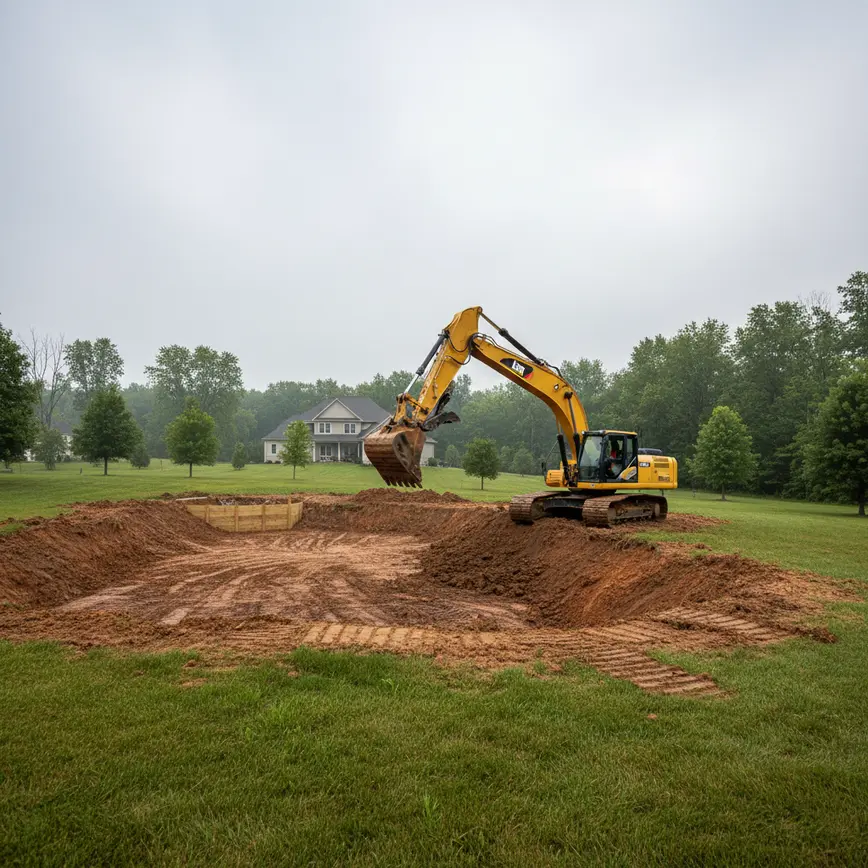
How is excavation different from trenching in Central Ohio?
Excavation in Central Ohio involves removing larger soil areas for foundations, ponds, or site prep, not just narrow channels. It requires heavy equipment and careful planning due to the region’s clay soils and legal safety steps. Excavation also includes grubbing, digging footers, and preparing bare-soil sites below grade.
Excavation includes grubbing, digging for footers, creating ponds, and preparing foundations. It is broader and deeper than trenching.
Both excavation and trenching must follow Ohio 811 requirements and consider the poorly drained Brookston-Crosby clay common in the area.
What legal steps are required before excavation or trenching?
Ohio law mandates an Ohio 811 utility locate at least 48 hours before any excavation or trenching begins. This ensures underground utilities are marked and helps prevent accidents or service disruptions during digging. Skipping this step can result in fines, liability, and serious safety hazards for workers and property.
The Ohio Revised Code 3781.28 requires property owners or contractors to request a utility locate before any soil disturbance.
Failure to comply can result in fines or liability for damages. Always schedule your locate before starting any project in Central Ohio.
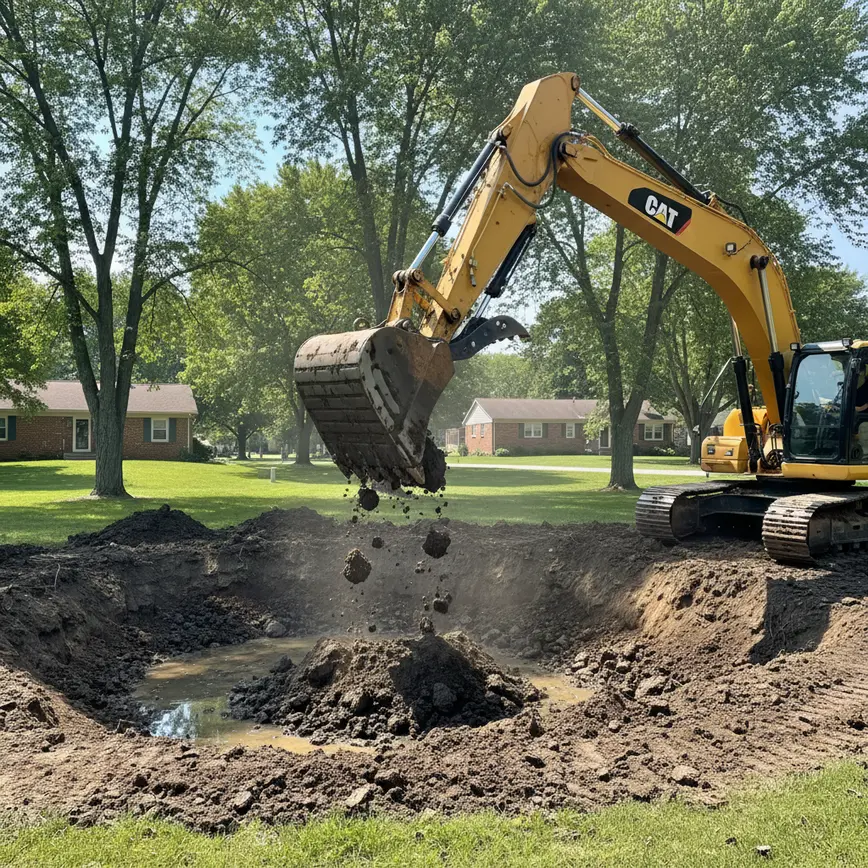
How does Central Ohio’s soil impact trenching and excavation?
Brookston-Crosby clay dominates Central Ohio and is poorly drained, making trenching and excavation more challenging, especially in wet seasons. Projects may require extra time and specialized equipment to manage water retention and soil stability. Planning and timing are critical to avoid delays and ensure safe, effective digging.
Heavy clay soils hold water well into spring, causing delays or complications with digging.
Contractors must plan around these conditions to ensure safe, efficient trenching and excavation in the region.
How do trenching and excavation compare in Central Ohio?
Trenching and excavation differ in purpose, scope, equipment, and challenges, especially with local clay soils and legal requirements in Central Ohio. Understanding these differences helps property owners and contractors choose the right approach for utilities, foundations, or site work.
| Aspect | Trenching | Excavation | Central Ohio Considerations |
|---|---|---|---|
| Purpose | Install utilities or drainage | Foundations, ponds, site prep | Both require utility locate |
| Scope | Narrow, linear cuts | Large, open areas | Affected by Brookston-Crosby clay |
| Equipment | Trencher, narrow bucket | Excavator, dozer, loader | Must handle heavy, wet clay |
| Legal Steps | Ohio 811 locate | Ohio 811 locate | 48-hour notice required |
| Soil Impact | Water retention may slow work | Clay can cause instability | Plan for spring wetness |
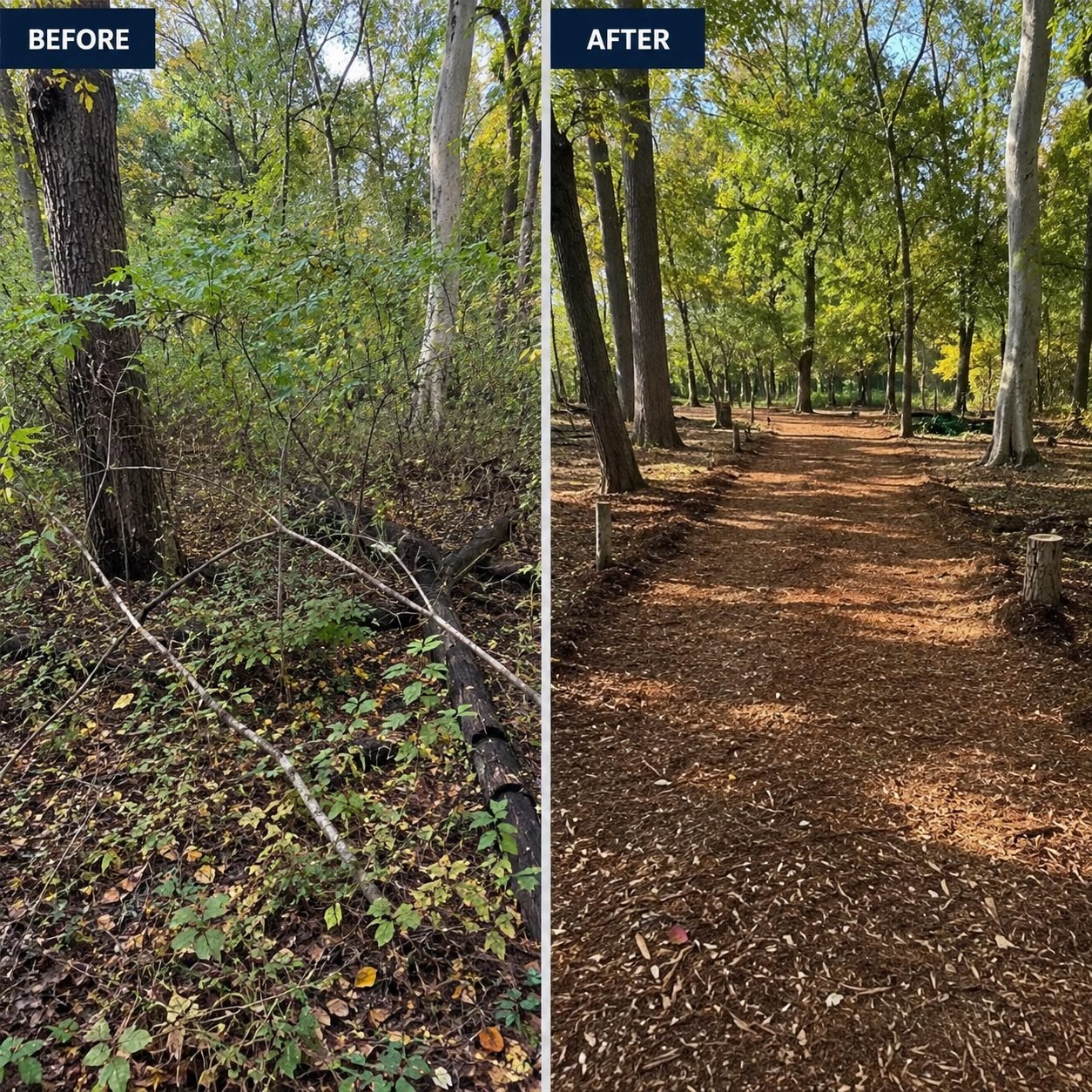
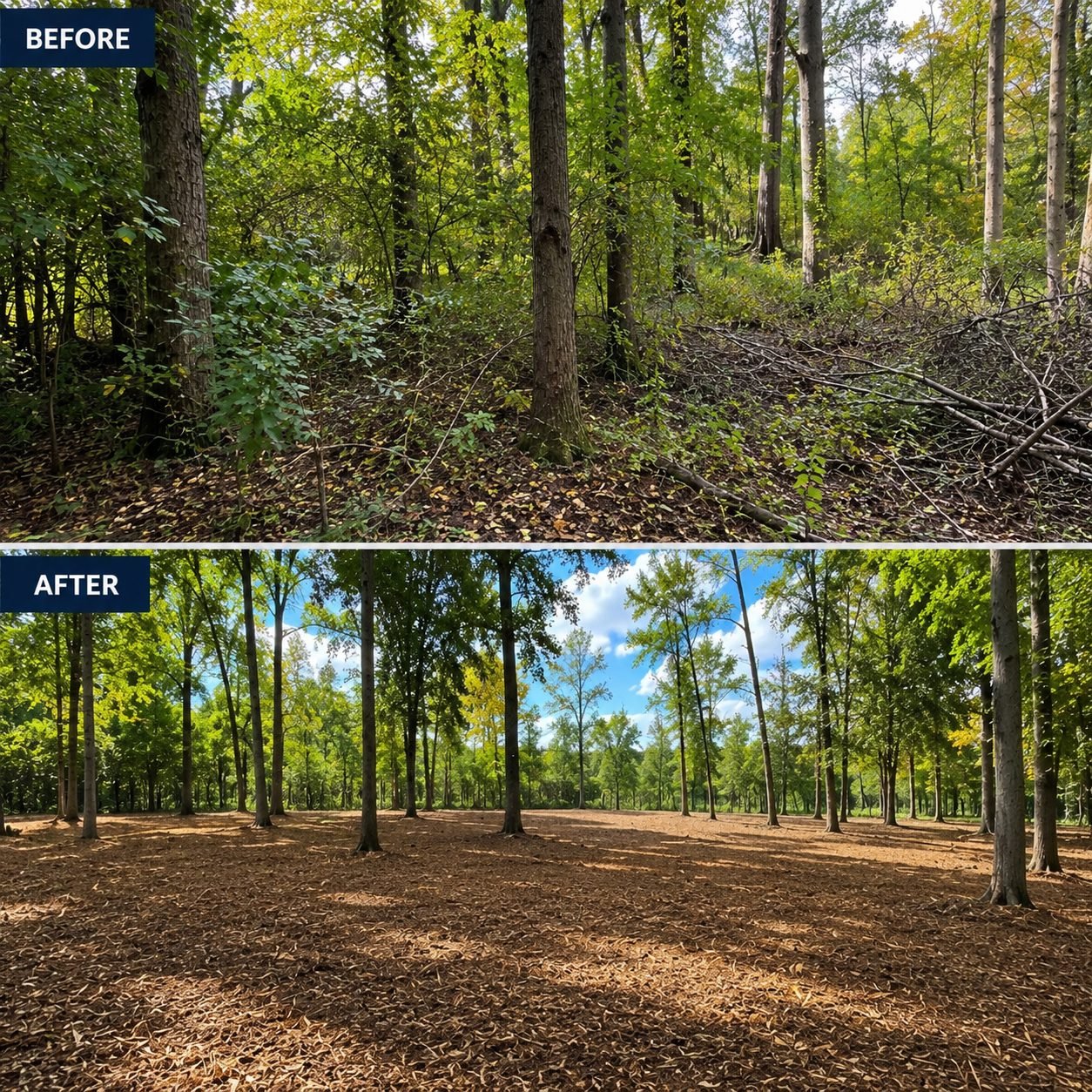
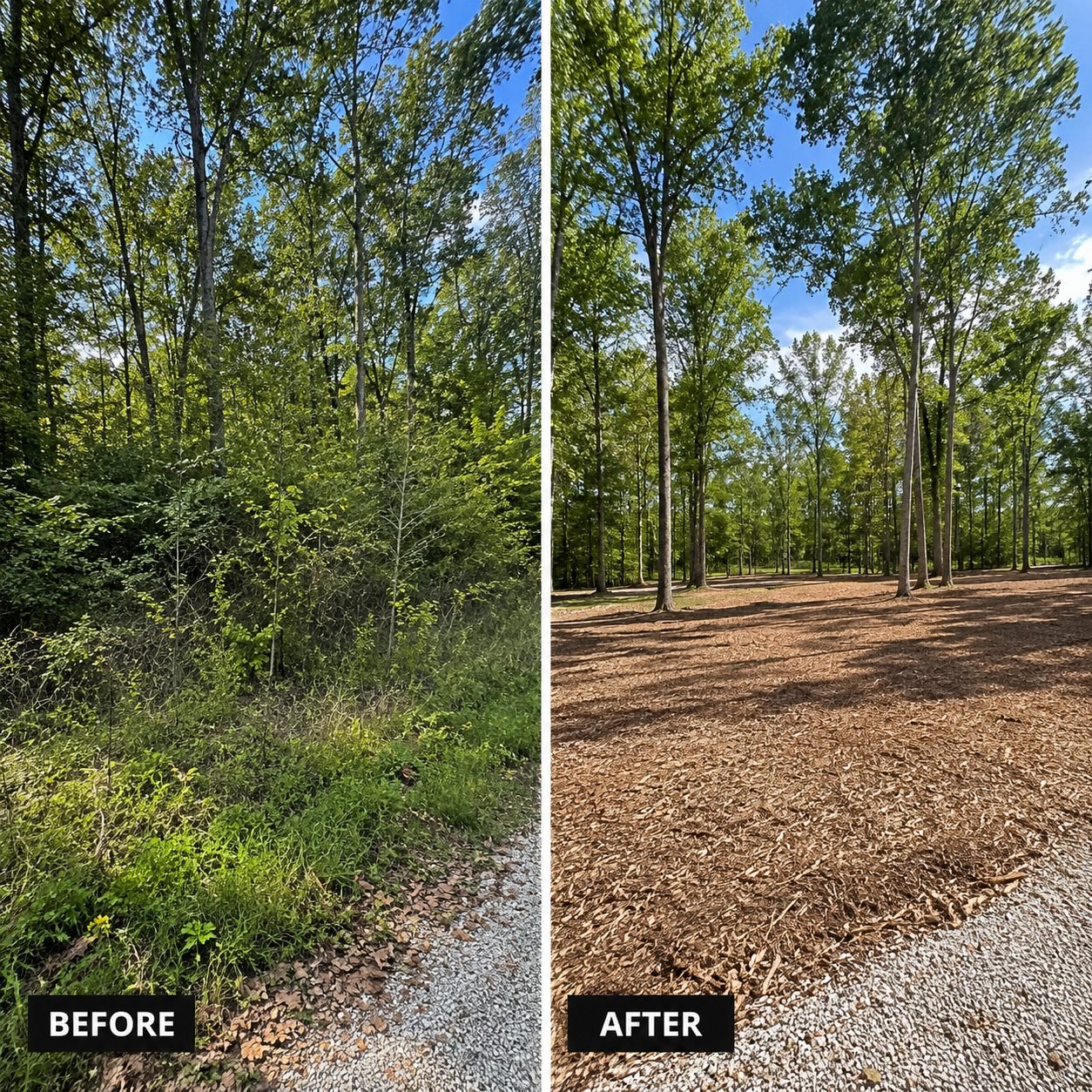
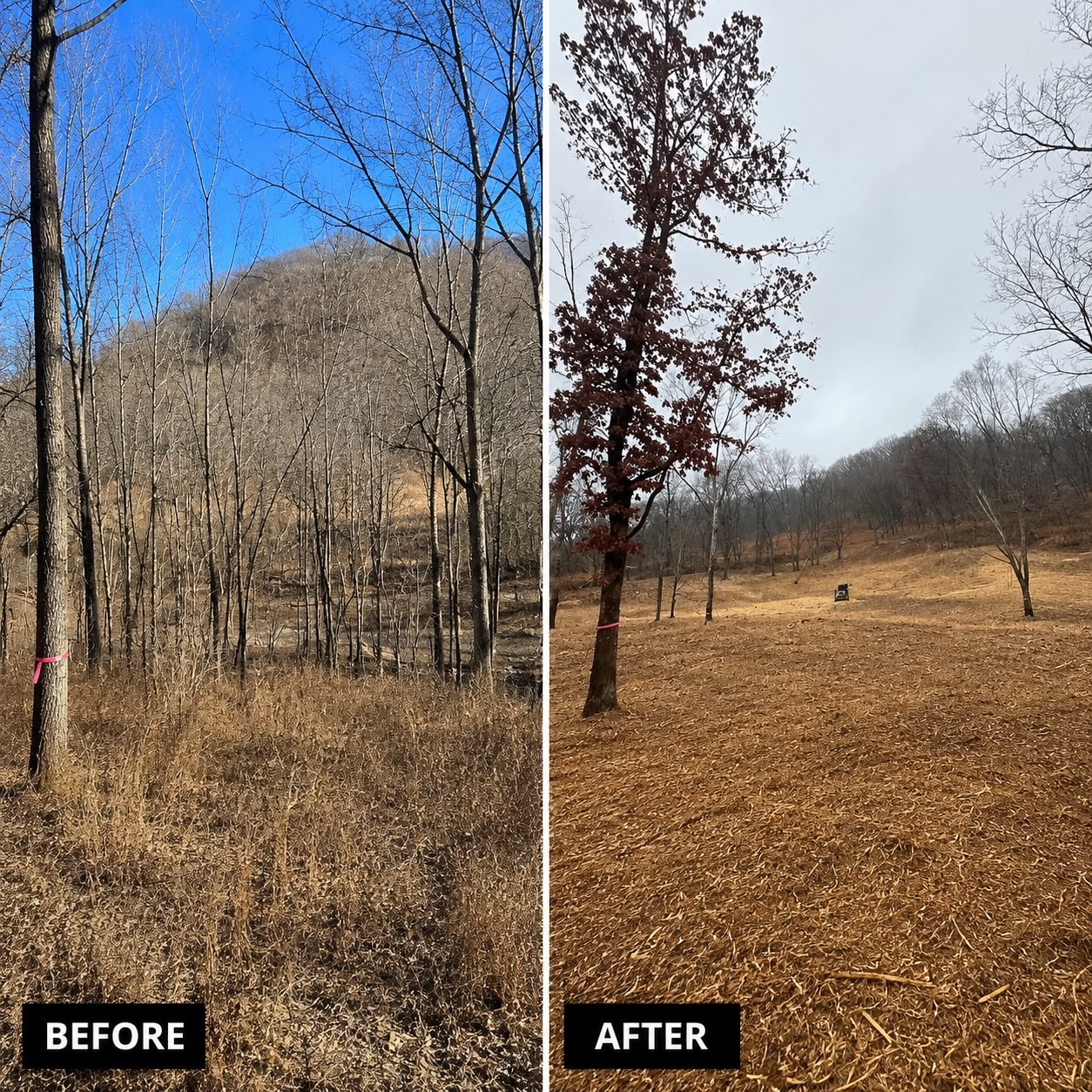
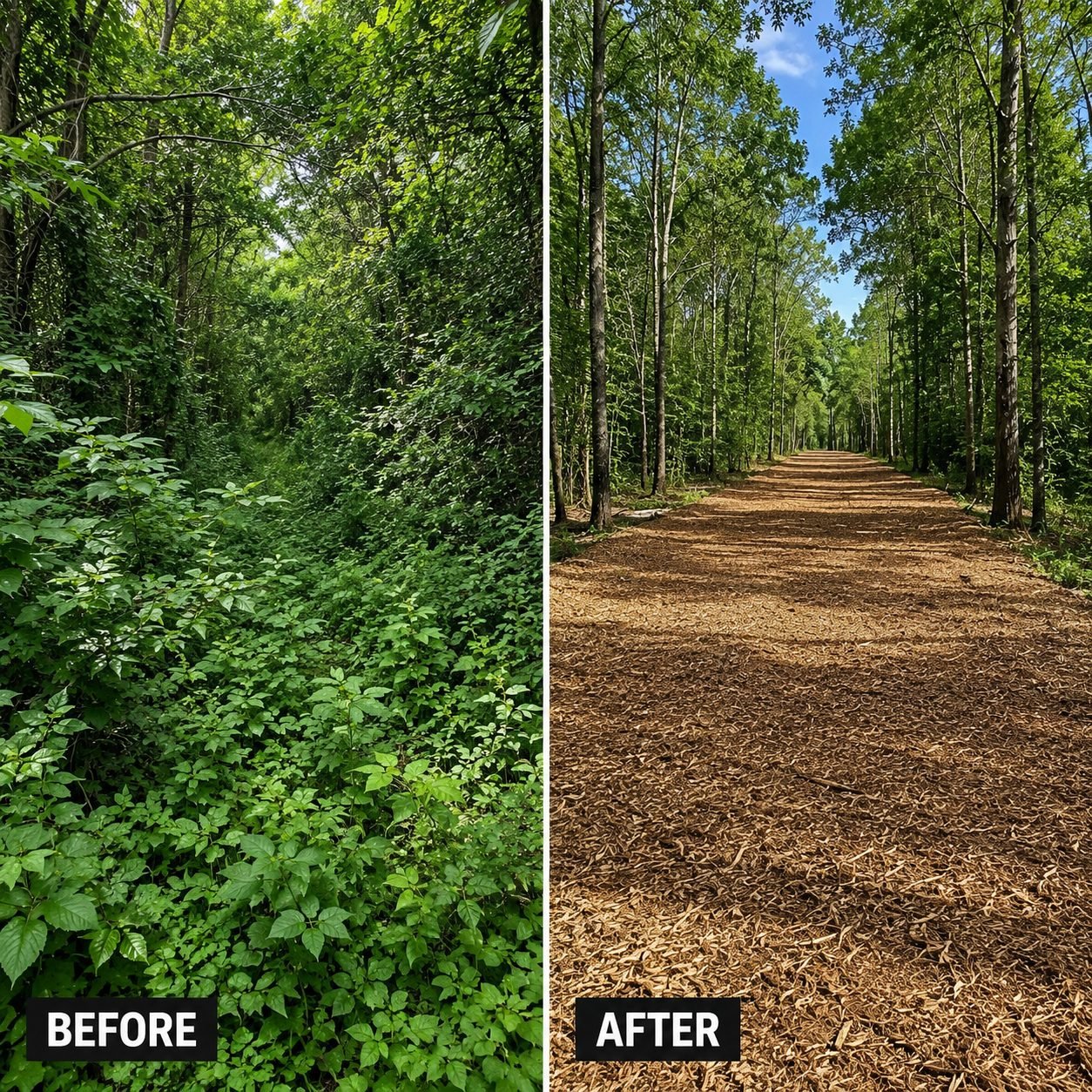
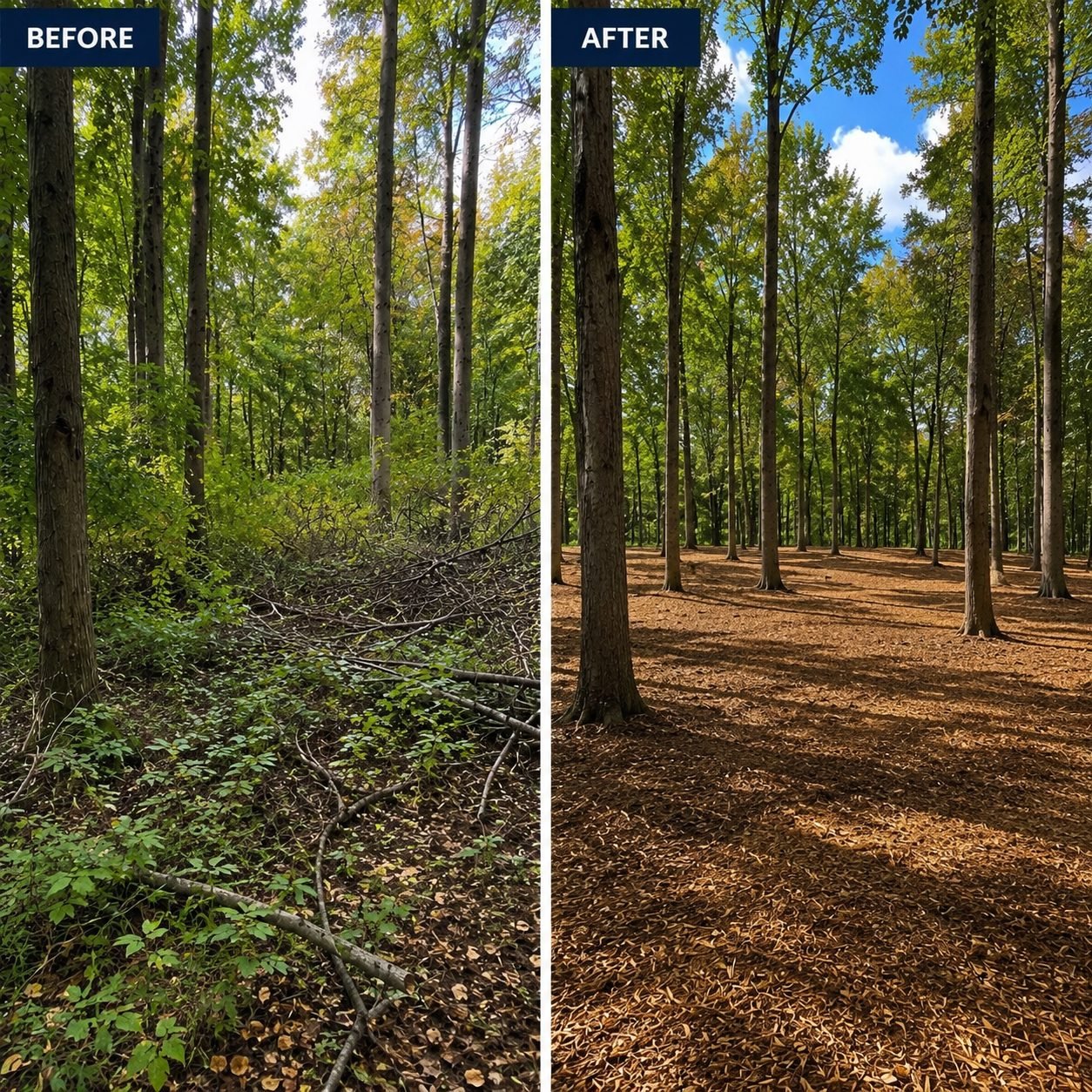
What Does Central Ohio Land Clearing Look Like Before and After?
Land clearing turns dense, unusable Central Ohio ground into open, walkable property. These are real Fortress jobs across Franklin, Delaware, Licking, Fairfield, and Union counties, cleared with mature trees left standing and no debris piles to burn or haul.
Frequently asked questions
Permits may be required depending on your township, city, or the specific scope of your project. Always check with your local building department before starting work. Additionally, an Ohio 811 utility locate is legally required at least 48 hours before any digging, regardless of permit status, to ensure safety and compliance.
The utility locate process must be started at least 48 hours before any trenching or excavation work begins. This allows utility companies time to mark underground lines. Scheduling the locate well in advance helps avoid delays and ensures your project can start on time and in compliance with Ohio law.
If marked utilities are found, only hand digging is allowed within 18 inches of the marked lines to prevent accidental damage. This safety measure protects workers and property. Always follow the utility locate markings and exercise caution to avoid service disruptions, fines, or liability during your project.
Yes, but winter conditions can make trenching and excavation more difficult in Central Ohio. Frozen or saturated Brookston-Crosby clay may require specialized equipment and careful timing. Projects may take longer and need extra planning to manage soil stability, water retention, and safe equipment operation.
The property owner or contractor is responsible for contacting Ohio 811 to schedule the utility locate before any trenching or excavation begins. This step is required by law and must be completed at least 48 hours in advance to ensure underground utilities are properly marked and the site is safe.
Skipping the Ohio 811 utility locate before trenching or excavation is illegal in Ohio. It can result in fines, liability for damages, and significant safety risks, including utility strikes. Always schedule the locate at least 48 hours before starting any digging to protect workers, property, and underground services.
What Other Services Does Fortress Offer in Central Ohio?
Land clearing is one of nine services Fortress Level Construction runs across Central Ohio, so one owner-operated crew can clear, grade, and prep a site end to end.
Get a Flat-Rate Quote from Lee Carson
Owner-operated land clearing across all five Central Ohio counties. Send your property details and Lee gets back to you within 2 to 3 hours during business hours with one flat number after a free on-site walk-through.