

When Is Land Clearing Best on Ostrander, Ohio Cropland?
Land clearing is best on Ostrander, Ohio cropland between harvest and planting, on frozen ground. That window fits the farming calendar because the field is already out of production, and frozen soil carries the machine cleanly where saturated spring clay would rut the field badly enough to need repair.
The right window on Ostrander cropland
- Between harvest and planting is the window that fits the farming calendar.
- Frozen ground carries the machine cleanly with minimal rutting.
- Saturated spring clay is the worst case and can stop work entirely.
- Leaves down means boundary pins, tile lines and the fence are visible.
- The field is out of production anyway, so there is no crop cost.
- Booking early enough to choose the window is the main lever on finish quality.
What Else Do People Ask About Land Clearing in Ostrander, Ohio?
Both work. Frozen is the cleanest, and it coincides with the window when the field is out of production.
Saturated clay ruts deeply and the repair costs more than waiting would have.
On boundaries, sometimes, with care about access. Field work waits for the ground to be free.
Far enough to choose conditions rather than take whatever exists when the machine is free.
Why Does the Harvest to Planting Window Suit Ostrander, Ohio?
Because the field is already out of production and the ground is at its best working condition of the year. Those two things coincide, which is unusual and worth taking advantage of.
There is no standing crop to work around, no compaction concern on ground about to be planted, and no conflict with field operations.
Frozen soil in that window carries the machine with almost no rutting, so the field is left in the condition it started in.
With leaves down the operator can also see boundary pins, tile lines and the fence itself, all of which matter when work runs to a property line.
What Goes Wrong on Saturated Ostrander, Ohio Ground?
The machine ruts the field, the finish is poor, and the repair costs more than the delay would have. Saturated clay has almost no bearing strength, so equipment displaces material rather than rolling across it.
Late spring is the specific problem window here. Snowmelt and rain keep clay saturated for weeks, and a field pushed through in those conditions carries the damage into the season.
On cropland the consequence is worse than on rough ground, because ruts have to be repaired before the field can be worked normally again.
Stopping when conditions turn is arithmetic rather than caution. The delay costs less than the repair every time.
How Should Ostrander, Ohio Field Work Be Booked?
Early enough to choose the window. That is the main lever an owner has over both finish quality and the risk of a job stopping midway, and it costs nothing to exercise.
Booking close to the intended date means taking whatever ground conditions exist, which on Delaware County clay is a genuine gamble in any season but midwinter.
A large parcel splits comfortably across two windows if that suits the farming calendar better than one continuous block.
The likely window is flagged at the walk rather than a date being promised that the ground may not support. See forestry mulching.
When Should Ostrander, Ohio Ground Be Worked?
Working conditions through the year on Ostrander cropland. The best window coincides with the field being out of production, which is why it is the standard choice.
| Window | Ground condition | Finish quality | Suitability |
|---|---|---|---|
| Midwinter, frozen | Firm, carries the machine | Cleanest | Best |
| Late autumn, after harvest | Usually workable | Good | Very good |
| Deep winter, snow on frozen | Firm | Clean | Good |
| Thaw cycle | Unpredictable | Variable | Assess daily |
| Early spring, saturated | No bearing strength | Poor, needs repair | Avoid |
| Midsummer, dry | Firm | Good | Good, crop permitting |
| After sustained rain, any season | Machine sinks | Damage exceeds work | Stop work |
Working practice published by Fortress Level Construction for its Delaware County operation, August 2026. Soil depth, slope class and erosion factor for any Ostrander parcel are published in the USDA NRCS Web Soil Survey (accessed August 2026).
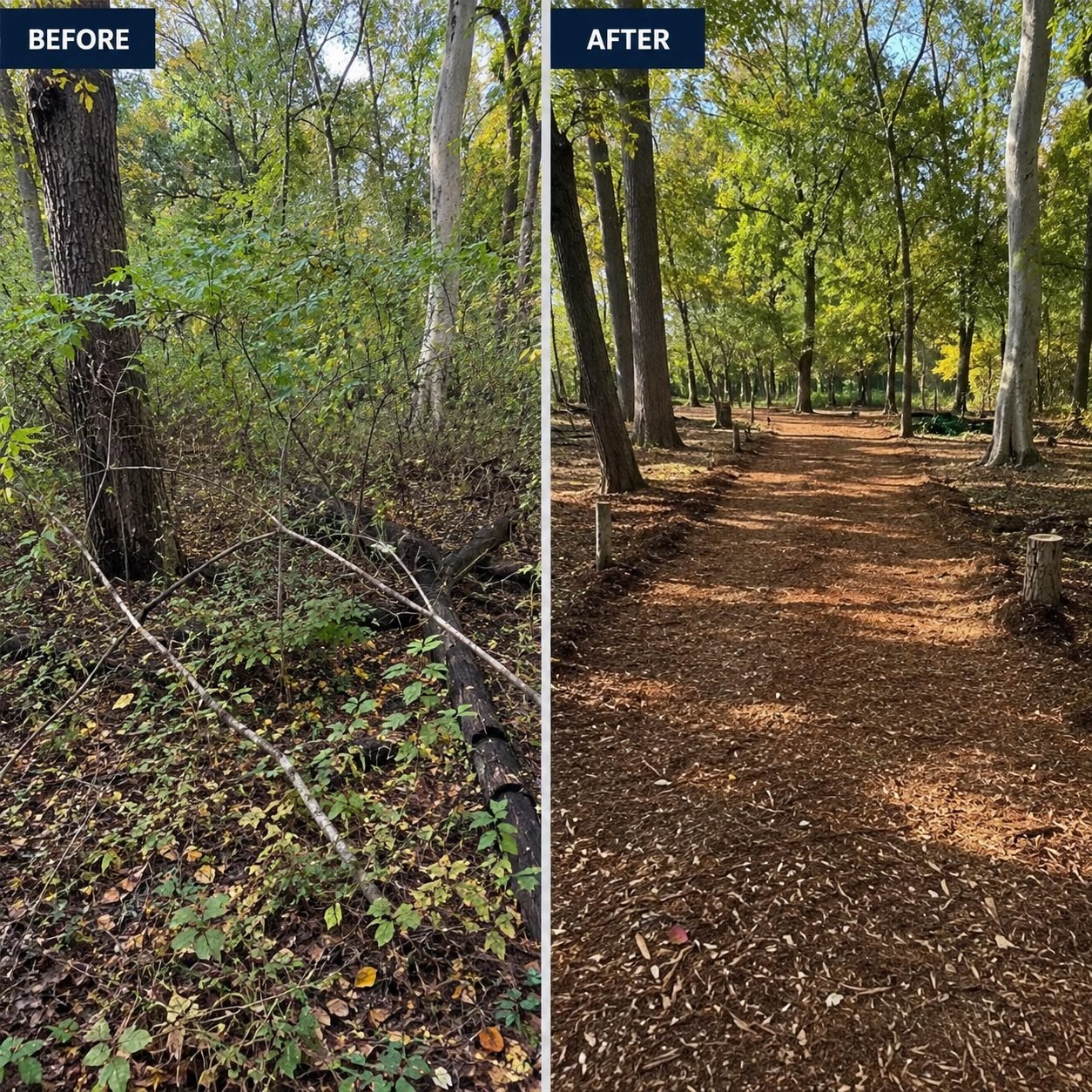
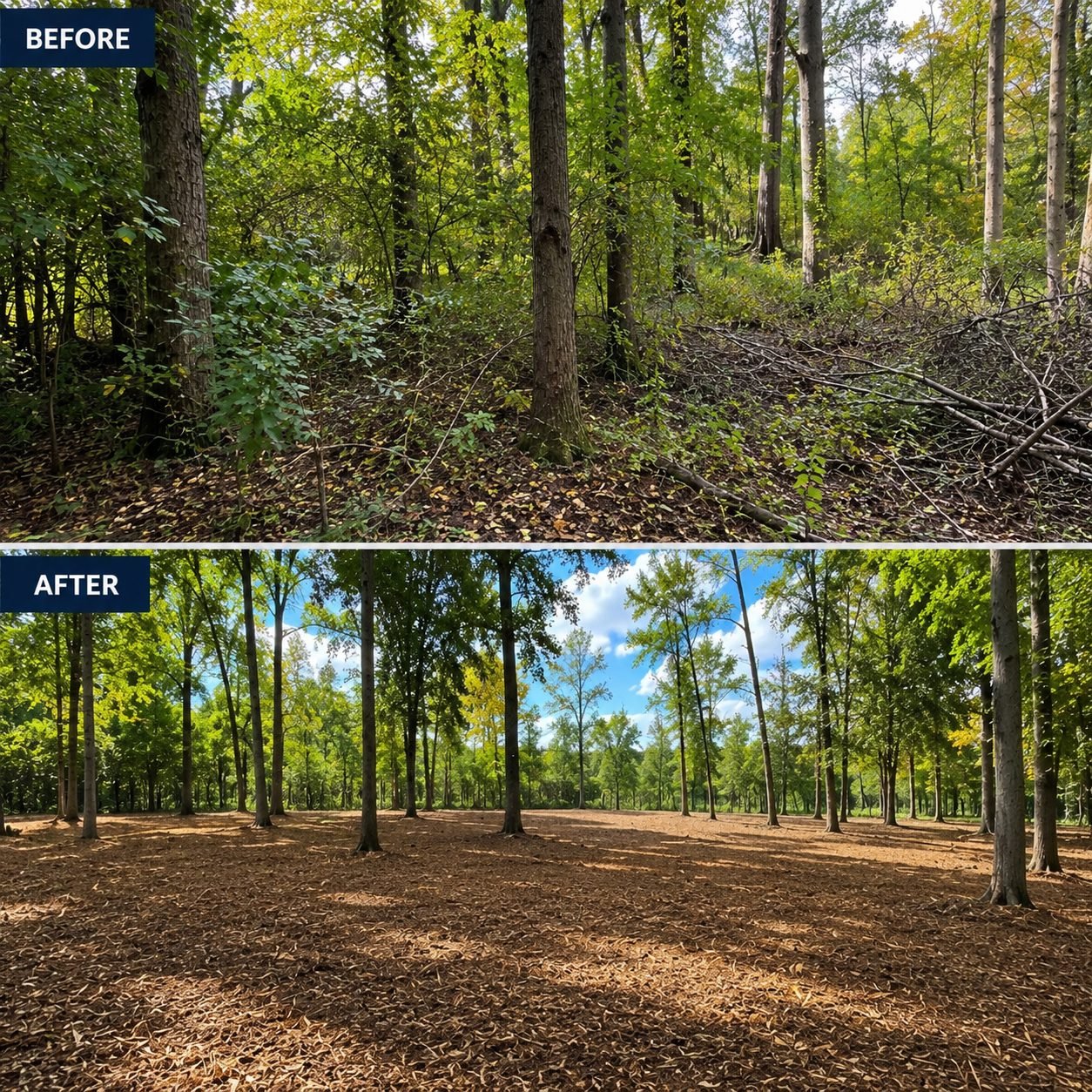
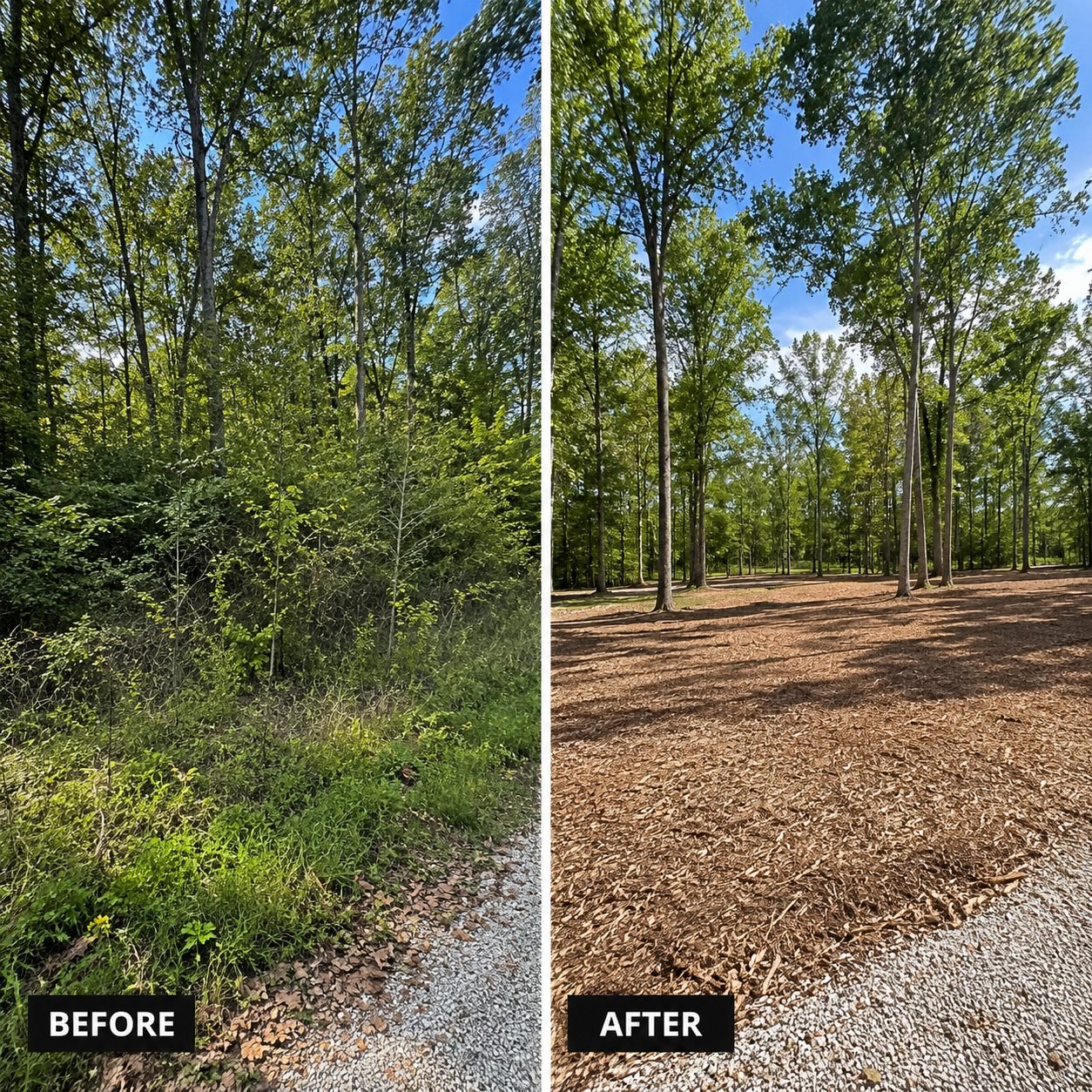
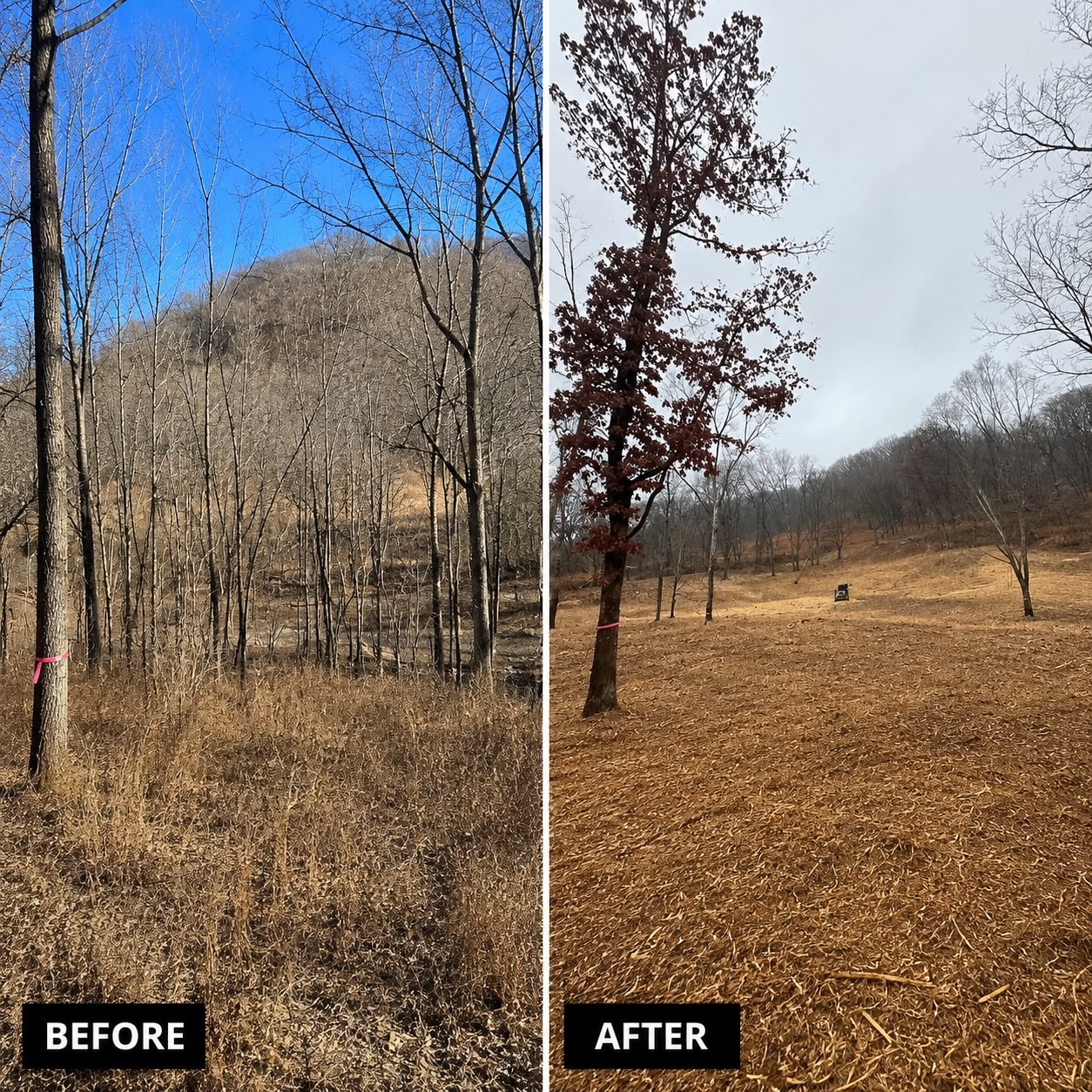
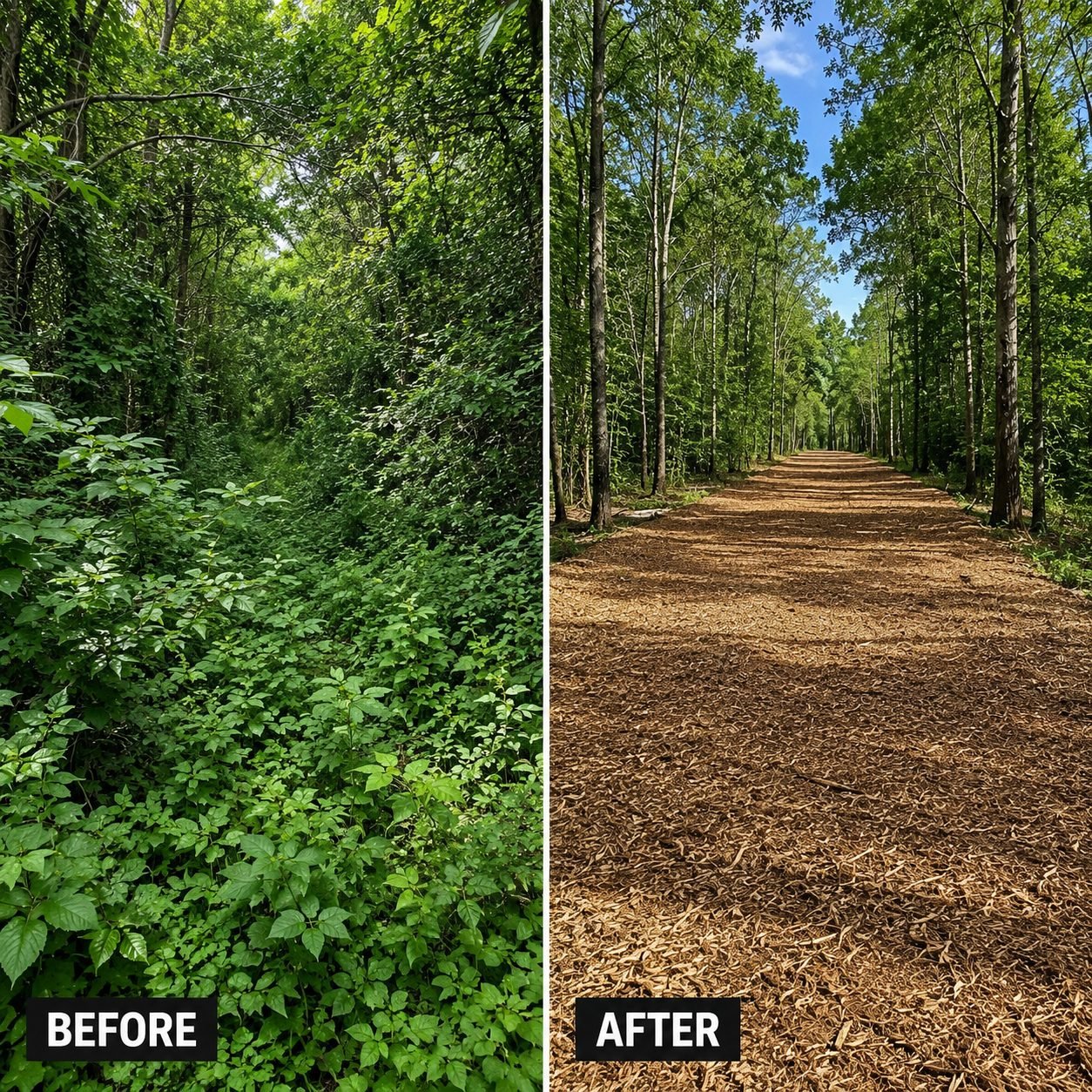
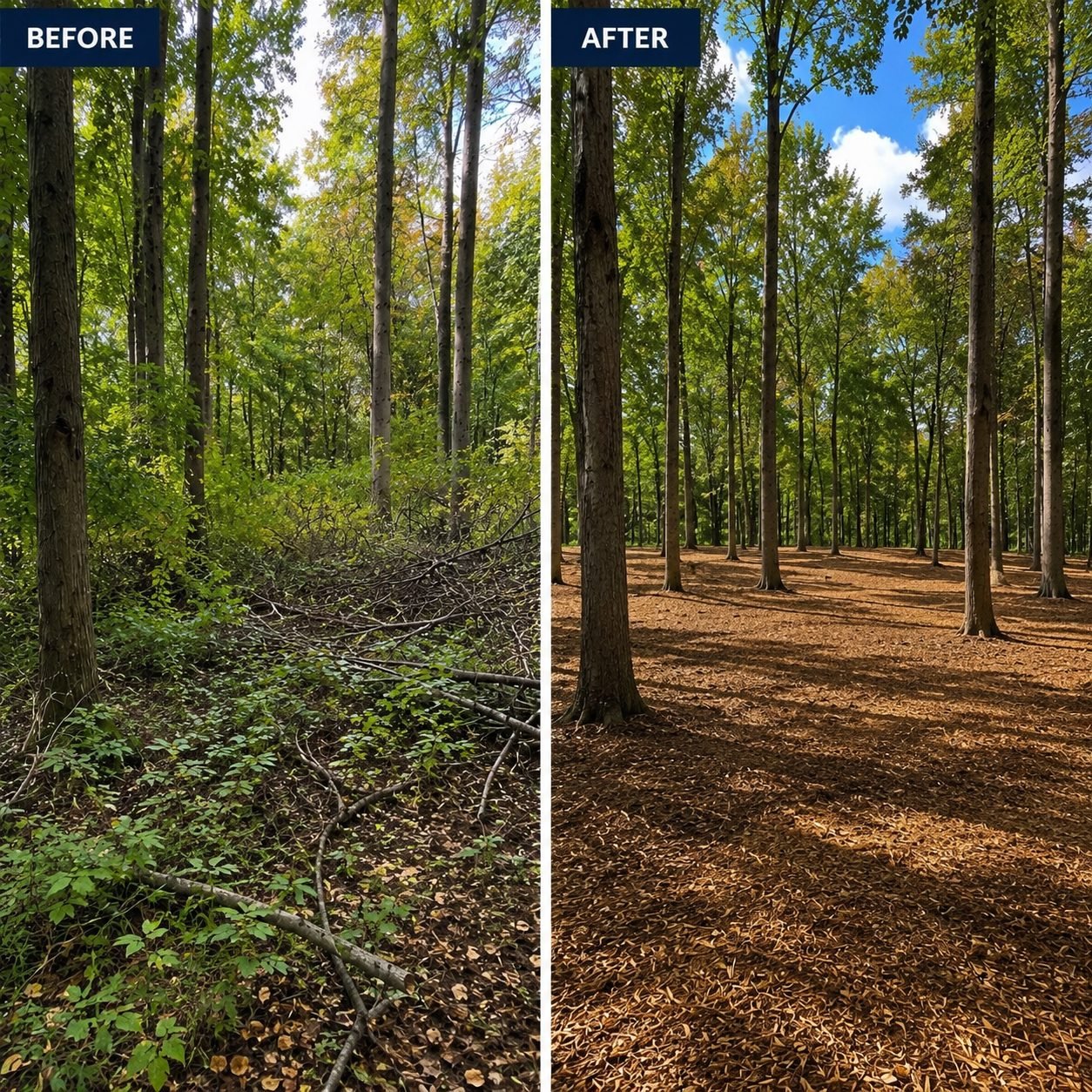
What Does Land Clearing Look Like Before and After in Ostrander, Ohio?
Recent Central Ohio jobs. The finished surface keeps a two to four inch mulch layer rather than bare soil, which is what holds ground through the first winter after clearing.
What Do Ostrander, Ohio Owners Ask About Land Clearing?
Light rain on draining ground, yes. Once the field is saturated, no, because the damage exceeds the progress.
Days in summer, potentially weeks in a wet spring. Drainage on the specific field decides it.
Snow over frozen ground is workable and often ideal. Deep snow hides grade and obstacles, which is the limit.
Sometimes, with care about access across the crop. It is assessed rather than assumed.
No. The rate is the same; the window affects finish quality and the chance of delay.
Scope is reduced to what can be worked properly rather than pushing the whole parcel through bad ground.
What Else Can Fortress Do on a Ostrander, Ohio Property?
Land clearing, forestry mulching, excavation, demolition and grading run with the same crew and the same point of contact, so a Ostrander job that needs two trades does not wait on a second schedule.
Soil depth, slope class and erosion factor for any Ostrander parcel are published in the USDA NRCS Web Soil Survey (accessed August 2026).
Ready for a Flat Rate on Your Ostrander, Ohio Land Clearing?
Owner-operated land clearing across all five Central Ohio counties. Send your property details and Lee gets back to you within 2 to 3 hours during business hours with one flat number after a free on-site walk-through.