

Why Has Land Clearing by Mowing Failed on Sunbury, Ohio Ground?
Land clearing by mowing has failed on Sunbury, Ohio ground because a bush hog cuts what the deck can reach and never touches the root crown. Fifteen years of that made autumn olive thicker, not thinner, because every cut returns several stems where there was one.
Why the bush hog made it worse
- A bush hog cuts at deck height and leaves the crown untouched.
- Each cut triggers multiple stems where there was one. The stand gets denser.
- Autumn olive is the worst case because it also fixes its own nitrogen.
- Stems above about two inches stop the deck entirely, so the mower goes around them.
- Mulching processes the whole stem structure to ground level instead.
- Fifteen years of mowing is why the ground is worse now than when it started.
What Else Do People Ask About Land Clearing in Sunbury, Ohio?
Cutting a stem triggers the crown to send up several replacements. Repeat annually and the count multiplies.
It processes the whole stem structure to ground level and leaves a suppressing layer, rather than trimming the top.
For maintaining ground that is already open, yes. For reclaiming ground that has been taken over, no.
One clearing pass, then a second season follow-up. The stand does not take fifteen years to reverse.
What Does a Bush Hog Actually Do to Sunbury, Ohio Ground?
It cuts everything the deck can reach at deck height and leaves the rest. The root crown, where the plant stores its energy, is untouched, so the plant responds exactly as it would to browsing: it sends up replacement stems, usually several.
That is the whole mechanism. One stem cut becomes three or four the following season, and repeating it annually is a multiplication rather than a reduction.
Owners often describe exactly this without connecting it: the ground was manageable fifteen years ago and is impassable now, despite being mowed every year throughout.
The mowing is not incidental to that. It is a large part of why the stand is as dense as it is.
Why Is Autumn Olive the Worst Case on Sunbury, Ohio Fields?
Because it combines aggressive resprouting with nitrogen fixation. Cutting it thickens it like anything else, and unlike most invasives it does not need decent soil, so nothing about reclaiming poor retired ground slows it down.
Multiflora rose behaves similarly on the fence lines and is nearly as stubborn, though it lacks the nitrogen advantage.
There is also a physical limit to what a deck can handle. Once stems pass roughly two inches the mower goes around them rather than through, so the largest plants are the ones never touched.
The result is a field mowed for years that still carries its oldest and biggest stems, with a dense multiplied thicket in between. That is the typical Sunbury starting point.
What Does Land Clearing Do That Mowing Cannot on Sunbury, Ohio Ground?
It processes the whole stem structure down to ground level regardless of diameter, and leaves a mulch layer that suppresses the flush of seedlings that follows. It also does not care that a stem is six inches thick.
That does not make it permanent on its own. The crown is still below ground and autumn olive still resprouts, which is why the second season matters.
The difference is direction of travel. Mowing makes the stand denser every year; clearing makes it thinner, and one follow-up pass in the second season settles it.
After that, ordinary mowing genuinely does work, because it is maintaining open ground rather than fighting an established stand. See brush clearing.
How Do Sunbury, Ohio Invasives Respond to One Clearing Pass?
What grows on retired Sunbury cropland and how each species behaves after a single mulching pass. Autumn olive is the one that reliably needs a second season.
| Species | Where it takes hold | After one pass | Second season |
|---|---|---|---|
| Autumn olive | Open retired cropland | Removed to ground | Resprouts hard, plan for it |
| Multiflora rose | Old fence lines | Removed to ground | Moderate regrowth |
| Bush honeysuckle | Field edges, treelines | Removed to ground | Light regrowth |
| Common buckthorn | Shaded margins | Removed to ground | Light regrowth |
| Callery pear | Field boundaries | Removed to ground | Resprouts, treat stumps |
| Volunteer boxelder | Wet corners | Removed to ground | Light |
| Established pasture grass | Open field | Retained | Recovers quickly |
Species behaviour recorded by Fortress Level Construction across Delaware County agricultural work, August 2026. Bush honeysuckle, autumn olive and multiflora rose are listed among the species restricted in Ohio by the Ohio Department of Natural Resources and the Ohio Department of Agriculture Division of Plant Health (both accessed August 2026).
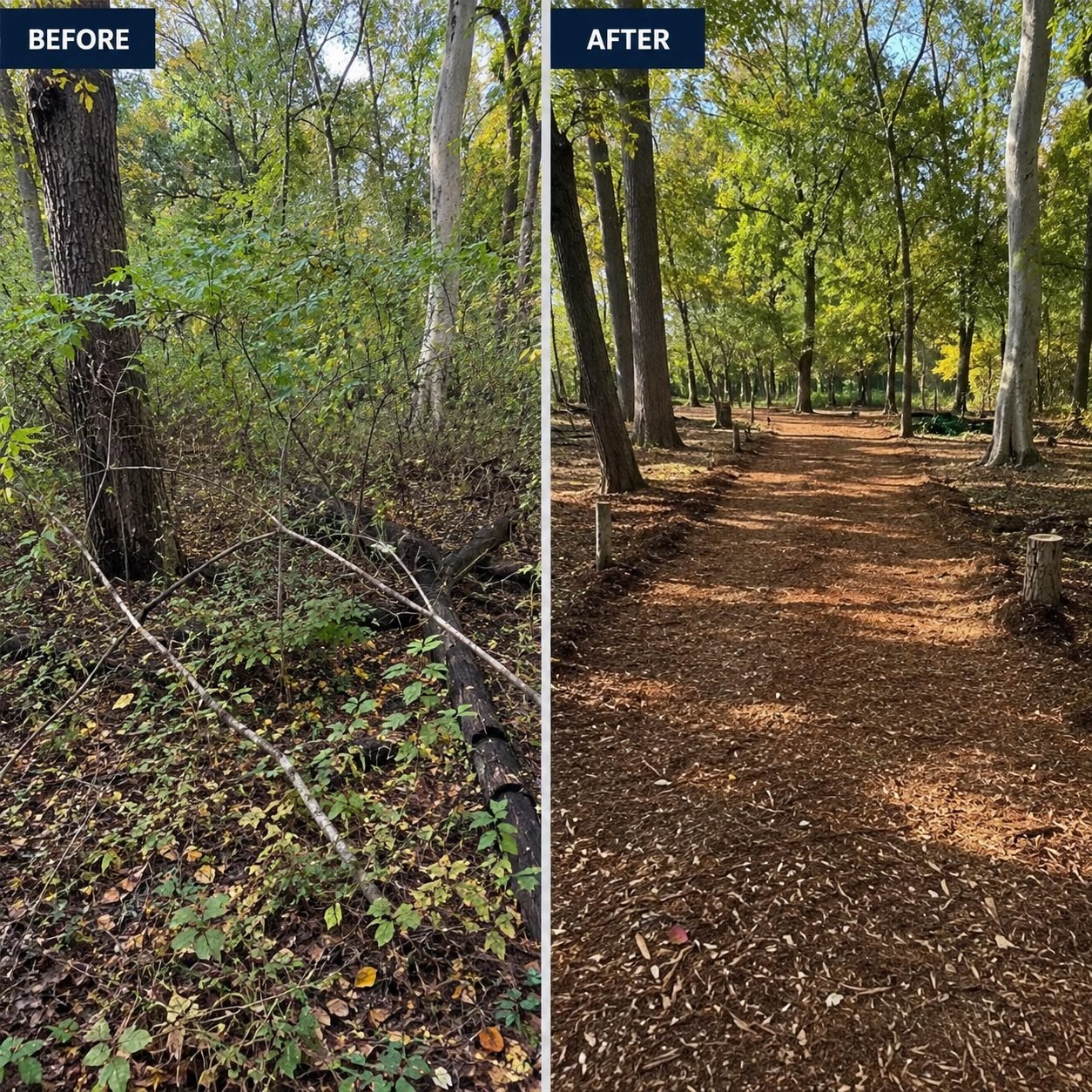
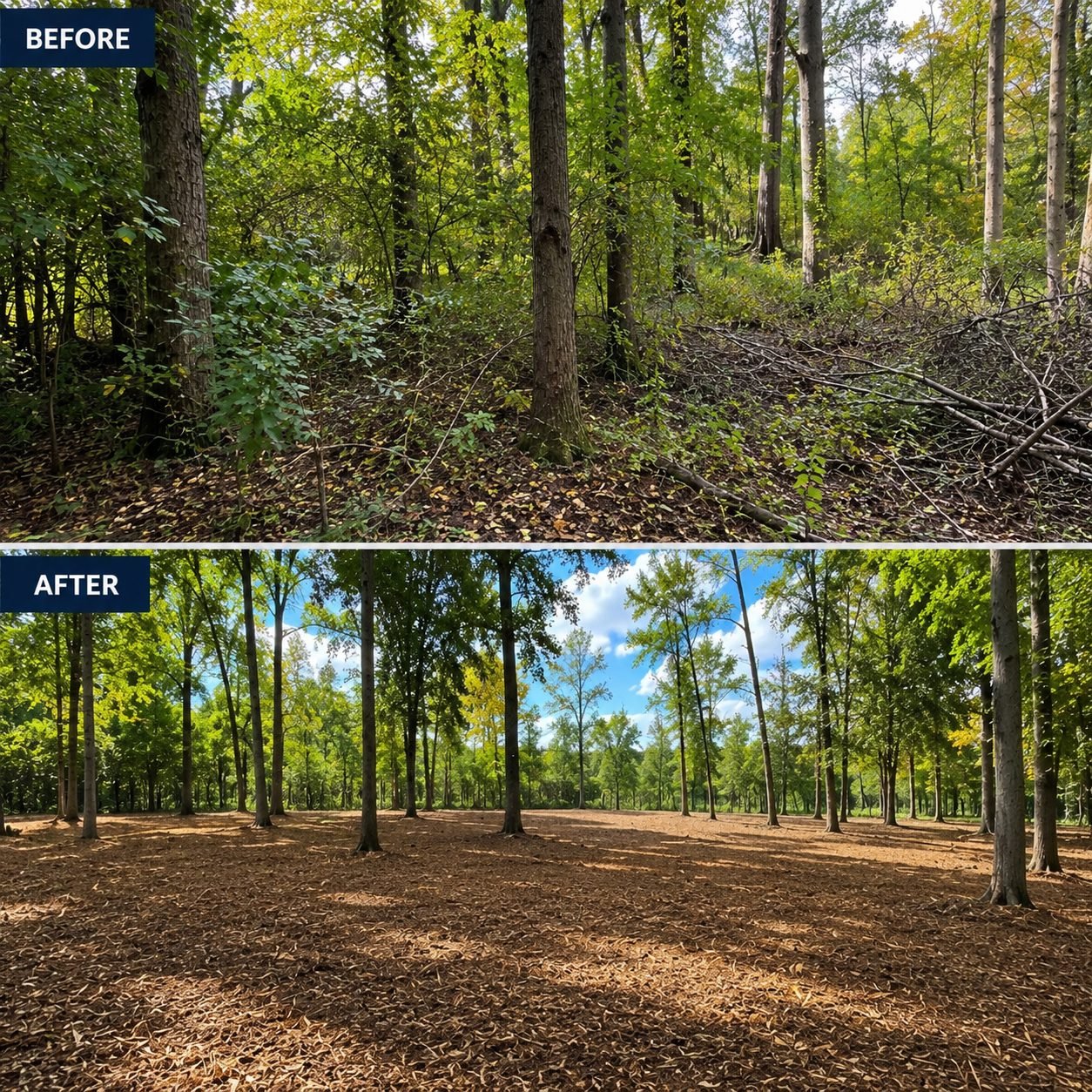
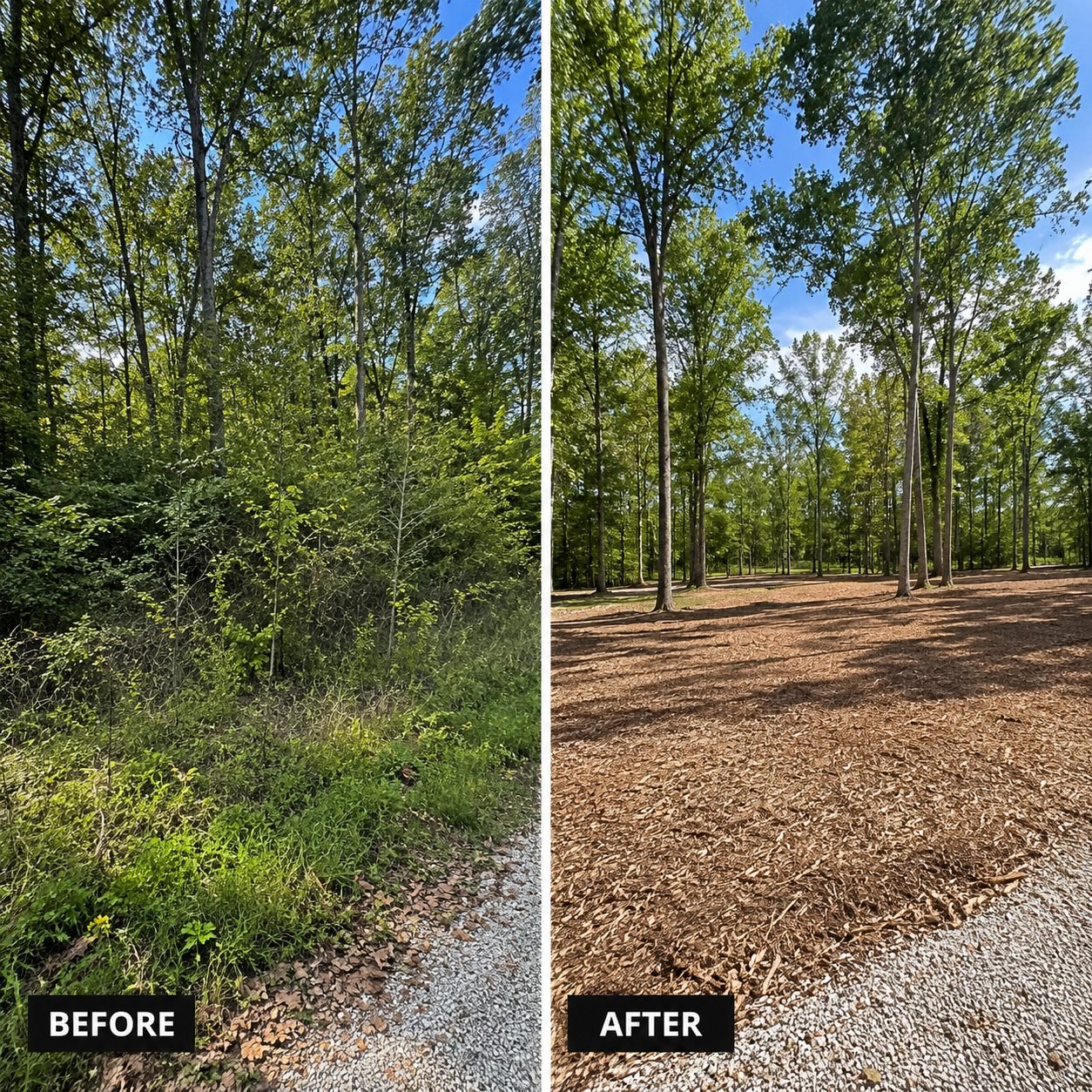
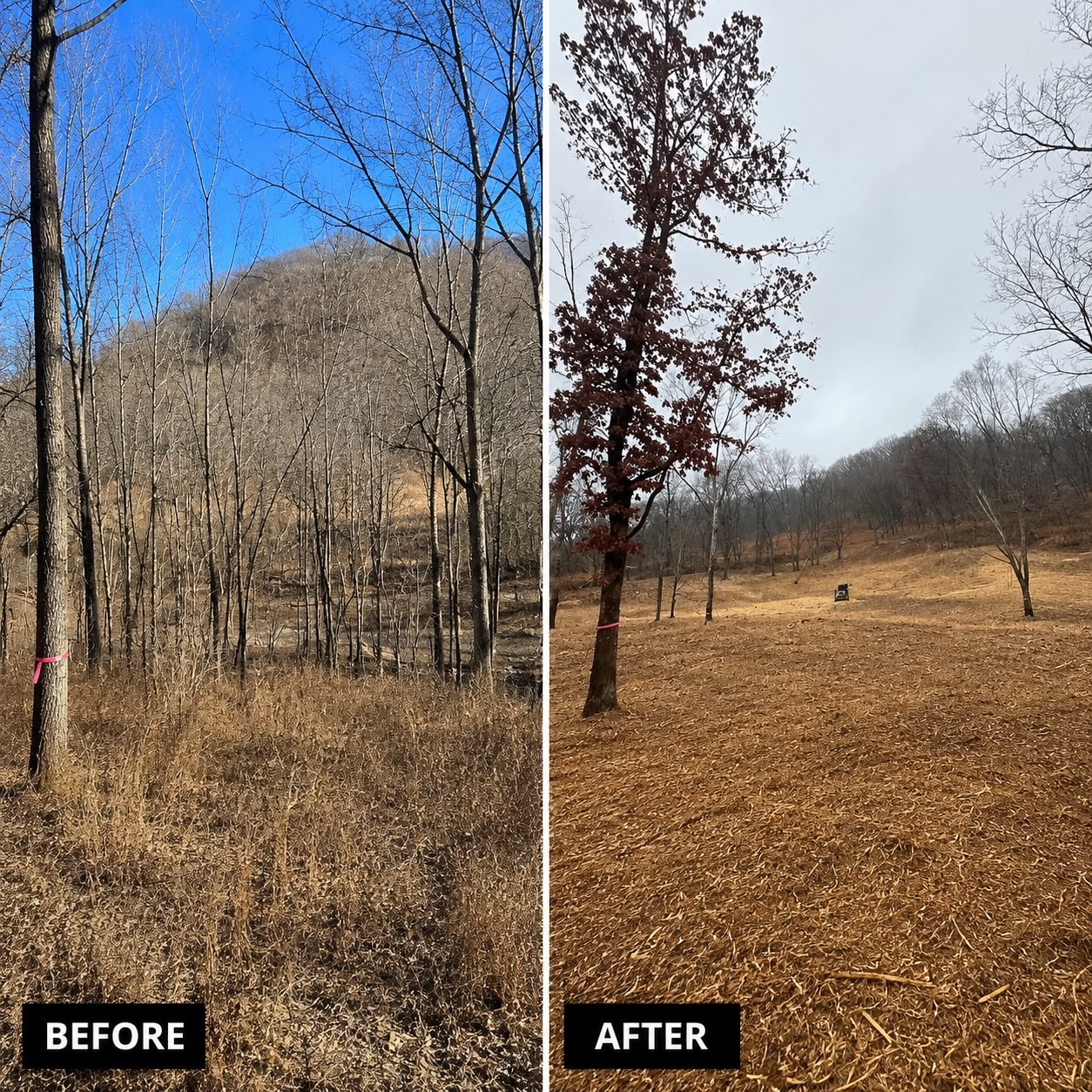
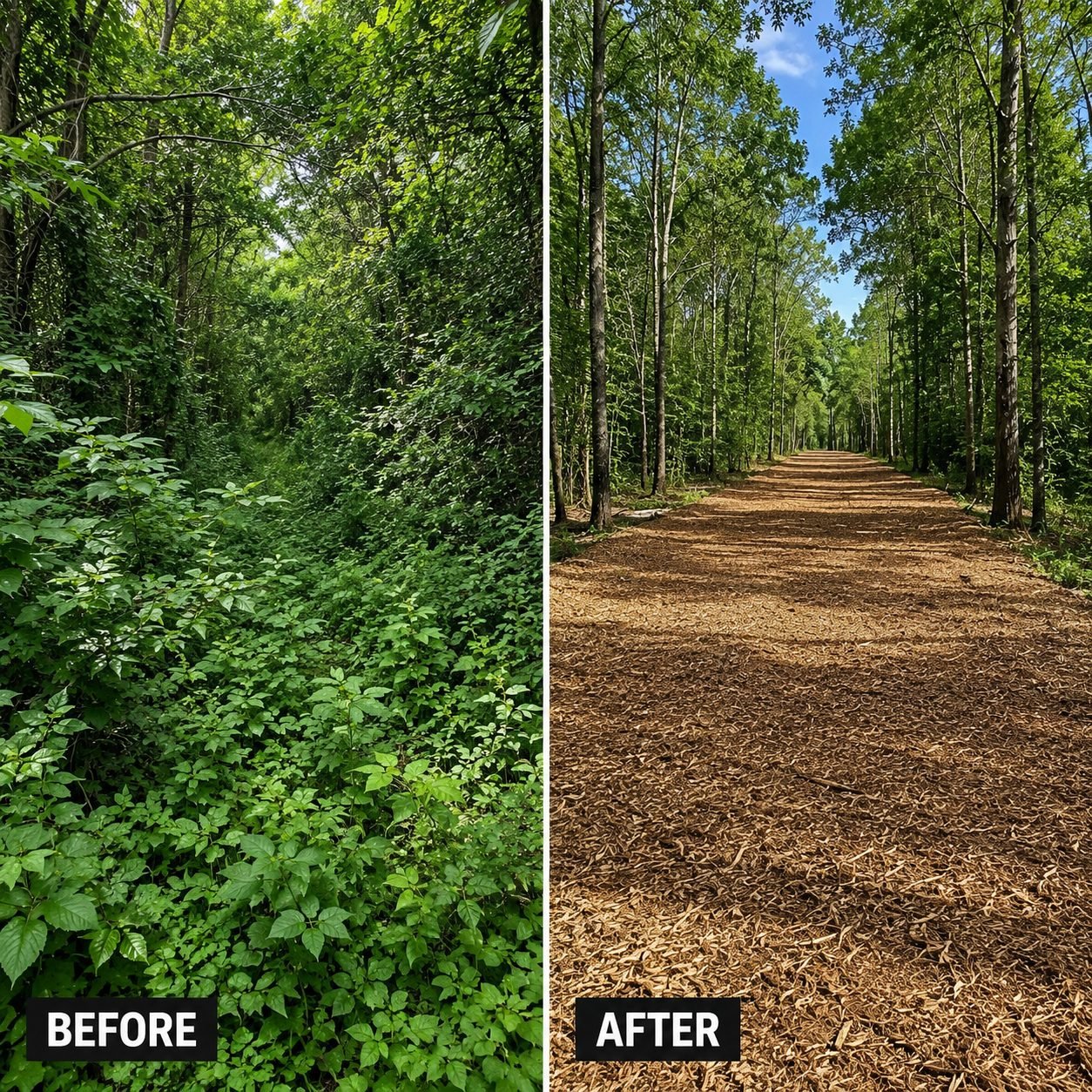
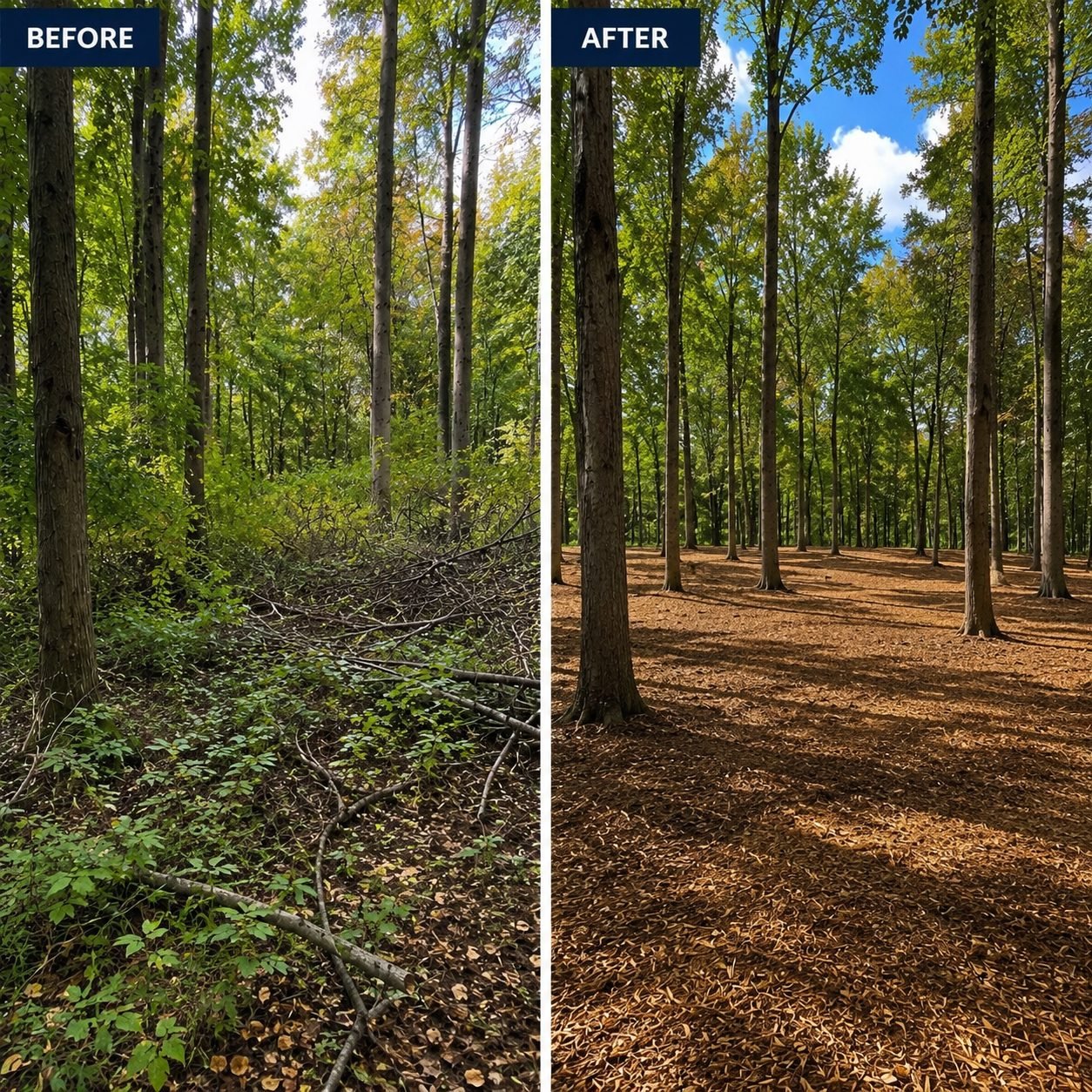
What Does Land Clearing Look Like Before and After in Sunbury, Ohio?
Recent Central Ohio jobs. The finished surface keeps a two to four inch mulch layer rather than bare soil, which is what holds ground through the first winter after clearing.
What Do Sunbury, Ohio Owners Ask About Land Clearing?
On ground you intend to clear, there is little point continuing. Once it is cleared and followed up, mowing maintains it well.
It removes fifteen years of standing growth in a day. The second season handles what resprouts.
On light regrowth, sometimes. On autumn olive specifically it repeats the original problem.
Better than a bush hog, limited by stem size and tractor weight on wet ground. It is a maintenance tool.
It suppresses seedlings well. It does not stop resprouting from an established crown.
Far less than the first pass, because there is a fraction of the material. Quoted once you have seen what returned.
What Else Can Fortress Do on a Sunbury, Ohio Property?
Land clearing, forestry mulching, excavation, demolition and grading run with the same crew and the same point of contact, so a Sunbury job that needs two trades does not wait on a second schedule.
Bush honeysuckle, autumn olive and multiflora rose are listed among the species restricted in Ohio by the Ohio Department of Natural Resources and the Ohio Department of Agriculture Division of Plant Health (both accessed August 2026).
Ready for a Flat Rate on Your Sunbury, Ohio Land Clearing?
Owner-operated land clearing across all five Central Ohio counties. Send your property details and Lee gets back to you within 2 to 3 hours during business hours with one flat number after a free on-site walk-through.