


Methods of land clearing in Ohio: how to choose the most efficient way to clear land for your project
Methods of land clearing are the different ways contractors remove trees, brush, stumps, roots, and debris to make a site usable for building, farming, drainage, or access. The best way to clear land depends on the property’s size, vegetation, soil, slope, utility conflicts, disposal needs, and whether the goal is selective cleanup or full site preparation.
The Quick Answer
- Methods of land clearing range from forestry mulching and selective cutting to full clearing, stump removal, grading, and demolition, and the right choice depends on the end use of the site.
- The most efficient way to clear land is not always the fastest machine on paper. It is the method that matches the site, limits rework, controls erosion, and avoids hauling and disposal bottlenecks.
- Forestry mulching is often the best way to clear land for many residential, farm, and access projects because it removes brush and smaller trees in place with less disturbance than dozing.
- Full clearing is better when you need a construction-ready pad, deep root removal, utility trenching, or a finished surface that will support grading and drainage work.
- In Central Ohio, clay soil, freeze-thaw cycles, and drainage issues can change the land clearing plan and make proper grading just as important as vegetation removal.
- Ohio law requires an Ohio 811 locate request at least 48 hours before digging, and utility marking is a critical part of safe land clearing and excavation planning.
- Costs are driven by acreage, density, stump size, access, haul-off, grading, demolition, and whether the project requires selective clearing or complete site preparation.
- A qualified contractor should explain equipment, sequencing, utility protection, and disposal methods clearly before any work starts.
Related Questions People Ask Next
The most efficient way to clear land is the method that matches the site and the end goal. For many properties, forestry mulching is efficient because it clears brush and smaller trees in place with less hauling and less ground disturbance. If the site must be build-ready, though, full clearing with stump removal and grading may be the better overall choice. Efficiency is not just speed; it is also rework avoided, erosion controlled, and final usability achieved.
Forestry mulching is often better when the goal is selective clearing, trail creation, fence lines, lot cleanup, or managing overgrowth without stripping the soil. Dozing is better for pushing larger volumes, rough site shaping, and heavy redevelopment. In Ohio clay soil, dozing can be effective but can also leave more disturbance and require more restoration. The better option depends on what the land needs after clearing, not just what is fastest on day one.
Start with the end use. A future house site, pond, driveway, pasture, or hunting lane all call for different methods of land clearing. Then factor in slope, access, tree size, stumps, wet ground, drainage, and whether haul-off or demolition is involved. A good contractor will walk the site, identify utility conflicts, and recommend a sequence that gets you to the finished condition with the least wasted effort.
Land clearing can become expensive when trees are large, access is tight, stumps are numerous, debris must be hauled away, or the job includes grading and demolition. Clearing also costs more when the site requires careful selective work around structures, septic fields, fences, or utilities. The cheapest-looking method is not always cheapest once cleanup, restoration, and time are included.
Sometimes, yes, but only on small, simple lots with light brush and no utility conflicts. DIY clearing becomes risky when stumps are large, soil is wet, slopes are steep, or the property will be built on afterward. A rental machine can remove vegetation, but it cannot replace utility locating, site planning, debris disposal, drainage correction, or the experience needed to avoid costly mistakes.
What is land clearing and what does it prepare a property for?
Land clearing is the process of removing vegetation, stumps, roots, rocks, debris, and sometimes structures so a parcel can be used safely and efficiently. The best way to clear land depends on whether you need a build site, driveway, pasture, drainage correction, access trail, or a cleaned-up lot with minimal soil disturbance.
At its simplest, land clearing creates usable ground. In practice, that can mean removing invasive brush on a back lot, opening a corridor for utilities, preparing a pad for a future home, or converting rough timber into a property that can be graded and built on. The methods of land clearing used for each goal are different because the end result is different. A pasture cleanup does not need the same process as a house foundation site.
A lot of confusion happens because people use the phrase land clearing to mean several jobs at once. Brush removal, tree removal, stump grinding, excavation, demolition, and grading may all be part of the same project, but they are not the same task. A contractor who understands the sequence can recommend the most efficient way to clear land without creating extra work for the next phase. That sequencing matters more in Ohio clay soil, where poor timing can turn a simple job into a rut-filled mess.
For a Central Ohio property, the right answer often starts with drainage and access, not just vegetation. Heavy soils hold moisture, and clearing during wet conditions can compact the ground or create deep tracks that later require more grading. That is why a professional site walk is so valuable. It identifies what needs to be removed, what can stay, and what must happen before equipment enters the property. The result is a plan that fits the land rather than forcing the land to fit the equipment.

Why does land clearing matter before building, farming, or selling?
Land clearing matters because it changes a property from overgrown or unusable ground into something safer, more accessible, and more valuable. The best way to clear land also improves drainage, reduces fire and pest risk, creates room for utilities, and helps prevent expensive surprises during construction or resale.
What land clearing methods are available and when does each work best?
The major methods of land clearing include forestry mulching, selective cutting, full clearing, stump grinding, dozing, excavation, and demolition. The best choice depends on density, tree size, site access, soil conditions, and whether you need a natural cleanup or a construction-ready surface.
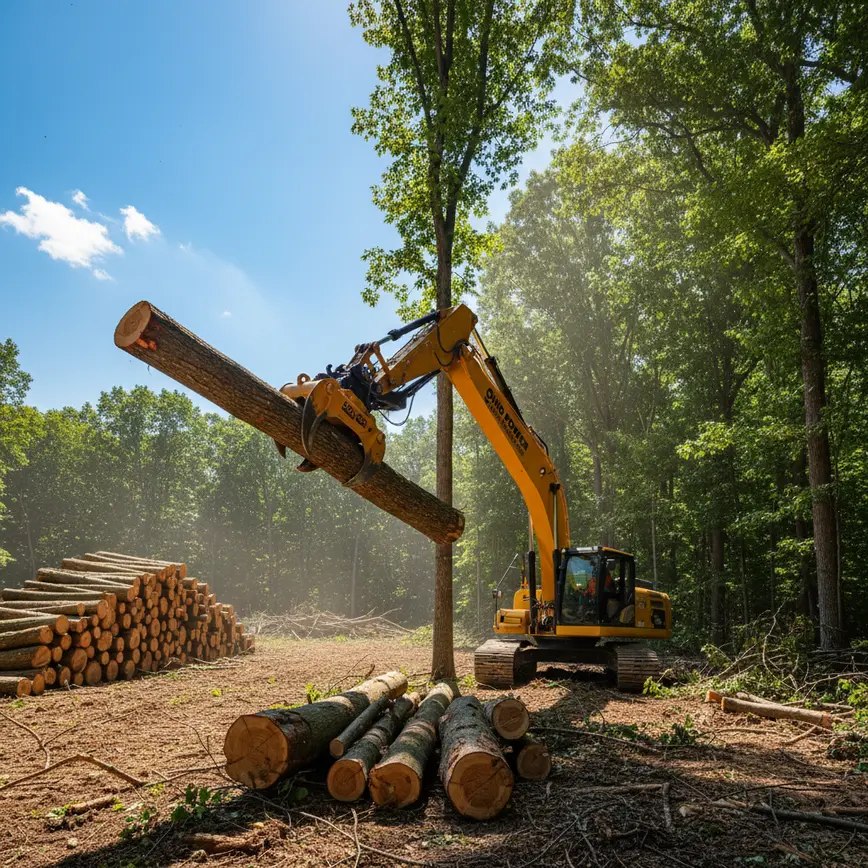
How does the land clearing process work from site walk to finish grade?
A professional land clearing process starts with a site assessment, utility locate, and plan for access, then moves through vegetation removal, stump work, debris handling, rough grading, and final cleanup. Following the correct sequence is often the real key to the most efficient way to clear land.
What drives land clearing cost and where does the money go?
Land clearing cost is driven by acreage, vegetation density, tree size, stumps, access, disposal, grading, and whether the work includes demolition or excavation. The most efficient way to clear land is usually the one that minimizes extra handling, haul-off, and rework, not just the one with the lowest upfront quote.
What equipment is used for efficient land clearing jobs?
Land clearing equipment ranges from forestry mulchers and skid steers to excavators, dozers, stump grinders, dump trailers, and demolition tools. The right machine mix is what makes the methods of land clearing efficient, safe, and cost effective for the actual site conditions.
Should you DIY land clearing or hire a pro?
DIY can work for very small, low-risk projects, but hiring a pro is usually the most efficient way to clear land when there are stumps, slopes, wet soil, utilities, or disposal needs. The best way to clear land is the one that gets the job done safely without creating expensive cleanup or repair work.
What permits, regulations, and Ohio 811 rules apply before you clear land?
Before clearing or digging, you need to understand local permits and utility rules. In Ohio, ORC 3781.28 requires an Ohio 811 utility locate 48 hours before digging. That requirement is central to safe land clearing, especially when projects involve excavation, grading, demolition, or new utility installation.
How do you choose the right contractor for land clearing work?
Choose a contractor who can explain the land clearing methods, site sequence, equipment, permits, utility locating, cleanup, and pricing in plain language. The best contractor is the one whose plan matches your end use, protects the property, and avoids hidden scope gaps.
Start with the contractor’s process, not the sales pitch. Ask how they evaluate the site, how they handle Ohio 811 locates, what equipment they plan to use, where the debris goes, and whether grading or stump work is included. A strong contractor should be able to explain why forestry mulching, full clearing, selective cutting, or excavation is the best fit for your property. If the answer is vague, the quote may be incomplete.
Look for a company that handles the whole job responsibly, not just the visible part. That includes licensing, insurance, equipment condition, scheduling, and crew capacity. A real crew matters because land clearing is a sequence of tasks, not a single pass with one machine. Fortress Level Construction, founded by Lee Carson, a combat veteran, operates as a licensed and insured land-services company serving Central Ohio and surrounding areas. That matters because the contractor’s ability to manage the site, not just the cut, determines the result.
Finally, compare bids on scope, not just price. One contractor may include locating coordination, stump treatment, haul-off, rough grading, and cleanup, while another may only be pricing brush removal. The most efficient way to clear land is not the cheapest line item. It is the method and contractor combination that delivers the finished condition you actually need without surprise extras. Ask for a clear scope, verify what is excluded, and make sure the plan fits the property rather than assuming all clearing is the same.
How do the main methods of land clearing compare by cost, speed, and best use?
This comparison shows how the main methods of land clearing differ in cost profile, speed, soil disturbance, and best use. The best way to clear land is usually the method that balances the site goal with the least hauling, least disruption, and least rework.
| Method | Typical fit | Efficiency tradeoff | Best use |
|---|---|---|---|
| Forestry mulching | Brush, saplings, smaller trees, access lanes, selective cleanup | Fast with low disturbance and little haul-off, but not a finish-grade solution | Best when you want the most efficient way to clear land for trails, fence lines, and light to moderate overgrowth |
| Selective cutting | Properties where some trees stay and some are removed | More precise than broad clearing, but slower than wide-open removal | Best for view corridors, habitat improvement, and phased property management |
| Full clearing | Construction sites, pads, driveways, utility work, and major redevelopment | More complete, but usually more labor, hauling, and restoration | Best when the end goal requires a build-ready site or major reshaping |
| Stump grinding or excavation | Sites with leftover stumps after cutting or where root removal matters | Grinding is efficient for isolated stumps, excavation is more complete but more disruptive | Best for removing trip hazards, clearing future work areas, and finishing after tree removal |
| Dozing and rough grading | Large, open, or heavily disturbed sites | Powerful and fast for rough shaping, but can disturb more soil than needed | Best when clearing and initial site shaping must happen together |
| Demolition plus clearing | Lots with barns, sheds, slabs, or obsolete structures | Solves multiple scope items at once, but requires more coordination and disposal planning | Best when buildings must come down before the land can be reused |
When is a clearing method not the right approach?
Not every method of land clearing is right for every property. The main mistakes are choosing the fastest-looking machine, ignoring drainage, skipping utility locates, underestimating stump work, or using a low-disturbance method where full site preparation is actually required.
Forestry mulching is excellent for many jobs, but it is not a universal answer. If you need deep root removal, a clean construction pad, major regrading, or soil export, mulching alone will not finish the site. Likewise, a full clearing approach may be overkill if the goal is just to open a trail or thin an overgrown fence line. The most efficient way to clear land starts with the end use and works backward.
Another common mistake is assuming a property can be cleared without considering water and soil. In Ohio clay, clearing during the wrong weather window can create rutting and compaction that require extra grading later. That can erase the efficiency you thought you gained. It is also a mistake to ignore debris volume. Cutting trees is only one part of the job. The remaining material has to be managed, whether by mulching, stacking, haul-off, or disposal.
Finally, land clearing is not just a machine job. Hidden utility lines, permit triggers, and neighboring property impacts can change the plan quickly. A contractor who clears first and thinks later can create expensive problems. If your site includes structures, septic components, protected drainage, mature trees you want to preserve, or very soft ground, the wrong method can damage more than it improves. In those cases, the safest and most efficient choice is often a blended plan, not a single tool.
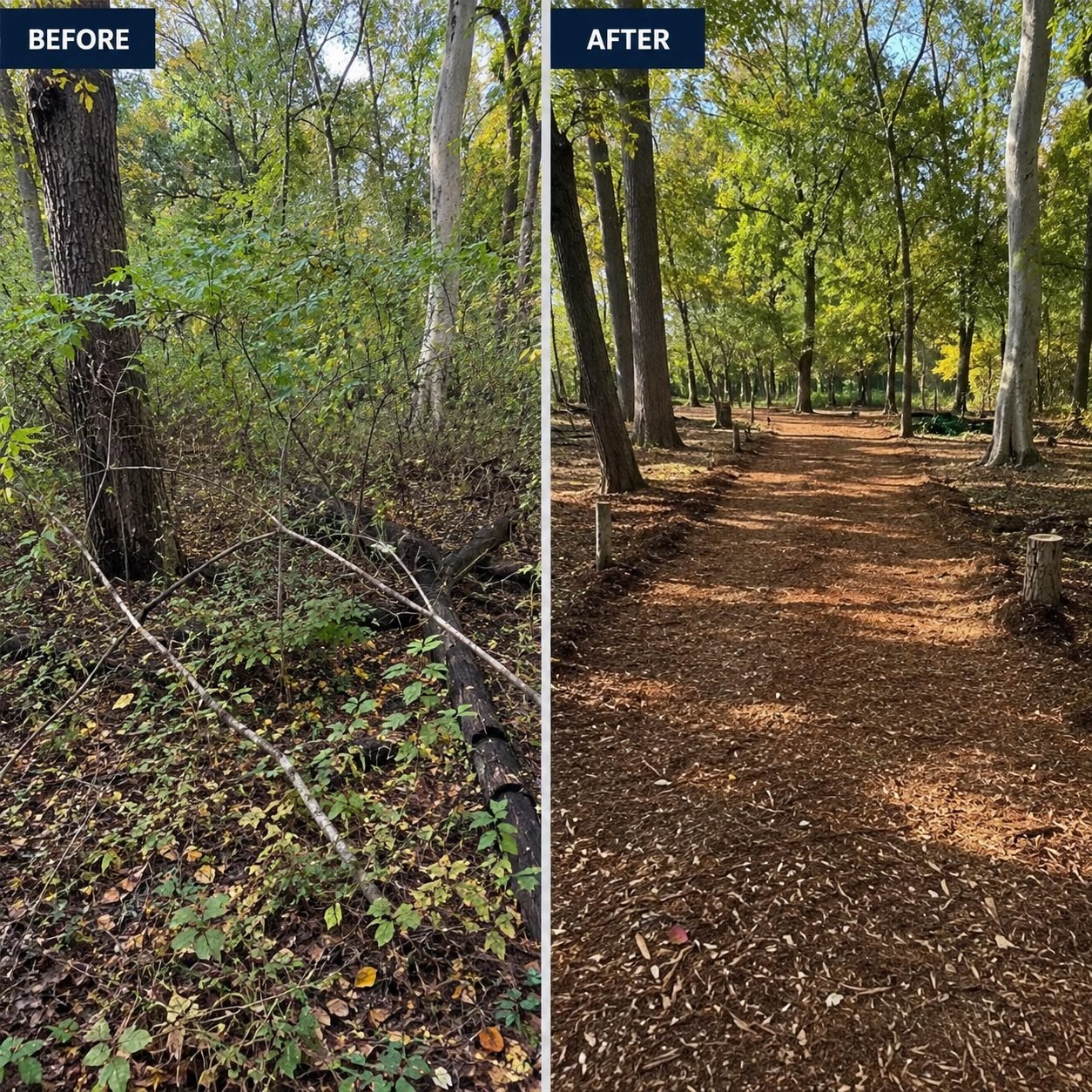
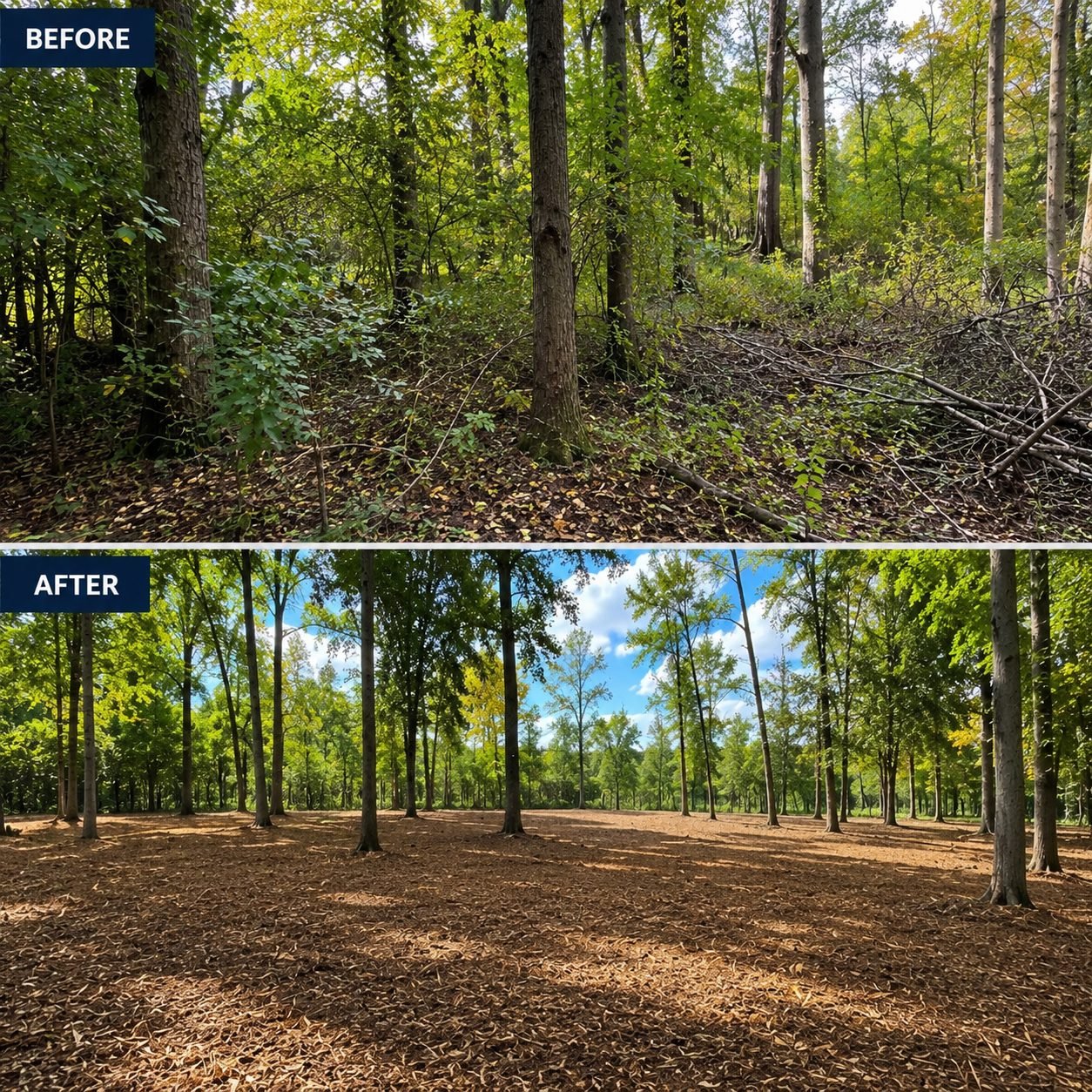
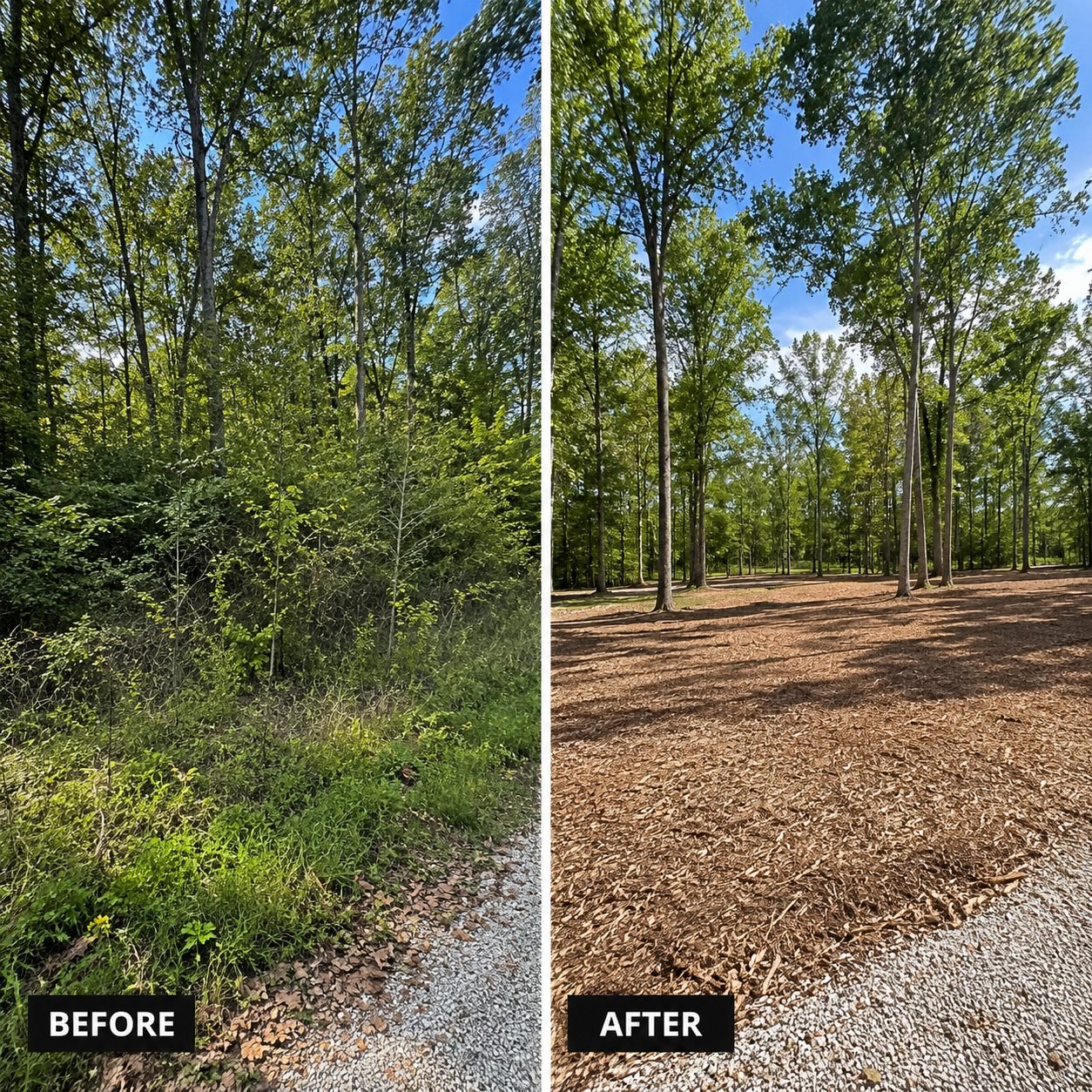
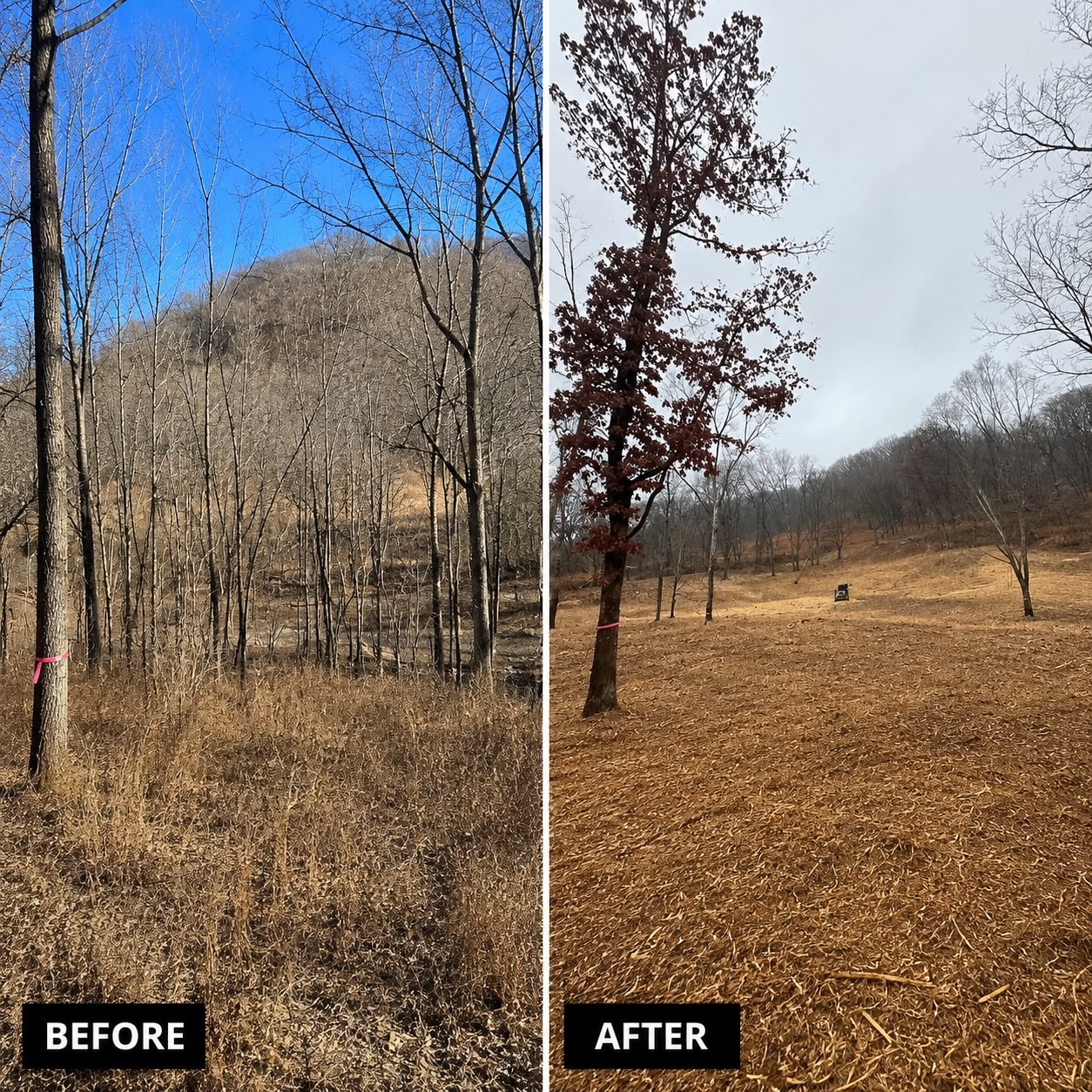
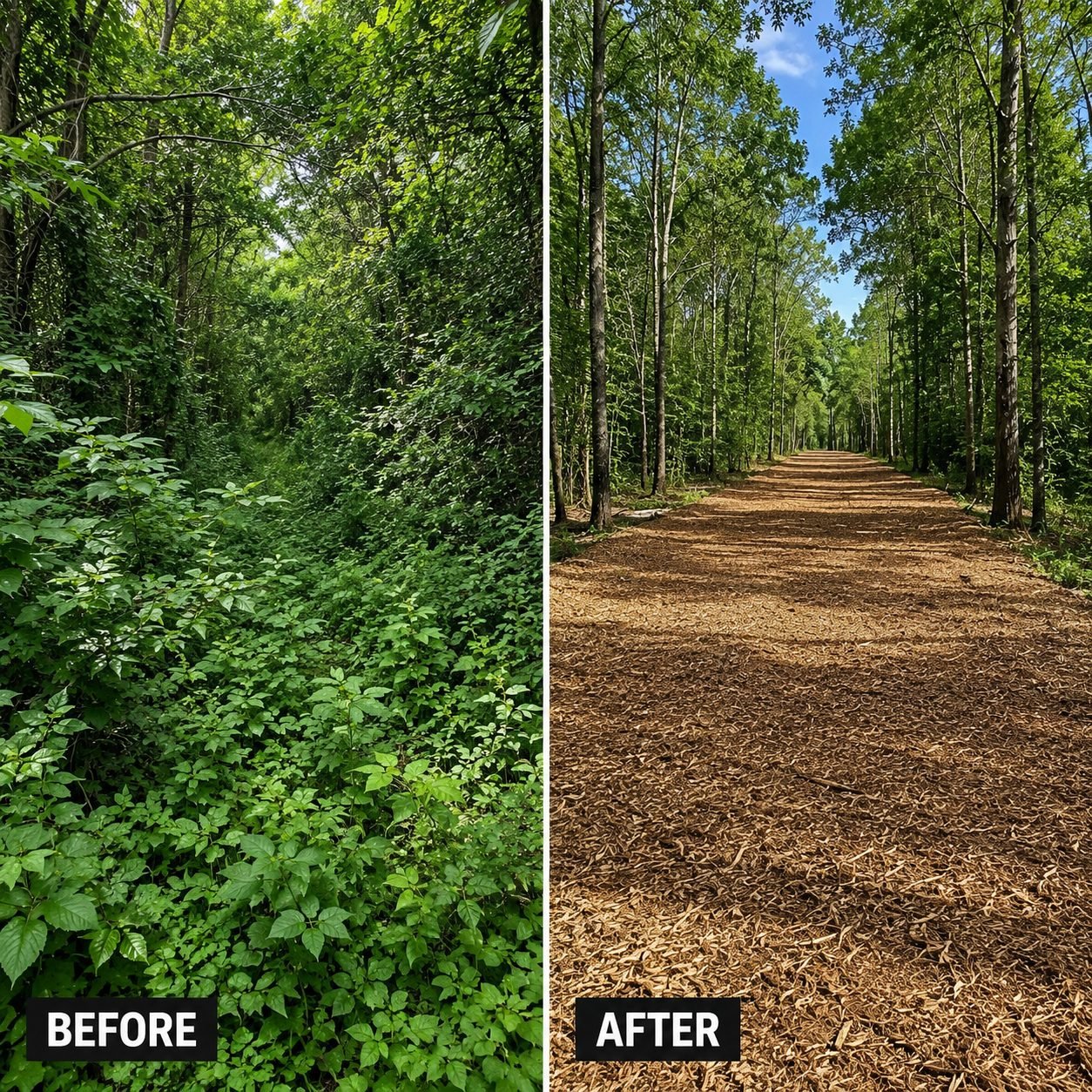
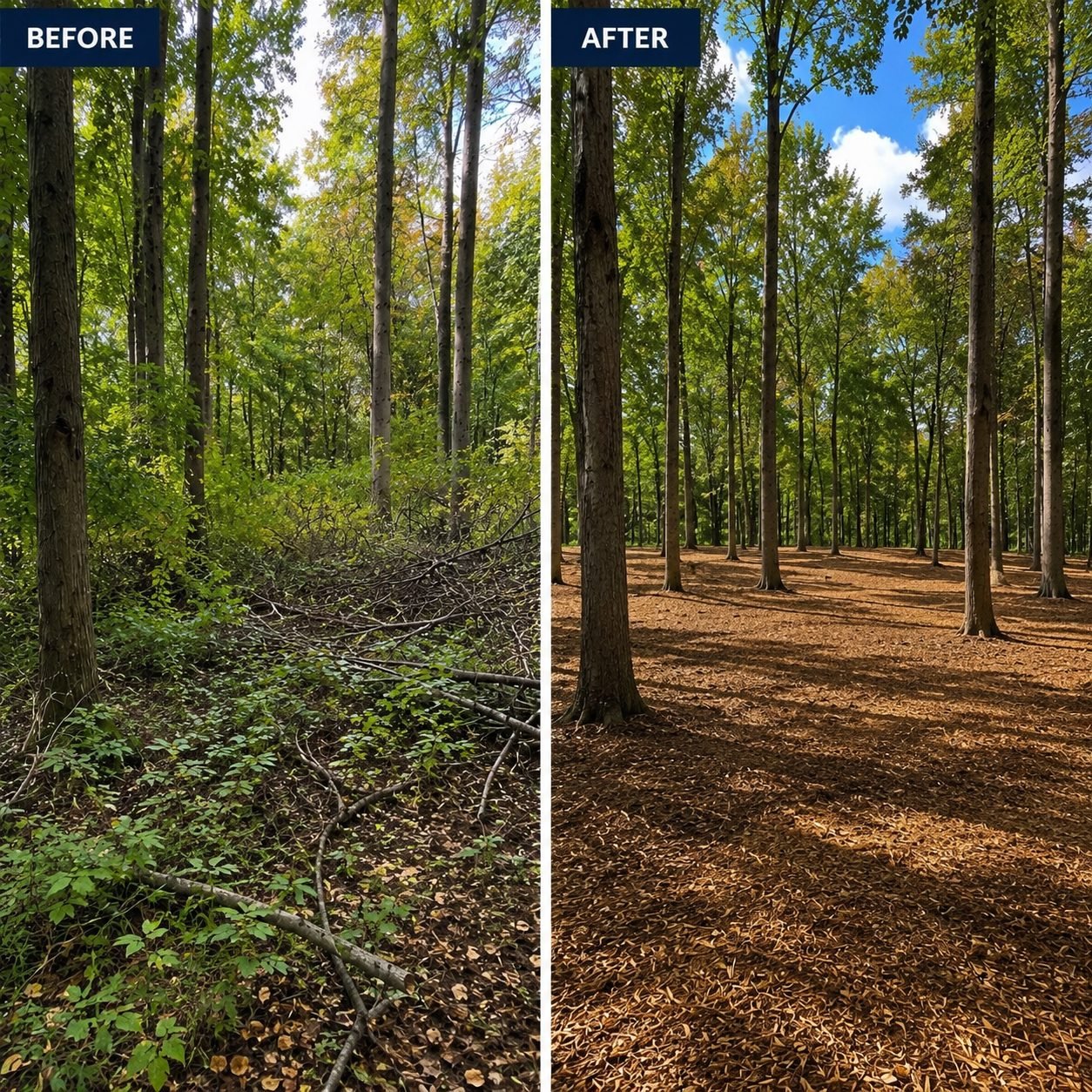
What should a land clearing project gallery show?
A strong project gallery should show the property before clearing, the site walk and equipment setup, the active clearing phase, stump or debris handling, grading or finish work, and the final result. For land clearing, before-and-after images are most useful when they also show slope, access, and how the ground was left behind.
Frequently asked questions
For a house site, the best way to clear land is usually a full site preparation plan that includes clearing, stump removal, grading, drainage shaping, and utility coordination. Forestry mulching may be a good first step if the site is heavily overgrown, but it usually will not finish the property for a foundation. The correct method depends on soil, access, slope, and the footprint of the future build.
Yes, forestry mulching is often one of the most efficient methods of land clearing for brush, small trees, and selective cleanup because it reduces hauling and keeps disturbance low. It is especially useful for trails, fence lines, access lanes, and property improvement. It is not always the best choice for build-ready pads or areas where full root removal is required.
Timeline depends on acreage, density, weather, access, and whether the project includes stump work, grading, or demolition. A small brush cleanup may move quickly, while a dense wooded lot with stumps and haul-off will take longer. Efficiency is not just machine speed. It is also planning, sequencing, and avoiding delays from utilities, permits, or wet ground.
Sometimes. It depends on the township, city, county, and the type of work being done. Clearing that includes grading, demolition, significant land disturbance, or drainage changes may require permits, and permit costs commonly fall in the $100 to $300 range. Before any digging, Ohio 811 locates are required by law at least 48 hours in advance.
Land clearing removes vegetation, stumps, roots, and debris. Grading changes the shape and slope of the soil so the property drains properly and is ready for the next use. Many projects need both. If you only clear land without grading, the site may still not be usable. If you only grade without clearing, the vegetation and roots can interfere with the work.
Ohio clay soil matters because it can become slick, sticky, and easily compacted when wet. That changes how equipment moves and how much finish work is needed. A method that looks efficient in dry conditions can become inefficient if the soil is saturated. That is why timing, access planning, and grading are critical in Central Ohio projects.
Sometimes they can, but it depends on the project. If the land is being used for a trail, pasture edge, or temporary improvement, some stumps may be acceptable. If the site will be built on, graded, or driven on, stumps usually need to be removed or ground out. Leaving them behind can cause settling, obstacles, and future excavation problems.
Compare contractors by scope, equipment, utility locating process, cleanup plan, insurance, and whether they explain the land clearing methods in a way that matches your site. The cheapest estimate is not always the best value. Ask what is included, what is excluded, and whether the contractor can handle clearing, grading, excavation, or demolition if the job expands.
Land Clearing Across Central Ohio
Fortress Level Construction handles land clearing in every county and community across Central Ohio. See local details, drive times, and pricing for your area:
What Other Services Does Fortress Offer in Central Ohio?
Fortress Level Construction runs a full range of land-clearing, excavation, grading, and site-work services across Central Ohio, so one owner-operated crew can clear, grade, and prep a site end to end.
Get a Flat-Rate Quote from Lee Carson
Owner-operated land clearing across all five Central Ohio counties. Send your property details and Lee gets back to you within 2 to 3 hours during business hours with one flat number after a free on-site walk-through.