
How does Fence Line Clearing work in Licking County, Ohio’s mix of farmland, woods, and Intel-driven development?
Fence line clearing in Licking County, Ohio, means addressing rural farm boundaries near Granville, wooded lots in Heath, and industrial greenfields by Johnstown’s Intel development. Fortress Level Construction’s experienced crew uses mulchers and excavators to clear brush and trees, making property lines accessible and survey-ready. Free on-site quotes are available countywide.
The Quick Answer
- Fence line clearing in Licking County addresses both rural and fast-growing industrial needs.
- Fortress Level Construction services all towns from Newark to Johnstown, Buckeye Lake, and Granville.
- Specialized equipment tackles thick brush and trees up to 14 inches in diameter.
- Free on-site walk-throughs and flat-rate quotes for every project.
- Rapid response: 2-3 hour call-back and same-week site visits.
- Experienced, insured crew led by veteran Lee Carson.
- Compliant with Ohio Revised Code 3781.28 and utility locate requirements.
- Serving both agricultural and development sites reshaping the county.
Related Questions People Ask Next
In Licking County, rural fence line clearing often means removing overgrowth, multiflora rose, and invasive species along farm boundaries, especially near Granville, Hebron, and Buckeye Lake. In contrast, clearing near Johnstown’s Intel corridor focuses on prepping large, flat greenfields for commercial fencing, which requires heavier equipment and close coordination with utility locates due to ongoing infrastructure expansion.
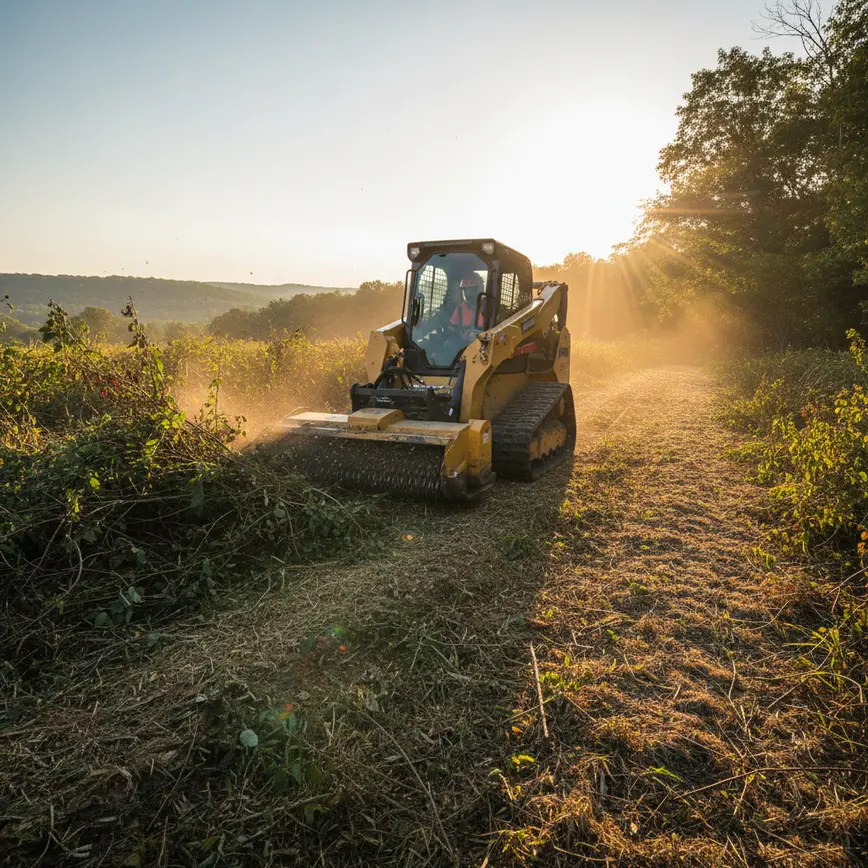
For sites near Buckeye Lake or the wooded hills east of Newark and Granville, Fortress Level Construction deploys John Deere 333G compact track loaders with Diamond drum mulchers, handling stems up to 14 inches. This tackles dense, wet brush and hardwoods common to Licking County’s creek bottoms. Dozers and excavators handle stumps and grading for fence installation.
Most agricultural fence line clearing in Licking County doesn’t require a permit, but clearing for new commercial or industrial fencing, especially near Johnstown, Jersey Township, or major development corridors, often does. Permit fees typically range from $100 to $300. Fortress Level Construction assists with local requirements and always schedules Ohio 811 utility locates before any work.
With massive industrial development near Johnstown and Jersey Township, Licking County’s demand for fence line clearing has surged. Developers need boundaries marked and brush removed for new fencing, while farmland owners maintain traditional fence rows. Fortress Level Construction adapts to both, scaling equipment and crew for everything from one-acre farms to multi-acre industrial parcels.
What makes Licking County’s fence line clearing different from other Ohio counties?
Licking County’s fence line clearing is unique due to its blend of rural agriculture, wooded terrain, and rapid industrial expansion, especially near Johnstown. Fortress Level Construction tailors its approach for each area, using mulchers for overgrown farm edges and excavators for new industrial sites, always factoring in the county’s varied soils and landscape.
From the productive farmland near Pataskala and Heath to the wooded hills and creek valleys east of Newark, Licking County’s landscape requires flexible fence line clearing solutions. Fortress Level Construction’s crew adapts methods to each site, restoring farm boundaries or prepping greenfields for commercial fencing.
Major growth driven by industrial projects in Jersey Township and Johnstown has increased demand for large-scale clearing. This often requires coordination with township officials and utility providers. Fortress’s experience across Newark, Granville, and Buckeye Lake ensures each project is completed efficiently and meets local requirements.
How does Fortress Level Construction handles fence line clearing in Licking County’s diverse terrain?
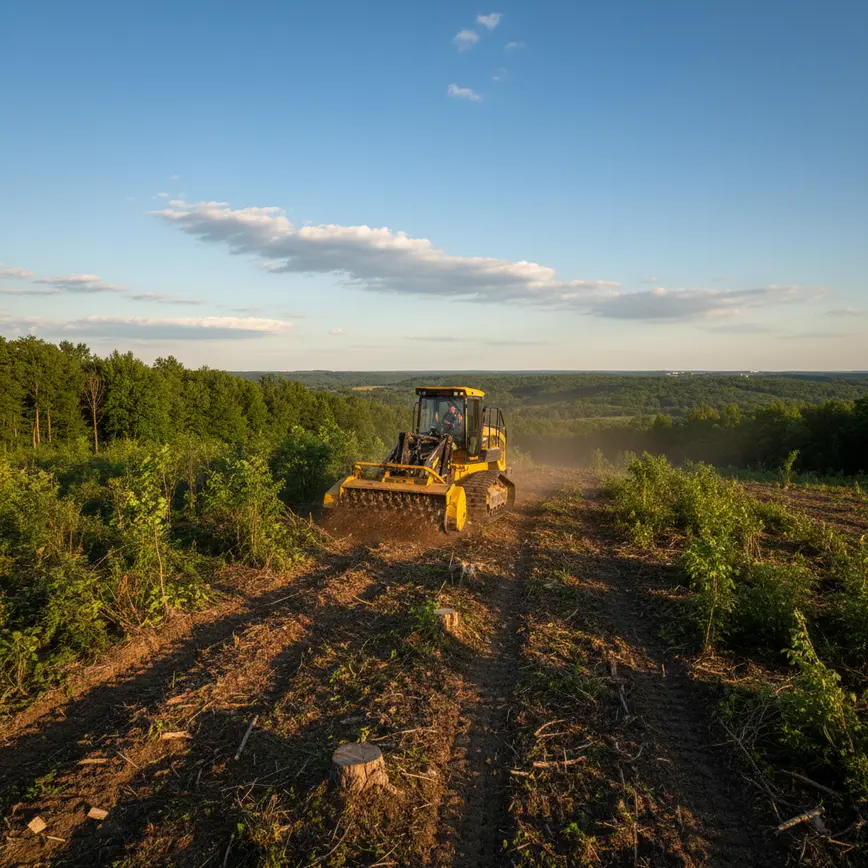
Fortress Level Construction uses John Deere 333G compact track loaders with Diamond drum mulchers for brush and small trees, plus dozers and excavators for tougher jobs. This equipment is ideal for Licking County’s farmland, wooded hills, and industrial greenfields, ensuring efficient clearing on everything from sloping creek valleys to flat development tracts.
In the east, wooded slopes and creek bottoms near Blackhand Gorge require nimble, low-ground-pressure equipment. Fortress’s mulchers can handle thick honeysuckle and hardwoods up to 14 inches, leaving a mulch bed that suppresses regrowth.
For flat industrial tracts near Johnstown and Jersey Township, larger excavators and dozers are used to clear brush and stumps for fence installation. The team’s local experience ensures minimal soil disturbance, which is important for both farmland and new construction.
What does fence line clearing cost in Licking County, and what factors affect the price?
In Licking County, forestry mulching for fence line clearing typically ranges from $1,850 to $3,500 per acre. Full clearing with stump removal runs $4,000 to $8,000 per acre. Terrain, brush density, and site size, from small farms near Hebron to large industrial parcels, impact cost. Free on-site quotes and walk-throughs are standard.
Clearing a fence line along a wooded creek near Granville or Hebron may cost less than tackling thick brush in a future industrial park near Johnstown. Slope, soil type, and site access all affect pricing, Fortress Level Construction walks every site to provide flat-rate quotes, so there are no surprises.
Permits may be necessary for new commercial projects, especially in rapidly growing areas like Jersey Township. Fortress helps clients budget for the full scope, including utility locates and any required township approvals, ensuring all work is compliant and ready for fencing.

How does Ohio law and utility locating affect fence line clearing in Licking County?
Ohio Revised Code 3781.28 and Ohio 811 require utility locates at least 48 hours before digging in Licking County. This is crucial near developing areas like Newark, Johnstown, and Buckeye Lake, where new infrastructure is common. Fortress Level Construction manages all notifications to ensure every fence line clearing is completed safely and in compliance.
With Licking County’s rapid growth and expanding utilities, even rural areas may have underground lines. Before any fence line clearing with heavy equipment, Fortress schedules a utility locate as required by state law, preventing costly or hazardous utility hits.
This step is especially important for industrial sites near the Intel development and in high-growth corridors, where new lines may not appear on older maps. Fortress’s compliance with Ohio regulations keeps projects on schedule and clients protected from liability.
How does fence line clearing compare across Licking County’s rural, industrial, and lakeside areas?
Fence line clearing in Licking County varies by landscape. Fortress Level Construction adapts methods for rural farms, wooded hills, industrial greenfields, and lakeside properties, using the right equipment and process for each environment.
| Area | Typical Vegetation | Clearing Method | Key Considerations |
|---|---|---|---|
| Rural Farmland (Pataskala, Heath) | Brush, invasive trees, old fence rows | Forestry mulching, selective clearing | Minimize soil compaction, protect crops |
| Wooded Hills (East of Newark, Blackhand Gorge) | Dense hardwoods, honeysuckle, vines | Drum mulcher, hand cutting | Steep slopes, creek access, erosion control |
| Industrial Greenfields (Johnstown, Jersey Twp) | Grass, brush, young trees | Mulching, full clearing with dozer | Utility locates, large acreage, fast timelines |
| Lakeside Properties (Buckeye Lake, Hebron) | Wetland brush, willow, softwoods | Light mulching, careful excavation | Soft soils, waterway protection, permit needs |
When is fence line clearing NOT the right solution in Licking County, and what should you do instead?
Fence line clearing is not always the right solution in Licking County, especially in areas with protected wetlands, archaeological sites like the Newark Earthworks, or along streams and lakesides where only selective trimming is permitted. Fortress Level Construction advises on alternatives and compliance for sensitive sites.
If your property borders the Newark Earthworks, Dawes Arboretum, or protected creek corridors like Raccoon Creek, full clearing may be restricted due to environmental or historical regulations. Consulting local authorities or environmental experts is recommended before proceeding with any clearing work.
For minor brush removal or simple fence repairs, hand tools or landscaping services may be more appropriate. Fortress Level Construction will advise on the best approach during your free walk-through, ensuring each Licking County project is handled legally and cost-effectively.
What does before-and-after fence line clearing look like in Licking County?
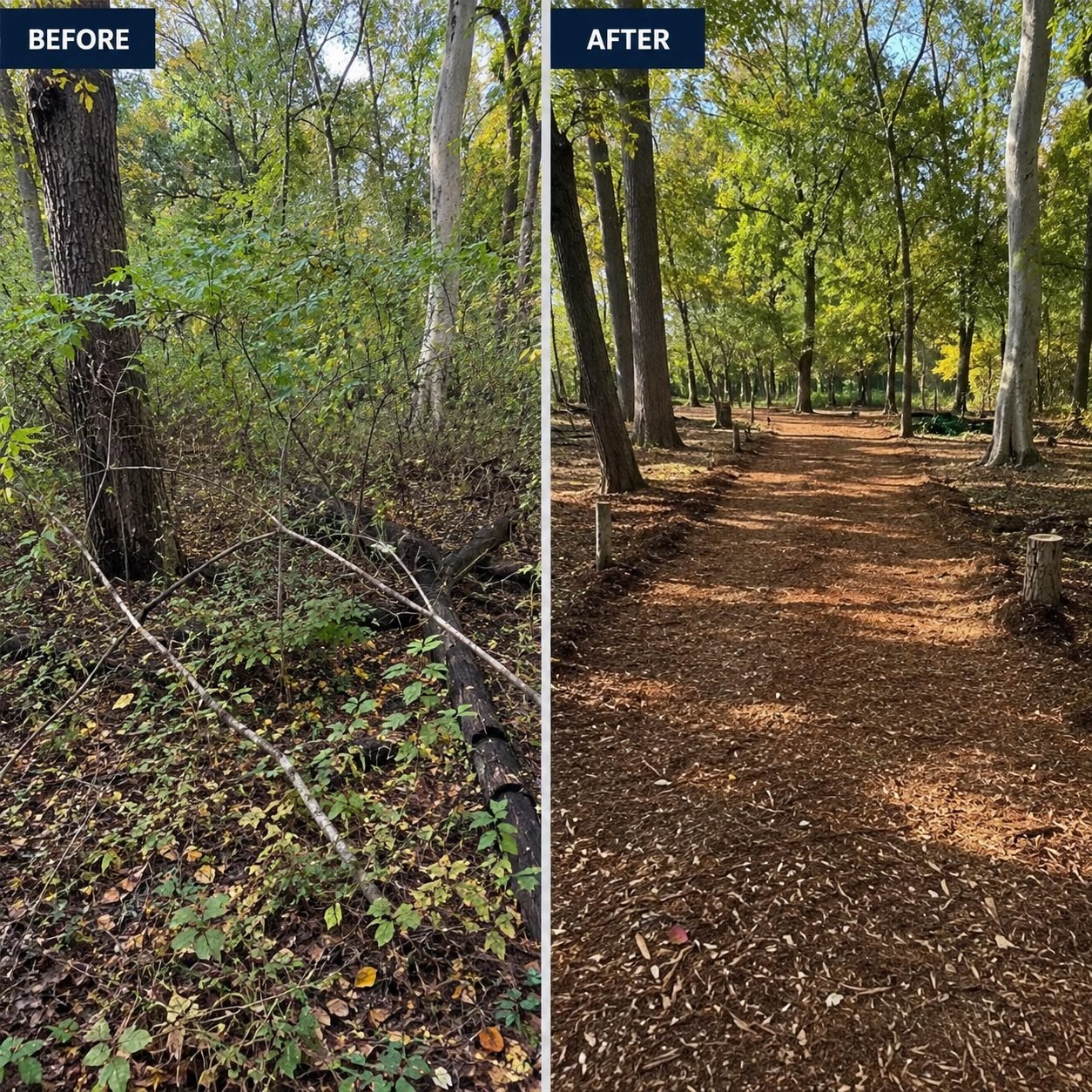
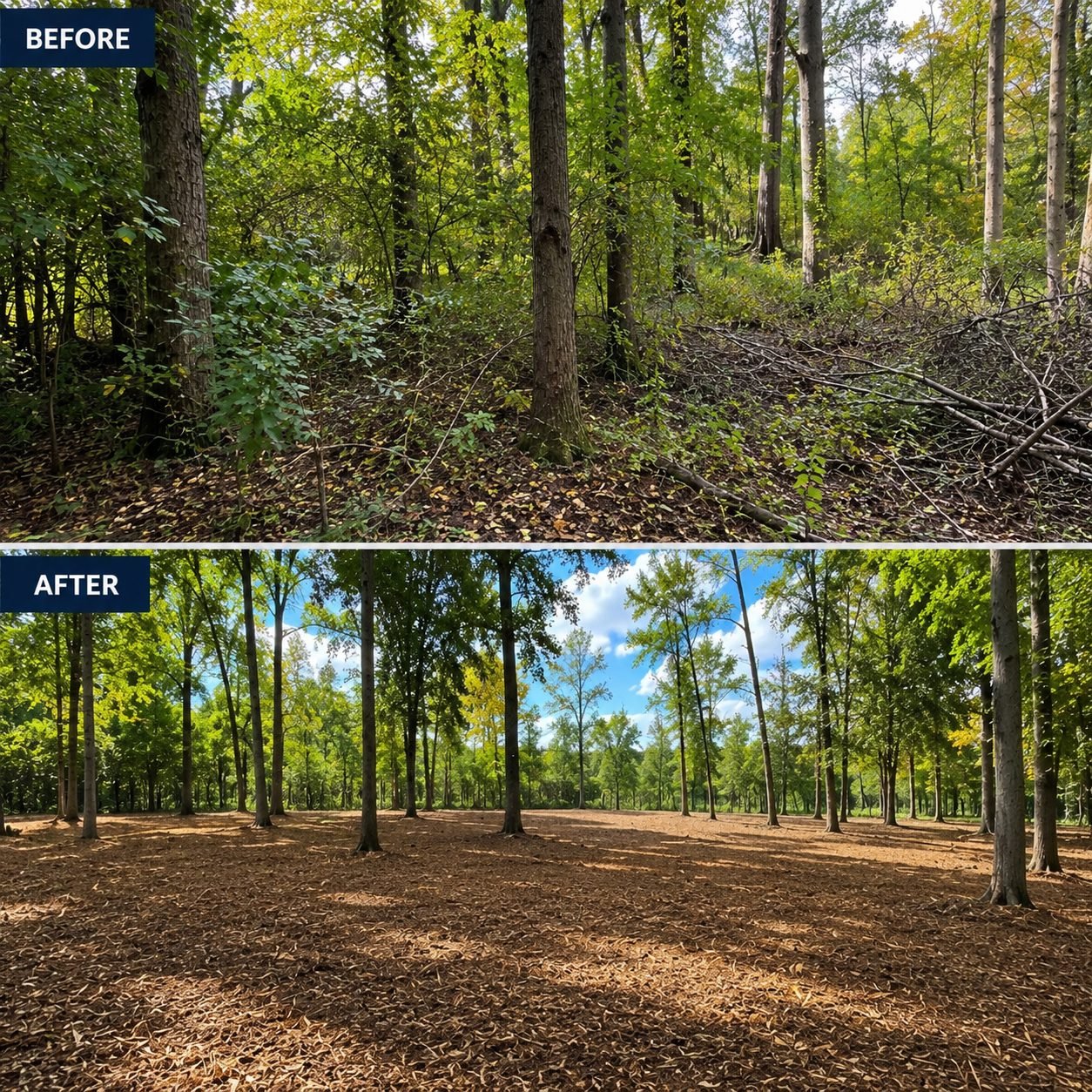
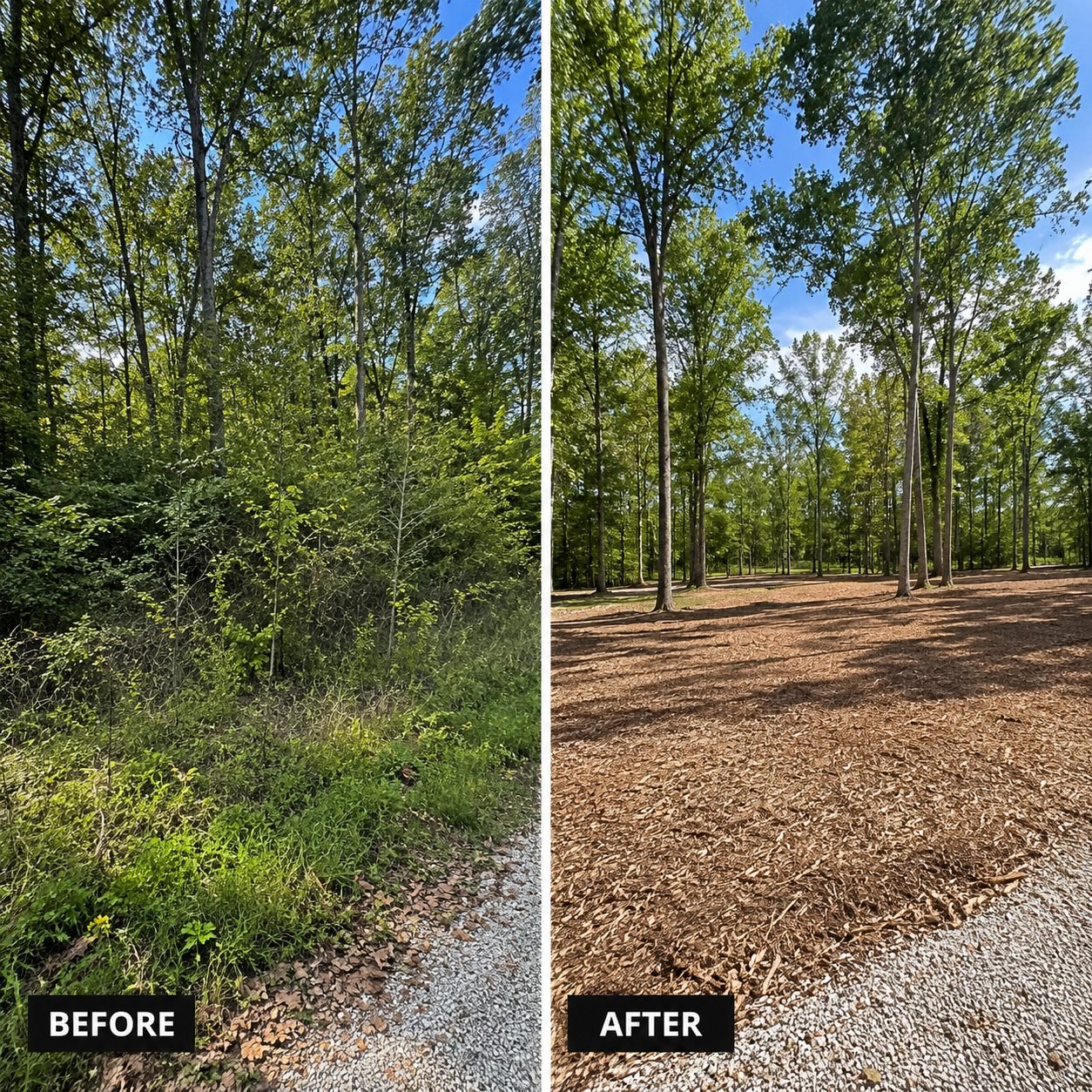
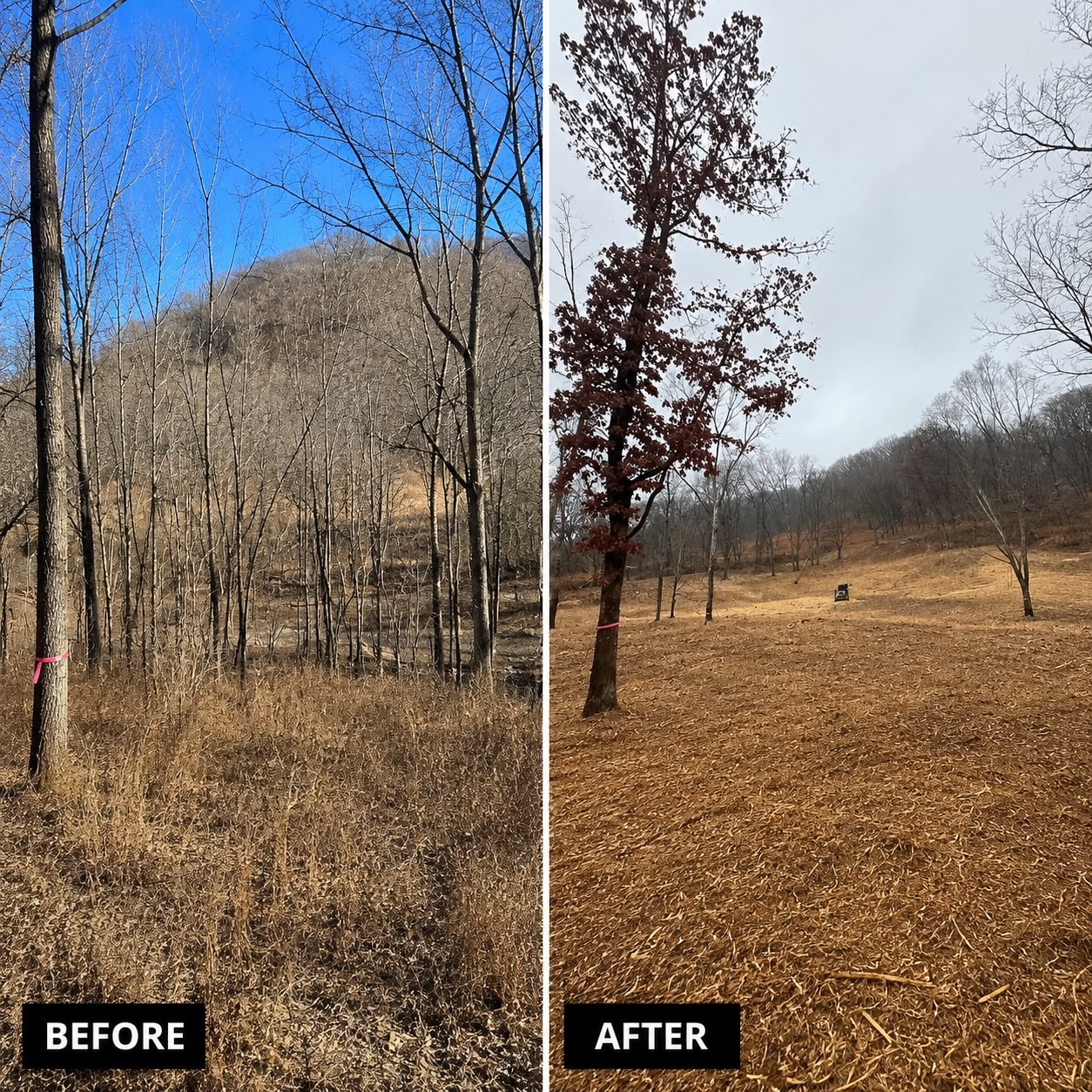
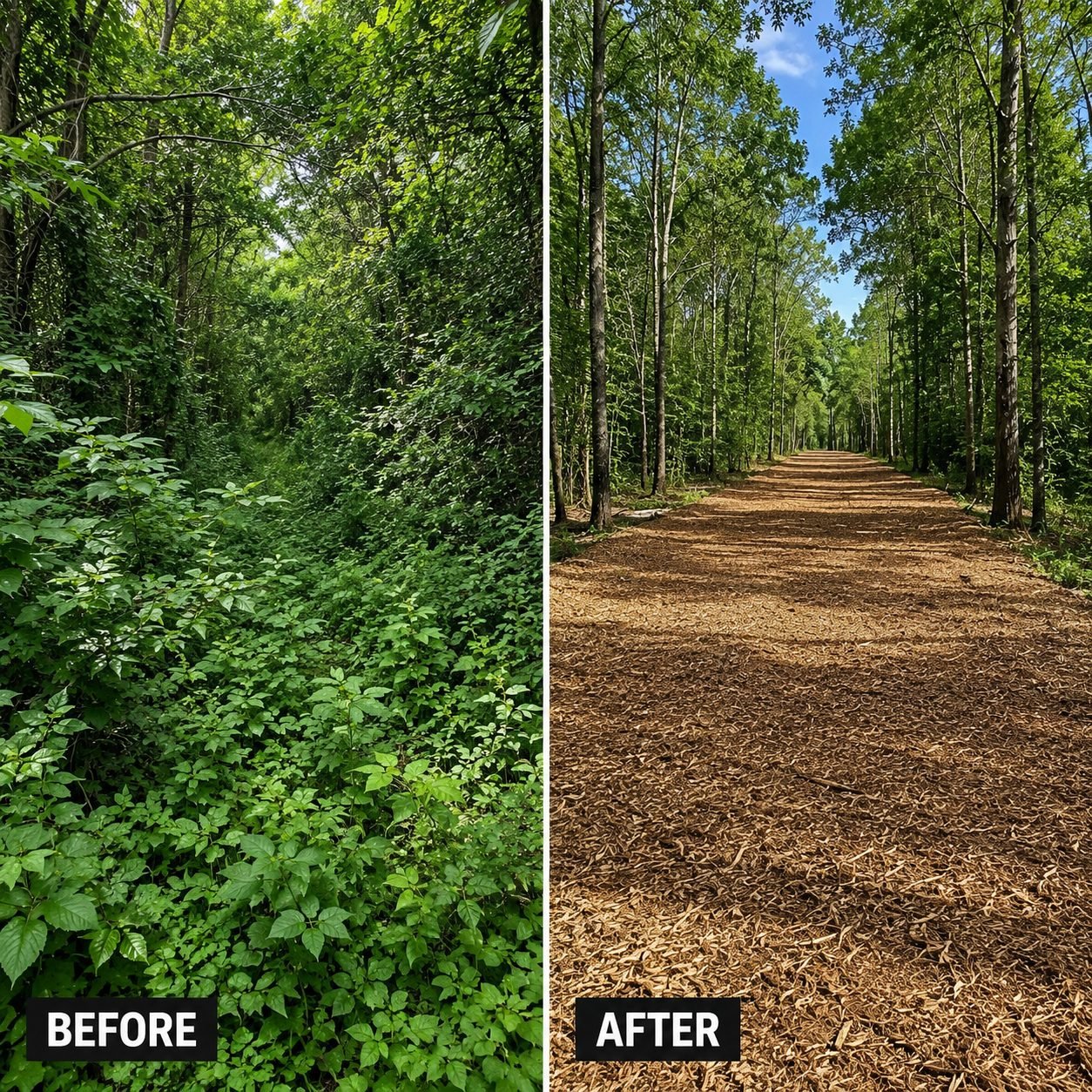
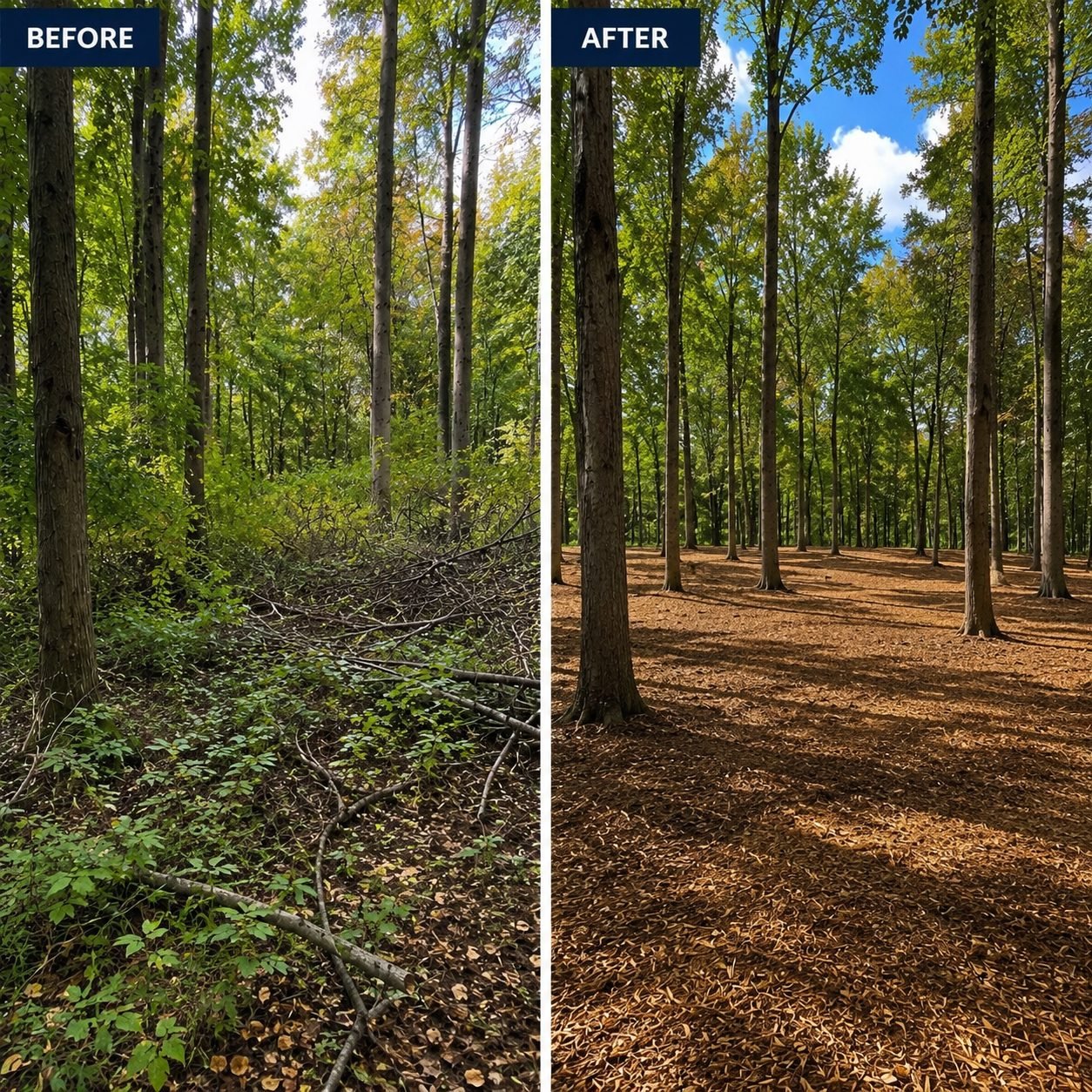
Before clearing, Licking County fence lines are often choked with honeysuckle, wild grape, and fallen limbs, especially near Raccoon Creek or old farm boundaries. After Fortress Level Construction’s crew finishes, property lines are open, mulched, and ready for new fencing or survey, whether in Newark, Johnstown, or Buckeye Lake.
Frequently asked questions
Fortress Level Construction responds to inquiries within 2-3 business hours and usually schedules free on-site walk-throughs the same week. After required utility locates (which take at least 48 hours), most Licking County projects are scheduled within 1-2 weeks, weather permitting. This quick turnaround applies to jobs from Newark and Granville to Johnstown and Buckeye Lake.
Before your appointment, mark any property corners, identify areas with underground utilities or drains, and notify neighbors if fence lines are shared. Fortress Level Construction handles the official Ohio 811 utility locate and walks the site with you to discuss access, boundaries, and any special concerns unique to your Licking County property, whether rural or industrial.
Standard forestry mulching by Fortress Level Construction removes brush and trees flush to the ground, leaving mulch behind. For full clearing, including root and stump removal, which is often required for new industrial fencing near Johnstown or Jersey Township, excavators and dozers are used. The crew will recommend the best solution for your Licking County site during the walk-through.
Yes. Clearing near Buckeye Lake, the Licking River, or Raccoon Creek requires care to avoid soil disturbance and protect water quality. Fortress Level Construction uses lighter equipment and follows best practices to prevent erosion or runoff, and can advise on any permit requirements or environmental protections for sensitive areas in Licking County.
Yes, fence line clearing is possible in winter months throughout Licking County, unless ground conditions are too wet or deeply frozen. Frozen ground can reduce soil compaction, but heavy snow or ice might delay work. Fortress Level Construction evaluates site conditions and schedules accordingly, minimizing impact on your farmland, woods, or development property.
Most Licking County fence line clearing projects are completed in one to three days, depending on acreage, brush density, and terrain. The John Deere 333G mulchers clear 1-5 acres per day, so rural farm boundaries and even large industrial sites are handled efficiently. Fortress Level Construction provides a detailed timeline after the on-site assessment.
Fence Line Clearing Cities and Counties We Serve
What Other Services Does Fortress Offer in Central Ohio?
Fortress Level Construction runs a full range of land-clearing, excavation, grading, and site-work services across Central Ohio, so one owner-operated crew can clear, grade, and prep a site end to end.
Get a Flat-Rate Quote from Lee Carson
Owner-operated land clearing across all five Central Ohio counties. Send your property details and Lee gets back to you within 2 to 3 hours during business hours with one flat number after a free on-site walk-through.