
Ohio Utility Right-of-Way Clearing: What It Is and How It Protects Your Project
Right of way clearing is the removal of trees, brush, stumps, and other obstructions from a utility corridor, access route, or easement so crews can install, inspect, repair, and maintain infrastructure safely. It supports utility line clearing, easement clearing, and long-term vegetation management without turning a corridor into unnecessary bare ground.
The Quick Answer
- Right of way clearing removes obstruction from utility corridors, easements, and access paths so infrastructure can be built, inspected, and maintained safely.
- The goal is not to strip every plant forever, but to create safe clearance, reliable access, and workable vegetation management over time.
- Common methods include forestry mulching, full clearing, selective clearing, stump grinding, and mechanical brush removal.
- A proper project starts with boundary verification, locate requests, utility line clearing planning, and a clear scope of what stays and what goes.
- Cost depends on density, tree size, access, slopes, soil, and whether grading or excavation follows the clearing work.
- Central Ohio clay soil can affect machine access, drainage, and restoration, especially after rain or when heavy equipment must cross a corridor.
- DIY clearing is risky near active utilities, hidden stumps, steep ground, and buried lines, so a pro is usually safer for most utility corridors.
- A qualified contractor should be licensed, insured, equipped for the terrain, and able to explain permits, Ohio 811, sequencing, and restoration.
Related Questions People Ask Next
Utility right-of-way clearing is the process of removing or controlling trees, brush, stumps, and other obstructions in a defined utility corridor or easement. The purpose is to keep overhead and underground infrastructure accessible, safe, and maintainable. It often includes vegetation management, access improvement, and selective clearing rather than total land stripping.
Right of way clearing is more targeted than general land clearing. A site clearing project usually prepares a parcel for broad redevelopment, while right of way maintenance focuses on a corridor, easement, or access lane that must remain usable over time. That means safety, utility protection, and long-term vegetation control matter as much as removal.
Utility companies clear easements to prevent tree contact, improve access for repairs, reduce wildfire or storm damage risk in some regions, and keep inspection routes open. Easement clearing helps crews reach poles, vaults, valves, cabinets, and underground assets without delay. The work also supports reliability by keeping regrowth from interfering with the corridor.
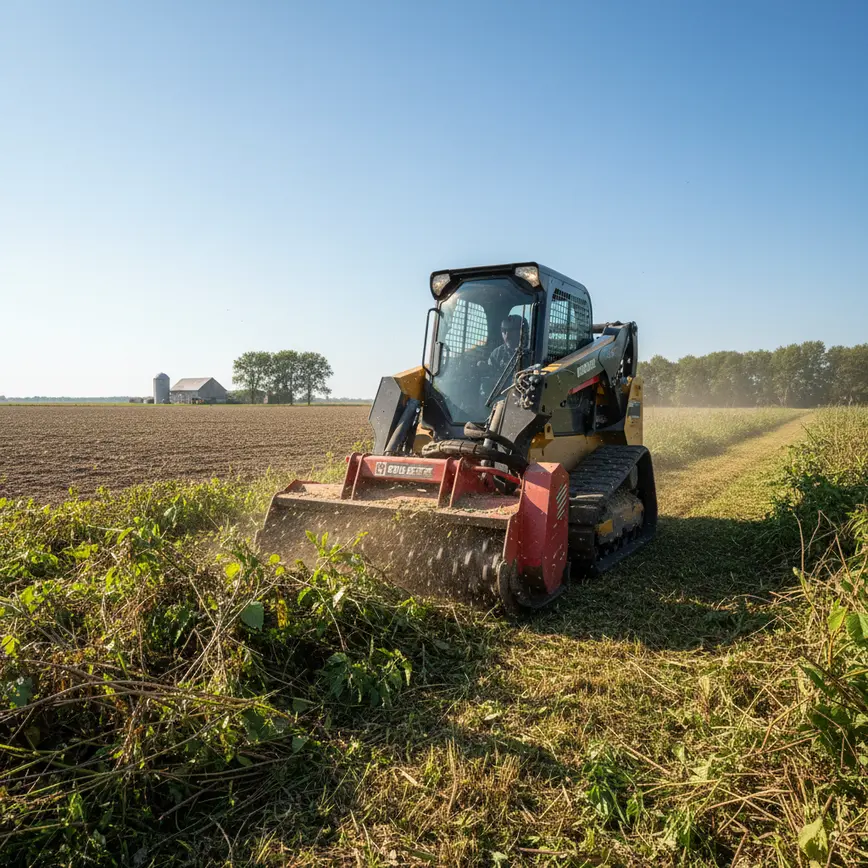
Yes, forestry mulching is commonly used in right of way maintenance when the goal is to reduce brush, saplings, and light to medium vegetation without exporting large amounts of debris. It is especially useful when a corridor needs fast cleanup, erosion-sensitive handling, or a cleaner finish than rough brush cutting alone.
Before utility line clearing starts, confirm boundaries, identify the exact work area, ask about underground utilities, and request an Ohio 811 locate if digging is involved. You should also verify permit needs, clarify what trees or stumps are to remain, and make sure the contractor understands access, disposal, and restoration expectations.
What is right of way clearing and what does it include?
Right of way clearing is the targeted removal of vegetation and obstructions from a utility corridor, easement, or access route so infrastructure can be installed, inspected, repaired, and maintained safely. It can include trees, brush, vines, saplings, stumps, debris, and limited grading, but it should always follow the project scope and utility clearance needs.
At its core, right of way clearing is not just about making a strip of ground look open. It is about creating a controlled corridor that allows safe access and reliable operation of infrastructure. That can mean utility line clearing along power, telecom, water, or gas routes, but it can also apply to access roads, drainage easements, and service lanes. The scope often depends on the utility owner, the recorded easement, and the physical conditions on the ground.
A good project defines exactly what is being removed and what is being preserved. In some cases, that means selective clearing around poles, cabinets, valves, or marked lines. In others, it means full easement clearing where dense brush, invasive species, and small trees must come out. The work may also include stump grinding, root removal, light grading, or forestry mulching if the site should remain stable and easy to maintain after the initial pass.
In Central Ohio, clay soil can change how the work is approached. Heavy equipment can rut saturated ground, and old root systems can hold water or make access rough after clearing. That is why right of way maintenance is often planned with drainage, seasonal conditions, and restoration in mind. The best result is a corridor that is clear enough for utility needs but still practical for the landowner and the long-term maintenance schedule.

Why does right of way clearing matter for safety, access, and reliability?
Right of way clearing matters because overgrown corridors can block access, hide hazards, interfere with utilities, and make repairs slower or more expensive. Proper vegetation management also helps crews work more safely, keeps easements usable, and reduces the chance that a neglected corridor becomes a recurring problem after every storm season or growing season.
Which methods are used in utility line clearing and easement clearing?
The main methods are forestry mulching, full clearing, selective clearing, brush cutting, stump grinding, and mechanical removal. The right method depends on vegetation density, tree size, terrain, access, soil conditions, and how permanent the corridor must be. Utility line clearing usually uses the least disruptive method that still meets safety and maintenance goals.
How does the right of way clearing process work step by step?
A proper right of way clearing project starts with locating utilities and verifying the scope, then moves through mobilization, vegetation removal, stump and debris handling, grading or restoration, and final inspection. The process should be planned so the work protects existing infrastructure, limits disturbance, and leaves the corridor ready for use or ongoing maintenance.
What drives the cost of right of way clearing?
Cost depends on vegetation density, tree size, terrain, access, disposal, equipment needs, and whether the project includes grading, excavation, or stump work. Right of way clearing is usually priced by acreage, linear corridor, or project complexity, and the cheapest bid is not always the best value if restoration or utility protection is weak.
What equipment is commonly used for utility right of way clearing?
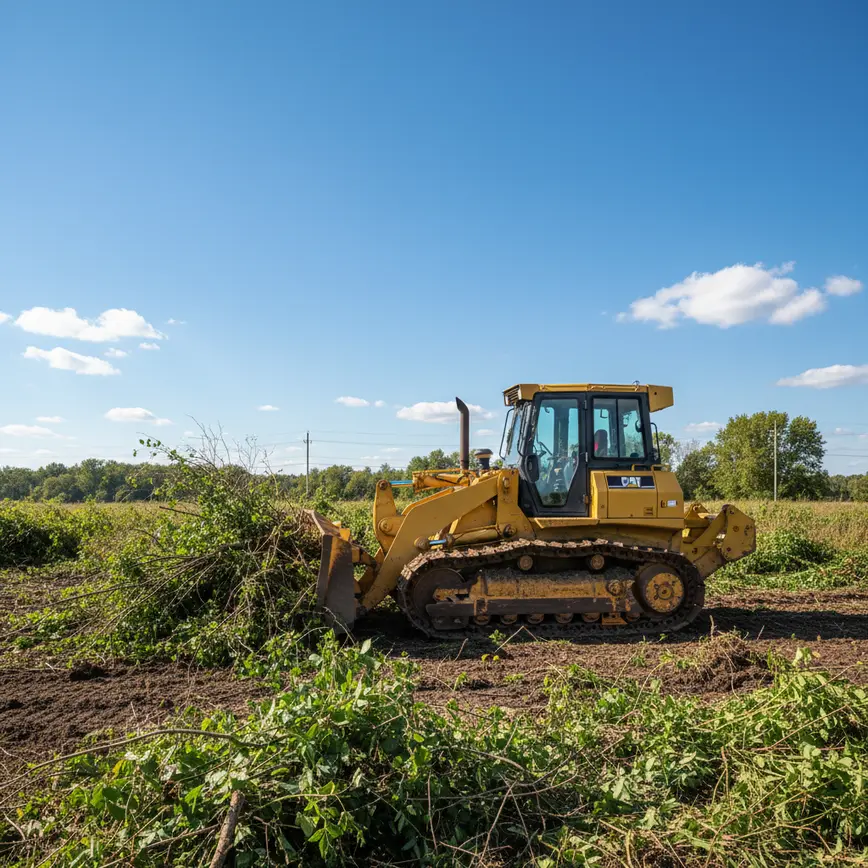
The right equipment depends on the vegetation, terrain, and desired finish. Common machines include forestry mulchers, track loaders, skid steers, excavators, brush cutters, grapples, stump grinders, and dump or haul equipment. Well-chosen equipment makes right of way clearing faster, safer, and less disruptive to the surrounding property.
Should you DIY right of way clearing or hire a professional?
DIY clearing can work for very small, low-risk brush removal, but most utility corridor projects are better handled by a professional. Active utilities, hidden hazards, heavy equipment, access challenges, and restoration requirements make right of way clearing a job where experience, insurance, and proper sequencing matter more than just having a saw or tractor.
What permits, regulations, and Ohio 811 rules apply before digging?
Before any digging, excavation, or substantial ground disturbance, the project must follow permit rules and utility locate requirements. In Ohio, ORC 3781.28 requires an Ohio 811 utility locate request 48 hours before digging. That step protects underground lines, reduces liability, and helps the crew plan safe right of way clearing from the start.
How do you choose the right contractor for right of way maintenance?
Choose a contractor who is licensed, insured, experienced with utility corridors, and able to explain the scope, equipment, safety plan, and restoration. The best partner for right of way maintenance should understand vegetation management, utility line clearing, Ohio 811, and the difference between clearing a site once and maintaining it over time.
Start by asking what kinds of projects the contractor actually handles. Right of way clearing is specialized work, and a contractor who mostly does general landscaping may not be equipped for corridor access, stump work, or utility-adjacent conditions. Ask how they handle easement clearing, what equipment they use, and how they protect nearby infrastructure. A good contractor should be comfortable describing the sequence from locate request to final cleanup without sounding vague or improvisational.
Next, verify insurance, licensing, and communication. Because corridor work can involve large machines, hidden hazards, and potential third-party impacts, insurance is not optional. You also want a crew that communicates clearly about dates, weather delays, access needs, and what will happen if the site conditions are worse than expected. Fortress Level Construction has been a licensed, insured Central Ohio land-services company since 2009, founded by Lee Carson, a combat veteran The company operates with a crew, not a one-person model, which matters on utility work that requires coordination and consistency.
Finally, compare proposals by scope, not just by price. The best bid should identify what is being cleared, what is being preserved, how debris will be handled, whether grading or excavation is included, and what restoration will look like afterward. If a contractor cannot explain how they will protect the corridor or support future maintenance, keep looking. Good right of way maintenance is about keeping the utility functional over time, not just making the first pass look clean.
How do right of way clearing methods compare?
Different clearing methods solve different problems. The best choice depends on corridor width, vegetation size, soil conditions, access, restoration needs, and whether the goal is one-time removal or long-term vegetation management. This comparison helps you match the method to the job instead of overpaying for more disruption than the site actually needs.
| Method | Best use | Typical speed | Main tradeoff |
|---|---|---|---|
| Forestry mulching | Brush, saplings, light to medium trees, maintenance corridors | Fast | Leaves mulch on site and may not be enough for large stumps or deep roots |
| Full clearing | Heavier site prep, redevelopment, major corridor reset | Moderate | More disturbance, more debris handling, often higher cost |
| Selective clearing | Utility line clearing where some trees or ground cover must remain | Moderate to slow | Requires planning and careful operator control |
| Brush cutting and mowing | Ongoing right of way maintenance and light vegetation control | Fast | Does not remove stumps or larger woody material |
| Stump grinding | Reducing tripping hazards and preparing a finished corridor | Moderate | Useful on isolated stumps but not a full clearing solution |
| Mechanical removal with excavator | Root balls, storm debris, large obstructions, difficult terrain | Slow to moderate | Most disruptive, but sometimes necessary for access or safety |
When is right of way clearing not the right approach?
Not every overgrown corridor should be cleared aggressively. In some cases, selective vegetation management is better than full removal, and in others the project should wait for utility locates, permits, weather improvement, or a revised scope. Common mistakes include clearing without boundaries, disturbing drainage, and assuming all vegetation should be removed.
One common mistake is treating every project like a blank-slate land clearing job. Utility corridors are different. Some easements only allow certain types of vegetation removal, and some need low ground cover or select trees left in place. If the goal is right of way maintenance, over-clearing can create erosion, heat stress, invasive regrowth, or unnecessary restoration costs. The right answer is often targeted control, not total removal.
Another mistake is moving ahead without utility verification or without understanding the ground conditions. Central Ohio clay soil can become slick, soft, and easily rutted after rain. Heavy machines in poor conditions can turn a manageable corridor into a repair project. Also, if the work will involve digging, stumps, or excavation, skipping Ohio 811 is not acceptable. The safest job is the one planned around the site, the utility map, and the weather, not the one started the fastest.
Finally, right of way clearing may not be the correct first step if the real issue is drainage, access control, or unstable slopes. Sometimes grading, drainage correction, or limited excavation should happen before or alongside clearing. If the contractor cannot explain why one method is being chosen over another, that is a warning sign. Good vegetation management is practical and specific. It should solve the corridor problem without creating a new one.
What does a right of way clearing project look like?
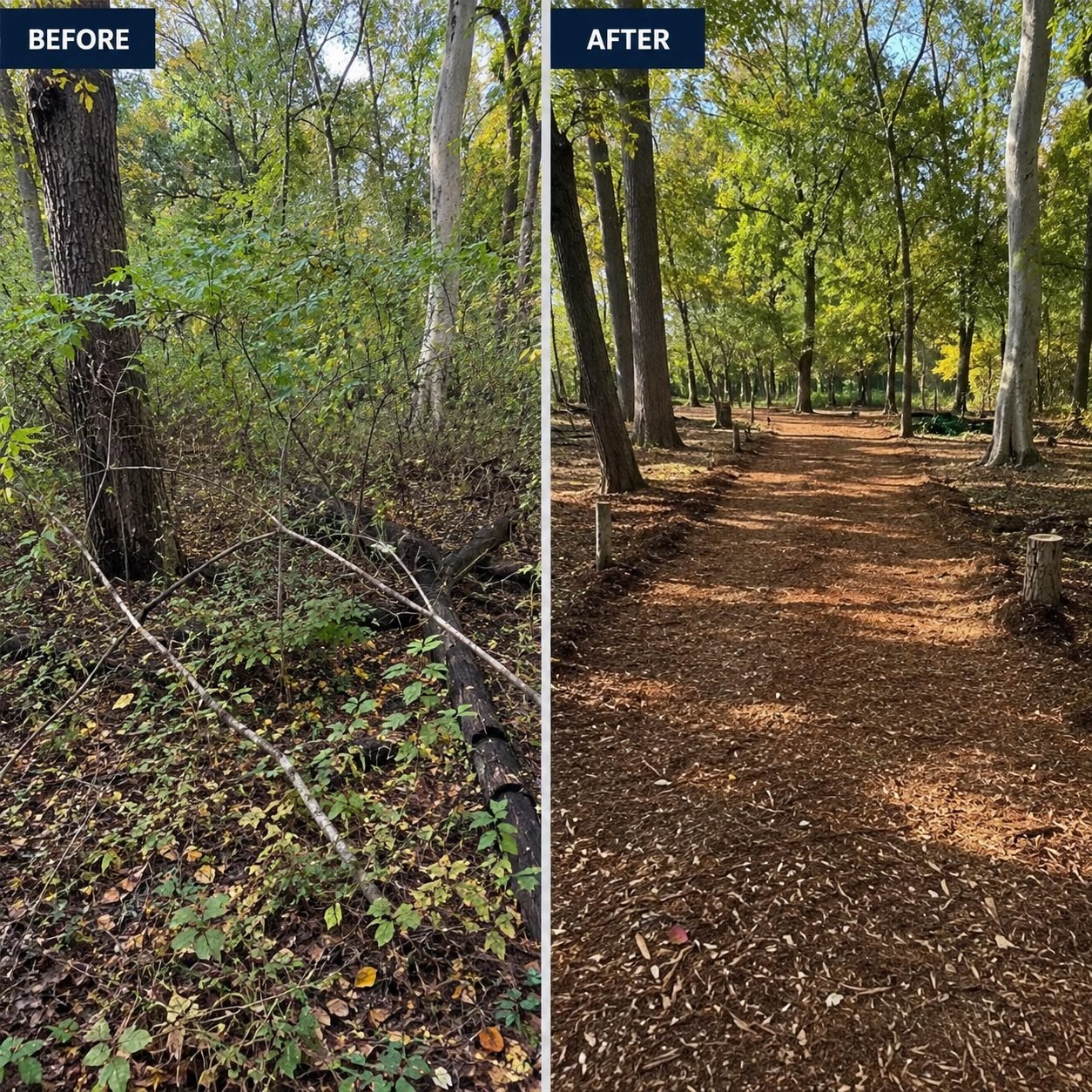
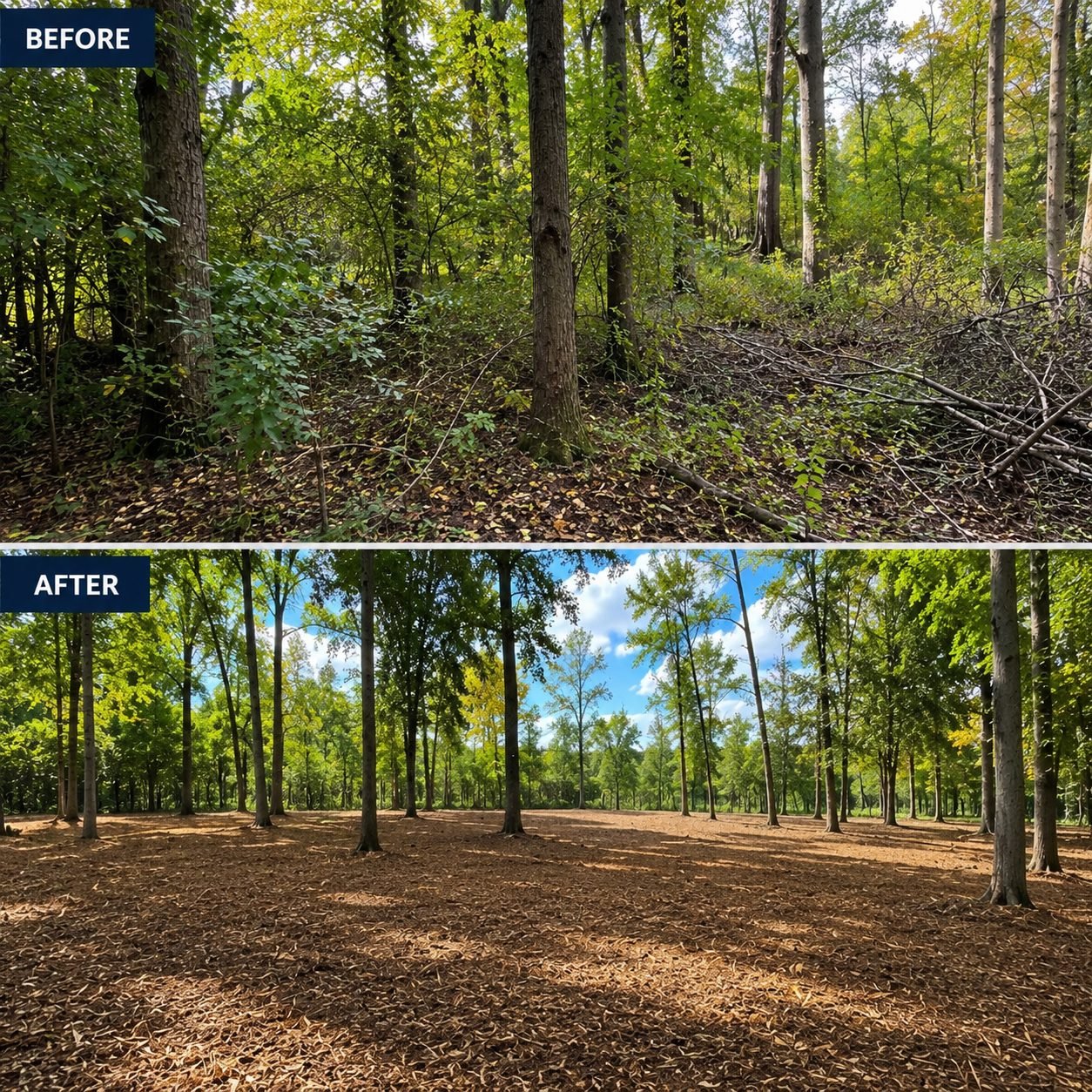
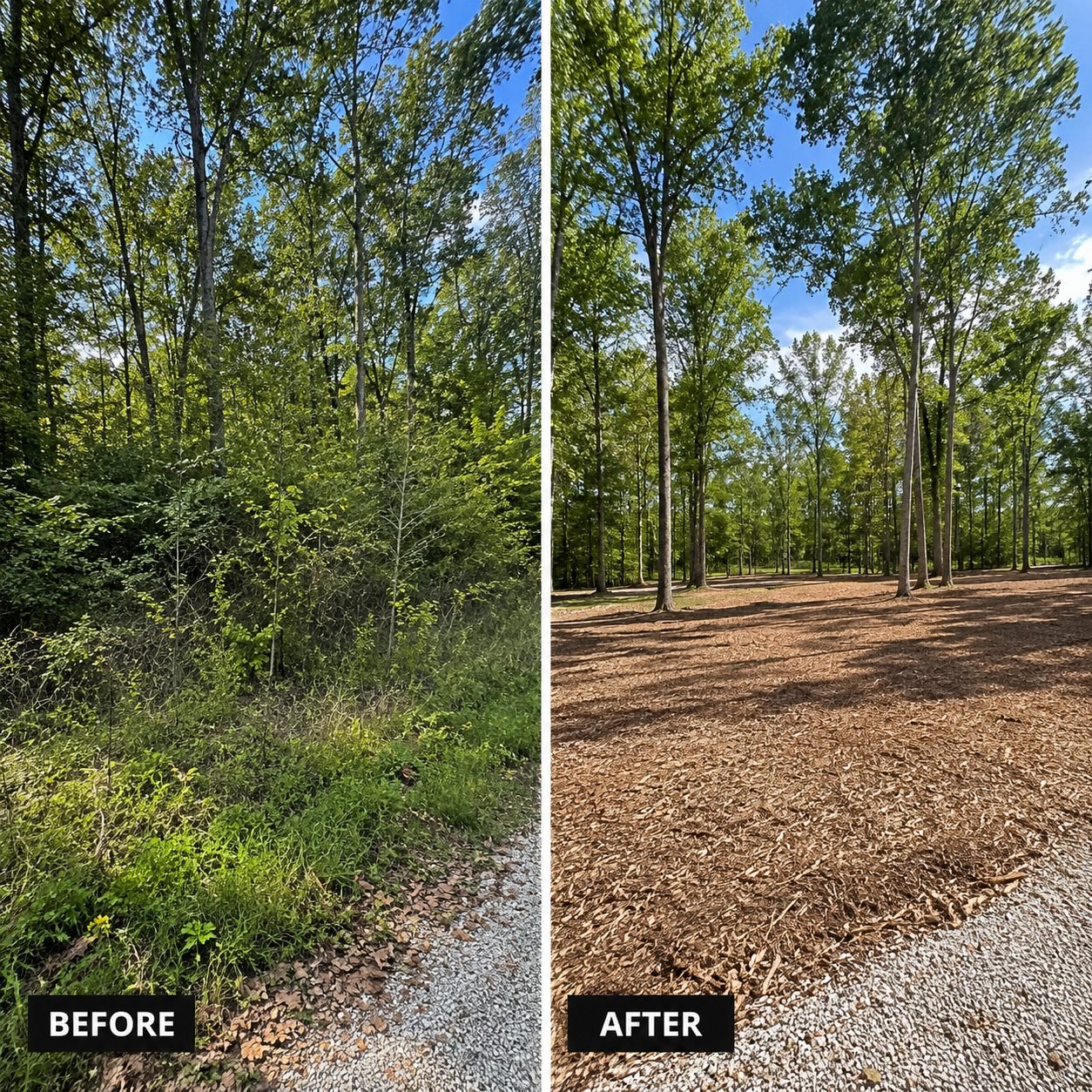
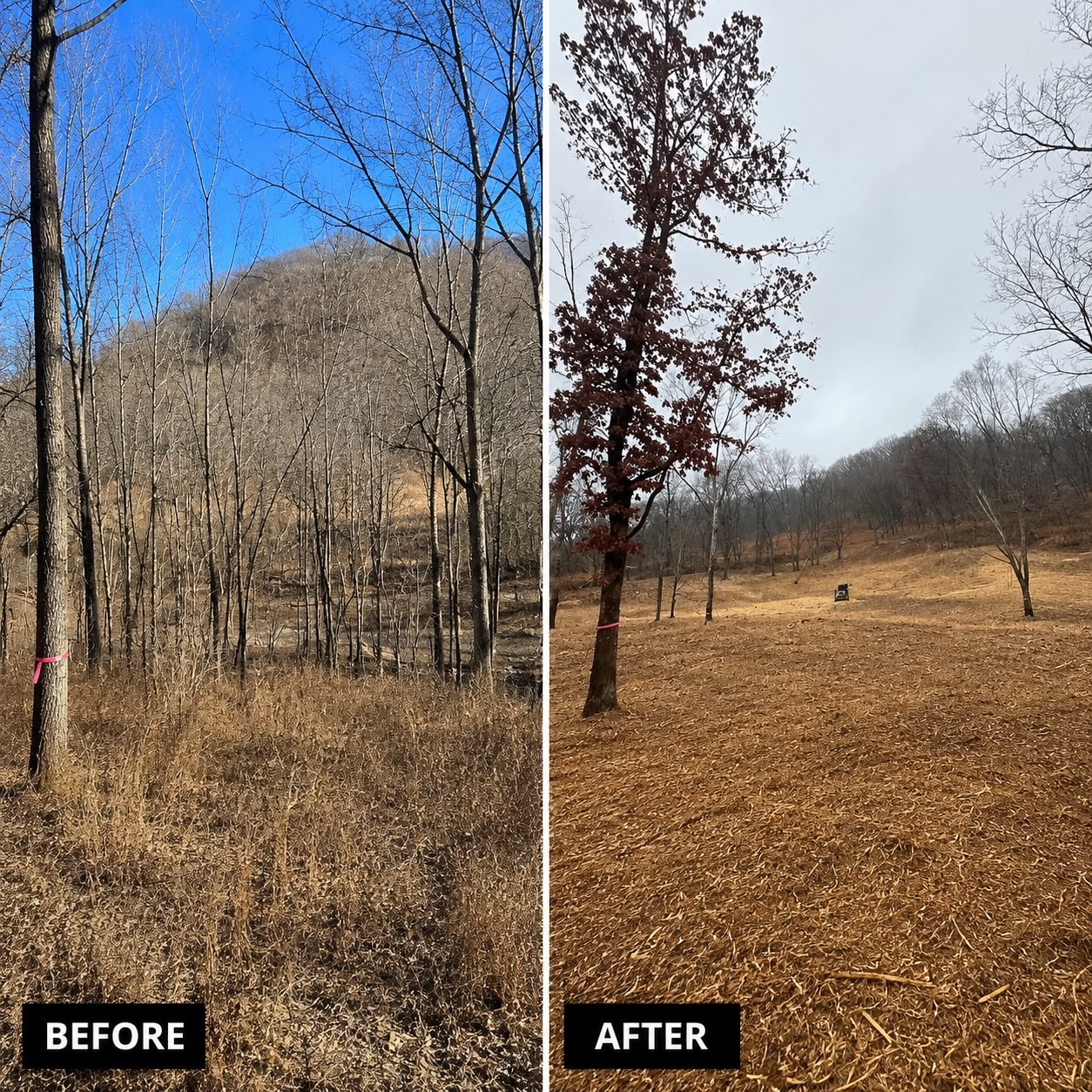
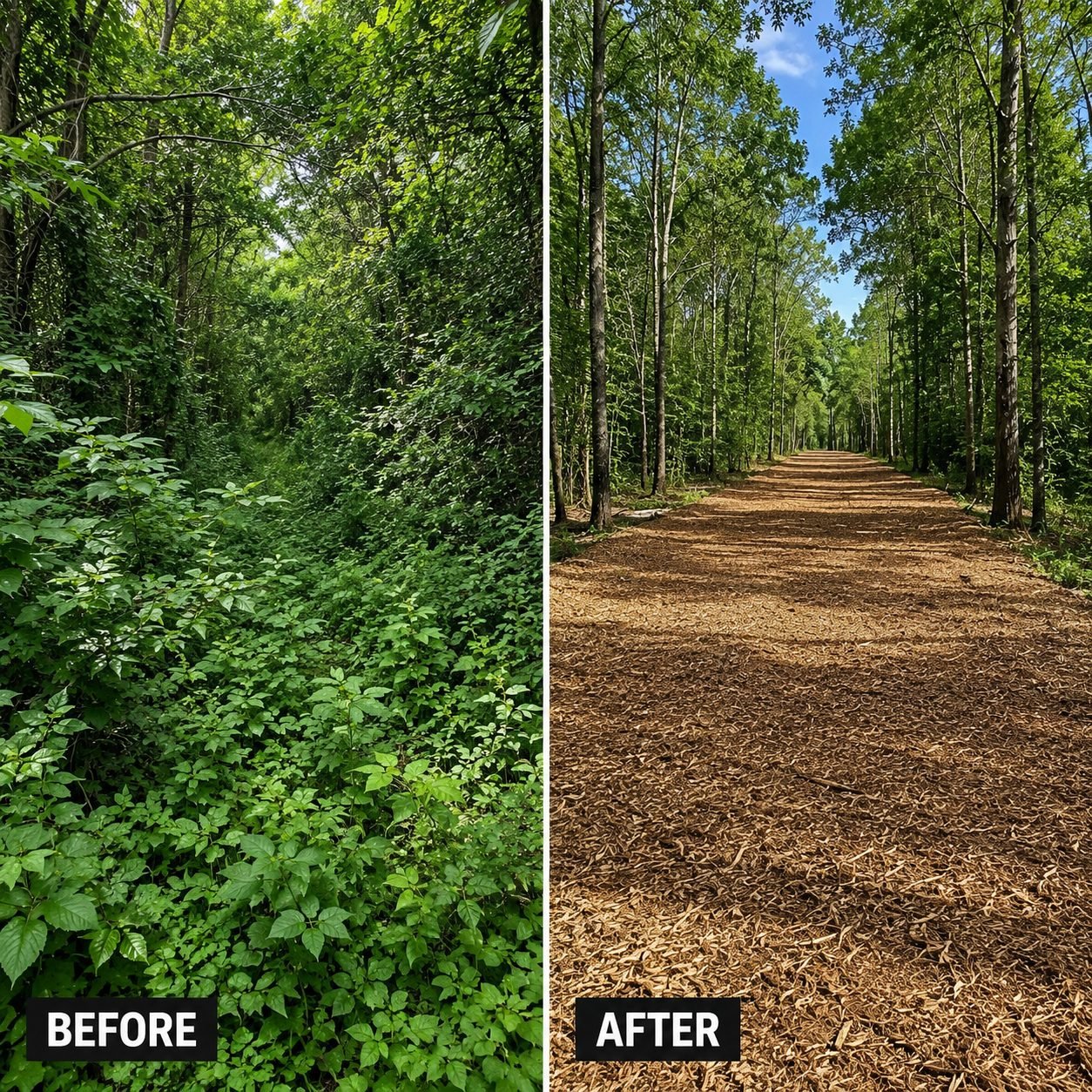
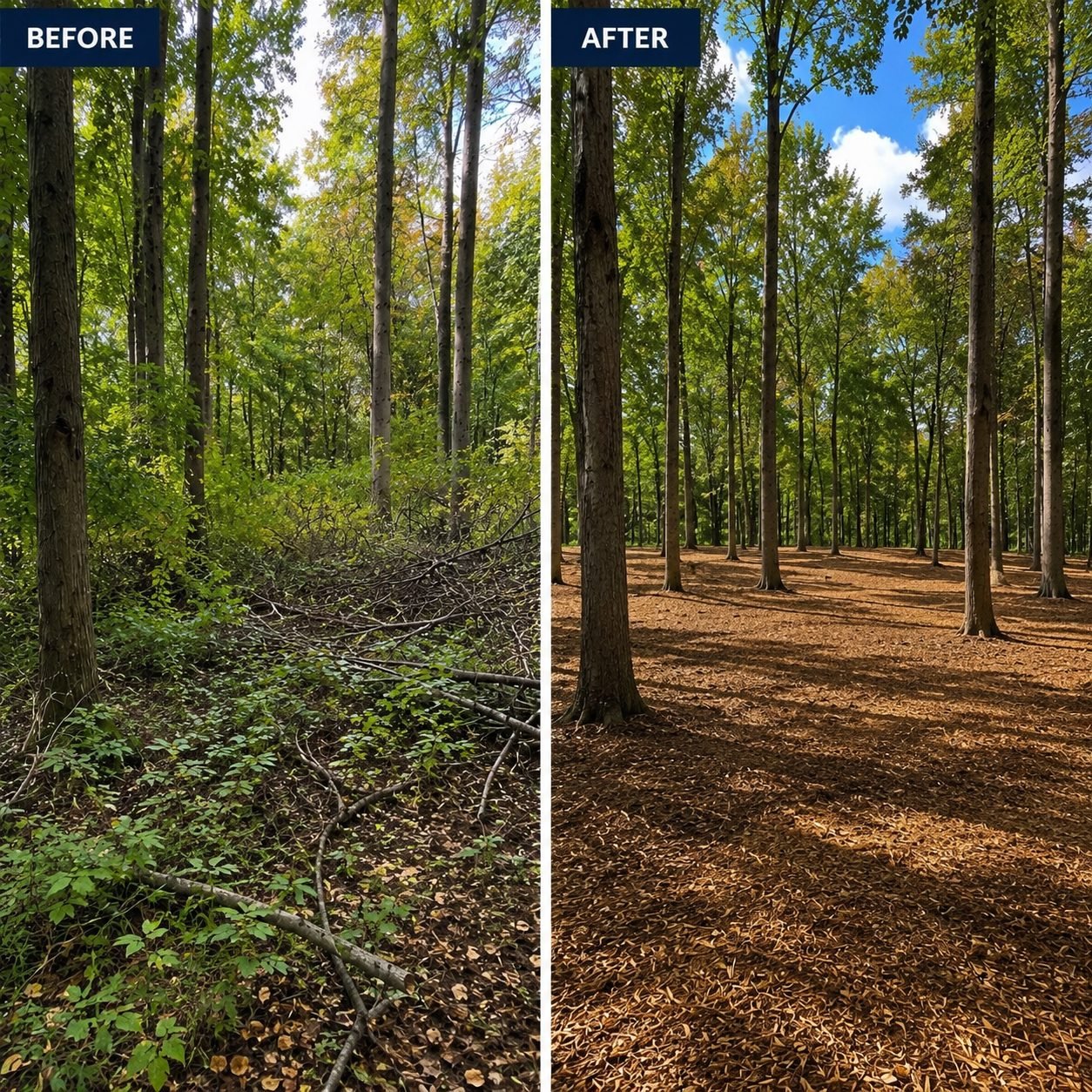
A useful gallery for this topic should show the corridor before work, utility locate markings, selective clearing, mulching or debris removal, stump and obstruction treatment, grading or restoration, and the final maintained access route. The point is to show the sequence and the difference between a raw overgrown easement and a functional utility corridor.
Frequently asked questions
It usually includes removal of brush, saplings, unwanted trees, vines, debris, stumps, and other obstacles from a utility corridor or easement. Depending on the project, it may also include selective clearing, stump grinding, light grading, and cleanup. The exact scope should always match the utility needs and any recorded easement restrictions.
Yes, forestry mulching is often a strong choice for right of way maintenance because it clears vegetation in place, improves access, and leaves a mulch layer that can help with surface stability. It works best for brush and smaller trees, and it may not be enough when the project requires large stump removal or a full reset of the corridor.
Plan as early as possible, especially if the project needs locates, permits, seasonal scheduling, or coordination with a utility owner. If digging is involved, Ohio 811 requires a locate request 48 hours before digging under ORC 3781.28. Larger corridors may also need site visits, marking, and equipment staging before the crew can start.
Sometimes yes, sometimes no. Easement clearing may only need utility coordination and a locate request, but local grading, drainage, access, or environmental rules can trigger permit needs. Permit requirements vary by jurisdiction, so the right approach is to check before the work starts. For planning, some local permit costs may fall in the $100 to $300 range.
You can sometimes handle very light maintenance yourself, but active utilities, buried lines, hidden stumps, and uneven ground make DIY risky. If the project involves excavation, larger trees, or anything near infrastructure, a professional is the safer choice. A contractor can also help keep the work within the easement and avoid damage or liability.
Common equipment includes forestry mulchers, excavators, skid steers, grapples, brush cutters, stump grinders, and haul-off equipment. The right machine depends on vegetation size, access, soil conditions, and how much restoration is needed afterward. In softer or wetter soils, tracked equipment is often preferred because it reduces rutting and improves traction.
Clay soil affects drainage, access, and how heavy equipment performs after rain. It can compact easily and rut when saturated, which means a corridor may need more careful staging or restoration. That is one reason site conditions should be evaluated before the clearing method is chosen, especially when the project includes grading or excavation.
Look for licensing, insurance, a real crew, relevant equipment, and the ability to explain utility locates, safety procedures, access planning, and restoration. Ask for a scope that shows what will be cleared and what will remain. A qualified contractor should understand vegetation management and the difference between one-time clearing and ongoing maintenance.
Brush Clearing Across Central Ohio
Fortress Level Construction handles brush clearing in every county and community across Central Ohio. See local details, drive times, and pricing for your area:
What Other Services Does Fortress Offer in Central Ohio?
Fortress Level Construction runs a full range of land-clearing, excavation, grading, and site-work services across Central Ohio, so one owner-operated crew can clear, grade, and prep a site end to end.
Get a Flat-Rate Quote from Lee Carson
Owner-operated land clearing across all five Central Ohio counties. Send your property details and Lee gets back to you within 2 to 3 hours during business hours with one flat number after a free on-site walk-through.