
How Does Acreage Clearing Work for Large Parcels in Central Ohio?
Acreage clearing in Central Ohio involves removing trees, brush, and stumps from multi-acre rural properties using heavy equipment. Fortress Level Construction specializes in large-scale clearing, handling everything from selective forestry mulching to full clearing and haul-off, all while addressing local soil, drainage, and permit requirements.
The Quick Answer
- Acreage clearing in Central Ohio removes trees and brush from large rural parcels using specialized equipment and local expertise.
- Fortress Level Construction handles both selective and full clearing for multi-acre projects.
- Forestry mulching is the most common, cost-effective method, grinding vegetation in place.
- Full clearing includes haul-off and grading, required for some development projects.
- Central Ohio’s glacial clay and silt soils require careful drainage and erosion planning.
- Permits may be needed for land disturbance, especially on projects over one acre.
- Owner Lee Carson personally oversees each job, ensuring compliance and efficiency.
- Equipment includes John Deere and CAT loaders with drum mulchers, dozers, and excavators.
Related Questions People Ask Next
Forestry mulching grinds trees and brush into mulch on-site, leaving roots and soil largely undisturbed, which helps prevent erosion and speeds up the process. Full clearing removes all vegetation, stumps, and roots, often requiring haul-off and grading, making it necessary for construction or pasture conversion on large rural parcels.
Clearing pace depends on terrain, density, and the method used, but with forestry mulching, 1 to 5 acres can be cleared per day. Clearing 10 acres may take anywhere from 2 to 10 days, with additional time needed for permitting, full clearing, or haul-off depending on project requirements.
Most rural and agricultural acreage clearing does not require a permit, but land-disturbance permits, typically $100 to $300, may be needed for development, especially for projects over one acre or near waterways. Always check with your county planning office and ensure an Ohio 811 utility locate is completed before digging.
Common obstacles include mature hardwoods like oak and maple, dense stands of dead ash, and invasive species such as bush honeysuckle, multiflora rose, and buckthorn. These invasives can resprout if not properly managed, often requiring follow-up treatment to ensure they do not quickly return after clearing.
What Is Acreage Clearing and How Does It Differ for Large Rural Parcels?
Acreage clearing means removing trees, brush, and stumps from multi-acre properties to prepare land for development, agriculture, or pasture. For large tracts, the process involves careful staging, heavy equipment, and often a blend of selective and full clearing to match the property’s goals.
Unlike small lot clearing, large acreage projects require logistical planning for equipment access, debris staging, and efficient progress over several acres.
Selective clearing preserves valuable trees or buffers, while full clearing removes all vegetation, often for building or farming.
Why Do Central Ohio’s Soils and Terrain Matter for Acreage Clearing?
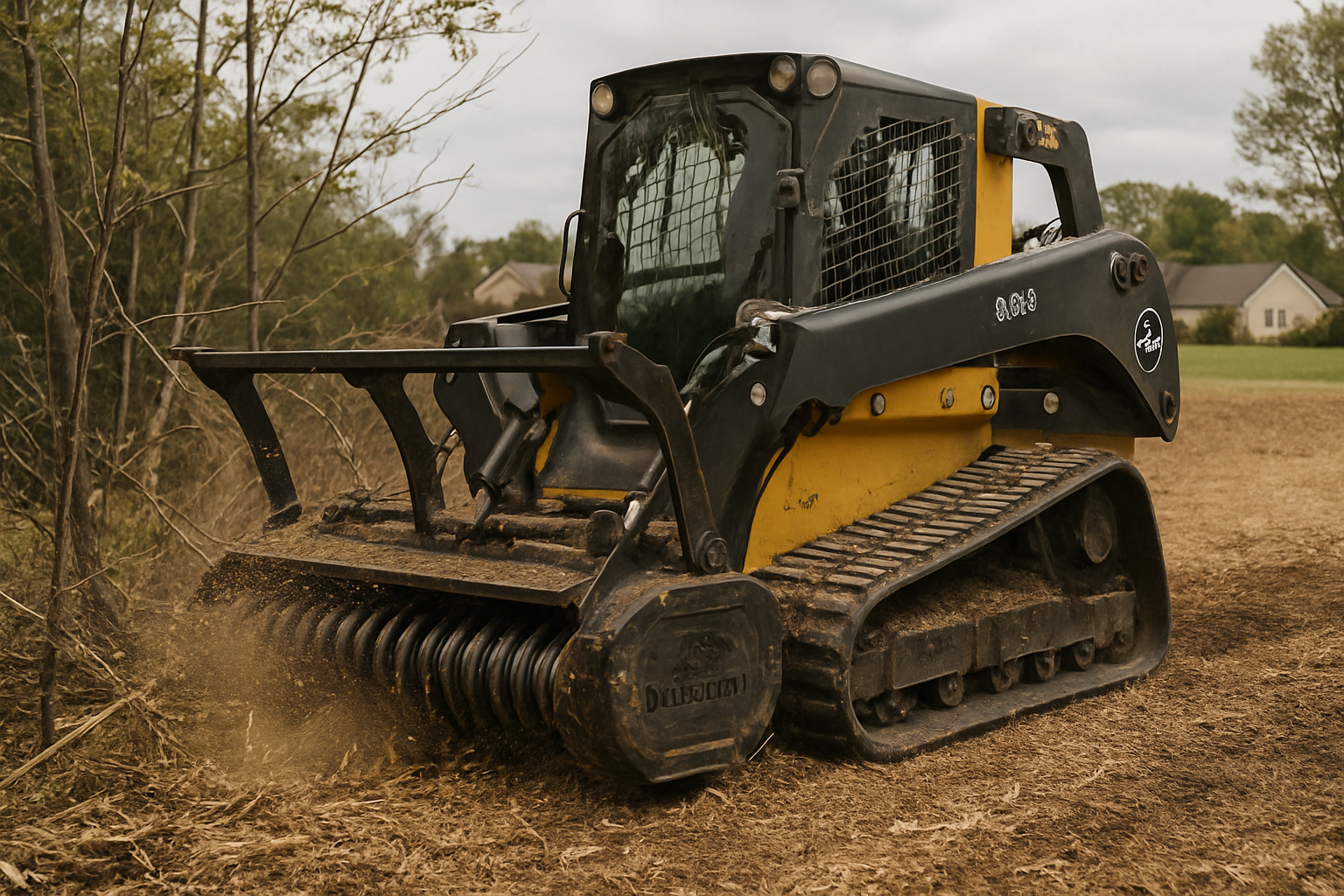
Central Ohio’s glacial clay soils, rolling hills, and steep grades impact both equipment choice and clearing strategy. Wet, poorly drained soils require low-ground-pressure machines and careful timing to avoid rutting and compaction, especially in spring and after heavy rain.
Brookston-Crosby clay holds water, making spring and early summer challenging for heavy equipment unless properly staged.
Steep slopes in Fairfield and Licking counties require erosion controls and may limit the pace of clearing.
What Equipment Does Fortress Level Construction Use for Large Acreage Clearing?
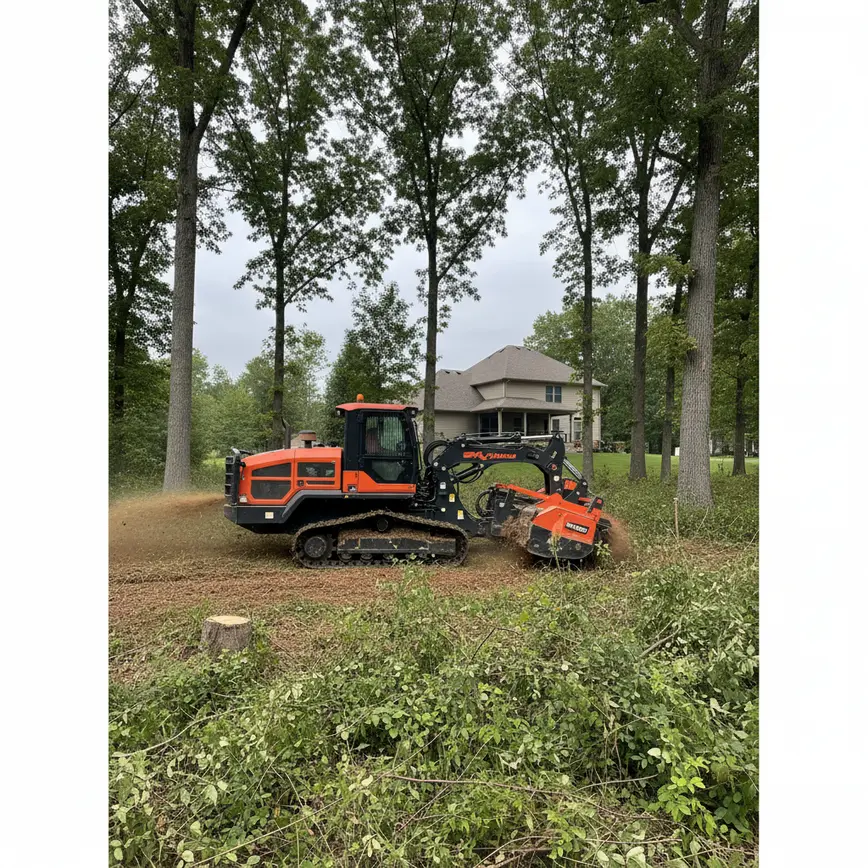
For multi-acre clearing, Fortress Level Construction uses John Deere 333G and Caterpillar compact track loaders with drum mulchers, capable of grinding hardwoods up to 14 inches in diameter. Dozers, excavators, and loaders are deployed for full clearing, grading, and haul-off as needed.
Forestry mulchers handle dense brush and mature trees efficiently, clearing 1 to 5 acres per day depending on site conditions.
All equipment is selected for minimal soil disturbance and maximum productivity on Central Ohio’s varied terrain.

What Is the Process and Timeline for Clearing Large Acreage in Central Ohio?
The process starts with a site walk and quote, followed by utility locates and any required permits. Clearing typically proceeds in stages: mulching or cutting, debris staging or haul-off, and final grading if needed. Most projects are completed within days to weeks, depending on acreage and weather.
Ohio law requires an Ohio 811 utility locate before any digging or excavation, with at least 48 hours’ notice.
Permits are usually only needed for land disturbance or development, and the timeline may be extended by weather or site access challenges.
How Does Acreage Clearing Compare to Other Land Management Methods?
Acreage clearing for large parcels uses different techniques and equipment than small lot clearing, brush hogging, or selective tree removal. Here’s how the main methods stack up for Central Ohio’s rural properties.
| Acreage Clearing (Large Parcels) | Small Lot Clearing | Brush Hogging | Selective Tree Removal | |
|---|---|---|---|---|
| Best For | Multi-acre rural tracts, development, ag expansion | Residential lots under 1 acre, new builds | Pasture maintenance, light brush control | Preserving shade trees, hazard removal |
| Equipment Used | Forestry mulcher, track loader, dozer, excavator | Mini-excavator, skid steer, chipper | Tractor with rotary cutter | Chainsaw, bucket truck, chipper |
| Clearing Pace | 1-5 acres per day (site dependent) | 0.25-1 acre per day | 5+ acres per day (light brush) | Tree-by-tree, variable |
| Cost Range (per acre) | $1,850-$3,500 (mulching), $4,000-$8,000 (full clearing) | Usually lower total cost, but not scalable | Lowest per acre, but only for light brush | Priced per tree, can add up quickly |
| When to Use | Opening land for building, farming, or large-scale projects | Preparing home sites, small developments | Maintaining open fields, controlling regrowth | Protecting specimen trees, hazard mitigation |
When Is Acreage Clearing Not the Right Solution in Central Ohio?
Acreage clearing is not ideal for properties needing only light brush control, or when preserving mature woodland is a priority. Invasive species like honeysuckle may require follow-up treatment to prevent regrowth, and wet soils can delay heavy equipment access.
For light brush or pasture maintenance, brush hogging is faster and more cost-effective than full-scale clearing.
If your goal is to preserve mature trees or sensitive habitats, selective tree removal or forestry mulching with targeted treatment is a better fit.
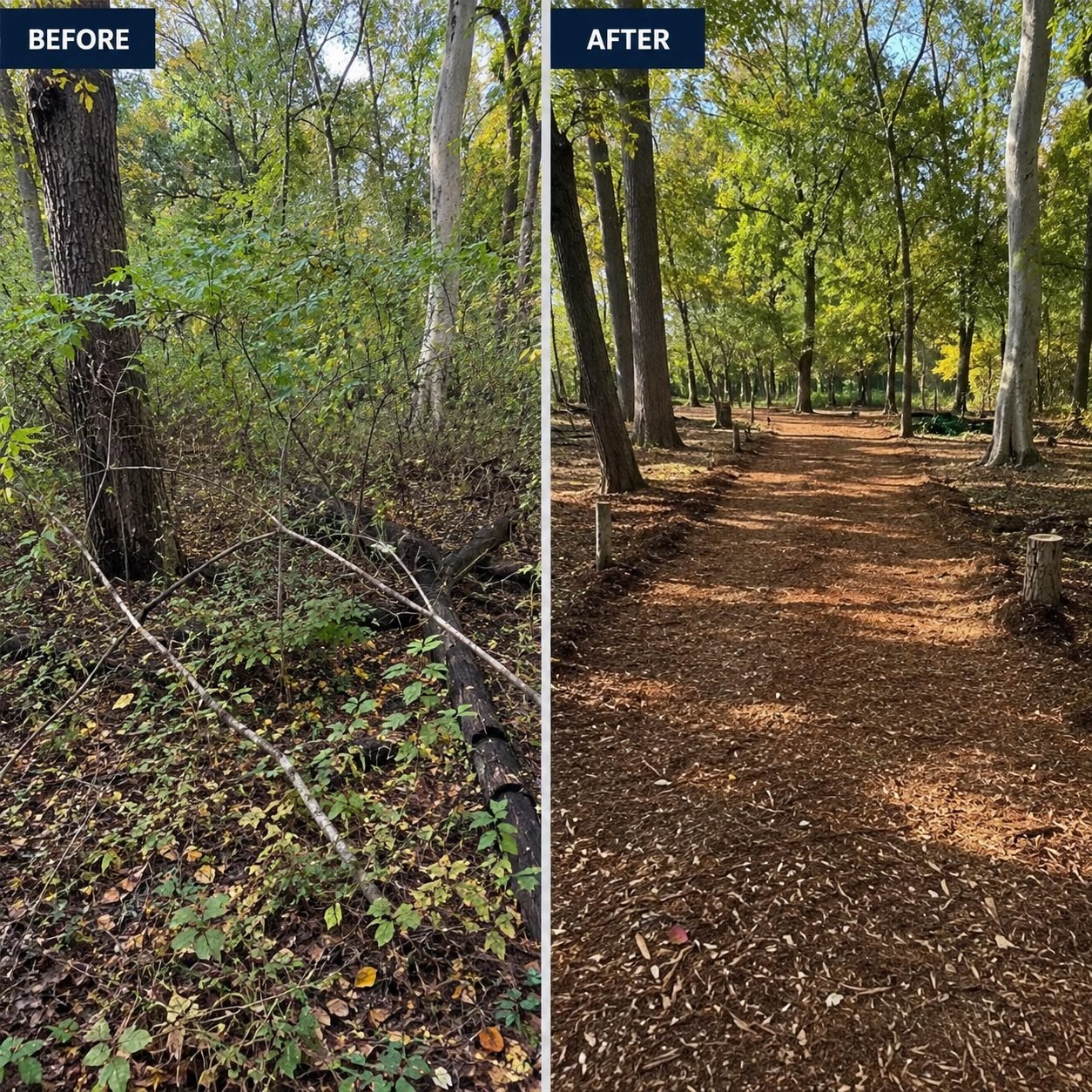
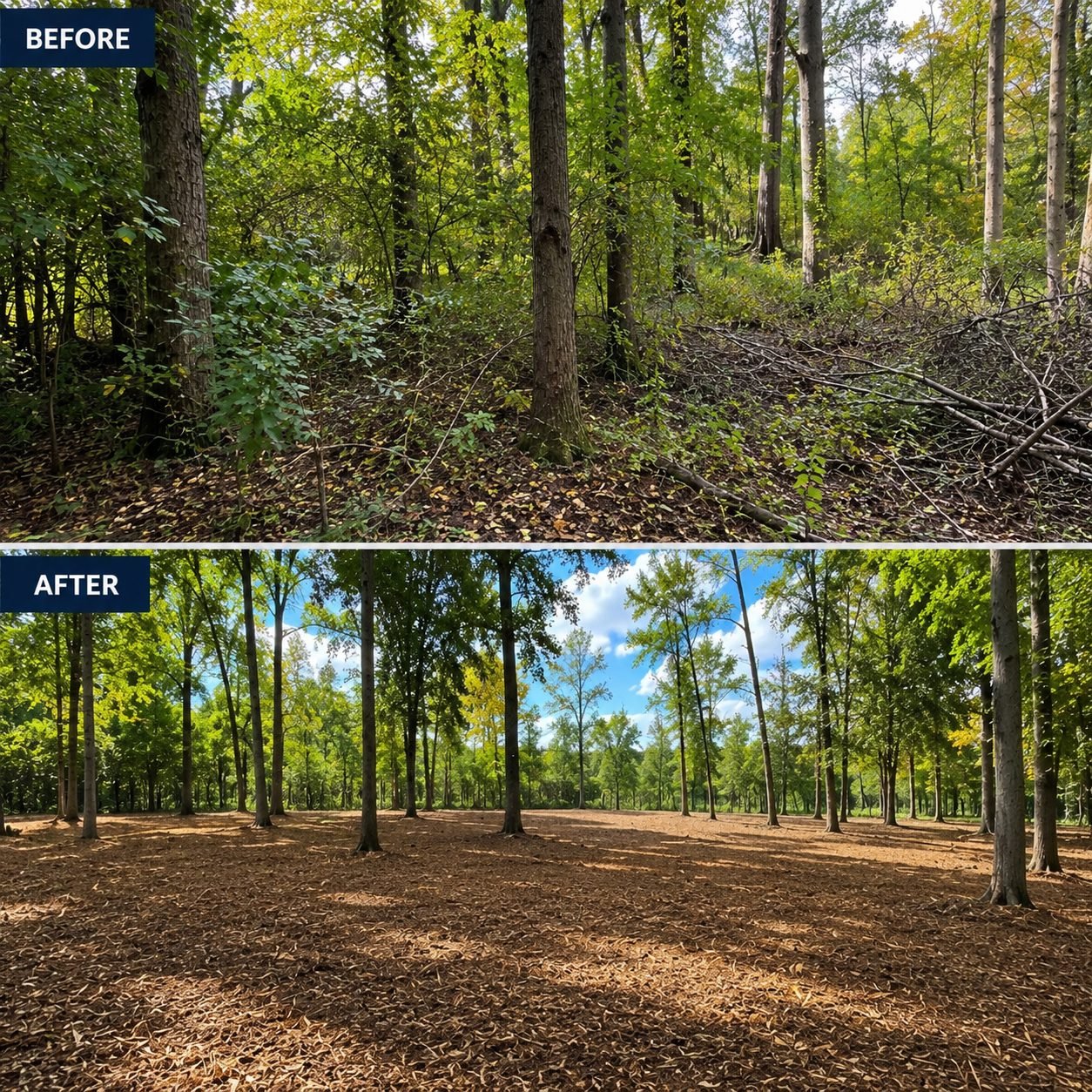
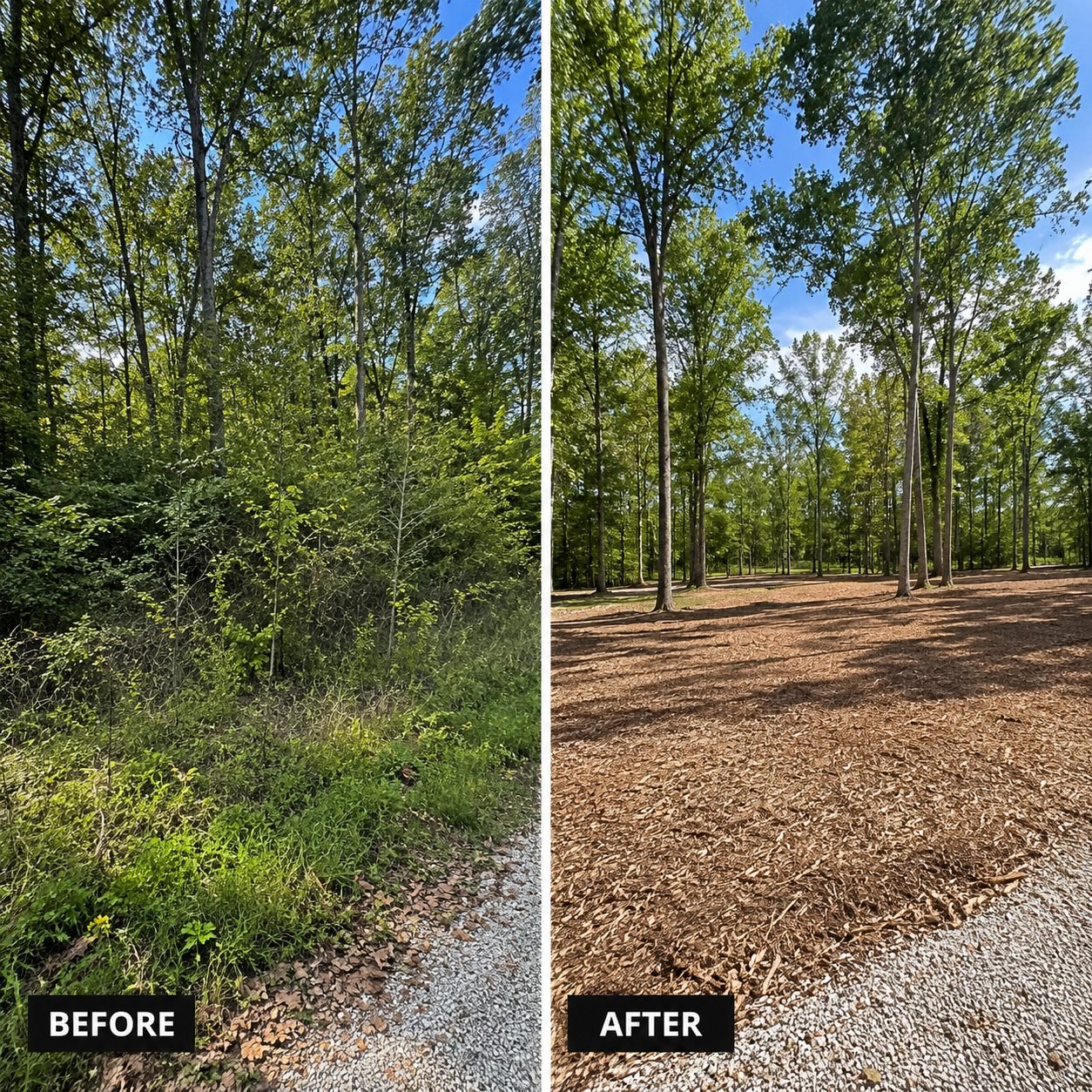
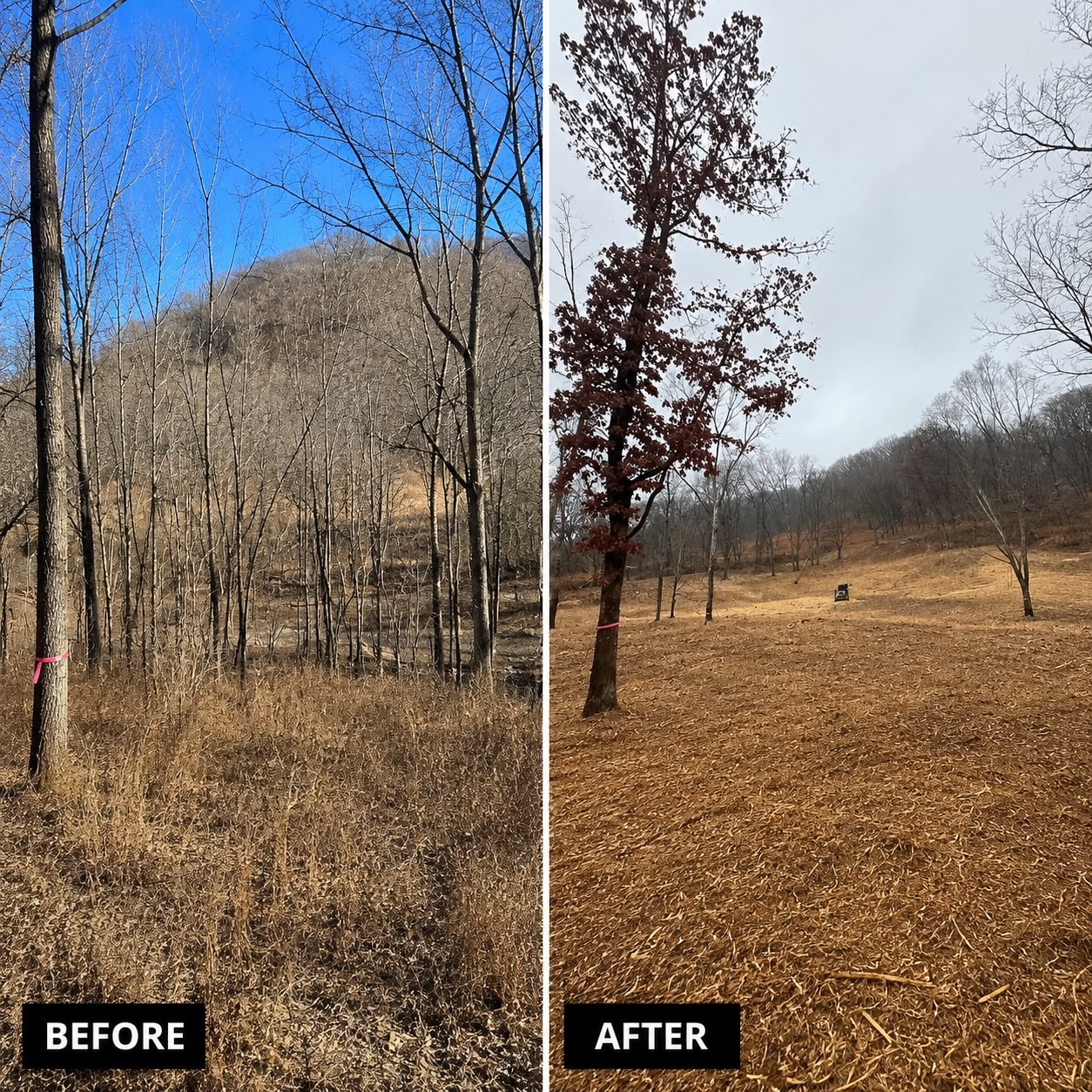
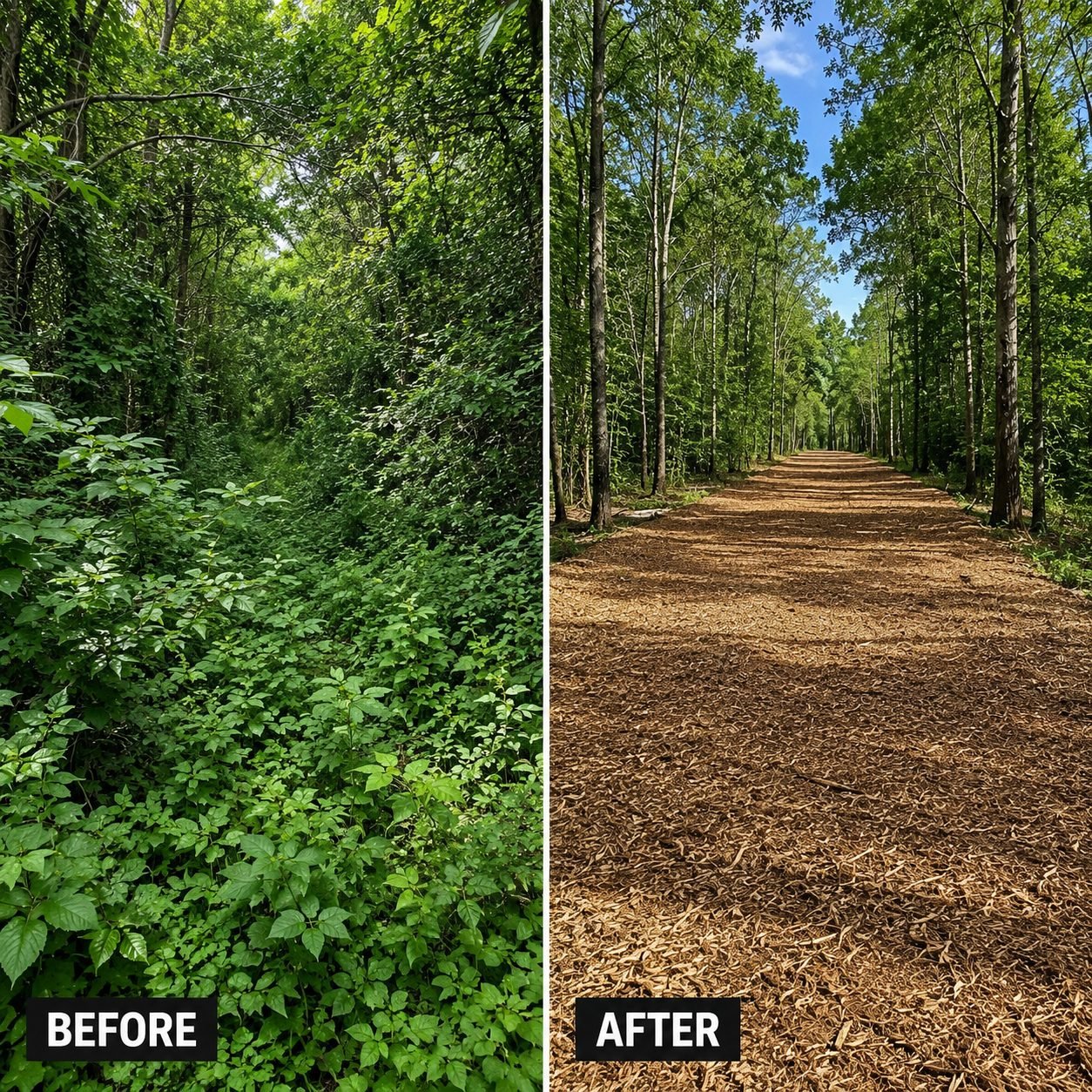
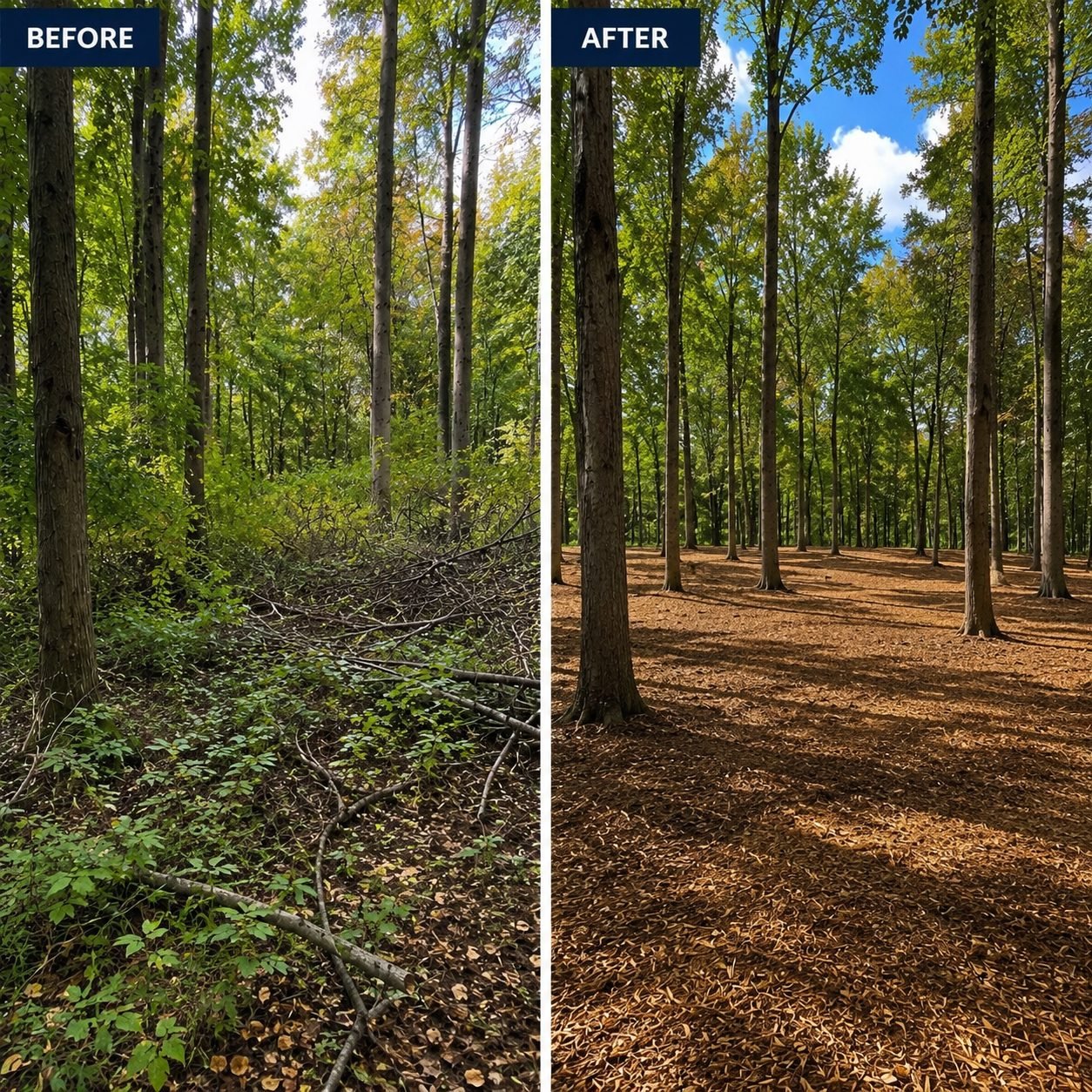
What Do Before and After Results Look Like for Acreage Clearing in Central Ohio?
Before clearing, large rural parcels often feature dense hardwood stands, underbrush, and invasive thickets. After acreage clearing, the land is opened up, stumps are ground or removed, and access is created for building, farming, or pasture. Results vary by selective versus full clearing.
Frequently asked questions
Pricing depends on the method and site conditions. Forestry mulching generally ranges from $1,850 to $3,500 per acre, while full clearing with haul-off and grading ranges from $4,000 to $8,000 per acre. Permits, if required, may add $100 to $300 for land disturbance.
Most rural and agricultural clearing does not require a permit, but land-disturbance permits are needed for development, especially for projects over one acre or near waterways. Each county has its own process, and Ohio 811 utility locates are always required before excavation.
Fortress Level Construction uses John Deere and Caterpillar compact track loaders with drum mulchers for forestry mulching, plus dozers, excavators, and loaders for full clearing and grading. This equipment is designed to handle Central Ohio’s heavy hardwoods and poorly drained clay soils efficiently and safely, even on large rural sites.
Selective clearing removes only unwanted trees and brush, preserving valuable timber or buffers for privacy or habitat. Full clearing removes all vegetation, stumps, and roots, preparing land for construction, farming, or pasture. The choice depends on your project goals, site conditions, and whether you want to maintain some natural cover.
Central Ohio’s Brookston-Crosby clay and silt loam soils are poorly drained and prone to compaction, especially in wet weather. Clearing is often timed for drier periods, and low-ground-pressure equipment is used to minimize soil disturbance and rutting, especially in spring and after rain, ensuring the land remains stable for future use.
Invasive species like bush honeysuckle, autumn olive, and multiflora rose are mulched or removed during clearing, but they often resprout if not treated. Follow-up herbicide treatment or repeated mowing may be needed to prevent regrowth, as recommended by OSU Extension, to ensure the invasives do not quickly return after clearing.
Acreage Clearing by County and City in Central Ohio
Franklin County
Fairfield County
Union County
What Other Services Does Fortress Offer in Central Ohio?
Fortress Level Construction runs a full range of land-clearing, excavation, grading, and site-work services across Central Ohio, so one owner-operated crew can clear, grade, and prep a site end to end.
Get a Flat-Rate Quote from Lee Carson
Owner-operated land clearing across all five Central Ohio counties. Send your property details and Lee gets back to you within 2 to 3 hours during business hours with one flat number after a free on-site walk-through.