
Forestry Mulching Benefits in Ohio: A Smarter Way to Clear Land for Building and Use
Forestry mulching is a land-clearing method that uses a single machine to cut, grind, and spread vegetation into mulch on site. It is often chosen when property owners want to improve access, reduce overgrowth, and prepare land for construction while preserving more of the existing soil structure and natural cover.
The Quick Answer
- Forestry mulching is a targeted way to clear vegetation while leaving a protective mulch layer behind.
- The biggest forestry mulching benefits are faster site access, less soil disturbance, and less hauling than traditional clearing.
- It is often a strong fit for overgrown lots, fence lines, trails, hunting land, utility corridors, and selective prep before construction.
- Mulching vs clearing comes down to project goals: mulching keeps organic material on site, while full clearing removes more material for a clean finish.
- Forestry mulching cost depends on acreage, density, tree size, access, slope, and whether the work is selective or full-scale.
- Professional forestry mulching services rely on tracked machines, cutter heads, and a crew that knows how to work safely around utilities and terrain.
- DIY mulching can be risky because equipment size, hidden stumps, buried utilities, and site hazards can quickly turn a simple job into expensive damage.
- A contractor should be licensed, insured, clear about scope, familiar with Ohio 811, and able to explain what the finish grade will look like.
Related Questions People Ask Next
Forestry mulching is used to clear brush, saplings, invasive growth, and light-to-moderate trees while leaving the material as mulch on the ground. It is commonly used to open access roads, improve visibility, clean up fence lines, create defensible space, and prepare rural or semi-rural property for future grading, drainage work, or building. It is especially helpful when the goal is to improve the site without the disruption of full excavation and hauling.
It depends on the goal. Forestry mulching is usually better when you want faster clearing with less disturbance, less hauling, and a cleaner organic finish. Traditional clearing is better when you need root removal, precise grading, complete debris export, or a build-ready pad. In many real projects, the best approach is selective mulching first, then grading or excavation where the structure, driveway, or drainage system will go.
Forestry mulching cost varies by density, tree size, slope, access, and how much finish work is expected. Fortress Level Construction’s land clearing range for forestry mulching is $1,850 to $3,500 per acre, while more intensive full clearing can run $4,000 to $8,000 per acre. Small jobs, scattered debris, wet ground, and heavy overgrowth can all change pricing because the machine time and crew time increase.
Sometimes. Simple vegetation removal may not need a permit, but site changes, grading, drainage work, development, or regulated tree removal can trigger local requirements. Township, county, city, or drainage district rules may apply depending on where the work is happening. Before any digging, Ohio law also requires an Ohio 811 utility locate request at least 48 hours in advance under ORC 3781.28.
Forestry mulching can reduce smaller stumps and grind many stems flush or close to grade, but it is not the same as full stump removal. Large root systems, building pads, and areas that need precise compaction usually call for additional work such as stump grinding, excavation, or full clearing. The right method depends on how the land will be used after the vegetation is removed.
What Is Forestry Mulching and How Does It Work?
Forestry mulching is a single-machine clearing process that cuts vegetation and turns it into mulch without burning, piling, or hauling most debris away. It is used for brush, saplings, vines, and some small trees. The result is a cleaner, more usable property surface with less disruption than heavy clearing methods.
At its core, forestry mulching is a mechanized land-management method that uses a tracked machine with a mulching head to grind vegetation in place. Instead of felling trees, loading trucks, and hauling material away, the machine cuts and processes organic growth where it stands. That makes it especially useful for overgrown lots, access paths, drainage easements, and selective clearing around future build areas. For many property owners, the biggest forestry mulching benefits are speed, control, and a neater finish.
A professional forestry mulching crew will usually start by walking the site and identifying what stays, what goes, and what needs to be protected. That can include utilities, septic fields, property lines, wetlands, hidden drainage features, and trees the owner wants to keep. In Central Ohio, clay soil can make poor drainage more obvious after clearing, so it is smart to think about runoff, rutting, and finish grade before the first pass is made. Good mulching is not just about cutting; it is about setting the property up correctly for the next phase.
The term is often used broadly, but not every machine or scope is the same. Some projects are light brush cleanup. Others involve dense saplings, thorny undergrowth, and small diameter trees. In the field, that distinction matters because machine type, head style, and site conditions all affect output. When people compare mulching vs clearing, they are usually comparing on-site processing and minimal disturbance against a more complete removal method that includes more excavation, hauling, and disposal.
Why Does Forestry Mulching Matter and What Are the Main Benefits?
The main forestry mulching benefits are faster access, less disturbance to soil, lower hauling needs, and a cleaner finish than many traditional clearing methods. It is often a practical choice when the land must remain stable, usable, or visually improved without turning the entire site into a bare construction zone.
What Forestry Mulching Methods and Types Are There?
Forestry mulching methods range from light brush cleanup to selective tree mulching and heavier land reduction. The right approach depends on vegetation density, slope, soil, access, and whether the end goal is habitat improvement, visibility, a future building site, or a maintained corridor.
How Does the Forestry Mulching Process Work Step by Step?
A professional forestry mulching process starts with site review, utility marking, and target selection, then moves through machine clearing, cleanup, and final inspection. The goal is to remove unwanted growth safely while leaving the property in a condition that supports the next phase of use or construction.
What Drives Forestry Mulching Cost?
Forestry mulching cost is driven by vegetation density, tree size, acreage, access, slope, moisture, and whether the job is simple clearing or part of a larger site-prep plan. The more machine time, precision, and follow-up a project needs, the more the price tends to move upward.
What Equipment Is Used in Forestry Mulching Services?
Professional forestry mulching services use tracked carriers, mulching heads, and support equipment designed to move through rough terrain and process vegetation efficiently. The right machine choice affects speed, finish quality, safety, and whether the crew can handle selective work or heavier land clearing.
Should You Do Forestry Mulching Yourself or Hire a Pro?
DIY forestry mulching may look simpler than it is, because the machine, terrain, hidden hazards, and finish requirements can quickly become expensive or unsafe. Hiring a pro is usually the better choice when the site is large, has unknown utilities, needs precise clearing, or must support future construction.
What Permits, Regulations, and Ohio 811 Rules Apply?
Permits and utility rules can affect forestry mulching when the project includes digging, grading, drainage changes, development, or regulated clearing. In Ohio, any work that disturbs the ground must be planned around Ohio 811, which requires a locate request at least 48 hours before digging under ORC 3781.28.
How Do You Choose the Right Forestry Mulching Contractor?
The right forestry mulching contractor should be licensed, insured, transparent about scope, familiar with local rules, and able to explain how the clearing will affect grading, drainage, and future use. The best choice is a company with real equipment, a real crew, and a clear process from start to finish.
Start with proof of basics. Ask whether the company is licensed and insured, and ask how long it has been operating. Experience matters because forestry mulching is not just a machine job. It requires site reading, utility awareness, safe machine operation, and the ability to adapt to changing conditions. Fortress Level Construction has served Central Ohio since 2009, is licensed and insured, and was founded by Lee Carson, a combat veteran That kind of background matters because it signals discipline, accountability, and field experience.
Then ask for a clear scope. Good contractors explain whether the quote includes selective clearing, full clearing, stump work, grading, haul-off, or cleanup. They should also tell you what the land will look like when they are done. If the project involves future construction, the contractor should be able to discuss whether forestry mulching alone is enough or whether grading, excavation, or demolition will be needed later. A good estimate is not the cheapest one on paper. It is the one that matches the real end goal.
Finally, look for responsiveness and practical guidance. The contractor should answer questions about Ohio 811, permits, access, weather, and soil conditions without dodging. They should be comfortable discussing the difference between forestry mulching benefits and the situations where another method is better. A trustworthy company will not oversell the method or promise that one pass solves every problem. Instead, it will tell you what the land needs now and what may be required next. That is the mark of a real contractor.
How Does Forestry Mulching Compare to Full Clearing?
This comparison helps property owners decide between forestry mulching and full clearing by showing how each method affects cost, speed, disturbance, debris handling, and the kind of finish you get. The right answer depends on whether the property needs selective improvement or true build-ready preparation.
| Method | Typical Result | Best Use | Key Tradeoff |
|---|---|---|---|
| Forestry mulching | Cuts vegetation and leaves mulch on site with less hauling | Brush cleanup, trails, fence lines, selective clearing, access opening | Less disturbance, but not full root removal or final grading |
| Full clearing | Removes more vegetation and debris for a cleaner blank slate | Build sites, pads, major development, complete site reset | Higher cost and more disturbance, but stronger reset for construction |
| Selective mulching | Opens space while preserving chosen trees and features | Properties that need visibility and access without total loss of cover | Requires more planning and skilled machine control |
| Mulching plus grading | Clears the site and begins shaping the surface for future use | Driveways, building areas, drainage corrections, rough site prep | Better long-term function, but adds cost and more site work |
| Stump grinding after mulching | Reduces stump height and helps improve surface usability | Areas where flush finish or safer mowing is needed | Helpful for finish quality, but not the same as stump extraction |
| Manual clearing with haul-off | Crew cuts, piles, and removes debris by hand or with equipment | Small lots, tight access, highly controlled finishes | Precise, but slower and often more labor-intensive |
When Is Forestry Mulching Not the Right Choice?
Forestry mulching is effective, but it is not the best solution for every property. It is the wrong tool when a site needs deep root removal, strict finish grading, major excavation, or complete debris export. The honest contractor knows when another method will produce a better long-term result.
One common mistake is assuming mulching alone creates a build-ready site. It does not. If a future foundation, driveway, drainage system, or utility trench is planned, the work may require grading, excavation, compaction, and possibly stump removal after the initial clearing. Mulch left on site can be useful for erosion control and surface cover, but it is not a substitute for engineered site preparation. If a customer only wants the land cleared, that is fine. If the customer wants to build, more steps may be required.
Another limitation is heavy root structure and large tree removal. Forestry mulching can process a lot of vegetation, but it is not the same as pulling stumps and root balls out of the ground. For areas that need a very clean finish, strict slope control, or deep utility installation, traditional clearing or excavation may be the better answer. This is where mulching vs clearing matters most. The more precise the final use, the less likely mulching alone will be enough.
Weather and site conditions can also make the method a poor fit. Saturated ground, steep slopes, hidden debris, and uncertain utility conditions all increase risk. In Ohio, clay soil can hold moisture and rut easily, which means a job scheduled too soon after rain may create more damage than benefit. Good contractors will say no or recommend a different plan when conditions are wrong. That honesty protects the property and usually saves money in the long run.
What Does a Forestry Mulching Project Typically Look Like?
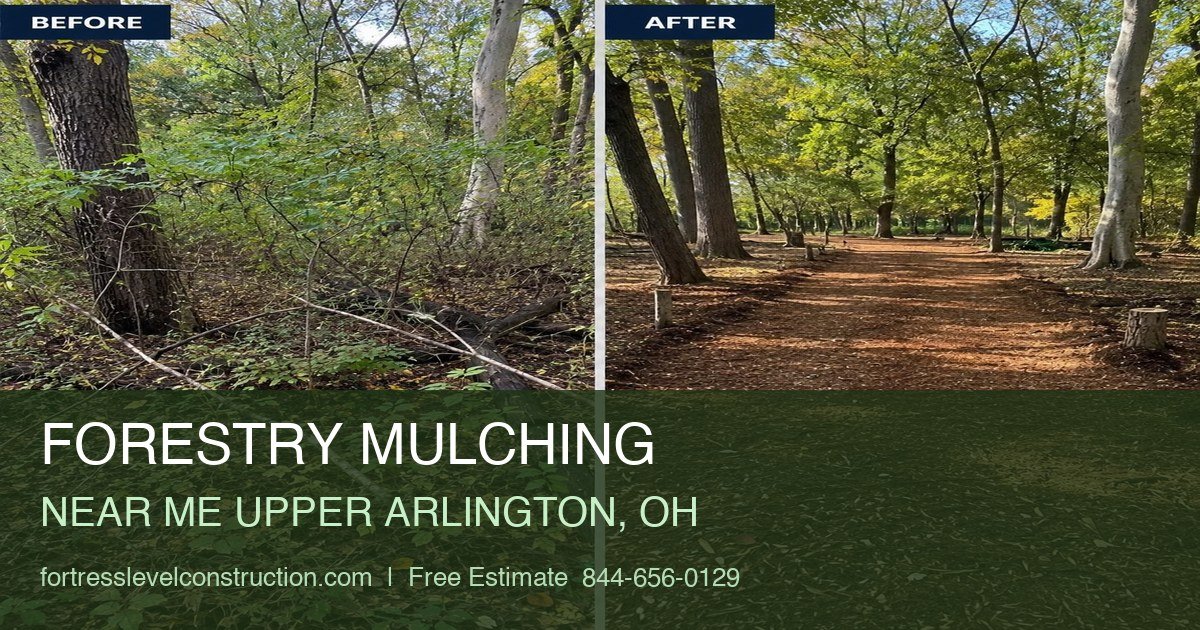
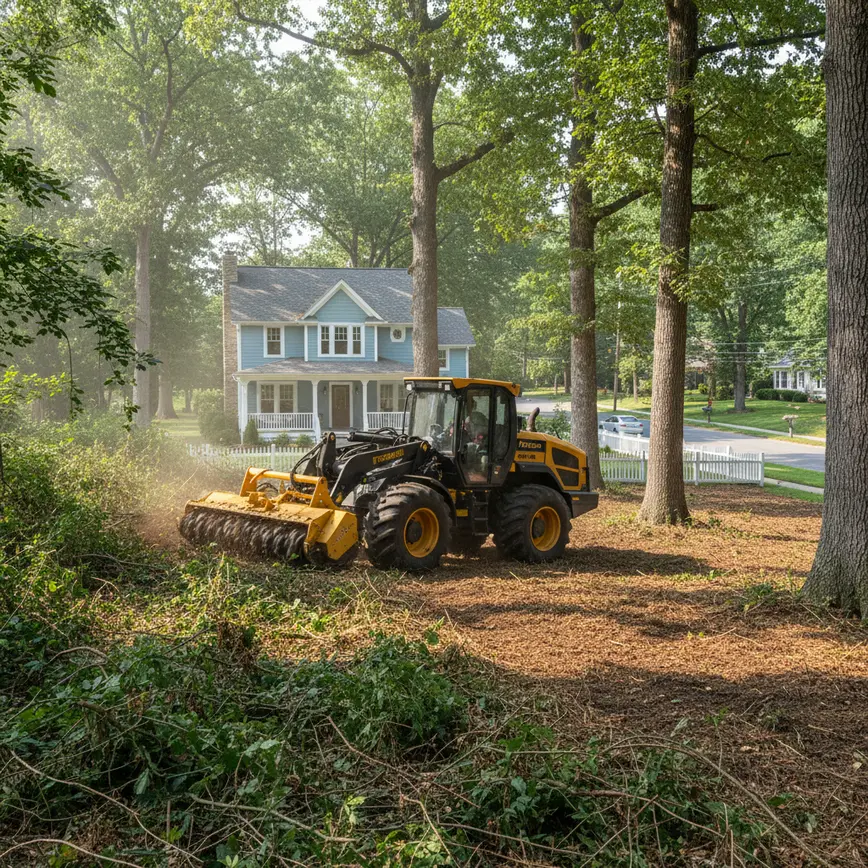
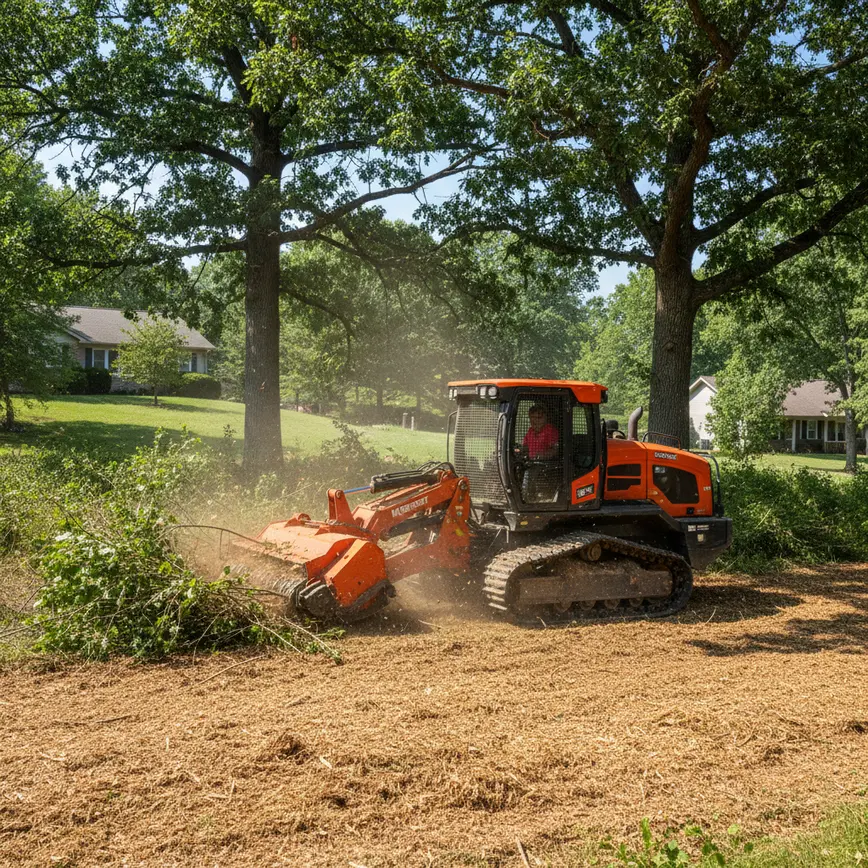
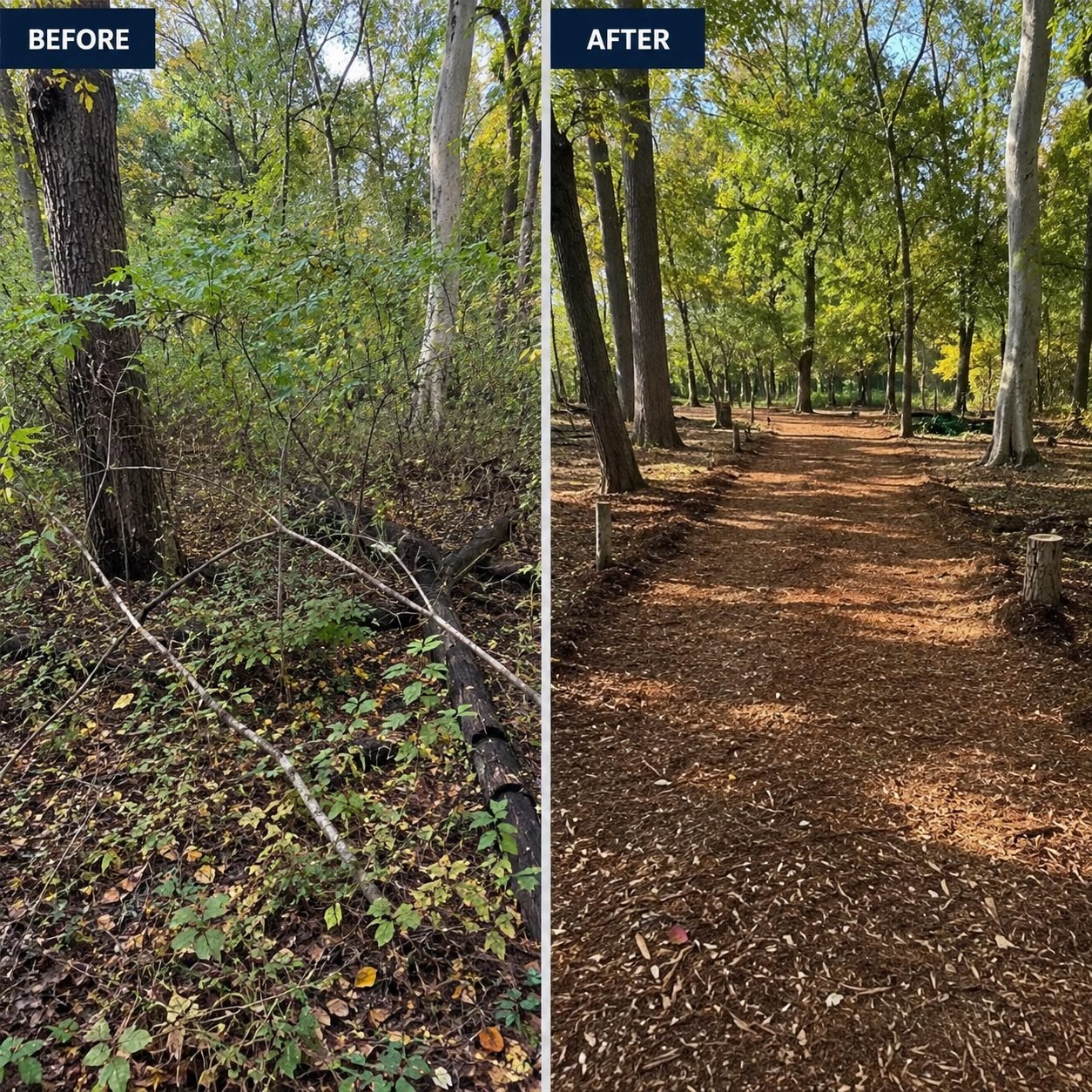
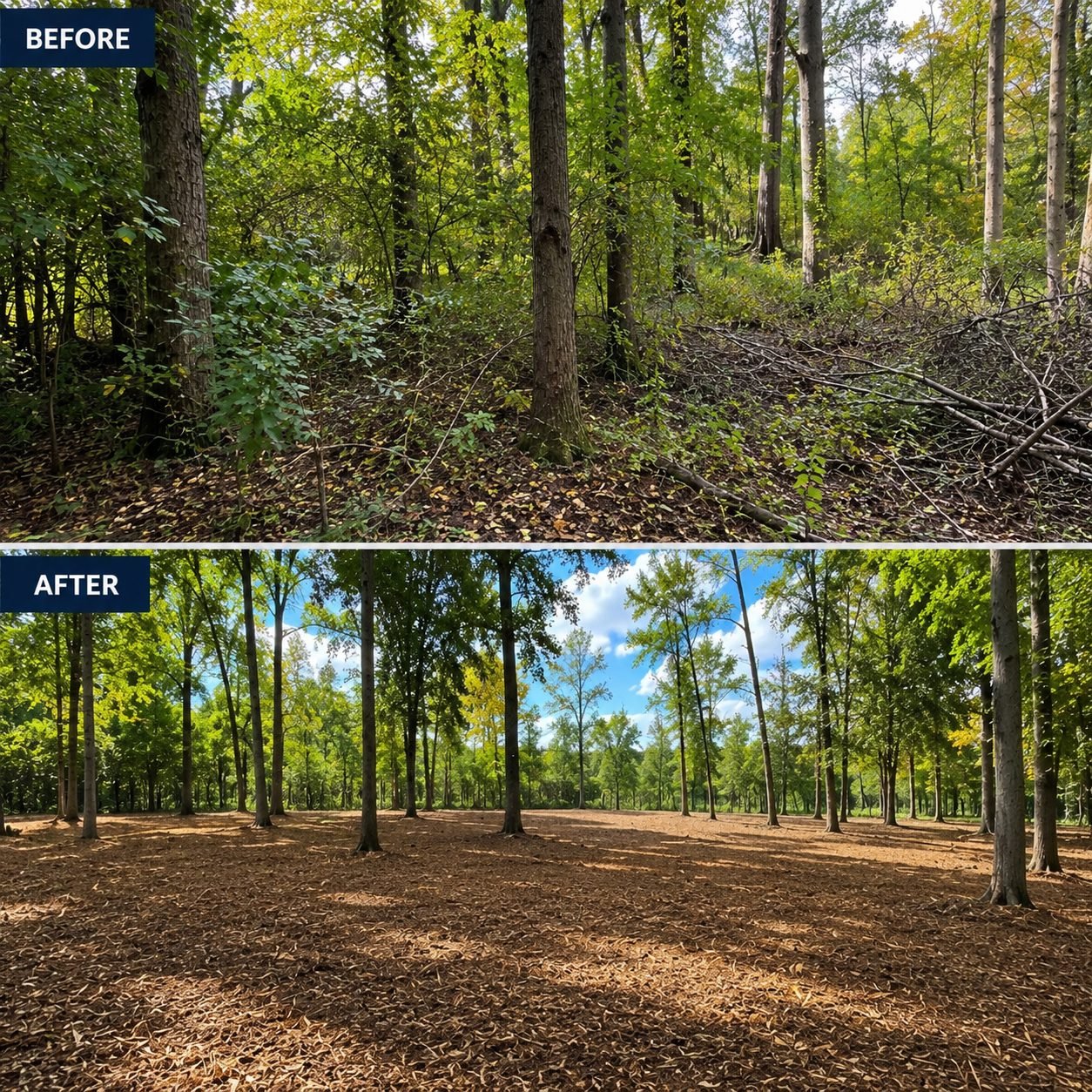
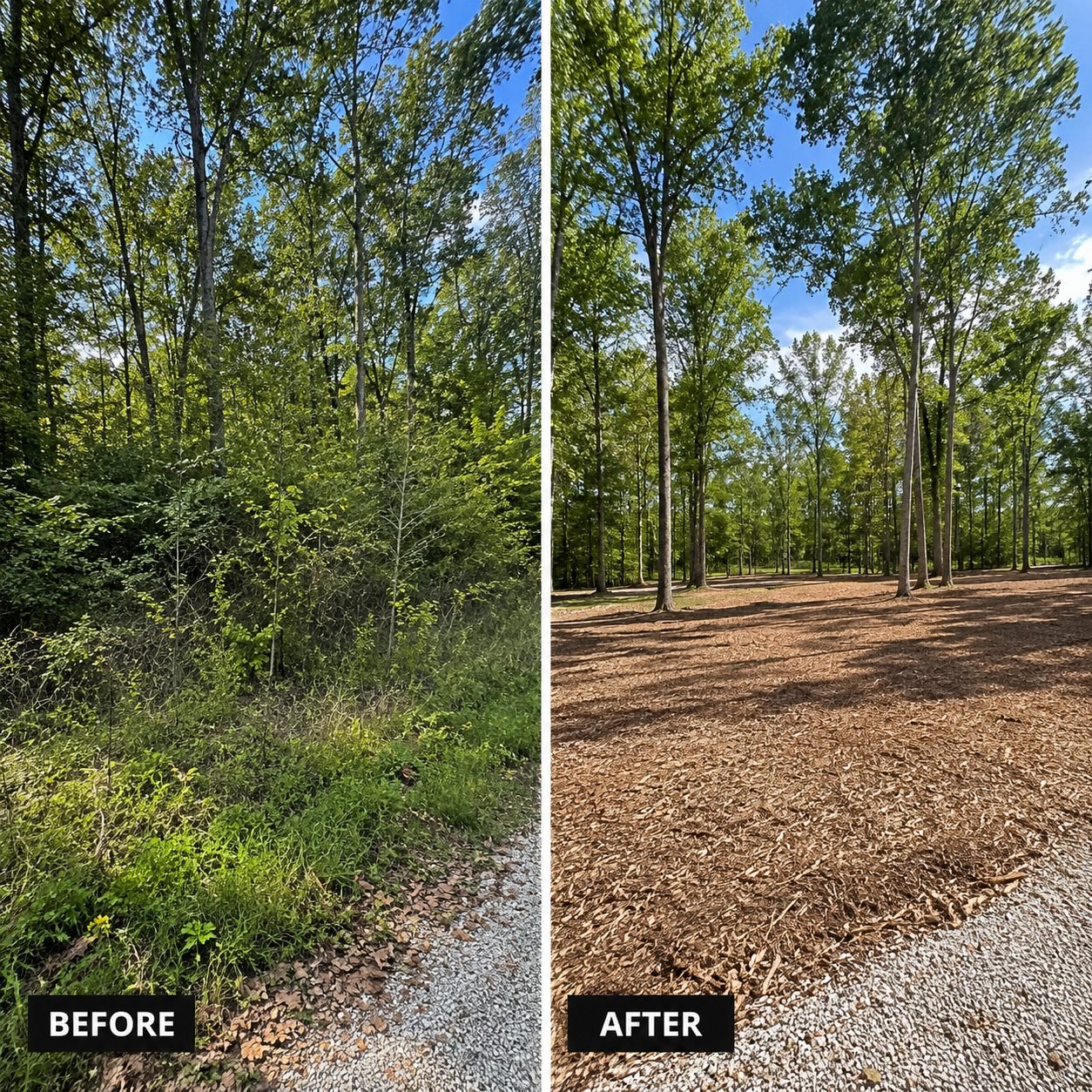
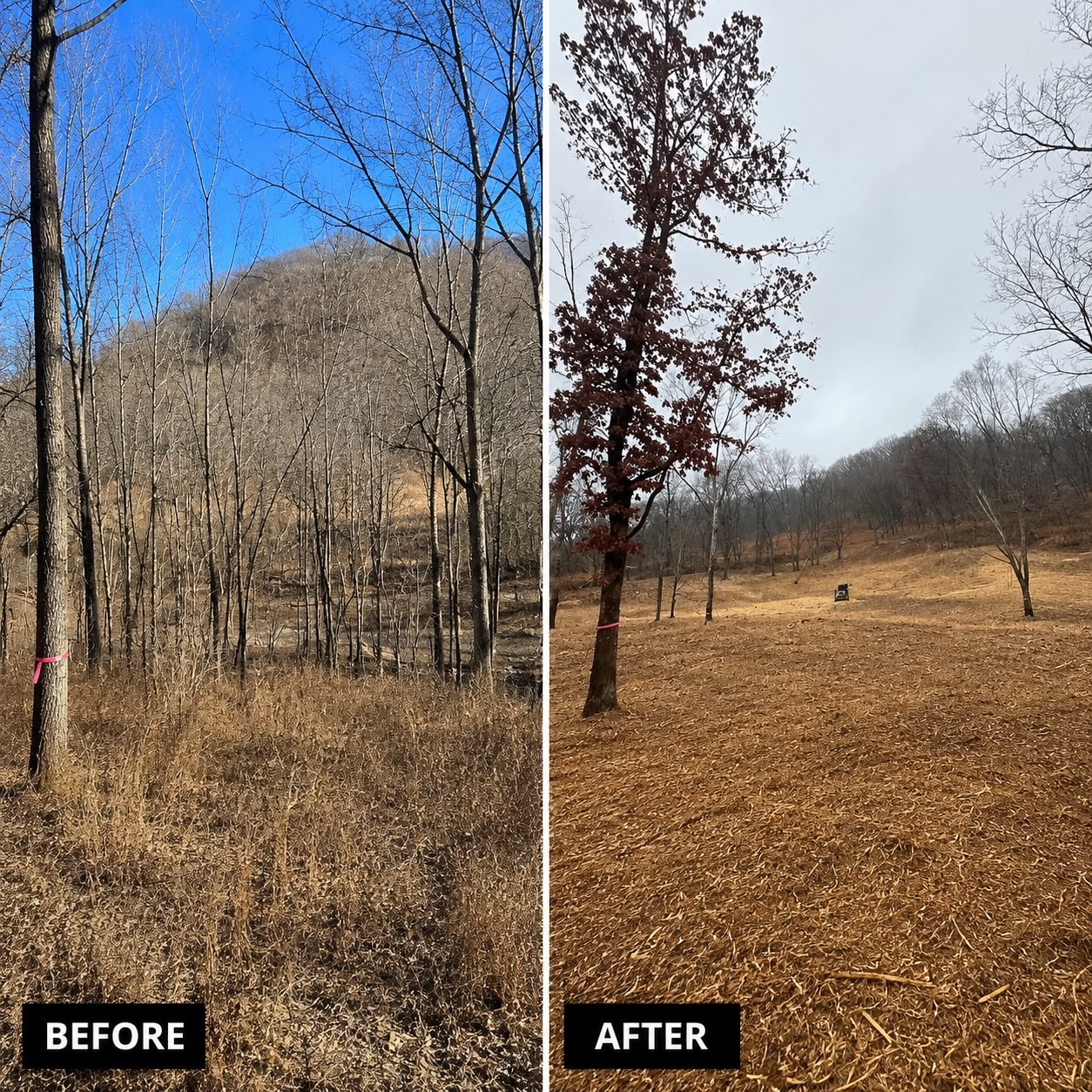
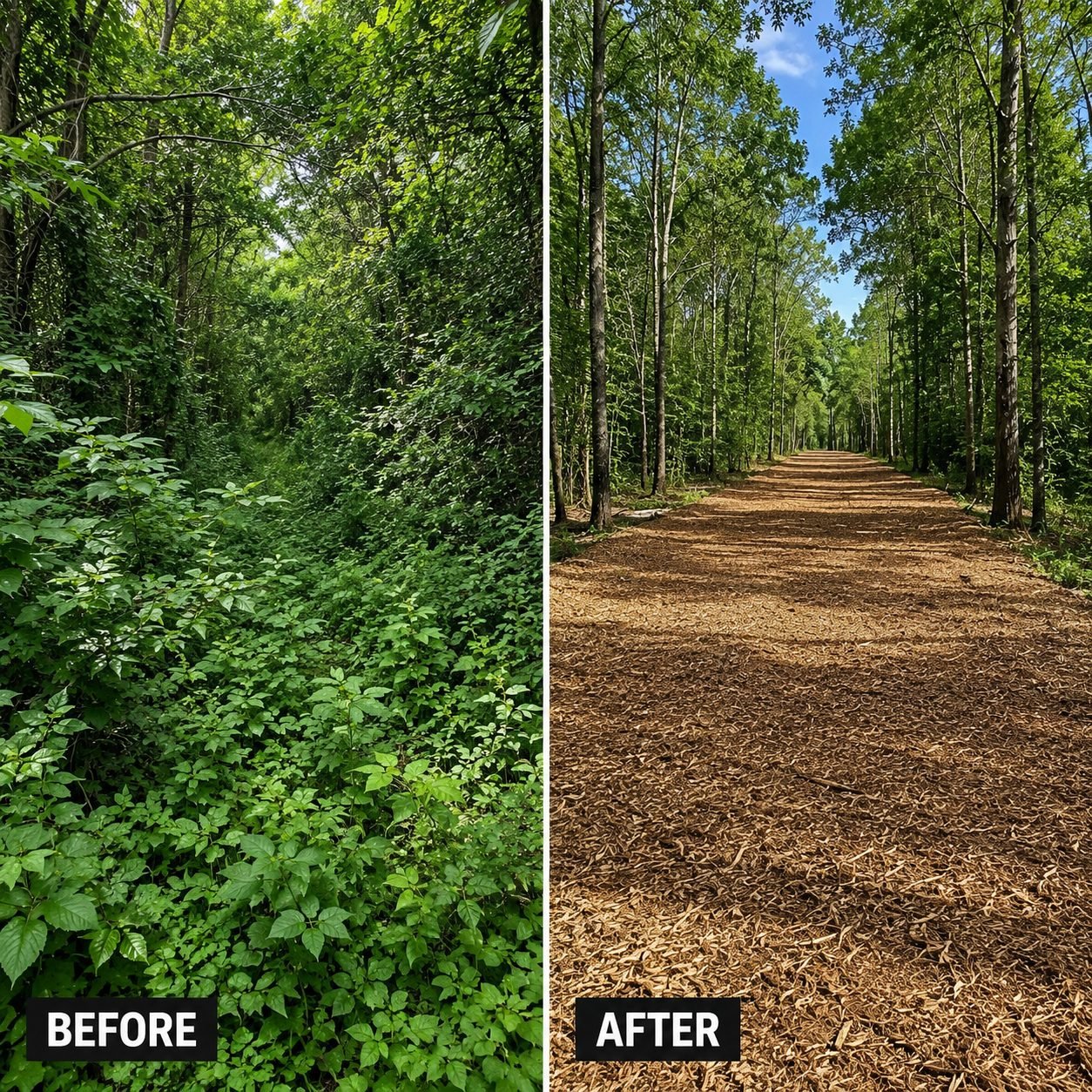
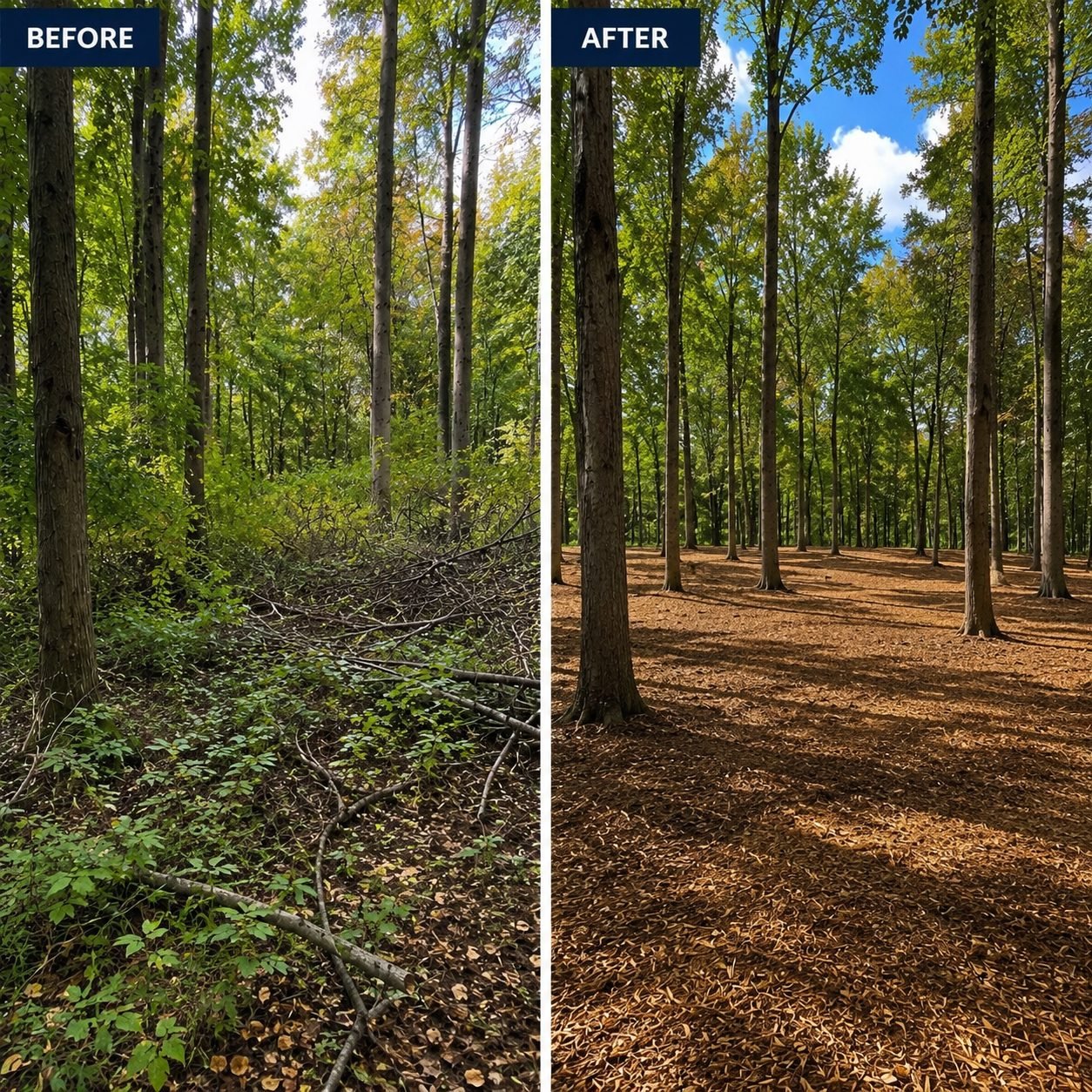
A forestry mulching gallery usually shows the property before clearing, the machine in active use, and the finished result with brush reduced to mulch on site. Strong project photos help clients understand the level of selectivity, the cleanup standard, and how the land will function after the work is complete.
Frequently asked questions
The timeline depends on acreage, vegetation density, access, slope, and whether the job is selective or full coverage. A simple brush cleanup can move quickly, while dense growth or a site with obstacles takes longer. Weather also matters because wet clay soil can slow equipment and increase the chance of ruts. The best contractor will give you a realistic schedule after seeing the property rather than promising a one-size-fits-all completion time.
It can help in many cases because the mulch layer leaves organic cover on the soil surface and reduces bare-ground exposure. That can slow runoff and help protect disturbed areas. However, it is not a complete erosion-control plan on its own. If the site has slopes, drainage issues, or concentrated water flow, the project may also need grading, seeding, silt control, or other measures to stabilize the land properly.
Yes, forestry mulching is often used to knock back invasives such as briars, honeysuckle, and dense volunteer growth. The results are usually strongest when the clearing is paired with a maintenance plan, because many invasive species regrow if roots remain active. If the goal is long-term control, a contractor may recommend follow-up treatments, seasonal maintenance, or a combination of mulching and selective removal.
It is still construction work, so there will be machine noise and site activity. But compared with full clearing, it often involves less hauling, fewer trucks, and less debris staging. That can make it feel less disruptive to neighbors and easier to manage on rural properties. Noise level also depends on the equipment, the terrain, and how long the machine must stay in one spot to process thicker vegetation.
Not necessarily, but the mulch can affect how quickly the ground is ready for seeding or finish work. Thick mulch layers may need to be redistributed, reduced, or incorporated into a site-prep plan before grass establishment. If the land will be seeded or graded soon after clearing, the contractor should discuss the finish sequence so the remaining material does not interfere with the next phase of work.
Ask what is included in the scope, whether the company is licensed and insured, how they handle Ohio 811, what equipment they use, and what the property will look like when finished. Also ask whether they can handle related work like grading, stump grinding, or excavation if the project expands. A quality contractor should answer clearly and explain where forestry mulching ends and other services begin.
It can be very effective for opening access and removing undergrowth, especially when the homeowner wants to preserve some trees and avoid a completely stripped lot. But if the goal is to build, the clearing plan has to match the future foundation, driveway, utilities, and drainage requirements. In wooded areas, a selective approach is often best at first, followed by grading or excavation where the house and access points will go.
It can handle some light surface debris, but hidden wire, metal, concrete, and buried objects are a different matter. Those items can damage equipment and create safety hazards. Before any forestry mulching project, the site should be inspected for trash, fencing, and unknown obstacles. If there is demolition debris or an old structure involved, demolition or cleanup may be needed before mulching begins.
Forestry Mulching Across Central Ohio
Fortress Level Construction handles forestry mulching in every county and community across Central Ohio. See local details, drive times, and pricing for your area:
What Other Services Does Fortress Offer in Central Ohio?
Fortress Level Construction runs a full range of land-clearing, excavation, grading, and site-work services across Central Ohio, so one owner-operated crew can clear, grade, and prep a site end to end.
Get a Flat-Rate Quote from Lee Carson
Owner-operated land clearing across all five Central Ohio counties. Send your property details and Lee gets back to you within 2 to 3 hours during business hours with one flat number after a free on-site walk-through.