

Land Clearing Equipment in Ohio: Machines, Uses and Which to Choose for a Better Build
Land clearing equipment is the machinery and tools used to remove trees, brush, stumps, roots, rocks, and debris so a property can be safely built on, graded, farmed, or restored. The right machine depends on the site, soil, vegetation, access, budget, and whether you want mulching, full clearing, or selective clearing.
The Quick Answer
- Land clearing equipment is not one machine. It is a toolkit of machines and land clearing tools chosen based on terrain, vegetation, and the finished use of the property.
- The most common land clearing machines include excavators, dozers, skid steers, forestry mulchers, stump grinders, grapples, brush cutters, and dump or haul equipment.
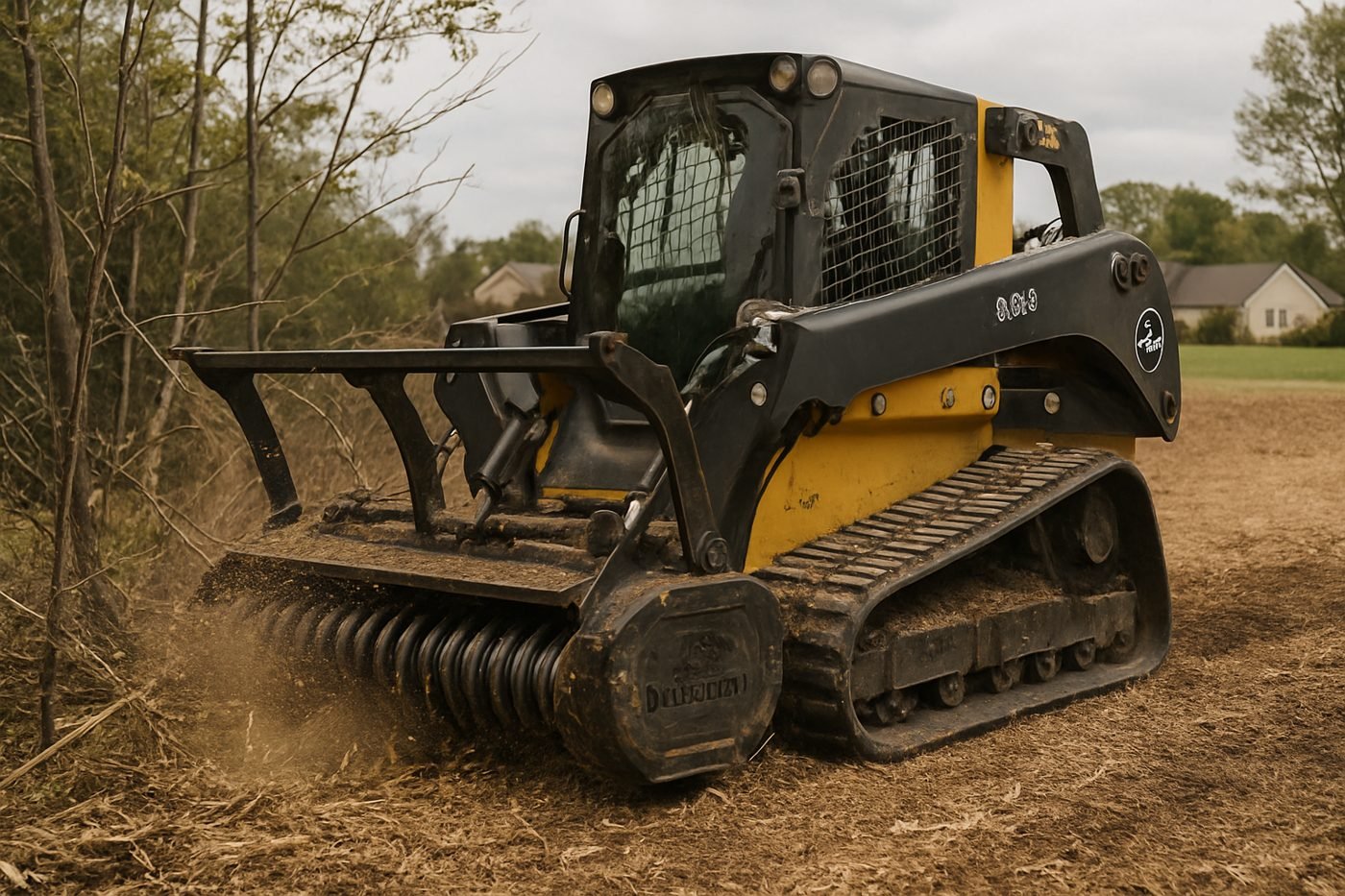
- Forestry mulcher work is often the fastest way to clear brush and smaller trees while leaving a mulch layer that helps reduce erosion and cleanup time.
- Full clearing usually means a bigger machine mix, more hauling, stump removal, and more grading work after the vegetation is removed.
- Ohio clay soil can hold moisture, rut easily, and complicate access, so machine selection matters as much as the clearing method.
- Ohio 811 utility locate is required before digging, and that step is part of responsible clearing, not an optional extra.
- A lower upfront price is not always the best value if the site needs grading, export haul-off, erosion control, or stump removal afterward.
- The best contractor is the one that can explain the exact equipment plan, the disposal plan, permit needs, and how they will protect utilities and the finished grade.
Related Questions People Ask Next
For heavy brush, the best land clearing equipment is often a forestry mulcher, skid steer with brush cutter attachment, or excavator depending on stem size and access. A forestry mulcher is ideal when you want to knock down dense undergrowth and small trees quickly while keeping debris on site as mulch. If the brush is tangled with stumps, rocks, or larger trunks, an excavator or dozer may be more efficient.
Forestry mulching cuts vegetation and grinds it into mulch on site, usually with less disturbance and less haul-off. Full clearing removes trees, stumps, roots, and debris from the property for a cleaner, more build-ready result. Full clearing generally takes more equipment, more labor, and more grading afterward, but it may be the better choice if you need foundations, driveways, utilities, or a completely open site.
Choose land clearing machines based on what is growing there, how big the stems are, how wet or steep the ground is, and what the finished site needs to become. A flat lot with thick brush may be a mulcher job. A wooded parcel with large stumps and poor access may need an excavator and dozer. Clay soils, narrow access, and nearby utilities can all change the plan.
Sometimes, but not always. A forestry mulcher is excellent for removing vegetation and improving access, but it does not always solve stump extraction, root removal, rough grading, drainage correction, or building pad prep. If a home, barn, garage, or road will be built, the site often needs clearing plus grading and possibly excavation to reach construction-ready conditions.
Ask what equipment they will bring, whether they are doing mulching or full clearing, how they handle stumps and haul-off, whether they will call Ohio 811, what permits may be needed, and how they will protect existing structures, fences, septic systems, and drainage. A strong contractor should explain the process clearly and give you a realistic scope rather than just a low price.
What is land clearing equipment and what does it do?
Land clearing equipment is the machinery and attachment set used to remove vegetation, stumps, roots, rocks, and debris so a site can be used safely and efficiently. The right mix of land clearing machines depends on whether the goal is brush removal, tree removal, full lot prep, access road work, or final grading.
At a basic level, land clearing equipment turns a rough parcel into a workable site. That can mean cutting brush, felling trees, grinding stumps, piling debris, loading trucks, or shaping the ground for construction. In practice, the term covers everything from a compact skid steer with land clearing tools to a heavy excavator, dozer, forestry mulcher, grapple, stump grinder, and haul-off equipment. The best setup is never one-size-fits-all.
The wrong equipment can create extra cost and damage. For example, a machine that is too light may bog down in Ohio clay soil, especially after rain. A machine that is too aggressive may tear up access routes, leave ruts, or remove more soil than intended. Choosing the right land clearing equipment is about balancing power, footprint, ground pressure, reach, and the type of material being removed.
In Central Ohio, land often includes a mix of brush, volunteer trees, old fence lines, buried debris, and dense clay that holds moisture. That means the work is not just about cutting vegetation. It also involves planning how the machines will enter, where the debris will go, what happens to stumps and roots, and whether the next phase is grading, excavation, or building. A good clearing plan starts with the site, not with the machine.

Why does land clearing matter before construction or property use?
Land clearing matters because it creates safe access, exposes hidden issues, improves drainage planning, and prepares a property for construction, pasture, roads, or landscape work. Proper clearing reduces delays later, especially when the site must also handle stumps, utilities, grade changes, and erosion control.
What are the types of land clearing equipment and when is each used?
The main types of land clearing equipment include forestry mulchers, excavators, dozers, skid steers, stump grinders, grapple attachments, brush cutters, and hauling equipment. Each machine solves a different problem, and many jobs need a combination rather than a single piece of equipment.

How does the land clearing process work step by step?
A good land clearing process starts with a site review, locate request, and equipment plan, then moves through cutting, mulching or removal, stump handling, cleanup, grading, and final inspection. The order matters because each step affects safety, cost, drainage, and how ready the site is for the next trade.
What drives land clearing cost and how should estimates be read?
Land clearing cost is driven by vegetation density, stump volume, terrain, access, soil condition, haul-off, grading needs, and whether the job is forestry mulching or full clearing. The lowest quote is not always the best value if it leaves behind stumps, drainage problems, or extra cleanup.
What land clearing machines and tools are used on real jobs?
The most common land clearing machines include excavators, dozers, skid steers, forestry mulchers, stump grinders, grapples, and hauling equipment, while smaller land clearing tools support cutting, pruning, sorting, and cleanup. The right mix depends on the size of material, site access, and how much disturbance is acceptable.
Should you DIY land clearing or hire a pro?
DIY land clearing can work for small, light jobs, but professional land clearing is usually safer and more efficient when the site has heavy vegetation, stumps, utility concerns, steep grades, or a construction deadline. The machine size, disposal burden, and soil conditions quickly push many projects beyond weekend equipment rental.
What permits, regulations and Ohio 811 rules apply before digging?
Permits and locate requirements are part of the land clearing process, not an afterthought. In Ohio, ORC 3781.28 requires an Ohio 811 utility locate request at least 48 hours before digging, and local permit rules may apply for grading, tree removal, demolition, erosion control, or work near protected areas.
How do you choose the right land clearing contractor?
Choose a contractor by checking their equipment, scope clarity, insurance, utility-locate process, disposal plan, grading capability, and local experience. The best land clearing contractor explains exactly which land clearing machines they will use and why, instead of offering a vague all-in price with no details.
Start with the question of whether the contractor actually handles the type of work your property needs. Some crews are strong in forestry mulching, while others are better at full clearing, demolition, excavation, or grading. The right choice depends on the next phase of your project. If the land must be build-ready, a contractor who can only cut brush may not be enough. Ask what equipment they plan to bring and how they will handle stumps, debris, and finish grading.
Next, look for clear communication. A good contractor should walk the site, explain what can be cleared, what must stay, what will be hauled away, and what the cleanup will look like when the machine leaves. They should also be able to discuss permit needs and Ohio 811. If they cannot explain the process in plain language, that is a warning sign. You want someone who understands the practical reality of site work, not just someone selling a machine day.
Finally, look at business fundamentals. Fortress Level Construction is a licensed, insured Central Ohio land-services company founded by Lee Carson, a combat veteran The crew-based model matters because land clearing is rarely a one-person job. The right contractor should have enough equipment and people to match the site, plus the discipline to protect the property, manage safety, and finish the job the way it was scoped.
How do land clearing methods compare by cost, speed and best use?
The best method is the one that matches the site. Forestry mulching is often faster and less disruptive for brush and light trees, while full clearing is better for build-ready sites that need stumps removed, debris hauled away, and grading completed. This comparison shows how the common methods differ in practical use.
| Method | Typical Use | Strengths | Tradeoffs |
|---|---|---|---|
| Forestry mulching | Brush, saplings, light to moderate growth | Fast, low haul-off, less site disturbance, useful for access and erosion control | Not ideal for large stumps, major root removal, or full build-ready cleanup |
| Full clearing | Homesites, pads, roads, utility prep, open fields | Creates a cleaner, more construction-ready site, handles larger material | More equipment, more cleanup, more grading, typically higher cost |
| Excavator-based clearing | Wooded lots, stump extraction, debris loading, rough terrain | Excellent reach and power, handles roots and heavy material well | Can be slower on open brush and may disturb more soil if overused |
| Dozer-based clearing | Large open areas, rough shaping, pushing material | Strong for moving material and shaping the site quickly | Less precise near structures, utilities, or tight access |
| Skid steer with attachments | Tight access, small to medium sites, cleanup, light grading | Versatile, maneuverable, useful with many land clearing tools | Limited on very large trees, dense stumps, or very rough ground |
| Stump grinding only | Post-cut stump removal, landscape cleanup, selective areas | Targets stumps without full site disturbance | Does not solve broader clearing, grading, or haul-off needs |
When is land clearing equipment not the right first answer?
Land clearing equipment is powerful, but it is not the best first step when the real problem is drainage, wetlands, buried utilities, protected trees, or a grading issue that needs planning before removal. Clearing too early, too aggressively, or with the wrong machine can create more work and higher costs.
One common mistake is using a mulcher or dozer before the site is fully understood. If you clear first and ask questions later, you can damage drainage patterns, disturb areas that should have stayed intact, or discover too late that the finished pad needs a different elevation. In some cases, land clearing should be coordinated with excavation or grading from the beginning so that the site is opened in the right order.
Another limitation is assuming that all vegetation can be treated the same way. Forestry mulching works well for many sites, but it is not a universal solution. Large stumps, embedded debris, old foundations, rocky ground, or heavily tangled growth may require excavators, stump grinders, or full clearing instead. Likewise, a dozer can be the wrong choice where ground pressure, access, or precision matter more than brute force.
A final mistake is focusing only on the visible area. A lot may look simple from the road and still hide soft soil, buried trash, drain lines, old fencing, or utility concerns. If the job is tied to construction, a professional should consider the full sequence from locate request to grade finish. That is the difference between land that looks cleared and land that is actually ready.
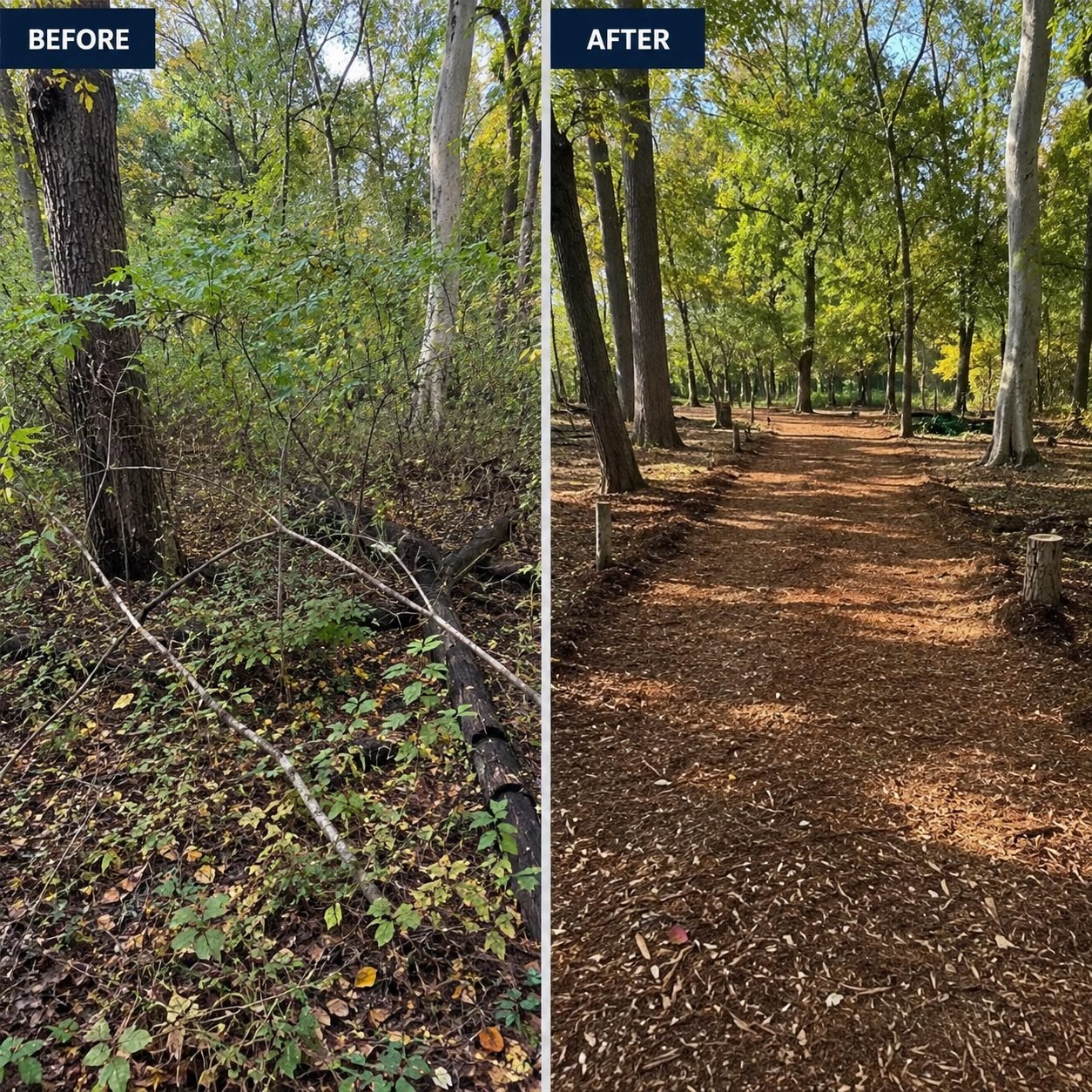
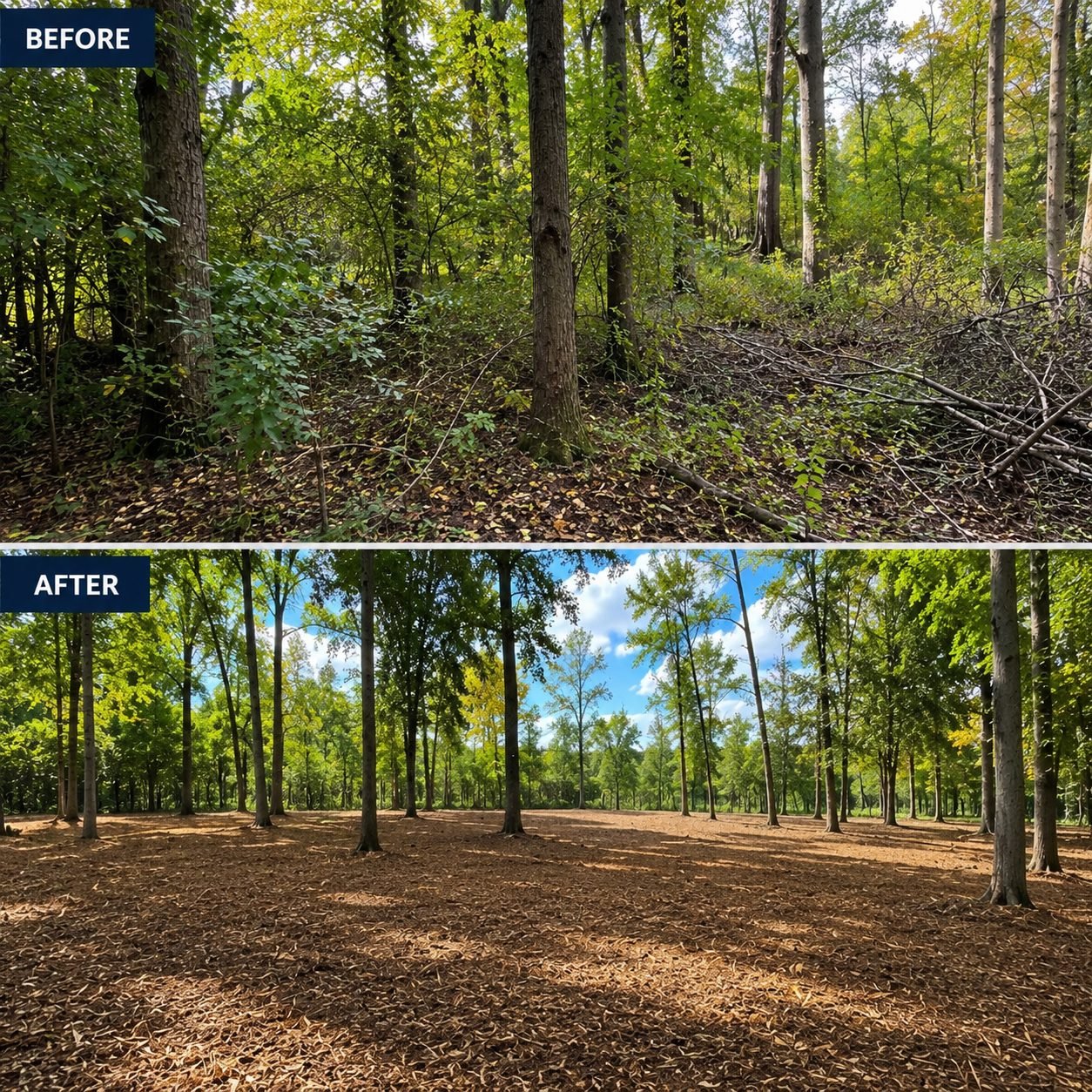
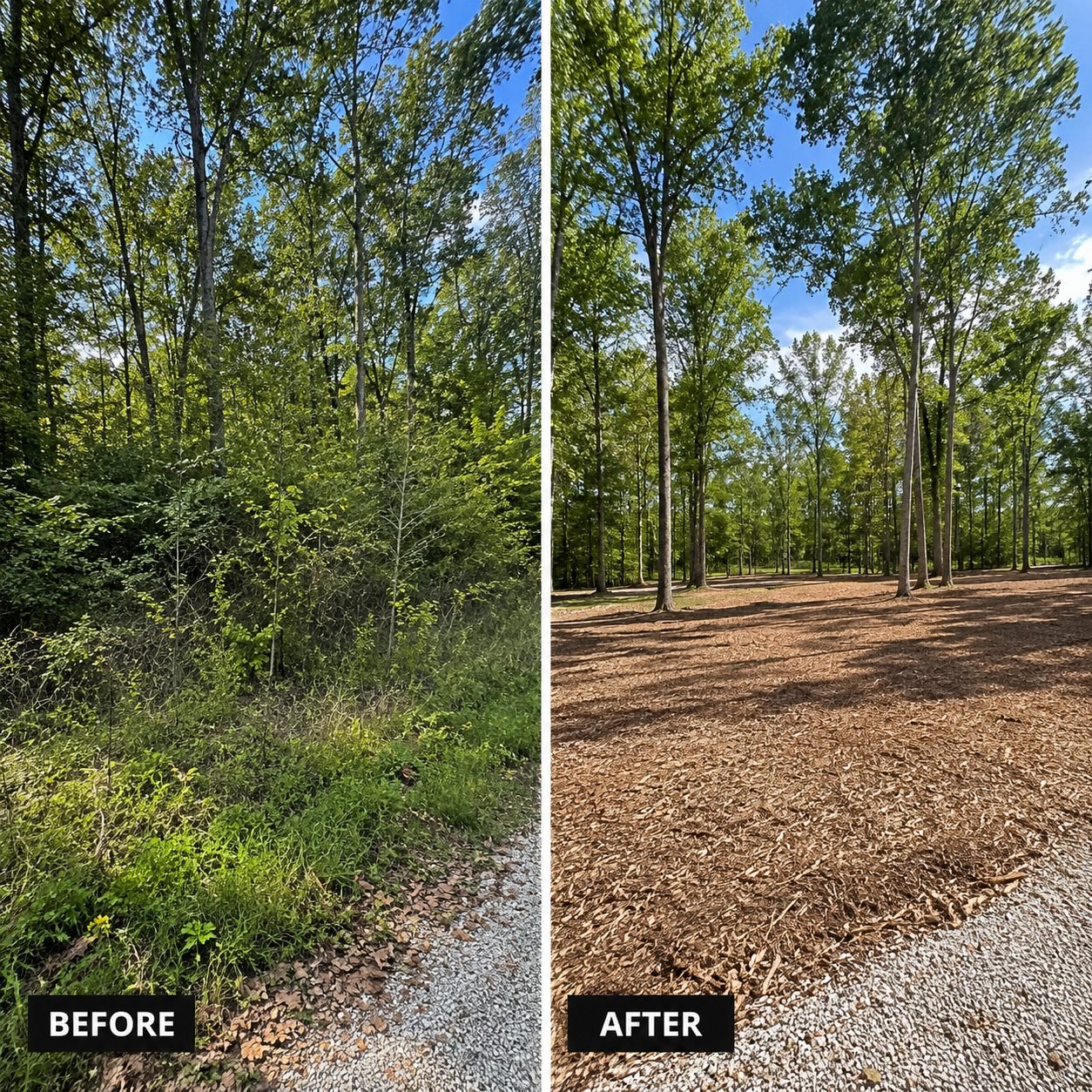
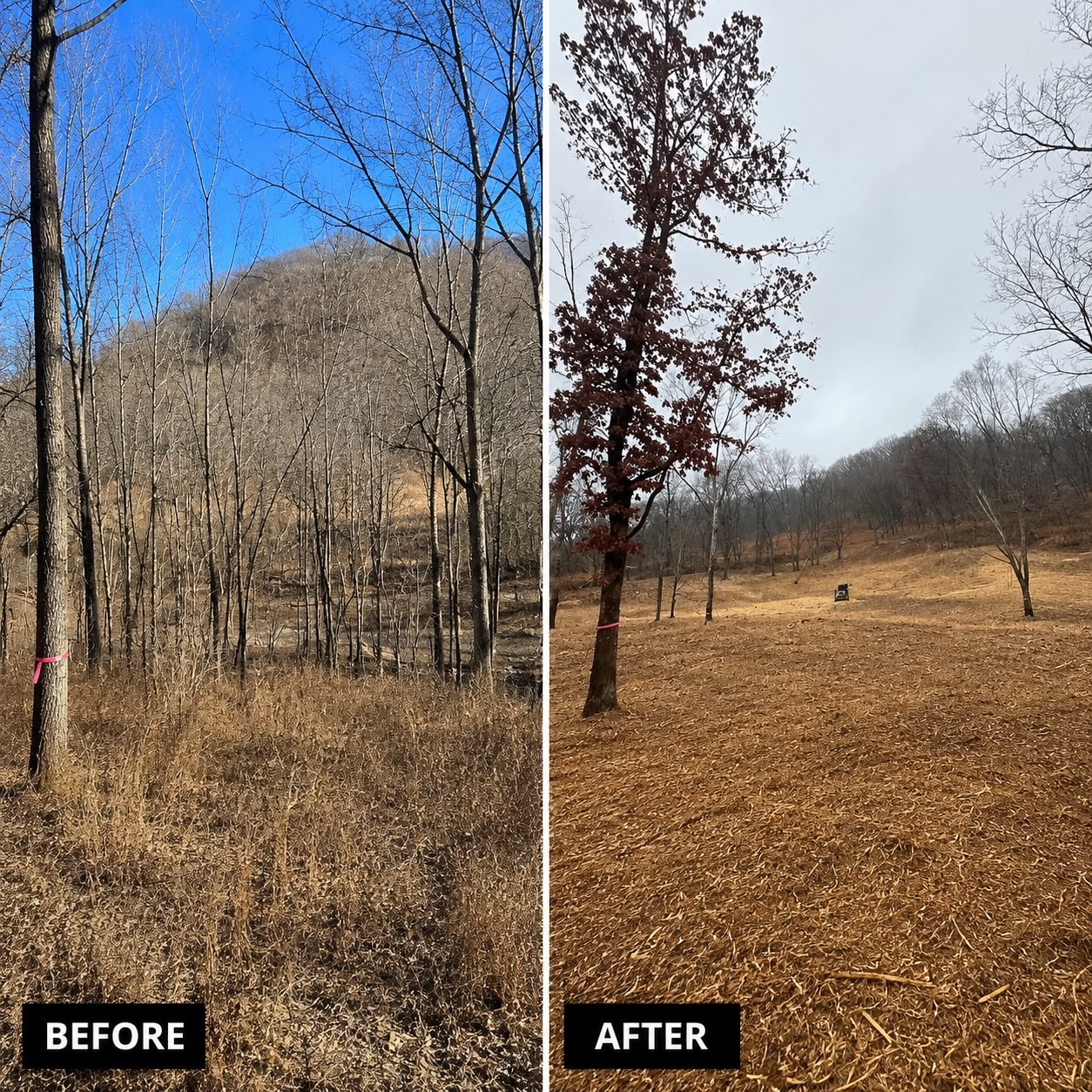
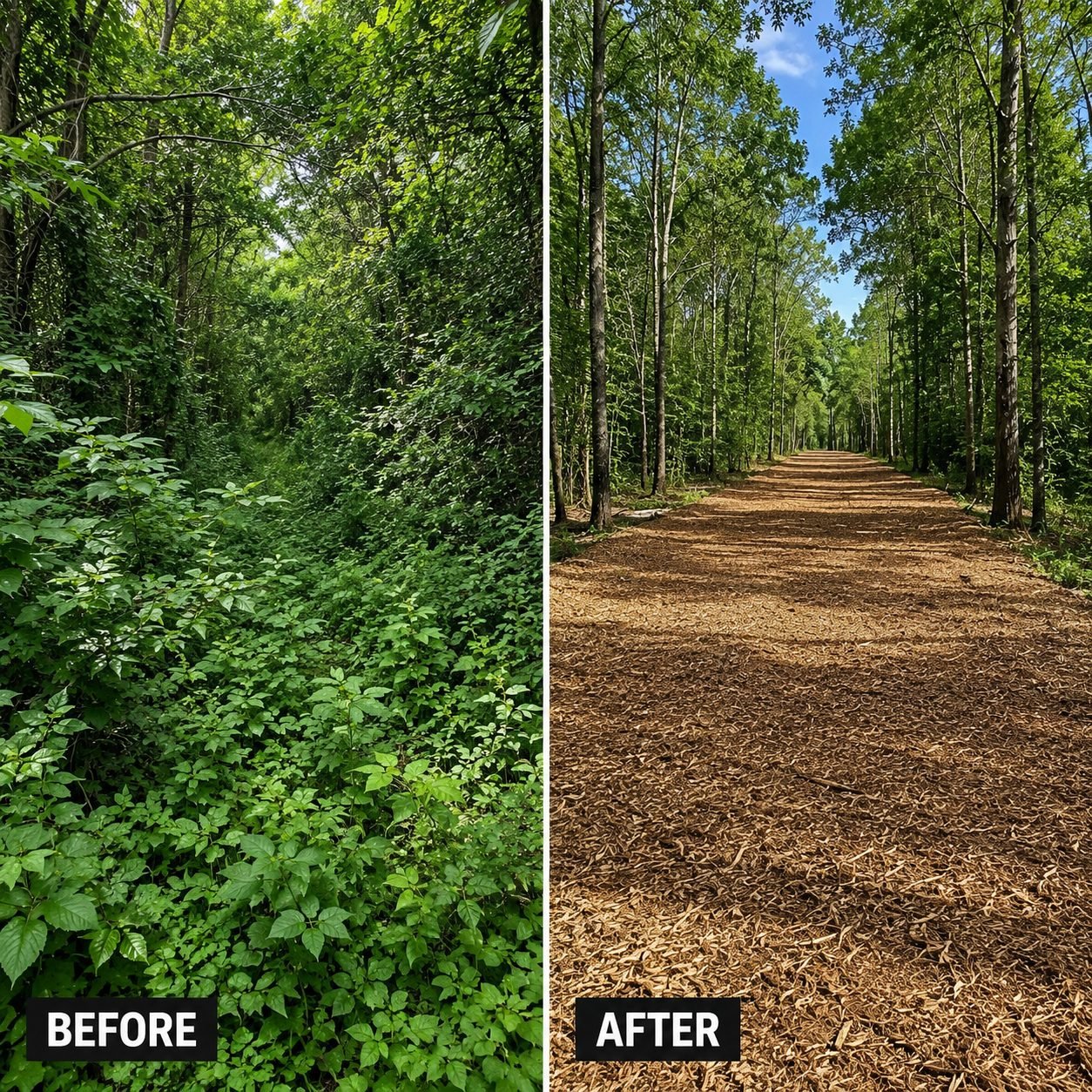
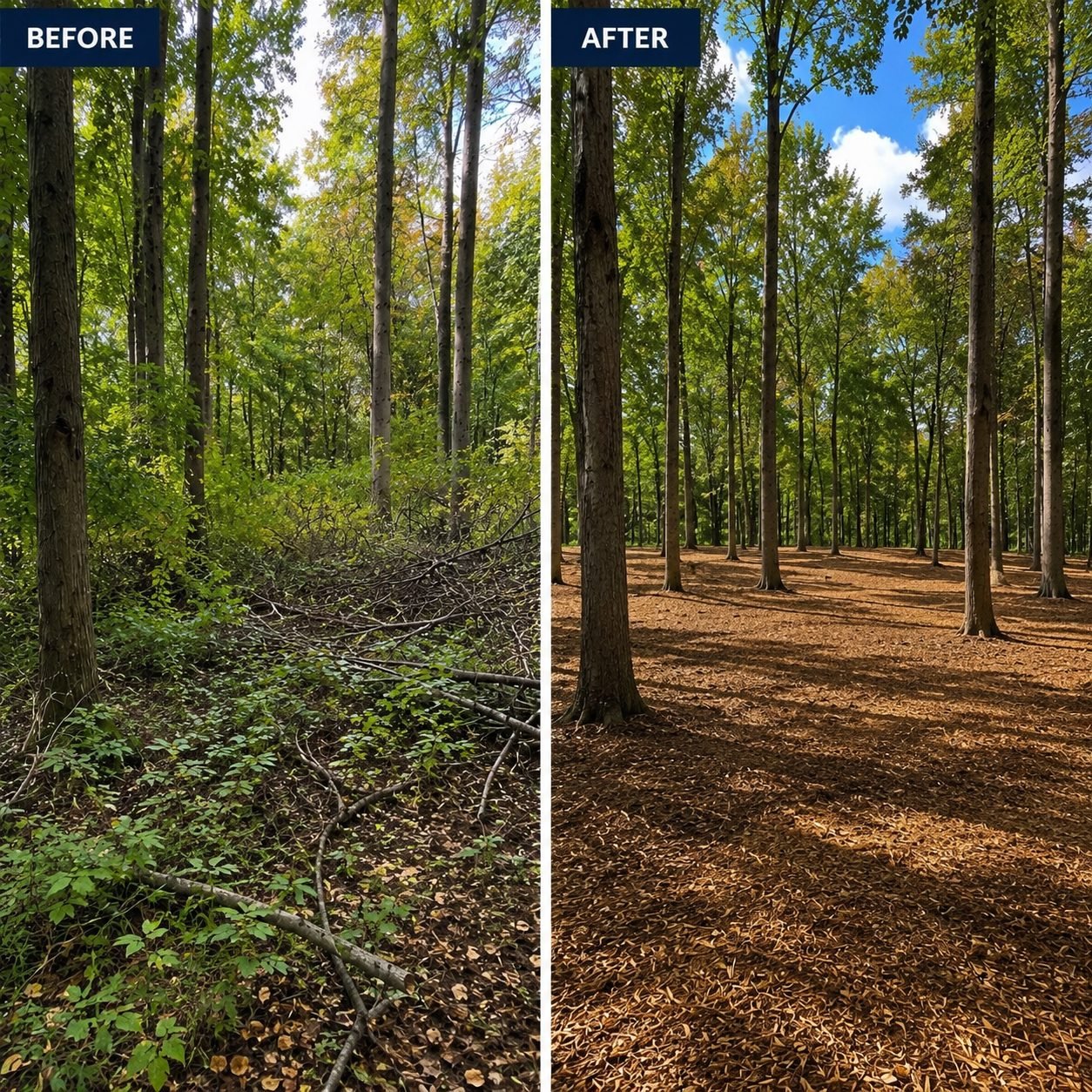
Land Clearing Equipment and Site Prep Gallery
A useful land clearing gallery should show more than finished before-and-after shots. It should document the actual equipment in use, the ground conditions, the debris handling, stump removal, grading transitions, and the final site shape so property owners can understand how the work was completed.
Frequently asked questions
The main types of land clearing equipment include forestry mulchers, excavators, dozers, skid steers, stump grinders, grapples, brush cutters, and haul-off equipment. Each machine has a different strength. A mulcher is efficient for brush and smaller growth, an excavator is strong for stumps and roots, and a dozer is effective for pushing and shaping larger areas.
No. A forestry mulcher cuts and grinds vegetation into mulch on site, which is ideal for many brush and light tree jobs. Full clearing removes vegetation plus stumps, roots, and debris from the property, often followed by grading. If the land needs to become a build pad, driveway, or utility corridor, full clearing is often the more complete option.
Sometimes, yes, if the area is small, the vegetation is light, and you are not dealing with stumps, buried debris, or utility risks. But rental equipment can be expensive to use incorrectly, and DIY clearing often runs into hidden issues like wet clay, unstable ground, and disposal problems. Once the site gets larger or more complex, a pro is usually the safer route.
Clay soil holds water, compacts easily, and can rut badly under heavy equipment. That means land clearing machines must be chosen carefully to avoid tearing up the site or making future grading harder. In Central Ohio, moisture, seasonal changes, and soil behavior can affect access, timing, and the amount of cleanup needed after the vegetation is removed.
Ohio law requires an Ohio 811 utility locate request at least 48 hours before digging under ORC 3781.28. That timing gives utility owners a chance to mark lines before ground disturbance starts. Even if the job seems minor, any work that involves digging, stump removal, trenching, or excavation should be coordinated through Ohio 811 first.
Sometimes. Permit needs depend on where the property is located and what the project includes. Some sites need permits for grading, driveway work, erosion control, demolition, or work near regulated areas. Permit costs can commonly fall around $100-$300, but the exact requirement is local. A contractor should help determine whether your project needs one before work starts.
The best equipment for removing stumps is usually an excavator, stump grinder, or in some cases a dozer depending on size and site conditions. Excavators are strong for pulling entire root masses, stump grinders are ideal when you want to reduce the stump below grade, and dozers are useful when many stumps need to be pushed or moved in bulk.
Choose forestry mulching when the goal is to remove brush, saplings, and lighter growth with minimal disturbance. Choose excavation when the site needs stump extraction, root removal, debris loading, or deeper ground work. If you are building on the land, excavation often becomes part of the plan because the site needs to be more than just visually cleared.
Land Clearing Across Central Ohio
Fortress Level Construction handles land clearing in every county and community across Central Ohio. See local details, drive times, and pricing for your area:
What Other Services Does Fortress Offer in Central Ohio?
Fortress Level Construction runs a full range of land-clearing, excavation, grading, and site-work services across Central Ohio, so one owner-operated crew can clear, grade, and prep a site end to end.
Get a Flat-Rate Quote from Lee Carson
Owner-operated land clearing across all five Central Ohio counties. Send your property details and Lee gets back to you within 2 to 3 hours during business hours with one flat number after a free on-site walk-through.