

How does land clearing for new construction work in Newark, Ohio?
Yes. In Newark, Ohio, land clearing for new construction means preparing a mix of urban lots and rural-fringe parcels for foundations, driveways, and utilities. Fortress Level Construction handles the clearing, grubbing, mulching, and rough grading the crew needs to start right in Licking County’s clay-heavy glacial till.
The Quick Answer
- Yes, Newark land clearing for new construction means preparing established city lots and rural-fringe acreage so foundations, utility runs, and driveways can start clean.
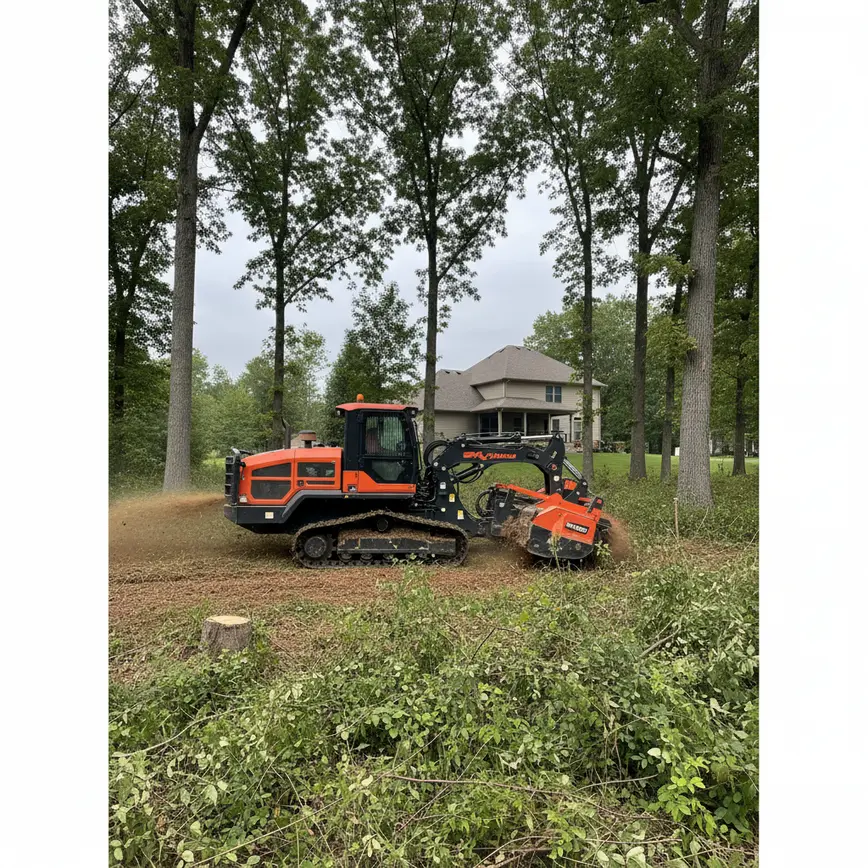
- Fortress Level Construction brings John Deere 333G compact track loaders with Diamond drum mulchers, plus dozers and excavators, to match lot size and tree density.
- Clay-heavy glacial till in Licking County changes the work plan, so the crew watches rutting, drainage, and spoil handling during rough clearing and grading.
- On smaller urban parcels near the historic courthouse square or older residential streets, the goal is tight access, selective tree removal, and minimal disturbance.
- On outskirts near Heath, Granville, Hanover, and Hebron, the crew can clear rural ground, wooded edges, and mixed farm lots for new builds.
- Ohio law requires an Ohio 811 utility locate at least 48 hours before digging, and Fortress schedules the walk-through around that step.
- Flat-rate quotes and a free on-site walk-through help buyers understand clearing land to build before excavation, footing work, or slab prep begins.
- Typical Newark project pricing for this service usually falls between $1,000 and $5,000, depending on acreage, access, tree cover, stumps, and grading needs.
Related Questions People Ask Next
Newark is the Licking County seat, but it is still small enough that the work shifts between older urban lots, courthouse-square blocks, and rural parcels on the edge of town. That mix changes machine selection, access planning, and debris removal. Fortress matches the clearing method to the site, not a one-size approach.
The crew looks at tree thickness, stump count, soil moisture, and the amount of grading needed after clearing. A John Deere 333G with a Diamond drum mulcher is efficient for stems up to 14 inches, while dozers and excavators handle heavier push-out, stump work, and rough shaping on clay-heavy ground.
Fortress reviews access, tree cover, utility marking, drainage, and where the cleared material will go. In Newark, that matters whether the site is near the historic courthouse square, along the Licking River, or on wooded ground outside the city. The quote is flat-rate, so the scope is clear before work starts.
Yes. The team regularly handles rural-fringe acreage near Heath, Granville, Hanover, and Hebron, where wooded edges and farm ground can slow unplanned projects. With same-week walk-throughs and 2-3 hour response during business hours, Fortress can move quickly from quote to clearing once the Ohio 811 locate is complete.
What does land clearing for new construction include on a Newark lot?
On a Newark lot, the crew clears trees, brush, stumps, and surface debris, then rough grades the pad area for the builder. Because lots here range from older residential parcels to rural edges, Fortress plans around tight access, clay-heavy glacial till, and where the new utility runs will enter.
The process starts with a free on-site walk-through and a flat-rate quote, then the crew confirms the Ohio 811 locate before digging or stump removal begins. On smaller urban sites near the historic courthouse square, the work may focus on selective clearing and preserving workable boundaries for the foundation crew.
On wider parcels outside the city, the team can use John Deere 333G compact track loaders with Diamond drum mulchers, plus dozers and excavators, to open a build area faster. Newark’s mix of county-seat lots and rural-fringe acreage is exactly why the equipment and scope have to be matched to the parcel.
How does clay-heavy Newark soil change pre-construction clearing?
Clay-heavy glacial till changes everything from traction to drainage. Fortress plans land clearing for new construction around soft spots, rutting, and spoil piles so the future builder gets a stable starting point. The crew also watches runoff toward the Licking River and other low areas when rough grading the lot.
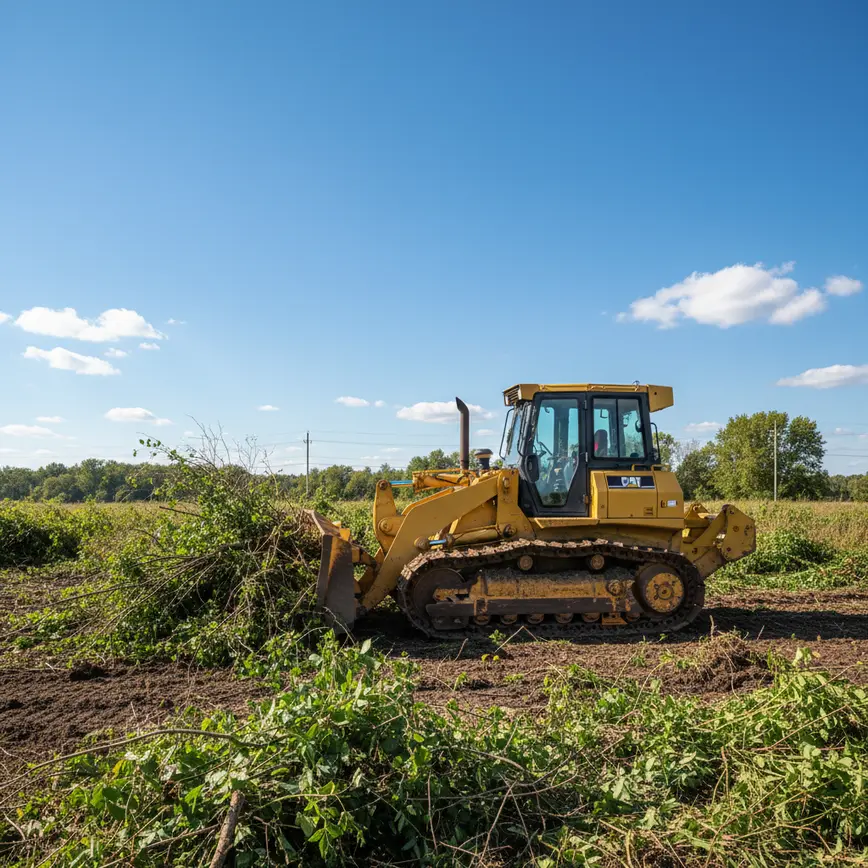
In Newark, a site can look open but still hold sticky clay that packs onto tracks and limits movement. The crew uses compact track loaders for control, then brings in dozers or excavators when stump roots, heavy brush, or uneven grade require more push and lift than mulching alone can manage.
That matters near wooded ground on the outskirts and on older lots where previous use left buried debris. Clearing land to build here is not just cutting vegetation. It is preparing a foundation-ready surface that drains well, supports access, and does not leave the builder fighting mud after the first rain.
What equipment does Fortress uses for Newark construction-site clearing?
For Newark construction-site clearing, Fortress uses John Deere 333G compact track loaders with Diamond drum mulchers for stems up to 14 inches, plus dozers and excavators for heavier removal and rough shaping. That combination fits both urban-lot access and larger rural jobs around Heath, Granville, Hanover, and Hebron.
Mulching is efficient when the site has brush, saplings, and manageable trees that need to be turned into ground-level material rather than hauled away. The 333G setup can clear 1 to 5 acres per day under the right conditions, which helps when buyers want the build site opened without dragging the schedule.
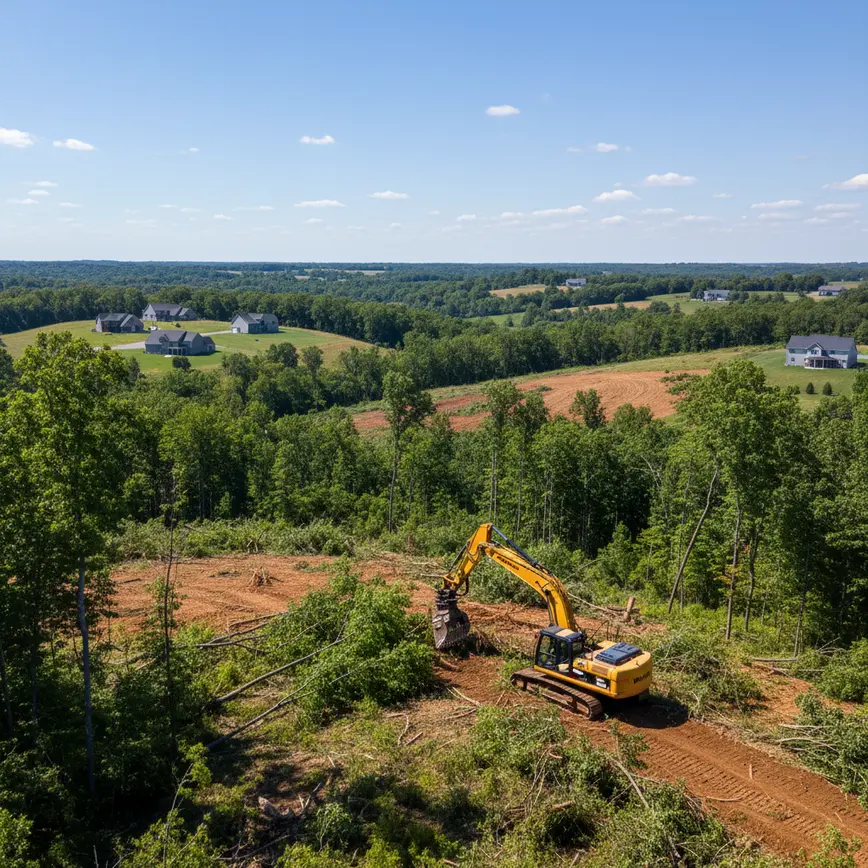
When a Newark parcel has larger stumps, thicker tree lines, or an awkward grade between the street and the build area, excavators and dozers take over. That mixed fleet is important in a county-seat market where one job may be a tight infill lot and the next may be acreage on the rural fringe.
How much does land clearing for new construction usually cost in Newark?
Most Newark land clearing for new construction falls between $1,000 and $5,000 per project, depending on acreage, access, tree density, stumps, and how much rough grading the builder needs. Flat-rate quotes help buyers compare urban-lot work against rural-fringe clearing without surprise add-ons after the walk-through.
Smaller lots near established streets can stay on the lower end when the work is selective and access is easy. Rural parcels with wooded ground, heavier stems, or clay that needs more machine time tend to cost more because the crew spends longer on clearing, mulching, stump handling, and shaping the build pad.
Fortress keeps pricing tied to the site conditions seen during the free on-site walk-through. That is useful in Newark because a lot near the city core may need delicate access work, while an outlying parcel may need a broader clearing plan before excavation and utility trenching can begin.
How does Newark pre-construction clearing compare by lot type?
Newark jobs split between compact urban lots and rural-fringe acreage, so the right clearing plan changes by site. Fortress compares access, vegetation, soil, and grading needs before quoting. The goal is to hand the builder a usable pad, not just a cut lot, whether the parcel is near downtown or outside town.
| Site type | Typical Newark condition | Fortress approaches | Why it matters |
|---|---|---|---|
| Older urban lot | Tight access and limited working room | Selective clearing with compact track loaders | Protects boundaries and reduces disturbance |
| Rural-fringe acreage | Wooded ground and heavier brush | Mulching, dozing, and excavating as needed | Opens a wider build area faster |
| Clay-heavy ground | Sticky glacial till and rut risk | Machine control and rough grading | Helps the site drain and stay workable |
| Mixed-use parcel | Debris, trees, and uneven grade | Combined clearing and grading plan | Prepares the lot for foundation work |
| Utility-sensitive site | Lines must be marked before digging | Ohio 811 locate first, then work | Keeps the job compliant and safer |
When is land clearing for new construction not the right call in Newark?
It is not the right call when the site needs only mowing, when a builder has not finalized the footprint, or when the parcel is too wet for safe machine traffic. In those cases, Fortress may recommend waiting, revising the plan, or starting with utility marking and a lighter site review first.
If the Newark lot is only overgrown with grass and small weeds, full construction clearing may be more than the job needs. If the ground sits near a low area by the Licking River or holds too much moisture after rain, the crew may advise delaying heavy equipment until the site can support safe access.
When the builder has not chosen foundation corners, driveway entry, or utility routes, the team cannot responsibly open the whole parcel. The better next step is a walk-through, an Ohio 811 locate, and a scoped plan that matches the future structure instead of clearing more than needed.
What should a Newark before-and-after gallery show for new-construction clearing?
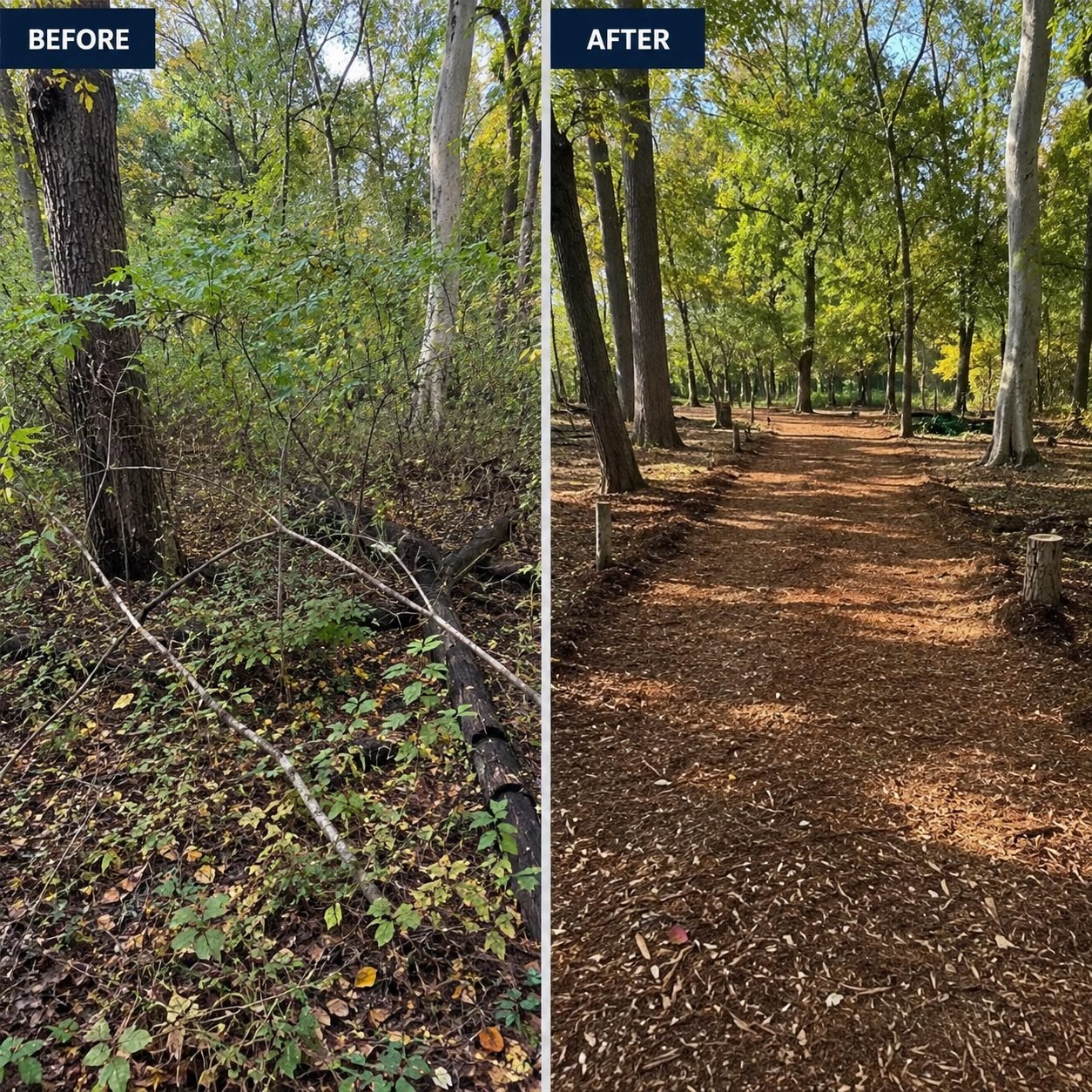
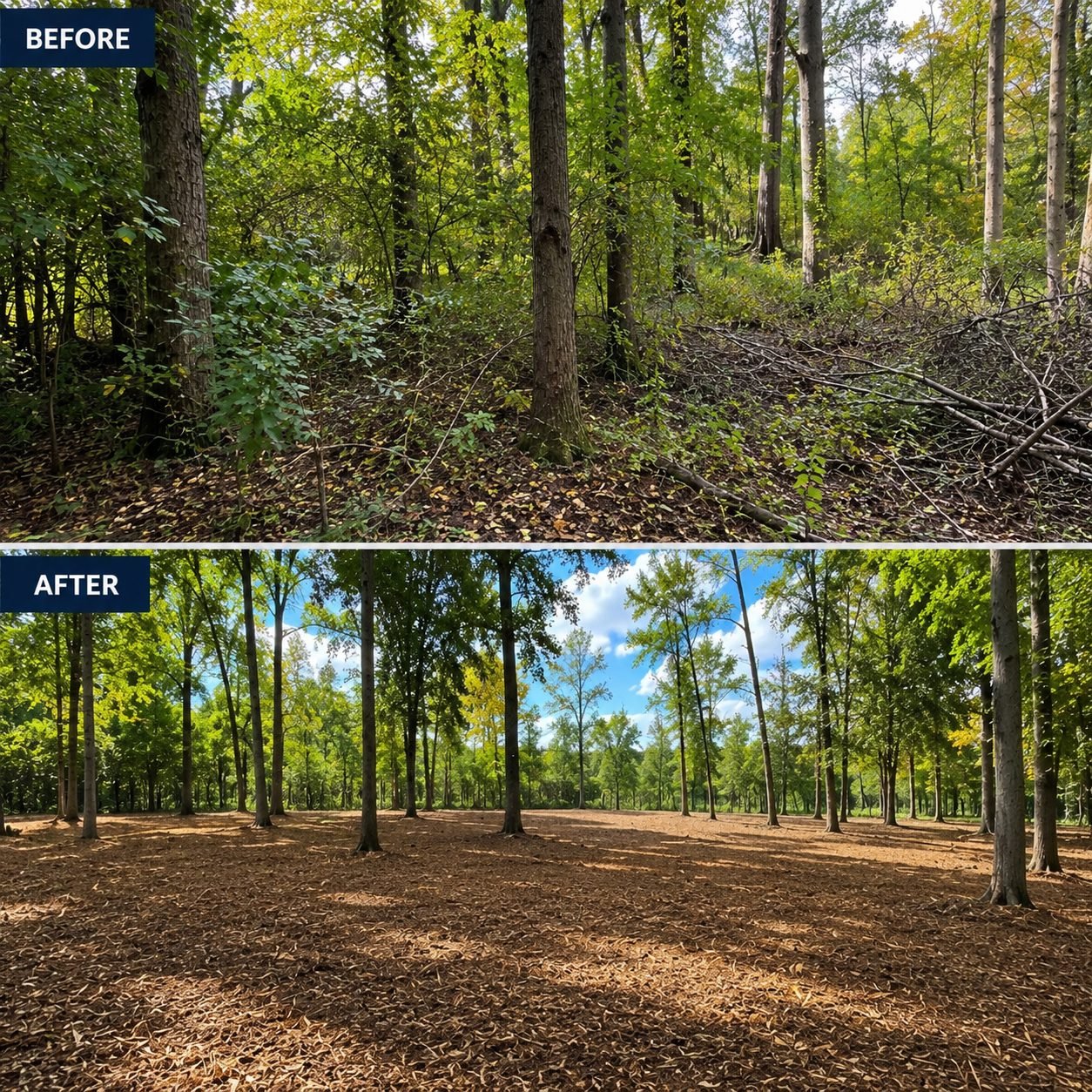
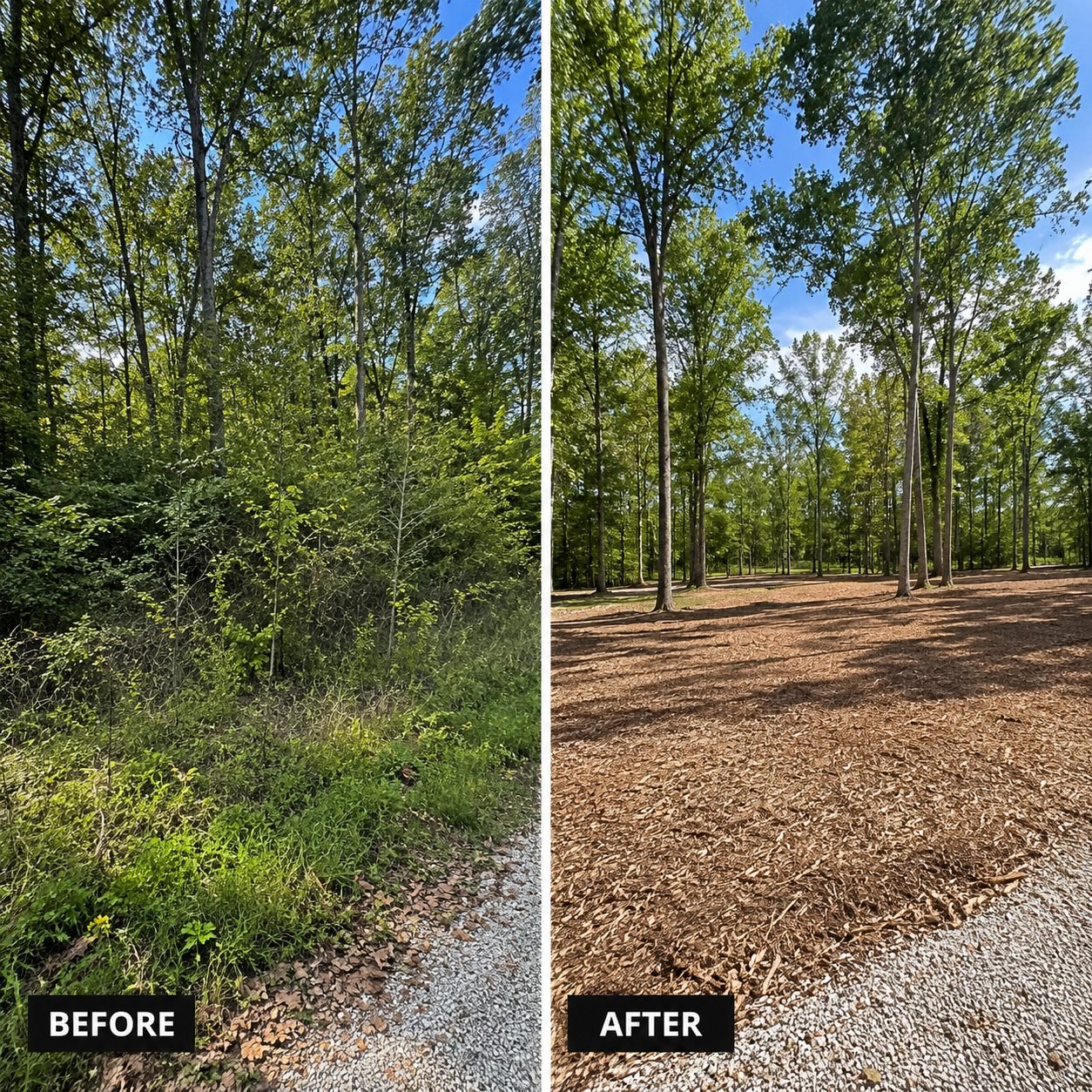
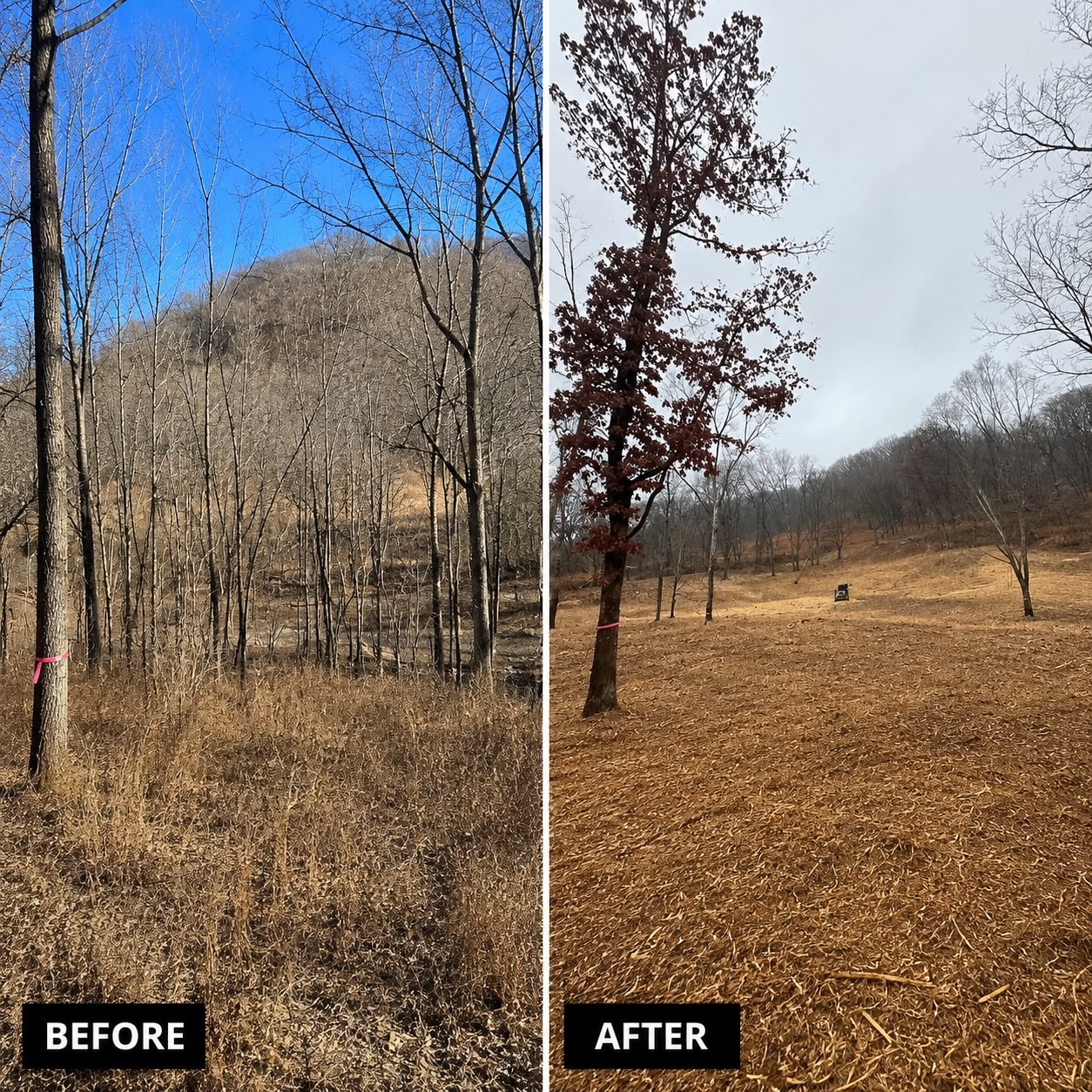
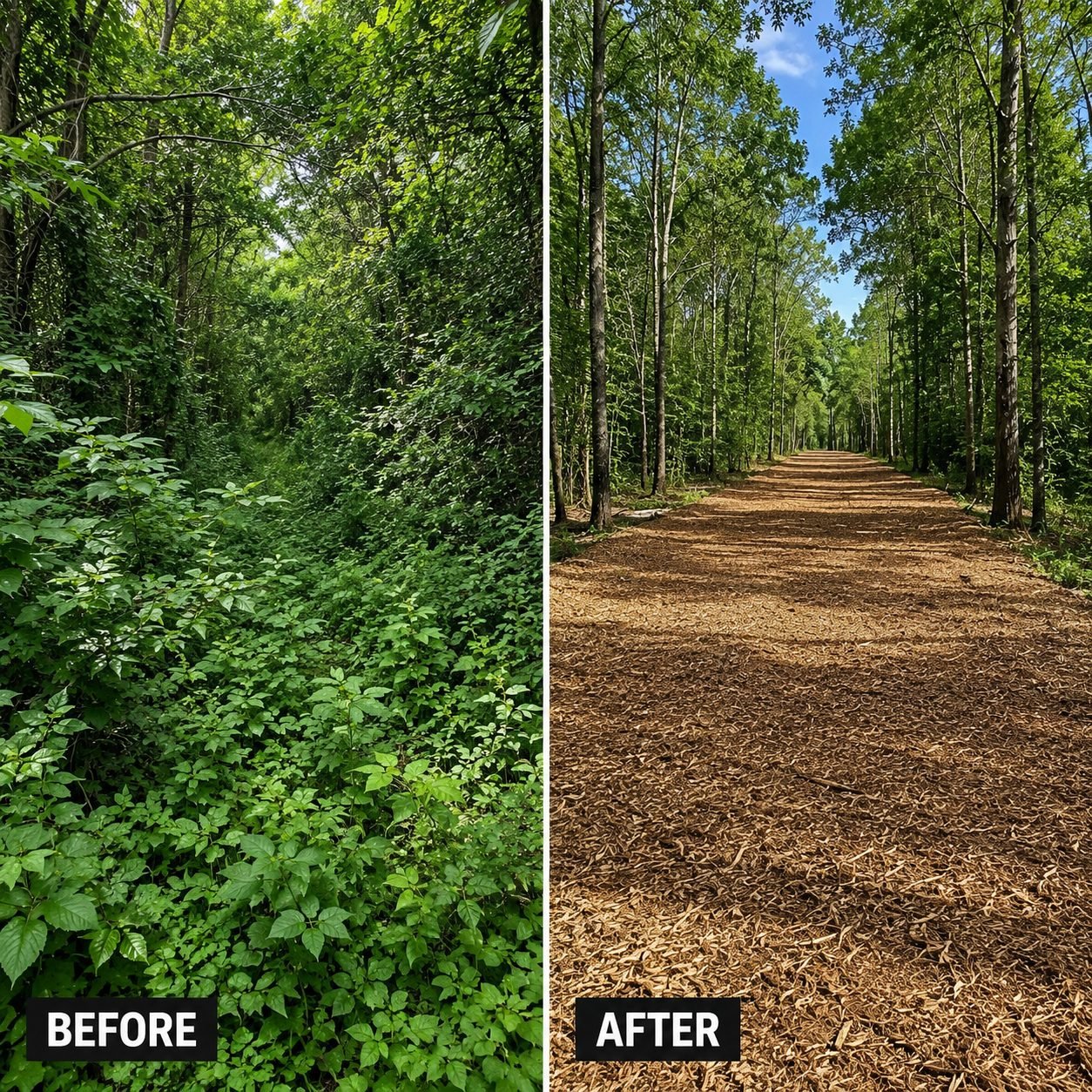
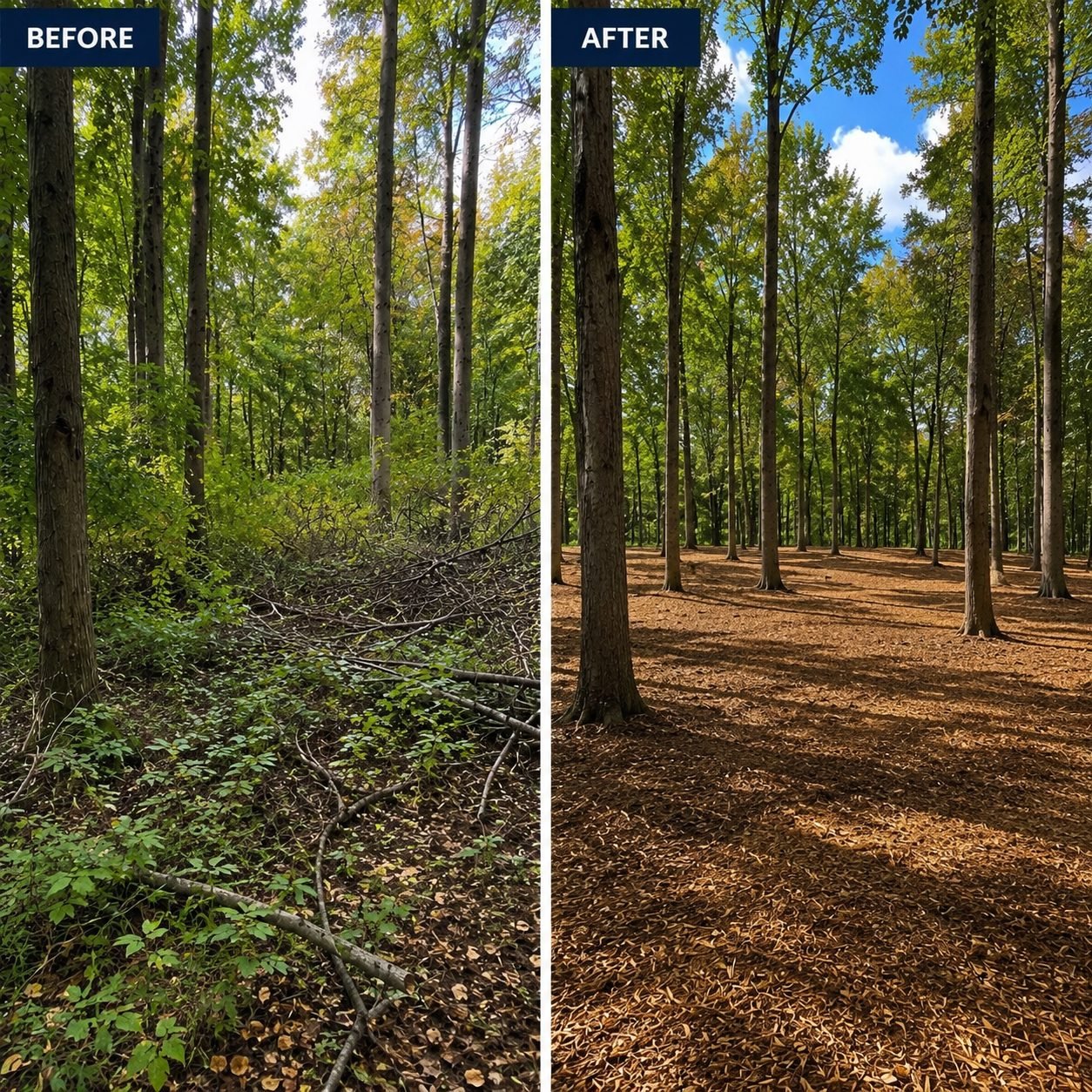
A useful Newark gallery should show a wooded or brush-covered parcel before work, then the same site after clearing land to build, rough grading, and debris removal. The best examples are urban-lot and rural-fringe views, because Newark jobs often shift between tight city access and larger county-seat acreage.
Frequently asked questions
During business hours, the team responds in 2 to 3 hours, and same-week walk-throughs are available. That matters in Newark because buyers often need a fast answer on an older lot, a rural parcel, or a site near the city core before the builder schedules excavation. The quote is flat-rate after the walk-through.
Yes. Ohio Revised Code 3781.28 requires an Ohio 811 utility locate at least 48 hours before digging. Fortress builds that step into the schedule before stump removal, grading, or excavation begins. That protects the site whether the parcel is near the historic courthouse square or on the rural fringe outside Newark.
Yes, as long as the work scope fits the site and the utility locate is complete. Wooded ground near low areas can require careful machine placement, drainage awareness, and more grading after clearing. Fortress uses mulchers, dozers, and excavators to prepare the site without turning the lot into a mud problem.
For acreage near Heath, Granville, Hanover, or Hebron, the John Deere 333G with Diamond drum mulcher is efficient for brush and stems up to 14 inches, while dozers and excavators handle stumps, push-out, and rough grade. That mix fits Newark’s county-seat pattern of urban lots and outer-parcel clearing.
If the builder has a footprint, the access is workable, and the site can support machines, the lot is usually ready for a quote. Fortress checks tree density, clay conditions, drainage, and any utility concerns during the on-site walk-through. That is the fastest way to see if clearing can start this week.
Because Newark has no named neighborhoods and instead mixes urban lots, older residential parcels, and rural ground, the clearing plan changes quickly from one site to the next. Tight access, clay-heavy soil, and the amount of vegetation all affect time and cost, which is why Fortress quotes each job after seeing the parcel.
Land Clearing For New Construction Near Newark
What Other Services Does Fortress Offer in Central Ohio?
Fortress Level Construction runs a full range of land-clearing, excavation, grading, and site-work services across Central Ohio, so one owner-operated crew can clear, grade, and prep a site end to end.
Get a Flat-Rate Quote from Lee Carson
Owner-operated land clearing across all five Central Ohio counties. Send your property details and Lee gets back to you within 2 to 3 hours during business hours with one flat number after a free on-site walk-through.