
How does lot clearing work in Etna, Ohio?
In Etna, lot clearing means preparing large former-farmland parcels along the I-70 logistics corridor for warehouses, industrial yards, or newer homes, while working clay-heavy glacial till and wooded ground. Fortress Level Construction uses a crew-led process with mulching, dozing, and excavation, then gives a free on-site walk-through and flat-rate quote.
The Quick Answer
- Etna lot clearing centers on former farmland, warehouse pads, and industrial parcels along the I-70 corridor.
- Fortress matches the method to the site, using mulching for lighter clearing and dozers or excavators for heavier removals.
- Clay-heavy glacial till can slow production and increase cleanup, so the crew plans access, staging, and drainage early.
- Large distribution and fulfillment sites near US-40 and Blacklick Creek often need wide open work zones, not small-yard cleanup.
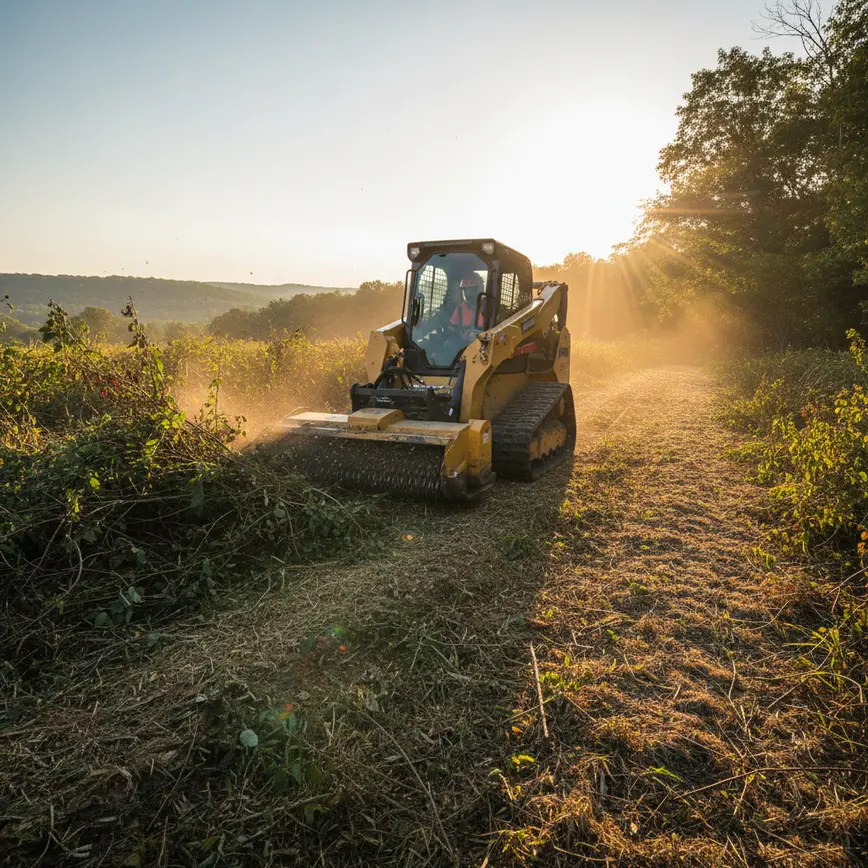
- Forestry mulching with John Deere 333G compact track loaders and Diamond drum mulchers can clear stems up to 14 inches.
- Full clearing costs more because it includes grubbing, piling or hauling debris, and grading for construction readiness.
- Ohio 811 locate marking is required at least 48 hours before digging under Ohio Revised Code 3781.28.
- Fortress gives flat-rate quotes after a free on-site walk-through and responds in 2 to 3 hours during business hours.
Related Questions People Ask Next
Etna is shaped by the I-70 logistics corridor, major distribution and warehouse hubs, and large parcels cut from former farmland. That means lot clearing often involves broad industrial pads, access lanes, and staged equipment movement, not just a brushy residential edge. Fortress sizes the plan to the parcel, soil, and build schedule.
The crew uses John Deere 333G compact track loaders with Diamond drum mulchers for stems up to 14 inches, plus dozers and excavators when the site needs grubbing, piling, or grading. On Etna ground, that matters because clay-heavy glacial till and large open parcels around Blacklick Creek can require more push and cleanup than light brush work.
Those parcels are often larger, flatter, and tied to tight construction schedules. Fortress plans machine access, tree line removal, and debris handling so the pad, laydown area, or truck court is ready for the next contractor. In Etna, that usually means former farmland with a mix of wooded edges and compacted clay soil.
A good quote depends on acreage, tree density, whether roots must be removed, and whether the finish needs to be construction-ready. Fortress provides a free on-site walk-through and flat-rate quote after seeing the parcel in person. For any digging, Ohio 811 must be marked at least 48 hours ahead of work.
What does lot clearing usually include on an Etna parcel?
Lot clearing in Etna usually means removing trees, brush, stumps, and leftover farm growth from large commercial or residential tracts, then shaping the ground for the next phase. On clay-heavy glacial till, Fortress often stages mulching first, then uses dozers or excavators where the old farmland needs grading, root removal, or wider access for construction equipment.
That approach fits Etna’s village and rural character, where the work is often on big parcels carved from former farmland near the old National Road, Blacklick Creek, and the I-70 warehouse corridor. A smaller yard cleanup would not be enough for a fulfillment center pad or an industrial building lot.
For a flat-rate quote, the crew looks at acreage, wooded sections, drainage, and whether the site needs forestry mulching or full clearing. Forestry mulching is usually the lower-cost path, often in the $1,850 to $3,500 per acre range, while full clearing can land in the $4,000 to $8,000 per acre range depending on what must be removed.
How does Fortress clears large lots in Etna’s warehouse zone?
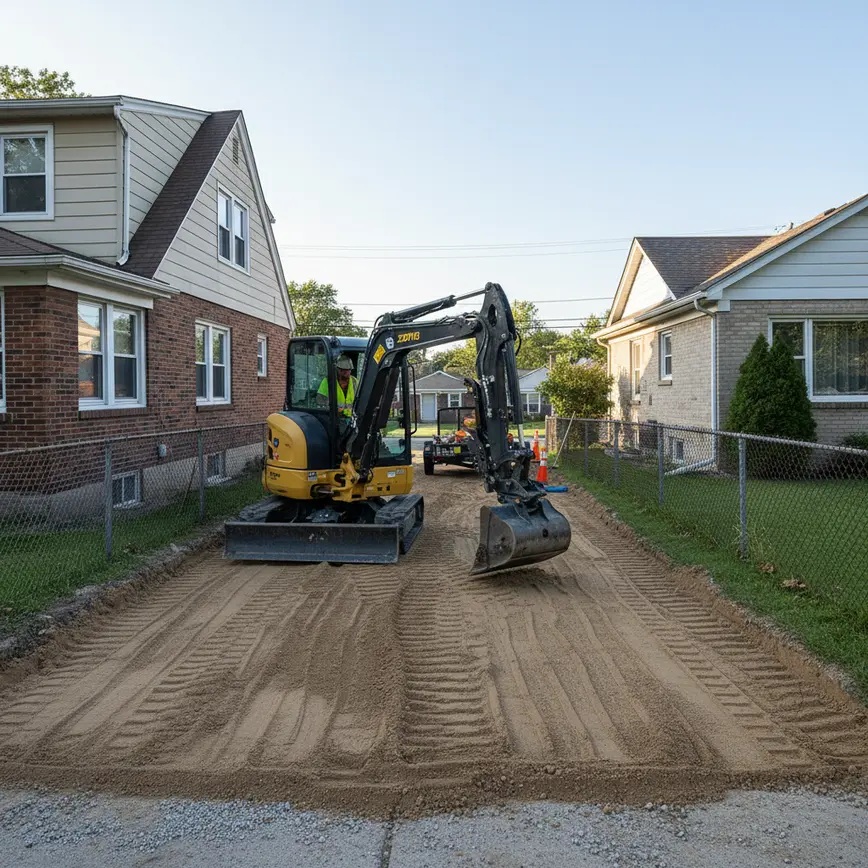
For large Etna sites, Fortress starts with a walk-through, then maps access, spoil areas, and utility locate requirements before any machine enters the parcel. The crew uses John Deere 333G compact track loaders with Diamond drum mulchers for rapid vegetation removal, then brings in dozers or excavators when industrial lots need heavier opening and grading.
That process fits the big distribution and warehouse hub near US-40 and Blacklick Creek, where former farmland often has wide tree lines, fence rows, and rough edges from years of rural use. The team works to clear enough ground for trucks, pads, and staging without wasting time on unnecessary demolition.
Because Etna sits near the Intel and New Albany growth zone and is only about 30 minutes from the Westerville base, Fortress can move quickly on site visits and schedule same-week walk-throughs. For digging work, Ohio 811 must be called and marked at least 48 hours in advance under Ohio Revised Code 3781.28.
What affects lot clearing cost on Etna farmland-to-build sites?
Cost in Etna depends on acreage, tree size, root mass, soil conditions, and whether the parcel only needs mulching or complete clearing. Clay-heavy glacial till slows excavation, while wooded ground and old fence lines add time. Fortress keeps pricing flat-rate after a site visit, so the quote reflects the actual lot, not a guess.
Former farmland along the I-70 corridor can look simple from the road, but hidden conditions change the price fast: thick stems, soft pockets near Blacklick Creek, or compacted clay that resists grading. Full clearing costs more because the crew may need to pull stumps, haul debris, and leave the lot ready for the next contractor.
For many Etna owners, forestry mulching is the cost-conscious option when the goal is to open visibility, remove brush, and control regrowth before construction decisions are final. When the site must be completely opened for a warehouse shell or a new subdivision lot, full clearing is the better fit despite the higher range.
Why is Etna lot clearing tied so closely to industrial expansion?
Etna’s clearing work is shaped by warehouse growth, the old National Road, and the long stretch of development along I-70. That means lot clearing is often the first step before grading, utilities, or foundation work on former farmland. Fortress plans around large footprints, truck access, and the need to finish cleanly before construction starts.
The village center is small, but Etna Township includes broad commercial and industrial parcels that need more than brush mowing. The crew sees a mix of new residential subdivisions and major fulfillment centers, so the clearing method changes from lot to lot. Some sites need selective mulching, while others need complete tree and stump removal.
Nearby Pataskala, Reynoldsburg, Kirkersville, and Pickerington can all influence scheduling and access, but the actual Etna job is usually defined by big open ground and clay-heavy soils. Fortress handles that with machine-led clearing instead of hand labor, which is the wrong tool for a logistics corridor parcel.
Which lot clearing method fits an Etna site?
Etna parcels vary from wooded farm edges to large industrial pads, so the right method depends on what the lot must become next. Fortress compares mulching, full clearing, and hybrid clearing based on acreage, soil, and construction timing, then recommends the option that matches the site rather than forcing one method everywhere.
| Method | Best fit in Etna | Typical outcome | Cost signal |
|---|---|---|---|
| Forestry mulching | Brushy former farmland, tree lines, and visibility clearing near I-70 | Vegetation reduced in place with fewer haul-off needs | $1,850 to $3,500 per acre |
| Full clearing | Warehouse pads, industrial lots, and sites that need complete open ground | Trees, stumps, and debris removed for construction readiness | $4,000 to $8,000 per acre |
| Hybrid clearing | Residential subdivisions or mixed lots with wooded edges and open sections | Selective removal with cleaner access and reduced waste | Quote depends on acreage and density |
| Dozer-assisted clearing | Heavy clay or rough former farmland that needs reshaping | Stronger grading and push work before final cleanup | Usually used when the site needs more than mulching |
| Excavator clearing | Stumps, roots, culverts, or tight edge work near drainage | Detailed removal and controlled digging | Used when the parcel needs deeper disturbance control |
When is lot clearing not the right call in Etna?
Lot clearing is not the right first step if the site is only overgrown grass, if the work is limited to light mowing, or if you still need survey, zoning, or utility decisions before disturbing soil. In Etna, the team may recommend a lighter cut, a phased plan, or a locate-first schedule instead.
If the parcel is a small residential lot with only seasonal growth, a full clearing package is often unnecessary. In that case, the smarter move is to hold off until you know whether the final plan needs mulch clearing, selective removal, or a utility-safe excavation layout. Etna’s clay soil and large-site profile make overdoing the scope expensive.
If the ground will be disturbed, Ohio 811 marking is required at least 48 hours before digging. Fortress can still provide a free on-site walk-through and a flat-rate quote, but the crew may advise waiting until the locate ticket, property boundaries, or construction plan are ready.
What should Etna lot clearing look like before and after?
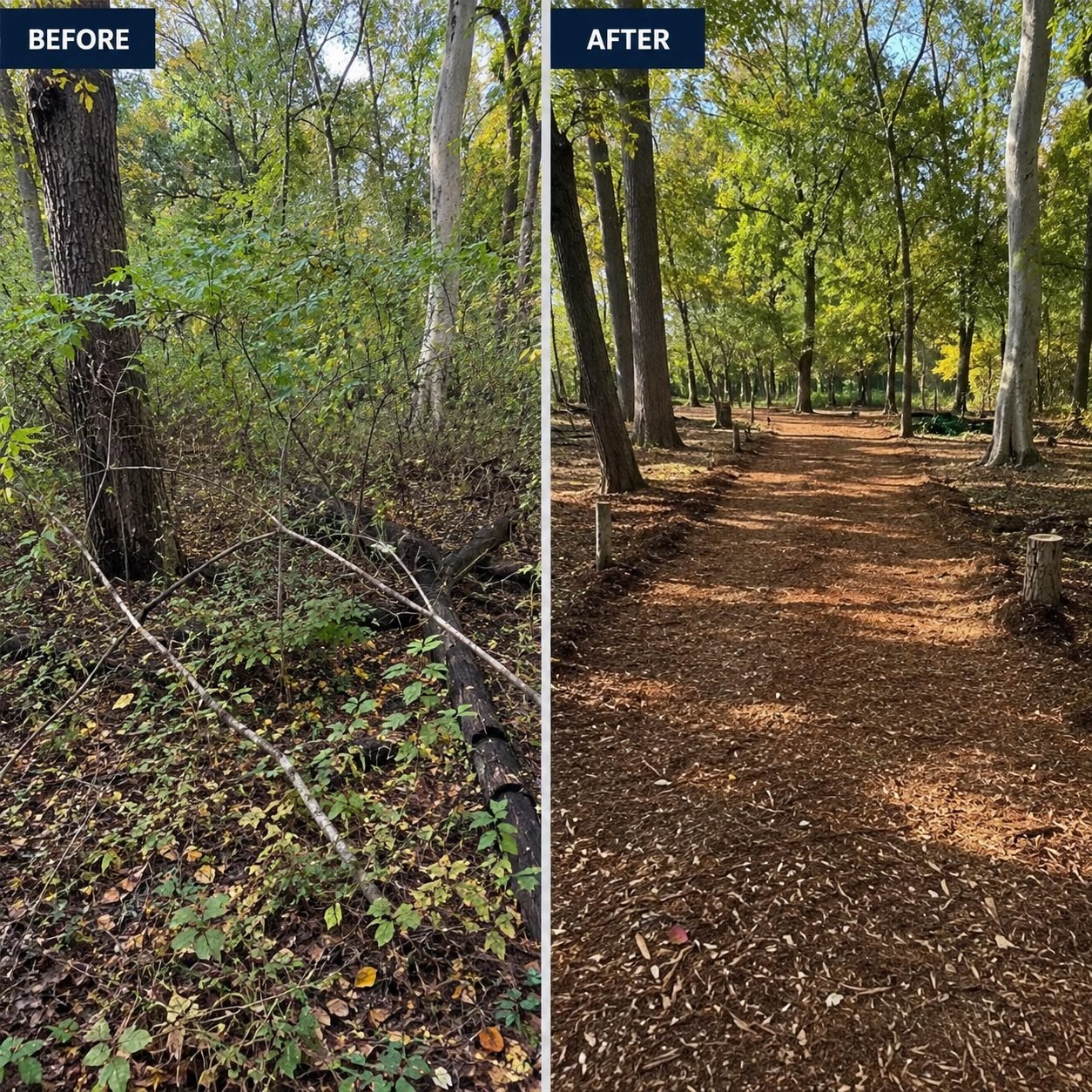
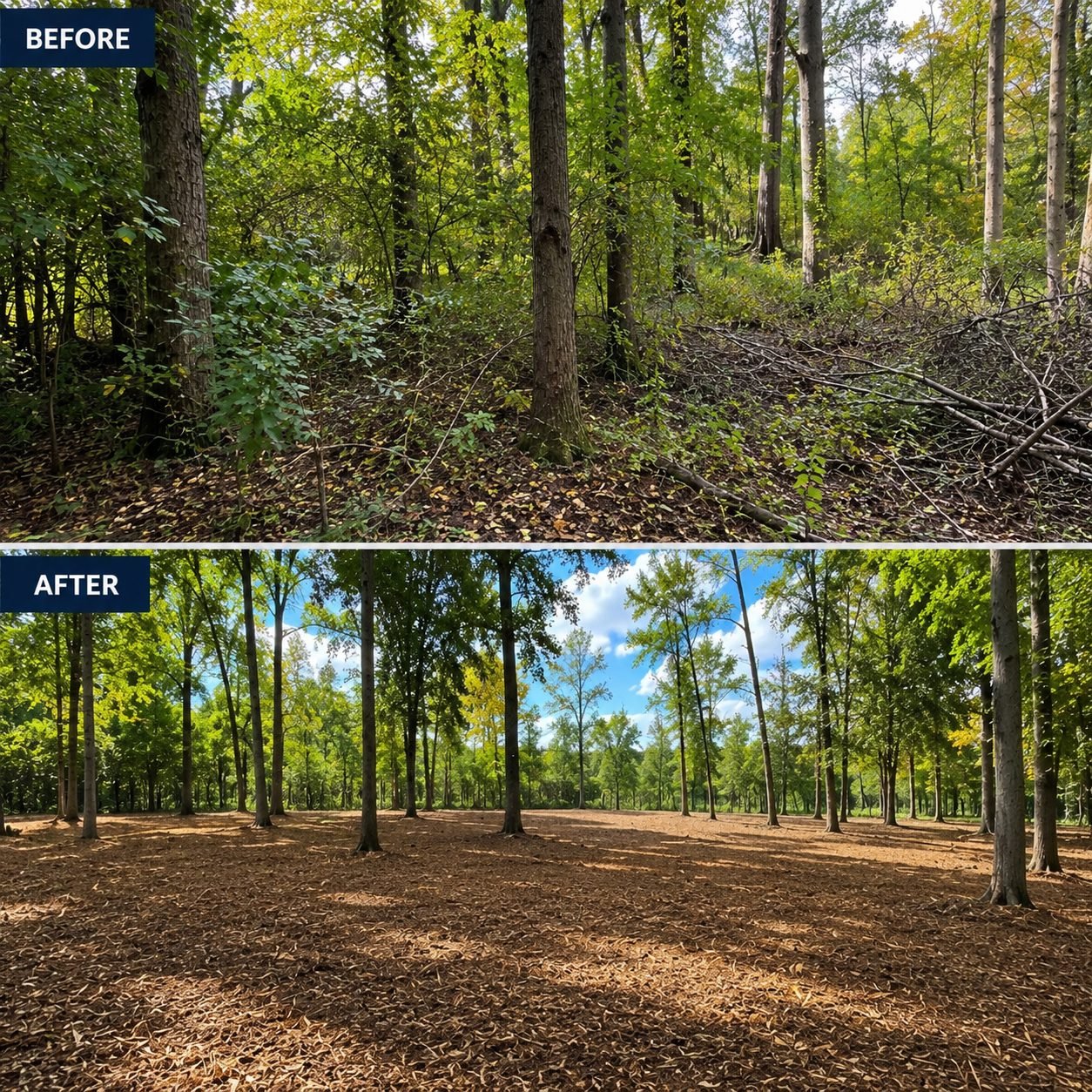
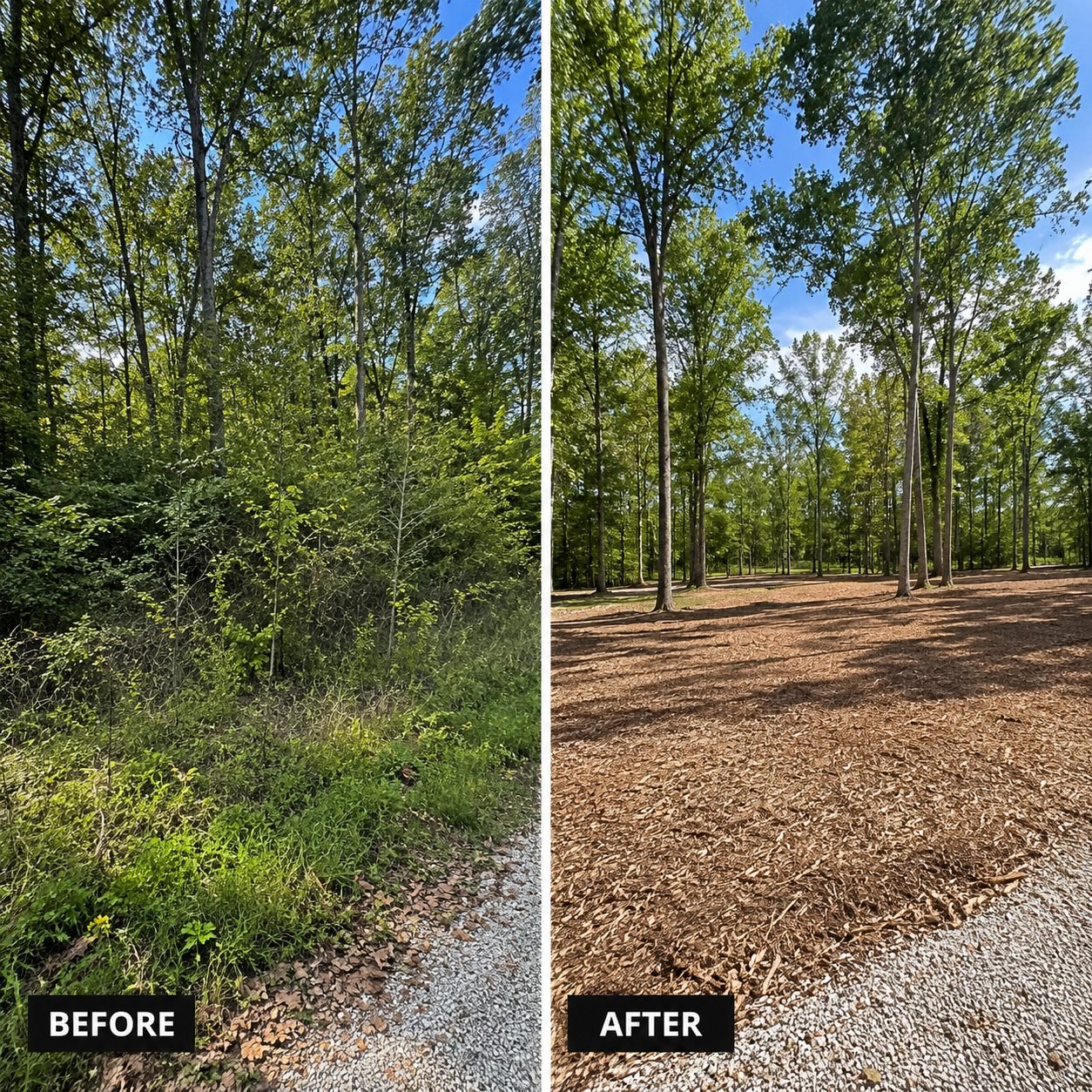
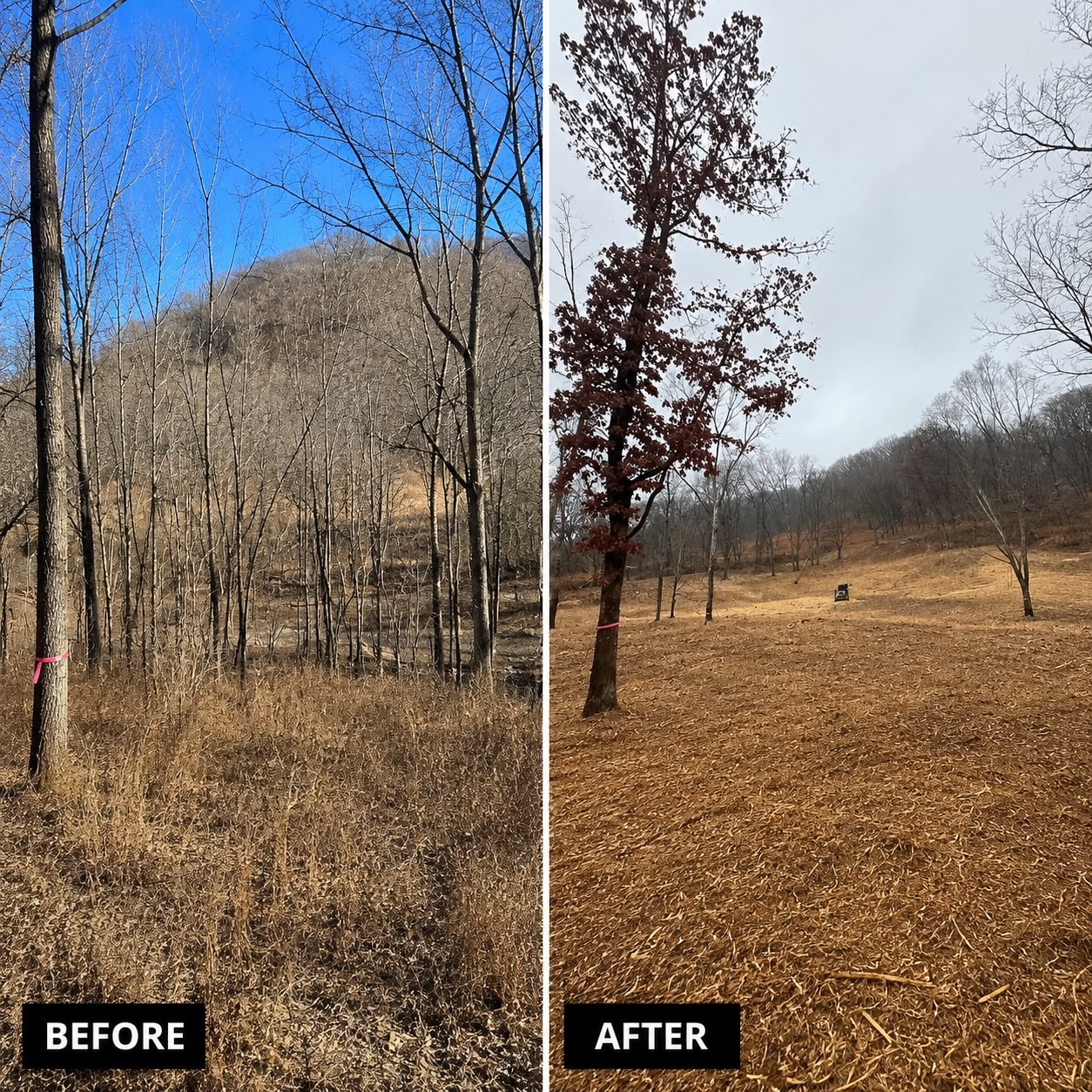
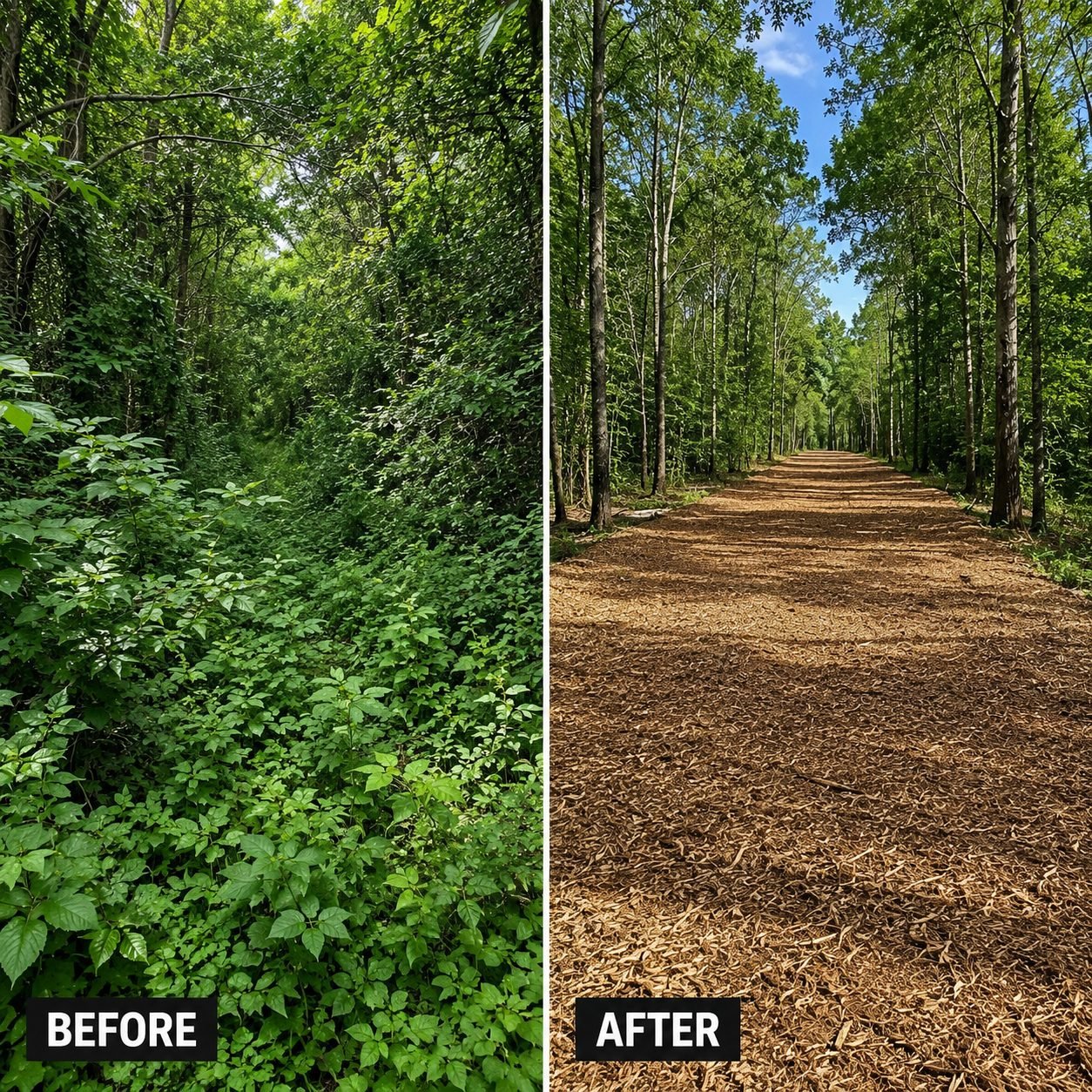
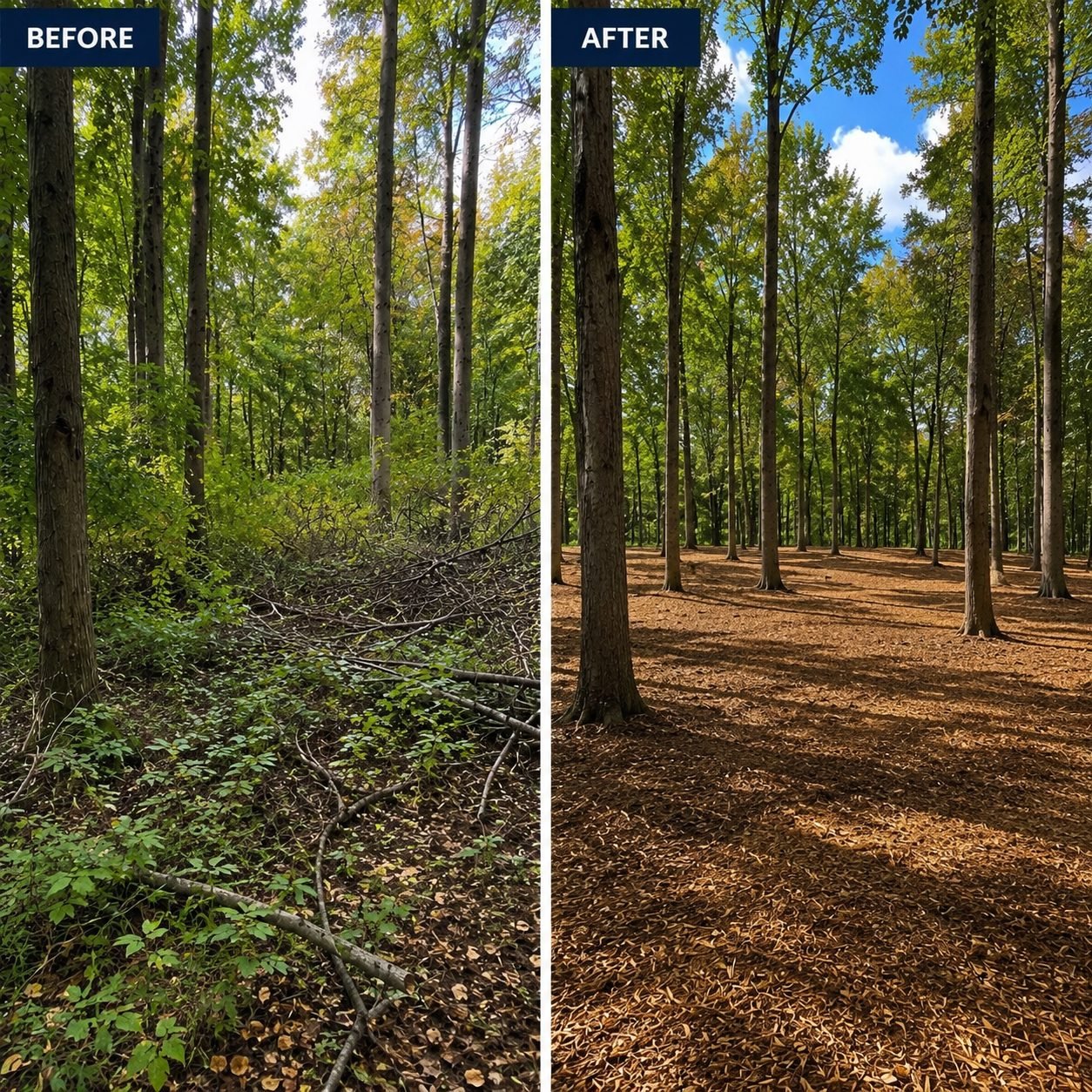
Before in Etna, a lot often shows former farmland growth, brushy edges, tree lines, or scattered stumps on clay-heavy glacial till near the I-70 corridor. After, the parcel should be open, graded as needed, and ready for warehouse, industrial, or residential follow-on work without hidden debris slowing the next contractor.
Frequently asked questions
During business hours, the team usually responds in 2 to 3 hours, and same-week walk-throughs are available. That matters in Etna because warehouse and industrial schedules move quickly, especially on former farmland near I-70 and US-40. The estimate is flat-rate after the site visit, so the quote reflects the actual parcel conditions.
No. Many Etna parcels only need forestry mulching, especially when the goal is to open access, remove brush, or clean up wooded edges without fully disturbing the ground. Full clearing is better when the lot must be construction-ready for a warehouse, industrial building, or new subdivision lot.
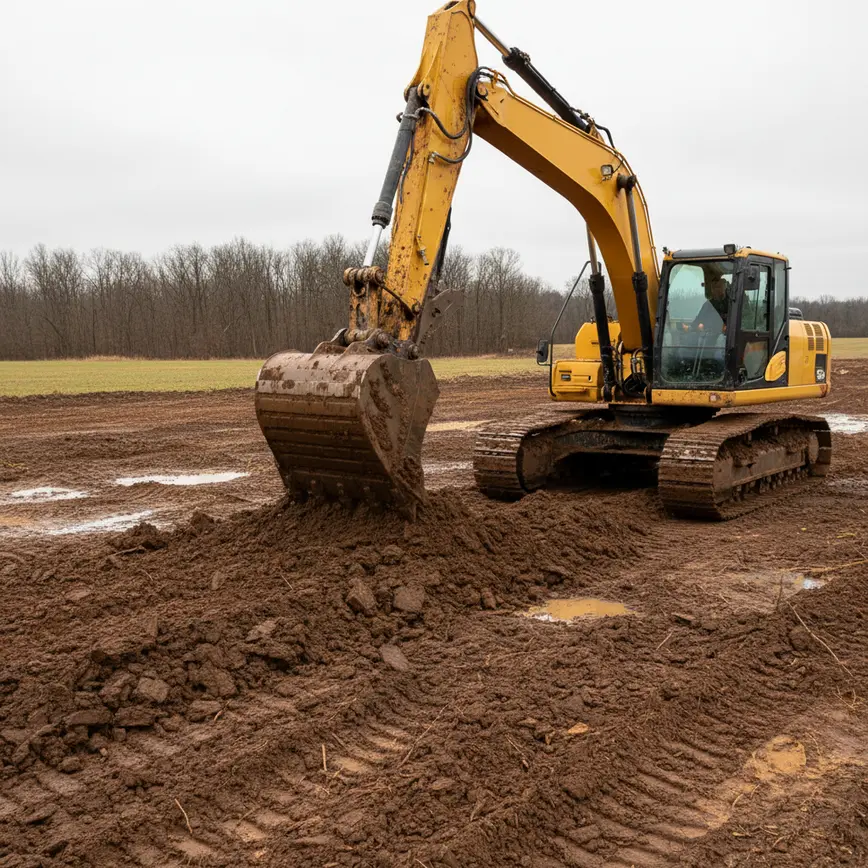
Clay-heavy glacial till can hold moisture, resist grading, and make stump removal harder. In Etna, that affects both machine choice and production speed. Fortress may start with mulching and then switch to dozers or excavators if the site needs deeper root work, cleanup, or shaping for the next phase.
Yes. Large commercial and industrial parcels are a core part of Etna work because the area is built around the logistics corridor and major warehouse growth. The crew handles former farmland, wooded edges, and open acreage with compact track loaders, mulchers, dozers, and excavators sized to the job.
Call for Ohio 811 utility marking at least 48 hours before digging, as required by Ohio Revised Code 3781.28. That step matters on Etna sites because older farmland, new subdivisions, and industrial parcels can all have buried utilities, drainage, or laterals that are not obvious from the surface.
Lot clearing can include tree removal, stump work, debris handling, and grading for construction readiness. Brush cutting is lighter and usually leaves more behind. In Etna, the difference is important because many parcels are large former-farm sites or industrial pads where the next contractor needs open, usable ground rather than a quick trim.
Lot Clearing Near Etna
What Other Services Does Fortress Offer in Central Ohio?
Fortress Level Construction runs a full range of land-clearing, excavation, grading, and site-work services across Central Ohio, so one owner-operated crew can clear, grade, and prep a site end to end.
Get a Flat-Rate Quote from Lee Carson
Owner-operated land clearing across all five Central Ohio counties. Send your property details and Lee gets back to you within 2 to 3 hours during business hours with one flat number after a free on-site walk-through.