
Need Site Clearing in Baltimore, Ohio?
Yes. Fortress Level Construction provides site clearing in Baltimore, Ohio, where village lots, surrounding farmland, and edge parcels call for different approaches. The crew handles brush, trees, and overgrowth with compact track loaders, mulchers, dozers, and excavators, then gives a flat-rate quote after a free on-site walk-through.
The Quick Answer
- Site clearing in Baltimore, Ohio has to fit a small village with no named neighborhoods, plus farmland edges and larger parcels on the perimeter.
- Fortress gives free on-site walk-throughs and flat-rate quotes before work starts, so you can compare village lot clearing with larger acre-by-acre clearing.
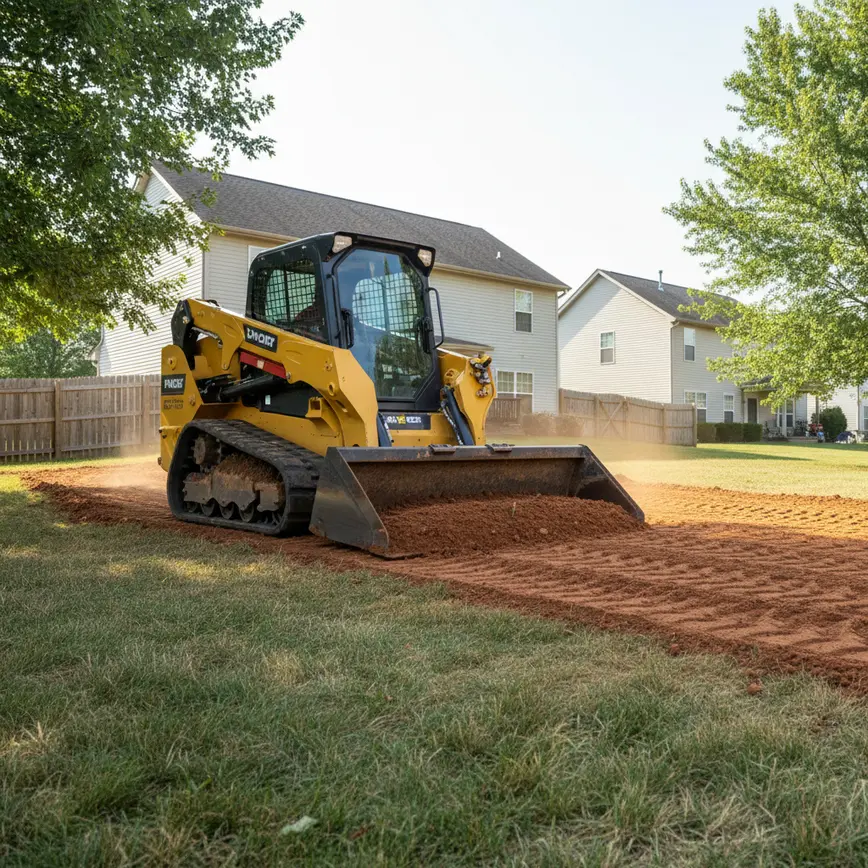
- The crew uses John Deere 333G compact track loaders with Diamond drum mulchers, plus dozers and excavators, depending on brush density and final grade needs.
- Forestry mulching often runs $1,850 to $3,500 per acre, while full clearing is usually $4,000 to $8,000 per acre, based on density, access, and disposal.
- Baltimore access along US-33 helps the team move equipment to sites near the historic small-town center, the Liberty Union-Thurston school community, and rural edges.
- Clay uplands and fertile Hocking River-valley farmland to the south affect how roots, wet spots, and grading are handled during clearing.
- Ohio law requires an Ohio 811 utility locate at least 48 hours before digging, which applies to posts, stumps, trenches, and grading cut lines.
- Fortress is licensed and insured, and the team responds in 2 to 3 hours during business hours with same-week walk-throughs.
Related Questions People Ask Next
In Baltimore, site clearing usually means removing brush, saplings, small trees, and heavy overgrowth from village lots or farmland edges, then preparing the surface for construction access, grading, or drainage work. Fortress matches the method to the parcel, using mulching for lighter clearing or dozers and excavators when stumps, larger stems, and cleanup are part of the scope.
Baltimore combines clay uplands with fertile farmland to the south, so the crew plans around access, soft ground, and root systems differently from a flat suburban tract. On a small village lot, that may mean tighter equipment moves. On an edge parcel, it may mean staged clearing so the site stays workable and the final grade stays clean.
Cost shifts with density, acreage, access, and whether the job is forestry mulching or full clearing. A village lot near the historic center may be faster but tighter to access, while larger farmland-edge tracts can take more machine time. Fortress gives a flat-rate quote after the walk-through, so the scope is set before digging starts.
Fortress uses John Deere 333G compact track loaders with Diamond drum mulchers for stems up to 14 inches, which is useful on brushy edges and smaller clearing zones. For heavier site clearing, the crew brings dozers and excavators. That mix works well for Baltimore’s village lots, rural perimeters, and access along US-33.
How does site clearing work on Baltimore village lots?
On Baltimore village lots, site clearing starts with a free walk-through, because tight access around a small historic center needs a different plan than open ground. Fortress maps brush, trees, and utility conflicts, then chooses mulching, excavation, or full clearing based on the lot shape, soil, and final build use.
The crew checks how the lot ties into Baltimore’s rural character, nearby Fairfield roads, and access from US-33. On compact parcels, the John Deere 333G compact track loaders can work where larger machines would struggle, while dozers and excavators come in when stumps, rough debris, or a finished grade are part of the scope.
Baltimore’s clay uplands can hold moisture and make travel lines sensitive, so the team stages the work to limit rutting and keep the site build-ready. If the clearing is for a house, barn, or addition, Fortress prices the job as a flat-rate scope after the walk-through, not by guesswork.
What changes on Baltimore farmland-edge clearing jobs?
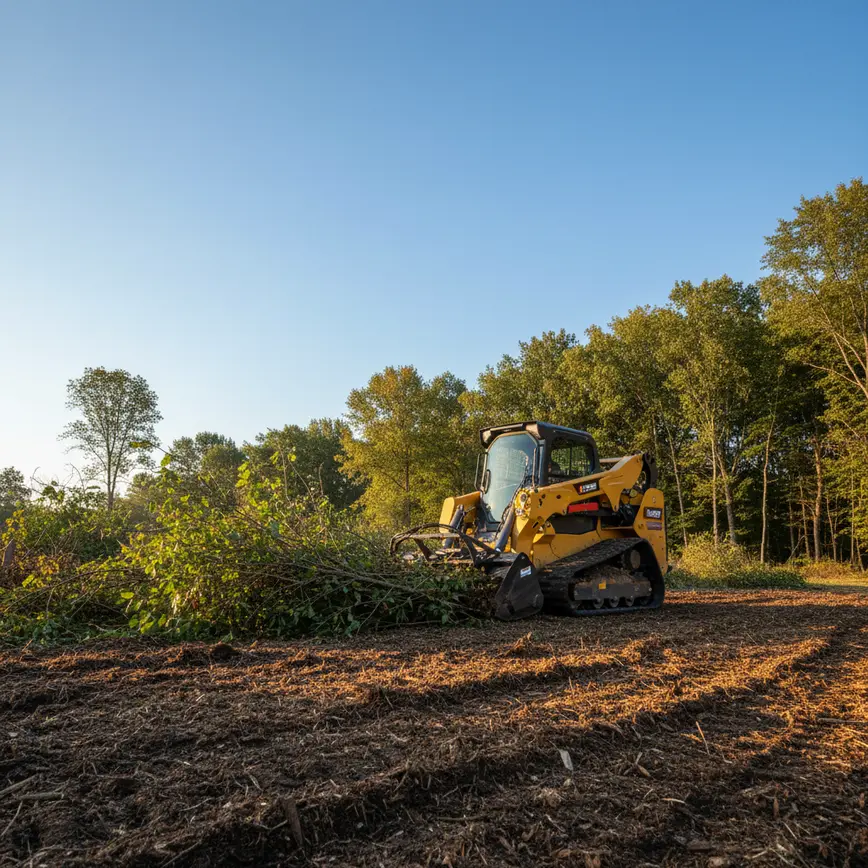
On the edges of Baltimore’s surrounding farmland, site clearing often covers larger runs of brush, volunteer trees, and old fence-line growth. Fortress uses mulchers for fast vegetation removal, then switches to dozers or excavators when stumps, uneven ground, or access lanes need more force and cleanup before construction.
Those edge parcels behave differently from village lots because the clearing may stretch into the fertile Hocking River-valley farmland to the south or into clay uplands that carry different drainage patterns. The crew plans machine access first, since a smooth route matters when moving loaders, mulchers, and haul-out equipment across longer fronts.
For Baltimore acreage, forestry mulching can be a cost-efficient option when the goal is to open ground without full root removal, often in the $1,850 to $3,500 per acre range. When the site needs total clearing, stump work, and rough grading, full clearing usually runs $4,000 to $8,000 per acre.
What equipment clears Baltimore sites fastest?
Fastest depends on the scope, but Baltimore jobs usually move with John Deere 333G compact track loaders and Diamond drum mulchers when the vegetation is thick but manageable. The mulchers can handle stems up to 14 inches, while dozers and excavators take over for stumps, push-out, and heavier ground preparation.
That equipment mix matters in Baltimore because some parcels are small enough for precise machine work, while others sit on farmland edges where speed counts. The crew can break a site into phases, clearing an entry lane first, then opening the full area, which is useful when access comes off US-33 or narrow village routes.
The machine choice also affects cost. Mulching can reduce hauling and disposal, while full clearing adds labor, fuel, and finish work. Fortress explains those differences during the free on-site walk-through so the quote reflects Baltimore conditions, not a generic rate sheet.

How do permits and utilities affect Baltimore clearing costs?
Before any digging in Baltimore, the crew schedules an Ohio 811 utility locate at least 48 hours ahead, as required by Ohio Revised Code 3781.28. That matters on village lots, edge parcels, and farm interfaces where buried lines may not be obvious, and it helps keep the project moving without avoidable delays.
If the clearing scope includes stumps, grading, or trench-ready prep, the utility locate is part of the planning, not an afterthought. Baltimore’s mix of small-town center lots and surrounding rural ground makes that step especially important, since line paths can vary from one parcel to the next even within the same area.
Permit needs can be modest or site-specific, and some projects may have a local fee in the $100 to $300 range depending on what follows clearing. Fortress builds those items into the walkthrough conversation so Baltimore property owners understand timing, access, and what must happen before the first bucket or mulcher tooth touches ground.
Which clearing method fits a Baltimore site?
Baltimore sites are not one-size-fits-all. A small village lot near the historic center may only need selective mulching, while a larger farmland-edge parcel may need full clearing and grading. Fortress compares access, stem size, soil, and finish goals during the walk-through, then quotes the method that fits the property.
| Method | Best Baltimore fit | Typical equipment | Cost pattern |
|---|---|---|---|
| Forestry mulching | Brushy village lots or edge parcels with lighter tree growth | John Deere 333G with Diamond drum mulcher | $1,850 to $3,500 per acre |
| Full clearing | Build sites needing stump removal and broad open ground | Dozers, excavators, loaders | $4,000 to $8,000 per acre |
| Selective clearing | Lots near the historic small-town center where trees are partly kept | Loader and hand-finished machine work | Quoted by scope |
| Access lane clearing | US-33-connected parcels or farm edges needing a work route first | Compact track loader and mulcher | Quoted by scope |
When is site clearing not the right first step in Baltimore?
Site clearing is not the first move when the land needs only mowing, brush trimming, or a simple inspection. In Baltimore, that can happen on a small village lot with minimal growth or on farmland where the goal is to preserve trees. Fortress will say so during the walk-through and steer you to the lighter option.
If the parcel is already open and only needs seasonal maintenance, full clearing would be unnecessary cost. Baltimore’s mix of village lots and rural edges means some jobs stop at selective vegetation removal, especially when the site sits near the school community or within a historic small-town setting where the owner wants to keep mature shade or boundary trees.
If the ground is too wet or the work requires utilities to be marked first, the crew may recommend waiting rather than forcing machine traffic. That is especially sensible on clay uplands and in low farmland areas south of town, where rutting or line damage can create bigger problems than the clearing itself.
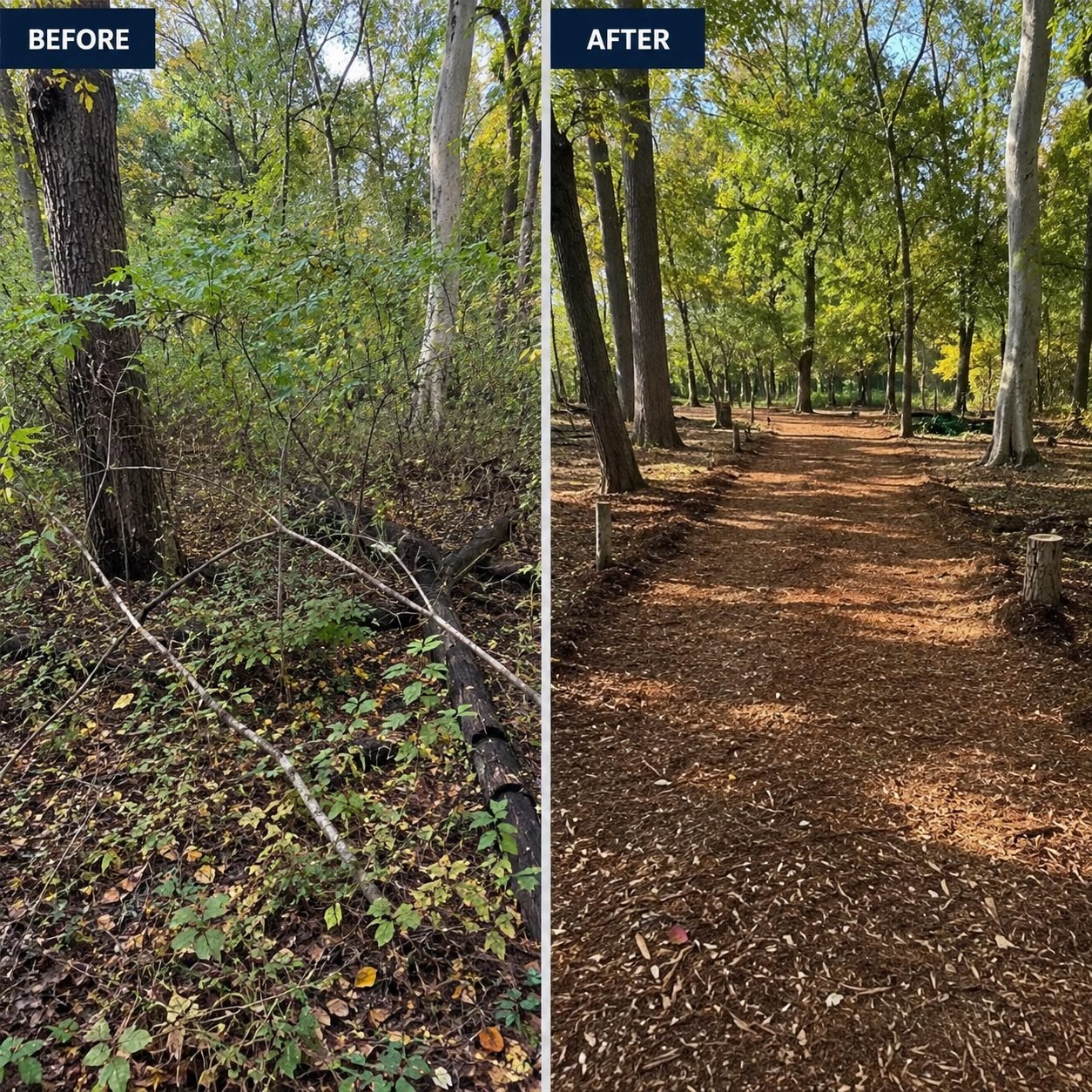
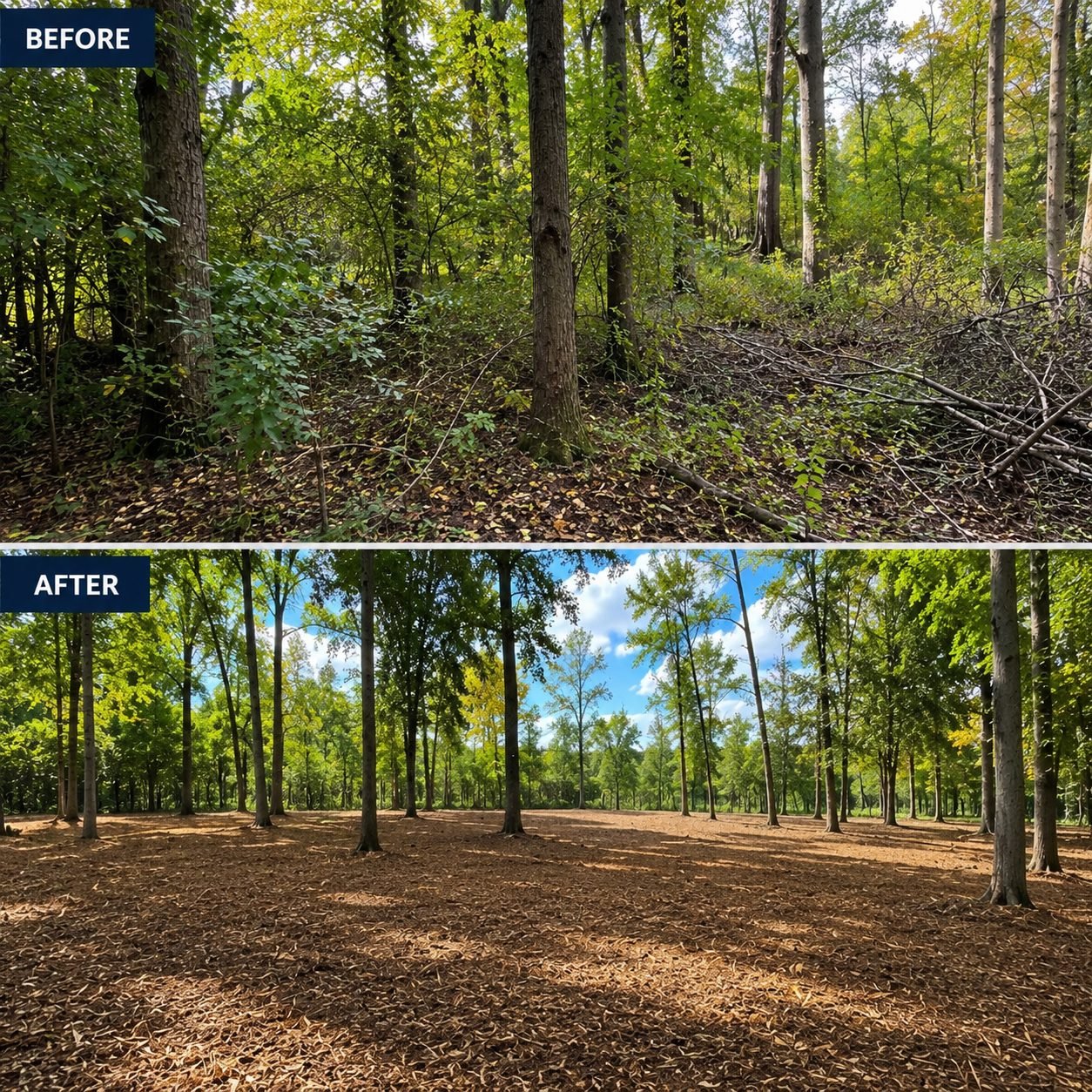
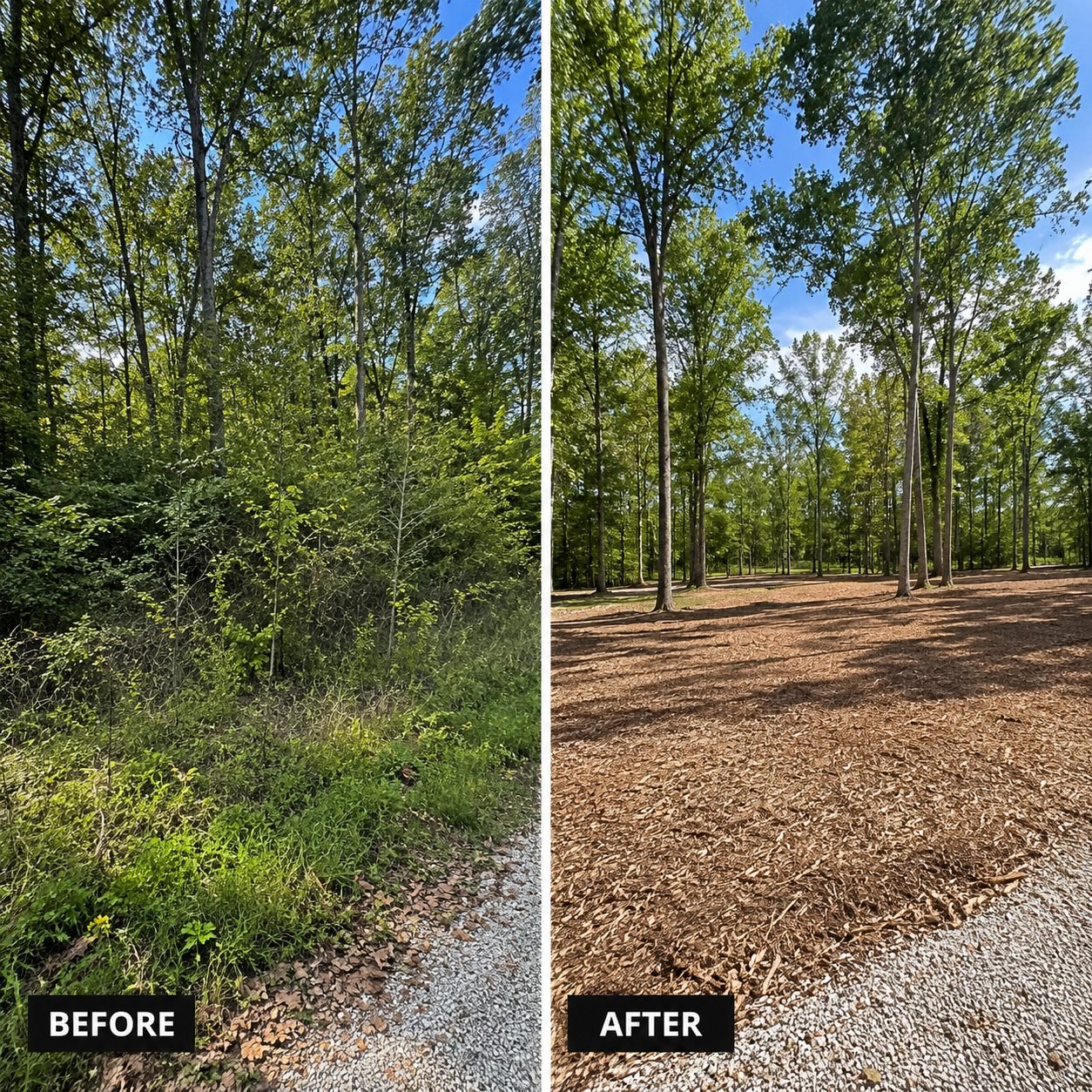
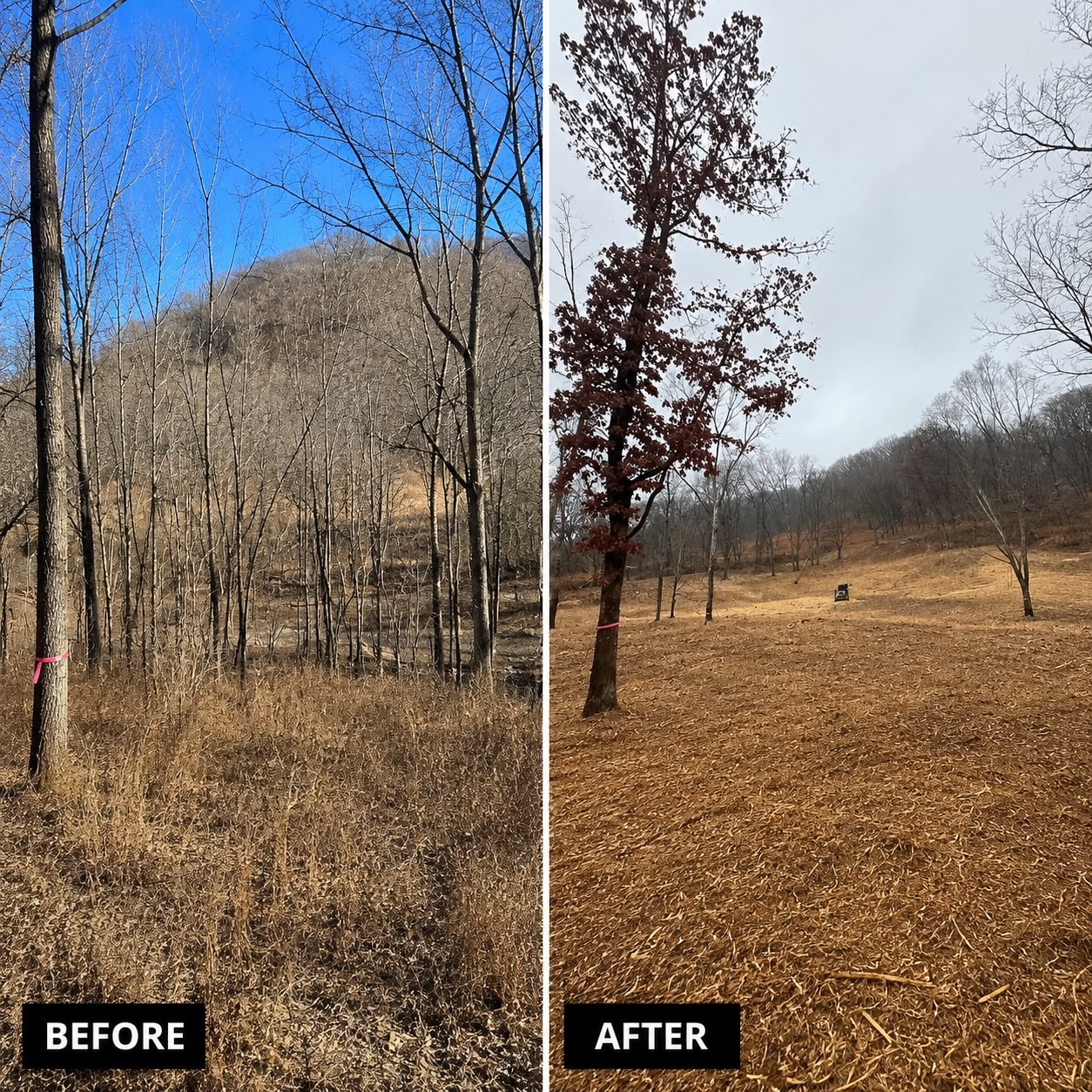
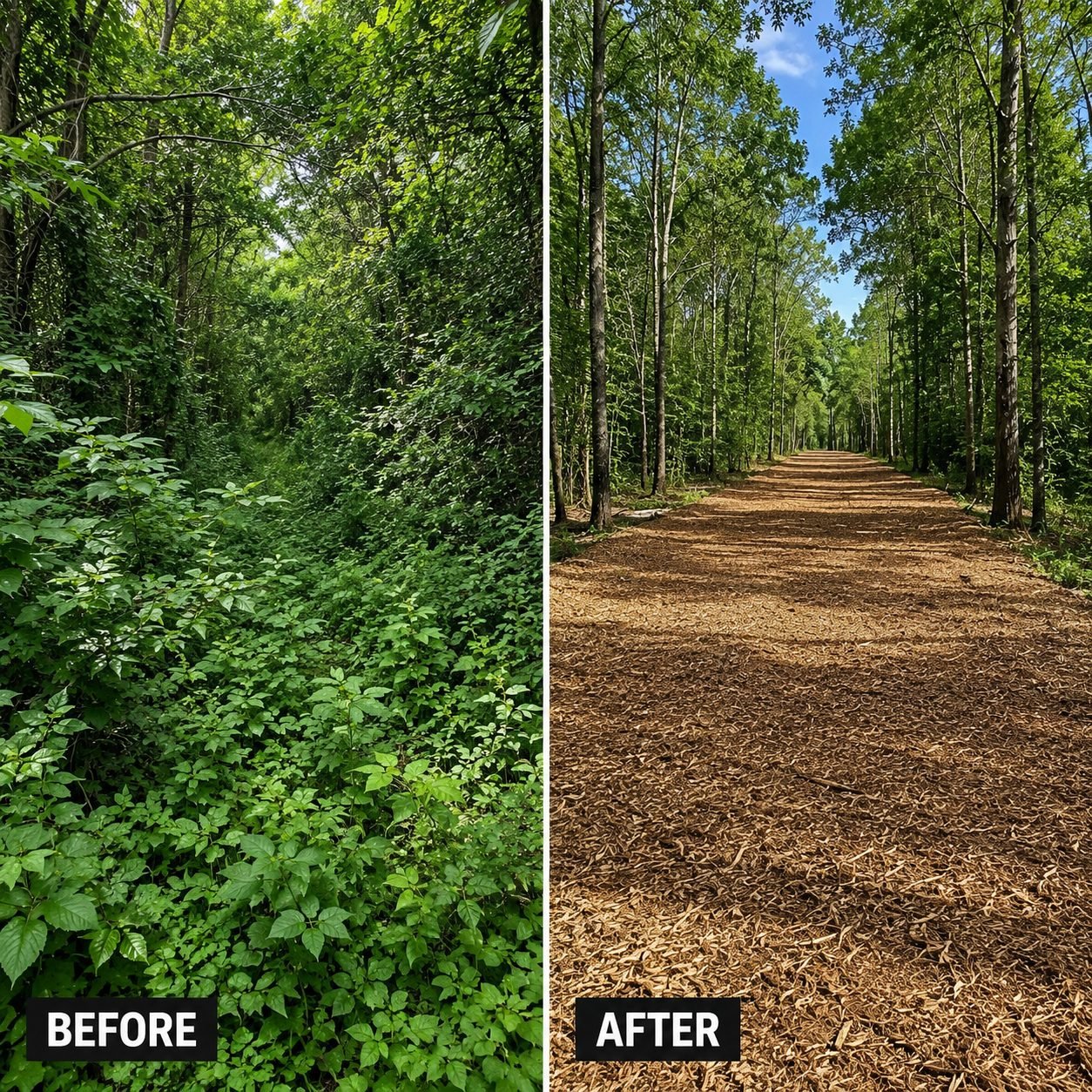
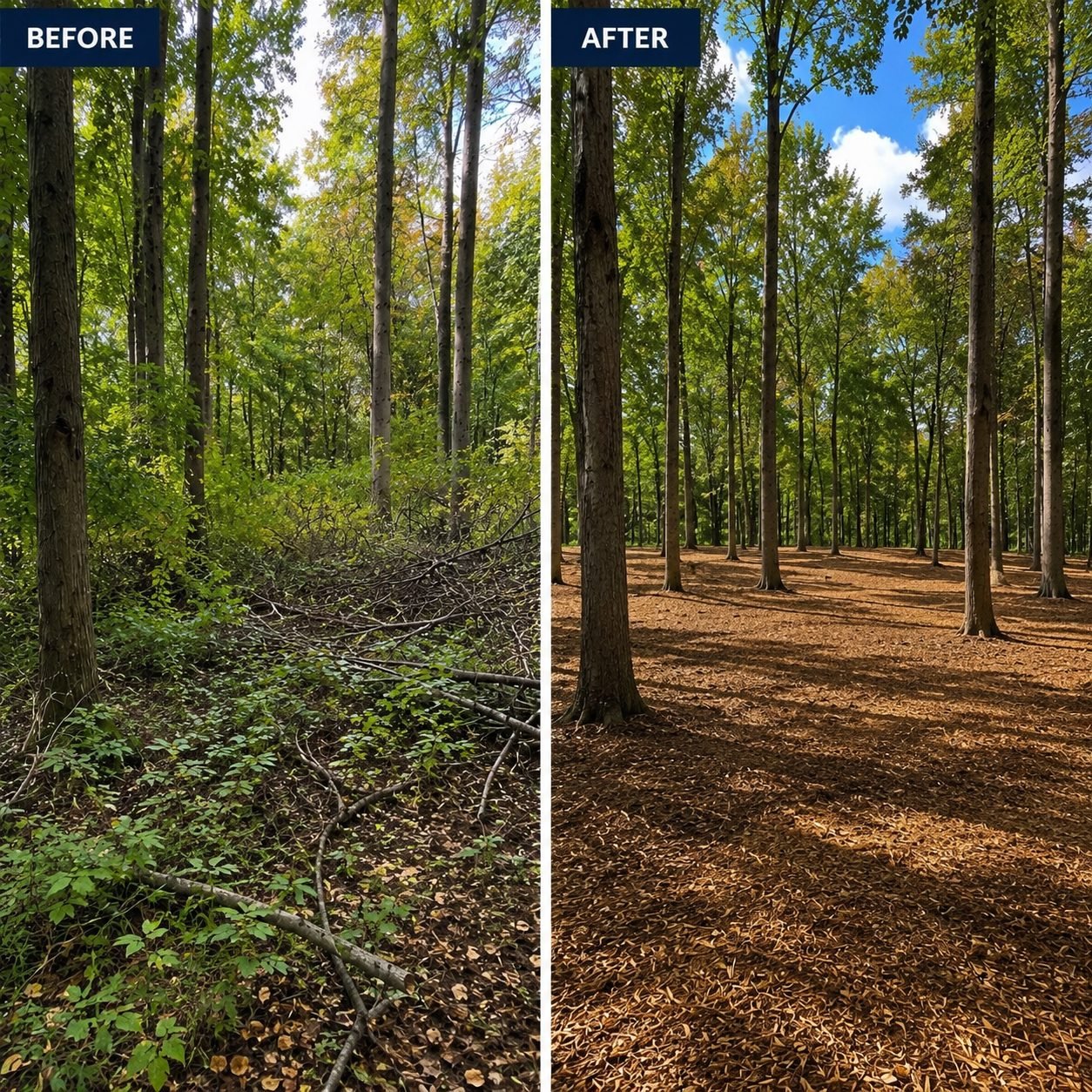
What does a Baltimore site clearing before-and-after look like?
Before: brush, saplings, and uneven access on a Baltimore village lot or farmland edge. After: a clearer pad, cleaner entry route, and ground ready for building or grading. Fortress documents the change during the walk-through so you can see how the site will open up without guessing about scope or equipment.
Frequently asked questions
During business hours, the team usually responds in 2 to 3 hours and can schedule same-week walk-throughs when the calendar allows. That helps Baltimore property owners move from first call to a clear scope quickly, whether the parcel is a village lot near the historic center or a larger edge tract off US-33.
Yes, if the work involves digging, stump removal, grading cuts, or anything that can disturb buried utilities. Ohio law requires an Ohio 811 utility locate at least 48 hours before digging. On Baltimore sites, that step is especially important because village lots and rural edges can have different utility layouts.
Yes. Forestry mulching is often a strong fit where the goal is to clear brush and smaller stems without full excavation. In Baltimore, that can make sense along farmland edges or access lanes where the crew wants to open ground while keeping hauling and disposal down. The John Deere 333G mulchers are built for that kind of work.
Baltimore’s difference is the mix of a small village, no named neighborhoods, a historic center, the Liberty Union-Thurston school community, and surrounding farmland edges. That creates both tight-access jobs and larger rural clearing jobs, sometimes on the same route plan. Fortress adjusts the machine package to match that local pattern.
Fortress uses a free on-site walk-through and then gives a flat-rate quote. The crew looks at access, stem density, soil, utility needs, and whether the job is mulching or full clearing. That approach is useful in Baltimore because a small lot and a boundary-acre job can look similar from the road but cost very differently.
Have the property lines, intended use, and any access concerns ready if you can. In Baltimore, it also helps to note whether the site is a small village lot or a larger farmland-edge parcel, since that affects machine access and cleanup. The team will handle the clearing plan and explain next steps after the visit.
Site Clearing Near Baltimore
What Other Services Does Fortress Offer in Central Ohio?
Fortress Level Construction runs a full range of land-clearing, excavation, grading, and site-work services across Central Ohio, so one owner-operated crew can clear, grade, and prep a site end to end.
Get a Flat-Rate Quote from Lee Carson
Owner-operated land clearing across all five Central Ohio counties. Send your property details and Lee gets back to you within 2 to 3 hours during business hours with one flat number after a free on-site walk-through.