
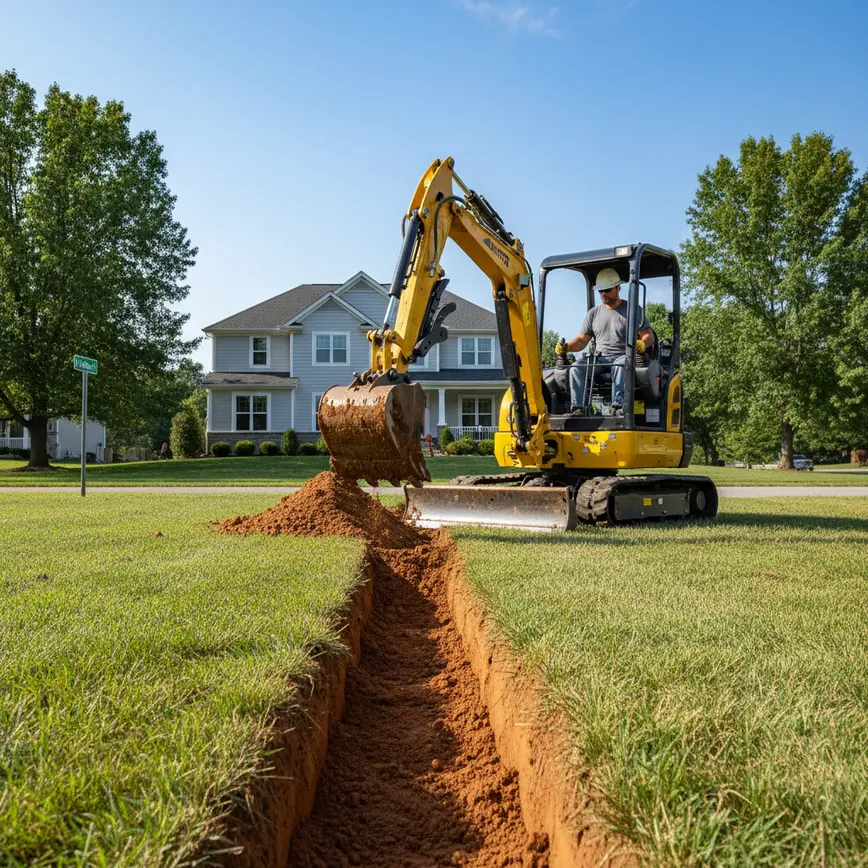

How does trenching work in Canal Winchester, Ohio?
Trenching in Canal Winchester, Ohio means cutting narrow, controlled excavation lines for utilities, drainage, and service runs on flat glacial-till ground with heavy clay. Fortress Level Construction sizes the trench to the line, soil, and depth, then stages the work around Canal Winchester’s former farmland lots, historic downtown edge, and semi-rural parcels.
The Quick Answer
- Trenching in Canal Winchester, Ohio starts with line marking, Ohio 811 locate timing, and a trench profile matched to heavy clay and glacial-till conditions.
- Canal Winchester jobs often split between new-build subdivision lots on former farmland and larger semi-rural parcels on the growing southeast fringe.
- The crew uses excavators and dozers for trench alignment and depth control, then finishes with compact track loaders where access is tighter.
- Dense Crosby, Miamian, and Kokomo silt loams can hold shape but also cling to buckets, so trench spoils and moisture management matter.
- Fortress gives flat-rate quotes after a free on-site walk-through, with same-week walkthroughs and 2 to 3 hour response during business hours.
- Ohio Revised Code 3781.28 requires an Ohio 811 utility locate at least 48 hours before digging.
- Typical trenching cost usually lands in a $50 to $200 per cubic yard range, depending on depth, spoil handling, access, and restoration.
- Lee Carson, a combat veteran and founder of Fortress, works with the crew across Central Ohio, including Canal Winchester’s Franklin and Fairfield side.
Related Questions People Ask Next
Canal Winchester is small, but its trenching work is split by setting: former farmland being cleared for subdivision utilities and larger semi-rural parcels on the southeast edge. The flat ground helps layout, yet the heavy clay subsoil slows digging, sticks to buckets, and makes backfill compaction more important.
For Canal Winchester trenching, Fortress uses excavators and dozers for cut accuracy, then John Deere 333G compact track loaders with Diamond drum mulchers when clearing is needed before the trench line is opened. That setup works well for tight subdivision lots, larger rural drives, and utility access on clay soil.
The team does a free on-site walk-through, then issues a flat-rate quote based on trench depth, length, soil, access, and spoil handling. In Canal Winchester, that means pricing reflects whether the work is on a new-build lot near the village core, or a larger parcel closer to Groveport, Pickerington, Lithopolis, or Columbus.
Before any digging in Canal Winchester, Ohio 811 must be contacted so utility locates are complete at least 48 hours in advance under Ohio Revised Code 3781.28. That step protects buried gas, electric, water, and telecom lines, especially on mixed-use lots where former farmland may have older service runs.
What happens during trenching on a Canal Winchester lot?
A trenching job in Canal Winchester begins with the utility path, depth target, and locate marks, then the crew opens a clean cut and keeps spoil separated for backfill. On flat Franklin and Fairfield ground, the challenge is not slope but the dense clay that can smear, cave, or hold water after rain.
Fortress uses excavators for the cut and depth control, then compact track loaders to move spoils without tearing up the surrounding grade. That matters on Canal Winchester subdivision lots built from former farmland, where the trench has to stay tight and the surface has to be restored cleanly for the next trades.
On the larger semi-rural parcels outside historic downtown along High Street, trenching may run farther to reach service points, outbuildings, or drainage tie-ins. The crew plans the route around heavy clay and the 35 minute drive from the Westerville base, then prices the work by volume and access, usually within the $50 to $200 per cubic yard range.
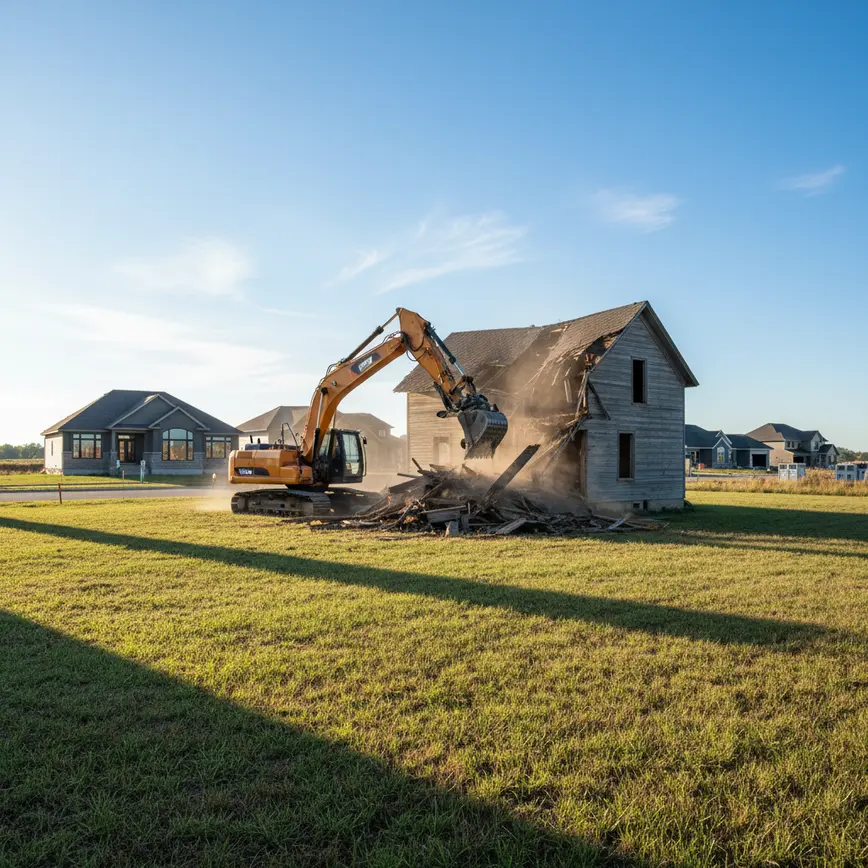
How does heavy clay change trench digging in Canal Winchester?
Canal Winchester soil is a real factor in trenching because Crosby, Miamian, and Kokomo silt loams and clays are dense and sticky. Fortress adjusts bucket choice, cut width, and spoil handling so the trench stays workable, the line stays true, and the backfill can be compacted instead of pumping mud.
In dry weather, that clay can cut cleanly but still load up equipment. In wetter stretches, the same soil can glaze and slow production, especially on lots near the Ohio Herb Education Center or on the outskirts where drainage is less established. The crew reads soil conditions before choosing the dig sequence.
That is why trenching here is not just about power. It is about control. John Deere 333G compact track loaders help when the access is soft or narrow, while dozers and excavators handle the deeper runs. On Canal Winchester’s flat glacial-till plain, small mistakes show up fast, so precise digging saves rework.
What trenching equipment fits Canal Winchester access and soil?
The right trenching equipment in Canal Winchester depends on lot size, soil moisture, and how much clearing comes first. Fortress brings excavators, dozers, and John Deere 333G compact track loaders with Diamond drum mulchers, which can handle stems up to 14 inches and clear one to five acres per day where a trench starts behind brush or old farm cover.
That mix fits Canal Winchester’s pattern of new-build subdivision lots on former farmland and bigger semi-rural parcels near Groveport, Pickerington, Lithopolis, and Columbus. If a line has to be opened through overgrowth before the trench can be dug, the mulcher stages the route without changing crews or delaying the excavation plan.
For utility trenching, the goal is a narrow, accurate cut that does not over-excavate the clay walls. The excavator handles the trench, the dozer keeps grade transitions smooth, and the track loader keeps access steady. On a fast-growing suburb like Canal Winchester, that equipment balance keeps the job moving without turning the site into a mess.
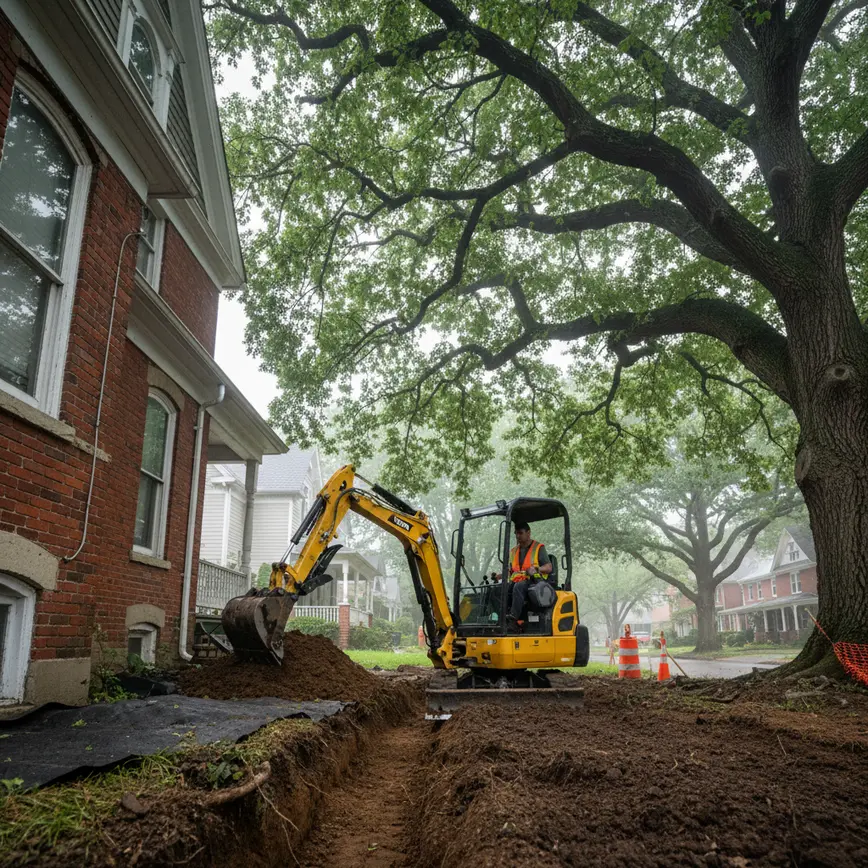
How do trenching cost drivers show up in Canal Winchester?
Trenching cost in Canal Winchester usually depends on depth, length, soil hardness, spoil hauling, access, and restoration, with many jobs landing in the $50 to $200 per cubic yard range. A short utility trench on an open lot costs differently than a deeper run through clay on a semi-rural parcel.
A free on-site walk-through lets Fortress measure the route, check the locate marks, and see whether the lot is a compact subdivision site or a larger fringe parcel near the Franklin and Fairfield line. That is how the team gives a flat-rate quote without guessing at clay conditions, haul distance, or cleanup time.
Canal Winchester’s growth changes pricing too. A trench near historic downtown along High Street may involve tighter access and more careful restoration, while a fringe parcel may need longer equipment travel and more spoil management. The quote reflects the actual cut, not a generic yardage number pulled from a different city.
Which trenching approach fits a Canal Winchester property?
Choose trenching by soil, access, and site type, not by guesswork. In Canal Winchester, a subdivision lot, a downtown-adjacent utility run, and a semi-rural parcel on the outskirts all call for different excavation control, spoil handling, and restoration.
| Canal Winchester site type | Trenching goal | Best Fortress equipment | What changes the price |
|---|---|---|---|
| New-build subdivision lot on former farmland | Open a tight utility trench with minimal surface disruption | Excavator plus compact track loader | Depth, clay handling, and restoration |
| Semi-rural parcel on the outskirts | Run longer trenches for service or drainage access | Excavator, dozer, and track loader | Length, access distance, and spoil hauling |
| Tighter access near historic downtown along High Street | Keep excavation narrow and controlled | Excavator and compact track loader | Space limits and cleanup detail |
| Cleared edge parcel with former farmland cover | Open route before trenching begins | John Deere 333G with Diamond drum mulcher | Clearing time, stems, and trench prep |
| Clay-heavy glacial-till ground | Keep walls stable and backfill compactable | Excavator with controlled bucket work | Soil moisture and handling complexity |
When is trenching not the right call in Canal Winchester?
Trenching is not the right solution in Canal Winchester when the issue is broad grading, full-site clearing, or a drainage problem that needs reshaping instead of a narrow cut. If the parcel only needs surface restoration or the utility route is not yet located, the team should pause and plan.
If Ohio 811 locates are not complete, digging should not start. Ohio Revised Code 3781.28 requires the locate window before excavation, and Canal Winchester’s mix of former farmland and newer utility layouts makes that step non-negotiable. If the project is still in design, a walk-through and marking review may be the better next step.
If the real issue is a field-wide water problem, retaining wall failure, or major regrading on a semi-rural parcel outside Canal Winchester, trenching alone will not solve it. In that case, the answer may be drainage correction, clearing, or dozer work first, then trenching once the route and elevations are settled.
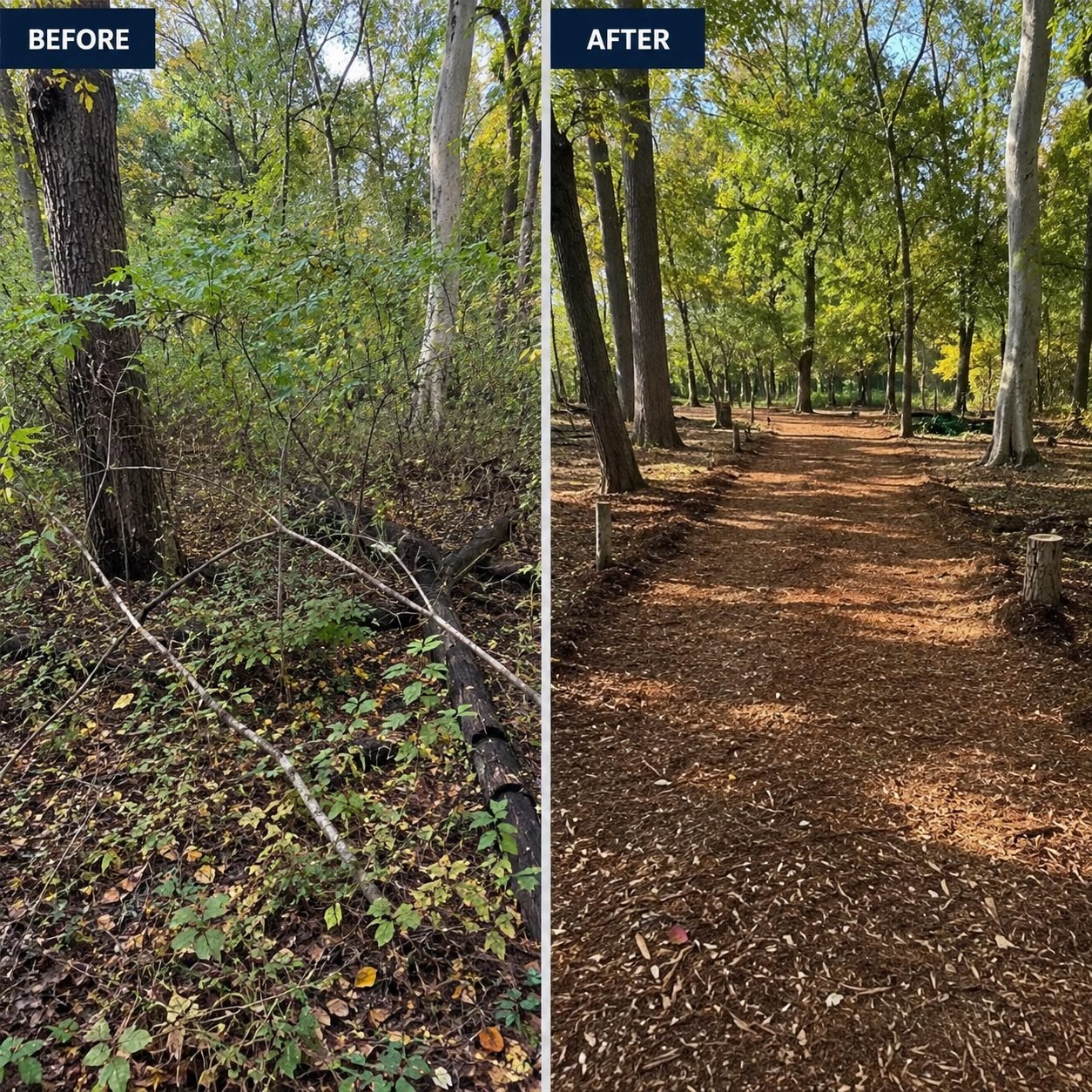
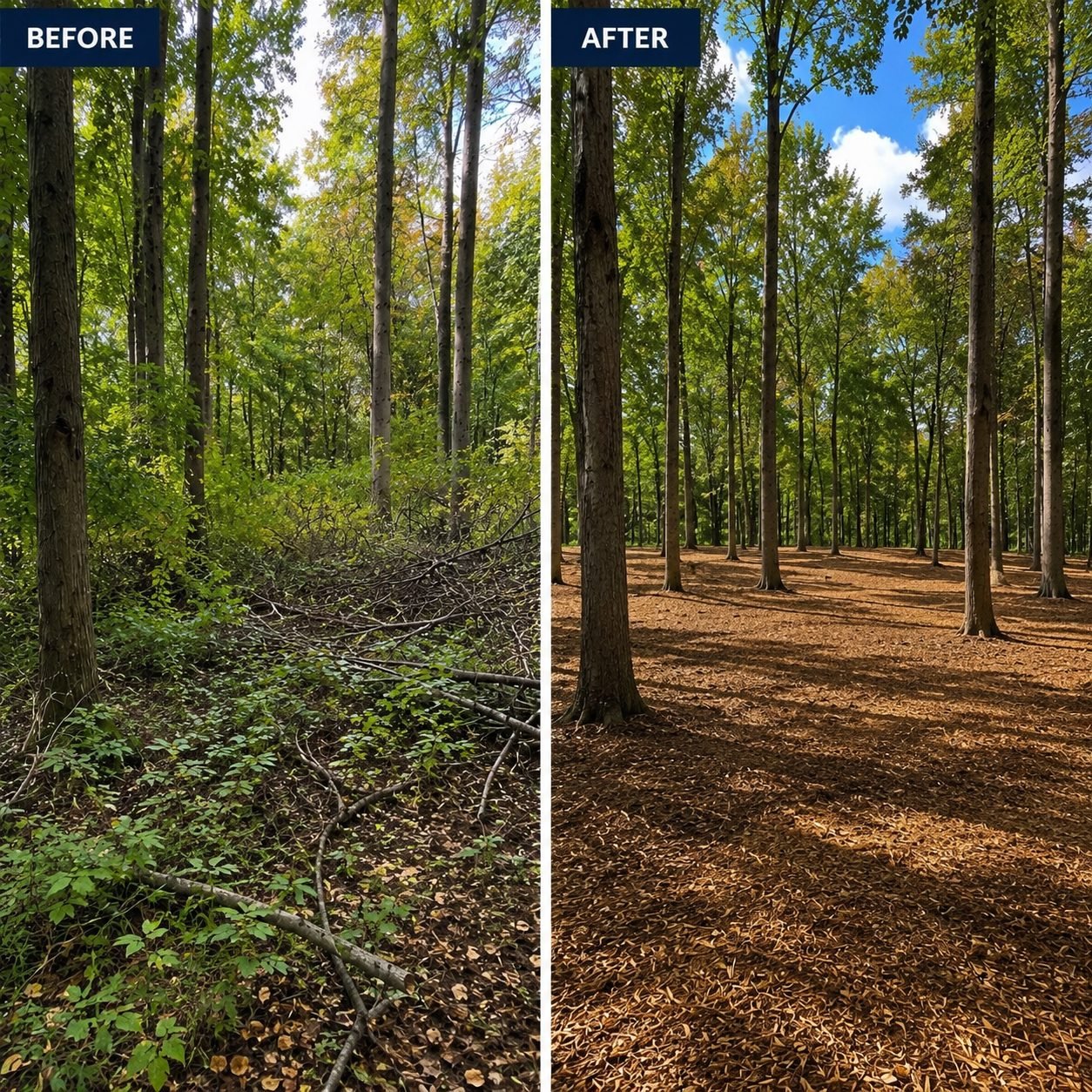
What should a Canal Winchester trenching before-and-after look like?
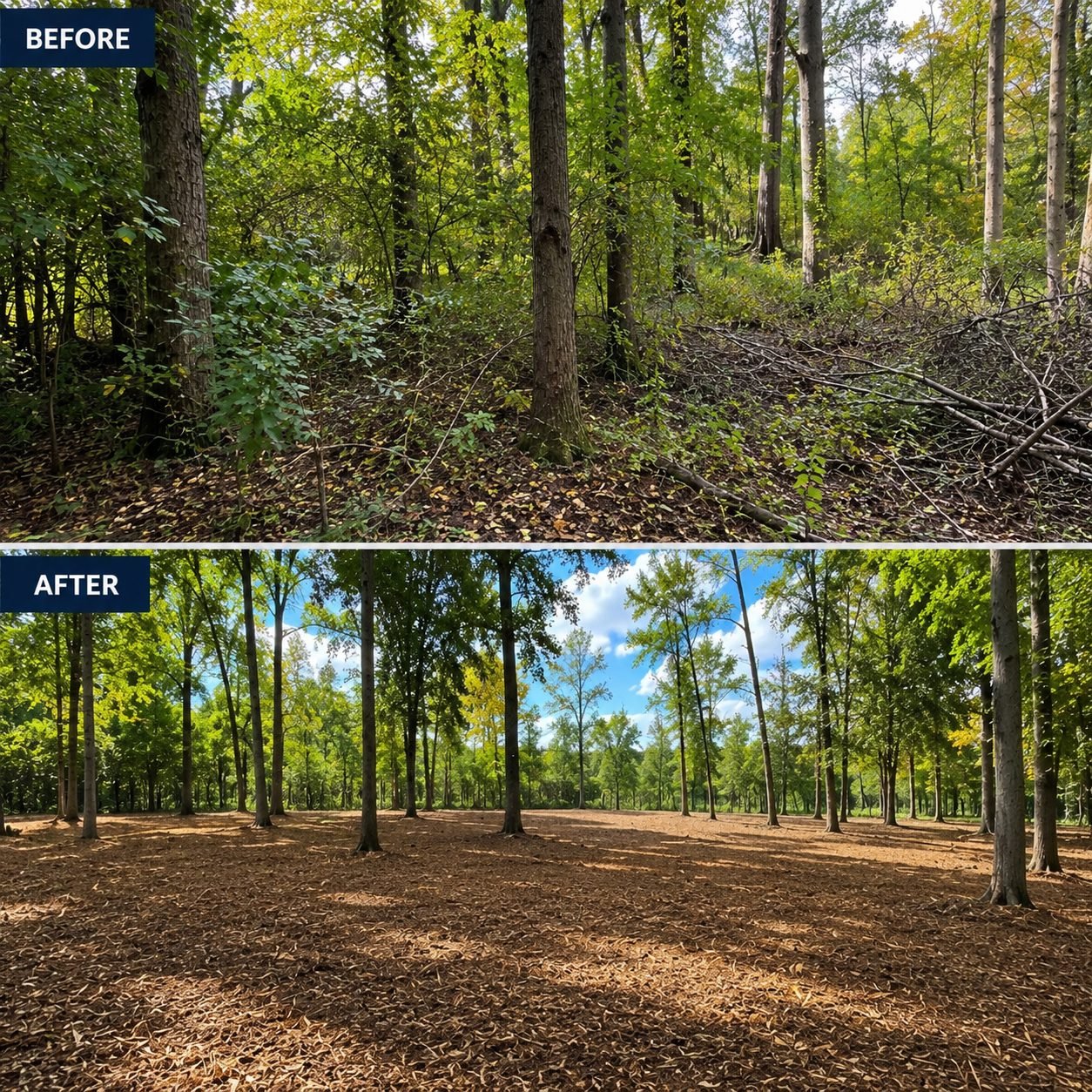
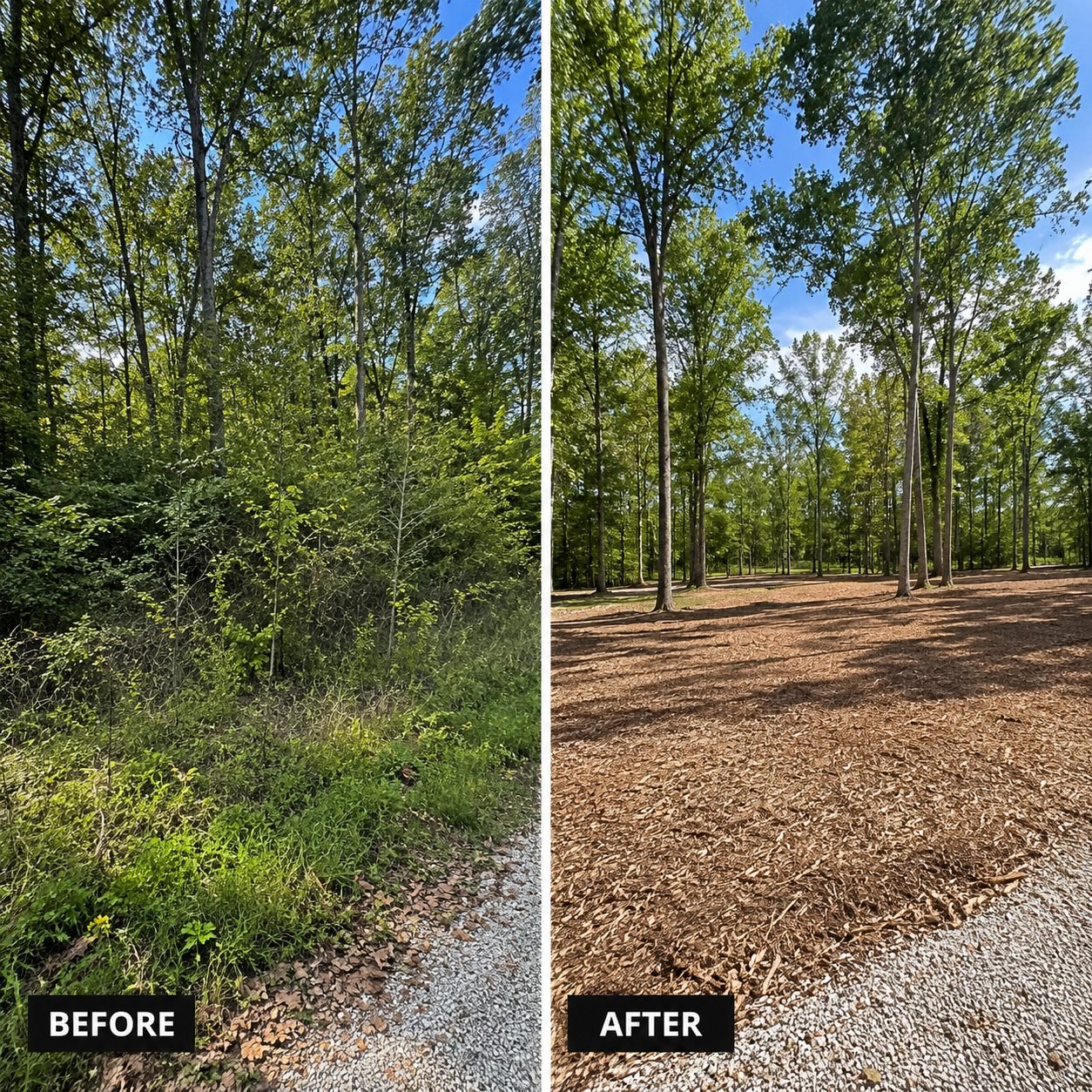
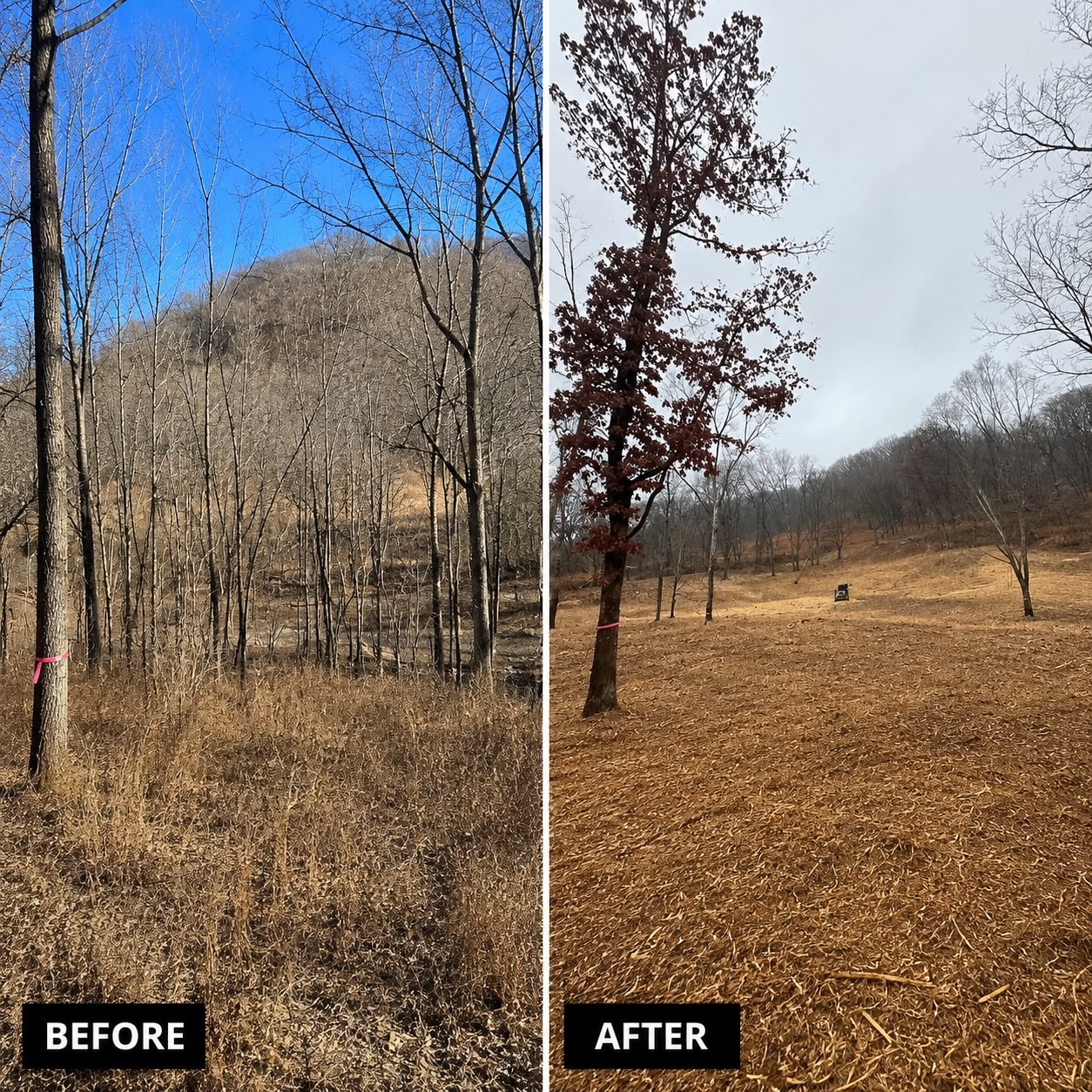
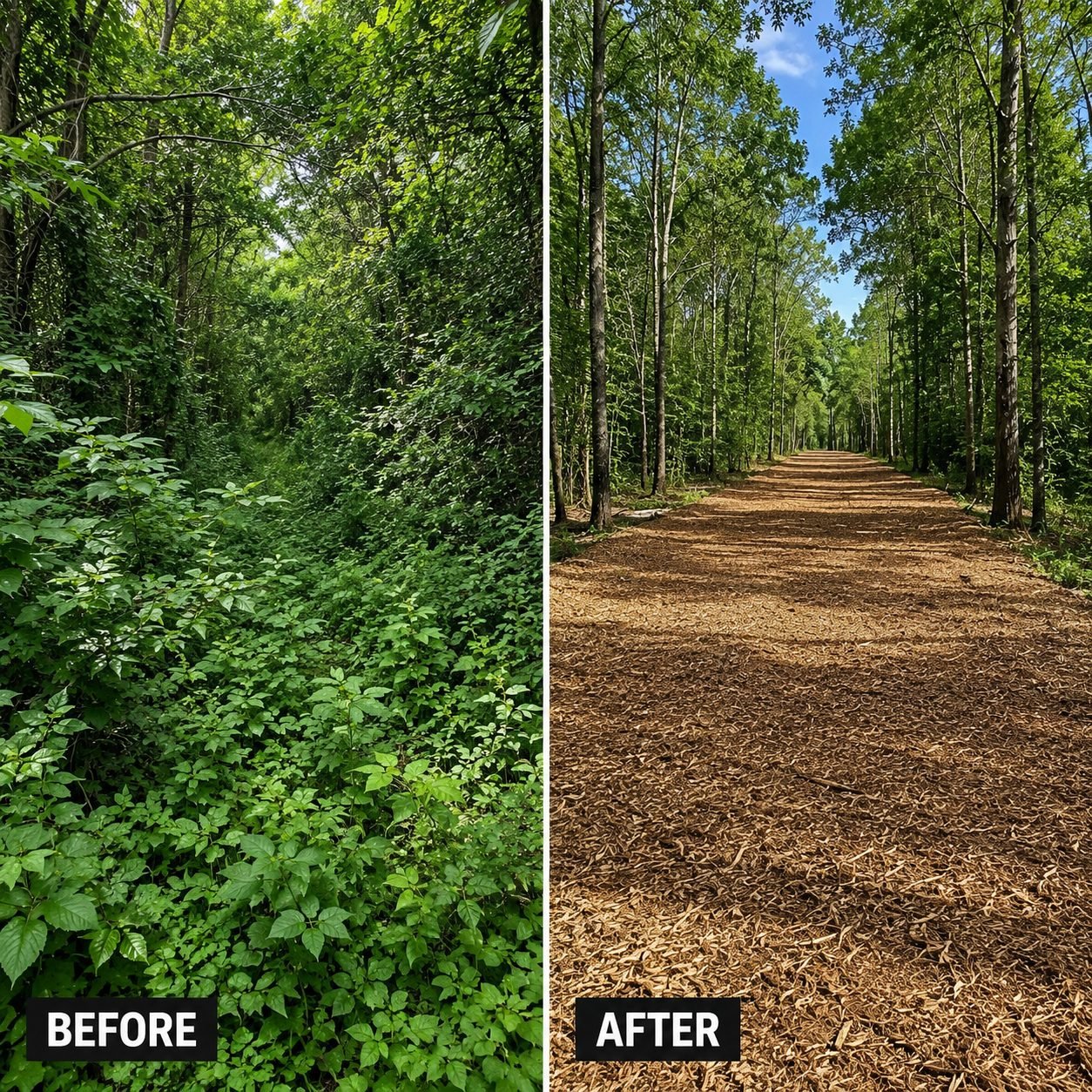
Before trenching, a Canal Winchester site may show utility stakes, compacted clay, former farmland cover, or a semi-rural access path that needs cleaning. Afterward, the trench is narrow, the line is open, the spoil is managed, and the surface is restored so the lot still fits the village and fringe character.
Frequently asked questions
During business hours, the team typically responds in 2 to 3 hours and can usually schedule same-week walk-throughs. For Canal Winchester trenching, that quick visit helps verify access, clay conditions, and locate status before the crew prices the cut and restoration.
Yes. Ohio law requires an Ohio 811 utility locate at least 48 hours before any digging. That applies in Canal Winchester just as it does elsewhere in Central Ohio, and it is especially important on former farmland lots where utility routes may not be obvious.
Yes. Canal Winchester has no named neighborhoods, so the work often shifts between compact subdivision lots and larger semi-rural parcels. Fortress plans the trench size, equipment, and spoil handling for each site rather than using the same setup everywhere, which helps on Franklin and Fairfield side jobs.
The local Crosby, Miamian, and Kokomo silt loams and clays are dense and heavy, which affects how the trench walls stand, how the buckets load, and how backfill compacts. That means the crew has to manage moisture, cut width, and haul-out carefully.
It lets Fortress verify the route, see whether the job is on former farmland or a semi-rural parcel, and check how close the trench will be to existing structures or service points. That leads to a more accurate flat-rate quote and fewer surprises.
Call Fortress Level Construction at (844) 656-0129 and ask for a free on-site walk-through in Canal Winchester. The team will review the route, utility locate timing, access, and soil conditions, then provide a flat-rate quote based on the actual trenching work.
What Other Services Does Fortress Offer in Central Ohio?
Fortress Level Construction runs a full range of land-clearing, excavation, grading, and site-work services across Central Ohio, so one owner-operated crew can clear, grade, and prep a site end to end.
Get a Flat-Rate Quote from Lee Carson
Owner-operated land clearing across all five Central Ohio counties. Send your property details and Lee gets back to you within 2 to 3 hours during business hours with one flat number after a free on-site walk-through.