
What Is Land Clearing in Ohio? How It Prepares Your Property for Building
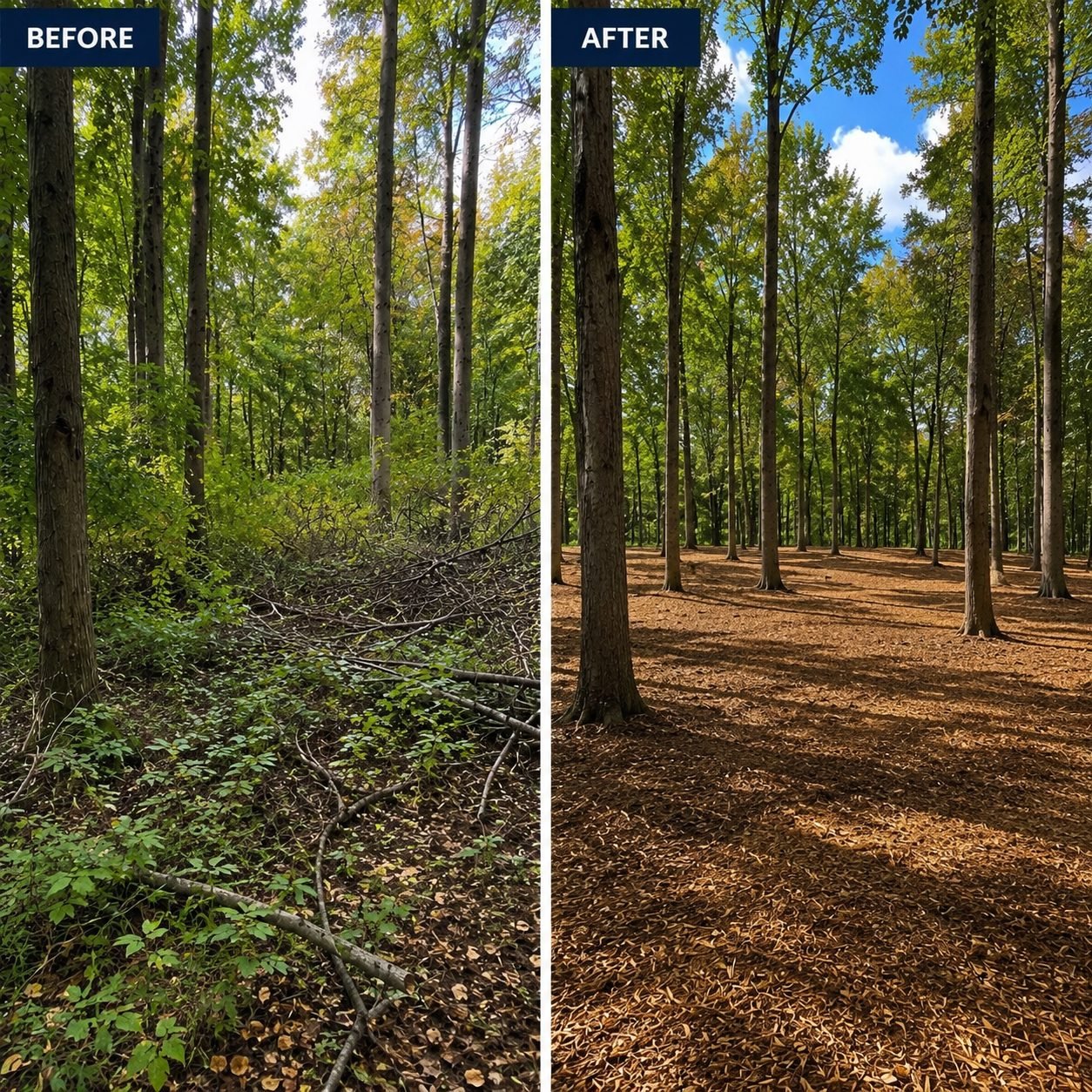
Land clearing is the process of removing trees, brush, stumps, rocks, and other obstacles so a site can be safely used for building, grading, farming, drainage work, or access. Done well, it creates a usable footprint without damaging the soil, utilities, or the project’s long-term stability.
The Quick Answer
- Land clearing removes vegetation and obstacles so a site can be built on, graded, drained, farmed, or accessed safely.
- The right method depends on what is growing there, how much material must be removed, and what the finished site must support.
- In Ohio, clay soil and wet seasons can change access, equipment choice, and the amount of disturbance a project creates.
- Forestry mulching is often best for selective ground clearing, while full clearing is better when a site needs a clean building footprint.
- A land clearing company should evaluate utilities, slope, drainage, stumps, erosion risk, and disposal needs before work begins.
- Cost is driven by density, acreage, access, stump removal, hauling, grading, and whether demolition or excavation is part of the job.
- DIY clearing can work for small brush jobs, but larger sites often need professional equipment, utility locating, and disposal planning.
- Ohio 811, local permits, and erosion control can matter just as much as the clearing itself.
Related Questions People Ask Next
Land clearing removes vegetation, roots, stumps, and obstacles. Grading reshapes the soil surface for drainage, access, or building elevation. Many projects need both, but they are not the same task. A site may be cleared first and then graded after utilities, drainage goals, and finished elevations are confirmed.
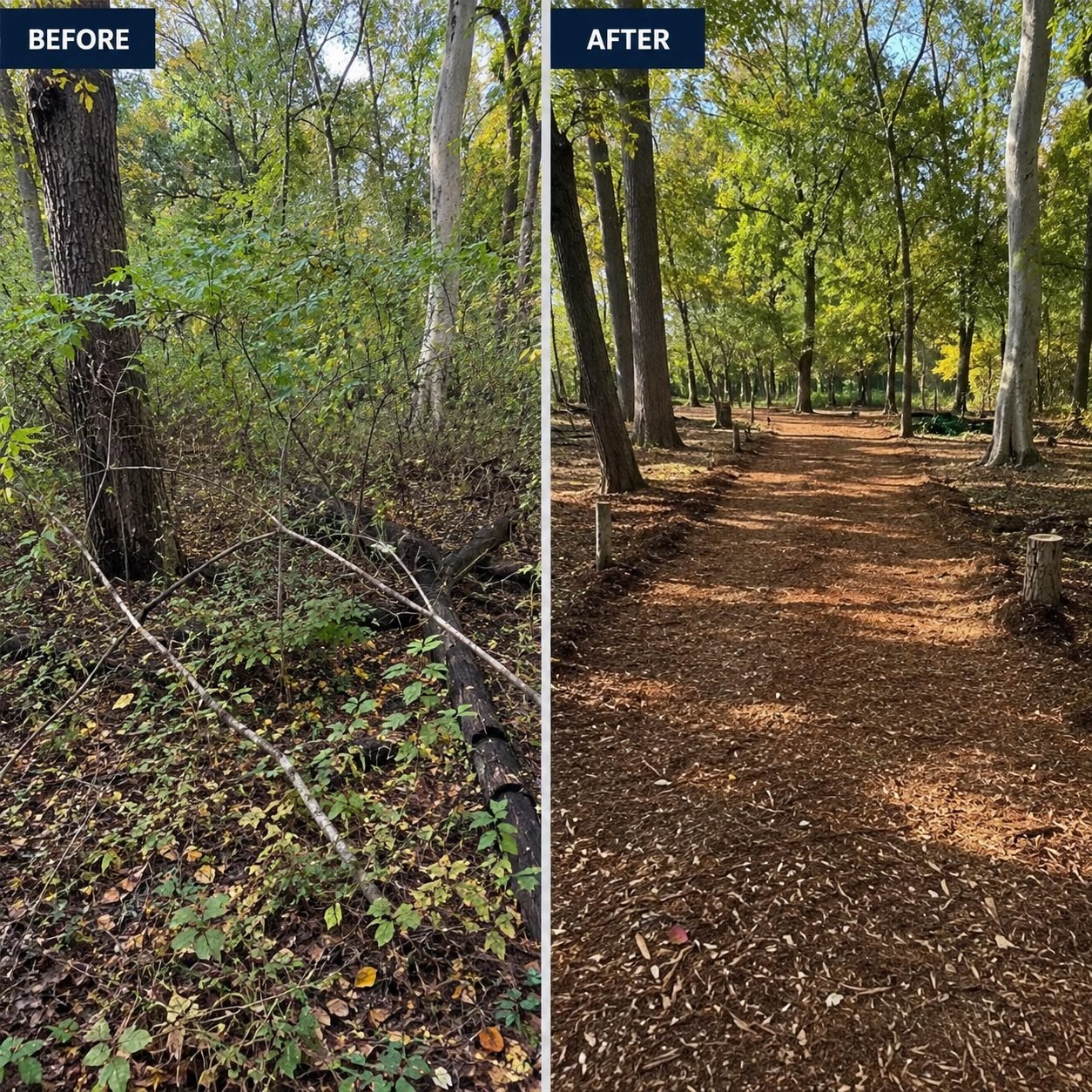
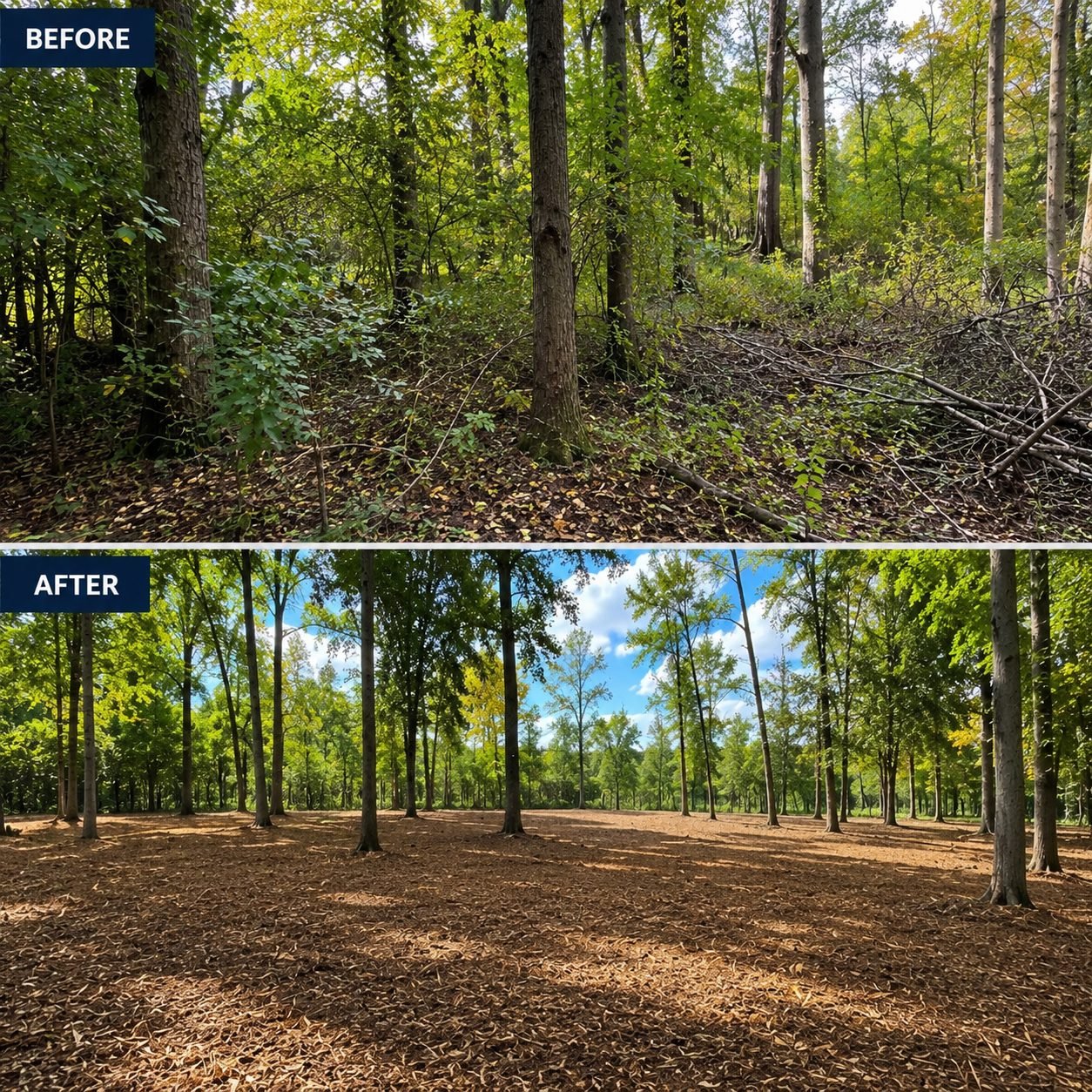
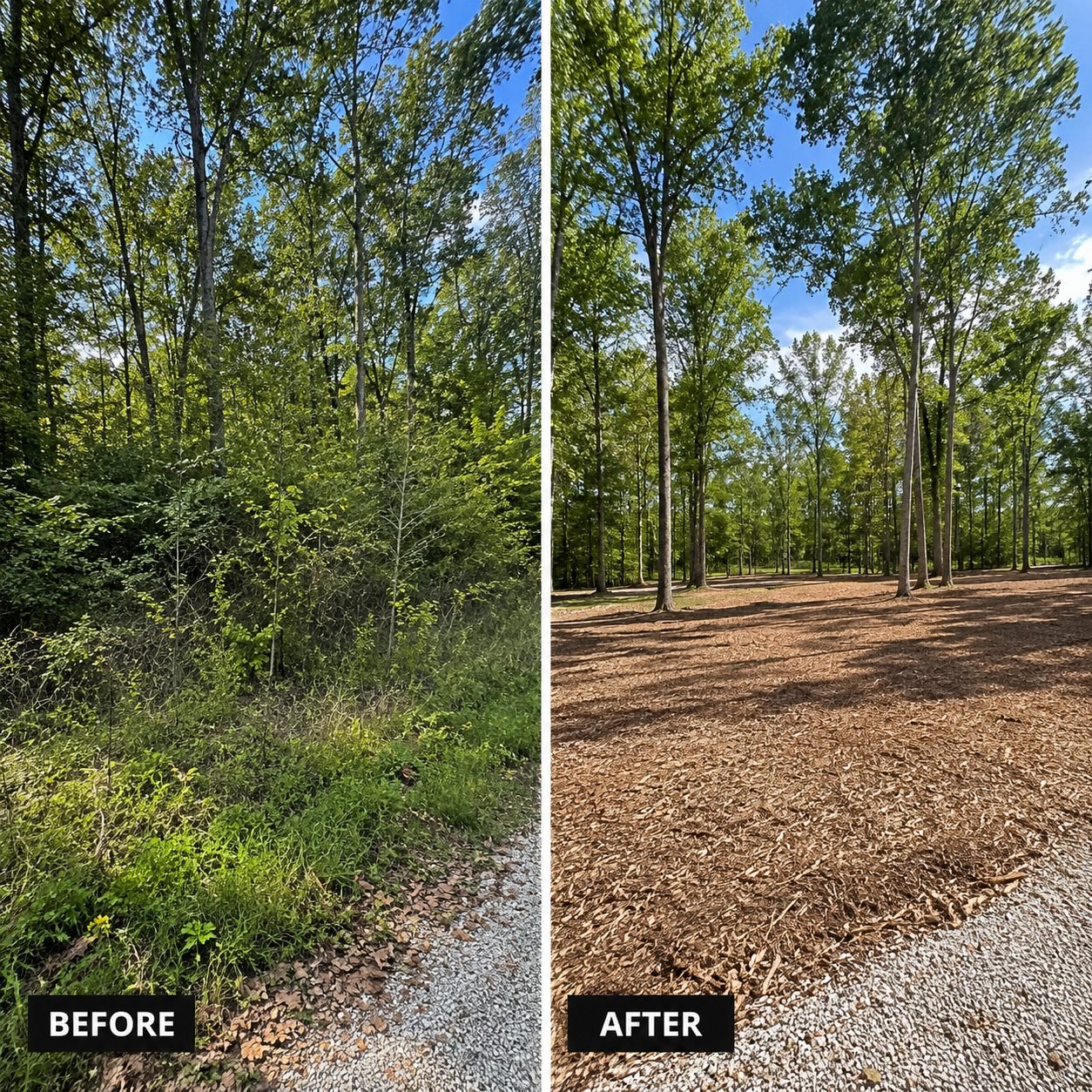
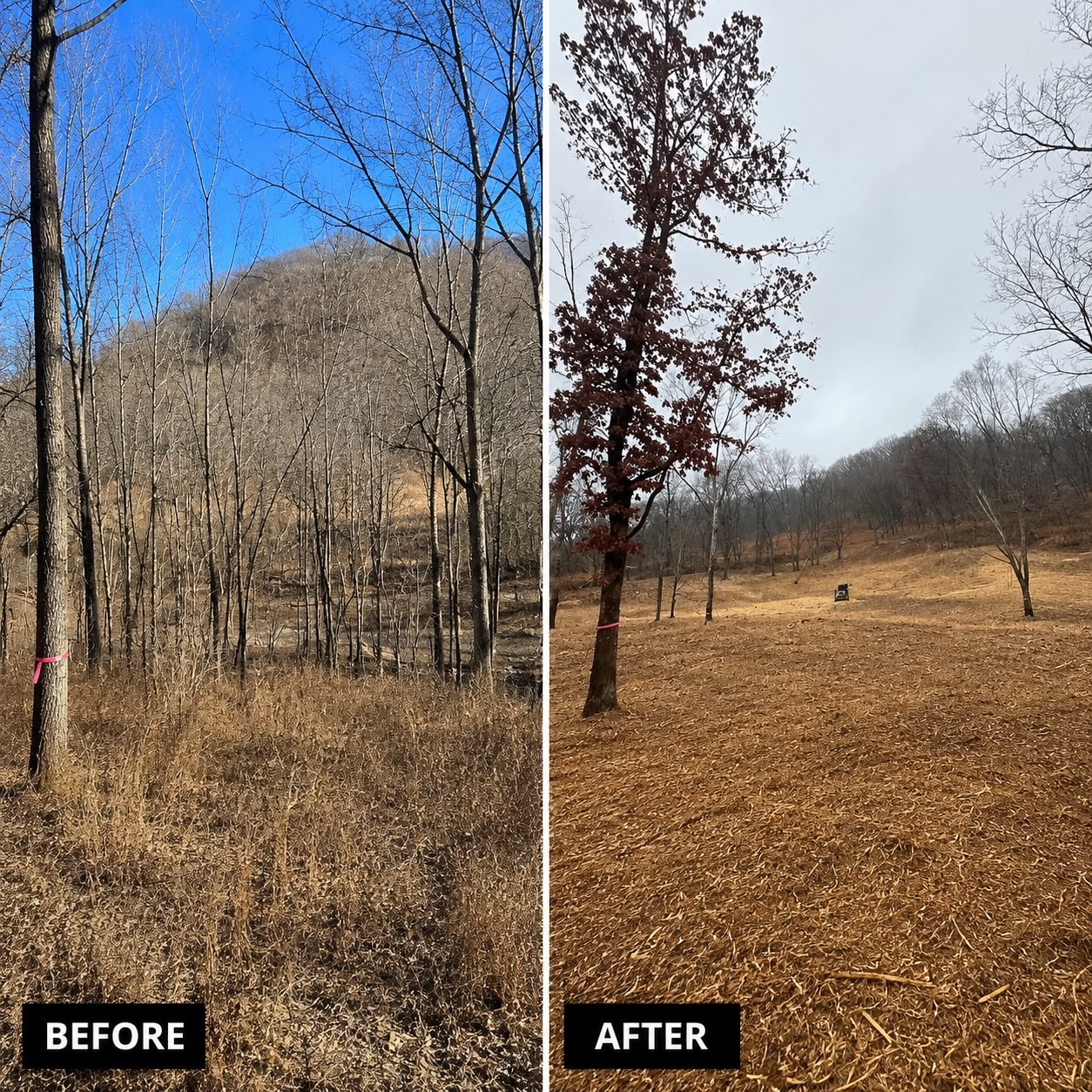
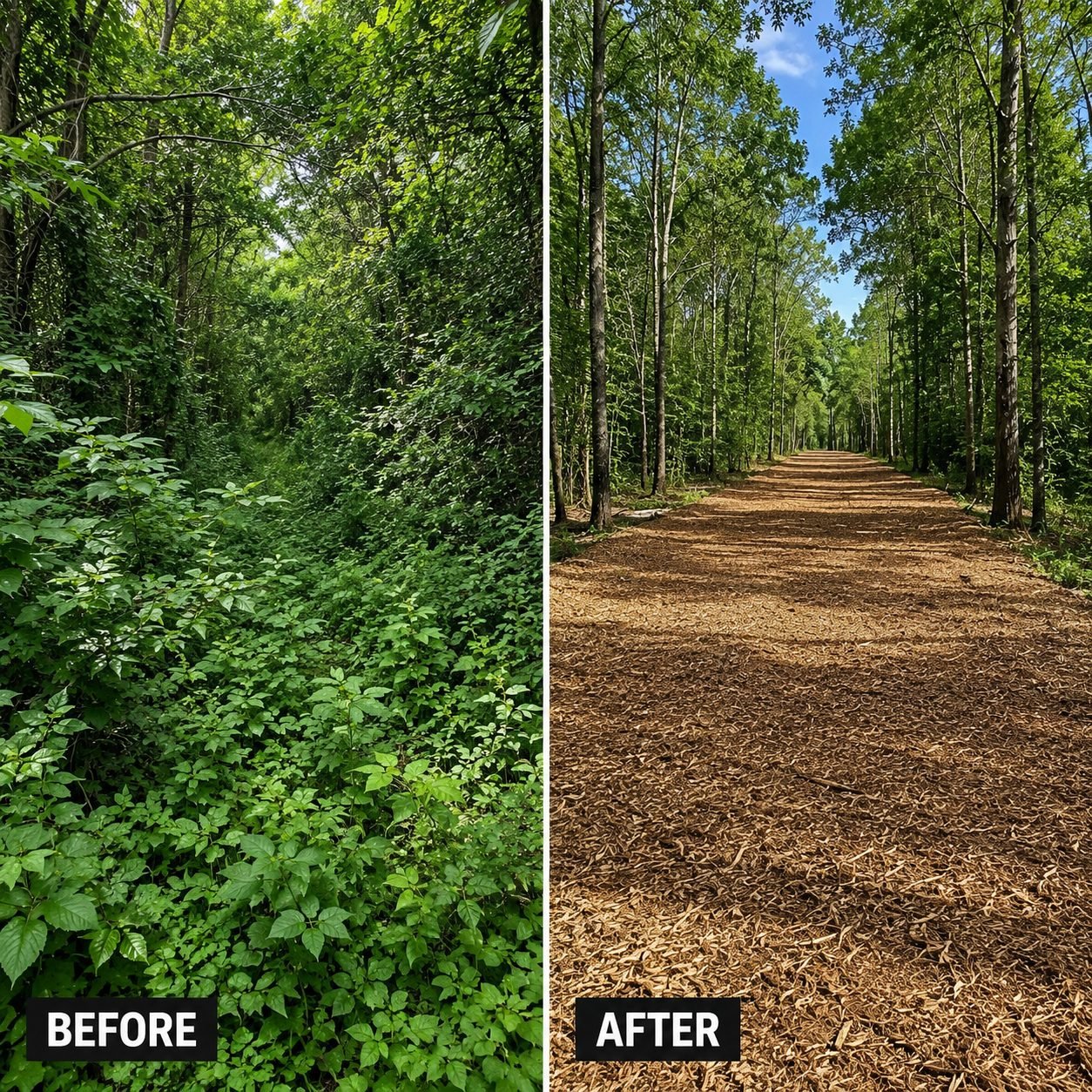
Yes. Forestry mulching is one of the most common land clearing methods for brush, small trees, and overgrown lots. It cuts and shreds vegetation on site, which can reduce hauling and site disturbance. It is ideal when you want to clear land without stripping the ground completely.
Ohio clay soil holds water, becomes slick when wet, and can rut easily under heavy machines. That affects when crews can access the site, how much they can disturb the surface, and whether extra stabilization or grading is needed. Clay conditions can also influence drainage planning after clearing.
Sometimes. Small brush removal may not need a permit, but larger land clearing, tree removal, grading, demolition, drive access, floodplain work, or erosion-disturbing projects can trigger local permits or approvals. Requirements vary by city, county, township, and whether stormwater rules apply.
Often yes, but stump removal is usually a separate step. Some crews use a mulcher to process brush and small stems, while larger stumps may need grinding, excavation, or full extraction. The right approach depends on the future use of the land, root depth, and whether the soil must stay stable.
What Is Land Clearing?
Land clearing is the controlled removal of trees, brush, stumps, vines, rocks, logs, and debris so a property can be used for construction, utilities, roads, drainage, farming, or site improvement. It can be selective or complete, depending on the end use and the amount of disturbance the land can tolerate.
At its core, land clearing is ground preparation. A property may look simply overgrown, but a real clearing job often includes more than cutting plants down. A land clearing company may need to remove saplings, mature brush, deadfall, invasive growth, root balls, and hidden debris that can damage equipment or compromise the finished site. The goal is not just to make it look neat. The goal is to create a safe, workable surface that supports the next phase of the project.
There are different levels of clearing. Some jobs involve clearing scrubland or field edges for visibility and access, while others require a full footprint for a driveway, barn, addition, pad, septic work, or utility run. In Central Ohio, clay-heavy soils can make the work more sensitive because disturbed ground may hold water and rut easily. That is why good land clearing services include site assessment, utility checks, and a plan for what happens after the vegetation is removed.
A common mistake is assuming all clearing is the same. It is not. A light brush cut, forestry mulching, stump grinding, full tree removal, and demolition-backed ground clearing each solve different problems. If the site is being prepared for construction, the crew has to think beyond the vegetation itself and account for access, drainage, erosion, and what the finished grade must support. That is what separates professional site prep from simple cutting.
Why Does Land Clearing Matter?
Land clearing matters because it turns unusable or unsafe ground into a site that can actually support the next step, whether that is building, drainage correction, agricultural use, access roads, or stormwater work. Done correctly, it improves safety, reduces hidden site risks, and protects the schedule.
What Are the Land Clearing Methods and Types?
The main land clearing methods include forestry mulching, full clearing, selective clearing, stump grinding, excavation-assisted removal, and demolition-backed clearing. The right method depends on density, slope, soil, access, and whether the property needs a finished construction-ready footprint or just improved access and visibility.

What Is the Land Clearing Process Step by Step?
A good land clearing job starts with a site review, utility locating, and a plan for access, disposal, erosion control, and finish grade. The crew then clears vegetation, removes obstacles, handles stumps or debris, and finishes the site so it is ready for the next phase of work.
What Drives Land Clearing Cost?
Land clearing cost is driven by acreage, vegetation density, stump work, slope, access, wet ground, disposal, hauling, and whether the job also needs grading, excavation, or demolition. The right quote depends on site conditions, not just size, because two similar lots can take very different amounts of time and equipment.
What Equipment Is Used for Land Clearing?
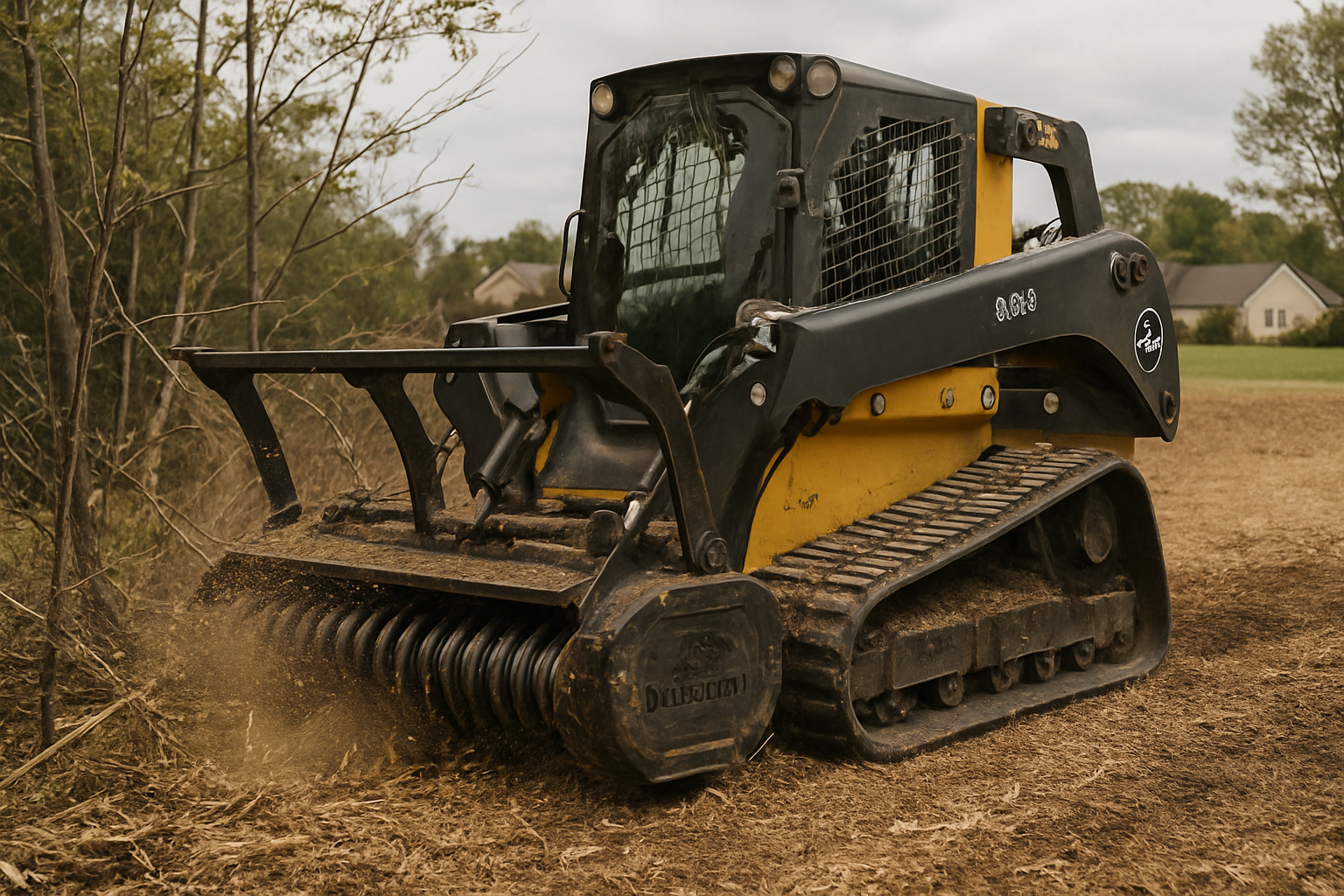
Professional land clearing uses a mix of machines and hand tools, including forestry mulchers, skid steers, excavators, stump grinders, brush cutters, chainsaws, grapples, and hauling equipment. The right setup depends on the size of the site, the thickness of vegetation, and how much material must be removed.
Should You DIY Land Clearing or Hire a Pro?
DIY land clearing can make sense for small brush patches, light cleanup, or simple rural maintenance, but larger jobs usually call for a professional because of safety, utility risks, disposal, machine capability, and soil damage. A pro is the better choice when the site must be build-ready or time-sensitive.
What Permits, Regulations, and Ohio 811 Rules Apply to Land Clearing?
Land clearing can trigger local permits, erosion requirements, or utility coordination, and Ohio law requires an Ohio 811 utility locate at least 48 hours before digging. Even when no permit is needed, safe clearing still depends on checking local rules, underground utilities, and site-specific restrictions before work starts.
How Do You Choose the Right Land Clearing Company?
Choose a land clearing company that is licensed, insured, experienced with your type of property, and able to explain the method, timeline, utility steps, and cleanup plan in plain language. The best contractor will inspect the site, answer questions directly, and provide a scope that matches the actual conditions.
Start with credentials and capability. The company should be insured and able to explain how it handles utility locating, site access, debris, erosion risk, and finish conditions. A good contractor will not promise a low price before seeing the site. They will ask about acreage, thickness of growth, stumps, wet areas, access, and whether the project also needs grading, excavation, demolition, or stump grinding. That conversation tells you whether the company understands real field conditions or is just selling a generic number.
Next, look at process. A strong land clearing company should explain whether forestry mulching, full clearing, or a mixed approach is best for the property. They should also be clear about what remains on site, what gets hauled away, and what happens to stumps and roots. If the site is in Central Ohio, ask how they handle clay soil, wet weather, and compaction. Those details matter because poor machine choices can make a finished property harder to use, not easier.
Finally, choose the team that is easiest to verify and easiest to communicate with. Fortress Level Construction is a licensed, insured Central Ohio land-services company founded by Lee Carson, a combat veteran with a real crew behind the work. That matters because land clearing is not just about cutting vegetation. It is about professional site preparation, accountability, and following through from first walkthrough to final cleanup.
How Do Land Clearing Methods Compare?
Different clearing methods solve different problems. Some are best for fast brush removal with lower disturbance, while others are meant for fully build-ready sites that need stumps, roots, and debris removed. This comparison helps match the method to the end use, access, and budget.
| Method | Typical Use | Main Advantage | Best Fit |
|---|---|---|---|
| Forestry mulching | Brush, saplings, light to moderate overgrowth, scrubland | Fast, lower disturbance, material stays on site as mulch | Paths, fence lines, selective clearing, acreage cleanup |
| Full clearing | Heavier woods, building footprints, full site reset | Creates a more open, build-ready site | Construction pads, drive corridors, utility areas |
| Selective clearing | Properties that need trees or buffers preserved | Targets only unwanted growth | Homesites, privacy-sensitive lots, managed landscapes |
| Stump grinding | Remaining stumps after tree removal or clearing | Removes the surface obstruction with less excavation | Yards, access lanes, future landscaping |
| Excavation-assisted clearing | Buried roots, debris, old foundations, rough terrain | Handles hidden obstacles and deep removal | Sites with mixed soil and buried material |
| Demolition-backed clearing | Sheds, slabs, old structures, site obstructions | Removes built obstacles before land work continues | Redevelopment, lot reuse, property resets |
When Is Land Clearing Not the Right First Step?
Land clearing is not always the first or best move. Some sites need surveying, utility locating, drainage planning, erosion control, or demolition before major vegetation removal begins. Pushing ahead too fast can damage the property, create permit issues, or leave behind problems that are expensive to fix.
If a property has unknown utilities, unclear boundaries, or a history of prior use, clearing first can be a mistake. You may uncover old debris, lines, tanks, slabs, or buried material that changes the scope immediately. That is especially true on older parcels or sites being repurposed. A good contractor will slow the process down when the site demands it, because the cost of one broken utility line or one bad excavation can be far greater than the inconvenience of waiting for a locate or inspection.
Land clearing is also not the right approach when erosion risk is high and no control plan is in place. Stripping vegetation from a steep or wet site without thinking about drainage can create runoff, mud problems, and sediment issues. In Ohio, clay soil makes this even more important because once the soil gets disturbed and wet, it can hold water and move poorly. Sometimes selective clearing or forestry mulching is better than full clearing because it preserves more ground cover and reduces disturbance.
Finally, some people assume that clearing everything is always best. It is not. Mature trees, buffers, and undisturbed soil can be valuable. If the site is intended for a home, driveway, or outbuilding, removing only what is necessary may protect shade, aesthetics, and long-term drainage. A real land clearing plan should fit the property’s future use, not just make it look empty.
What Can Be Included in a Land Clearing Project?
A typical land clearing project may include brush removal, tree cutting, forestry mulching, stump grinding, debris hauling, rough grading, excavation, and cleanup. The exact scope depends on whether the goal is a build site, access path, reclaimed acreage, or a fully cleared construction footprint.
Frequently asked questions
You likely need land clearing services if vegetation, stumps, rocks, or debris are preventing access, construction, drainage work, or productive use of the land. If a site is overgrown, uneven, or hiding obstacles, a professional assessment helps determine whether forestry mulching, full clearing, or selective clearing is the right move.
Clearing scrubland usually means removing light brush, vines, saplings, and overgrowth to improve access or visibility while keeping some natural cover. Full clearing is more complete and removes trees, stumps, and root systems to create a more open, buildable footprint. The right choice depends on the future use of the property.
Yes, if it is done without planning. Heavy equipment can rut soft ground, compact soil, damage tree roots, or create drainage issues. That risk is higher on wet sites and clay soils. A professional crew reduces that risk by planning access routes, choosing the right machines, and matching the clearing method to the site conditions.
Forestry mulching cuts and grinds vegetation above and near the ground, but it usually does not remove deep root systems the way excavation does. It is excellent for brush and small trees, but if you need the area fully cleared for construction, stumps and major roots may need grinding or extraction.
The timeline depends on acreage, density, access, weather, and what else is included. A light brush project may move quickly, while a wooded or debris-filled site takes longer. If grading, stump removal, excavation, or demolition is added, the schedule extends because each task has its own equipment, sequencing, and cleanup needs.
A local Ohio company understands regional soil, weather, utility rules, and permit expectations. That matters in places with clay soil, seasonal wet ground, and varying township or county requirements. Local experience also helps with access planning, erosion concerns, and realistic scheduling based on actual site conditions.
A good quote should describe the clearing method, acreage or area, what is being removed, how stumps and debris are handled, whether hauling is included, and whether grading or excavation is separate. It should also note any permit, utility locate, or site access assumptions so there are fewer surprises later.
Sometimes, but not always. Stump grinding can solve surface obstruction problems and is often enough for landscaping or access lanes. If the property will support construction, drainage work, or heavy use, deeper stump and root removal may be needed so the site can be properly graded and stabilized.
Land Clearing Across Central Ohio
Fortress Level Construction handles land clearing in every county and community across Central Ohio. See local details, drive times, and pricing for your area:
What Other Services Does Fortress Offer in Central Ohio?
Fortress Level Construction runs a full range of land-clearing, excavation, grading, and site-work services across Central Ohio, so one owner-operated crew can clear, grade, and prep a site end to end.
Get a Flat-Rate Quote from Lee Carson
Owner-operated land clearing across all five Central Ohio counties. Send your property details and Lee gets back to you within 2 to 3 hours during business hours with one flat number after a free on-site walk-through.