
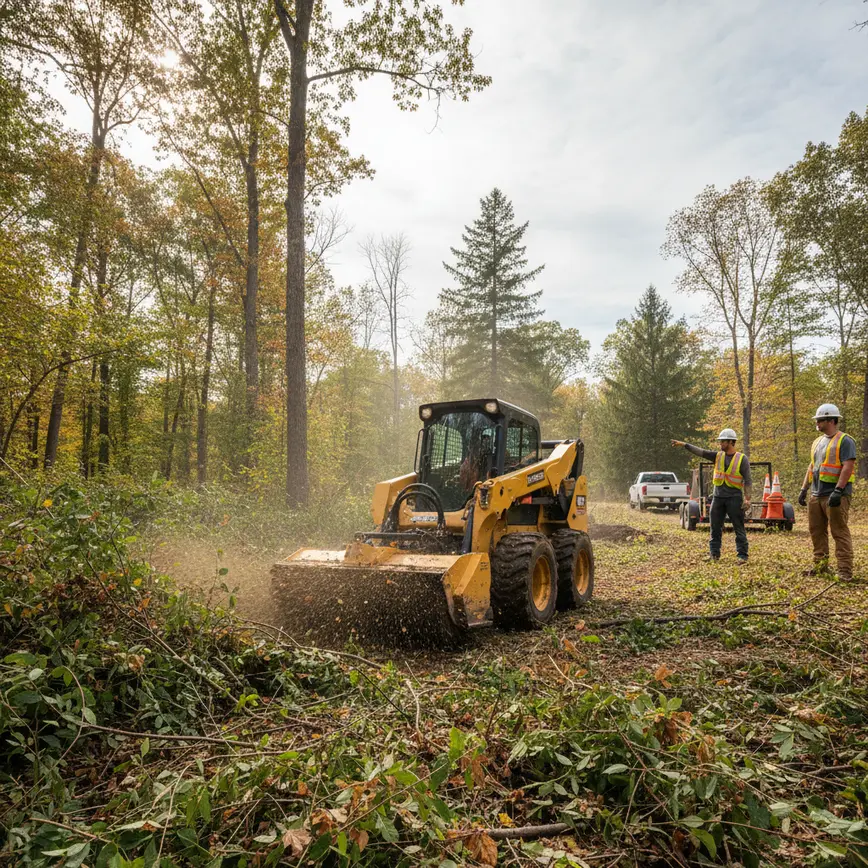

Brush Clearing vs Underbrush Clearing in Ohio: What’s the Difference and Which One Your Property Needs
Underbrush clearing is the removal of low growing vegetation beneath the main tree canopy, including saplings, vines, briars, and dense ground cover. Brush clearing usually means cutting heavier mixed vegetation above and below knee height. The right approach depends on your goals, site conditions, and whether you need a clean buildable lot or just better access.
The Quick Answer
- Underbrush clearing removes low growth beneath the canopy, while brush clearing can include thicker, taller mixed vegetation and small woody stems.
- The right method depends on whether you need access, fire reduction, site prep, drainage improvement, or a fully buildable pad area.
- Central Ohio clay soil can hold moisture, rut easily, and complicate clearing, grading, and equipment access after rain.
- Forestry mulching is fast and low disturbance, but it is not the same as full clearing when roots, stumps, and debris must be removed.
- Ohio 811 utility locate is required 48 hours before digging under ORC 3781.28, and utility checks should happen before any excavation.
- Permits may be needed depending on township, county, drainage, floodplain, tree removal rules, or erosion control requirements.
- Costs are driven by density, access, slope, wet ground, stump work, disposal needs, and whether grading or excavation is included.
- A qualified contractor should explain methods, protect utilities, match equipment to soil conditions, and give a clear scope before work starts.
Related Questions People Ask Next
Brush clearing usually refers to removing thicker mixed vegetation such as briars, saplings, and woody growth that has become dense enough to block access or visibility. Underbrush clearing is more specific. It means clearing the low vegetation layer under trees or around open ground, often with less impact than full clearing. People use the terms interchangeably, but the scope can be very different.
Not exactly. Forestry mulching is one method used for underbrush clearing. A mulcher grinds vegetation in place and leaves a mulch layer on the soil. That is useful for access, fire reduction, and low disturbance site prep. But underbrush removal can also involve cutting, hauling, stump grinding, or full clearing when a property needs a more complete finish.
It depends on the project. If you are creating a house pad, driveway, or utility corridor, understory clearing may be enough for the first phase, but you may still need grading, stump work, and excavation. If the lot must be fully buildable, full clearing is often the better fit because it removes more than the low growth layer.
Ohio clay soil can stay wet longer, get slick, and rut easily under heavy equipment. That makes access harder and can change the best clearing method. A site that is easy to mulch in dry weather may need a different plan when the ground is soft. Good contractors adjust timing, equipment, and access routes to protect the property.
Ask exactly what will be removed, what stays, whether stumps are ground or left, how debris is handled, whether grading is included, and how utilities are protected. You should also ask about permits, Ohio 811 locate procedures, equipment used, and whether the contractor can explain the difference between brush vs underbrush for your particular site.
What Is Underbrush Clearing?
Underbrush clearing is the selective removal of low vegetation beneath trees or across a wooded parcel. It typically targets saplings, briars, vines, volunteer growth, and thick ground cover without necessarily removing the mature canopy. It is smaller in scope than full clearing, but more targeted than basic mowing.
In practical terms, underbrush clearing is about opening up the floor of a property so you can see, move, drain, inspect, or build on it more effectively. It is common on overgrown lots, wooded homesites, farm edges, utility corridors, and access paths. In brush vs underbrush conversations, the main distinction is that underbrush is the lower layer of vegetation beneath the trees, while brush can include taller, thicker growth that is no longer just ground level nuisance growth.
This matters because the right method changes the outcome. If the goal is to improve visibility, reduce fire load, or reclaim walking and maintenance space, underbrush removal may be all you need. If the goal is to prepare for a driveway, foundation, septic work, or major construction, understory clearing might be only the first phase. A good contractor will define the scope clearly so you do not pay for more than the site actually needs.
Fortress Level Construction has seen many Ohio properties where the surface looks manageable until work starts and hidden saplings, root mats, vines, and soft clay complicate the job. Since 2009, the company has approached these projects with crew-based planning, not guesswork. That matters because undergrowth removal on a wooded parcel is not just about cutting plants. It is about understanding drainage, access, utility locations, and what the site must support after the clearing is done.
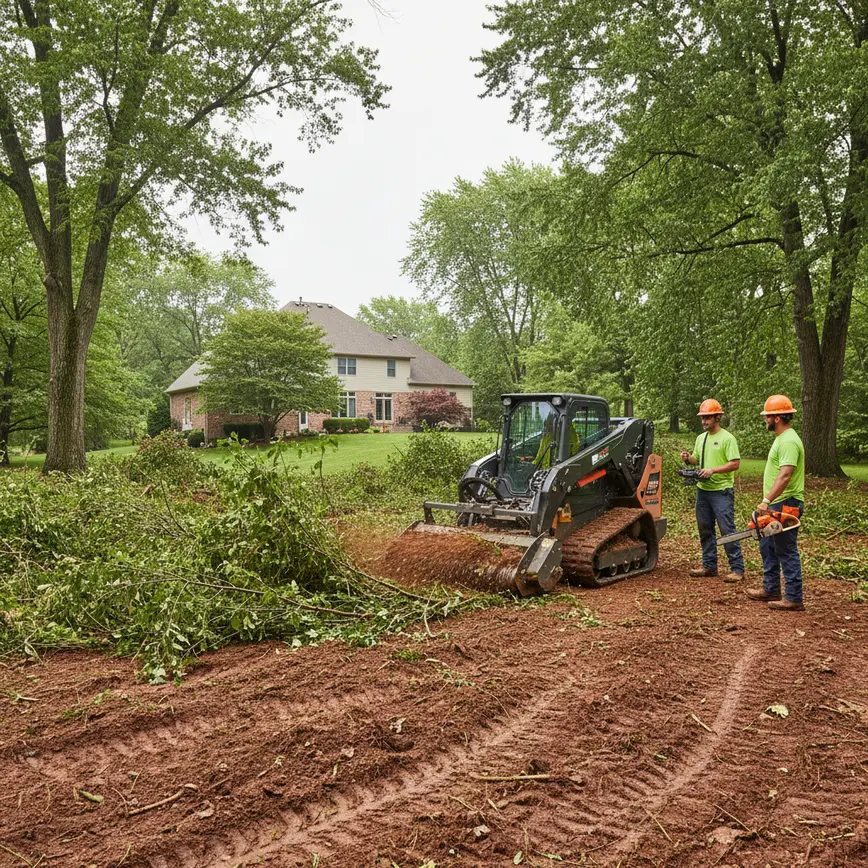
Why Does Underbrush Clearing Matter for Your Property?
Underbrush clearing improves access, visibility, safety, drainage, and future land use. It can reduce fuel load, expose drainage issues, and make a wooded parcel easier to maintain or build on. For many property owners, it is the most cost-effective first step before grading, excavation, or full site development.
What Methods Are Used for Brush Clearing vs Underbrush Clearing?
Brush clearing and underbrush clearing can be done with hand tools, machines, or a combination of both. The right method depends on density, stem size, access, and whether you want vegetation removed, mulched, or hauled away. Underbrush removal is often lighter and more selective than full brush clearing.
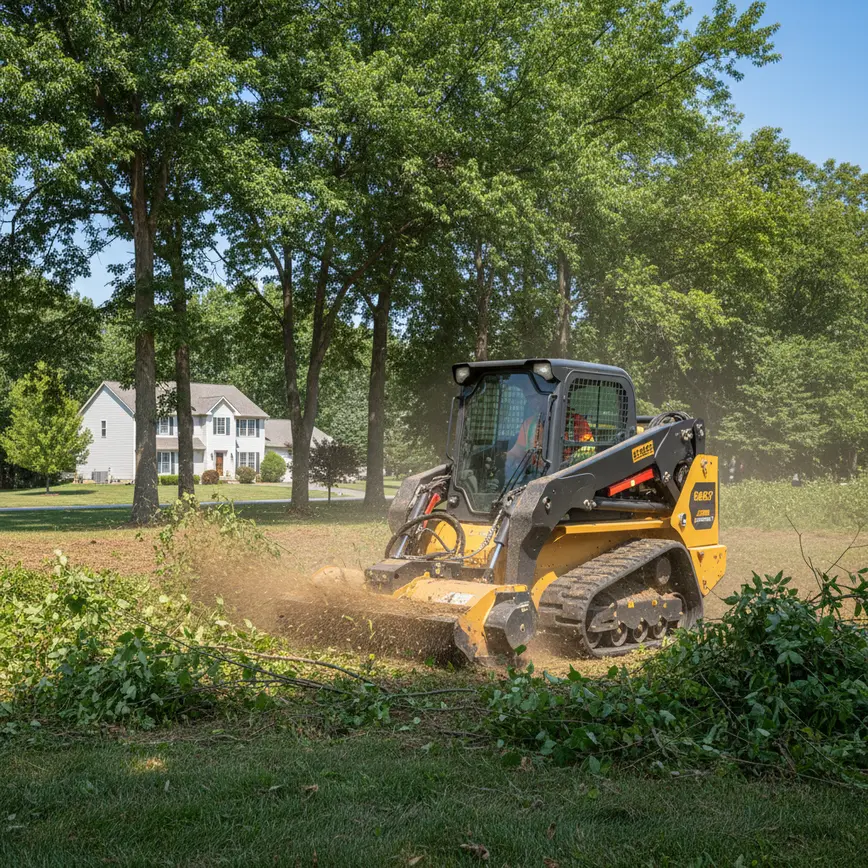
How Does the Underbrush Clearing Process Work Step by Step?
A proper clearing job starts with a site review, utility locate, and scope definition, then moves into access planning, vegetation removal, debris handling, and final cleanup or grading. The process is simple on paper but site conditions, wet ground, and hidden obstacles make professional planning important.
What Drives Underbrush Clearing Cost?
Underbrush clearing cost is driven by vegetation density, acreage, access, slope, wet soil, disposal needs, and whether the job includes stumps, grading, or excavation. Forestry mulching usually costs less than full clearing because it reduces hauling and disturbance, but it is not the right fit for every site.
What Equipment Is Used for Brush and Underbrush Clearing?
Equipment ranges from chainsaws and brush cutters to forestry mulchers, skid steers, excavators, stump grinders, and grading tools. The right setup depends on how thick the growth is, how much material must be removed, and whether the site needs to be finished for construction or just opened up.
Should You DIY or Hire a Pro for Underbrush Clearing?
DIY works best for small, light, low-risk areas. Hiring a pro is usually smarter for larger parcels, heavy brush, hidden utilities, wet clay soil, slopes, or any project tied to construction. The main difference is not just speed. It is safety, finish quality, and avoiding costly damage.
What permits, regulations, and Ohio 811 rules apply to clearing?
Permits and locate rules depend on the project scope, locality, and whether the work involves excavation, drainage changes, or protected areas. In Ohio, the utility locate requirement is especially important because ORC 3781.28 requires an Ohio 811 request at least 48 hours before digging. Do not skip it.
How Do You Choose the Right Contractor for Underbrush Clearing?
Choose a contractor who can explain the scope clearly, show the right equipment, handle utility locate requirements, and offer the full sequence from clearing to grading if needed. The best fit is not just the lowest bid. It is the team that matches the method to your site and end goal.
Start with clarity. A qualified contractor should be able to tell you whether your property needs underbrush clearing, brush clearing, understory clearing, or full land clearing. They should also explain what stays, what goes, and whether debris is mulched, piled, hauled, or buried. If the answer is vague, the estimate will probably be vague too. Good contractors understand that homeowners and landowners do not just need labor. They need a plan they can trust.
Ask about equipment and soil experience. In Ohio, clay soil can make access tricky, especially after rain, so it helps if the contractor understands how to protect the site from rutting and compaction. Ask whether the crew can handle stump grinding, grading, excavation, or demolition if the job expands. Fortress Level Construction is a licensed, insured Central Ohio land-services company founded by Lee Carson, a combat veteran, and it uses a real crew model for clearing and site work. That kind of structure matters when the job requires coordination, not just cutting.
Finally, judge the contractor by how well they discuss safety and compliance. They should mention Ohio 811, permit considerations, access planning, and how the work will be finished. They should also give you a realistic scope for the work based on site conditions rather than offering a one-size-fits-all promise. If you are comparing bids, ask whether the quote is for forestry mulching, full clearing, or selective undergrowth removal. The cheapest estimate is not always the least expensive once cleanup, rework, or grading are factored in.
Which Clearing Method Fits Your Property Best?
This comparison helps you match the method to the job. The best choice depends on vegetation size, access, finish quality, and whether you need a low disturbance cleanup or a fully cleared construction-ready site.
| Method | Best For | Typical Speed | Main Tradeoff |
|---|---|---|---|
| Forestry mulching | Low to moderate underbrush clearing, access lanes, fire reduction, low disturbance cleanup | Fast | Leaves mulch in place and is not a full replacement for stump removal or grading |
| Cut and haul | Heavier brush clearing, cleaner finish, sites where debris must leave the property | Moderate | More labor and disposal work than mulching |
| Selective hand clearing | Sensitive areas, narrow paths, tree preservation, detailed understory clearing | Slow | Best precision, but not efficient for large acreage |
| Full clearing | Build sites, heavy growth, tree removal, construction preparation | Slow to moderate | Highest disturbance, but the most complete site preparation |
| Stump grinding plus clearing | Yards, future lawn areas, driveways, and places where stumps would interfere | Moderate | Cleaner finish, but not always needed for every project |
| Clearing plus grading | Sites that must drain properly or support a pad, road, or structure | Moderate to slow | Most useful for build prep, but adds cost and equipment needs |
When Is Underbrush Clearing Not the Right First Step?
Underbrush clearing is useful, but it is not always the right starting point. If the site needs drainage correction, stump removal, demolition, or major excavation, clearing alone will not solve the problem. Some properties also need permits, utility work, or wet-weather delays before any work begins.
A common mistake is assuming that cutting brush solves all site problems. It does not. If the property has low spots, drainage failure, buried debris, or a need for a finished construction surface, underbrush clearing is only the beginning. On clay soil, removing vegetation can even reveal that water has nowhere to go. In that case, grading or excavation may be needed immediately after the clearing phase to make the property functional.
Another limitation is hidden obstruction. Thick undergrowth can hide stumps, rocks, old fence wire, trash, and utility components. Clearing without a plan can damage equipment or leave the site in worse shape than before. If the goal is to preserve trees and only remove undergrowth, a heavy machine may be the wrong choice. If the goal is buildability, selective undergrowth removal may be insufficient because roots and stumps still remain in the way.
Weather and timing also matter. In Ohio, wet conditions can make a project slower, messier, and more expensive because machines leave tracks and work less efficiently. That is especially true on clay. If the site is soft, a contractor may need to wait or change the sequence of work. The honest answer is that underbrush clearing is excellent for many projects, but it should be chosen because it fits the site, not because it is the simplest sounding option.
What Should a Project Gallery Show for Underbrush Clearing?
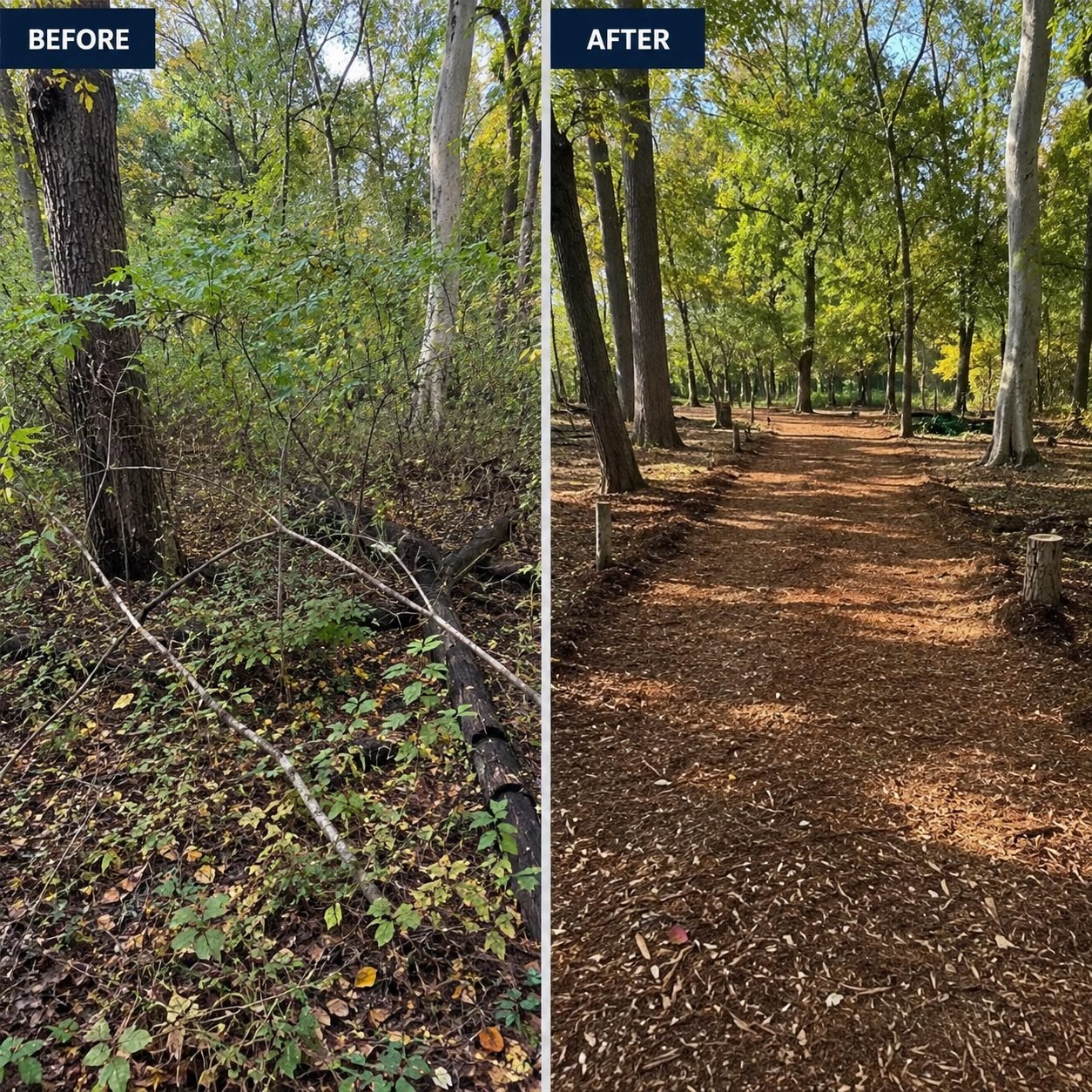
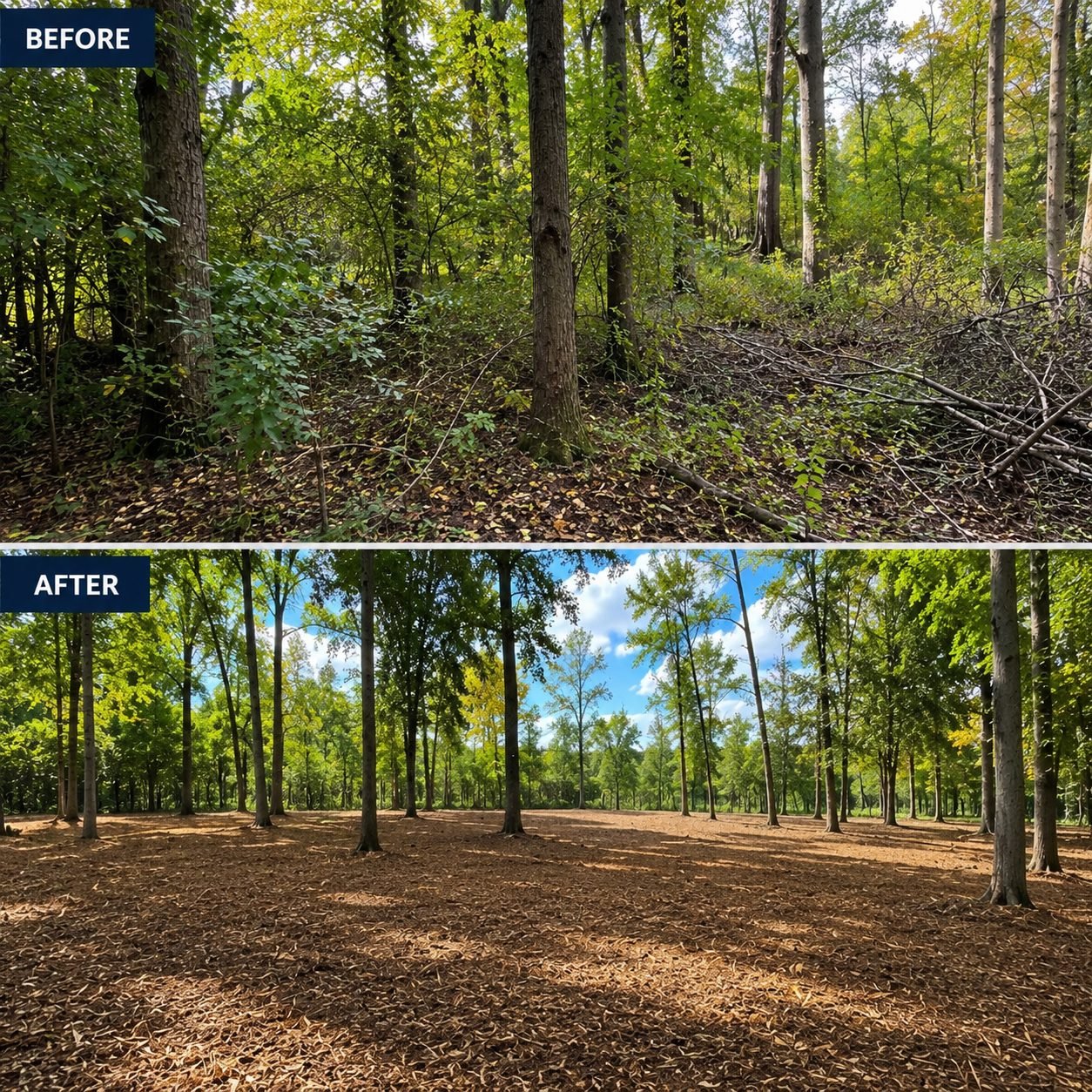
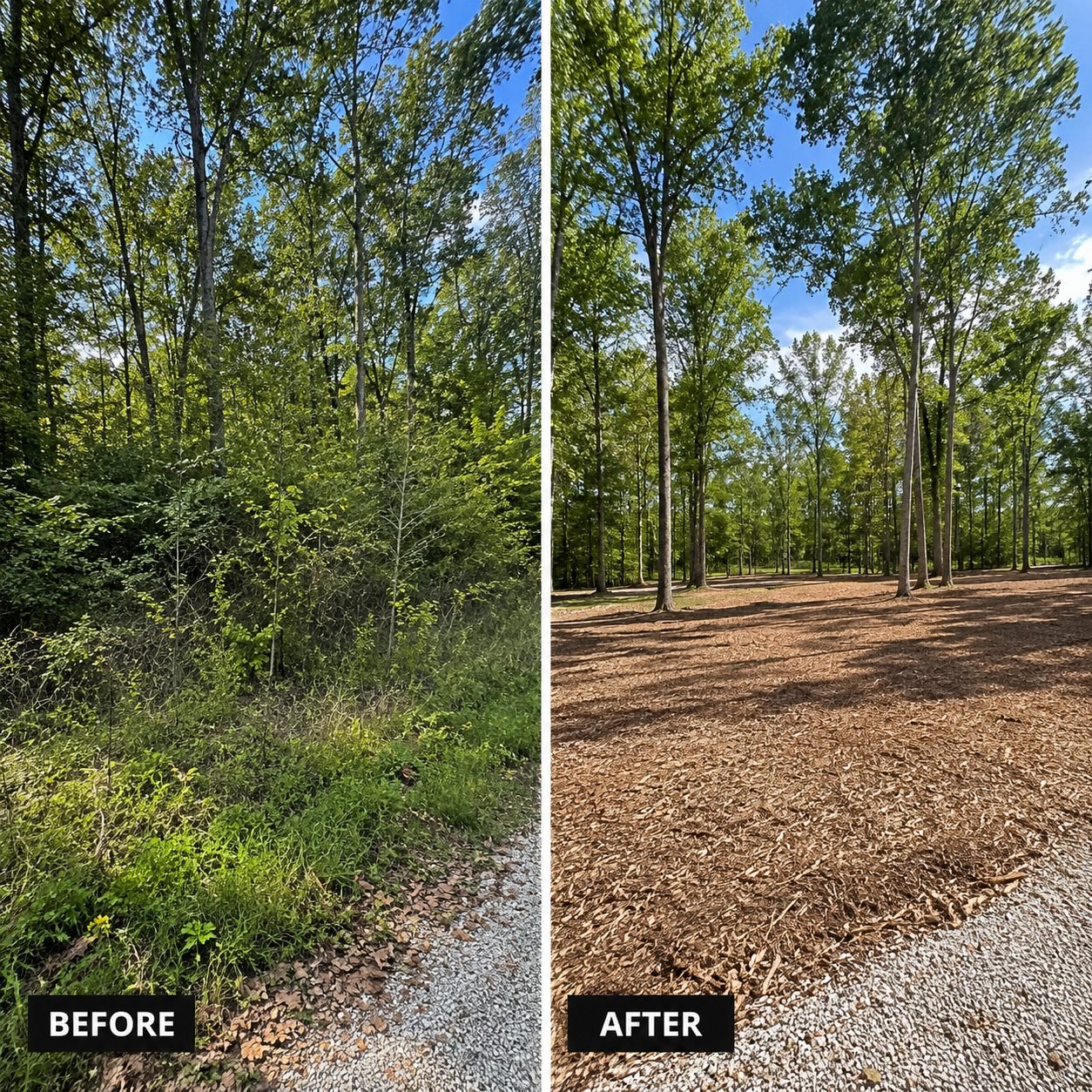
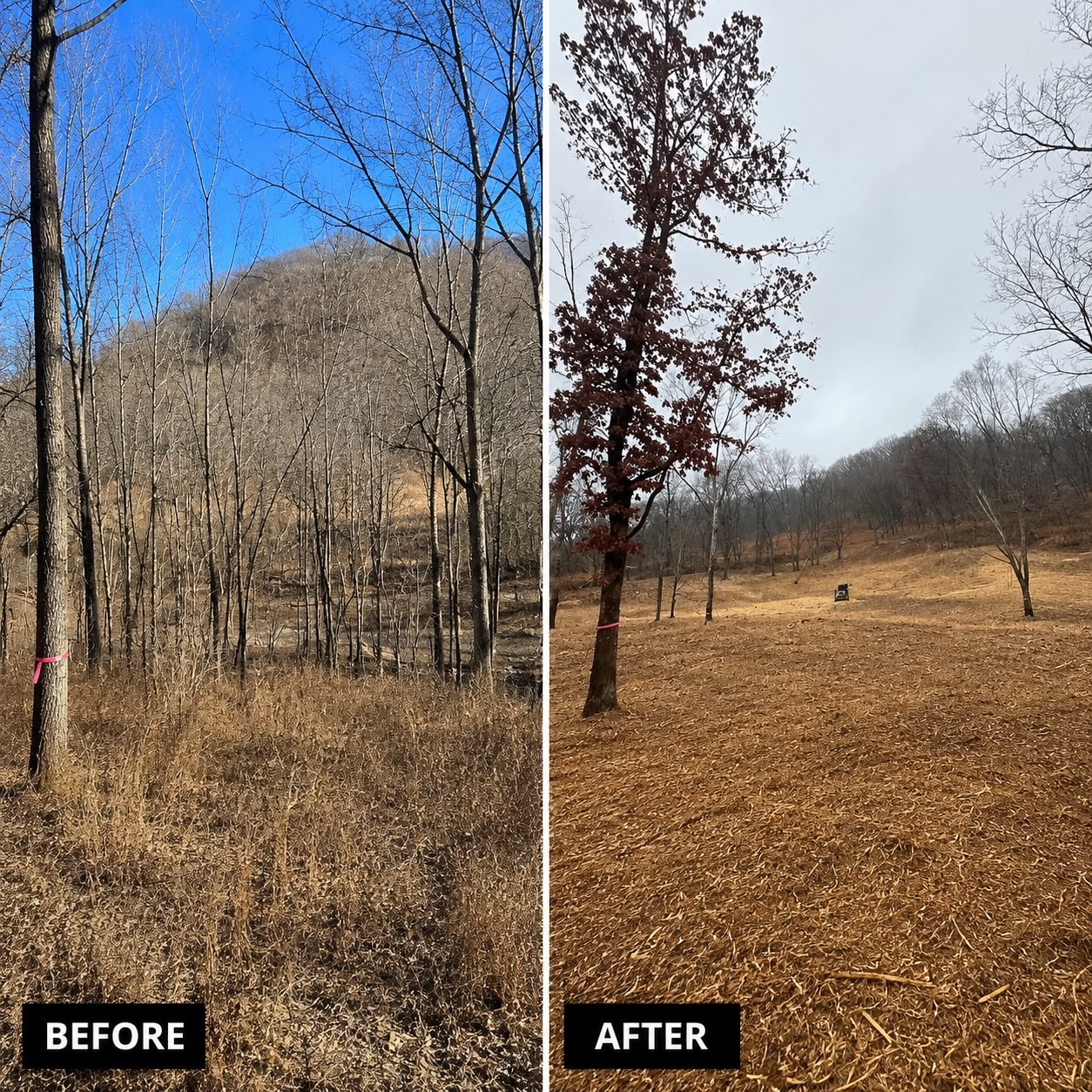
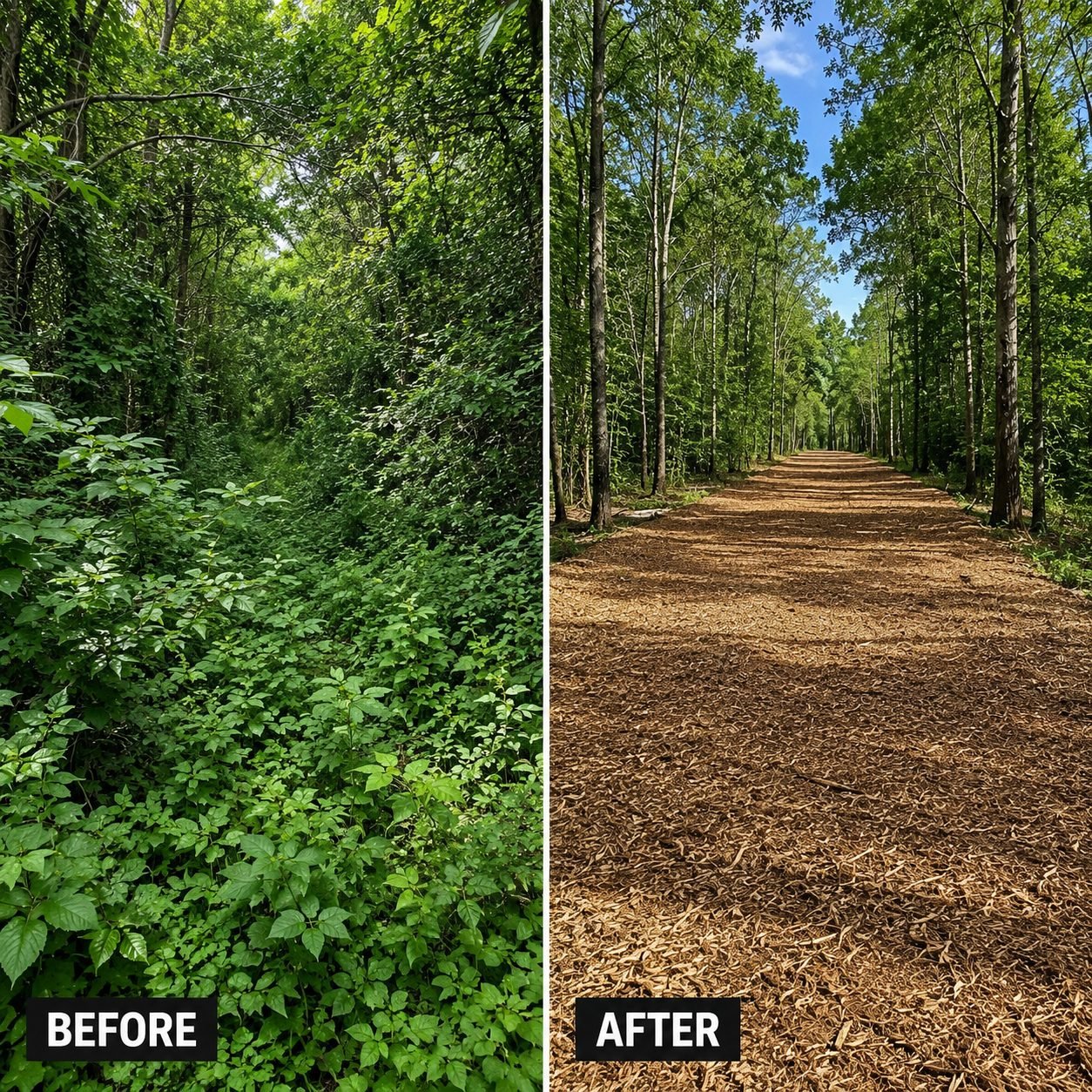
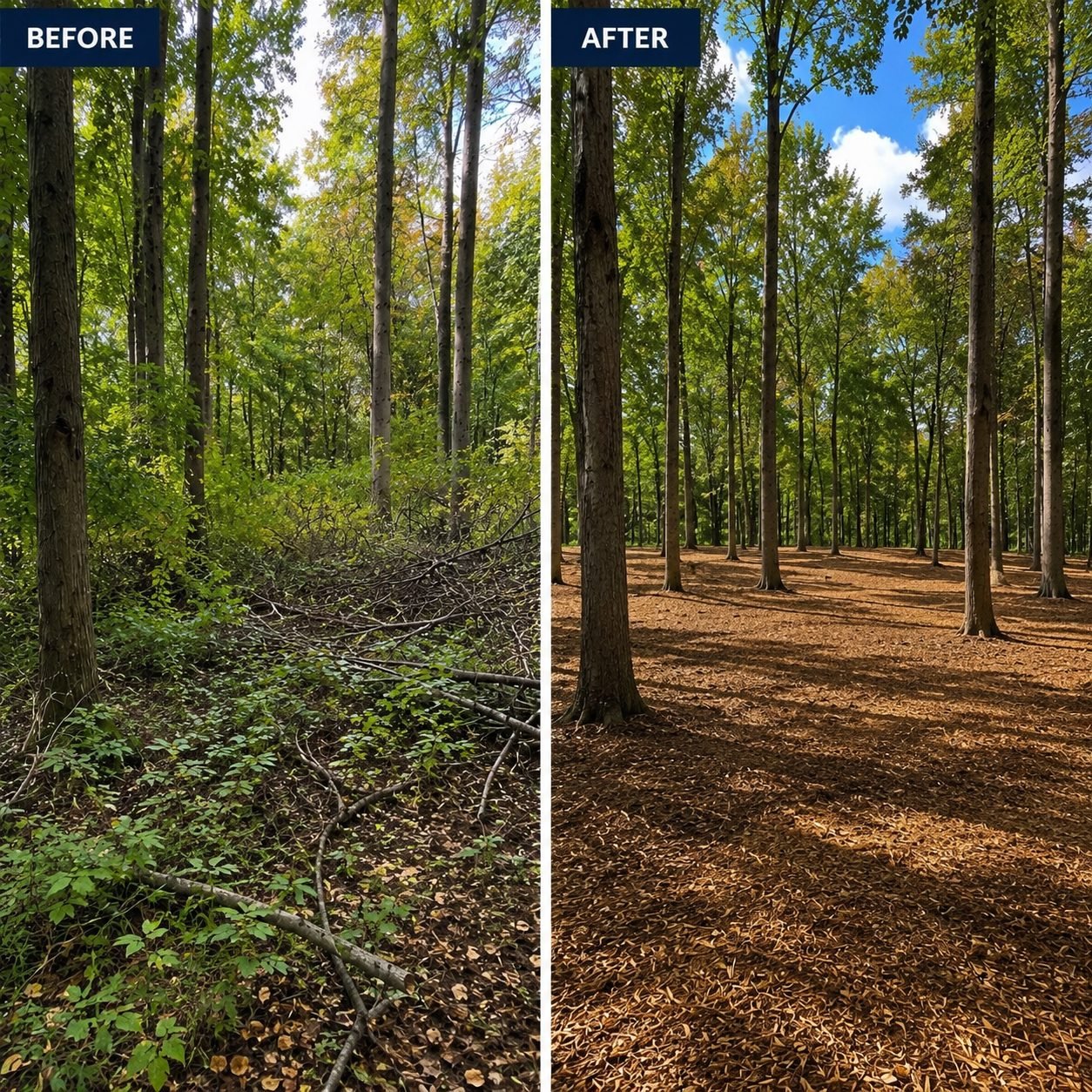
A useful gallery should show the property before work, the type of vegetation removed, the equipment used, the cleared result, and any grading or finish work. Before and after photos help property owners see the difference between brush clearing, underbrush removal, and full site preparation.
Frequently asked questions
Underbrush clearing means removing the low vegetation growing beneath trees or across an overgrown property. It usually includes saplings, briars, vines, and thick ground cover. The purpose is to make a site easier to use, safer to inspect, and more ready for future work. It is not always the same as removing every tree or stump.
Brush usually describes thicker, taller, or more tangled growth that may include woody stems and small saplings. Underbrush is the lower layer beneath the tree canopy or close to the ground. On a job site, the difference matters because underbrush clearing can often be handled with lighter methods, while brush clearing may need heavier equipment and more labor.
Yes, forestry mulching is one of the main methods used for underbrush removal. It cuts and grinds vegetation in place, which reduces hauling and disturbance. It is a good fit for access paths, lot cleanup, and selective clearing. It is not always enough for build sites that need stump removal, drainage work, or a finished grade.
Sometimes, but only for very light growth. Mowing is not a real substitute for underbrush clearing when saplings, vines, woody stems, or hidden obstacles are present. Mowers also struggle in uneven terrain and can be damaged by hidden stumps or debris. If the area is overgrown enough to block access or planning, a proper clearing method is usually safer and more effective.
Clay soil holds moisture and can become slippery or rutted when equipment passes over it. That affects access, cleanup, and final grading. A site may look manageable until wet weather changes the ground conditions. In Central Ohio, experienced contractors pay close attention to timing, machine selection, and drainage so clearing does not create new problems.
If the work involves digging or ground disturbance, yes. Ohio law under ORC 3781.28 requires an Ohio 811 utility locate at least 48 hours before digging. Even when a job is mostly clearing, it is smart to know where utilities are before using heavy equipment. It helps prevent strikes, repairs, and delays.
A good estimate should state the scope, the method, what vegetation is being removed, how debris is handled, whether stumps are included, and whether grading or excavation is part of the job. It should also mention any permit or utility locate responsibilities. If the estimate is too general, it is hard to compare it to other bids.
Choose full clearing when the site must be buildable or when trees, roots, and stumps interfere with the next phase of work. Underbrush clearing is great for opening a site, improving access, and reducing vegetation density. Full clearing is better when you need a blanker slate for construction, roads, utilities, or major grading.
Brush Clearing Across Central Ohio
Fortress Level Construction handles brush clearing in every county and community across Central Ohio. See local details, drive times, and pricing for your area:
What Other Services Does Fortress Offer in Central Ohio?
Fortress Level Construction runs a full range of land-clearing, excavation, grading, and site-work services across Central Ohio, so one owner-operated crew can clear, grade, and prep a site end to end.
Get a Flat-Rate Quote from Lee Carson
Owner-operated land clearing across all five Central Ohio counties. Send your property details and Lee gets back to you within 2 to 3 hours during business hours with one flat number after a free on-site walk-through.