

How Does Farm Land Clearing Work for Agriculture in Central Ohio?
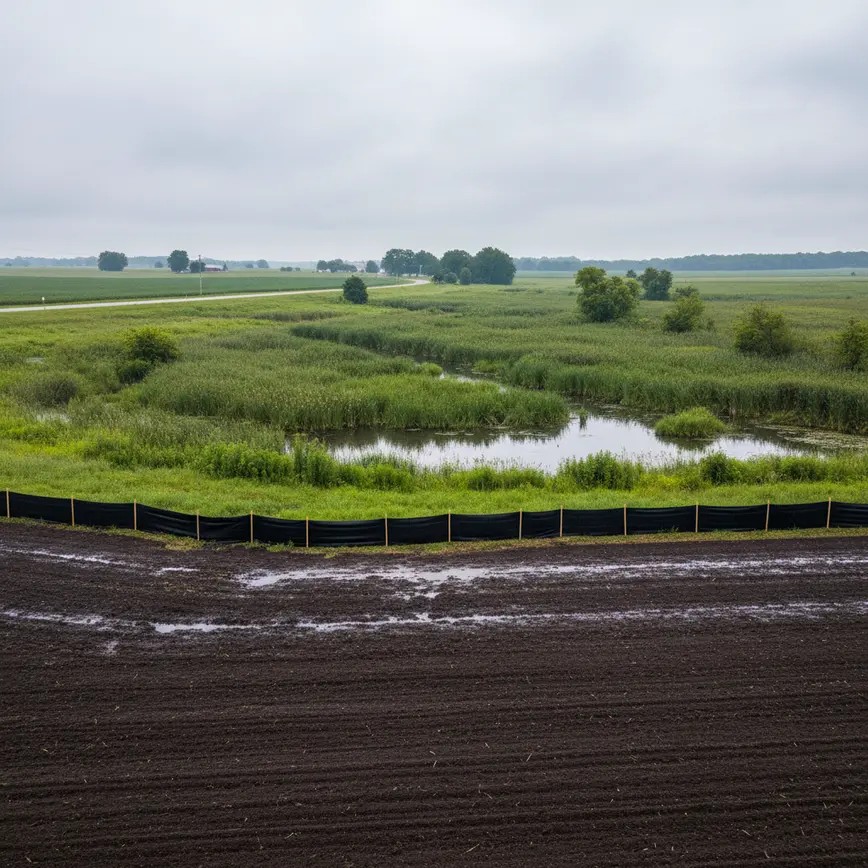
Farm land clearing in Central Ohio prepares fields for crops or pasture by removing trees, brush, and overgrowth, especially along fence rows and field edges. Fortress Level Construction uses forestry mulching and heavy equipment to reclaim tillable acreage while protecting soil and drainage. Most projects are completed efficiently with minimal soil disturbance.
The Quick Answer
- Farm land clearing in Central Ohio reclaims agricultural ground by removing trees, brush, and overgrown edges for crop or pasture use.
- Specialized forestry mulchers and compact track loaders minimize soil disturbance and protect ag drainage tile.
- Brookston-Crosby clay and Coshocton silt loam require careful equipment selection to avoid compaction and drainage issues.
- Forestry mulching costs range from $1,850 to $3,500 per acre; full clearing with haul-off and grading ranges from $4,000 to $8,000 per acre.
- Most farm clearing projects do not require a permit, but a land-disturbance permit may cost $100 to $300 if needed.
- Owner Lee Carson personally walks every site and provides flat-rate quotes, ensuring compliance with Ohio 811 utility locate laws.
- Invasive species like bush honeysuckle and multiflora rose require follow-up treatment to prevent regrowth after clearing.
- Fortress Level Construction has cleared agricultural land across Franklin, Delaware, Licking, Fairfield, and Union counties since 2009.
Related Questions People Ask Next
Forestry mulching grinds trees and brush in place, leaving mulch on the ground and minimizing soil disturbance. Full clearing removes all vegetation, stumps, and roots, often including haul-off and grading. Mulching is faster and more cost-effective for many agricultural applications, while full clearing is used for total land conversion.
Central Ohio soils like Brookston-Crosby clay hold water and can become compacted if worked improperly. Clearing methods and equipment are chosen to avoid damaging ag drainage tile and to protect the soil structure, especially in areas with rolling hills or creek valleys.
Most agricultural clearing projects do not require a permit, but larger jobs or those near waterways may need a local land-disturbance permit, typically costing $100 to $300. All digging or excavation requires an Ohio 811 utility locate at least 48 hours in advance.
Central Ohio farm clearing often involves mature hardwoods such as white oak, sugar maple, and ash, as well as invasive species like bush honeysuckle, autumn olive, multiflora rose, and buckthorn. Invasives resprout aggressively after cutting, so follow-up treatment or herbicide is recommended to ensure long-term control and prevent regrowth.
What Is Farm Land Clearing and How Does It Differ from Other Land Services?
Farm land clearing focuses on reclaiming tillable ground, removing overgrown fence rows, and expanding fields for crops or pasture. Unlike residential or commercial clearing, it prioritizes soil preservation and ag drainage. Forestry mulching is often used to minimize disturbance and leave mulch in place.
Farm land clearing removes trees, brush, and invasive species to restore or expand agricultural fields. It often targets field edges, fencerows, and abandoned pastures.
This service differs from site prep or residential clearing by focusing on soil health, minimizing compaction, and protecting existing drainage tile critical for farming operations.
Why Do Central Ohio Soils and Terrain Make Farm Land Clearing Unique?
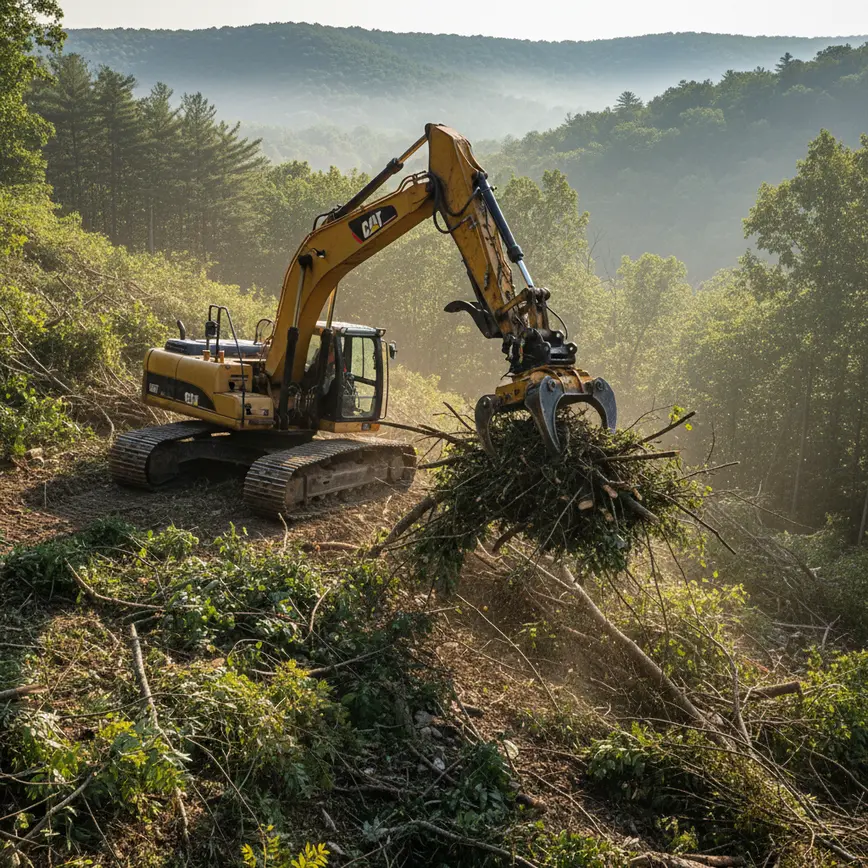
Central Ohio’s Brookston-Crosby clay and Coshocton silt loam soils are poorly drained and prone to compaction. Clearing must avoid damaging ag drainage tile and prevent erosion, especially in rolling hills and creek valleys. Local soil types dictate equipment choice and clearing technique.
Franklin County’s dense clay holds water into spring, while Licking and Fairfield counties have rolling terrain with silt loam that requires careful grading.
Clearing in these conditions demands equipment that can operate on wet, heavy soils without rutting or compacting the ground, protecting future crop yields.
What Equipment Does Fortress Level Construction Use for Farm Land Clearing?
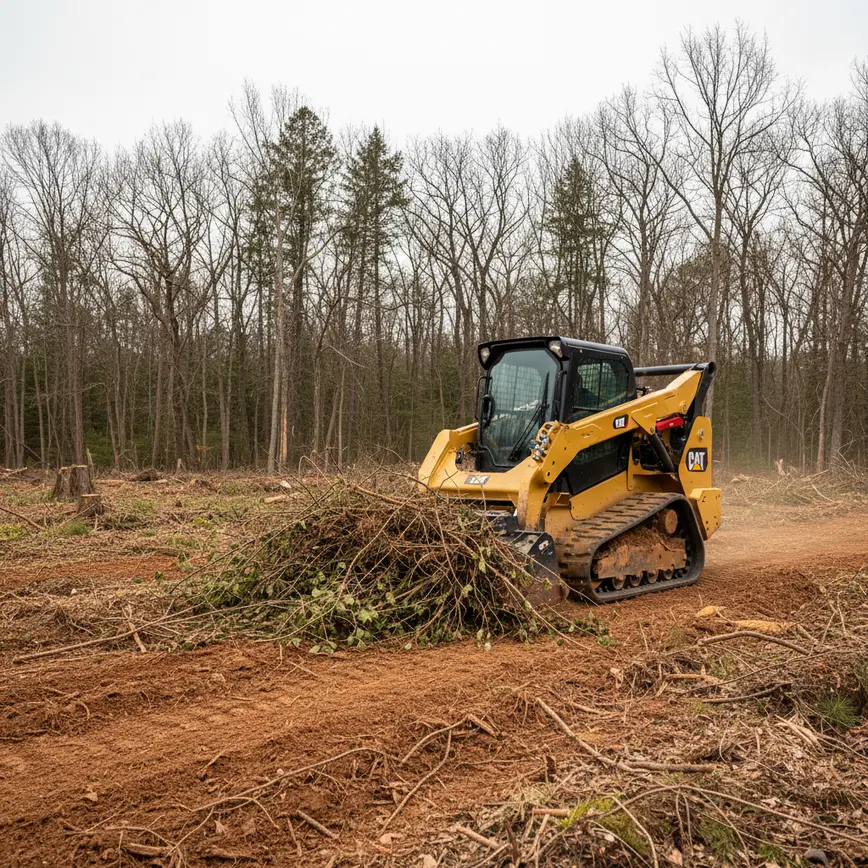
Fortress Level Construction uses John Deere 333G and Caterpillar compact track loaders with forestry mulchers to clear trees and brush efficiently. Excavators with thumbs and dozers are available for root and stump removal. This equipment is chosen for minimal soil impact and effective results.
Forestry mulchers can handle stems up to 14 inches in diameter and clear 1-5 acres per day, leaving mulch to protect the soil.
Excavators and loaders are used for stubborn roots, while dozers provide grading when full clearing is required, ensuring the land is ready for planting.
What Is the Process and Timeline for Farm Land Clearing in Central Ohio?
The process starts with a site walk and quote, followed by Ohio 811 utility locate. Clearing typically takes 1-5 days per field, depending on acreage and density. Most jobs use forestry mulching, with minimal haul-off. Final grading is done if full clearing is needed.
After a free assessment, Lee Carson marks boundaries and identifies drainage tile. Utility locates are scheduled as required by Ohio law.
Clearing is performed with mulchers and loaders, followed by optional grading or seeding. Most projects are completed within a week, weather permitting.
How Does Farm Land Clearing Compare to Other Land Clearing Methods in Central Ohio?
Farm land clearing for agriculture uses forestry mulching or full clearing to reclaim tillable ground. Compared to other methods, it prioritizes soil health, ag drainage, and minimal disturbance. Here’s how it stacks up against adjacent services:
| Farm Land Clearing (Agricultural) | Forestry Mulching Only | Full Clearing & Grading | Residential/Commercial Clearing |
|---|---|---|---|
| Purpose: Reclaim tillable acreage, expand crop/pasture, clear fence rows. | Purpose: Remove brush/trees, leave mulch in place, minimal soil impact. | Purpose: Remove all vegetation, stumps, roots, haul-off debris, final grading. | Purpose: Prep for building, driveways, utilities, often with more grading. |
| Typical Cost: $1,850-$3,500/acre (mulching), $4,000-$8,000/acre (full clearing). | Typical Cost: $1,850-$3,500/acre. | Typical Cost: $4,000-$8,000/acre. | Typical Cost: Varies widely by project scope and site. |
| Soil Impact: Low to moderate; protects ag drainage tile and field structure. | Soil Impact: Minimal; mulch protects soil, no root removal. | Soil Impact: Moderate to high; exposes soil, risk of compaction. | Soil Impact: Often high; grading and excavation common. |
| Equipment: Mulcher, loader, excavator as needed for roots/stumps. | Equipment: Mulcher and loader only. | Equipment: Mulcher, loader, excavator, dozer for grading. | Equipment: Excavator, dozer, loader, often more grading. |
| Best For: Farms reclaiming fields, expanding pasture, clearing overgrown edges. | Best For: Brush/wooded areas where soil preservation is key. | Best For: Total conversion to cropland or pasture, new ag development. | Best For: Home sites, commercial lots, utility installations. |
When Is Farm Land Clearing Not the Right Solution in Central Ohio?
Farm land clearing is not suitable for wetlands, protected habitats, or areas where minimal disturbance is required. If you need selective tree removal, invasive species management, or only fence row trimming, a different Fortress service or no clearing may be better.
Clearing should not be performed in regulated wetlands or protected stream buffers; these require environmental permits and specialized services.
If your goal is only to thin trees or manage invasives without disturbing the soil, consider selective clearing or targeted herbicide treatment instead.
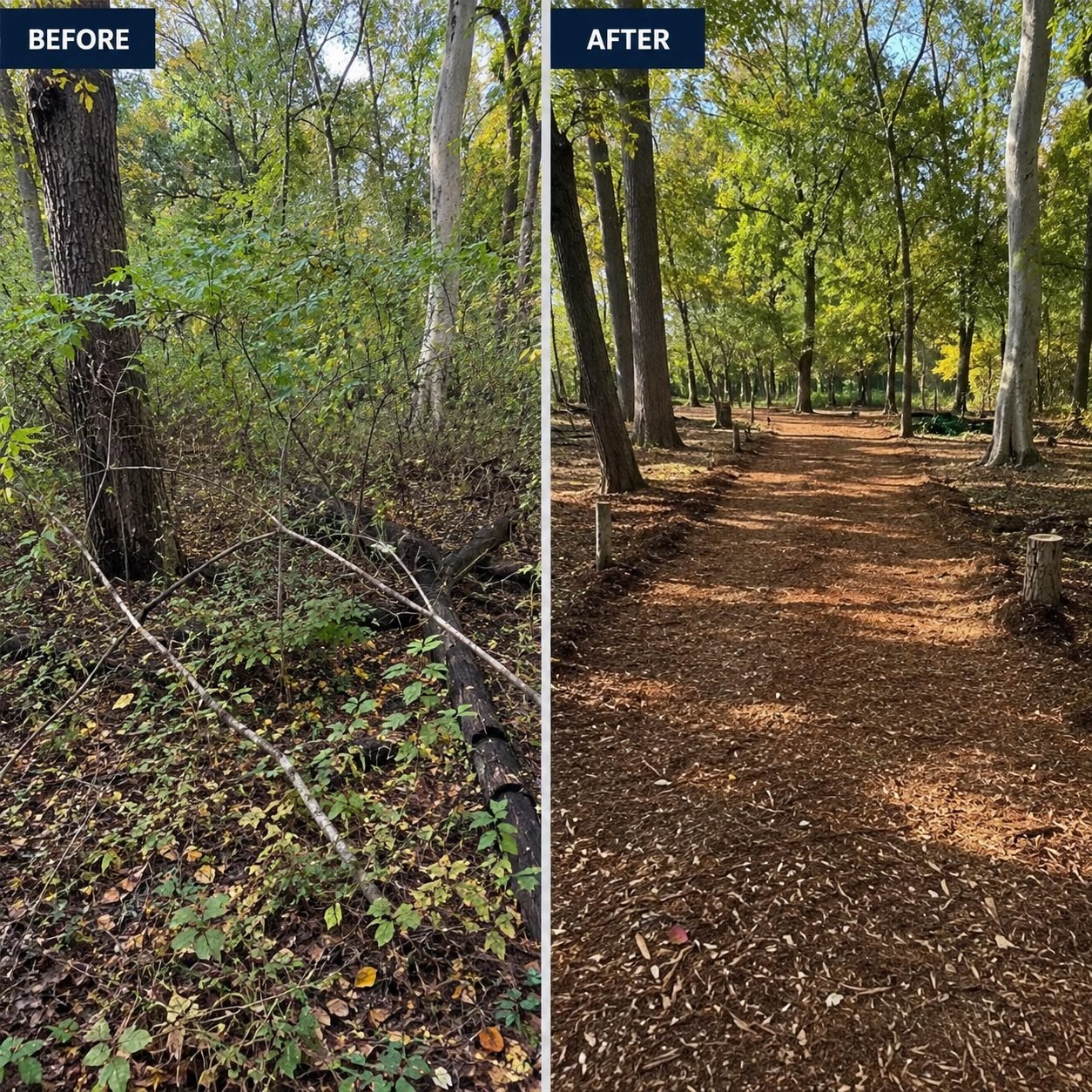
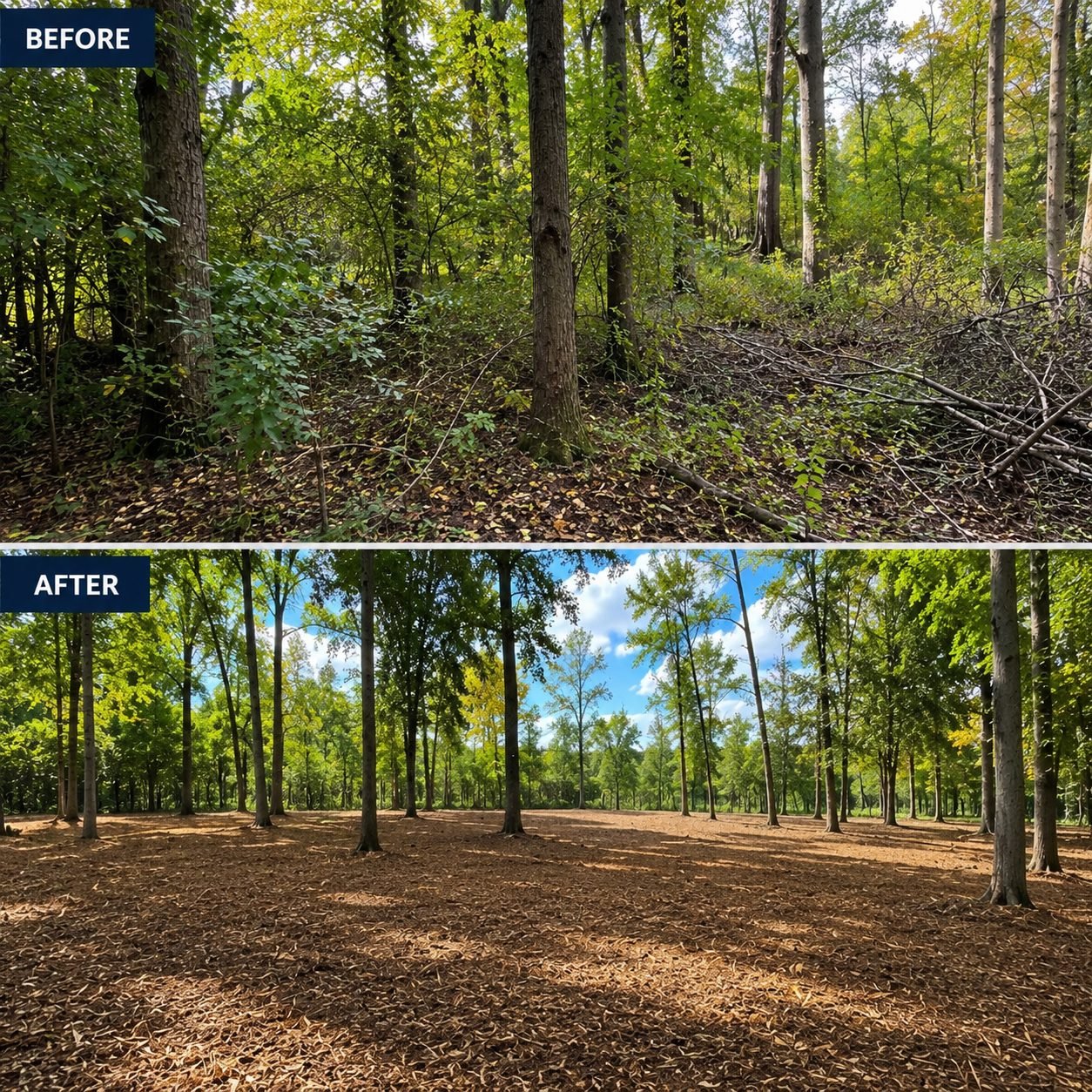
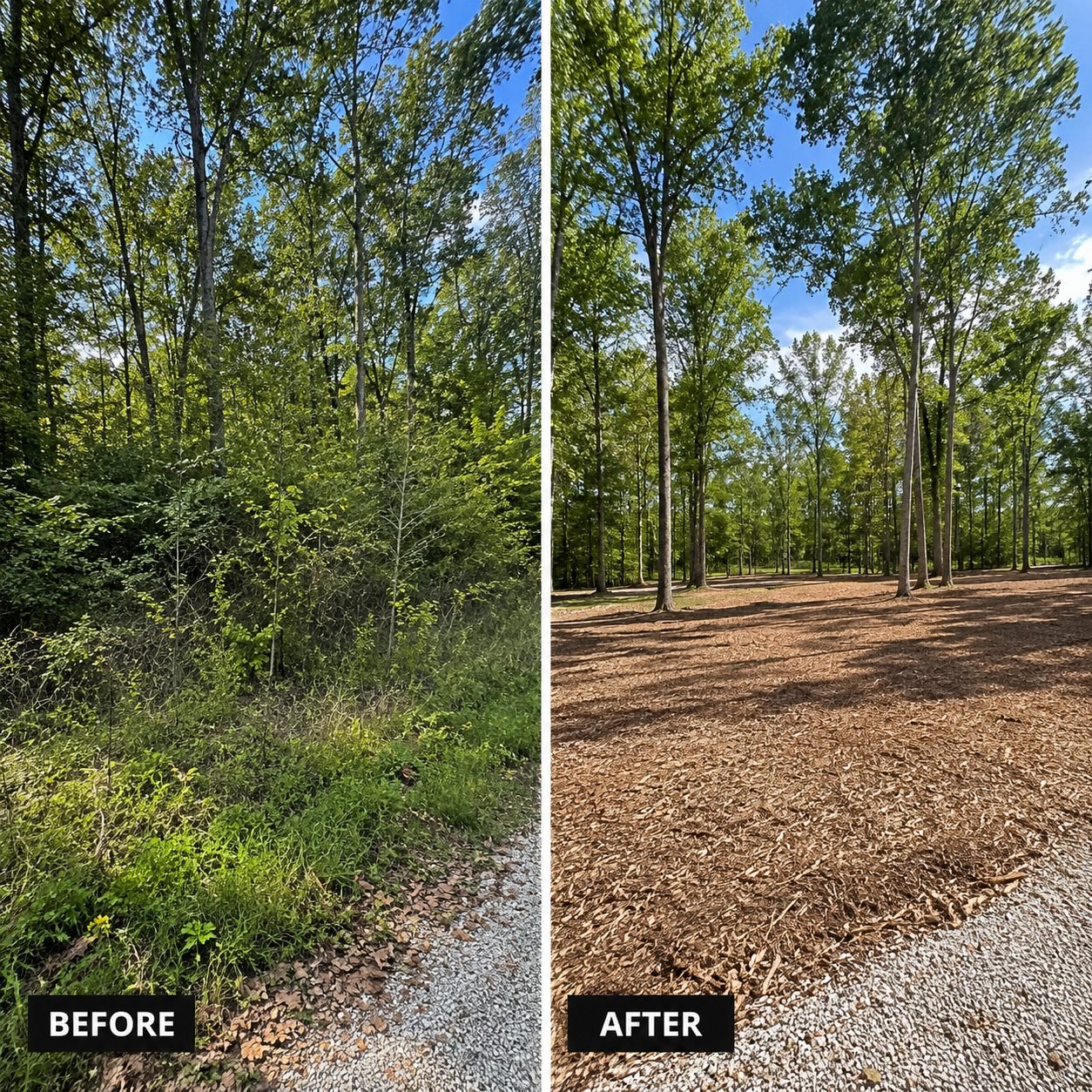
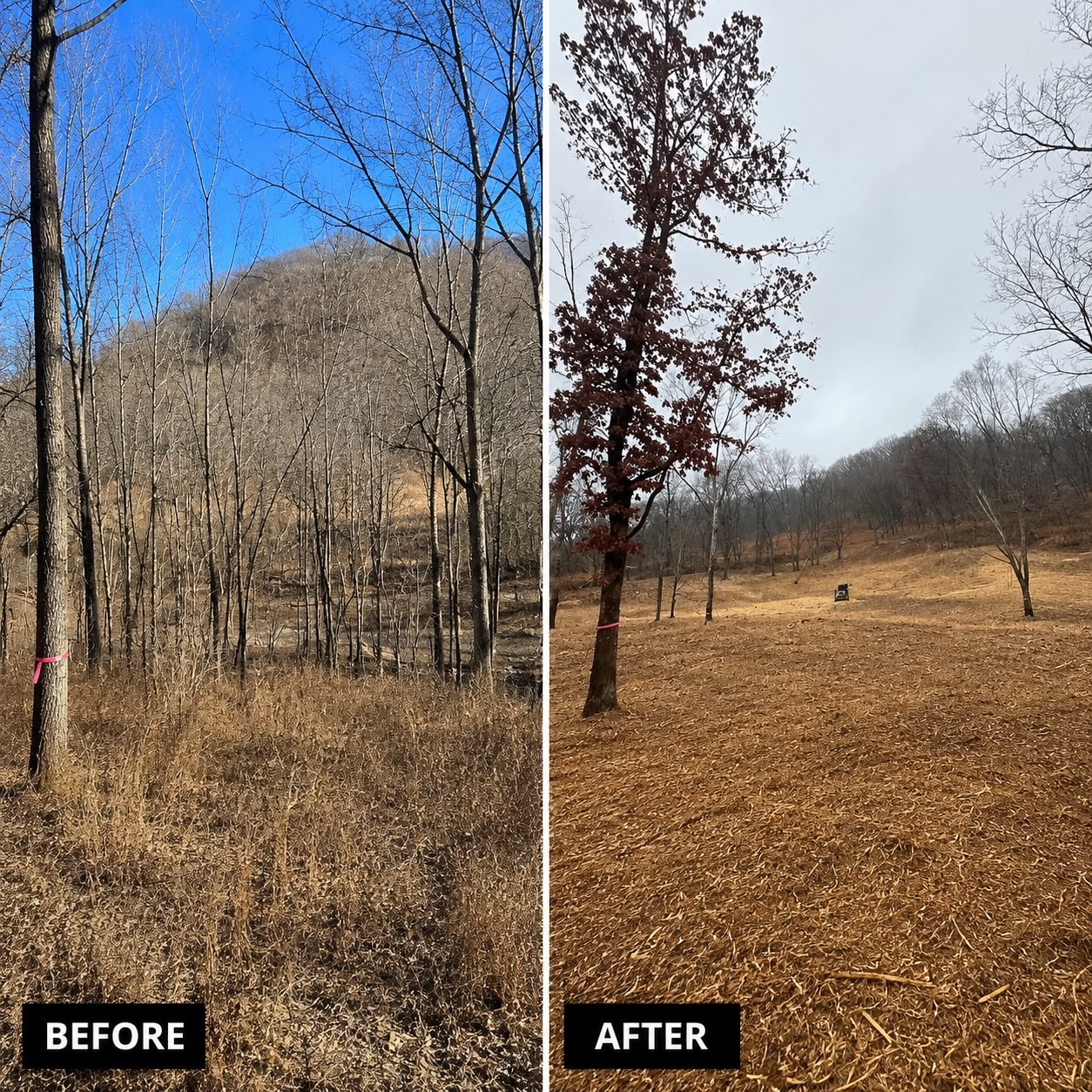
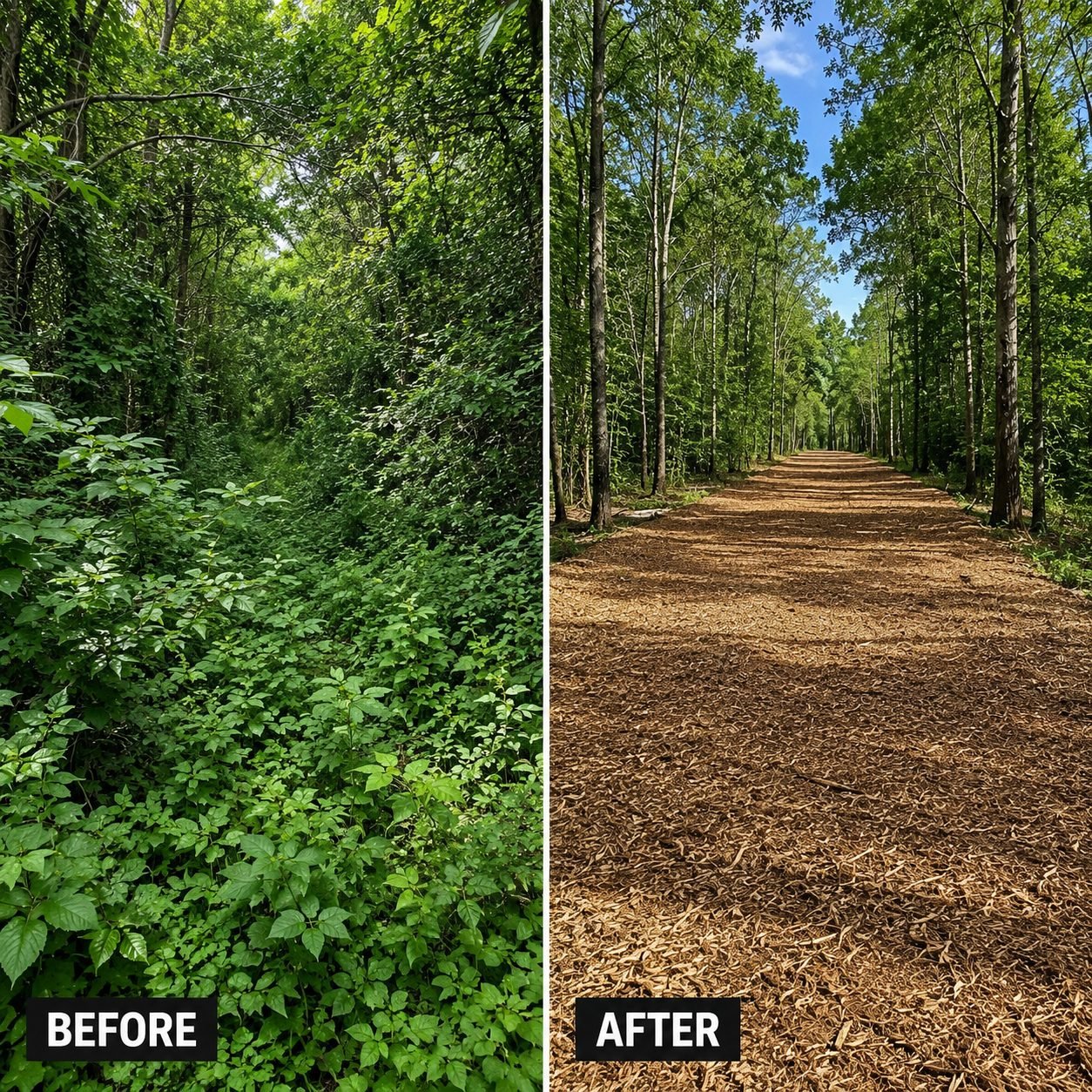
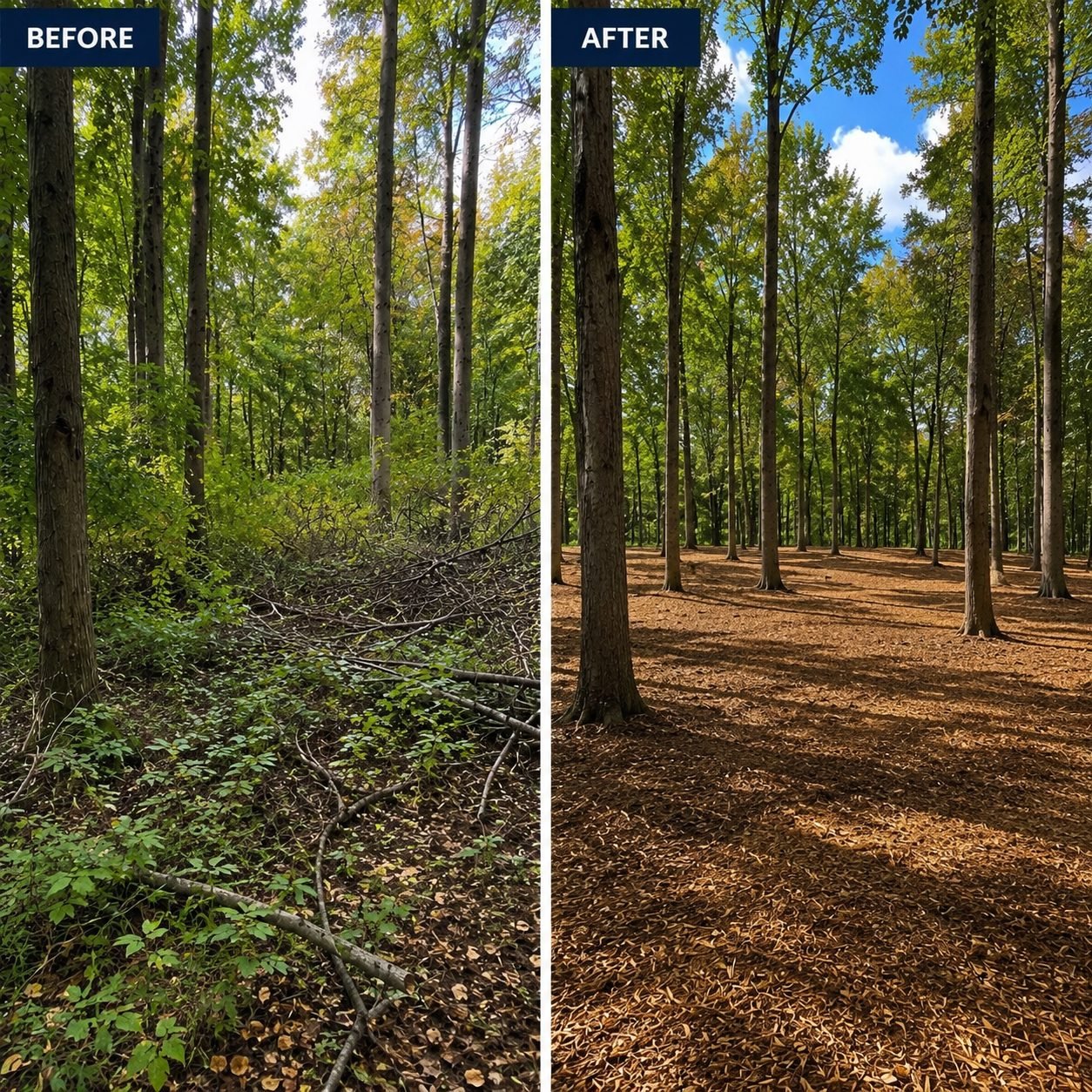
What Do Before and After Results Look Like for Farm Land Clearing in Central Ohio?
Before clearing, fields often have dense brush, overgrown fence lines, and trees crowding field edges. After clearing, the land is open, with mulch protecting the soil, expanded tillable acreage, and clear access for planting or grazing. Drainage tile and field contours are preserved for agricultural use.
Frequently asked questions
The cost for farm land clearing in Central Ohio ranges from $1,850 to $3,500 per acre for forestry mulching, and $4,000 to $8,000 per acre for full clearing with haul-off and grading. The final price depends on vegetation density, terrain, and whether grading or debris removal is required.
Fortress Level Construction uses forestry mulchers mounted on compact track loaders (like the John Deere 333G), excavators with thumbs for root and stump removal, and dozers for grading. This equipment is chosen to minimize soil compaction and protect ag drainage systems.
Most agricultural clearing projects do not require a permit. However, larger projects or those near waterways may need a local land-disturbance permit, typically costing $100 to $300. All excavation or digging also requires an Ohio 811 utility locate at least 48 hours in advance.
Forestry mulching grinds trees and brush in place, leaving a layer of mulch that protects the soil from erosion and compaction. This method is fast, cost-effective, and ideal for reclaiming overgrown fields or expanding pasture with minimal disturbance to the ground. Mulching also helps reduce regrowth of unwanted brush.
Commonly cleared vegetation includes mature hardwoods like white oak, sugar maple, and ash, as well as invasive species such as bush honeysuckle, multiflora rose, autumn olive, and buckthorn. Invasive plants often require follow-up treatment to prevent regrowth and ensure long-term control for productive farm use.
Most farm land clearing projects are completed within 1 to 5 days, depending on the size of the area and the density of brush and trees. Forestry mulching can clear 1 to 5 acres per day, while full clearing with grading may take longer, especially in wet or hilly conditions.
Farm Land Clearing by County and City in Central Ohio
Franklin County
Delaware County
Fairfield County
Union County
What Other Services Does Fortress Offer in Central Ohio?
Fortress Level Construction runs a full range of land-clearing, excavation, grading, and site-work services across Central Ohio, so one owner-operated crew can clear, grade, and prep a site end to end.
Get a Flat-Rate Quote from Lee Carson
Owner-operated land clearing across all five Central Ohio counties. Send your property details and Lee gets back to you within 2 to 3 hours during business hours with one flat number after a free on-site walk-through.