
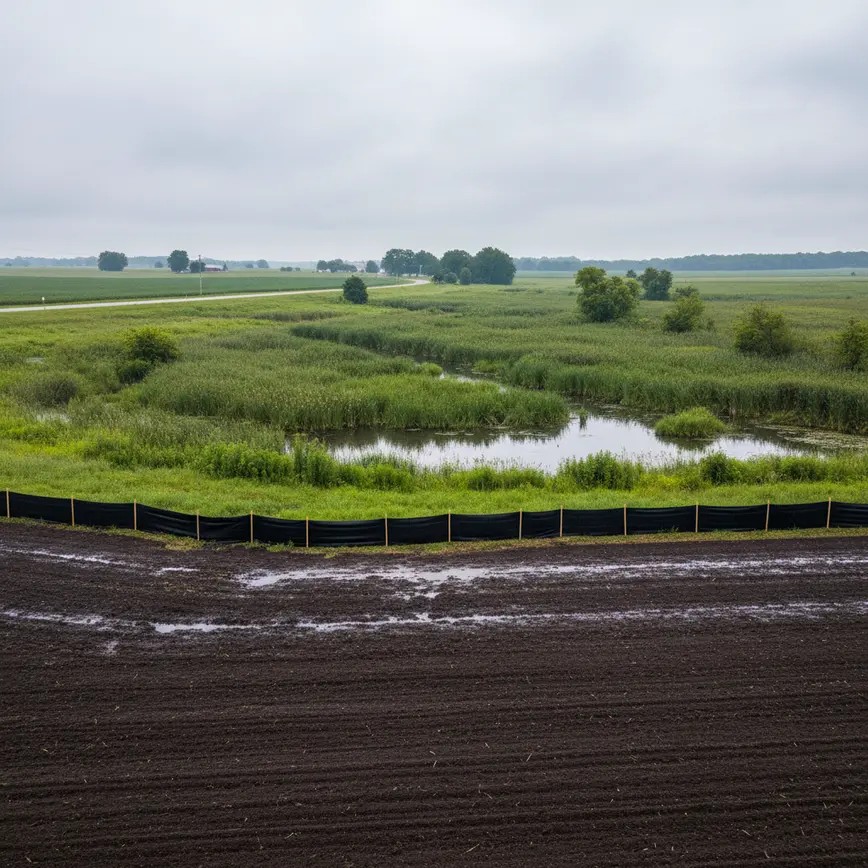

How does farm land clearing work in Whitehall, Ohio?
Farm land clearing in Whitehall, Ohio means the crew handles tight, established mid-century lots east of Columbus with compact access, heavy clay subsoil, and dense spacing. Fortress Level Construction uses compact track loaders, dozers, and excavators to clear growth, mulch stems, and stage debris without overworking the small infill site.
The Quick Answer
- Farm land clearing in Whitehall is about tight infill access, not wide-open acreage, so the crew plans around small mid-century lots, heavy clay, and close structures.
- Fortress Level Construction is licensed and insured, and the team responds in 2 to 3 hours during business hours for a free on-site walk-through.
- For lighter overgrowth, forestry mulching commonly lands in the $1,850 to $3,500 per acre range, while full clearing often runs $4,000 to $8,000 per acre.
- John Deere 333G compact track loaders with Diamond drum mulchers handle stems up to 14 inches, which fits brush-heavy parcels and narrow access points.
- Whitehall’s flat glacial-till plain and Crosby, Miamian, and Kokomo silt loams and clays can hold moisture, so machine choice and travel paths matter.
- The crew coordinates Ohio 811 utility locate timing at least 48 hours before digging, per Ohio Revised Code 3781.28.
- Whitehall’s East Main and Broad Street corridors, DSCC area, and nearby I-70 and I-270 access can affect arrival and staging more than distance alone.
- Call Fortress Level Construction for a flat-rate quote after the walk-through, especially when the goal is clearing brush, saplings, and field edge growth efficiently.
Related Questions People Ask Next
Whitehall’s compact, established mid-century lots leave less room for swing radius, debris staging, and truck access. Fortress adjusts the plan by using compact track loaders first, then excavators or dozers only where the site can support them. That approach helps keep the work controlled around dense residential spacing near Columbus, Bexley, Reynoldsburg, and Gahanna.
The core setup is John Deere 333G compact track loaders with Diamond drum mulchers, plus dozers and excavators when the clearing needs root removal, grading support, or heavier push work. On Whitehall’s flat clay ground, the team uses smaller machines first so the job can fit tight access near East Main, Broad Street, and the DSCC area.
Crosby, Miamian, and Kokomo silt loams and clays can slow travel, hold moisture, and increase cleanup time. That affects whether the job stays in forestry mulching range or moves into full clearing. In Whitehall, the crew looks at soil conditions during the walk-through so the flat-rate quote reflects access, stems, and debris handling.
Yes. Ohio law requires an Ohio 811 utility locate at least 48 hours before any digging. Even on a small Whitehall parcel, that step matters because tight residential spacing leaves little room for error. Fortress builds the schedule around the locate window, then sets the clearing date once the site is marked and ready.
What does a Whitehall farm land clearing walk-through cover?
The walk-through in Whitehall checks access, stem density, clay conditions, and where a compact track loader can move without tearing up a small lot. Fortress gives a free on-site estimate, then sets a flat-rate quote based on whether the job is brush mulching, full clearing, or staged removal near Columbus corridors.
Because Whitehall is a compact inner-ring suburb with tight, established mid-century lots, the crew does not treat the site like open rural acreage. Lee Carson and the Fortress team look at turning room, fence lines, drainage, and the heavy clay subsoil before they price the work. That keeps the quote tied to the real job, not a generic per-acre guess.
On sites near John Bishop Park, DSCC, or the East Main and Broad Street corridors, access can be the main limiter. The team can usually respond in 2 to 3 hours during business hours and schedule same-week walk-throughs. If the lot needs digging, Ohio 811 marking must happen at least 48 hours ahead, per Ohio Revised Code 3781.28.
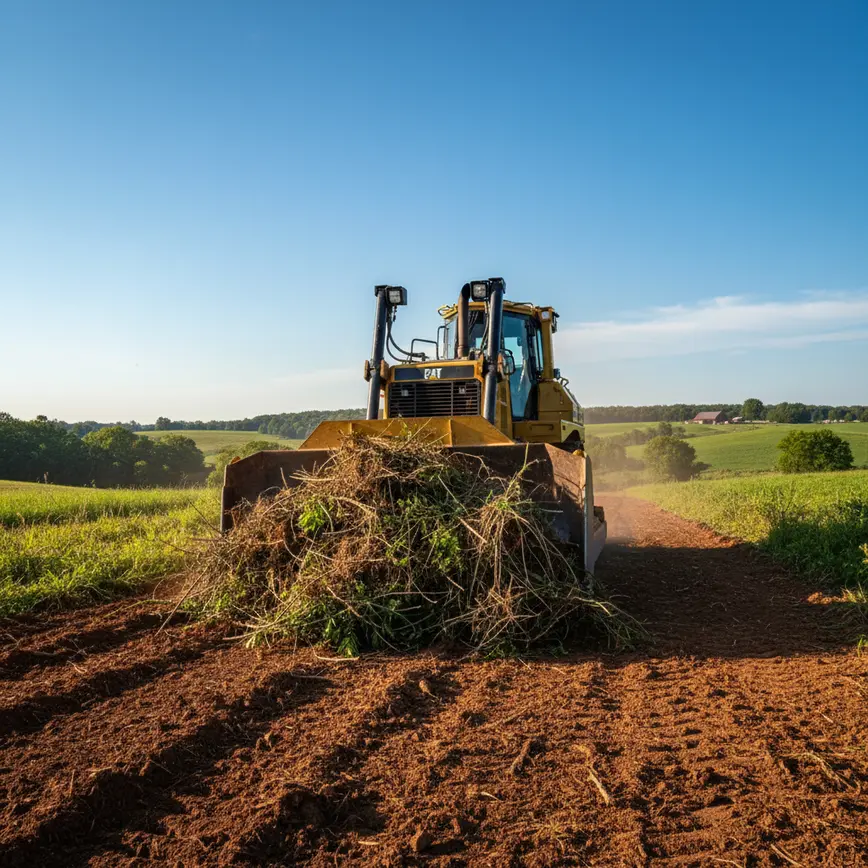
Which machines clear farm land fastest on Whitehall lots?
Fortress uses John Deere 333G compact track loaders with Diamond drum mulchers to cut stems up to 14 inches and clear about 1 to 5 acres per day, depending on density and access. In Whitehall, the compact machine footprint matters as much as power because small lots and close structures limit room to maneuver.
On Whitehall’s flat glacial-till plain, the crew can keep the machine level and productive, but the dense clay subsoil can still rut if the site is too wet. That is why the team may start with mulching on the lighter side of the lot and bring in dozers or excavators only when the clearing scope calls for root removal, pile work, or final shaping.
For brush-heavy farm edges and infill parcels east of Columbus, this setup is often faster than sending in large iron first. The mulcher knocks down stems, reduces haul-off, and leaves a cleaner working surface for follow-up. That matters on Whitehall lots where access lanes are narrow and the work has to happen without crowding neighboring homes.
How is farm land clearing priced in Whitehall, Ohio?
Pricing in Whitehall depends on stem size, access, clay conditions, and whether the site needs forestry mulching or full clearing with haul-off. Fortress gives flat-rate quotes after the walk-through, with forestry mulching usually in the $1,850 to $3,500 per acre range and full clearing usually in the $4,000 to $8,000 per acre range.
A small, tight lot can cost more per usable acre than open ground because machine placement, staging, and cleanup take extra time. In Whitehall, the team factors in the dense residential spacing, nearby corridors, and the cost of working around established structures. That is why a free on-site visit matters before any number is locked in.
If the parcel has thick overgrowth, heavy clay, or buried debris, the quote may move from mulching to full clearing. Full clearing usually includes more travel, more removal, and more finish work. The crew explains those differences clearly during the estimate so you know whether the site is a mulching candidate or needs a more complete clearing plan.
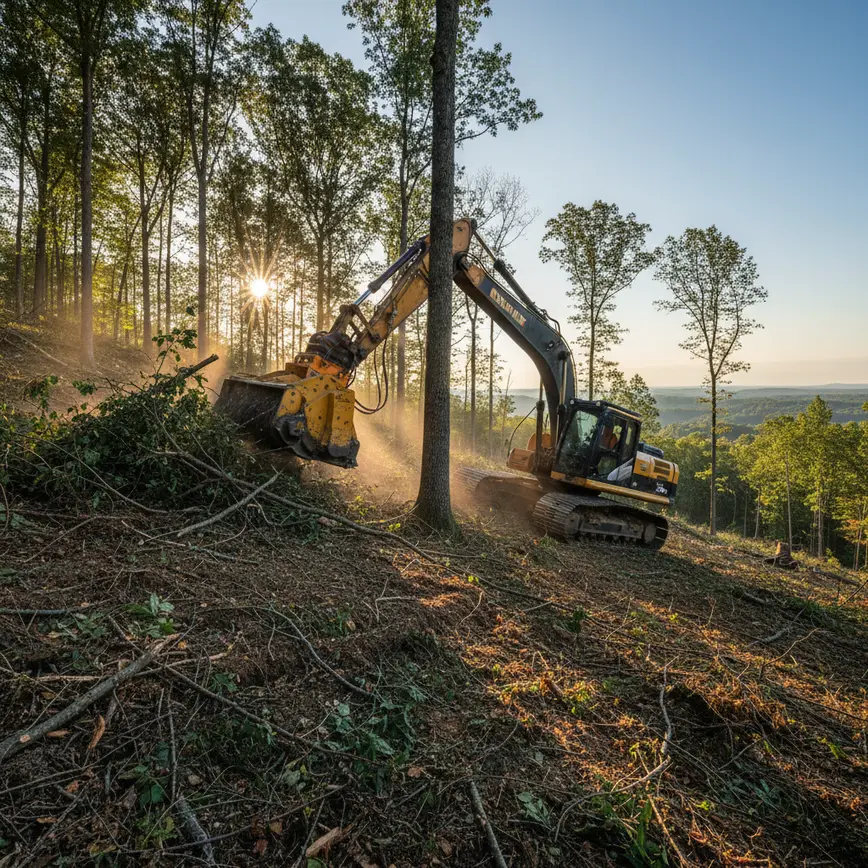
Why does Whitehall soil affect farm land clearing results?
Whitehall sits on a relatively flat glacial-till plain with dense heavy clay subsoil, including Crosby, Miamian, and Kokomo silt loams and clays. That ground can stay sticky and compacted, so Fortress times machine traffic carefully, especially on small lots where a bad path can damage the whole site.
The team uses that soil knowledge to decide whether to mulch first, push later, or bring in excavators for problem areas. In Whitehall, a narrow lot east of Columbus may look simple from the street but still require careful travel planning because the clay can hold moisture and track deep ruts. The wrong machine order can turn a clearing job into a restoration job.
That is also why the free walk-through is important. The crew checks whether the site drains well enough for fast travel or whether it needs a lighter approach near the DSCC area, John Bishop Park, or the I-70 and I-270 corridors. Good sequencing keeps the project efficient and protects the ground after the brush is gone.
How does Whitehall farm land clearing compare to open-country clearing?
Whitehall work is usually tighter, slower to stage, and more access-driven than open-country clearing. The crew often deals with small lots, close structures, and clay soil, so machine size and traffic control matter more than sheer acreage. That is different from broad rural fields where speed and long runs dominate.
| Whitehall tight lots | Open-country acreage | Best machine fit | Cost driver |
|---|---|---|---|
| Dense mid-century spacing | Wide field edges | Compact track loader first | Access and setup |
| Heavy clay subsoil | Variable loam or lighter ground | Mulcher plus dozer support | Travel condition |
| Near DSCC and I-70 or I-270 corridors | Remote farm tracts | Smaller equipment footprint | Staging room |
| Possible spot clearing on small parcels | Large continuous acres | Stems up to 14 inches | Debris handling |
| Often same-week walk-through | Longer travel planning | Flat-rate quote after site visit | Scope definition |
When is farm land clearing not the right choice in Whitehall?
Farm land clearing is not the right call if the issue is mostly grading, drainage repair, or a site with utilities that have not been located yet. In Whitehall, the small lot size and dense spacing can also make full clearing unnecessary when selective mulching will solve the problem at lower cost.
If your Whitehall property only needs brush knocked back, a full clearing package can be overkill. In that case, forestry mulching may be the better fit because it removes stems without the added haul-off and finish steps. The crew explains that difference during the walk-through so you are not paying for work the site does not need.
If the job involves excavation near a marked utility line, active drainage correction, or major grade changes, the first move may be a different service sequence instead of clearing alone. Fortress will still start with the site visit, then advise whether Ohio 811 locates, excavating, or a separate earthwork scope should come before land clearing.
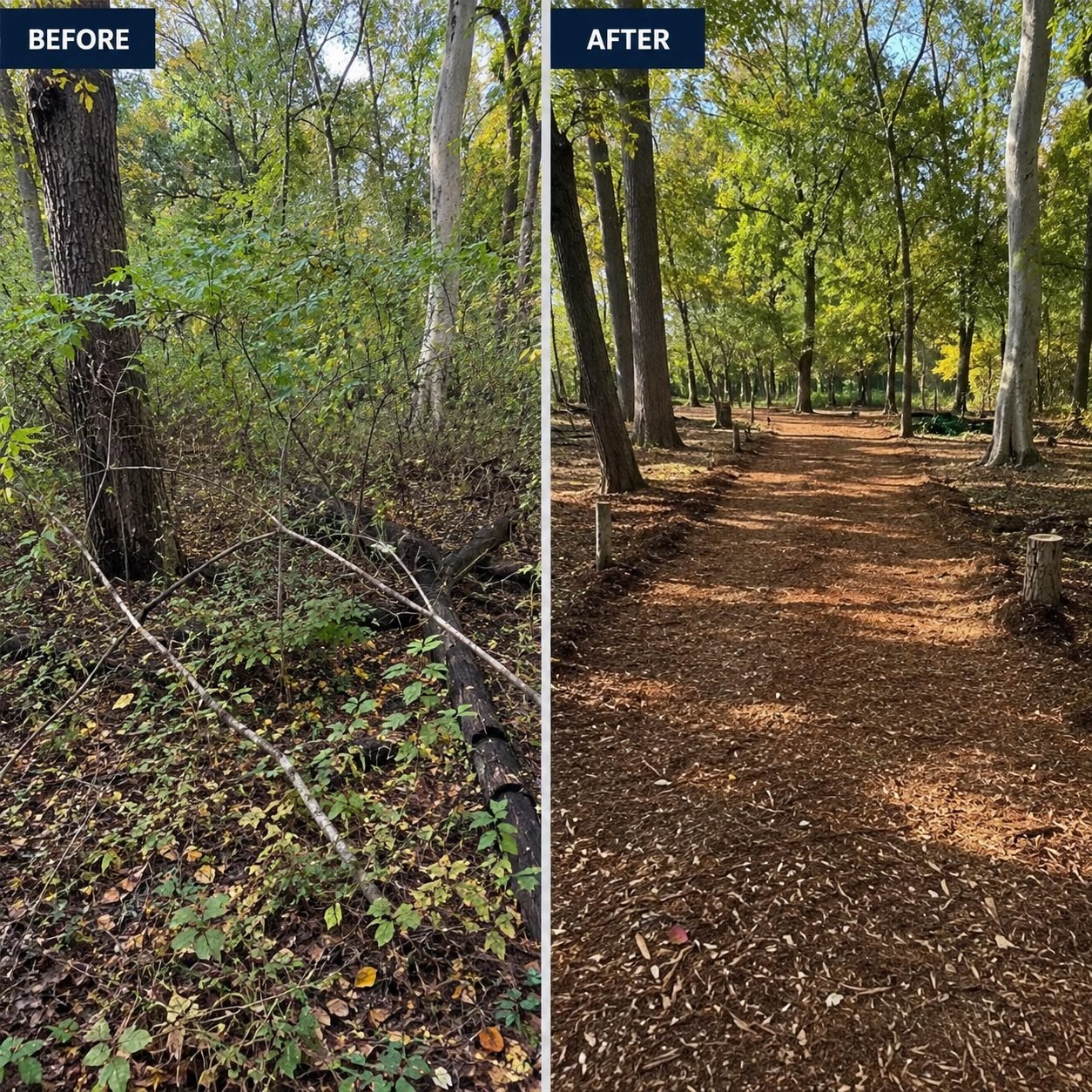
What should a Whitehall before-and-after farm land clearing gallery show?
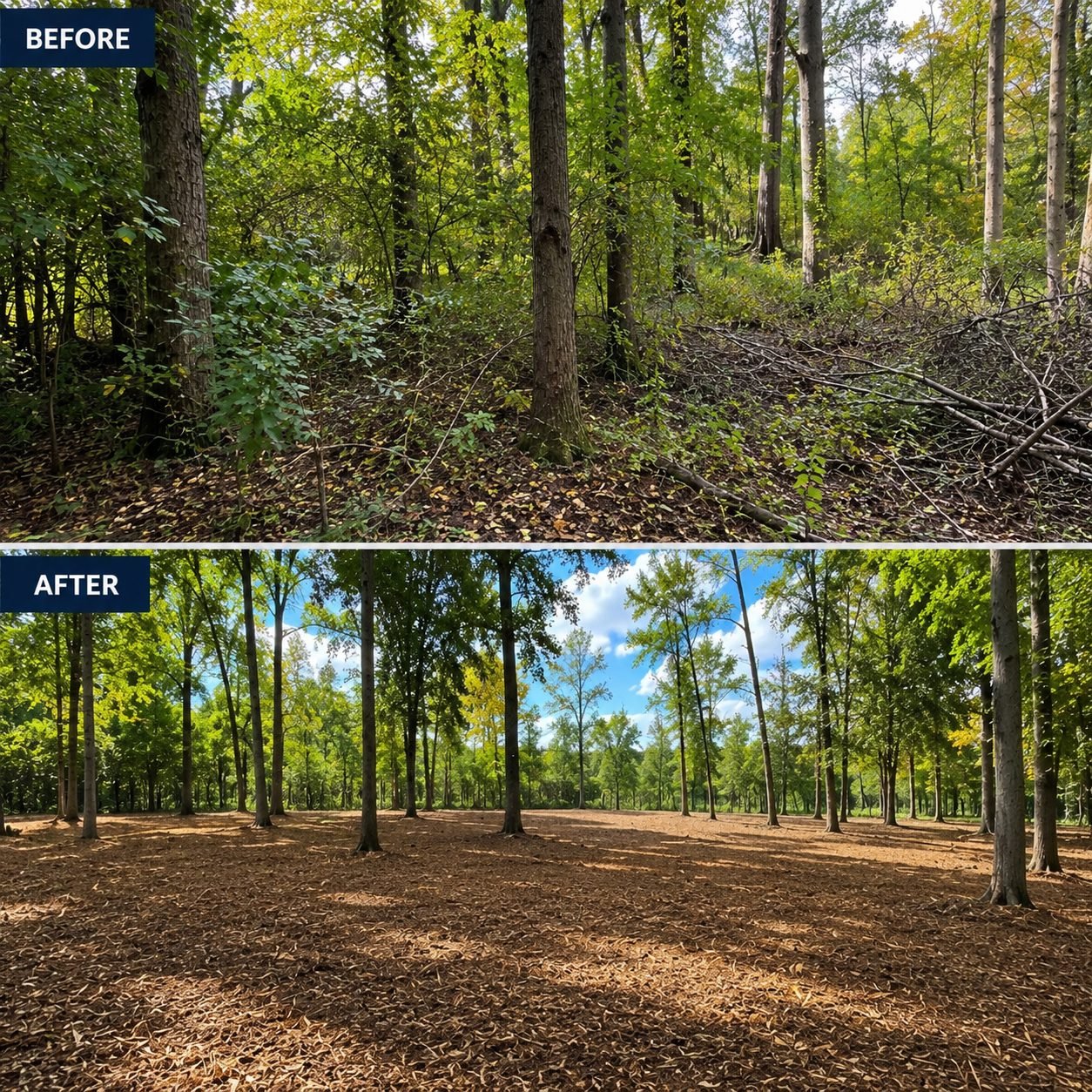
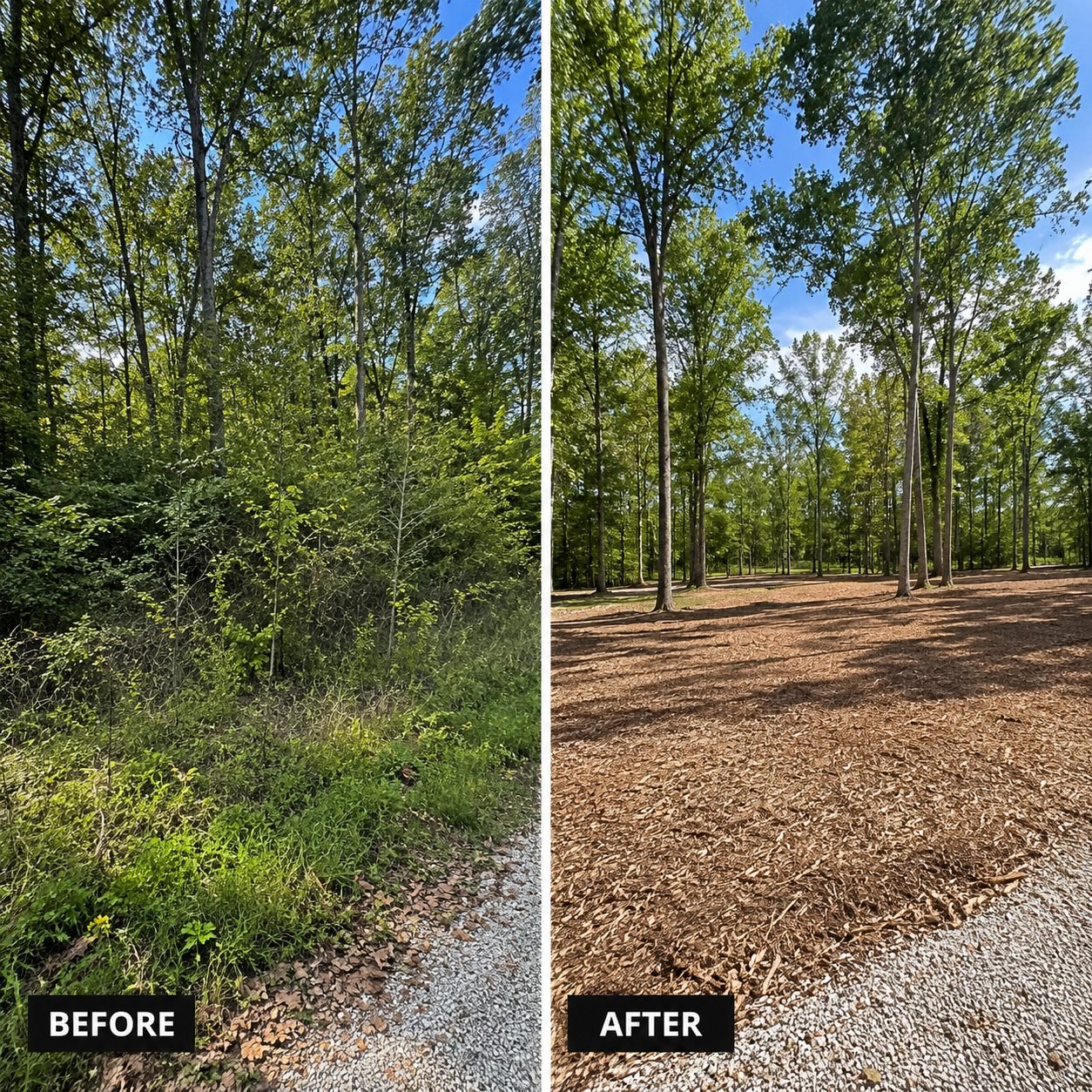
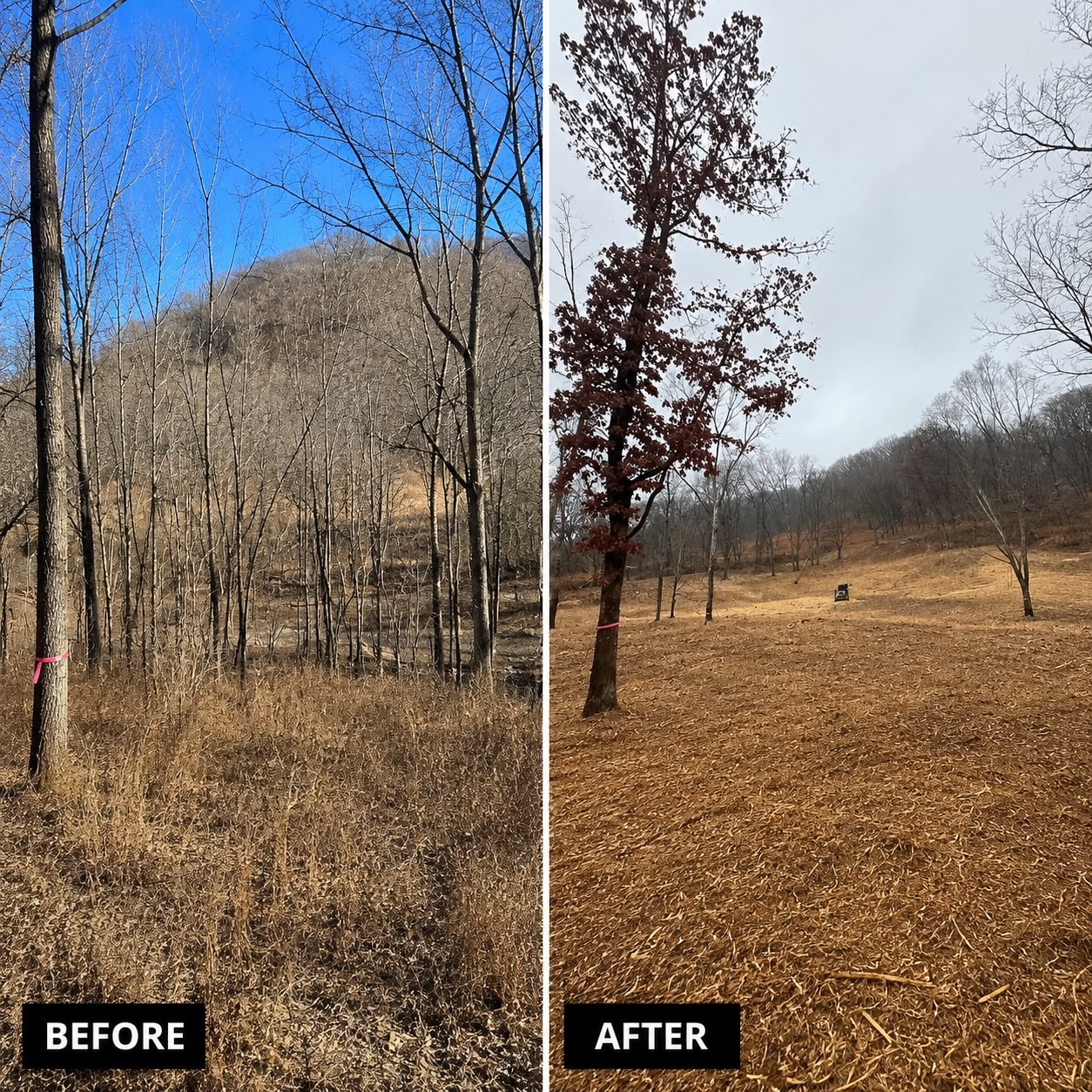
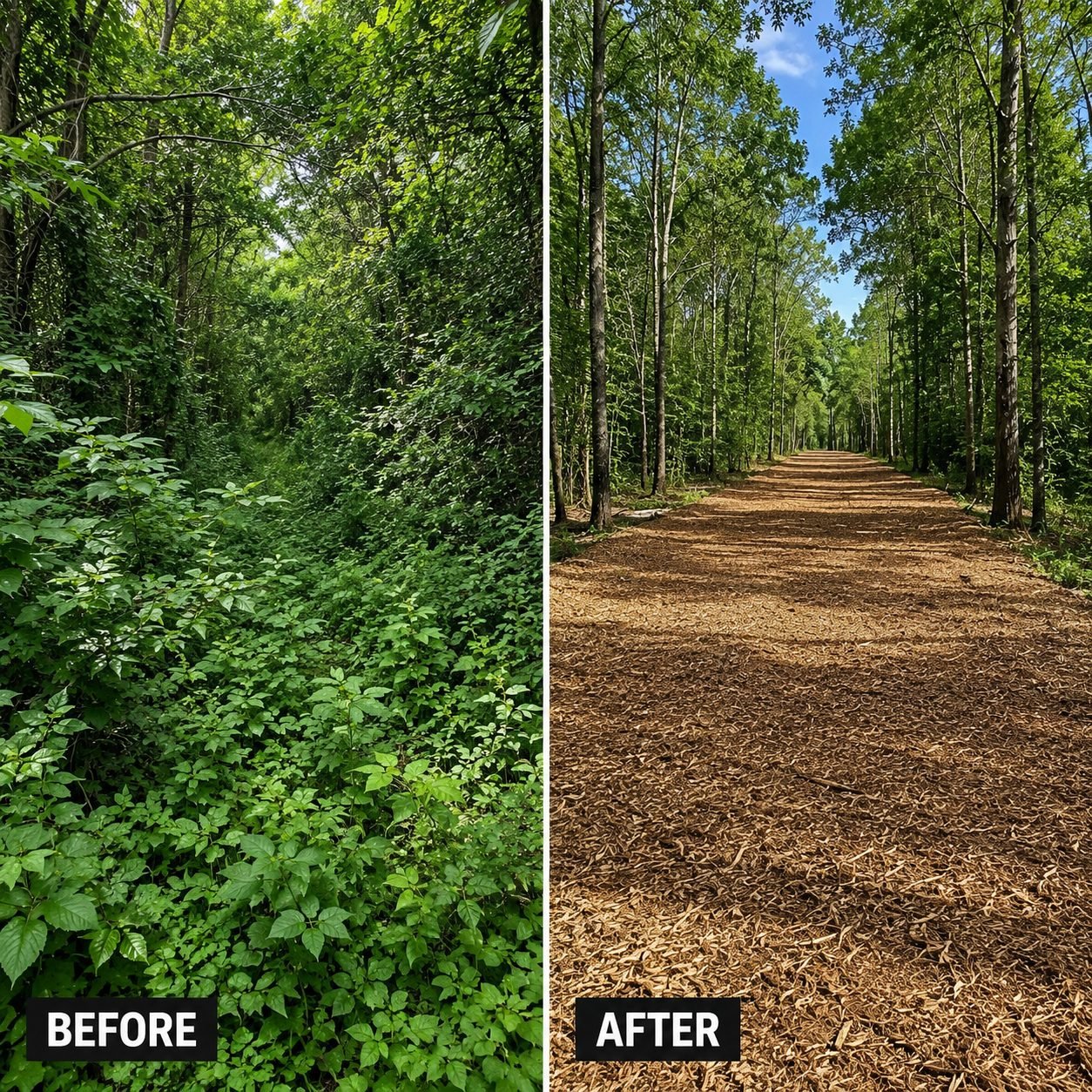
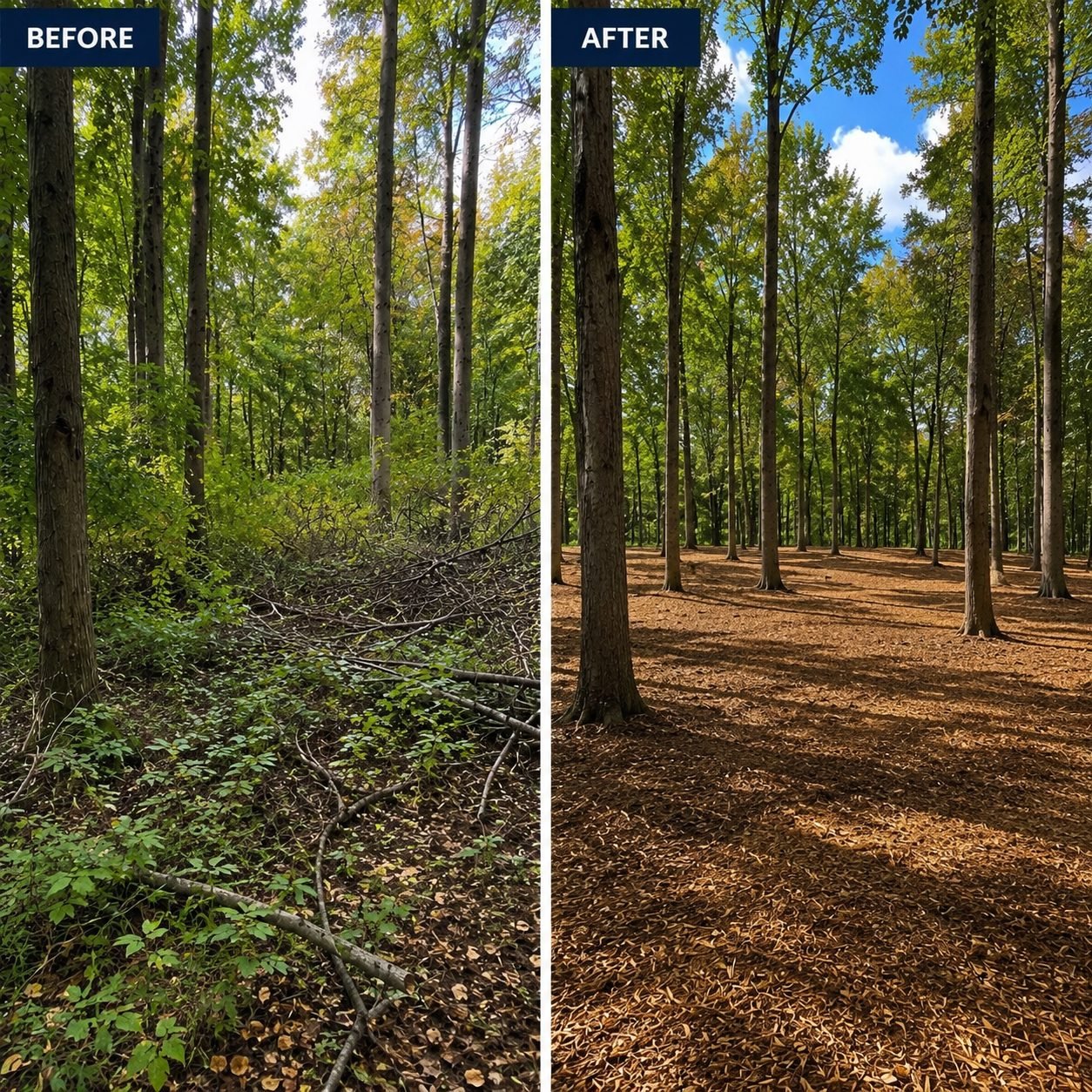
A Whitehall gallery should show a tight mid-century lot before clearing, then the same parcel after brush removal, stem mulching, and cleaner access paths. The best comparison highlights how Fortress opens small infill spaces near Columbus without overworking the heavy clay or crowding nearby homes and streets.
Frequently asked questions
During business hours, the team usually responds in 2 to 3 hours and can often schedule same-week walk-throughs. In Whitehall, that speed helps when access is tight and the parcel sits near East Main, Broad Street, or the I-70 and I-270 corridors. The quote is flat-rate after the site visit.
Yes, forestry mulching is often the right first step for Whitehall lots with brush, saplings, and field-edge growth. The John Deere 333G compact track loaders with Diamond drum mulchers can cut stems up to 14 inches. On compact lots, that keeps the work fast while reducing haul-off and keeping the footprint smaller.
Because Whitehall is compact and densely spaced, there is less room for machine swing, debris staging, and turning around. The crew plans around that reality instead of treating the lot like rural acreage. That is especially important near DSCC, John Bishop Park, and the established residential blocks east of Columbus.
Yes. Fortress handles forestry mulching for lighter overgrowth and full clearing when the site needs more complete removal. The decision depends on stem density, access, soil, and whether the parcel needs haul-off. In Whitehall, the clay ground and tight spacing often determine which option is most efficient.
Ohio Revised Code 3781.28 requires an Ohio 811 utility locate at least 48 hours before digging. Even on a small Whitehall lot, that step protects the project and helps the crew work safely around buried lines. Fortress builds the schedule around that locate window before any digging begins.
Whitehall sits east of Columbus in Franklin County, near Bexley, Reynoldsburg, and Gahanna, with access tied to the East Main and Broad Street corridors. Those local conditions make the work feel urban and compact rather than rural. That is why access planning is a major part of the farm land clearing quote.
Farm Land Clearing Near Whitehall
What Other Services Does Fortress Offer in Central Ohio?
Fortress Level Construction runs a full range of land-clearing, excavation, grading, and site-work services across Central Ohio, so one owner-operated crew can clear, grade, and prep a site end to end.
Get a Flat-Rate Quote from Lee Carson
Owner-operated land clearing across all five Central Ohio counties. Send your property details and Lee gets back to you within 2 to 3 hours during business hours with one flat number after a free on-site walk-through.